
Objective What Compare mitotic stages of cancer cells
Objective What: Compare mitotic stages of cancer cells to normal cells. How: By Looking at cells during different stages of Mitosis in cancer & normal cells. Why: So that we can understand what people who have gone through cancer treatments feel. Warm UP: 1. What are the 6 stages of Mitosis? 2. What happens during Metaphase?
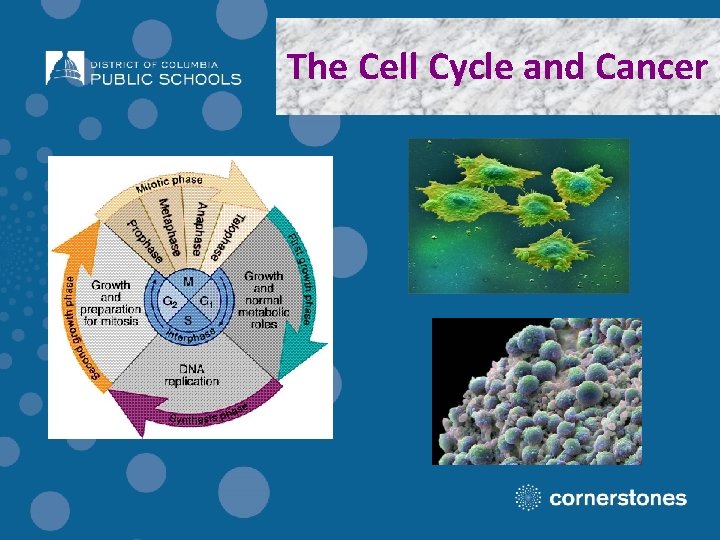
The Cell Cycle and Cancer
Ted Talk Audio http: //ed. ted. com/lessons/how-docancer-cells-behave-differently-fromhealthy-ones-george-zaidan Answer the following Questions during the video: 1. Finish this sentence: Growth occurs when ______________________________________________________________________ 2. What is a mutation? ______________________________________________________________________ 3. Radiation works by…. . ______________________________________________________________________ 4. What is the problem with healthy cells during radiation and chemotherapy treatments? ______________________________________________________________________ Page 3
Virtual Lab Website Google: Glencoe cancer cell virtual lab Page 4
Glencoe Cancer Cell Virtual Lab If this site doesn’t load the first time google: Glencoe cancer cell virtual lab Page 5
Henrietta Lacks Video http: //www. cbsnews. com/news/theimmortal-henrietta-lacks/ Page 6
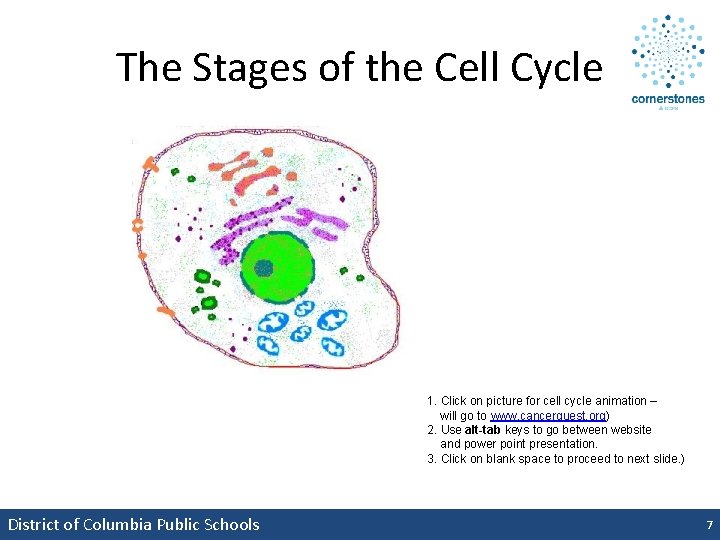
The Stages of the Cell Cycle 1. Click on picture for cell cycle animation – will go to www. cancerquest. org) 2. Use alt-tab keys to go between website and power point presentation. 3. Click on blank space to proceed to next slide. ) District of Columbia Public Schools 7
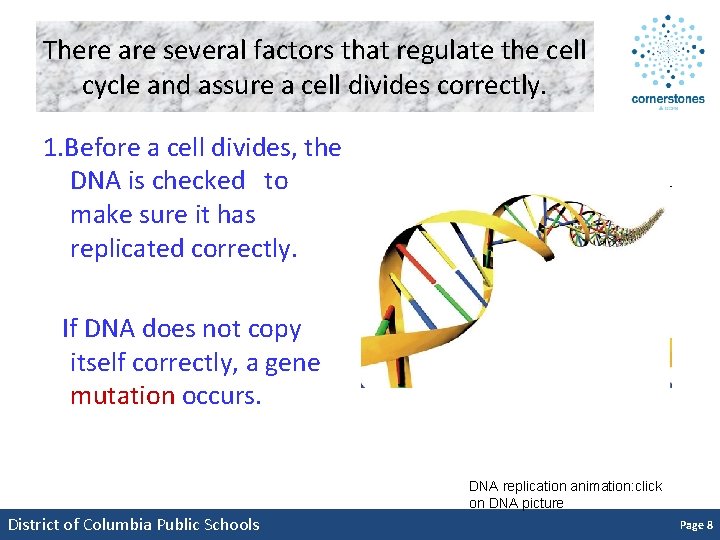
There are several factors that regulate the cell cycle and assure a cell divides correctly. 1. Before a cell divides, the DNA is checked to make sure it has replicated correctly. If DNA does not copy itself correctly, a gene mutation occurs. DNA replication animation: click on DNA picture District of Columbia Public Schools Page 8
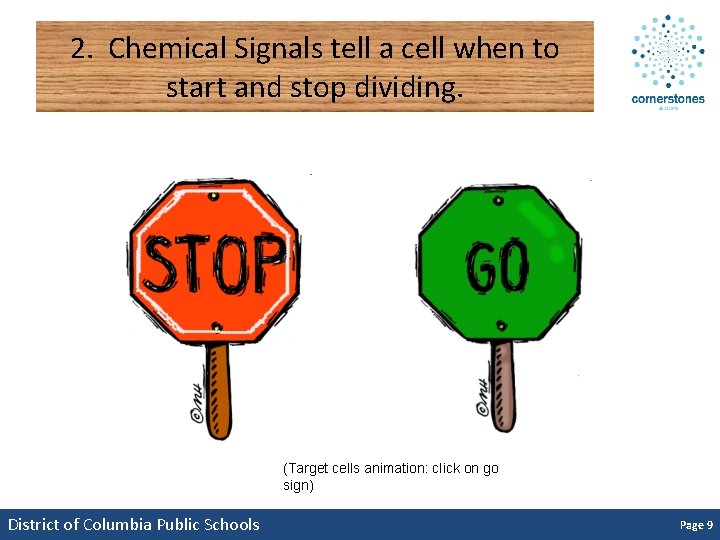
2. Chemical Signals tell a cell when to start and stop dividing. (Target cells animation: click on go sign) District of Columbia Public Schools Page 9
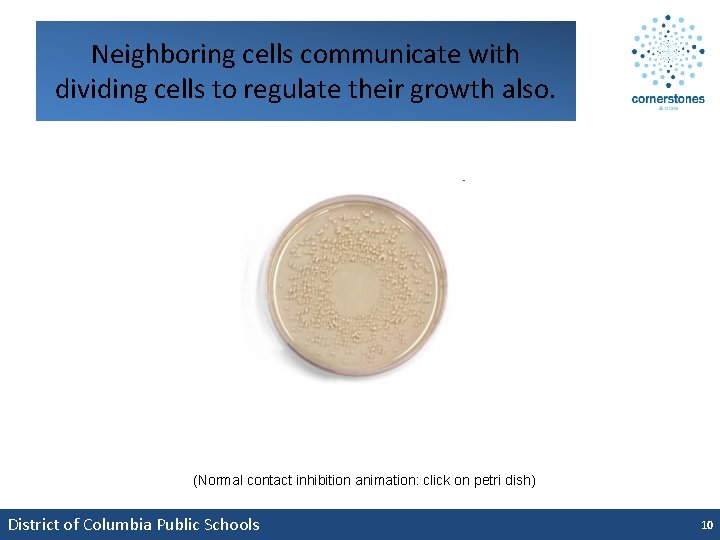
Neighboring cells communicate with dividing cells to regulate their growth also. (Normal contact inhibition animation: click on petri dish) District of Columbia Public Schools 10
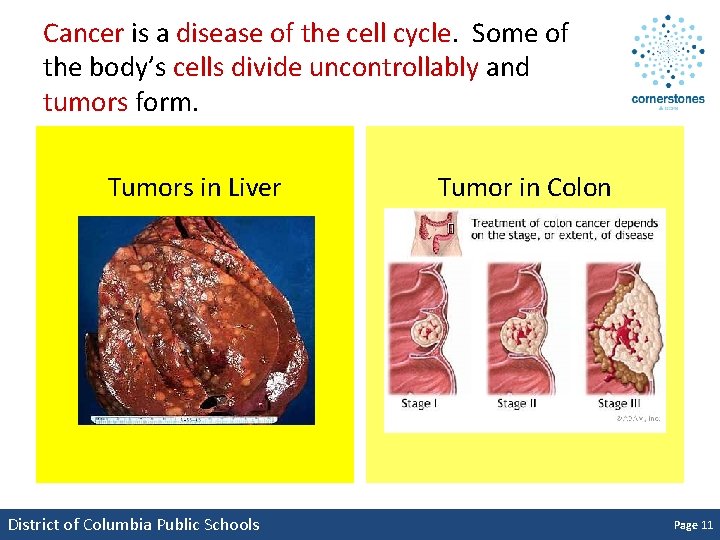
Cancer is a disease of the cell cycle. Some of the body’s cells divide uncontrollably and tumors form. Tumors in Liver District of Columbia Public Schools Tumor in Colon Page 11
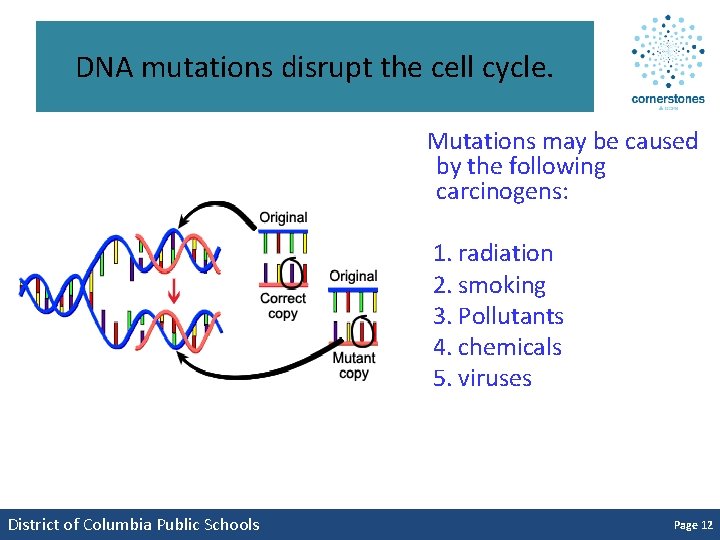
DNA mutations disrupt the cell cycle. Mutations may be caused by the following carcinogens: 1. radiation 2. smoking 3. Pollutants 4. chemicals 5. viruses District of Columbia Public Schools Page 12
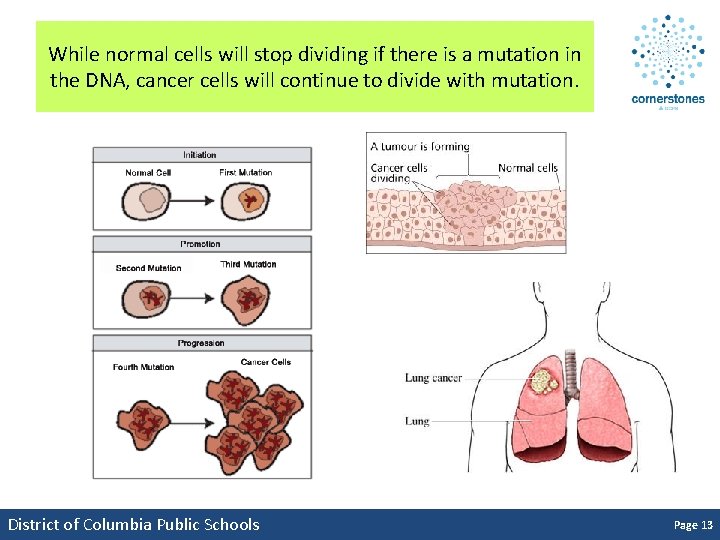
While normal cells will stop dividing if there is a mutation in the DNA, cancer cells will continue to divide with mutation. District of Columbia Public Schools Page 13
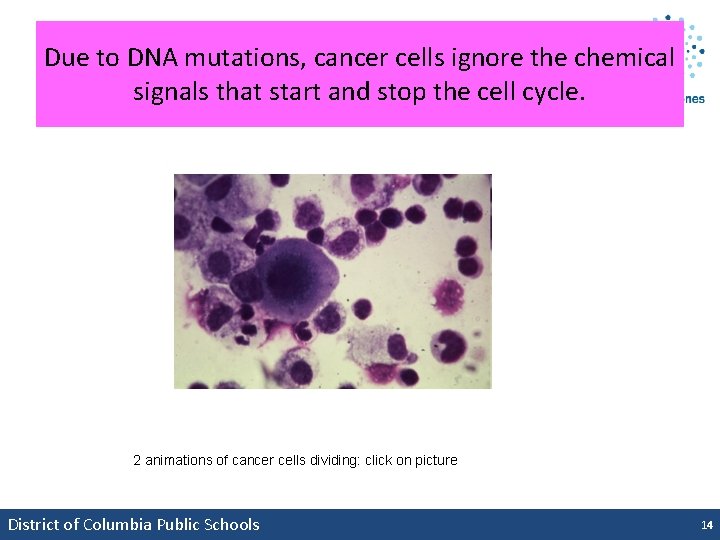
Due to DNA mutations, cancer cells ignore the chemical signals that start and stop the cell cycle. 2 animations of cancer cells dividing: click on picture District of Columbia Public Schools 14
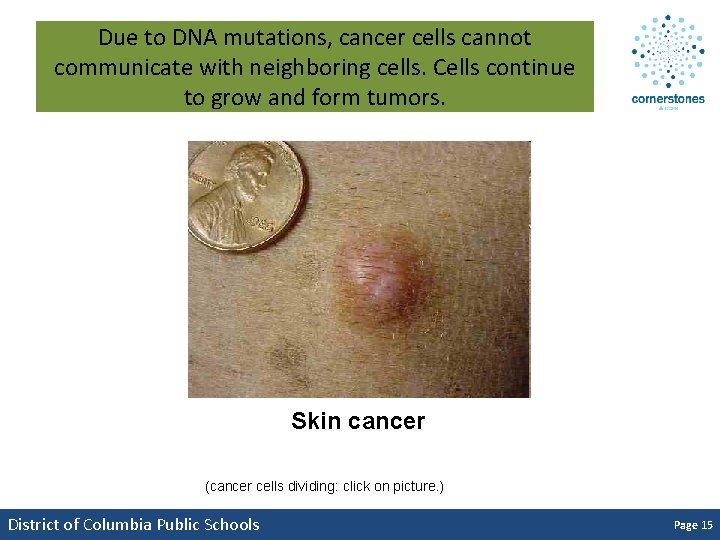
Due to DNA mutations, cancer cells cannot communicate with neighboring cells. Cells continue to grow and form tumors. Skin cancer (cancer cells dividing: click on picture. ) District of Columbia Public Schools Page 15
SUMMARY Normal Cell Division 1. DNA is replicated properly. 2. Chemical signals start and stop the cell cycle. 3. Cells communicate with each other so they don’t become overcrowded. District of Columbia Public Schools Cancer Cells 1. Mutations occur in the DNA when it is replicated. 2. Chemical signals that start and stop the cell cycle are ignored. 3. Cells do not communicate with each other and tumors form. Page 16
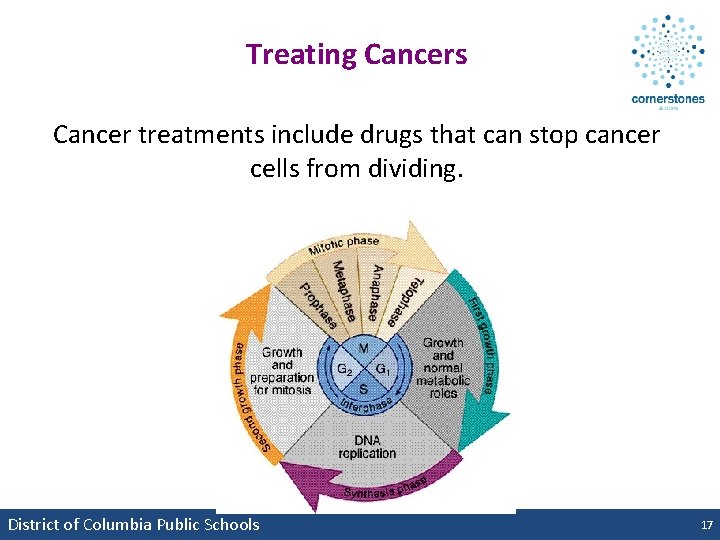
Treating Cancers Cancer treatments include drugs that can stop cancer cells from dividing. District of Columbia Public Schools 17
This powerpoint was kindly donated to www. worldofteaching. com http: //www. worldofteaching. com is home to over a thousand powerpoints submitted by teachers. This is a completely free site and requires no registration. Please visit and I hope it will help in your teaching. District of Columbia Public Schools 18
- Slides: 18