
Objective Today we will be translating word problems
Objective: Today we will be translating word problems into diagrams and maths sentences. Look at the 3 x 3 grid of word problems on your desk. Can you match the diagrams to the word problems?
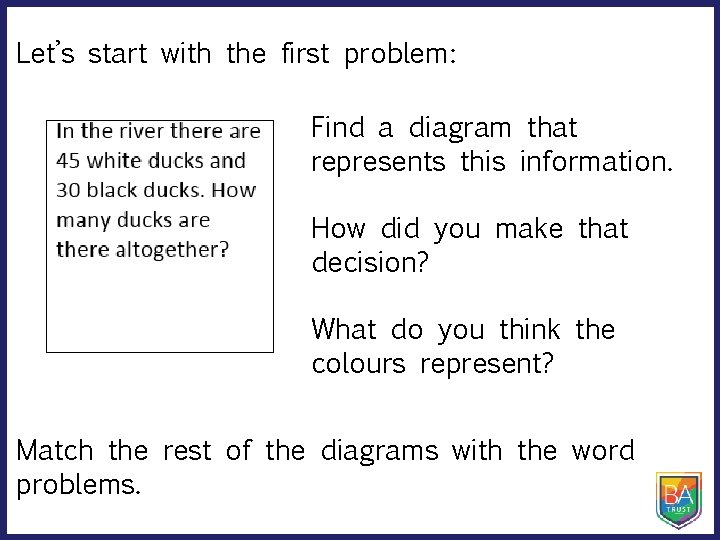
Let’s start with the first problem: Find a diagram that represents this information. How did you make that decision? What do you think the colours represent? Match the rest of the diagrams with the word problems.
Now you have matched the cards, think about these questions: Why have they been arranged in rows and columns in this way? Can you find any relationships? What is the same/ what is different?
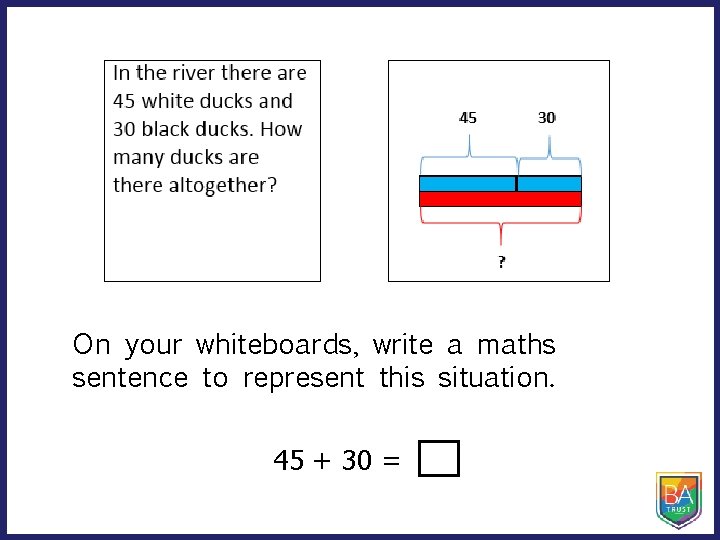
On your whiteboards, write a maths sentence to represent this situation. 45 + 30 =
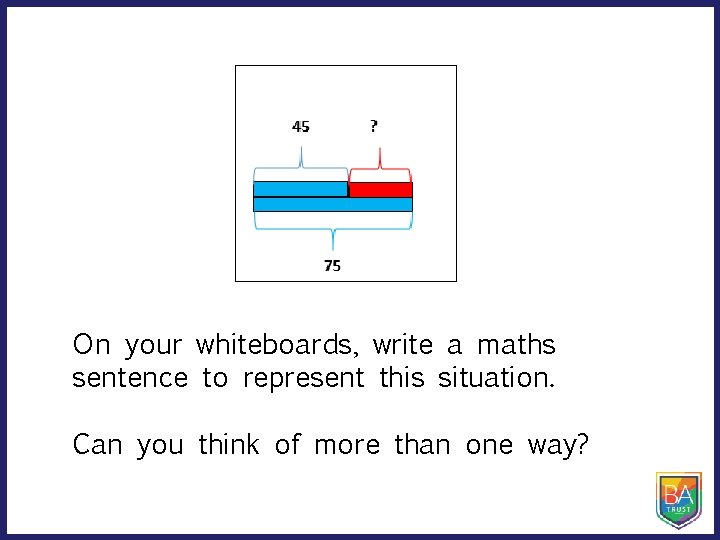
On your whiteboards, write a maths sentence to represent this situation. Can you think of more than one way?
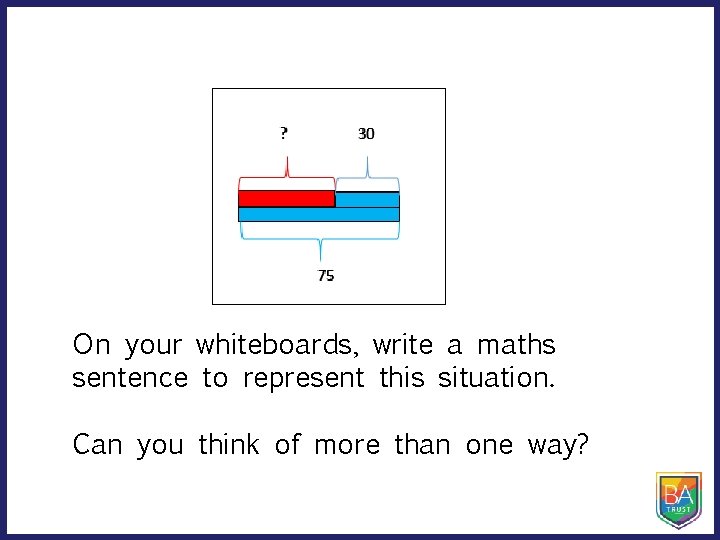
On your whiteboards, write a maths sentence to represent this situation. Can you think of more than one way?
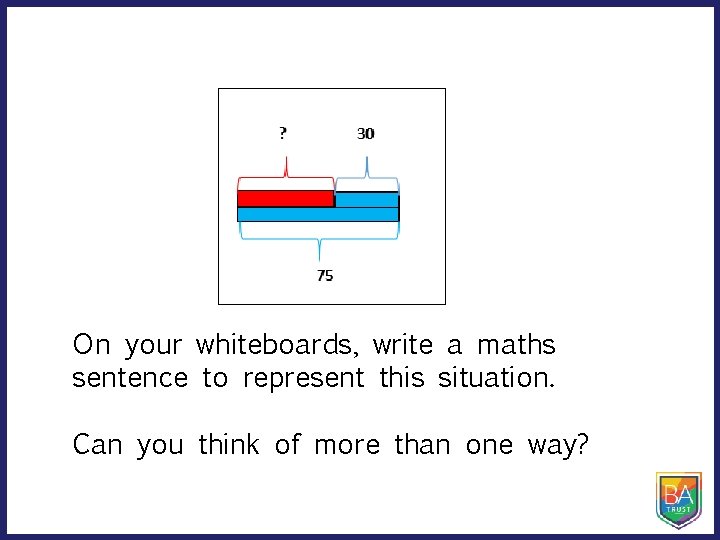
On your whiteboards, write a maths sentence to represent this situation. Can you think of more than one way?
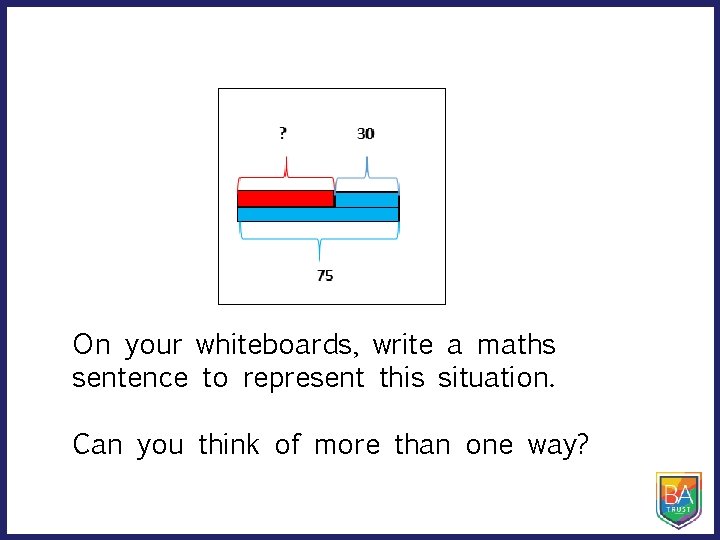
On your whiteboards, write a maths sentence to represent this situation. Can you think of more than one way?
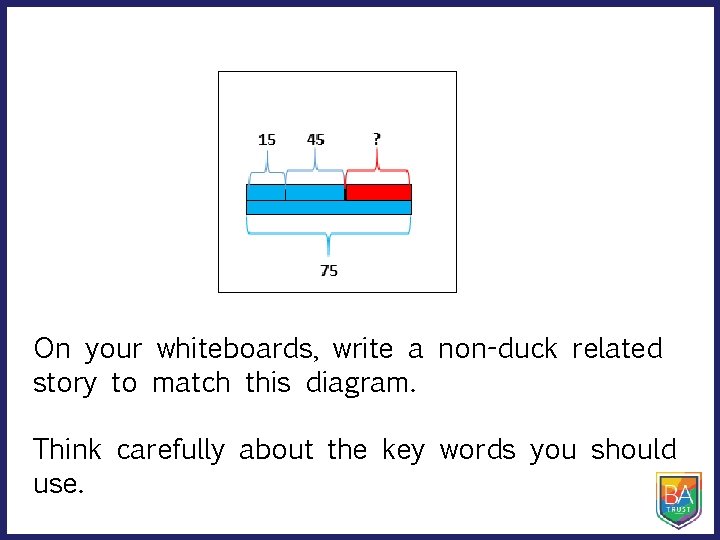
On your whiteboards, write a non-duck related story to match this diagram. Think carefully about the key words you should use.
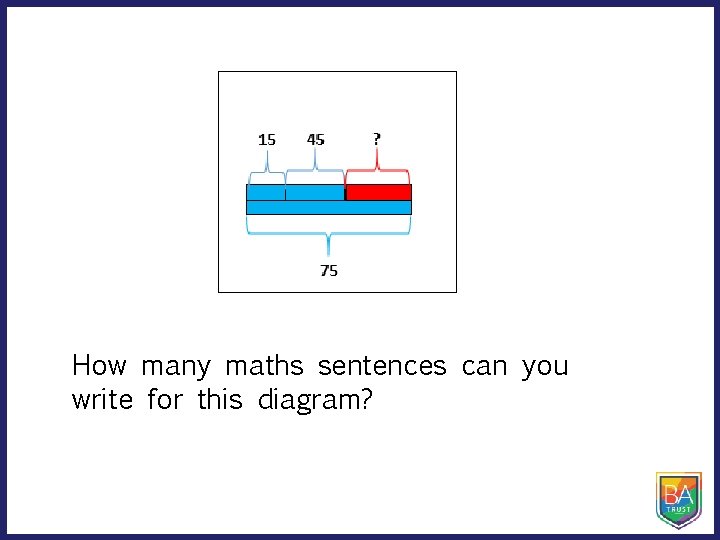
How many maths sentences can you write for this diagram?
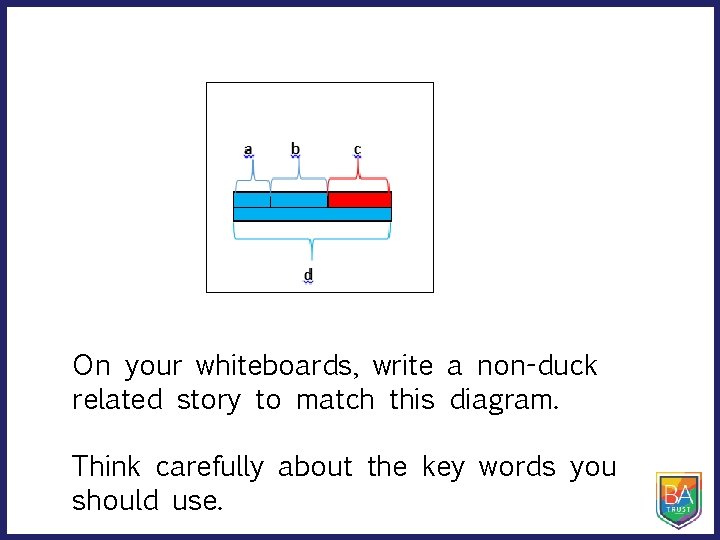
On your whiteboards, write a non-duck related story to match this diagram. Think carefully about the key words you should use.
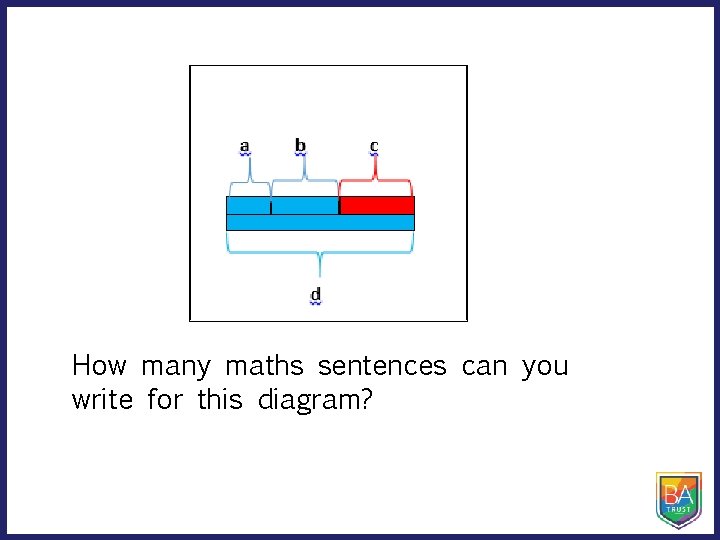
How many maths sentences can you write for this diagram?
You now have a blank grid. Can you put together a sequence of stories that have the same diagrams, but different numbers to the first grid we looked at? Would you like to try diagrams with three parts instead? What if you use letters instead of numbers?
- Slides: 13