
Objective setting application of ISPPIA 2210 in the
Objective setting: application of ISPPIA 2210 in the Netherlands Manfred van Kesteren Budapest, March 2017
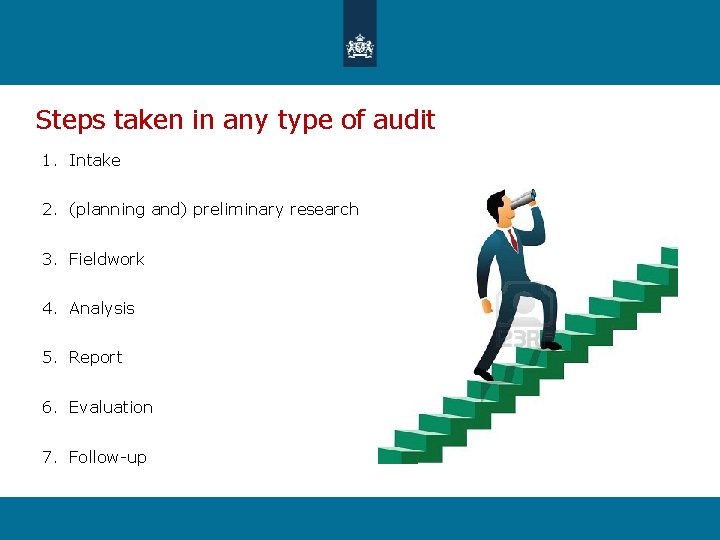
Steps taken in any type of audit 1. Intake 2. (planning and) preliminary research 3. Fieldwork 4. Analysis 5. Report 6. Evaluation 7. Follow-up
After intake and preliminary research: Ø An audit plan in which the ‘why’ and ‘how’ questions for the audit are described. These are the elements of the audit framework (see next slide); Ø The audit plan is basically the contract between the assigner of the audit and the audit unit (signed by both parties); A Risk Analysis is always the starting point and usually the trigger of an audit Ø
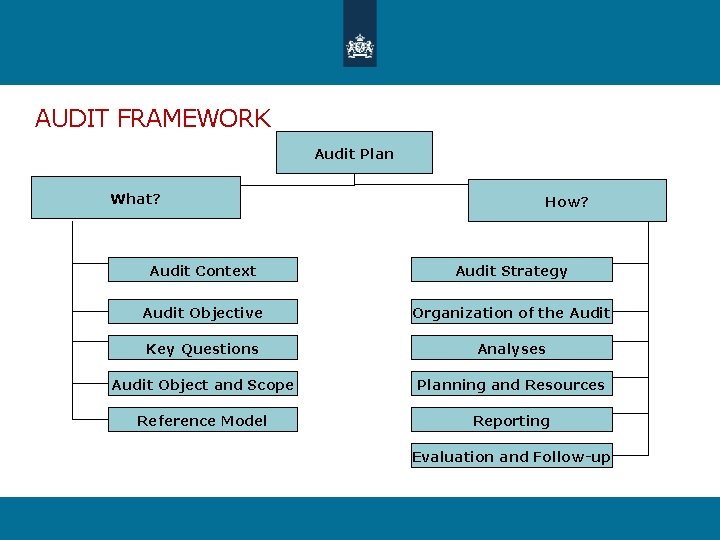
AUDIT FRAMEWORK Audit Plan What? How? Audit Context Audit Strategy Audit Objective Organization of the Audit Key Questions Analyses Audit Object and Scope Planning and Resources Reference Model Reporting Evaluation and Follow-up
Audit objective Ø Describes what the final result of the audit will be Ø Describes what management wants to achieve with the audit results Ø Usually composed of what and why components. Example: assessment of the quality of the objectives and the proper functioning of the control system within the tendering phase of the procurement process in Ministry X in order to improve this process if necessary.
Key Audit Questions Ø Key questions are derived from the audit objective Ø They are the main questions that will be answered by the audit Ø Can be problem identifying, diagnostic or solution aimed in nature Example: - Are the objectives set for the tendering phase of the procurement process of good quality? - Is the current system of internal control within the tendering phase of the procurement process functioning in a good way?
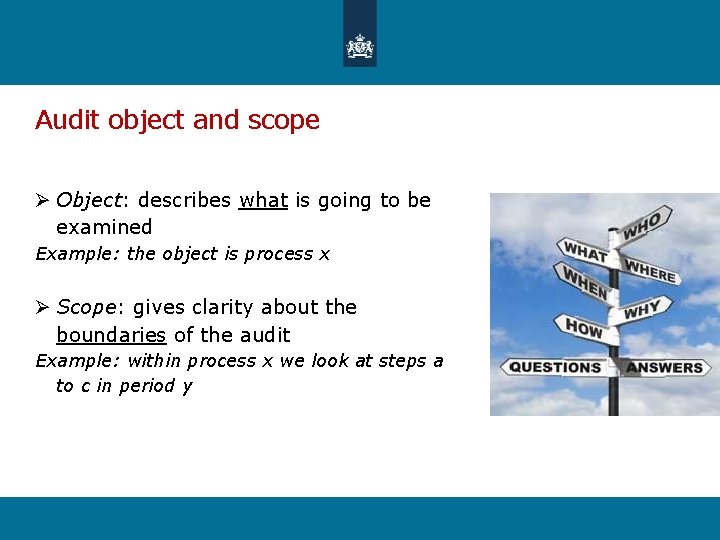
Audit object and scope Ø Object: describes what is going to be examined Example: the object is process x Ø Scope: gives clarity about the boundaries of the audit Example: within process x we look at steps a to c in period y
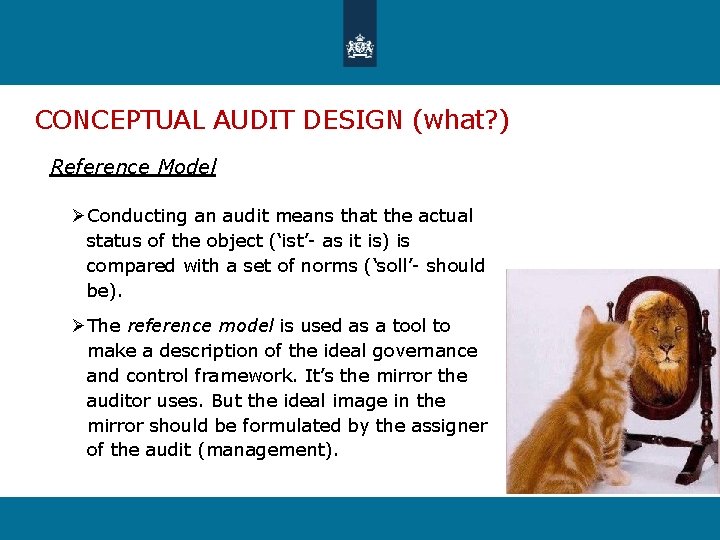
CONCEPTUAL AUDIT DESIGN (what? ) Reference Model Ø Conducting an audit means that the actual status of the object (‘ist’- as it is) is compared with a set of norms (‘soll’- should be). Ø The reference model is used as a tool to make a description of the ideal governance and control framework. It’s the mirror the auditor uses. But the ideal image in the mirror should be formulated by the assigner of the audit (management).
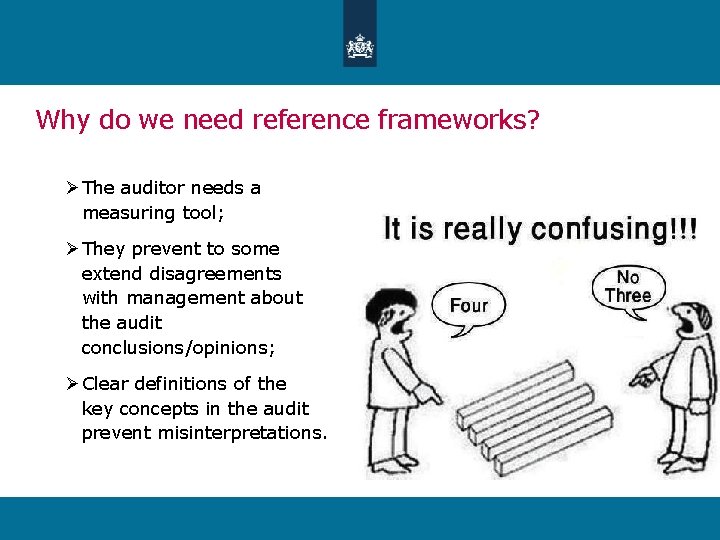
Why do we need reference frameworks? Ø The auditor needs a measuring tool; Ø They prevent to some extend disagreements with management about the audit conclusions/opinions; Ø Clear definitions of the key concepts in the audit prevent misinterpretations.
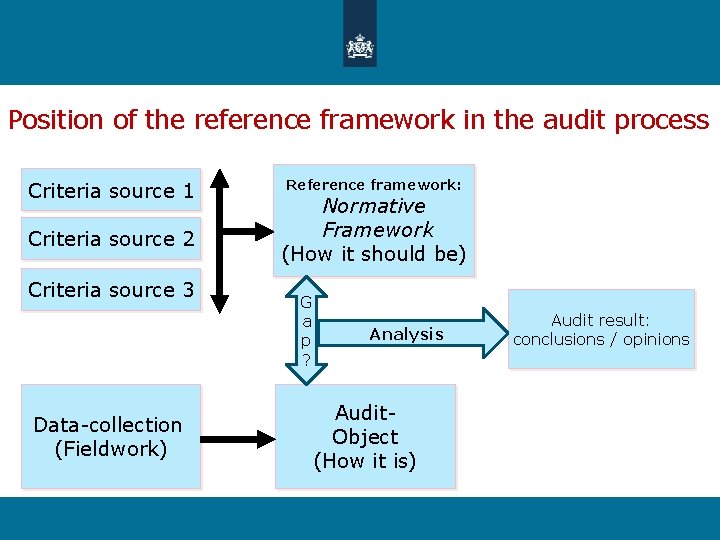
Position of the reference framework in the audit process Criteria source 1 Criteria source 2 Criteria source 3 Data-collection (Fieldwork) Reference framework: Normative Framework (How it should be) G a p ? Analysis Audit. Object (How it is) Audit result: conclusions / opinions
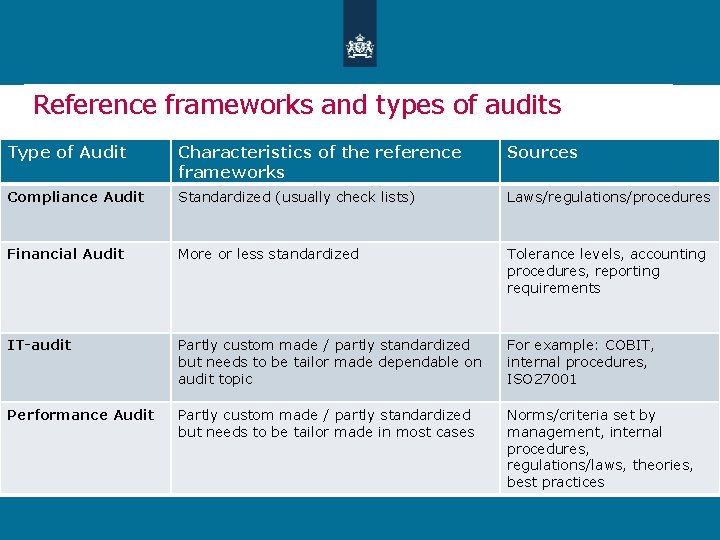
Reference frameworks and types of audits Type of Audit Characteristics of the reference frameworks Sources Compliance Audit Standardized (usually check lists) Laws/regulations/procedures Financial Audit More or less standardized Tolerance levels, accounting procedures, reporting requirements IT-audit Partly custom made / partly standardized but needs to be tailor made dependable on audit topic For example: COBIT, internal procedures, ISO 27001 Performance Audit Partly custom made / partly standardized but needs to be tailor made in most cases Norms/criteria set by management, internal procedures, regulations/laws, theories, best practices
m. Kesteren@minfin. nl
- Slides: 12