
Objective I will identify and describe the causes
Objective: I will identify and describe the causes and effects of the major biological and chemical hazards we currently face. Hazards
Risks �The probability of suffering harm from a hazard that can cause injury, disease, death, economic loss, or damage Probability: an estimate of the likelihood of such an event Possibility: this event could happen
Risk Assessment and Management �Risk Assessment: Process of using statistical methods to estimate how much harm a particular hazard can cause to human health or the environment. �Risk management: whether or how to reduce a particular risk
Types of Hazards �Five major types Biological Chemical Natural Cultural Lifestyle
Biological Hazards: Non. Transmissible �Non-transmissible disease: caused by something other than a living organism and does not spread Examples Now the leading cause of death is cardiovascular disease
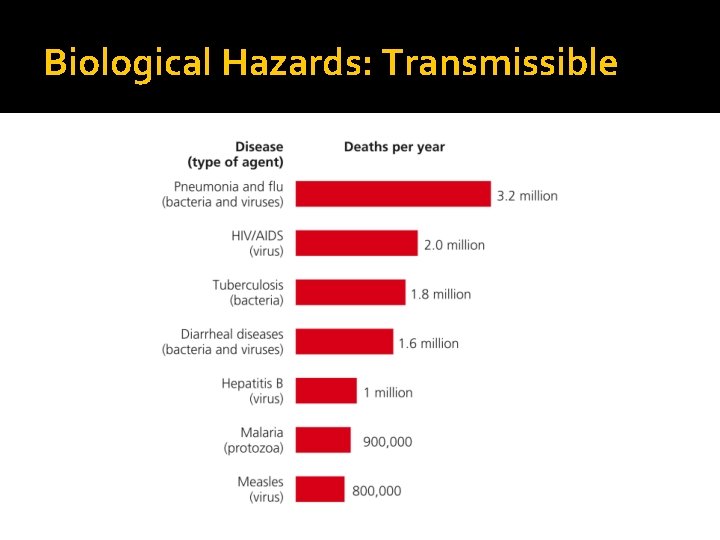
Biological Hazards: Transmissible �Infectious disease: pathogen invades the body and multiplies in its cells and tissues Transmissible (contagious or communicable) In 1990 infectious disease was the leading cause of death in the world and the U. S. Still a threat ▪ Epidemic ▪ Pandemic ▪ Genetic Resistance
Biological Hazards: Transmissible
Biological Hazards: Malaria �Caused by a parasite that is spread by certain types of mosquitoes Infects and destroys red blood cells Symptoms: fever, sweats/chills, abdominal pain, vomiting, headaches, and susceptibility to other diseases � 1 in 5 people are in the world are at risk from malaria
Biological Hazards: Malaria �Malaria on the rise since 1970 Drug resistant Plasmodium Insecticide resistant mosquitoes Clearing of tropical forests AIDS patients particularly vulnerable
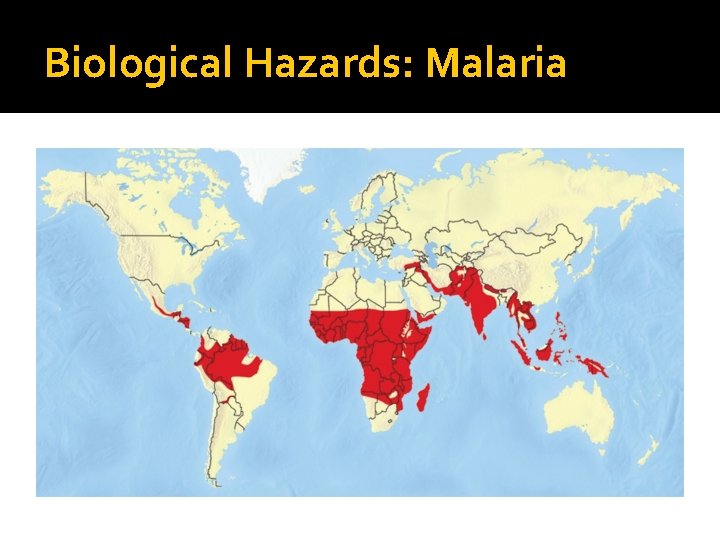
Biological Hazards: Malaria
Think Box �Between 1970 and 2006 the global death rate from infectious diseases decreased by more than two-thirds. Why do you think this happened? Explain your answer.
Biological Hazards: Solutions � Increase research � Reduce poverty � Improve drinking water � Reduce unnecessary use of antibiotics � Educate people to take all of an antibiotic prescription � Reduce antibiotic use to promote livestock growth � Require careful hand washing by all medical personnel � Immunize children against major viral diseases � Provide oral rehydration for diarrhea victims � Conduct global campaign to reduce HIV/AIDS
Think Box �How do you know if a chemical is bad for you?
Evaluating Chemical Hazards �Toxicology �Toxicity dependent on Dose Age Genetic makeup Multiple chemical sensitivity (MCS) Solubility Persistence Biomagnification
Chemical Hazards: Types �Toxic Chemicals: one that can cause temporary or permanent harm or death to humans and animals Carcinogens Mutagens Teratogens
Chemical Hazards: Immune System �Immune system: specialized cells and tissues that protect the body against disease and harmful substances by forming antibodies that render invading agents harmless. Examples ▪ Arsenic ▪ Mehtylmercury ▪ Dioxins
Chemical Hazards: Neurotoxins �Affect nervous system �Symptoms: behavioral changes, learning disabilities, retardation, attention deficit disorder, paralysis and death �Examples: Arsenic, lead, certain pesticides, and, methylcercury
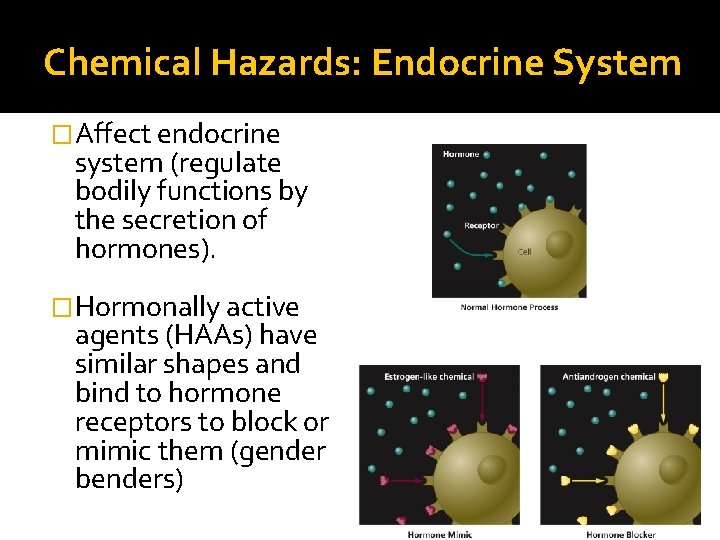
Chemical Hazards: Endocrine System �Affect endocrine system (regulate bodily functions by the secretion of hormones). �Hormonally active agents (HAAs) have similar shapes and bind to hormone receptors to block or mimic them (gender benders)
Think Box �Read the case study in your handout. What type(s) of chemical hazard would you classify PCBs as? Explain your answer.
- Slides: 19