
OBJECTIVE 8 01 UNDERSTAND FOOD SAFETY REGULATIONS FOOD
OBJECTIVE 8. 01 UNDERSTAND FOOD SAFETY REGULATIONS
FOOD SAFETY PRODUCTION REGULATIONS
FOOD SAFETY PRODUCTION REGULATIONS • United States Department of Agriculture, Food Safety Inspection Service are: • the regulatory agency that ensures federal laws are followed • designed to keep commercial food supply safe while also ensuring the proper treatment of animals during the slaughter process
FOOD SAFETY PRODUCTION REGULATIONS • Federal inspection of meat began in 1891 • Main purpose is to remove any carcass/meat that is to detect and remove irregular or contaminated meat
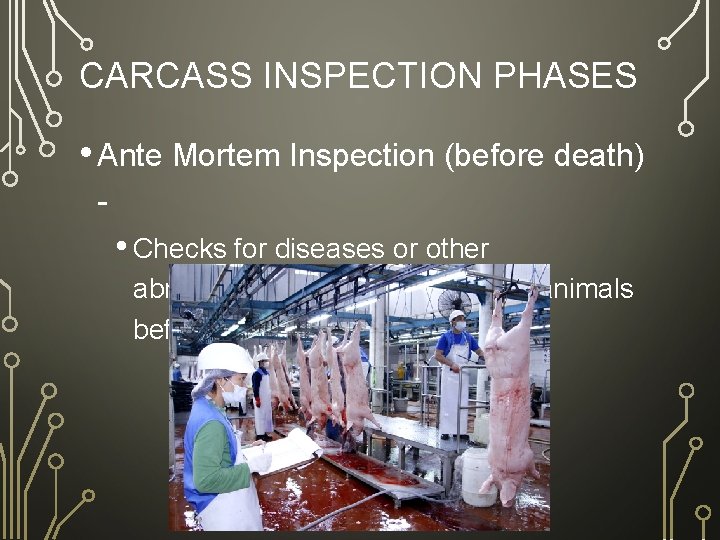
CARCASS INSPECTION PHASES • Ante Mortem Inspection (before death) - • Checks for diseases or other abnormalities and removes unfit animals before slaughter.
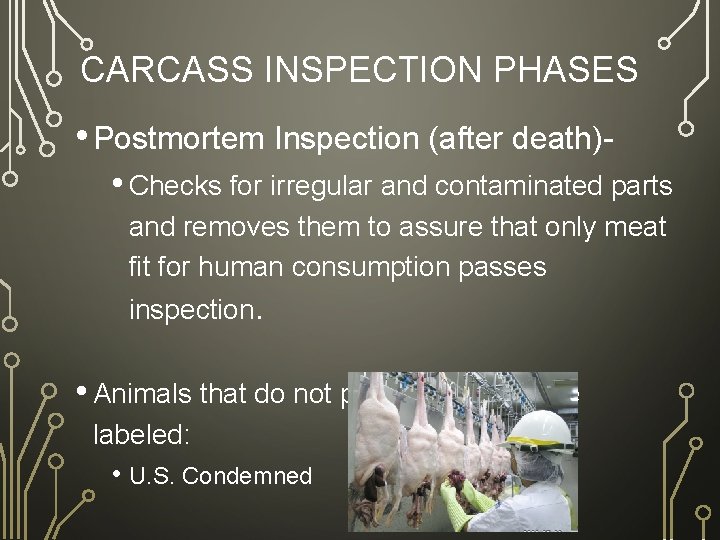
CARCASS INSPECTION PHASES • Postmortem Inspection (after death) • Checks for irregular and contaminated parts and removes them to assure that only meat fit for human consumption passes inspection. • Animals that do not pass inspection are labeled: • U. S. Condemned
FEDERAL ACTS GOVERNING MEAT INSPECTION • Humane Methods of Livestock Slaughter- • sets standards for animal handling, facilities and methods of slaughtering livestock. • Federal Meat Inspection Act • provides regulations for inspecting meat products.
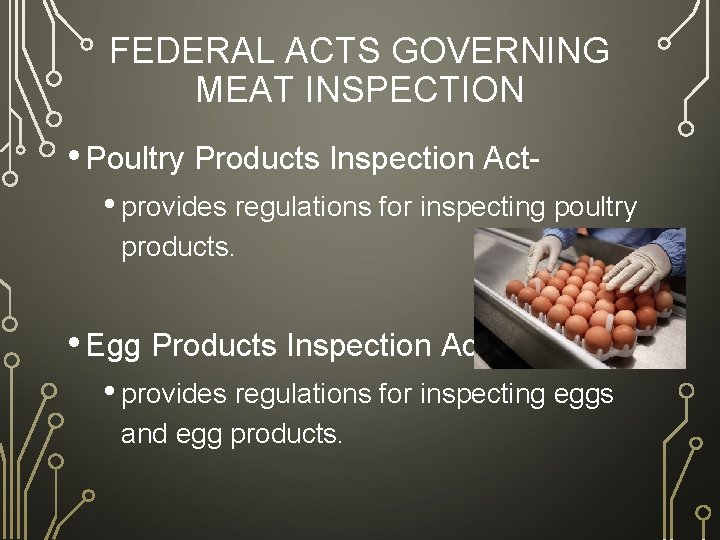
FEDERAL ACTS GOVERNING MEAT INSPECTION • Poultry Products Inspection Act • provides regulations for inspecting poultry products. • Egg Products Inspection Act • provides regulations for inspecting eggs and egg products.
USDA grades have nothing to do with sanitation, just the quality of products
CONSUMER FOOD SAFETY
CONSUMER FOOD SAFETY • Food supply in the Unites States is one of the safest in the world, but over 76, 000 people get sick each year from foodborne illness. • Infants, the elderly, pregnant women and those with poor immunity are the most prone to foodborne illness.
CONSUMER FOOD SAFETY • Food safety is a rising concern because so many people eat food handled and prepared by others in restaurants, hospitals, day-care centers. , etc. • Foodborne illnesses are caused when food becomes contaminated from bacteria.
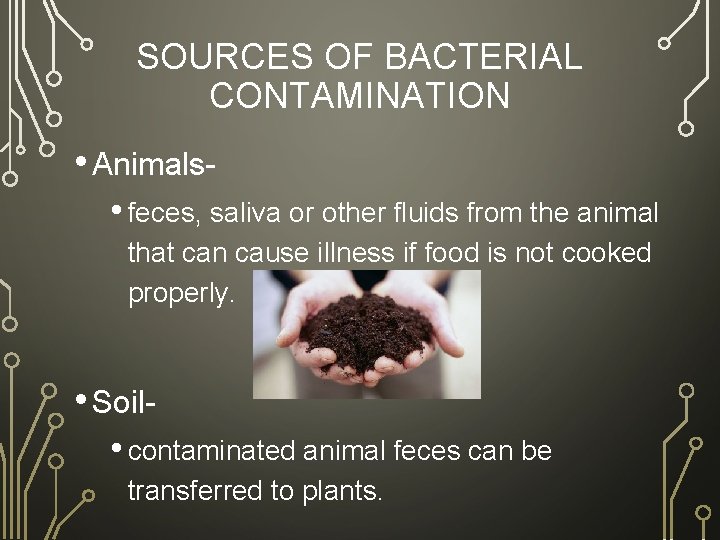
SOURCES OF BACTERIAL CONTAMINATION • Animals • feces, saliva or other fluids from the animal that can cause illness if food is not cooked properly. • Soil • contaminated animal feces can be transferred to plants.
SOURCES OF BACTERIAL CONTAMINATION • Water • contaminated animal feces that have come into contact with water that is used to wash or irrigate crops. • Humans • handling food with hands that are not clean.
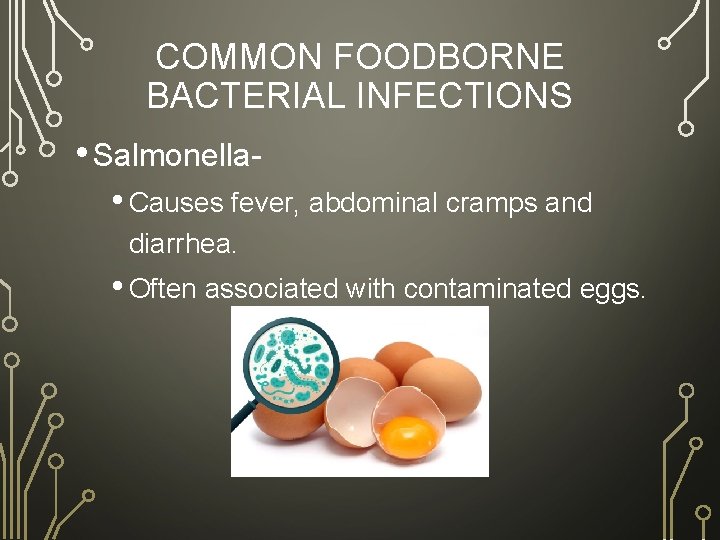
COMMON FOODBORNE BACTERIAL INFECTIONS • Salmonella • Causes fever, abdominal cramps and diarrhea. • Often associated with contaminated eggs.
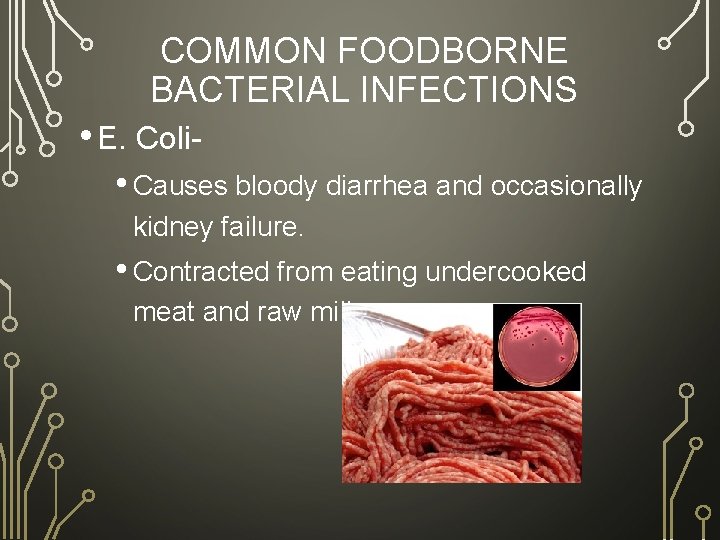
COMMON FOODBORNE BACTERIAL INFECTIONS • E. Coli • Causes bloody diarrhea and occasionally kidney failure. • Contracted from eating undercooked meat and raw milk.
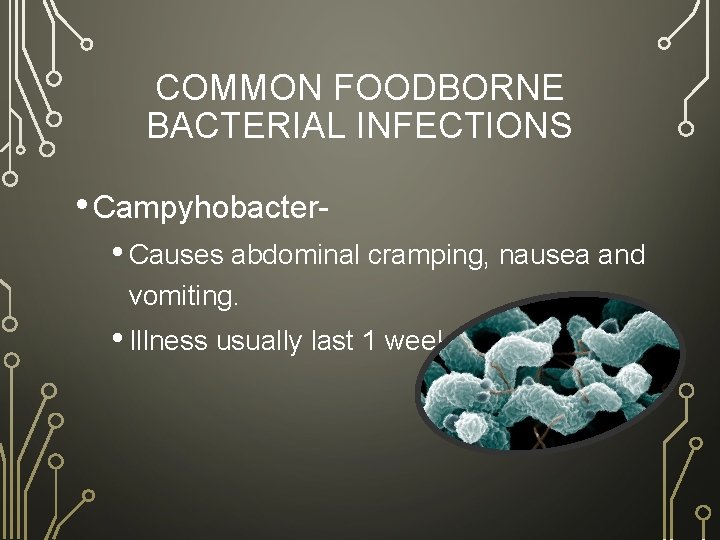
COMMON FOODBORNE BACTERIAL INFECTIONS • Campyhobacter • Causes abdominal cramping, nausea and vomiting. • Illness usually last 1 week.
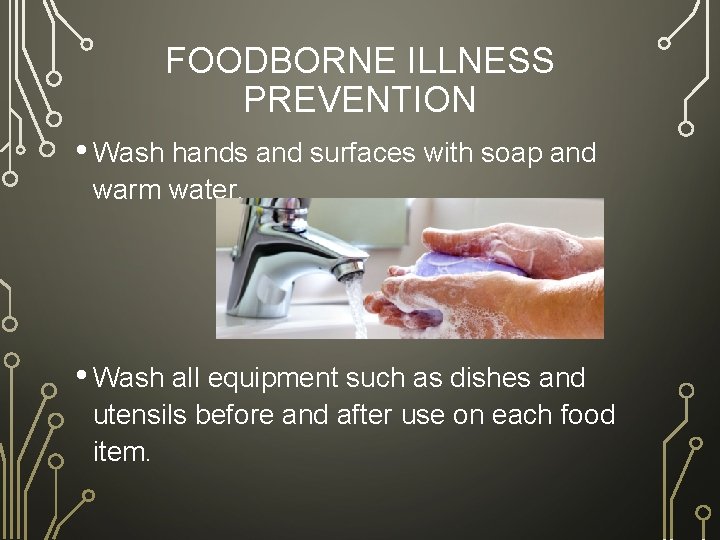
FOODBORNE ILLNESS PREVENTION • Wash hands and surfaces with soap and warm water. • Wash all equipment such as dishes and utensils before and after use on each food item.
FOODBORNE ILLNESS PREVENTION • Use a disposable towel for cleaning surfaces to prevent cross contamination. • Separate raw foods and use different cutting boards for meat versus other foods.
FOODBORNE ILLNESS PREVENTION • Never defrost food at room temperature. Always use refrigerator, cold water or microwave. • Use a food thermometer to ensure food has reached proper temperature to kill bacteria. • Refrigerate leftovers within 2 hours.
- Slides: 20