
Objective 8 01 RECOGNIZE ways to control comfort
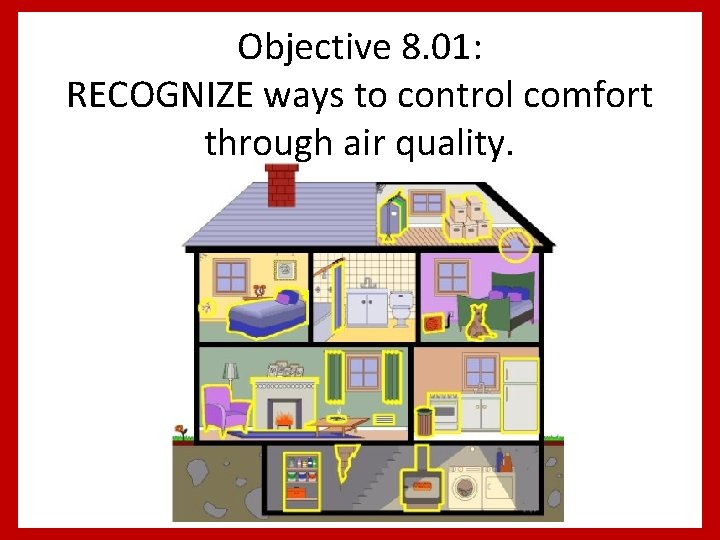
Objective 8. 01: RECOGNIZE ways to control comfort through air quality.
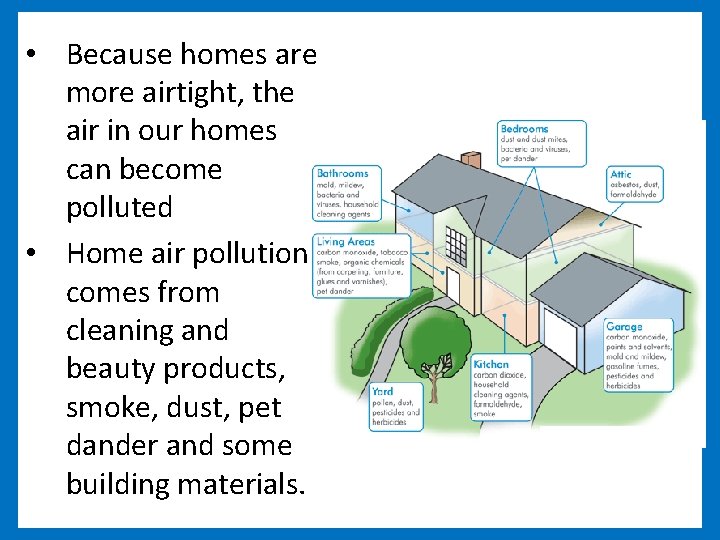
• Because homes are more airtight, the air in our homes can become polluted • Home air pollution comes from cleaning and beauty products, smoke, dust, pet dander and some building materials.
• Home air pollution cause people to develop allergies, feel tired, or develop other serious illnesses • What are some ways to eliminate home air pollution?
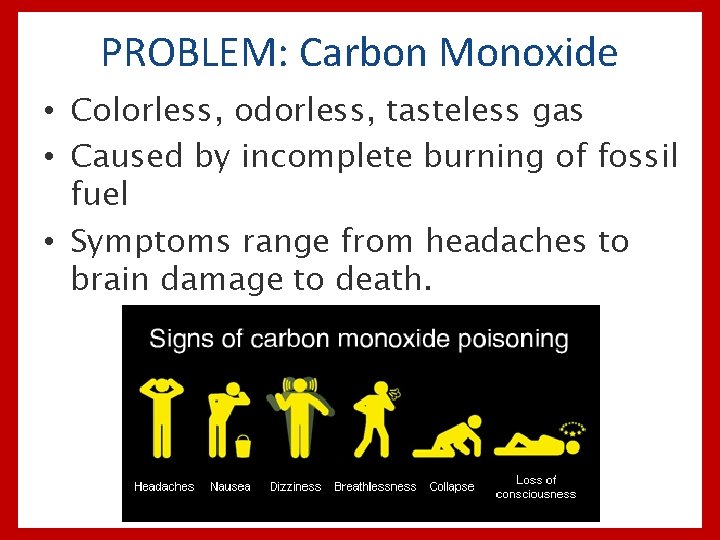
PROBLEM: Carbon Monoxide • Colorless, odorless, tasteless gas • Caused by incomplete burning of fossil fuel • Symptoms range from headaches to brain damage to death.
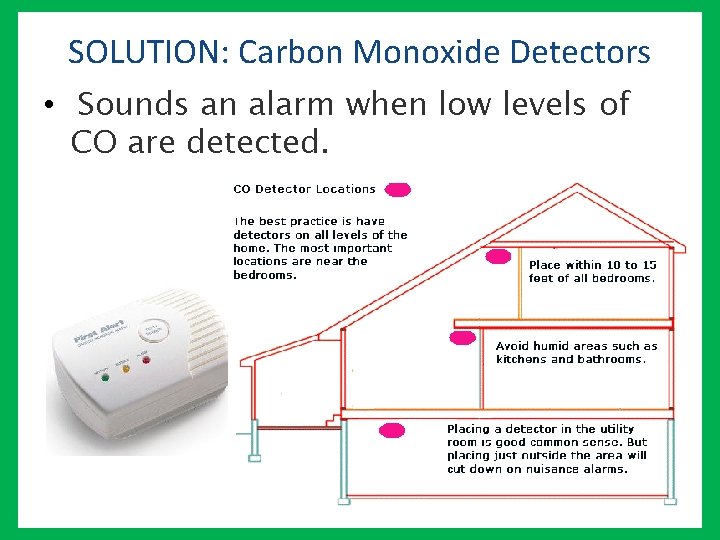
SOLUTION: Carbon Monoxide Detectors • Sounds an alarm when low levels of CO are detected.
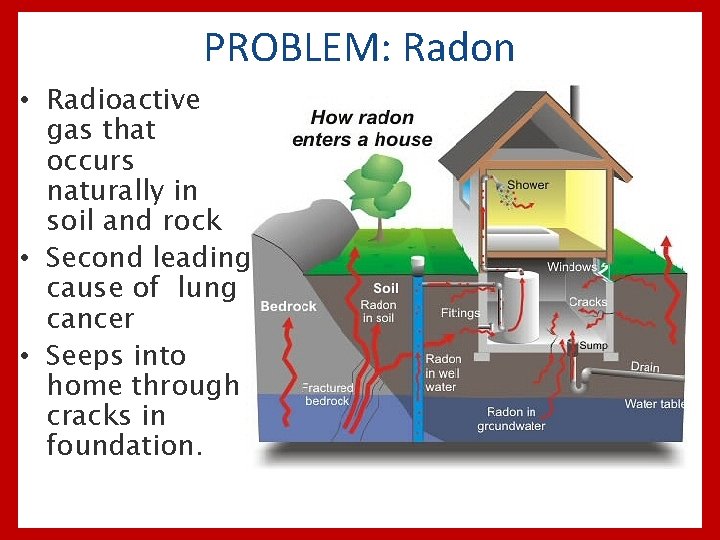
PROBLEM: Radon • Radioactive gas that occurs naturally in soil and rock • Second leading cause of lung cancer • Seeps into home through cracks in foundation.
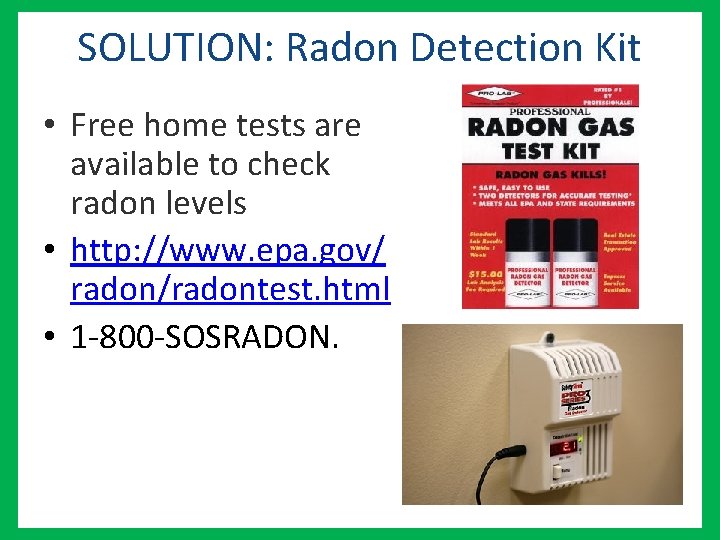
SOLUTION: Radon Detection Kit • Free home tests are available to check radon levels • http: //www. epa. gov/ radon/radontest. html • 1 -800 -SOSRADON.
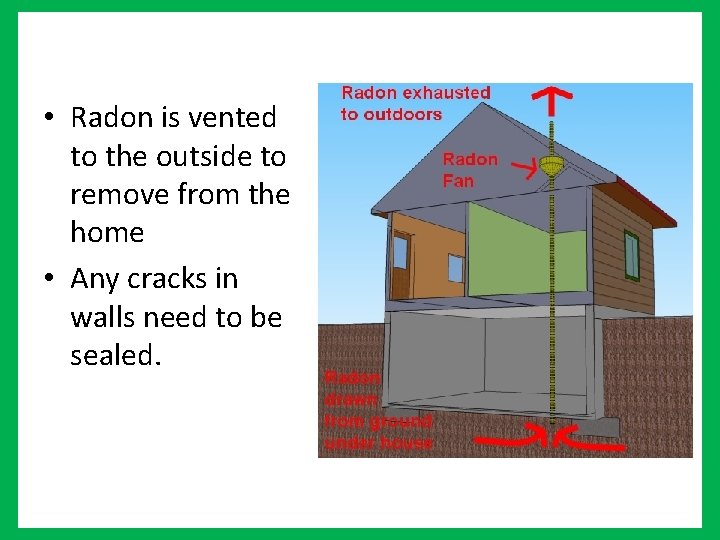
• Radon is vented to the outside to remove from the home • Any cracks in walls need to be sealed.
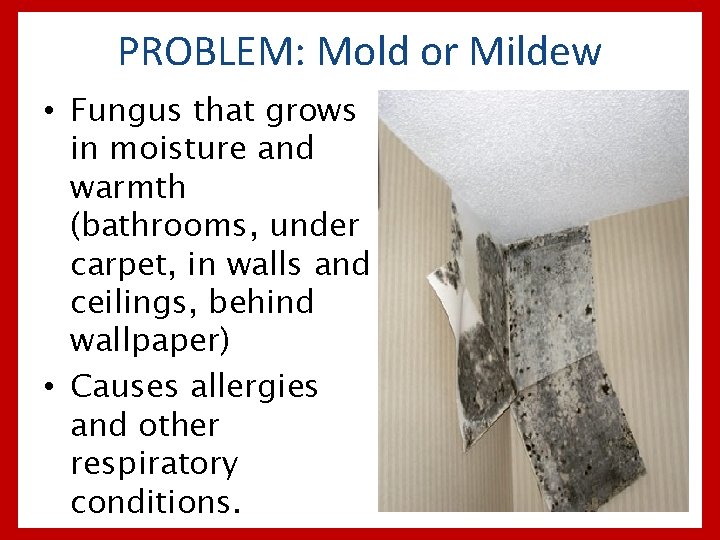
PROBLEM: Mold or Mildew • Fungus that grows in moisture and warmth (bathrooms, under carpet, in walls and ceilings, behind wallpaper) • Causes allergies and other respiratory conditions.
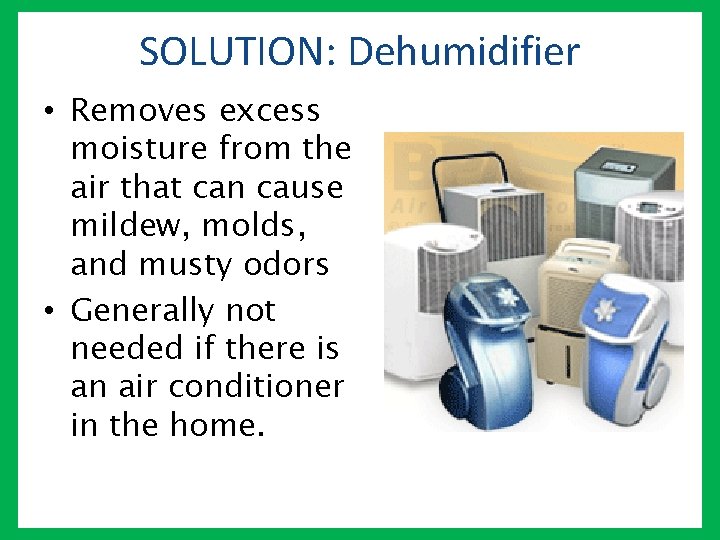
SOLUTION: Dehumidifier • Removes excess moisture from the air that can cause mildew, molds, and musty odors • Generally not needed if there is an air conditioner in the home.
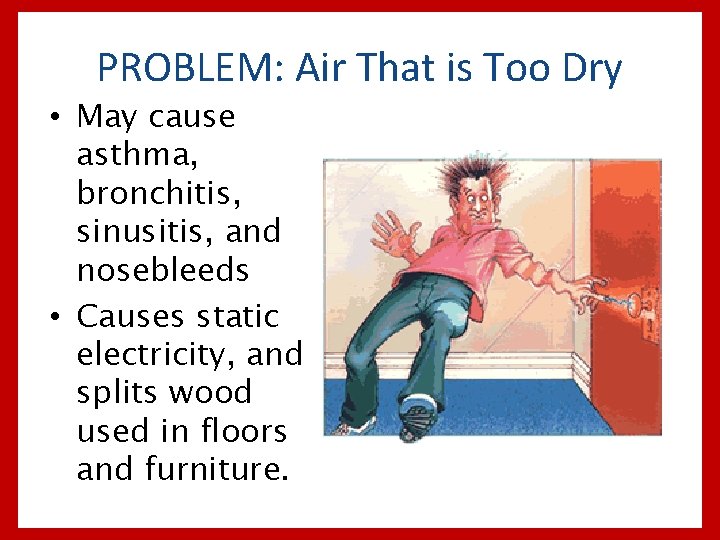
PROBLEM: Air That is Too Dry • May cause asthma, bronchitis, sinusitis, and nosebleeds • Causes static electricity, and splits wood used in floors and furniture.
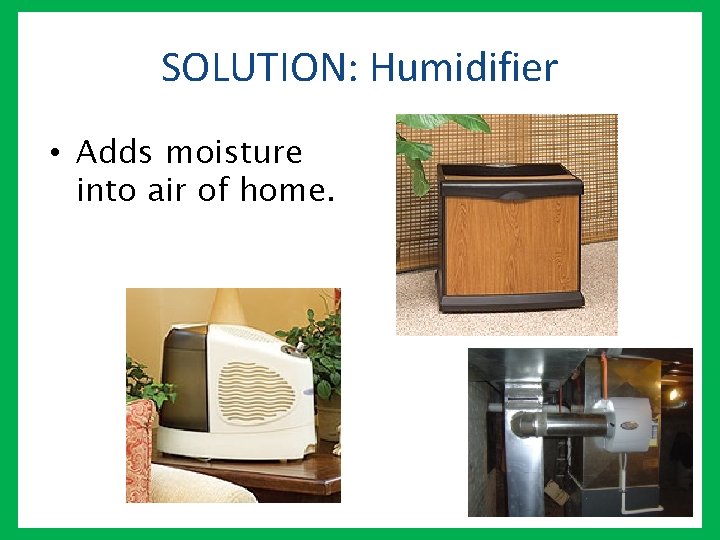
SOLUTION: Humidifier • Adds moisture into air of home.
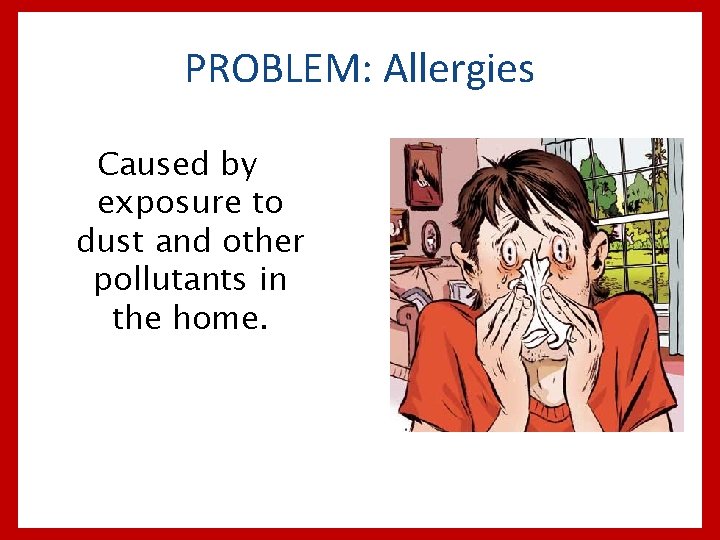
PROBLEM: Allergies Caused by exposure to dust and other pollutants in the home.
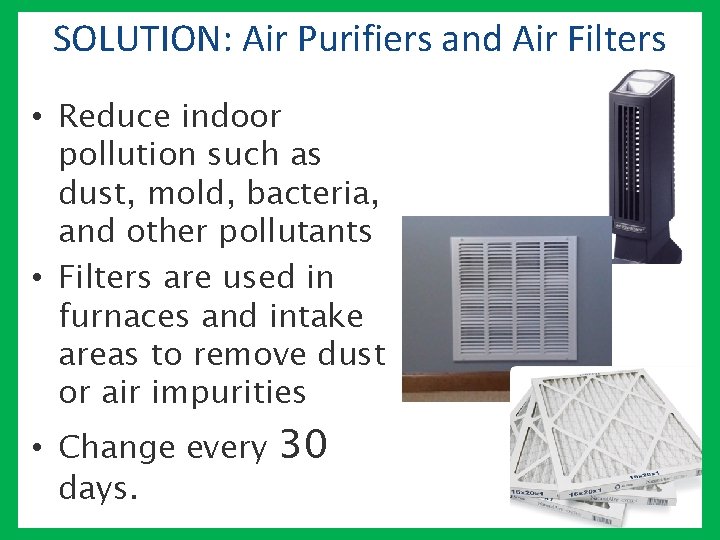
SOLUTION: Air Purifiers and Air Filters • Reduce indoor pollution such as dust, mold, bacteria, and other pollutants • Filters are used in furnaces and intake areas to remove dust or air impurities • Change every days. 30
OBJECTIVE 8. 02: Classify home safety and security features
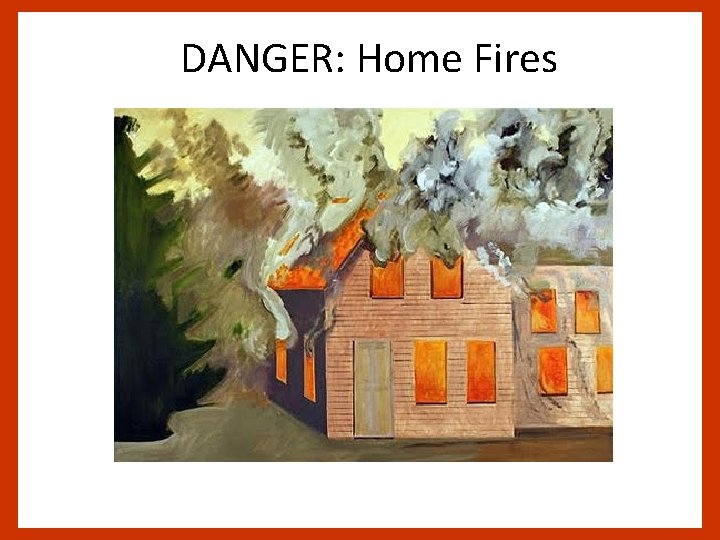
DANGER: Home Fires
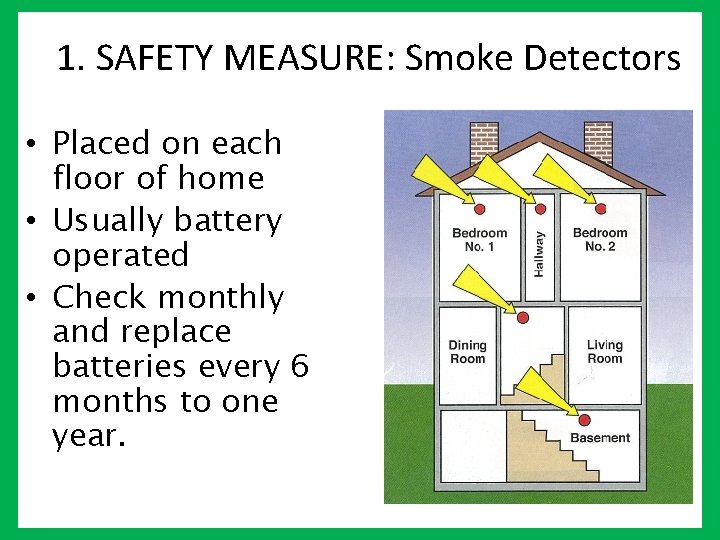
1. SAFETY MEASURE: Smoke Detectors • Placed on each floor of home • Usually battery operated • Check monthly and replace batteries every 6 months to one year.
Check Your Smoke Detectors
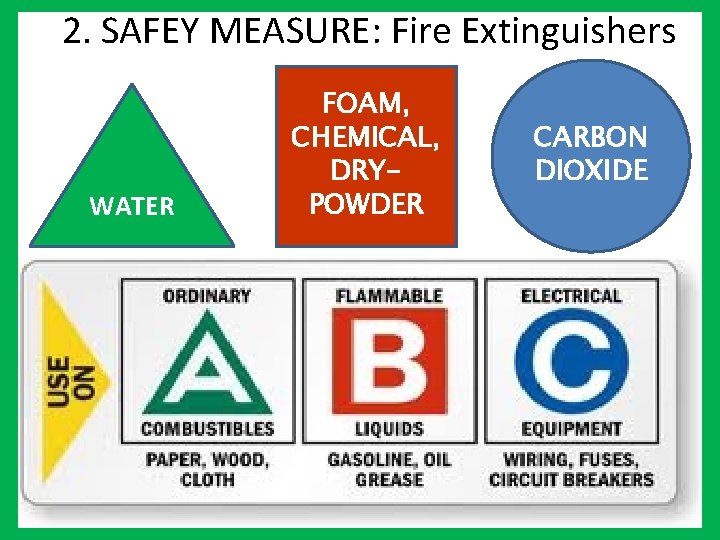
2. SAFEY MEASURE: Fire Extinguishers WATER FOAM, CHEMICAL, DRYPOWDER CARBON DIOXIDE

How to Use a Fire Extinguisher
3. SAFETY MEASURE: Look for Underwriters Laboratories Seals Independent company that tests and certifies electrical products • UL Seal found on an item shows the item meets safety standards when used properly. •
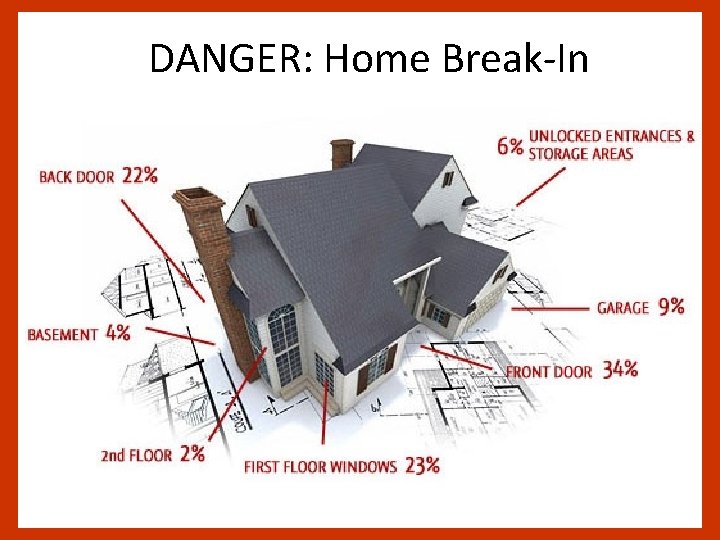
DANGER: Home Break-In
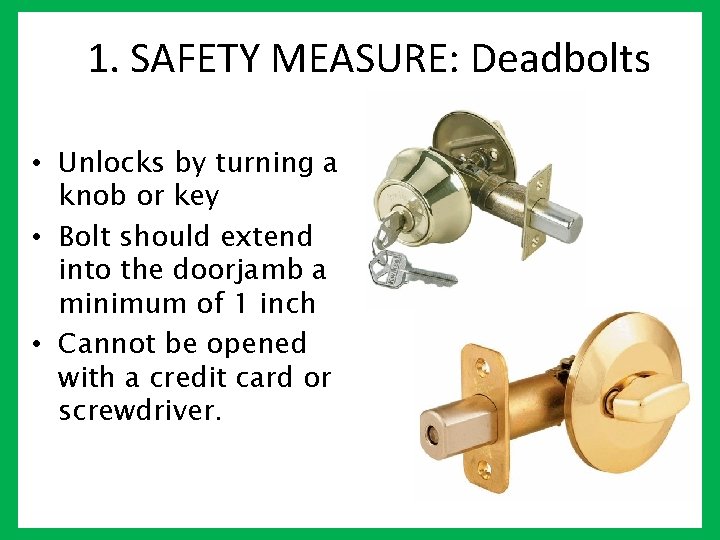
1. SAFETY MEASURE: Deadbolts • Unlocks by turning a knob or key • Bolt should extend into the doorjamb a minimum of 1 inch • Cannot be opened with a credit card or screwdriver.
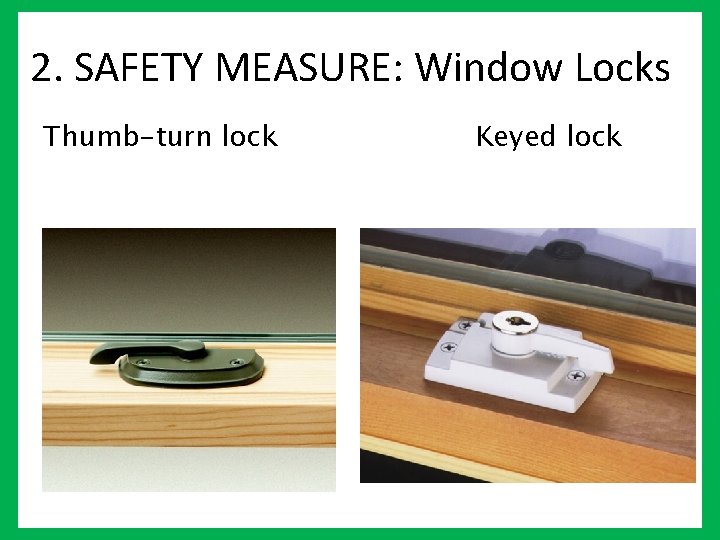
2. SAFETY MEASURE: Window Locks Thumb-turn lock Keyed lock
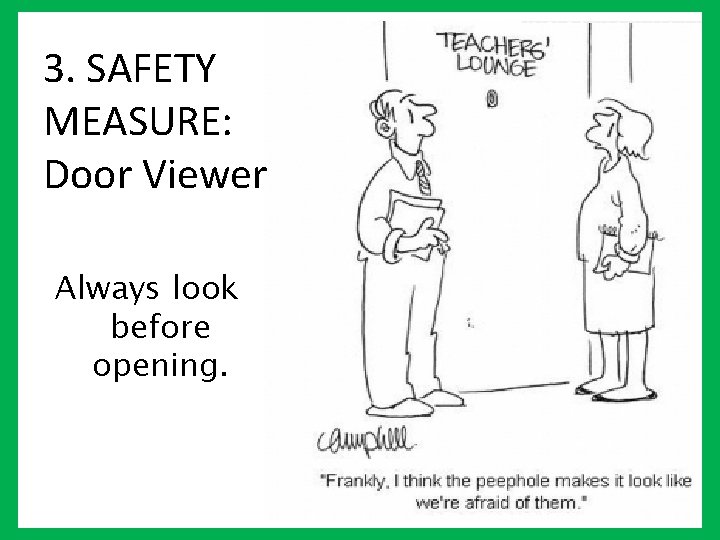
3. SAFETY MEASURE: Door Viewer Always look before opening.
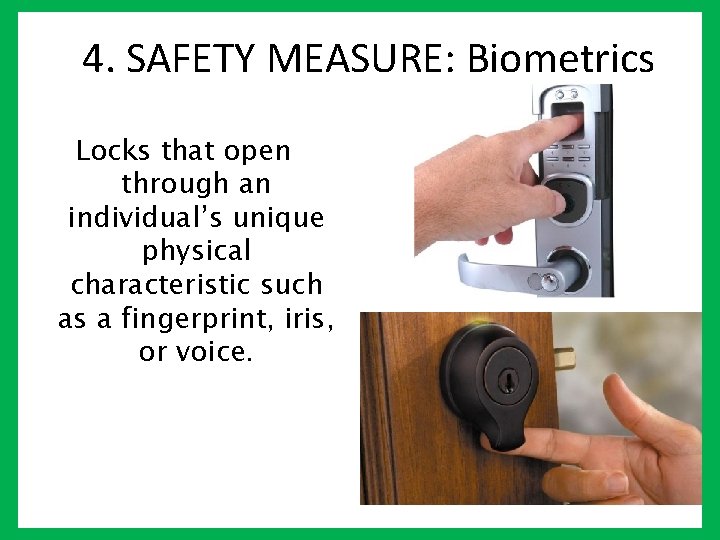
4. SAFETY MEASURE: Biometrics Locks that open through an individual’s unique physical characteristic such as a fingerprint, iris, or voice.

How Biometrics Works
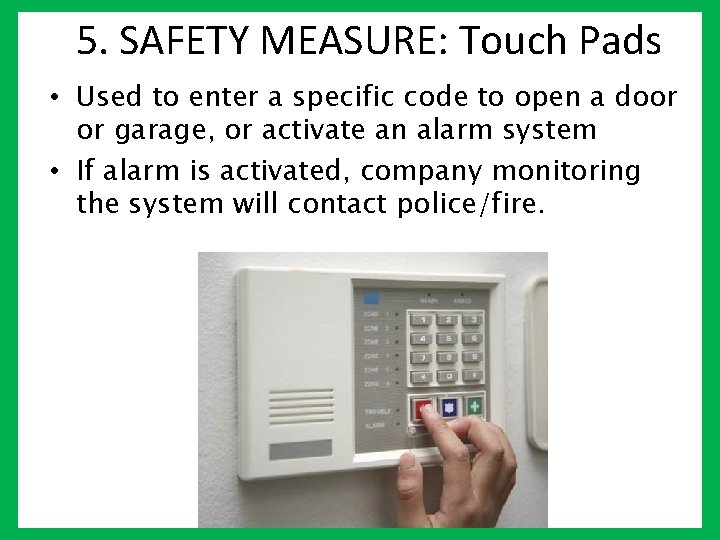
5. SAFETY MEASURE: Touch Pads • Used to enter a specific code to open a door or garage, or activate an alarm system • If alarm is activated, company monitoring the system will contact police/fire.
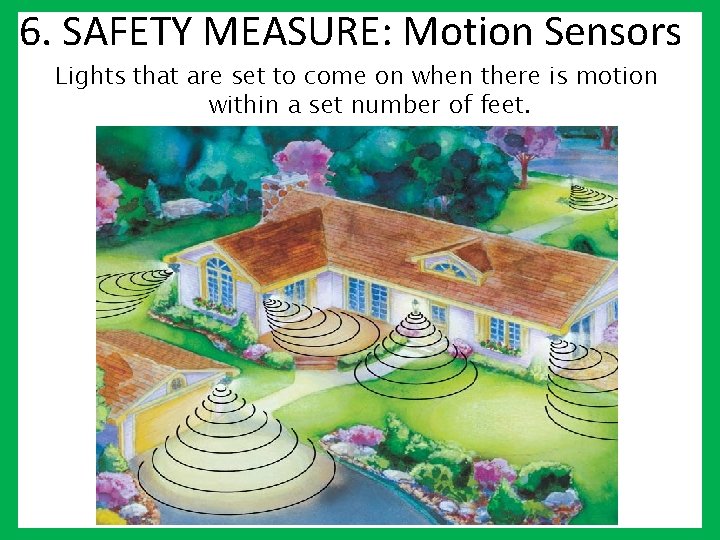
6. SAFETY MEASURE: Motion Sensors Lights that are set to come on when there is motion within a set number of feet.
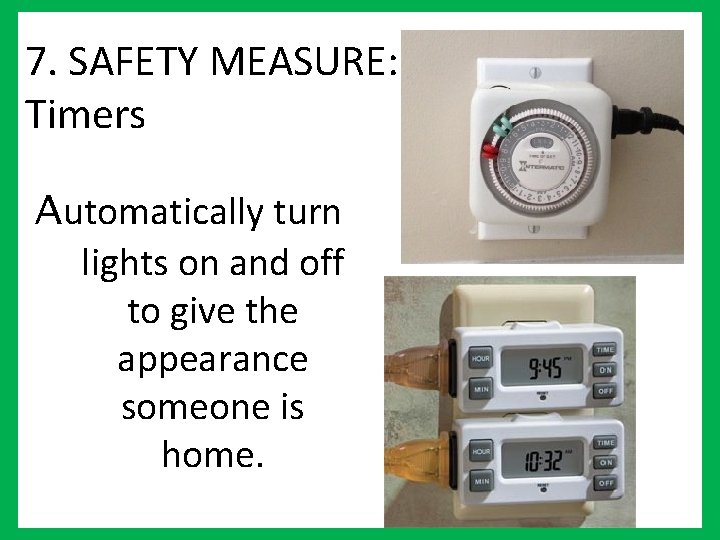
7. SAFETY MEASURE: Timers Automatically turn lights on and off to give the appearance someone is home.
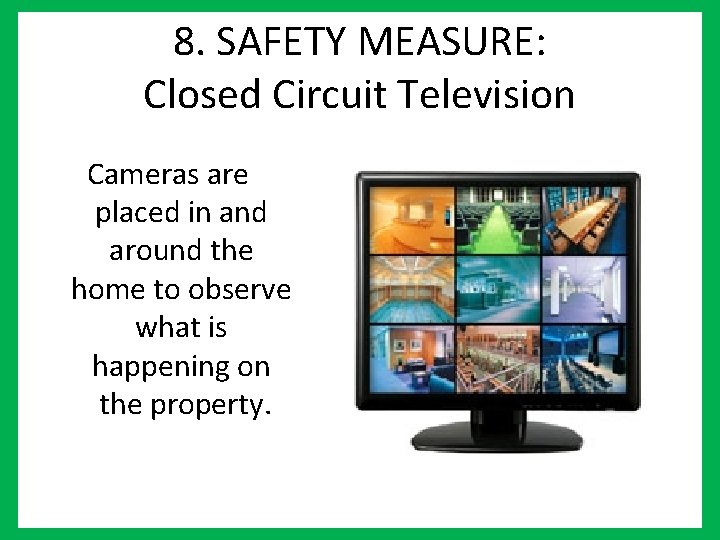
8. SAFETY MEASURE: Closed Circuit Television Cameras are placed in and around the home to observe what is happening on the property.

9. SAFETY MEASURE: Automated Management System A central control that manages a home’s daily functions.
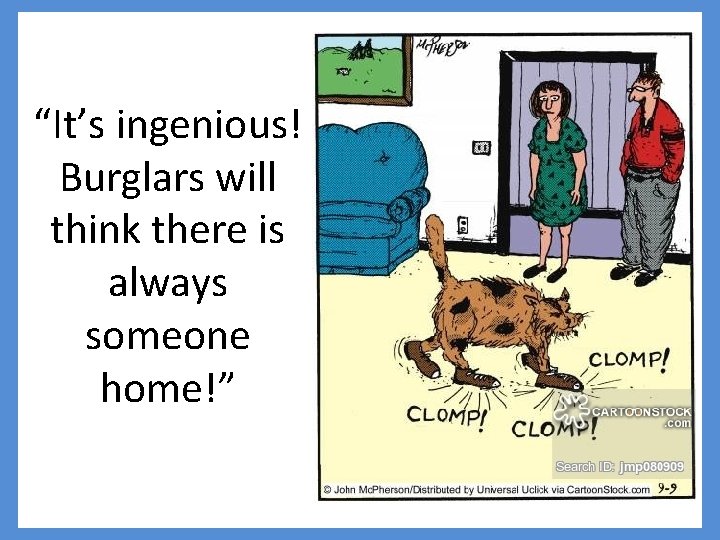
“It’s ingenious! Burglars will think there is always someone home!”
- Slides: 33