
Objective 6 01 Apply Rations for Livestock Animals
Objective 6. 01 Apply Rations for Livestock Animals
Livestock Rations

6 Functions of a Good Ration • 1. Maintenance Basic nutrient requirements to keep vital body processes functioning All animals need maintenance requirements met, before other functions will work • 2. Growth Increasing the size of bones, muscles, organs, & connective tissue • 3. Fattening Storing nutrients not used for maintenance, growth or other functions
6 Functions of a Good Ration • 4. Production Milk, eggs, wool, etc. • 5. Reproduction Gestation, parturition, and lactation • 6. Work Other needs are met before nutrients are available for work Most beef cattle, swine, and poultry produced in the U. S. do not work
Rations • 1/3 to ½ of the ration fed to livestock is used for body maintenance • Maintenance must be met before nutrients are available for other functions
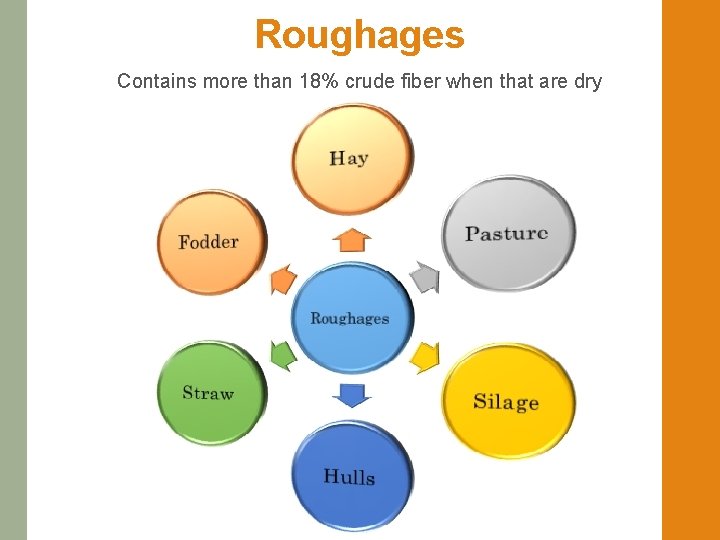
Roughages Contains more than 18% crude fiber when that are dry

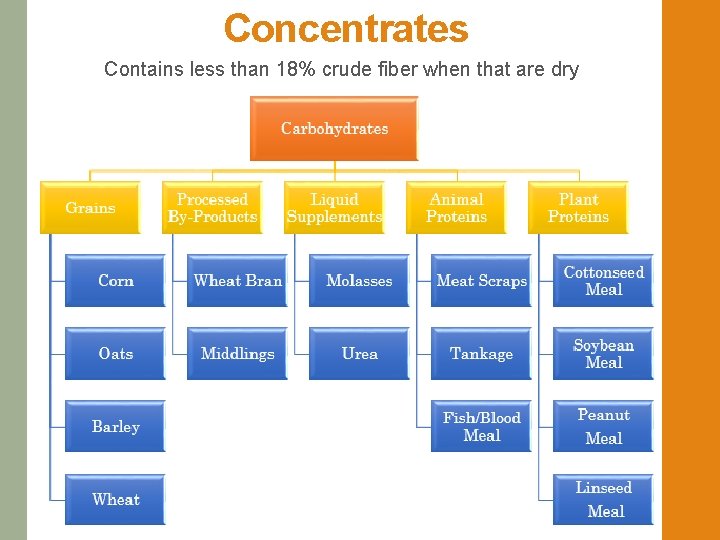
Concentrates Contains less than 18% crude fiber when that are dry
General Principles of a Good Ration

Good Rations are: • Balanced Has all the nutrients in the right amounts • Palatable Taste good • Low Cost Feed is about 75% of the cost of raising livestock

Good Rations are: • Not harmful to the health of animals Too much cotton seed can cause reproductive problems Bulky satisfy hunger Laxative improves feed efficiency and prevent constipation • Uniformly mixed Micronutrients- vitamins and minerals Feed additives
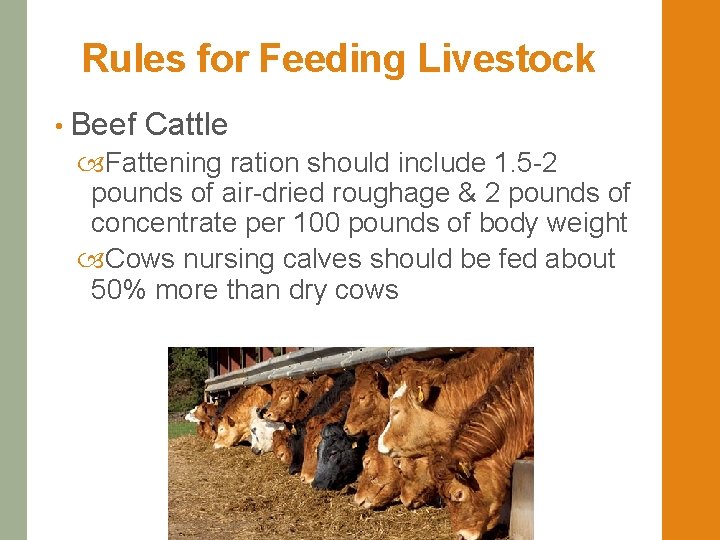
Rules for Feeding Livestock • Beef Cattle Fattening ration should include 1. 5 -2 pounds of air-dried roughage & 2 pounds of concentrate per 100 pounds of body weight Cows nursing calves should be fed about 50% more than dry cows

Rules for Feeding Livestock Example: An 850 pound steer will need approx: 12. 75 to 17 lbs. of roughage & 17 lbs. concentrates Total= 30 to 34 pounds of feed
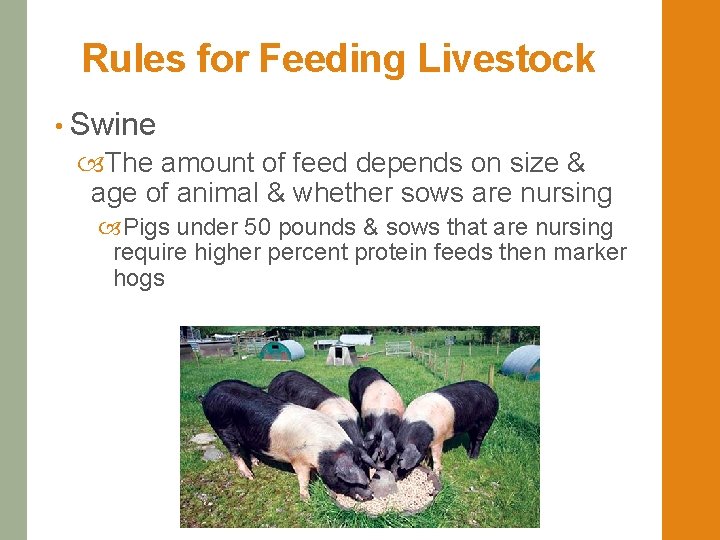
Rules for Feeding Livestock • Swine The amount of feed depends on size & age of animal & whether sows are nursing Pigs under 50 pounds & sows that are nursing require higher percent protein feeds then marker hogs

Rules for Feeding Livestock • Poultry The ration is about 10% of body weight
Balancing Rations

Balancing Rations • Feeds are balanced to meet the animal’s needs at the least expense • Variety of fresh feeds More palatable Easier to balance • Bulky Filling Helps in digestion

Balancing Rations • Slightly laxative Improve feed efficiency Prevent constipation • Economical price per pound of energy and digestible protein • Suitable Roughage for cattle Concentrates for swine and poultry High protein for younger animals
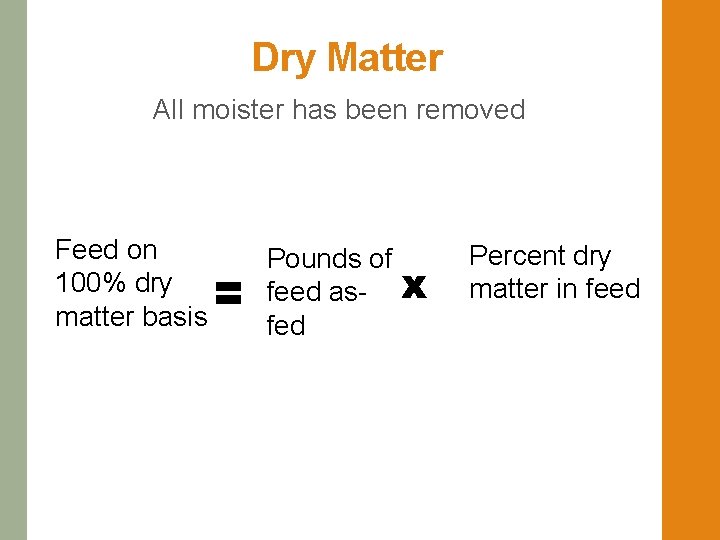
Dry Matter All moister has been removed Feed on 100% dry matter basis Pounds of feed asfed Percent dry matter in feed
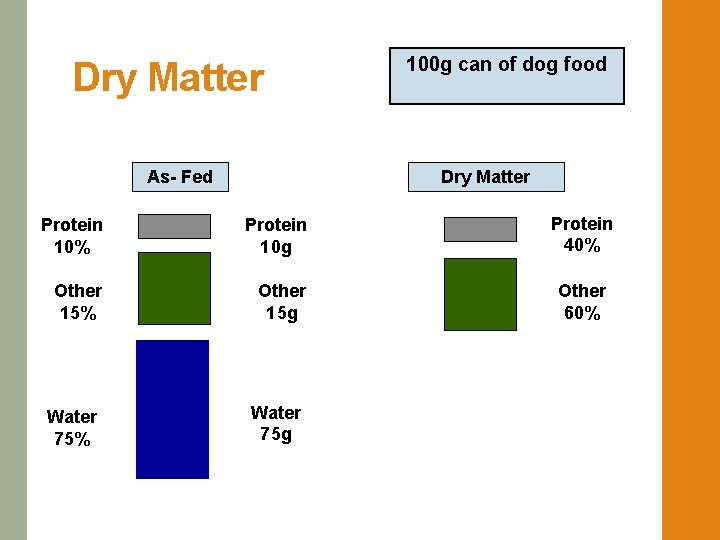
Dry Matter As- Fed 100 g can of dog food Dry Matter Protein 10% Protein 10 g Other 15% Other 15 g Water 75% Water 75 g Protein 40% Other 60%
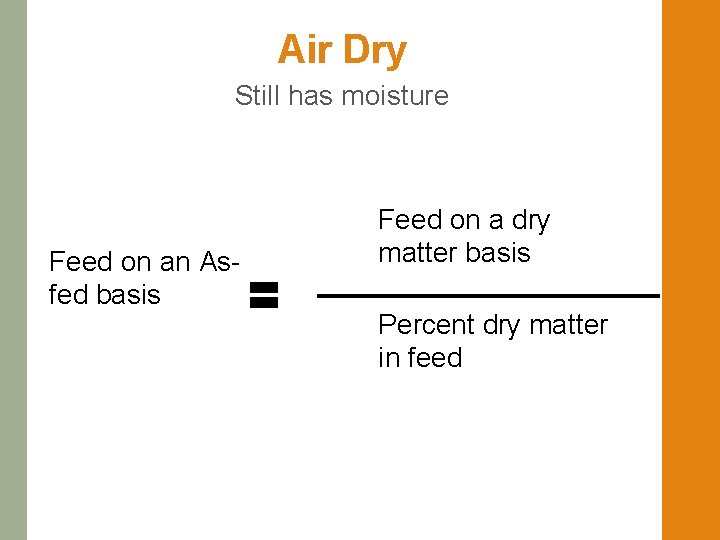
Air Dry Still has moisture Feed on an Asfed basis Feed on a dry matter basis Percent dry matter in feed
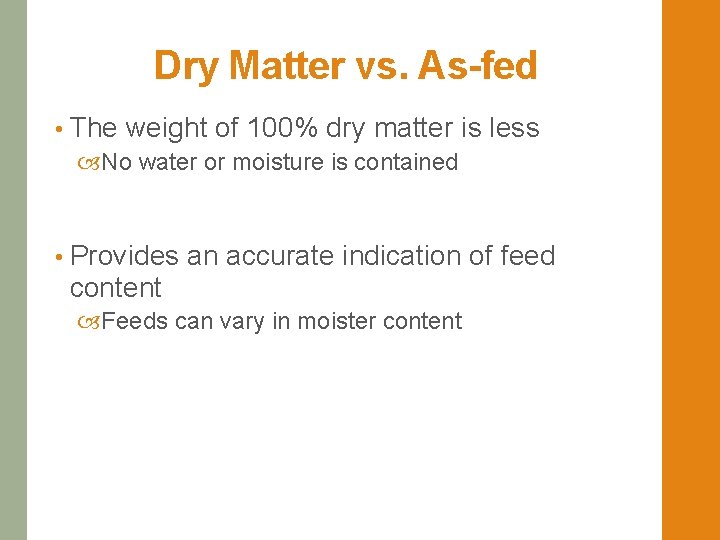
Dry Matter vs. As-fed • The weight of 100% dry matter is No water or moisture is contained • Provides less an accurate indication of feed content Feeds can vary in moister content
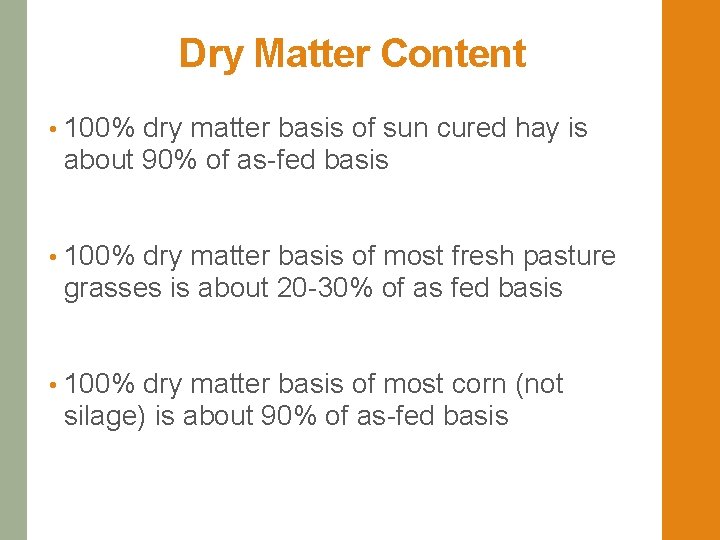
Dry Matter Content • 100% dry matter basis of sun cured hay is about 90% of as-fed basis • 100% dry matter basis of most fresh pasture grasses is about 20 -30% of as fed basis • 100% dry matter basis of most corn (not silage) is about 90% of as-fed basis
Dry Matter Content • Most feed will stabilize to about 90% dry matter in air drying • Storing high moisture feed materials will cause them to mold or build up heat
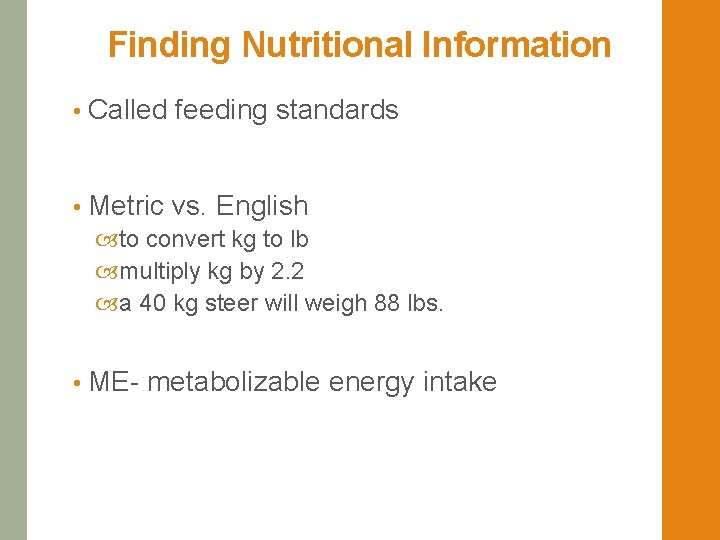
Finding Nutritional Information • Called feeding standards • Metric vs. English to convert kg to lb multiply kg by 2. 2 a 40 kg steer will weigh 88 lbs. • ME- metabolizable energy intake

Using the Pearson Square
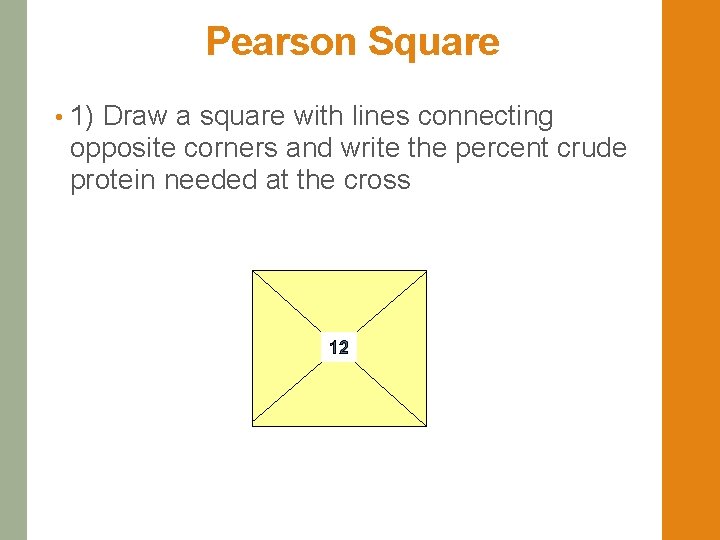
Pearson Square • 1) Draw a square with lines connecting opposite corners and write the percent crude protein needed at the cross 12
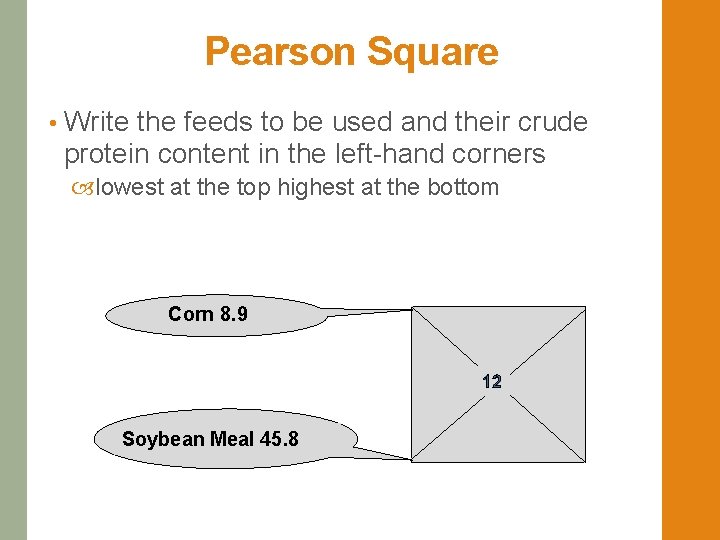
Pearson Square • Write the feeds to be used and their crude protein content in the left-hand corners lowest at the top highest at the bottom Corn 8. 9 12 Soybean Meal 45. 8
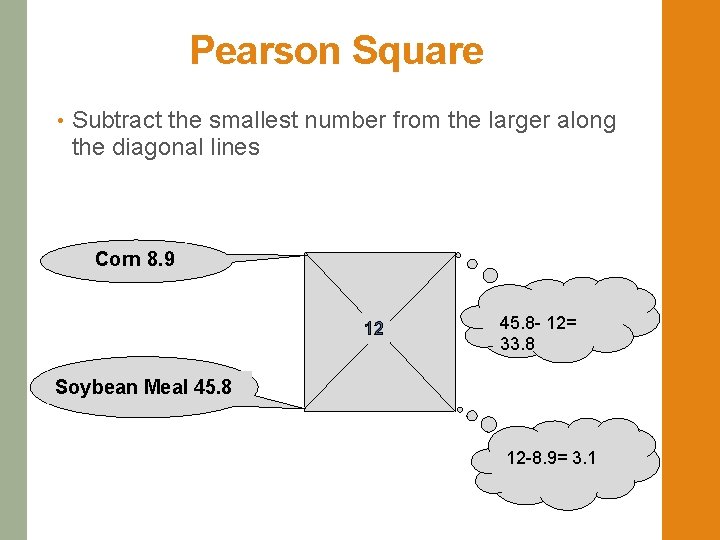
Pearson Square • Subtract the smallest number from the larger along the diagonal lines Corn 8. 9 12 45. 8 - 12= 33. 8 Soybean Meal 45. 8 12 -8. 9= 3. 1
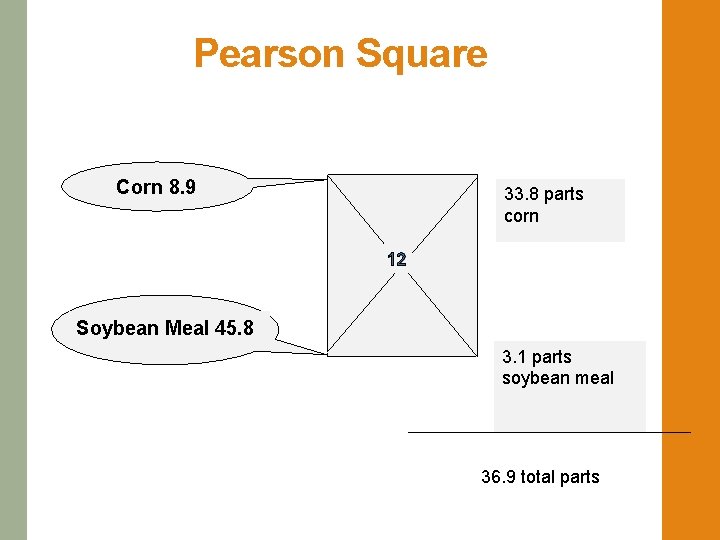
Pearson Square Corn 8. 9 33. 8 parts corn 12 Soybean Meal 45. 8 3. 1 parts soybean meal 36. 9 total parts
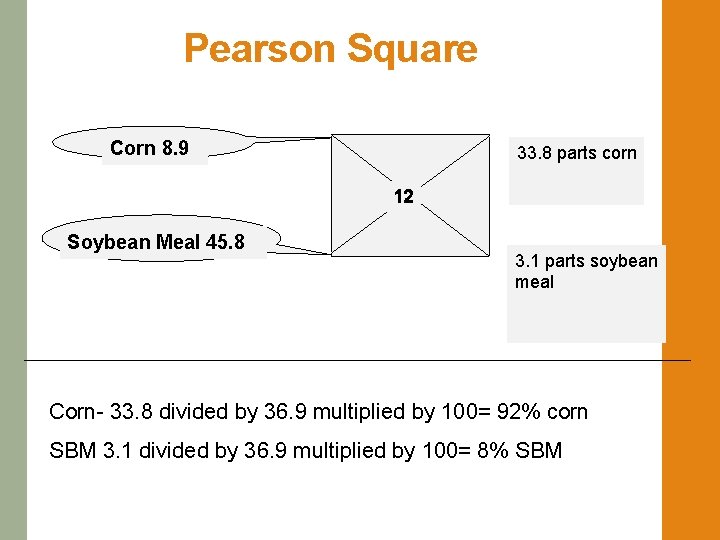
Pearson Square Corn 8. 9 33. 8 parts corn 12 Soybean Meal 45. 8 3. 1 parts soybean meal Corn- 33. 8 divided by 36. 9 multiplied by 100= 92% corn SBM 3. 1 divided by 36. 9 multiplied by 100= 8% SBM
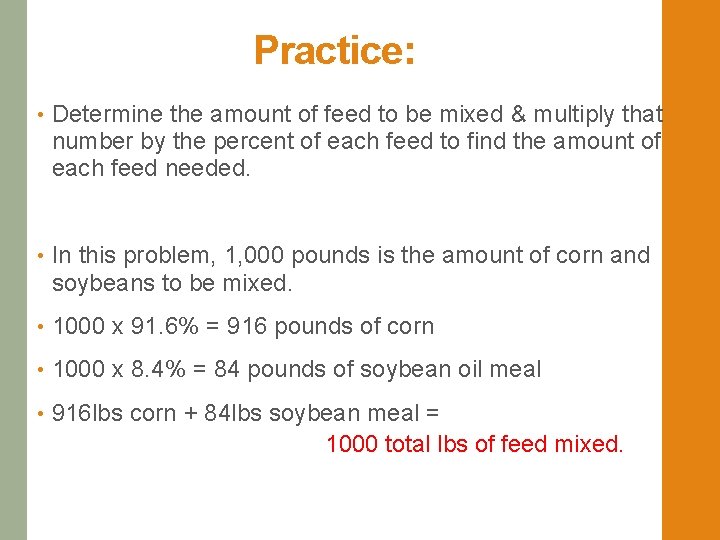
Practice: • Determine the amount of feed to be mixed & multiply that number by the percent of each feed to find the amount of each feed needed. • In this problem, 1, 000 pounds is the amount of corn and soybeans to be mixed. • 1000 x 91. 6% = 916 pounds of corn • 1000 x 8. 4% = 84 pounds of soybean oil meal • 916 lbs corn + 84 lbs soybean meal = 1000 total lbs of feed mixed.
- Slides: 34