
OBJECTIVE 2 02 Execute effective communication through written
OBJECTIVE 2. 02 Execute effective communication through written, verbal, and technological formats.
ESSENTIAL QUESTIONS What are the essential components of communication? What is the difference between verbal, non-verbal, and written communication? What is the different communication skills needed in a veterinary facility? How do veterinary assistants interact with people? How can you handle grief while effectively communicating with clients?
THE COMMUNICATION PROCESS Five essential components 1. Sender- person trying to relay an idea 2. Message- the idea 3. Receiver- person intended to understand the message 4. Channel- route of communication (verbal, non-verbal, and written) 5. Feedback- receiver returns message
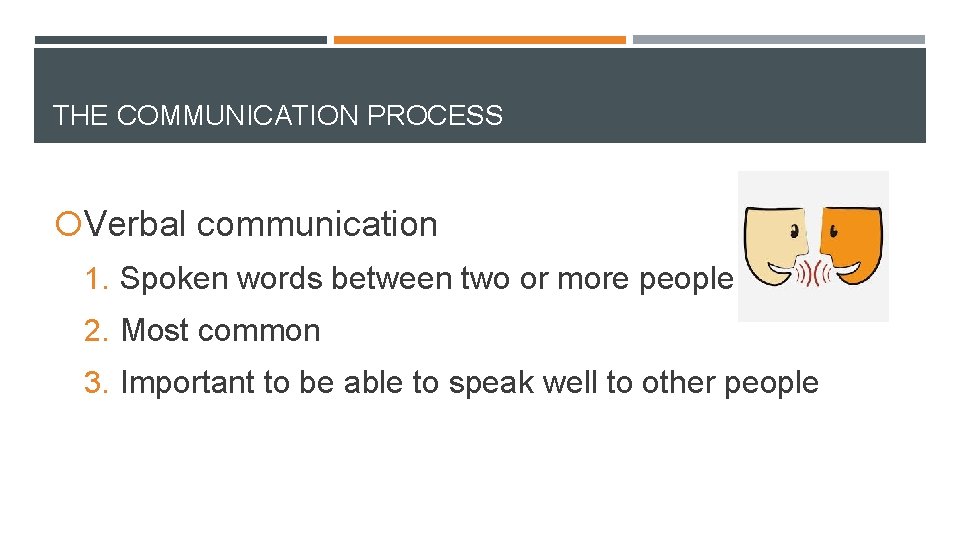
THE COMMUNICATION PROCESS Verbal communication 1. Spoken words between two or more people 2. Most common 3. Important to be able to speak well to other people
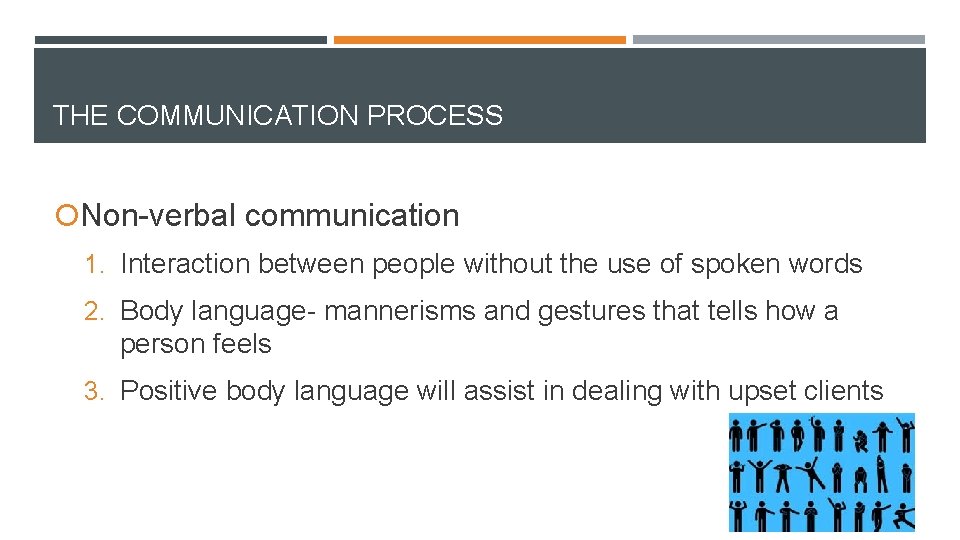
THE COMMUNICATION PROCESS Non-verbal communication 1. Interaction between people without the use of spoken words 2. Body language- mannerisms and gestures that tells how a person feels 3. Positive body language will assist in dealing with upset clients
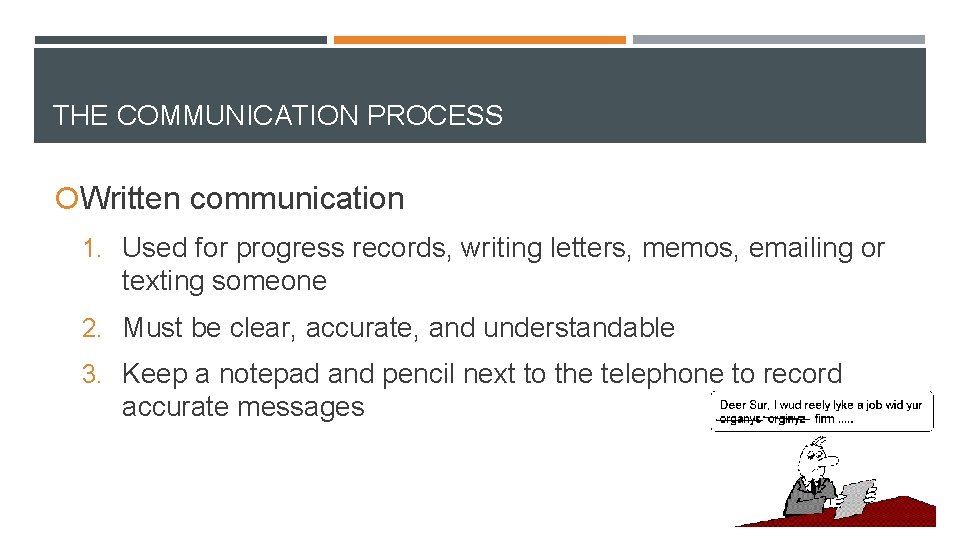
THE COMMUNICATION PROCESS Written communication 1. Used for progress records, writing letters, memos, emailing or texting someone 2. Must be clear, accurate, and understandable 3. Keep a notepad and pencil next to the telephone to record accurate messages
THE COMMUNICATION PROCESS Technological communication Many animal hospitals today use alert systems to send out reminders via email, text messages, or utilize social media written communication through non-traditional means treat this form of communication as written and each message should be cognizant of limitations to avoid complications
APPROPRIATE COMMUNICATION SKILLS Courtesy putting someone else’s needs and concerns before your own all people should be treated with respect and professionalism Kindness exemplifies being helpful, understanding, and working in a friendly manner treat others as you would like to be treated
APPROPRIATE COMMUNICATION SKILLS Patience trait that demonstrates calm demeanor in all situations without any negative complaints Tactfulness doing and saying the appropriate things at the correct time
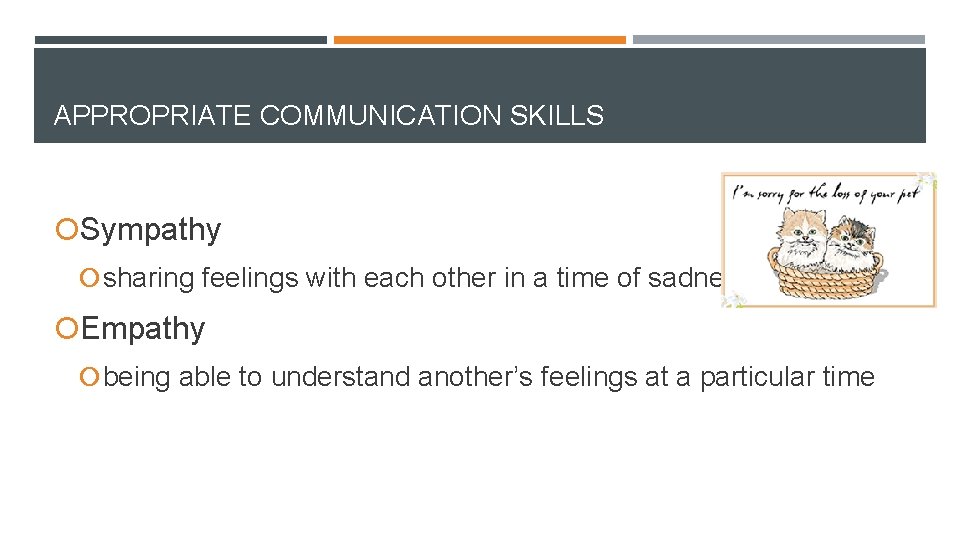
APPROPRIATE COMMUNICATION SKILLS Sympathy sharing feelings with each other in a time of sadness Empathy being able to understand another’s feelings at a particular time
INTERACTING WITH PEOPLE Speaking Speech communication requires practice and experience Conversations from people may have no focus on the task at hand will have to be clarified Remember that each person is different so treat each person as an individual Listening Essential in veterinary field Train to focus on what is being said Hear what is being said and think about the words to clearly understand the main point Observation Used to pay attention to a person’s body language and speech
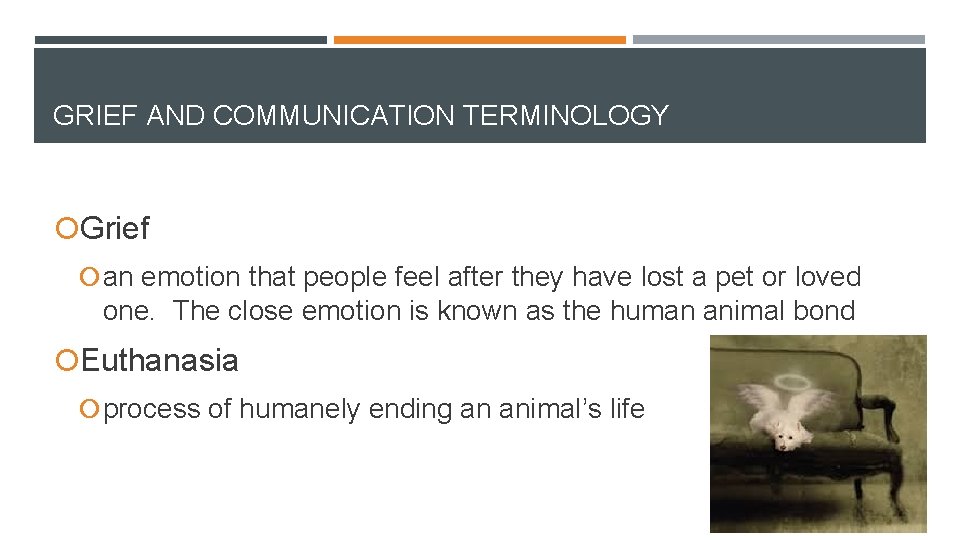
GRIEF AND COMMUNICATION TERMINOLOGY Grief an emotion that people feel after they have lost a pet or loved one. The close emotion is known as the human animal bond Euthanasia process of humanely ending an animal’s life
GRIEF AND COMMUNICATION TERMINOLOGY Humane used to describe what is considered acceptable by people in regards to an animal’s mental, physical, and emotional well-being Shock emotion of sudden death of a pet Denial person may not accept the pet’s death
GRIEF AND COMMUNICATION TERMINOLOGY Bargaining allows the person an attempt to resolve the pet’s problem by any means possible Acceptance owner understands and accepts that the pet has passed away Anger natural emotion in the event of the trauma
GRIEF AND COMMUNICATION TERMINOLOGY Sorrow emotion that leads to sadness over the loss of the pet Depression state of sadness where a person becomes so sad they can’t handle the normal functions of daily life Guilt stage when a person feels he or she should be able to do something to save the pet
- Slides: 15