
Objective 1 01 Understand causes of foodborne illness
Objective 1. 01 Understand causes of foodborne illness 9 -6 -2016 Bell Ringer: Food Safety Video Complete Apply your knowledge p. 1. 7, 1. 13 Case Study 1. 11 Complete Study questions 1. 12 Quiz on Chapter: 1 Review Teacher Input: Forms of Contamination. Power. Point Student Input: Notes on Forms of Contamination https: //www. youtube. com/watch? v=URg. F 2 Er 026 c:

Objective 1. 0 Understand causes of foodborne illness 1 -27 -2016 Bell Ringer: Review test/Restaurant Reviews Teacher Input: Forms of Contamination. Power. Point Student Input: Notes on Forms of Contamination Student Input: “Bad Bug Booklet”
How Contamination Happens Contaminants come from a variety of places: 2 -2 l Animals we use for food l Air, contaminated water, and dirt l People o Deliberately o Accidentally
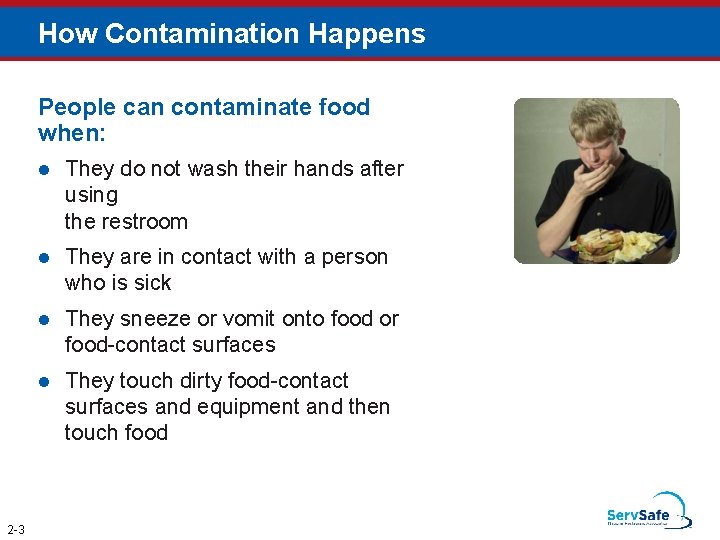
How Contamination Happens People can contaminate food when: 2 -3 l They do not wash their hands after using the restroom l They are in contact with a person who is sick l They sneeze or vomit onto food or food-contact surfaces l They touch dirty food-contact surfaces and equipment and then touch food
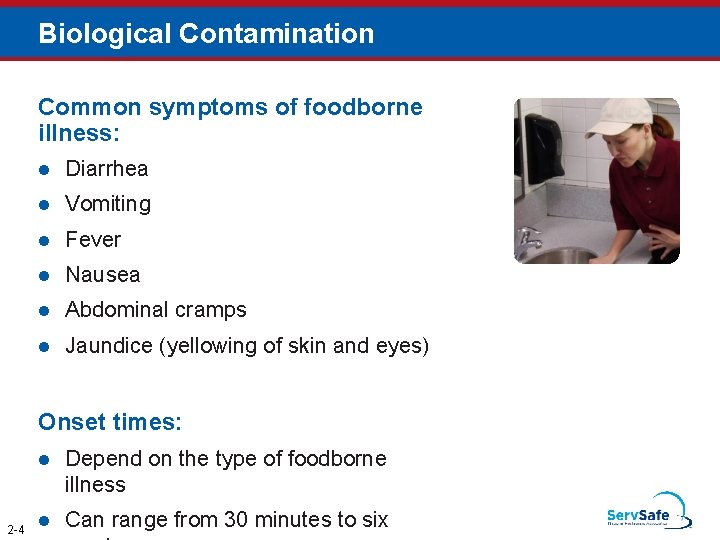
Biological Contamination Common symptoms of foodborne illness: l Diarrhea l Vomiting l Fever l Nausea l Abdominal cramps l Jaundice (yellowing of skin and eyes) Onset times: 2 -4 l Depend on the type of foodborne illness l Can range from 30 minutes to six
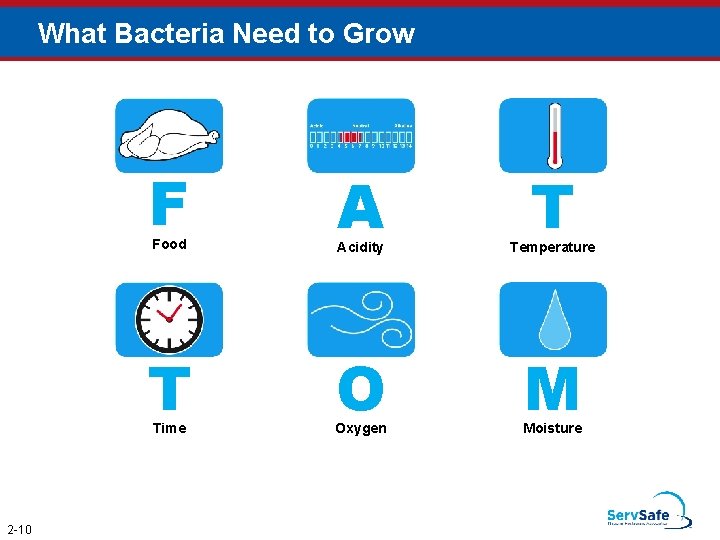
What Bacteria Need to Grow F T Food Acidity Temperature T O M Time 2 -10 A Oxygen Moisture
The “Big Six” Pathogens Food handlers diagnosed with illnesses from the “Big Six” pathogens cannot work in a foodservice operation while they are sick. 2 -5 l Shigella spp. l Salmonella Typhi l Nontyphoidal Salmonella (NTS) l Shiga toxin-producing Escherichia coli (STEC), also known as E. coli l Hepatitis A l Norovirus
Major Bacteria That Cause Foodborne Illness The FDA has identified four types of bacteria that cause severe illness and are highly contagious: 2 -6 l Salmonella Typhi l Nontyphoidal Salmonella l Shigella spp. l Shiga toxin-producing Escherichia coli
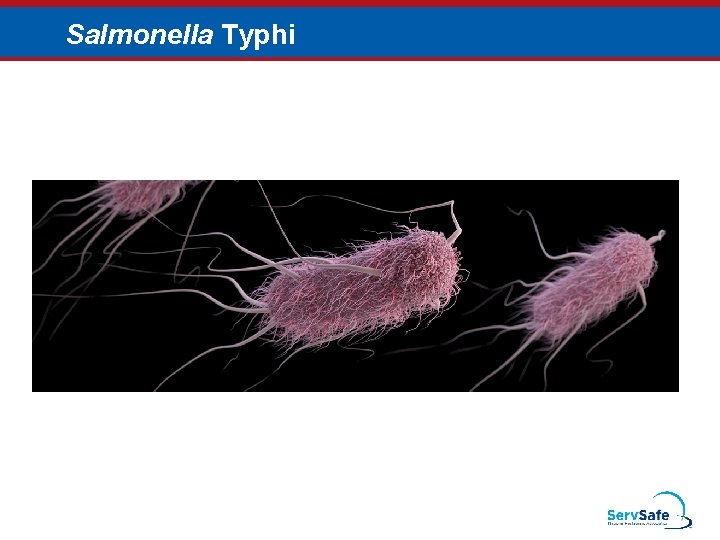
Salmonella Typhi

Nontyphoidal Salmonella

Shigella
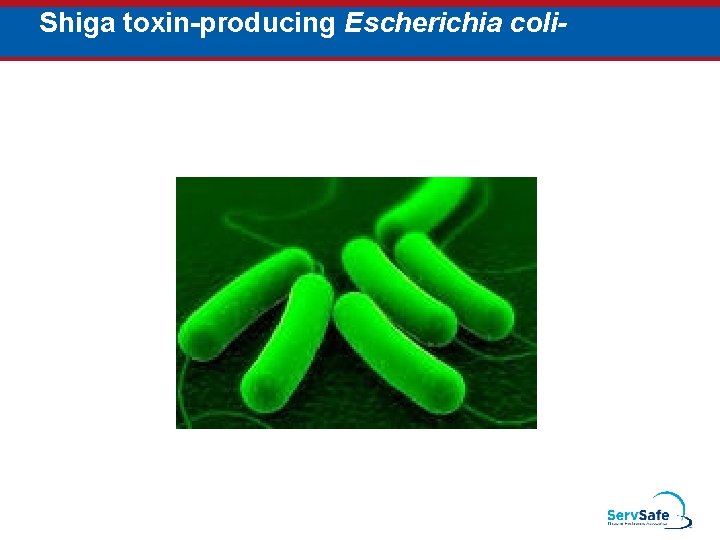
Shiga toxin-producing Escherichia coli-
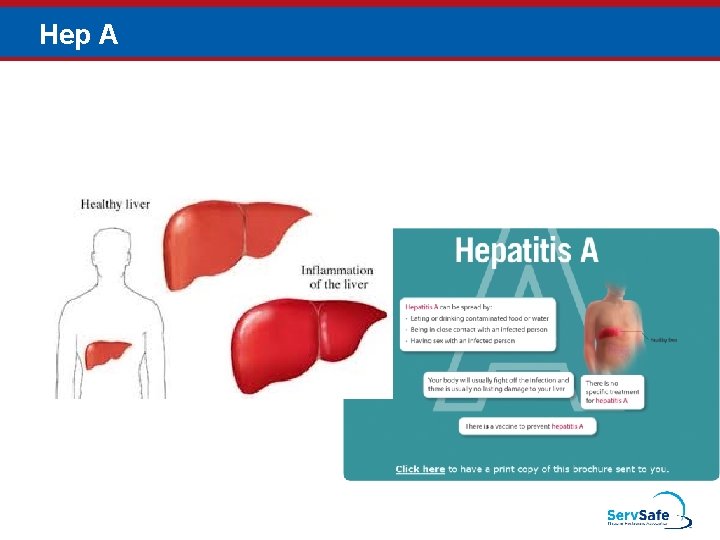
Hep A
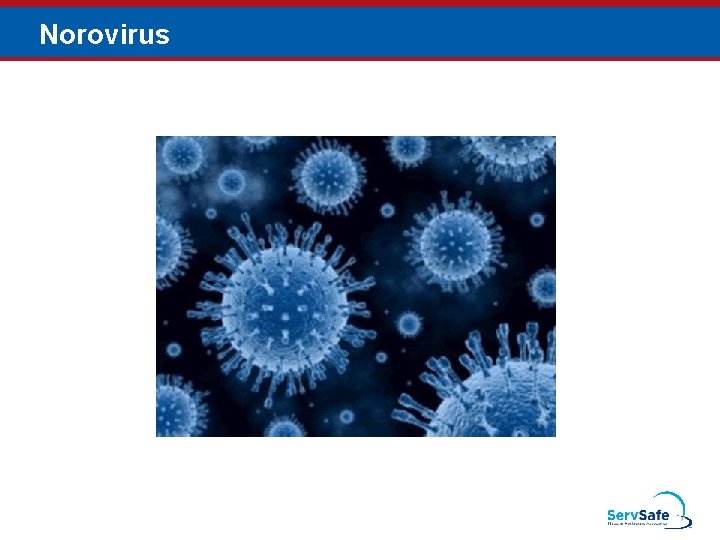
Norovirus
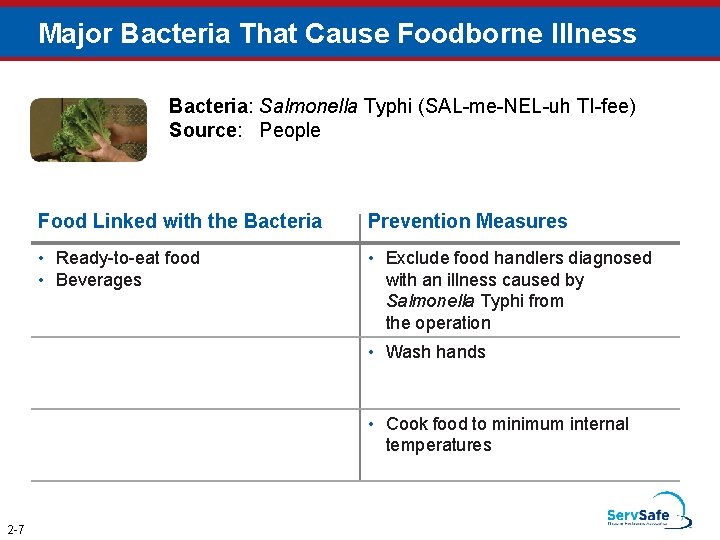
Major Bacteria That Cause Foodborne Illness Bacteria: Salmonella Typhi (SAL-me-NEL-uh TI-fee) Source: People Food Linked with the Bacteria Prevention Measures • Ready-to-eat food • Beverages • Exclude food handlers diagnosed with an illness caused by Salmonella Typhi from the operation • Wash hands • Cook food to minimum internal temperatures 2 -7
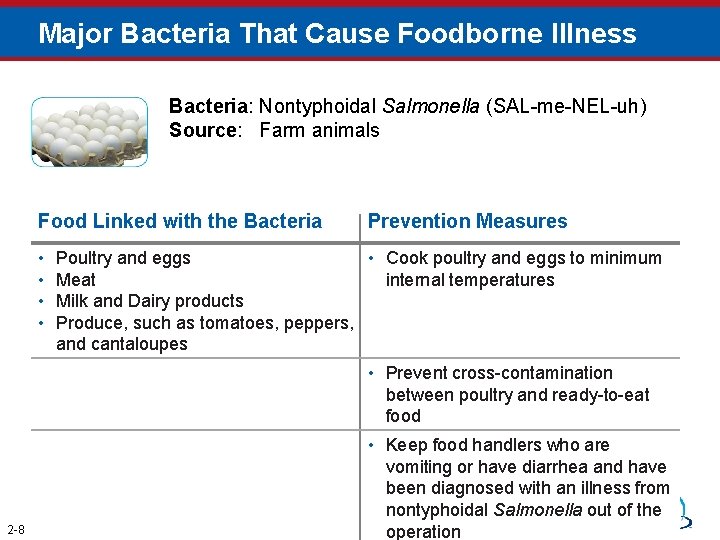
Major Bacteria That Cause Foodborne Illness Bacteria: Nontyphoidal Salmonella (SAL-me-NEL-uh) Source: Farm animals Food Linked with the Bacteria • • Prevention Measures Poultry and eggs • Cook poultry and eggs to minimum Meat internal temperatures Milk and Dairy products Produce, such as tomatoes, peppers, and cantaloupes • Prevent cross-contamination between poultry and ready-to-eat food 2 -8 • Keep food handlers who are vomiting or have diarrhea and have been diagnosed with an illness from nontyphoidal Salmonella out of the operation
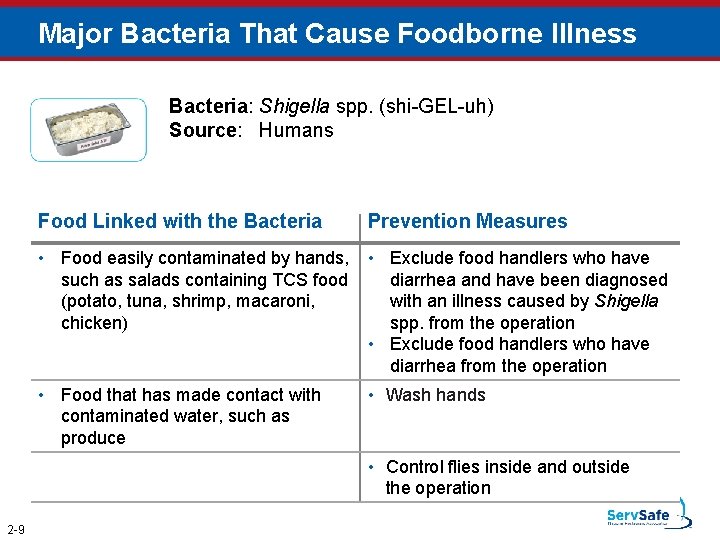
Major Bacteria That Cause Foodborne Illness Bacteria: Shigella spp. (shi-GEL-uh) Source: Humans Food Linked with the Bacteria Prevention Measures • Food easily contaminated by hands, such as salads containing TCS food (potato, tuna, shrimp, macaroni, chicken) • Exclude food handlers who have diarrhea and have been diagnosed with an illness caused by Shigella spp. from the operation • Exclude food handlers who have diarrhea from the operation • Food that has made contact with contaminated water, such as produce • Wash hands • Control flies inside and outside the operation 2 -9
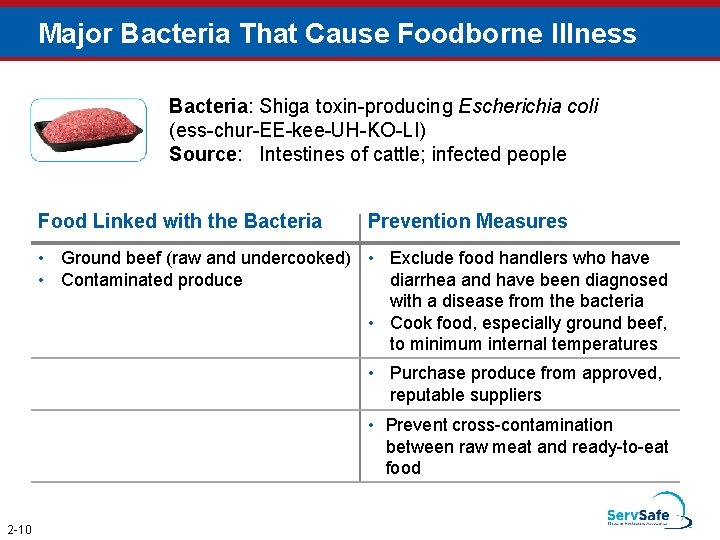
Major Bacteria That Cause Foodborne Illness Bacteria: Shiga toxin-producing Escherichia coli (ess-chur-EE-kee-UH-KO-LI) Source: Intestines of cattle; infected people Food Linked with the Bacteria Prevention Measures • Ground beef (raw and undercooked) • Exclude food handlers who have • Contaminated produce diarrhea and have been diagnosed with a disease from the bacteria • Cook food, especially ground beef, to minimum internal temperatures • Purchase produce from approved, reputable suppliers • Prevent cross-contamination between raw meat and ready-to-eat food 2 -10
Major Viruses that Cause Foodborne Illnesses The FDA has identified two viruses that are highly contagious and can cause severe illness: l Hepatitis A l Norovirus Food handlers diagnosed with an illness from hepatitis A or Norovirus must not work in an operation while they are sick. 2 -11
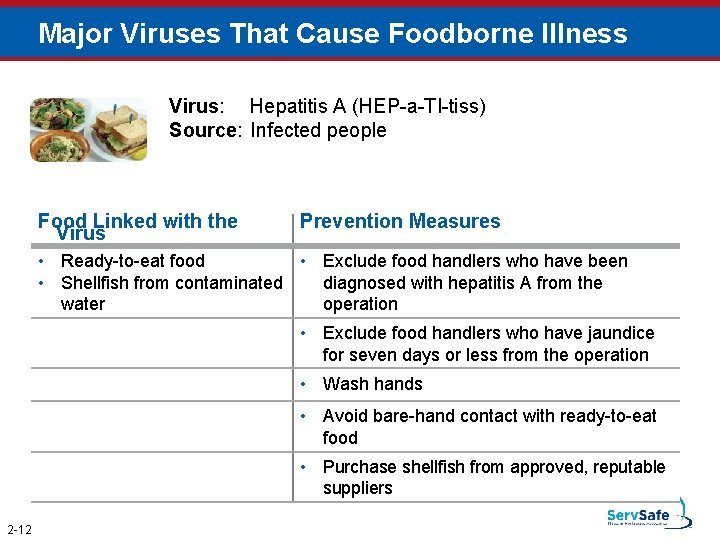
Major Viruses That Cause Foodborne Illness Virus: Hepatitis A (HEP-a-TI-tiss) Source: Infected people Food Linked with the Virus Prevention Measures • Ready-to-eat food • Exclude food handlers who have been • Shellfish from contaminated diagnosed with hepatitis A from the water operation • Exclude food handlers who have jaundice for seven days or less from the operation • Wash hands • Avoid bare-hand contact with ready-to-eat food • Purchase shellfish from approved, reputable suppliers 2 -12
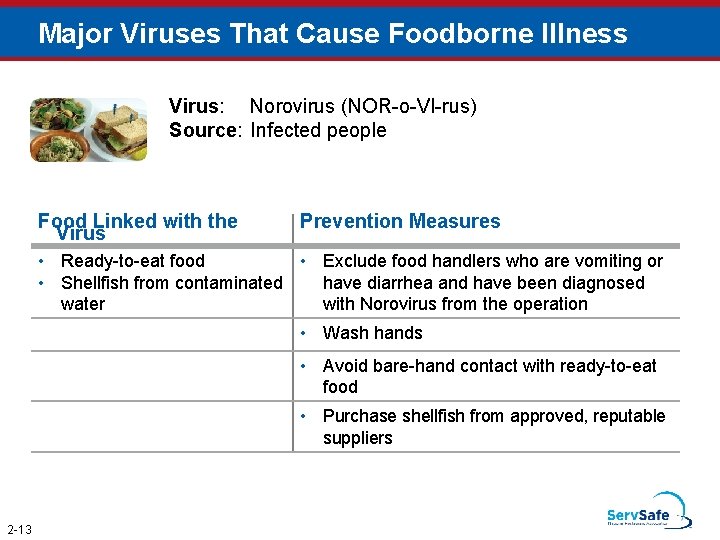
Major Viruses That Cause Foodborne Illness Virus: Norovirus (NOR-o-VI-rus) Source: Infected people Food Linked with the Virus Prevention Measures • Ready-to-eat food • Exclude food handlers who are vomiting or • Shellfish from contaminated have diarrhea and have been diagnosed water with Norovirus from the operation • Wash hands • Avoid bare-hand contact with ready-to-eat food • Purchase shellfish from approved, reputable suppliers 2 -13
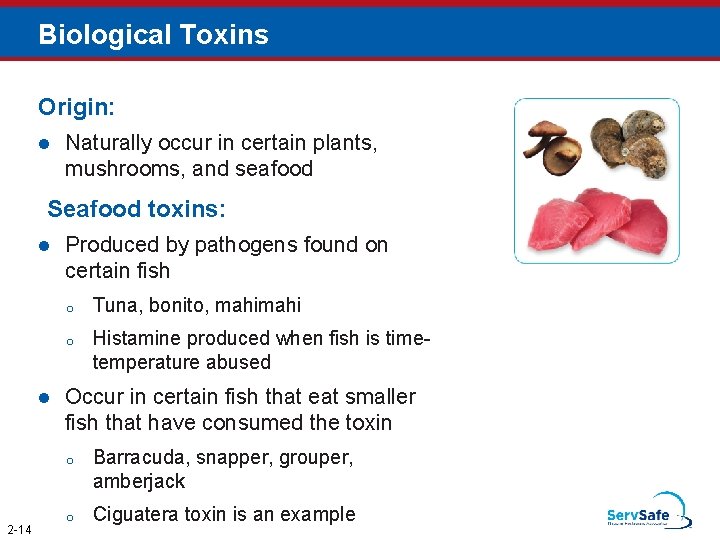
Biological Toxins Origin: l Naturally occur in certain plants, mushrooms, and seafood Seafood toxins: l l 2 -14 Produced by pathogens found on certain fish o Tuna, bonito, mahi o Histamine produced when fish is timetemperature abused Occur in certain fish that eat smaller fish that have consumed the toxin o Barracuda, snapper, grouper, amberjack o Ciguatera toxin is an example
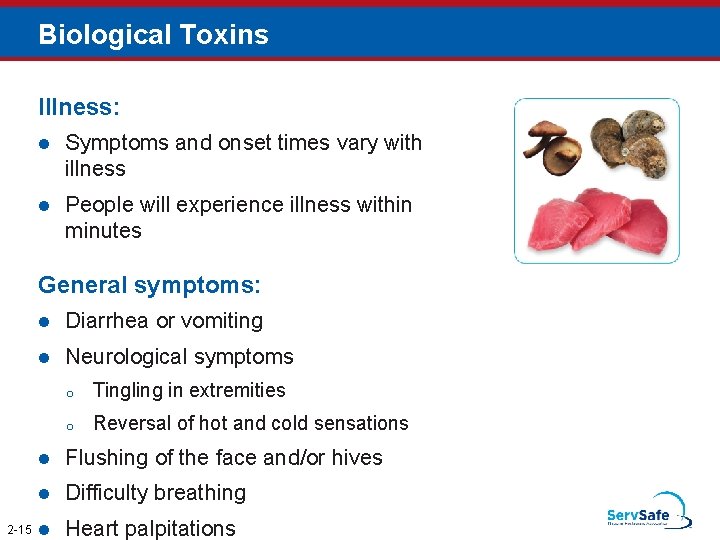
Biological Toxins Illness: l Symptoms and onset times vary with illness l People will experience illness within minutes General symptoms: 2 -15 l Diarrhea or vomiting l Neurological symptoms o Tingling in extremities o Reversal of hot and cold sensations l Flushing of the face and/or hives l Difficulty breathing l Heart palpitations
May Use Your Notes!! Name (3) ways food handlers can pass on contaminants. Name (6) symptoms of a foodborne illness. What are the offset times. The _______ has identified four types of bacteria that cause severe illness and are highly contagious. Name them. Name 6 conditions in which bacteria needs to grow! https: //www. youtube. com/watch? v=Ewm 8 BHzr. QSs
Continued Familiarize yourself with the “Big Six” pathogens. (2. 5, 2. 6 and 2. 7 in the Servsafe Book) *Shigella spp. *Salmonella Typhi *Nontyphoidal Salmonella (NTS) • Shiga toxin producing Escherichia coli. . (E-Coli) • Hepatitis A (Virus) • Norovirus (Virus)
“Bad Bug” Book Instructions: Students will make a Bad Bug Book. Each student will include the Big Six Pathogens along with (1) graphic of the Bug and detailed information to include: • • Foods Linked with the virus/Bacteria. All Prevention Methods • How Long will the symptoms last? if applicable • Treatment Methods (Grammar/complete sentences a MUST)/Organization/flow of information Materials Needed: Construction paper/pipe Cleaners Hole Puncher/Makers/Colored
Objective 1. 0 1 -29 -2016 Understand causes of foodborne illness Student Input: Turn in Bad Bug Books Teacher Input: “Typhoid Mary” Documentary 55 mins https: //www. youtube. com/watch? v=8 JPCZOb 7 z 2 w Teacher Input: Complete Chapter 2 Lecture/notes Group Input: Complete Apply your Knowledge 2. 10 & 2. 11 Exit Ticket…Quiz 2 Forms of Contaminants? ? ?
Typhoid Mary Table 1 - Watch the documentary take notes on how you think the Health Inspectors viewed the case, and how would you have handled the situation. Table 2 - Watch the documentary through Mary’s eyes, take notes on how she was feeling and her. How did she feel from the first accusation, second accusation, testing, isolation and the ending result. Table 3 - Watch the documentary through the eyes of the families who members contracted typhoid fever and how did they feel? Table 4 -How did the general public view the issue of an Typhoid Fever outbreak and was Mary named in the first accusation? Table 5 -Give a general overview of the documentary,
Deliberate Contamination of Food Groups who may attempt to contaminate food: l Terrorists or activists l Disgruntled current or former staff l Vendors l Competitors FDA defense tool: l 2 -16 A. L. E. R. T.
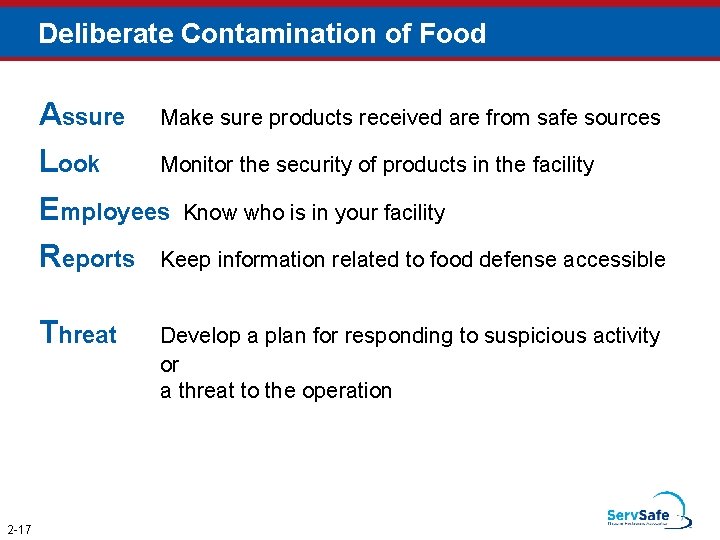
Deliberate Contamination of Food Assure Make sure products received are from safe sources Look Monitor the security of products in the facility Employees Know who is in your facility Reports Keep information related to food defense accessible Threat 2 -17 Develop a plan for responding to suspicious activity or a threat to the operation
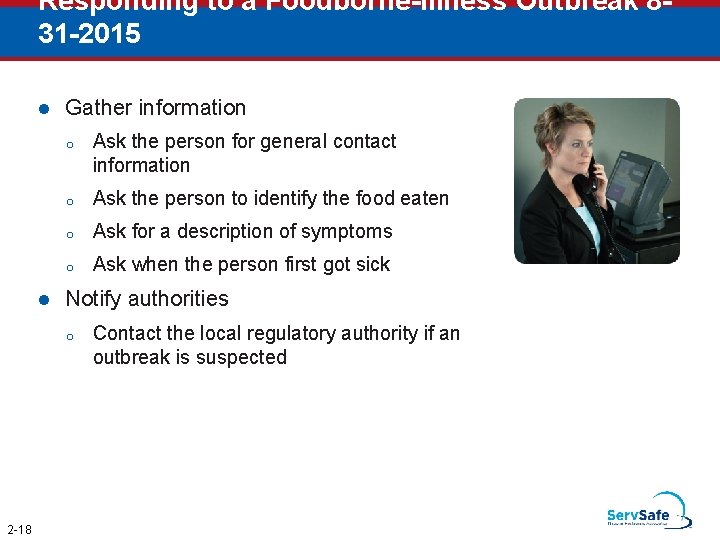
Responding to a Foodborne-Illness Outbreak 831 -2015 l l Gather information o Ask the person for general contact information o Ask the person to identify the food eaten o Ask for a description of symptoms o Ask when the person first got sick Notify authorities o 2 -18 Contact the local regulatory authority if an outbreak is suspected
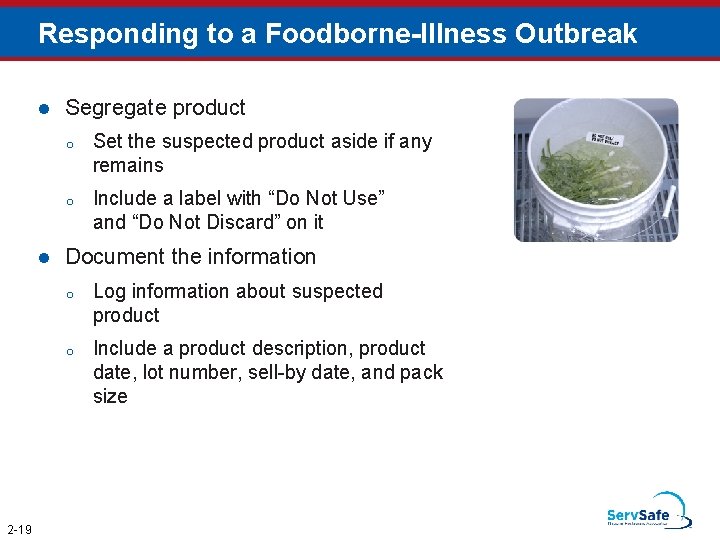
Responding to a Foodborne-Illness Outbreak l l 2 -19 Segregate product o Set the suspected product aside if any remains o Include a label with “Do Not Use” and “Do Not Discard” on it Document the information o Log information about suspected product o Include a product description, product date, lot number, sell-by date, and pack size
Responding to a Foodborne-Illness Outbreak l l Identify staff o Keep a list of food handlers scheduled at time of incident o Interview staff immediately Cooperate with authorities o l 2 -20 Provide appropriate documentation Review procedures o Determine if standards are being met o Identify if standards are not working
Preventing Allergic Reactions To help prevent allergic reactions, service staff should: 2 -21 l Describe menu items to guests, and identify any allergens in the item. l Suggest menu items without the allergen. l Clearly identify the guest's order for kitchen and service staff. l Deliver food separately to prevent cross-contact.
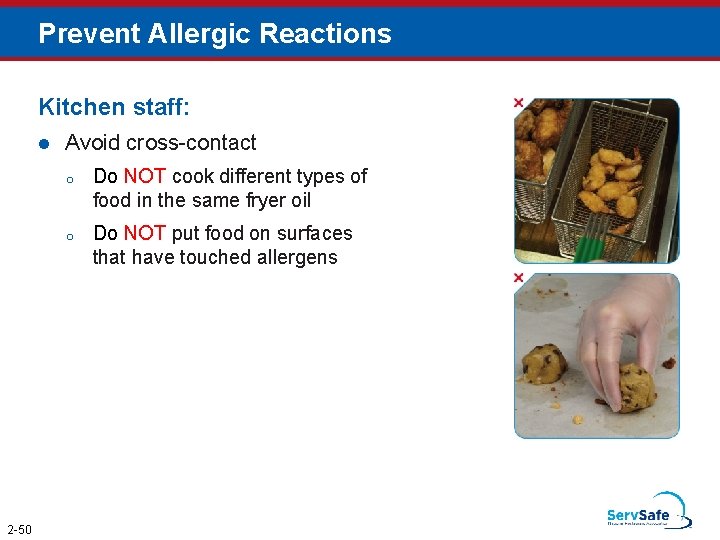
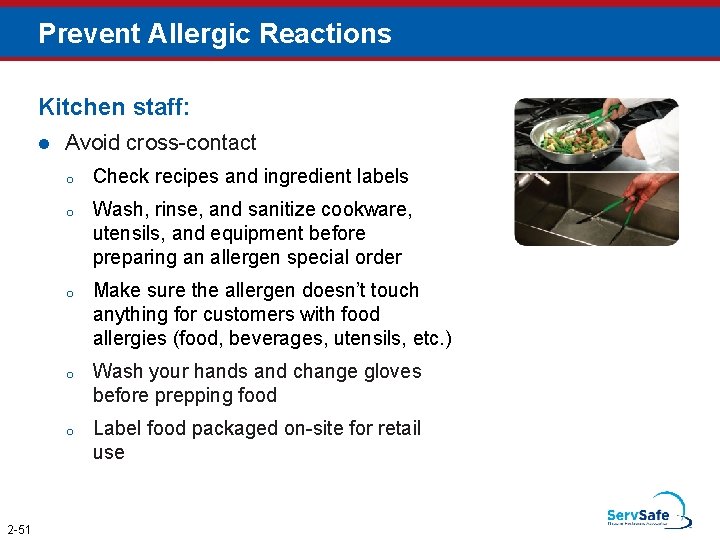
Avoiding Cross-Contact When preparing food for a guest with a known allergy, kitchen staff should: 2 -22 l Check recipes and food labels for the allergen l Use cleaned and sanitized utensils l Wash hands and change gloves l Use separate fryers and cooking oils l Label packages properly
Objective 1. 0 Understand causes of foodborne illness Bell Ringer: Review Questions Teacher Input: Forms of Contamination. Power. Point Student Input: Notes on Forms of Contamination Video: Forms of Contaminates Servsafe Video Group Work. Apply Your Knowledge 2. 11 (What have I got and What’s it stand for? ) 2. 12 2. 14 2. 16 (2. 19) Chapter Review Case Study
Bellringer Who could be responsible for contaminating food? (Name 4) The FDA has created a tool that can be used to develop a food defense program. (What is it? )
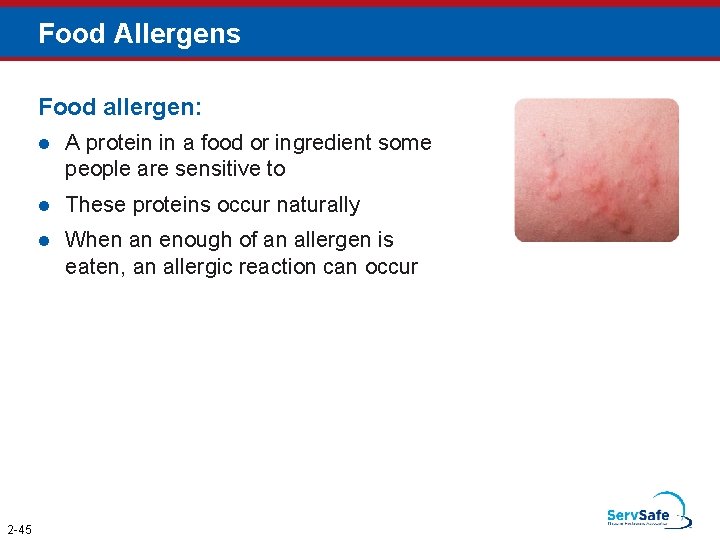
Food Allergens Food allergen: 2 -45 l A protein in a food or ingredient some people are sensitive to l These proteins occur naturally l When an enough of an allergen is eaten, an allergic reaction can occur
Food Allergens Allergy symptoms: l Nausea l Wheezing or shortness of breath l Hives or itchy rashes l Swelling in various parts of the body, including the face, eyes, hands, or feet l Vomiting and/or diarrhea l Abdominal pain Allergic reactions: 2 -46 l Symptoms can become serious quickly l A severe reaction, called anaphylaxis, can lead to death
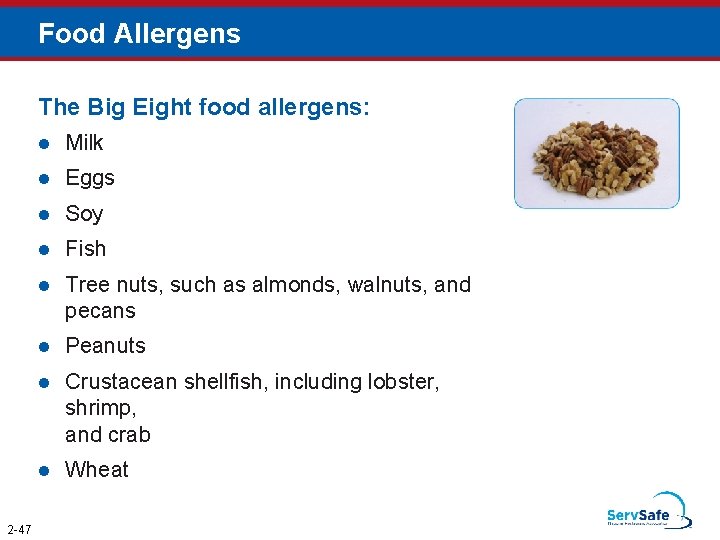
Food Allergens The Big Eight food allergens: 2 -47 l Milk l Eggs l Soy l Fish l Tree nuts, such as almonds, walnuts, and pecans l Peanuts l Crustacean shellfish, including lobster, shrimp, and crab l Wheat
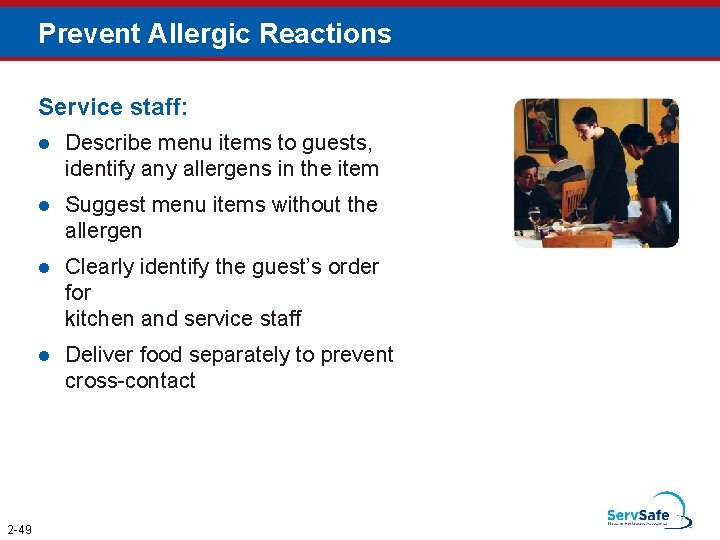
Prevent Allergic Reactions Service staff: 2 -49 l Describe menu items to guests, identify any allergens in the item l Suggest menu items without the allergen l Clearly identify the guest’s order for kitchen and service staff l Deliver food separately to prevent cross-contact
Bell ringer What is the food service manager’s most important role? What conditions bacteria need to grow? What is the temperature danger zone? Between ____ and __bacteria grows more rapidly. I may be able to keep food safe by controlling FAT TOM, but I will most likely be able to control only______ and _______. Name the bacteria that are linked with beverages and ready to eat foods? What does ALERT stand for explain each area of
Understand causes of foodborne illness 22 -2016 Bell Ringer: Review from Chapter : 2 Forms of Contamination Student Input: Notes on Forms of Contamination Video: Video 2: Food borne Illness Microorganisms (22) MINS Servsafe Video/Study Guide Group Work. Apply Your Knowledge 2. 11 (What have I got and What’s it stand for? ) 2. 12 2. 14 2. 16 (2. 19) Chapter Review Case Study Teacher Input: Chapter: 3 Notes
Prevent Allergic Reactions Kitchen staff: l 2 -50 Avoid cross-contact o Do NOT cook different types of food in the same fryer oil o Do NOT put food on surfaces that have touched allergens
Prevent Allergic Reactions Kitchen staff: l 2 -51 Avoid cross-contact o Check recipes and ingredient labels o Wash, rinse, and sanitize cookware, utensils, and equipment before preparing an allergen special order o Make sure the allergen doesn’t touch anything for customers with food allergies (food, beverages, utensils, etc. ) o Wash your hands and change gloves before prepping food o Label food packaged on-site for retail use
Quiz Chapter : 2 Forms of Contamination finish Video Graphic organizer Take You time, Good Luck. After you have completed the quiz sit and wait patiently to others are finished (NO talking) otherwise will result in a 0. Review all Check your knowledge for Chapter : 2
- Slides: 47