
OBJECT ORIENTED PROGRAMMING OOP LECTURE NO 10 REVIEW
OBJECT ORIENTED PROGRAMMING (OOP) LECTURE NO. 10
REVIEW �Copy constructors �Destructor �Accessor Functions �this Pointer
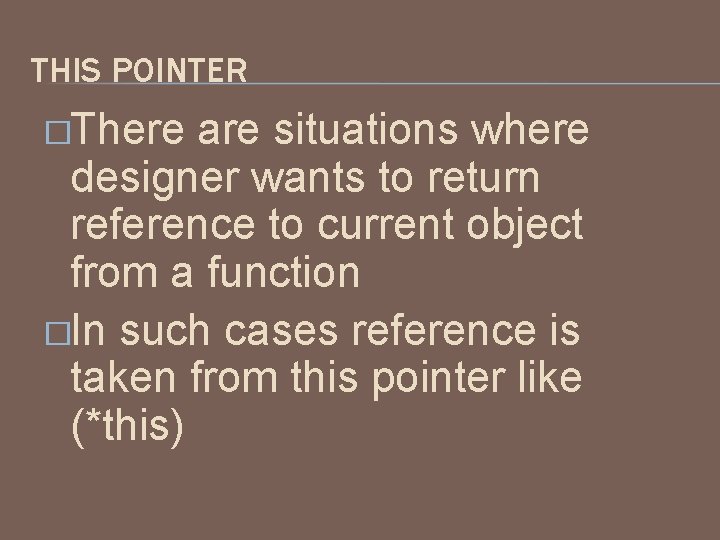
THIS POINTER �There are situations where designer wants to return reference to current object from a function �In such cases reference is taken from this pointer like (*this)
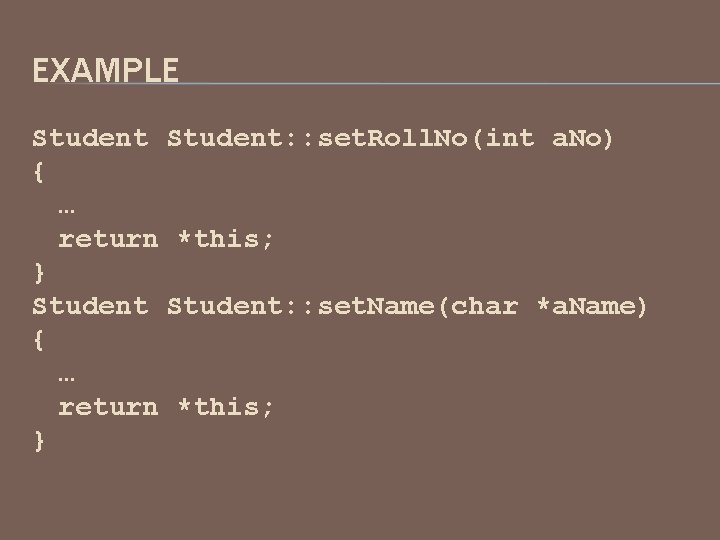
EXAMPLE Student: : set. Roll. No(int a. No) { … return *this; } Student: : set. Name(char *a. Name) { … return *this; }
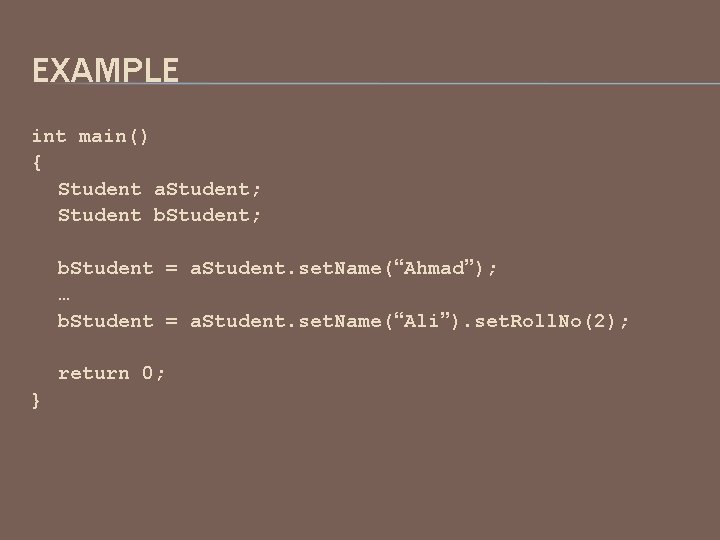
EXAMPLE int main() { Student a. Student; Student b. Student; b. Student = a. Student. set. Name(“Ahmad”); … b. Student = a. Student. set. Name(“Ali”). set. Roll. No(2); return 0; }
SEPARATION OF INTERFACE AND IMPLEMENTATION � Public member function exposed by a class is called interface � Separation of implementation from the interface is good software engineering
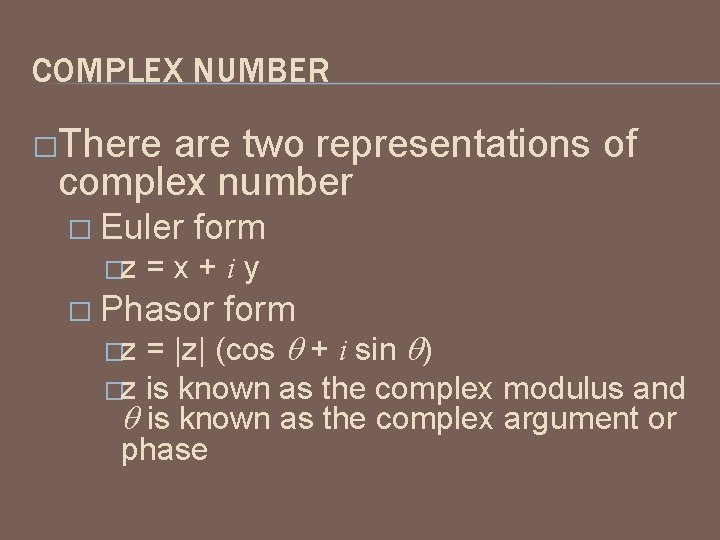
COMPLEX NUMBER �There are two representations of complex number � Euler �z form =x+iy � Phasor form = |z| (cos + i sin ) �z is known as the complex modulus and is known as the complex argument or phase �z
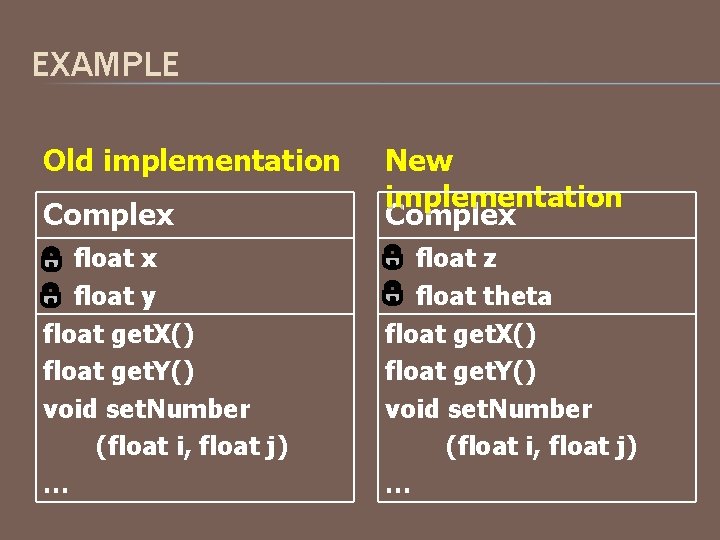
EXAMPLE Old implementation Complex New implementation Complex float y float get. X() float get. Y() void set. Number (float i, float j) … float z float theta float get. X() float get. Y() void set. Number (float i, float j) …
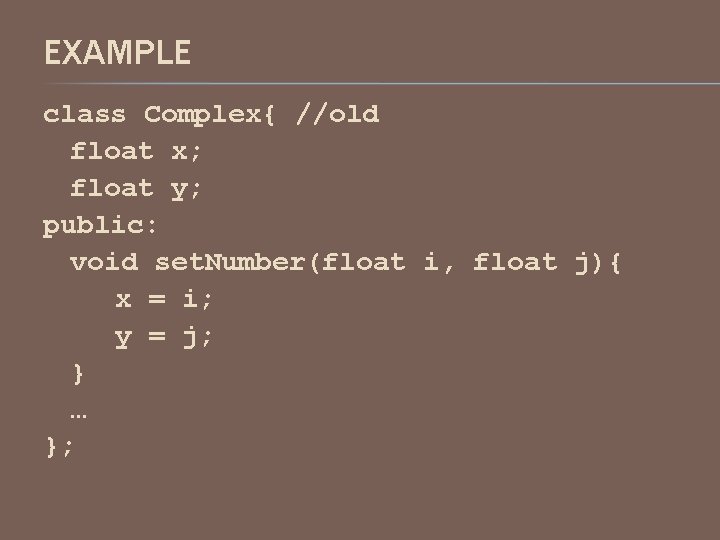
EXAMPLE class Complex{ //old float x; float y; public: void set. Number(float i, float j){ x = i; y = j; } … };
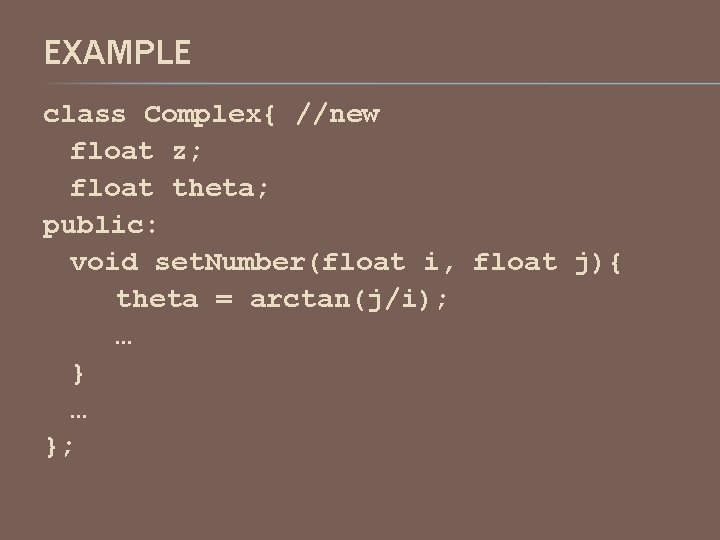
EXAMPLE class Complex{ //new float z; float theta; public: void set. Number(float i, float j){ theta = arctan(j/i); … };
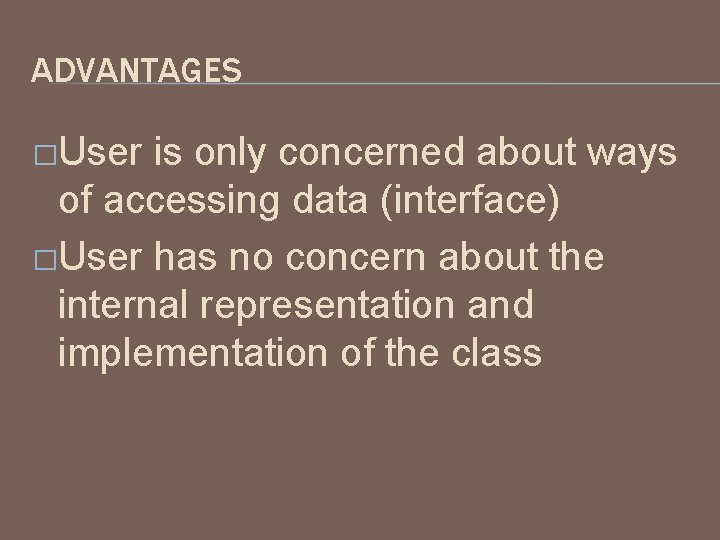
ADVANTAGES �User is only concerned about ways of accessing data (interface) �User has no concern about the internal representation and implementation of the class
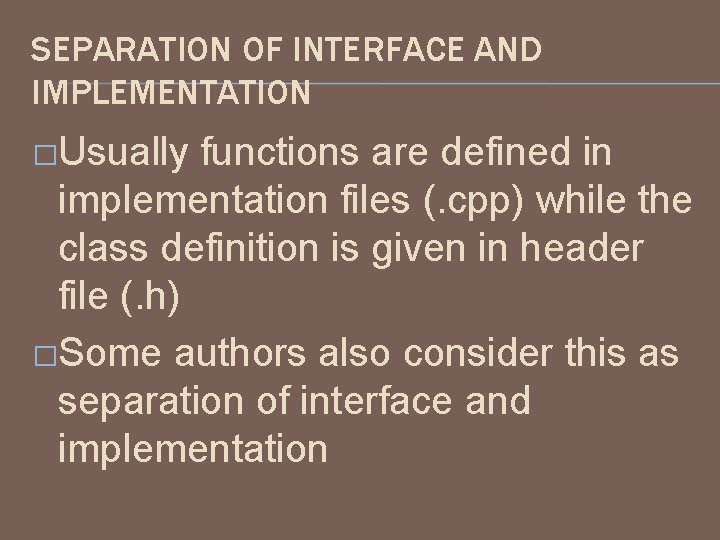
SEPARATION OF INTERFACE AND IMPLEMENTATION �Usually functions are defined in implementation files (. cpp) while the class definition is given in header file (. h) �Some authors also consider this as separation of interface and implementation
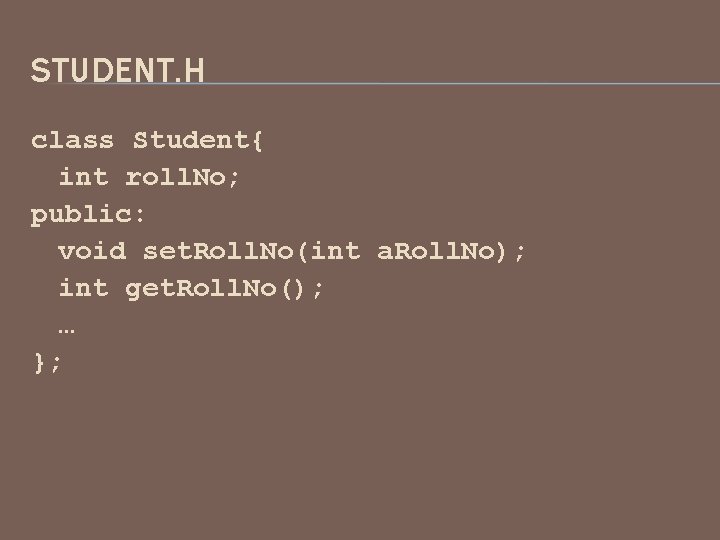
STUDENT. H class Student{ int roll. No; public: void set. Roll. No(int a. Roll. No); int get. Roll. No(); … };
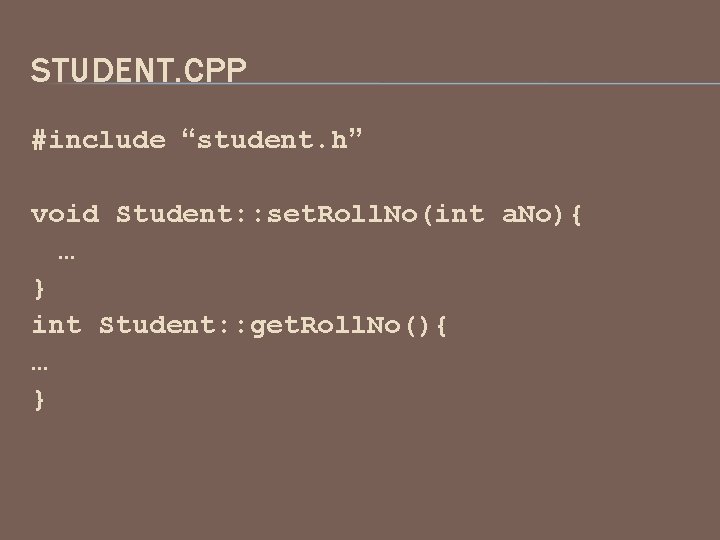
STUDENT. CPP #include “student. h” void Student: : set. Roll. No(int a. No){ … } int Student: : get. Roll. No(){ … }
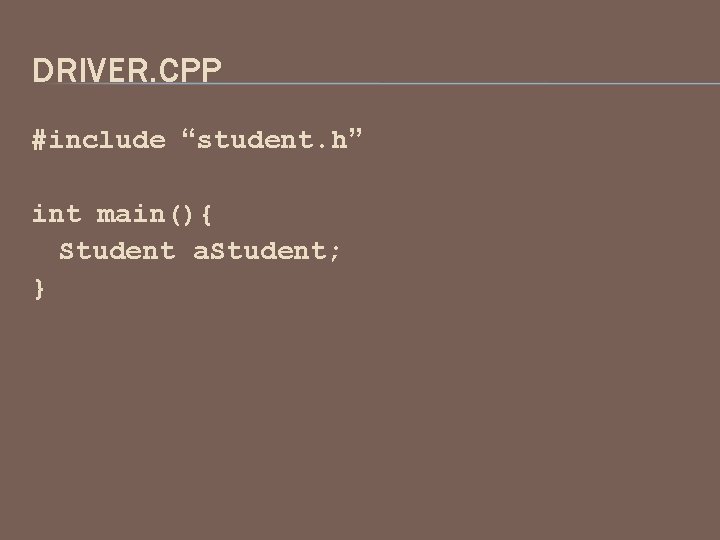
DRIVER. CPP #include “student. h” int main(){ Student a. Student; }
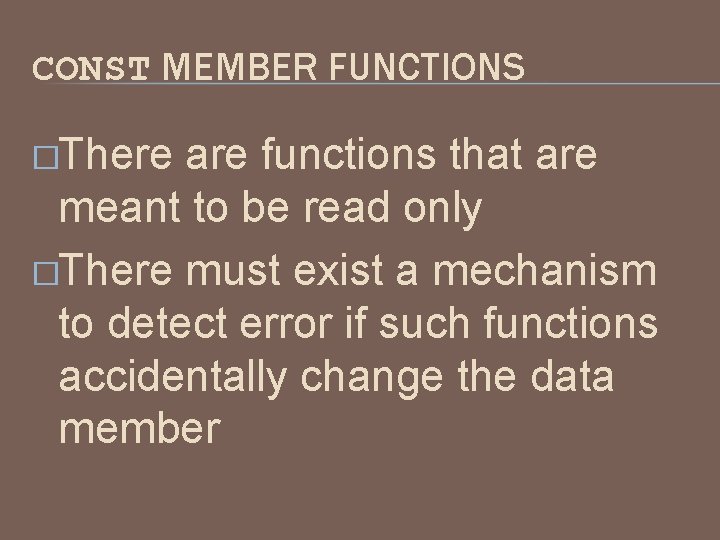
CONST MEMBER FUNCTIONS �There are functions that are meant to be read only �There must exist a mechanism to detect error if such functions accidentally change the data member
CONST MEMBER FUNCTIONS �Keyword const is placed at the end of the parameter list
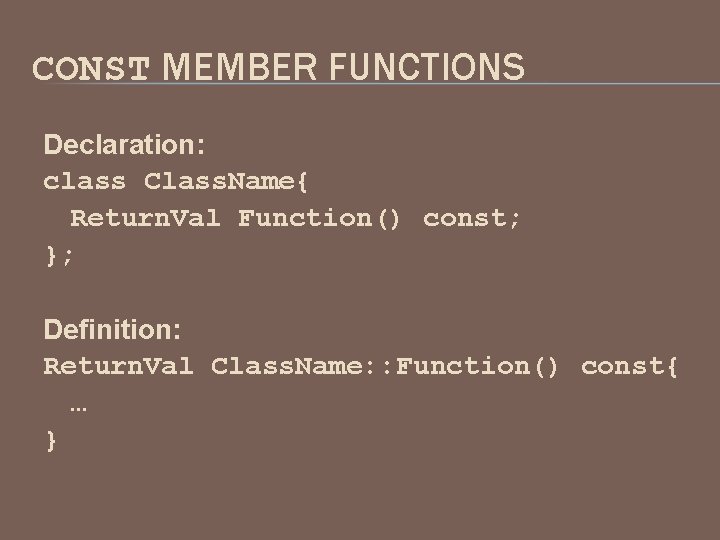
CONST MEMBER FUNCTIONS Declaration: class Class. Name{ Return. Val Function() const; }; Definition: Return. Val Class. Name: : Function() const{ … }
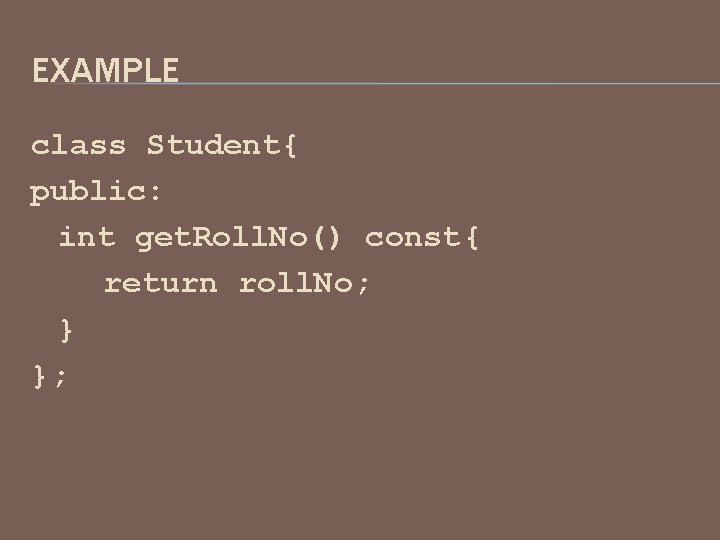
EXAMPLE class Student{ public: int get. Roll. No() const{ return roll. No; } };
CONST FUNCTIONS �Constant member functions cannot modify the state of any object �They are just “read-only” �Errors due to typing are also caught at compile time
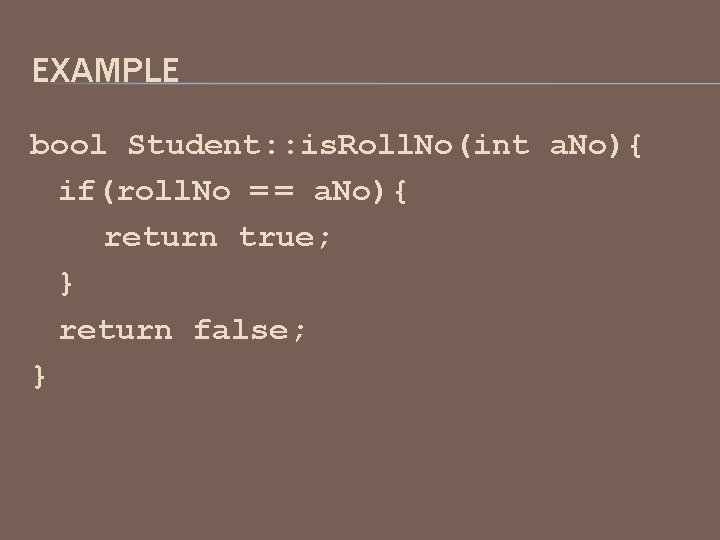
EXAMPLE bool Student: : is. Roll. No(int a. No){ if(roll. No = = a. No){ return true; } return false; }
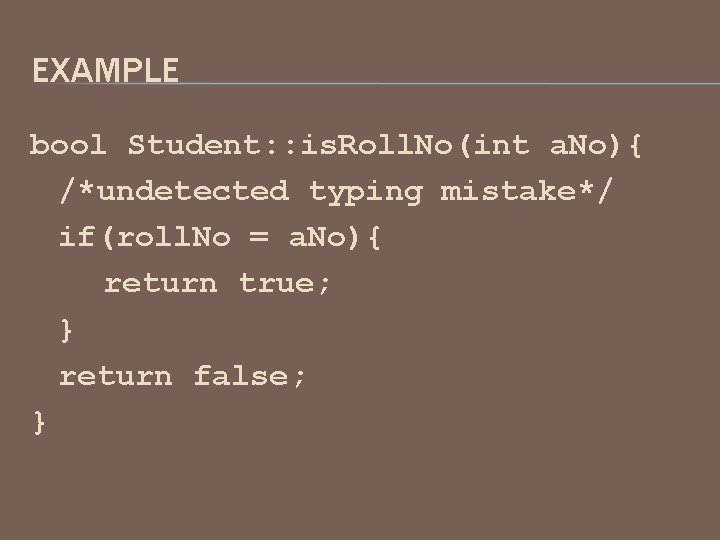
EXAMPLE bool Student: : is. Roll. No(int a. No){ /*undetected typing mistake*/ if(roll. No = a. No){ return true; } return false; }
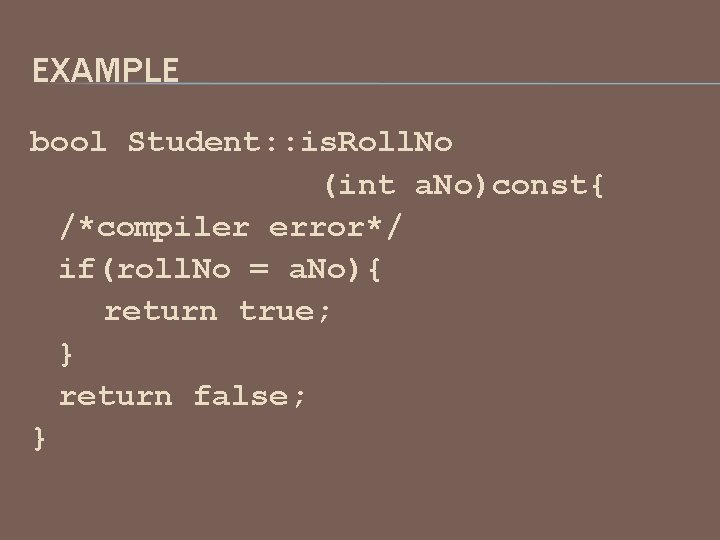
EXAMPLE bool Student: : is. Roll. No (int a. No)const{ /*compiler error*/ if(roll. No = a. No){ return true; } return false; }
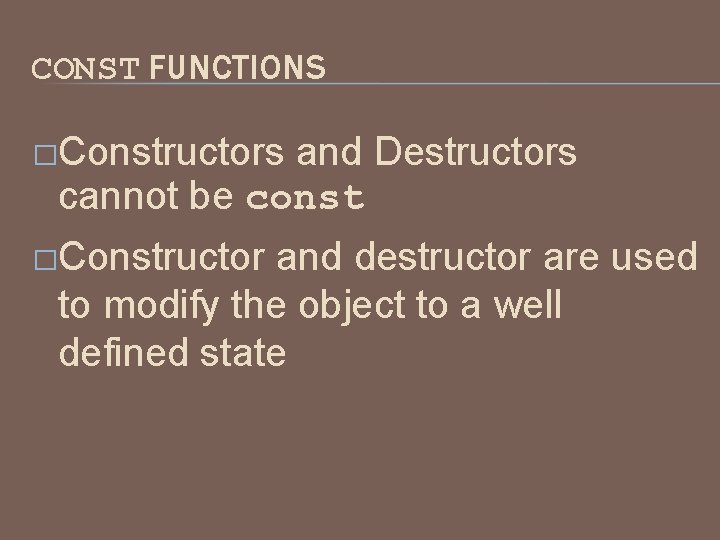
CONST FUNCTIONS �Constructors and Destructors cannot be const �Constructor and destructor are used to modify the object to a well defined state
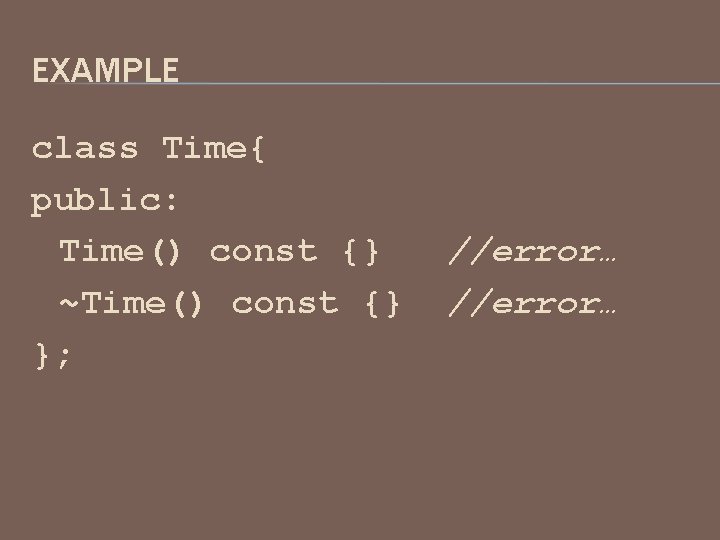
EXAMPLE class Time{ public: Time() const {} ~Time() const {} }; //error…
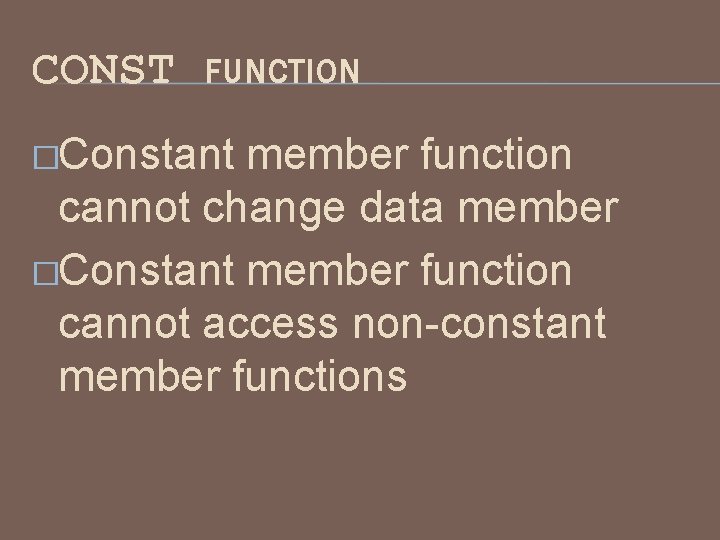
CONST FUNCTION �Constant member function cannot change data member �Constant member function cannot access non-constant member functions
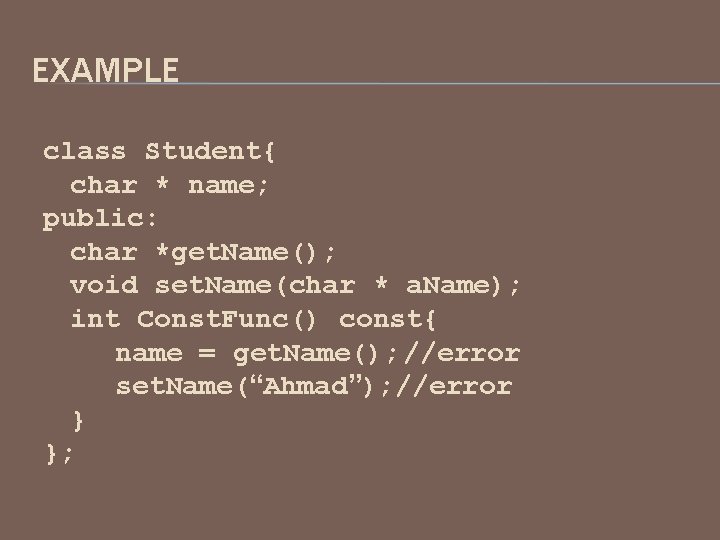
EXAMPLE class Student{ char * name; public: char *get. Name(); void set. Name(char * a. Name); int Const. Func() const{ name = get. Name(); //error set. Name(“Ahmad”); //error } };
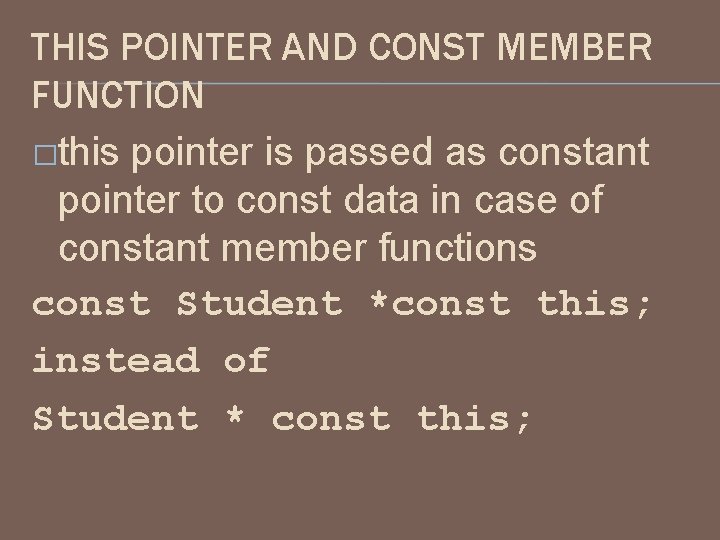
THIS POINTER AND CONST MEMBER FUNCTION �this pointer is passed as constant pointer to const data in case of constant member functions const Student *const this; instead of Student * const this;
- Slides: 28