
Object detection deep learning and RCNNs Ross Girshick
Object detection, deep learning, and R-CNNs Ross Girshick Microsoft Research Guest lecture for UW CSE 455 Nov. 24, 2014

Outline • Object detection • the task, evaluation, datasets • Convolutional Neural Networks (CNNs) • overview and history • Region-based Convolutional Networks (R-CNNs)

Image classification • Digit classification (MNIST) Object recognition (Caltech-101)

Classification vs. Detection ü Dog Dog
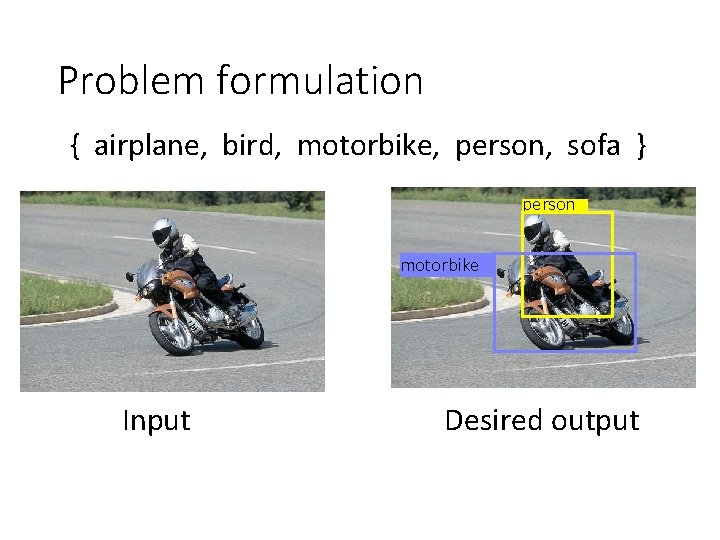
Problem formulation { airplane, bird, motorbike, person, sofa } person motorbike Input Desired output
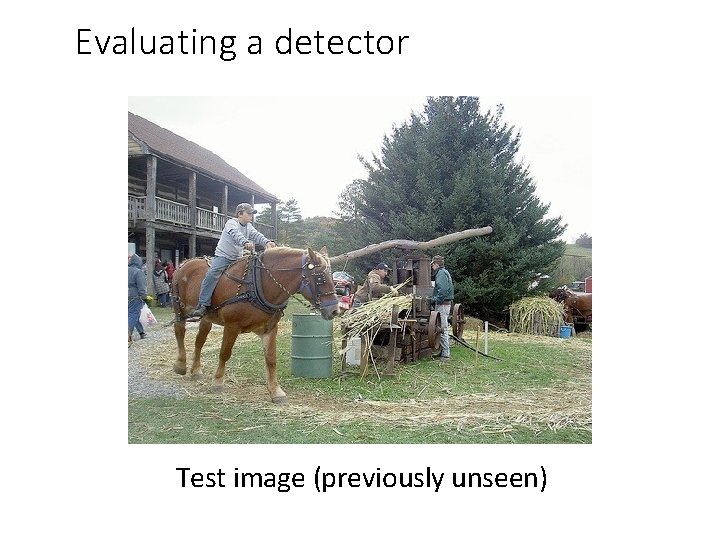
Evaluating a detector Test image (previously unseen)
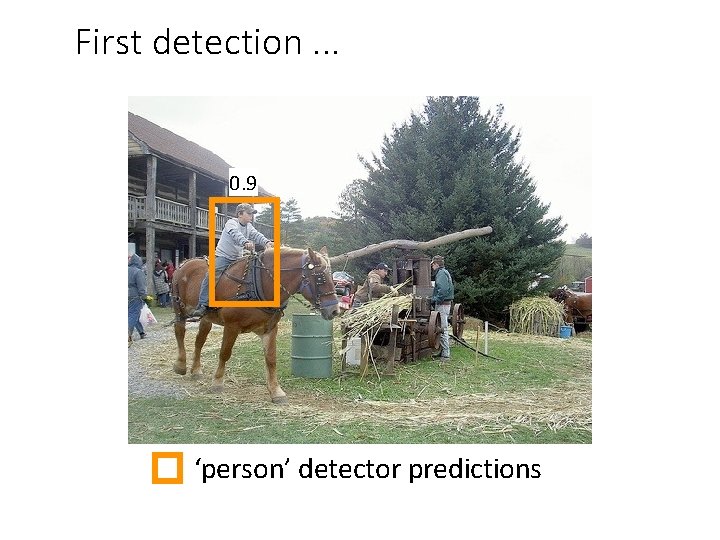
First detection. . . 0. 9 ‘person’ detector predictions
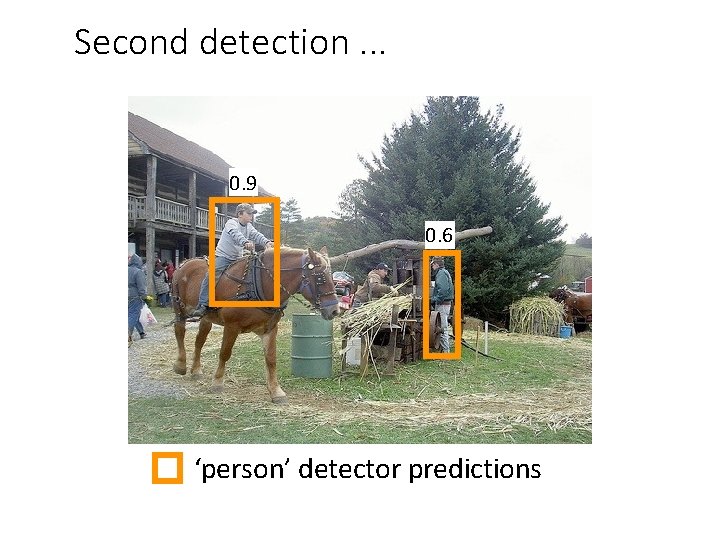
Second detection. . . 0. 9 0. 6 ‘person’ detector predictions
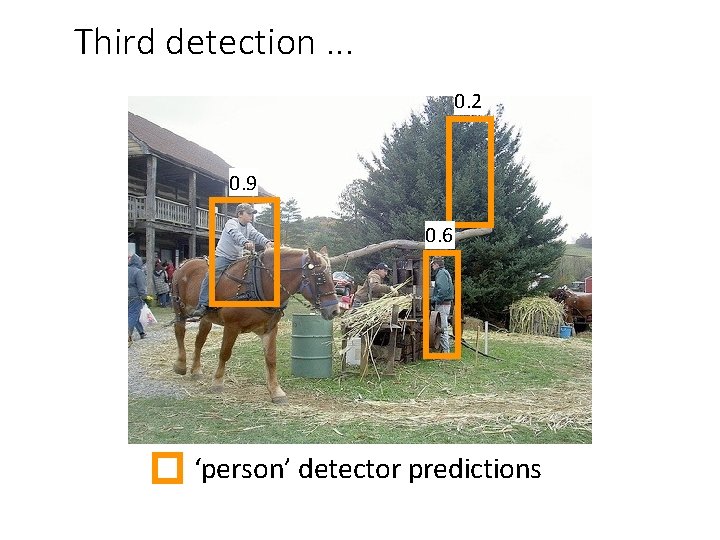
Third detection. . . 0. 2 0. 9 0. 6 ‘person’ detector predictions
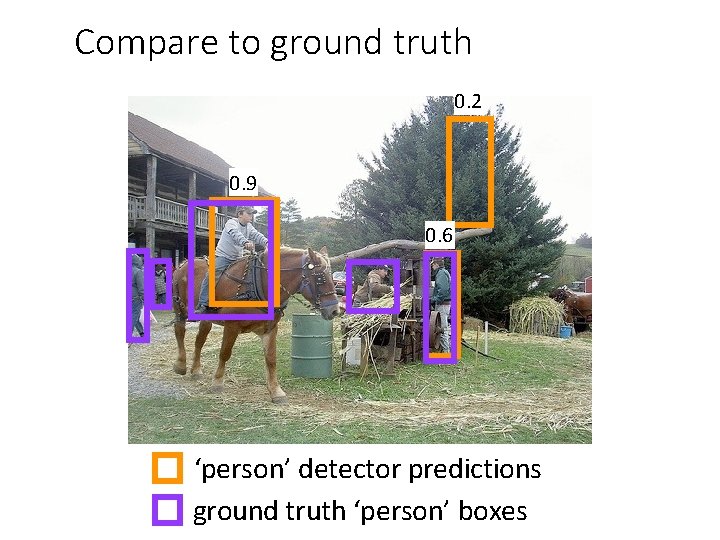
Compare to ground truth 0. 2 0. 9 0. 6 ‘person’ detector predictions ground truth ‘person’ boxes
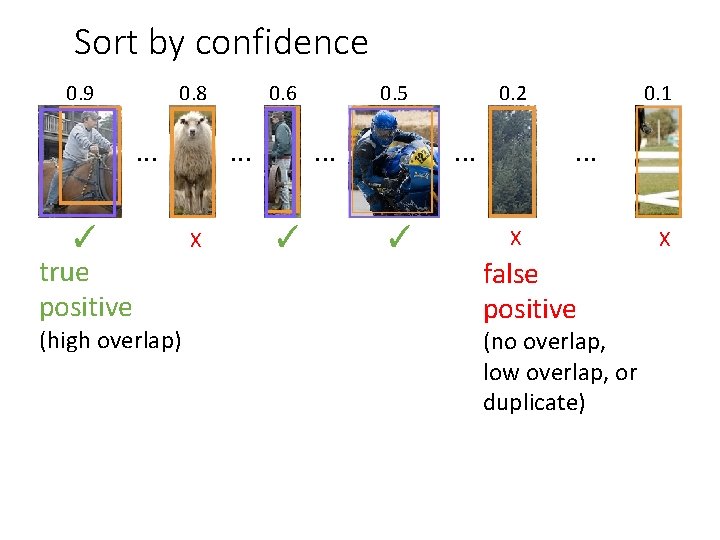
Sort by confidence 0. 9 0. 8 . . . ✓ true positive (high overlap) 0. 6 . . . X 0. 5 . . . ✓ 0. 2 . . . ✓ 0. 1 . . . X false positive (no overlap, low overlap, or duplicate) X
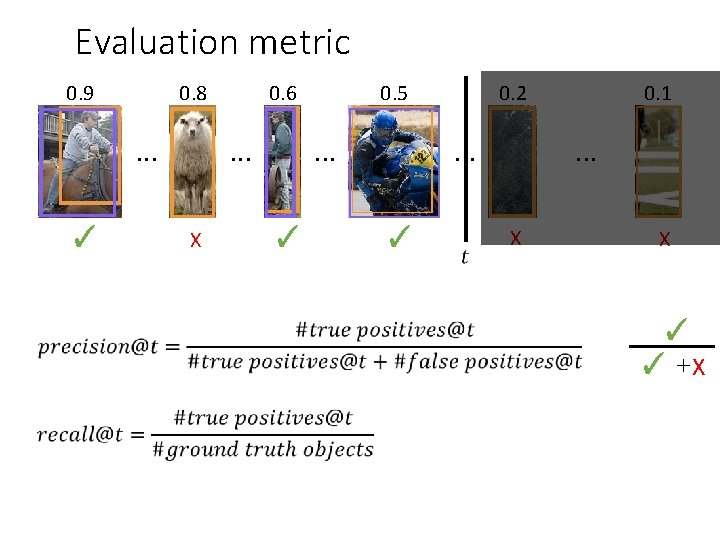
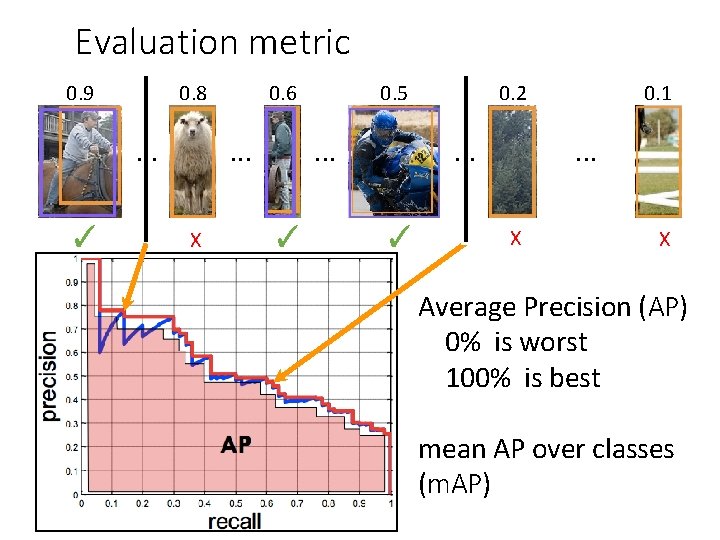
Evaluation metric 0. 9 0. 8 . . . ✓ 0. 6 . . . X 0. 5 . . . ✓ 0. 2 . . . ✓ 0. 1 . . . X X Average Precision (AP) 0% is worst 100% is best mean AP over classes (m. AP)
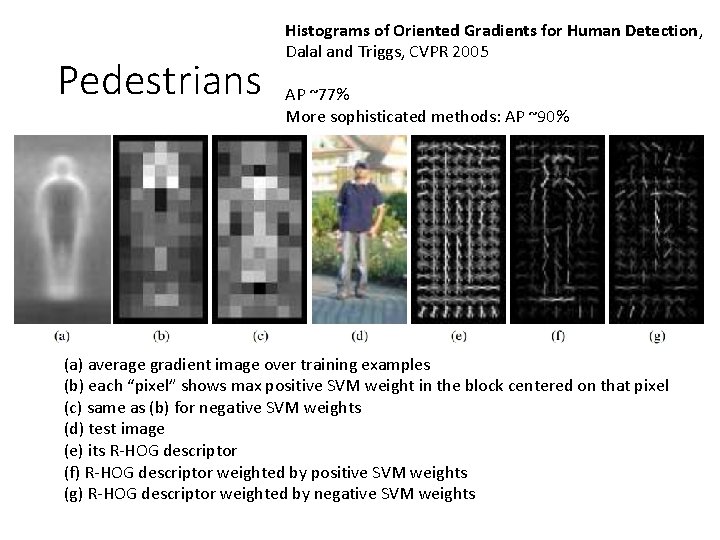
Pedestrians Histograms of Oriented Gradients for Human Detection, Dalal and Triggs, CVPR 2005 AP ~77% More sophisticated methods: AP ~90% (a) average gradient image over training examples (b) each “pixel” shows max positive SVM weight in the block centered on that pixel (c) same as (b) for negative SVM weights (d) test image (e) its R-HOG descriptor (f) R-HOG descriptor weighted by positive SVM weights (g) R-HOG descriptor weighted by negative SVM weights
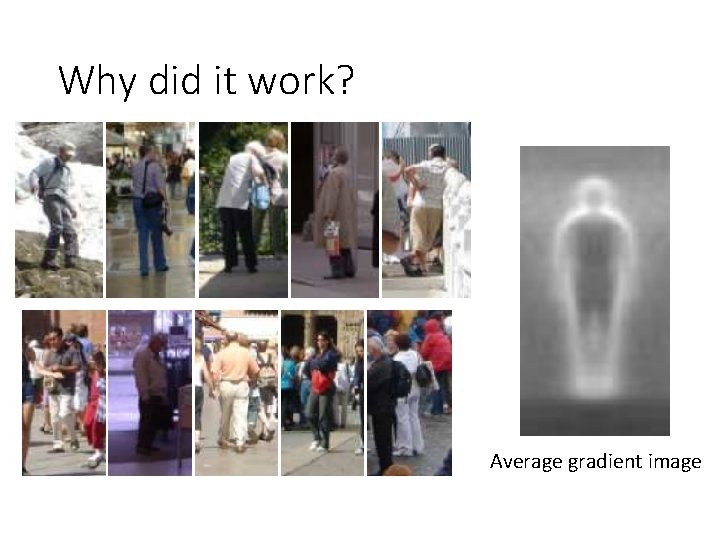
Why did it work? Average gradient image
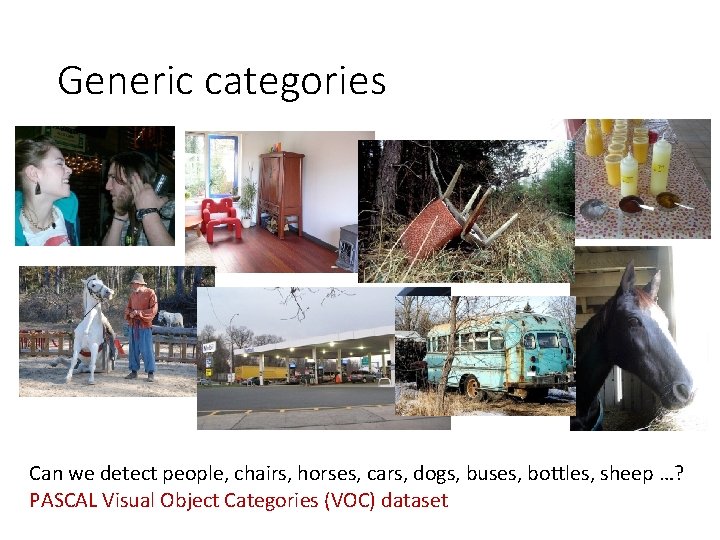
Generic categories Can we detect people, chairs, horses, cars, dogs, buses, bottles, sheep …? PASCAL Visual Object Categories (VOC) dataset
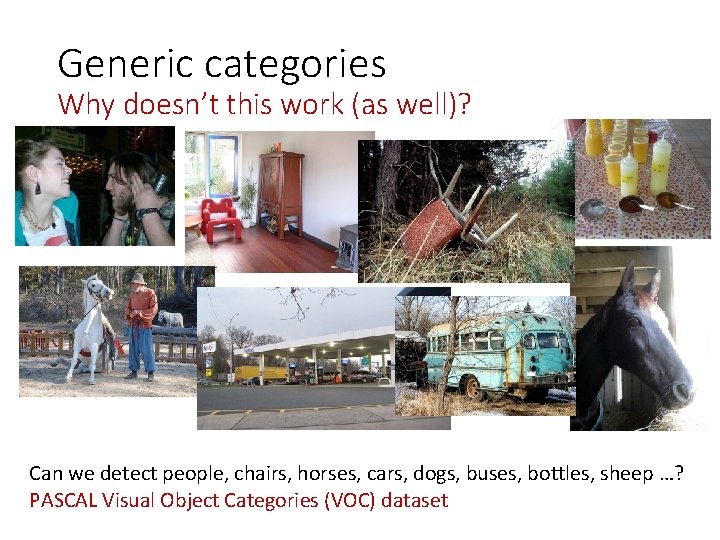
Generic categories Why doesn’t this work (as well)? Can we detect people, chairs, horses, cars, dogs, buses, bottles, sheep …? PASCAL Visual Object Categories (VOC) dataset

Quiz time
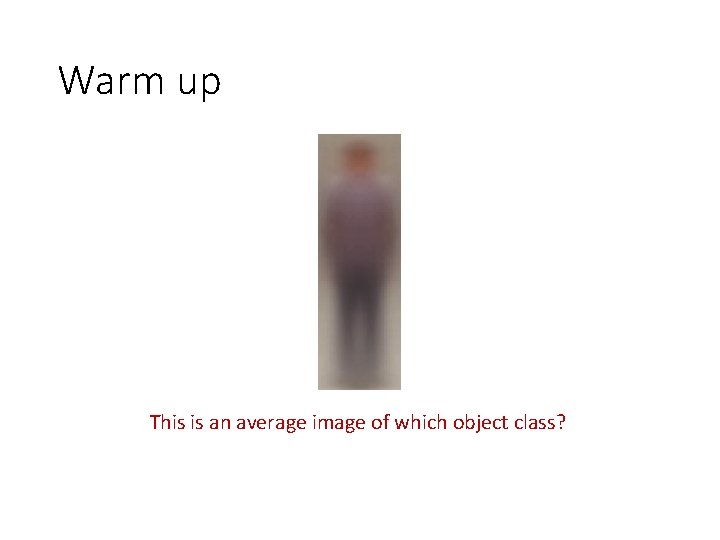
Warm up This is an average image of which object class?
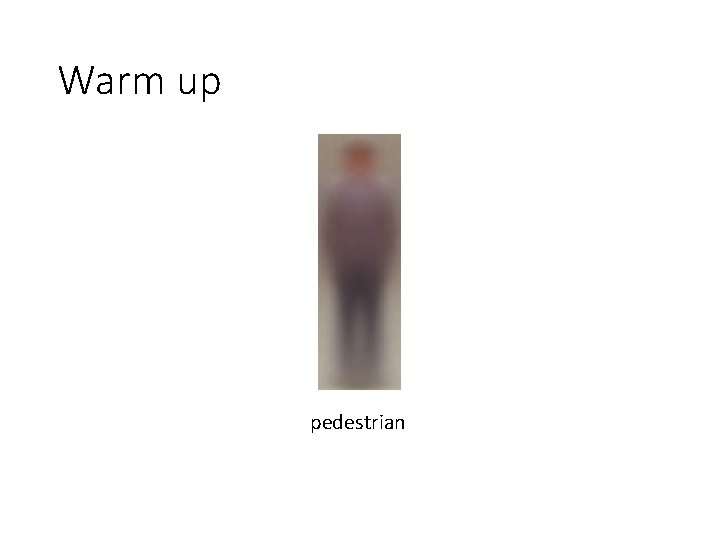
Warm up pedestrian
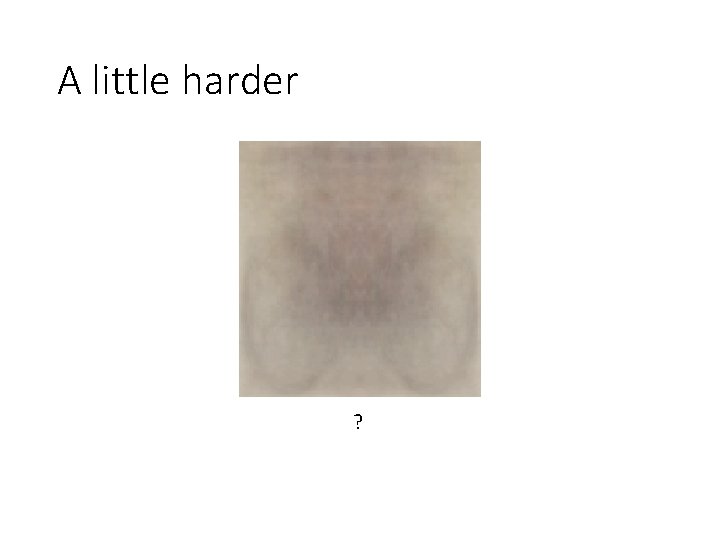
A little harder ?
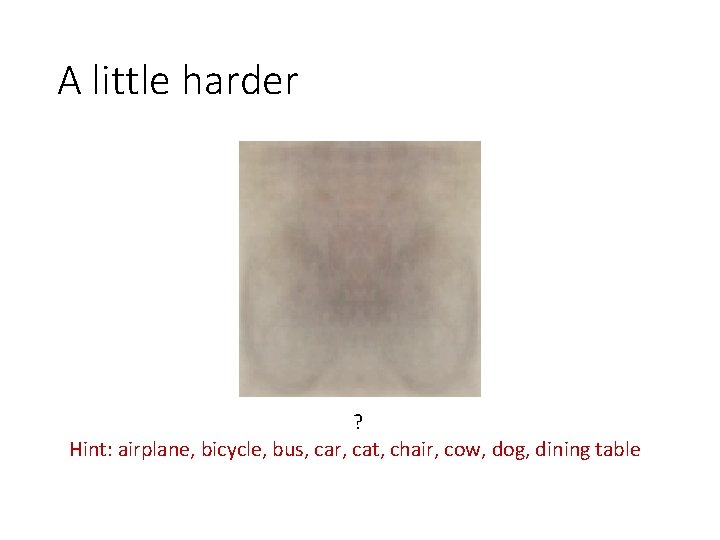
A little harder ? Hint: airplane, bicycle, bus, car, cat, chair, cow, dog, dining table
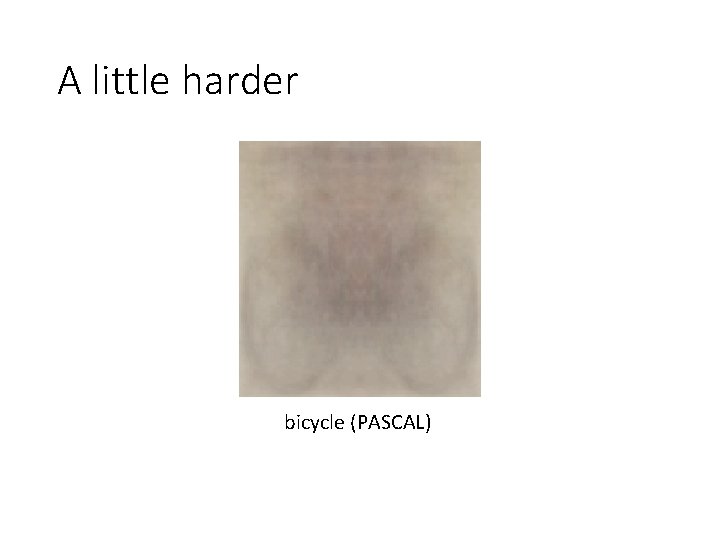
A little harder bicycle (PASCAL)
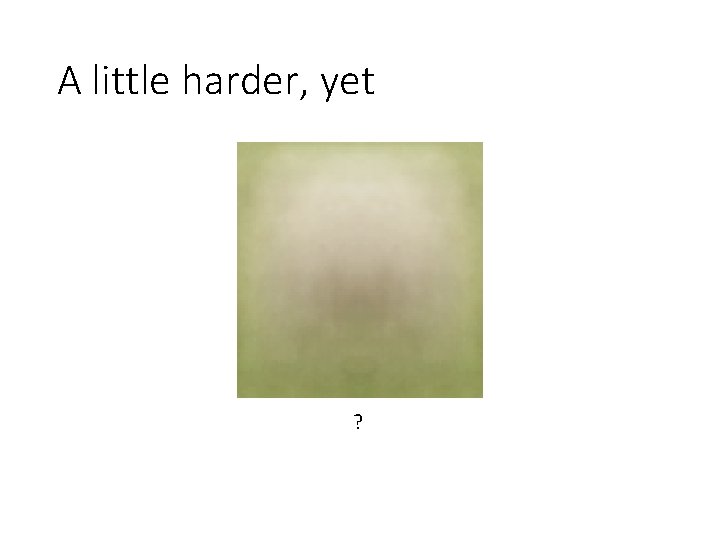
A little harder, yet ?
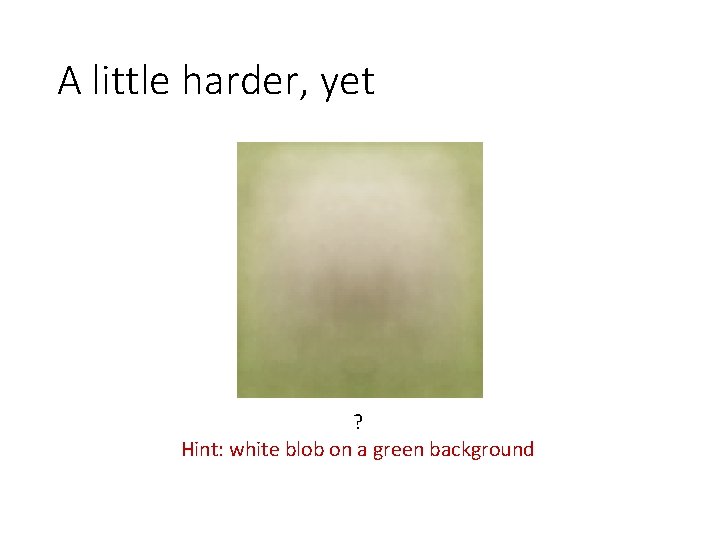
A little harder, yet ? Hint: white blob on a green background
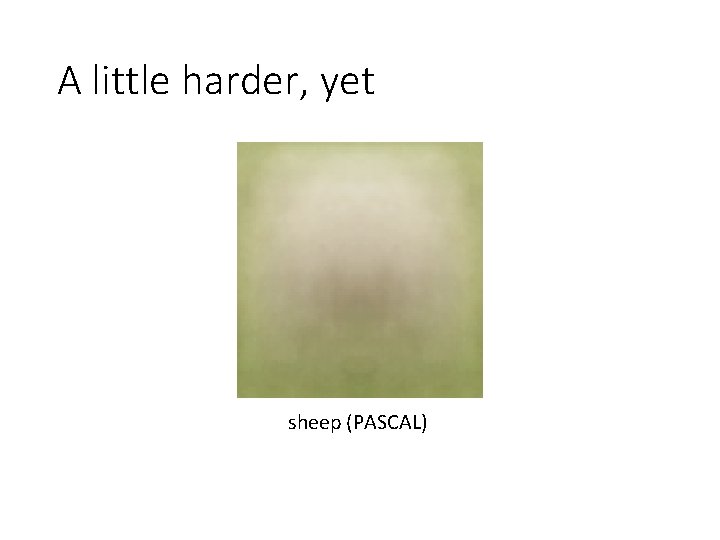
A little harder, yet sheep (PASCAL)

Impossible? ?
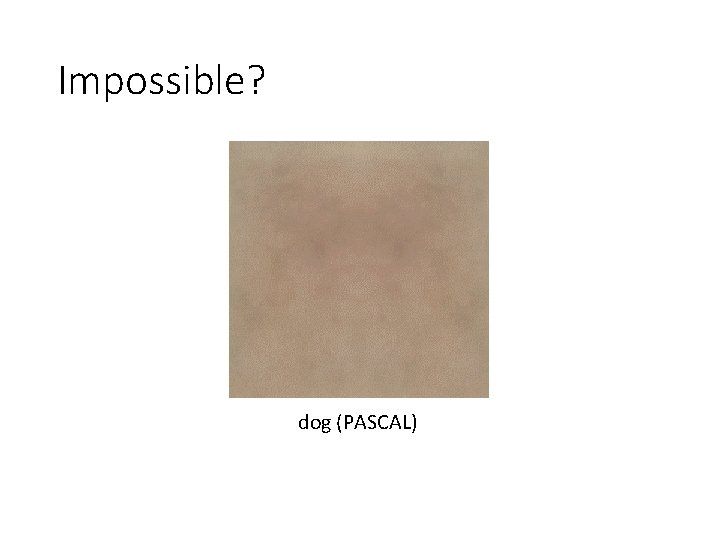
Impossible? dog (PASCAL)
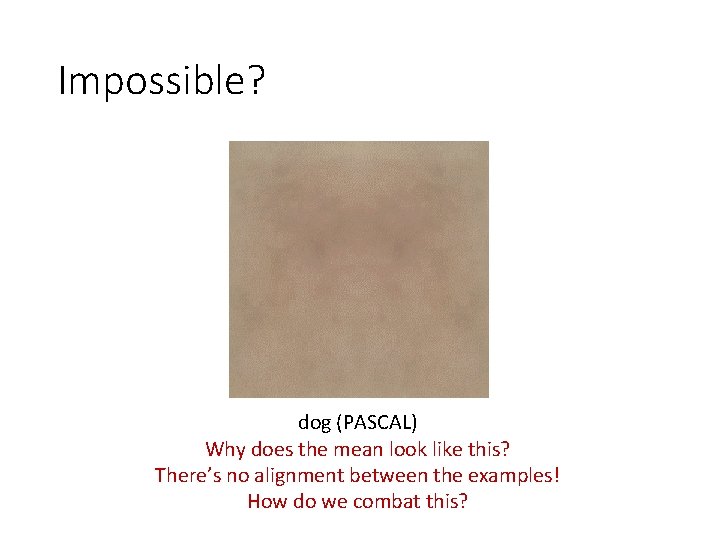
Impossible? dog (PASCAL) Why does the mean look like this? There’s no alignment between the examples! How do we combat this?
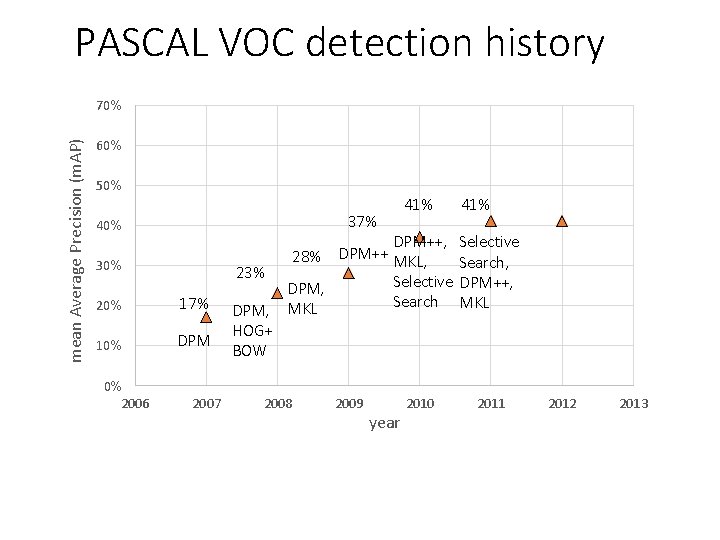
PASCAL VOC detection history mean Average Precision (m. AP) 70% 60% 50% 37% 40% 30% 23% 20% 17% 10% DPM 0% 2006 2007 DPM, HOG+ BOW 41% DPM++, Selective DPM++ 28% MKL, Search, Selective DPM++, DPM, Search MKL 2008 2009 year 2010 2011 2012 2013
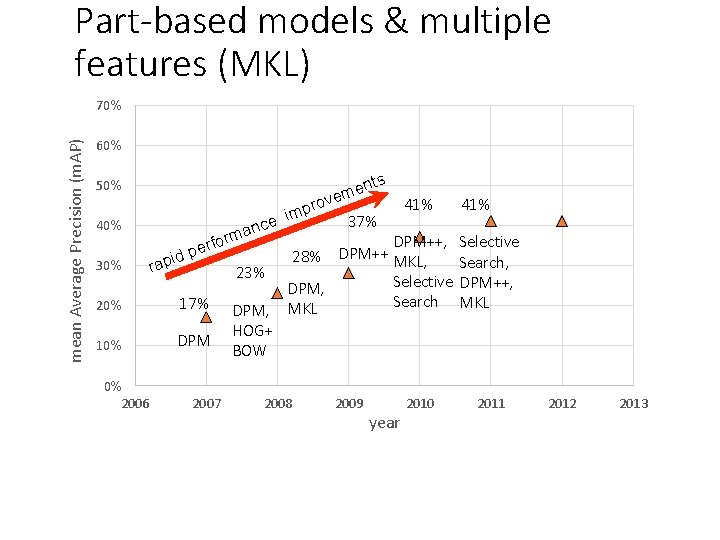
Part-based models & multiple features (MKL) mean Average Precision (m. AP) 70% 60% 50% 40% 30% 20% 10% 0% 2006 nts e m ve 41% pro m i 37% ce n a DPM++, form r e p DPM++ 28% id MKL, rap 23% Selective DPM, Search 17% DPM, MKL HOG+ DPM BOW 2007 2008 2009 year 2010 41% Selective Search, DPM++, MKL 2011 2012 2013
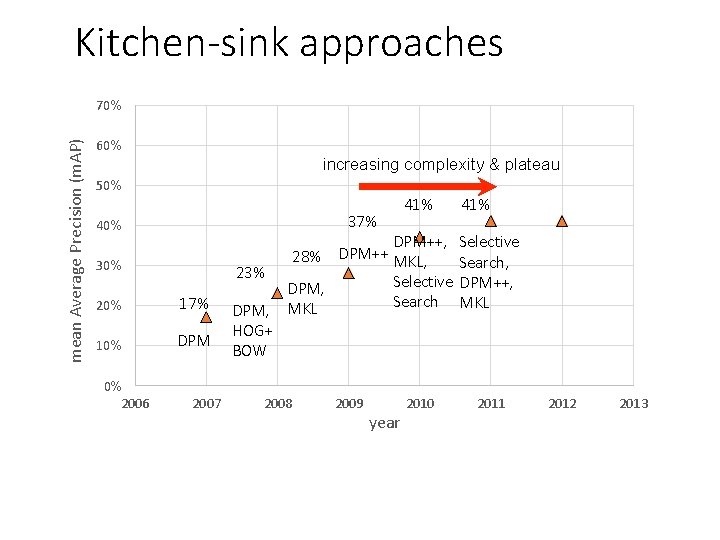
Kitchen-sink approaches mean Average Precision (m. AP) 70% 60% increasing complexity & plateau 50% 37% 40% 30% 23% 20% 17% 10% DPM 0% 2006 2007 DPM, HOG+ BOW 41% DPM++, Selective DPM++ 28% MKL, Search, Selective DPM++, DPM, Search MKL 2008 2009 year 2010 2011 2012 2013
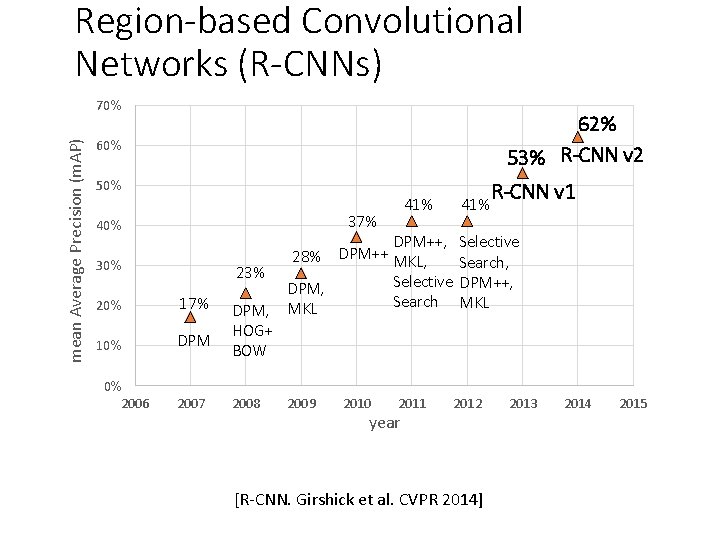
Region-based Convolutional Networks (R-CNNs) mean Average Precision (m. AP) 70% 62% 53% R-CNN v 2 60% 50% 37% 40% 30% 23% 20% 17% 10% DPM 0% 2006 41% 2007 DPM, HOG+ BOW 2008 41% R-CNN v 1 DPM++, Selective DPM++ 28% MKL, Search, Selective DPM++, DPM, Search MKL 2009 2010 2011 year 2012 [R-CNN. Girshick et al. CVPR 2014] 2013 2014 2015
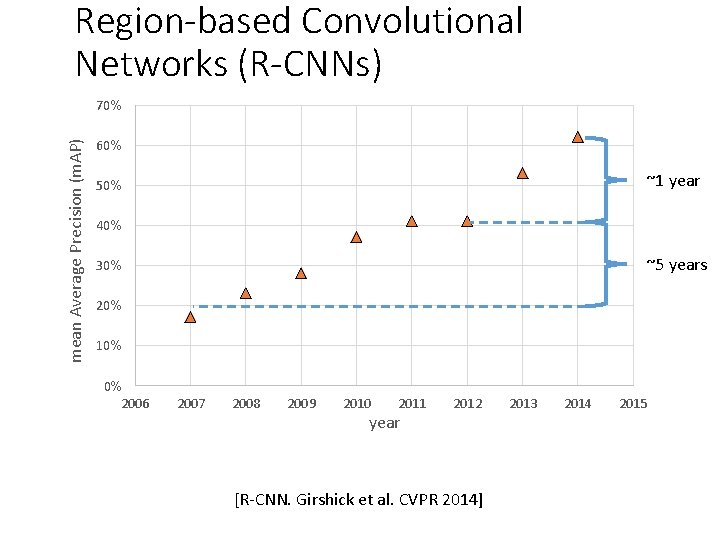
Region-based Convolutional Networks (R-CNNs) mean Average Precision (m. AP) 70% 60% ~1 year 50% 40% ~5 years 30% 20% 10% 0% 2006 2007 2008 2009 2010 2011 year 2012 [R-CNN. Girshick et al. CVPR 2014] 2013 2014 2015
Convolutional Neural Networks • Overview
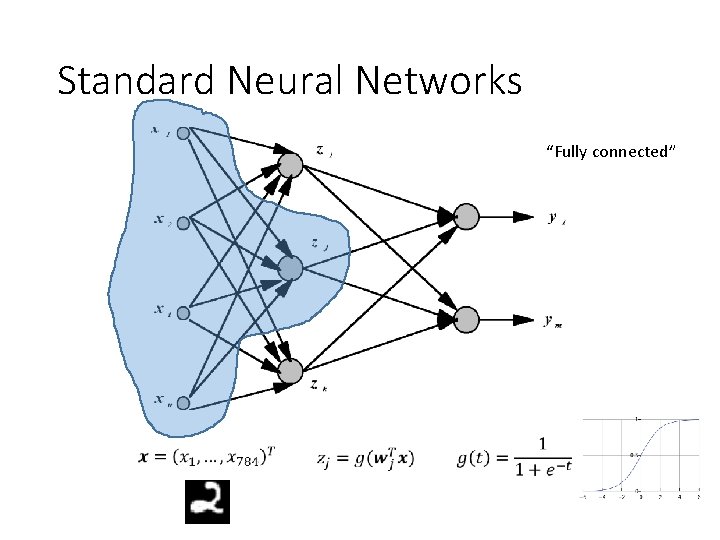
Standard Neural Networks “Fully connected”
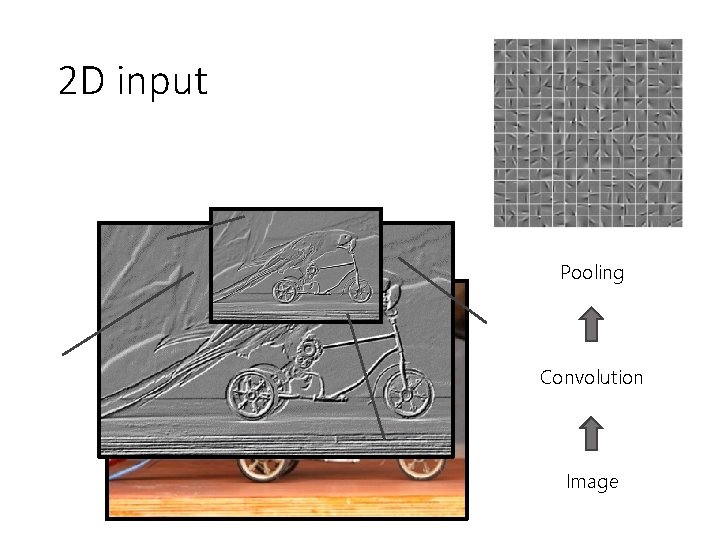
From NNs to Convolutional NNs • Local connectivity • Shared (“tied”) weights • Multiple feature maps • Pooling

Convolutional NNs • Local connectivity compare • Each green unit is only connected to (3) neighboring blue units
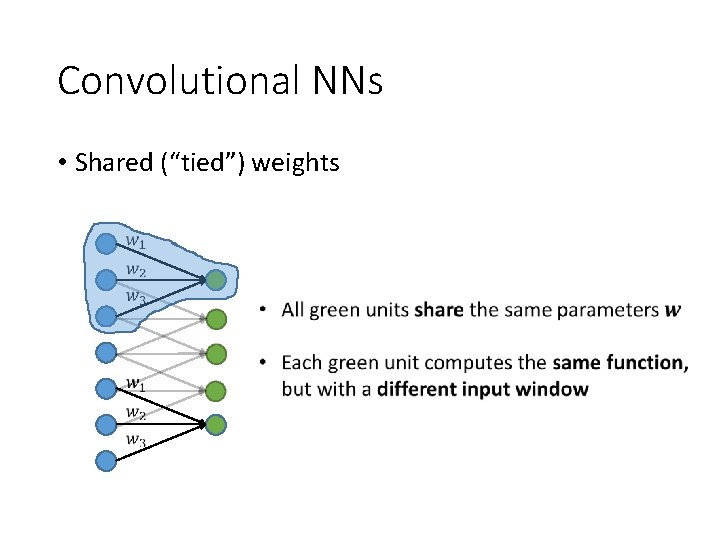
Convolutional NNs • Shared (“tied”) weights
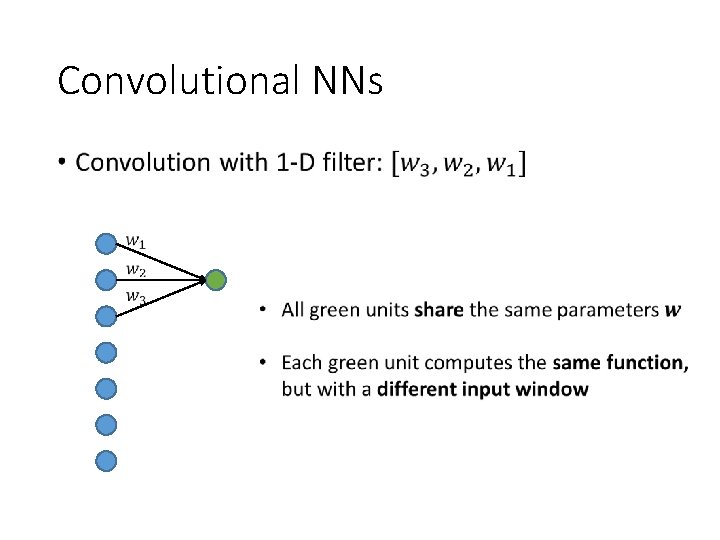
Convolutional NNs •
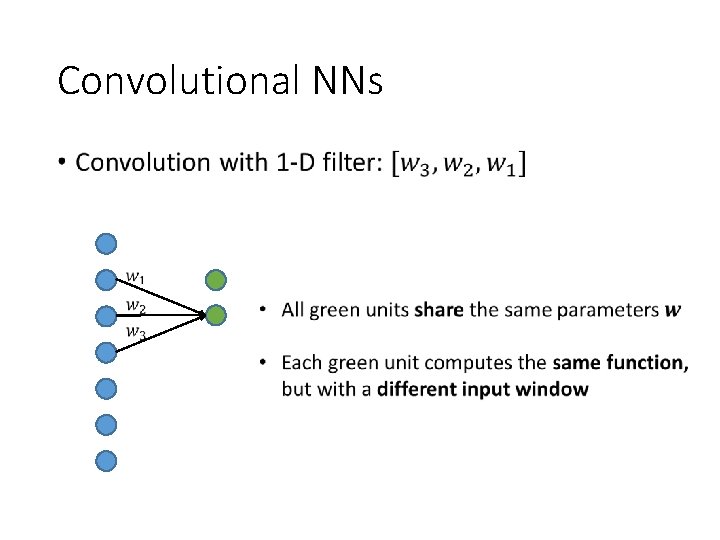
Convolutional NNs •
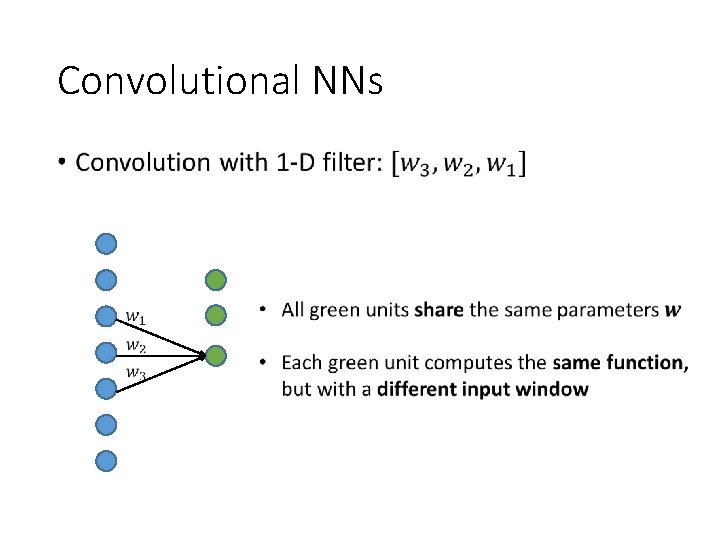
Convolutional NNs •
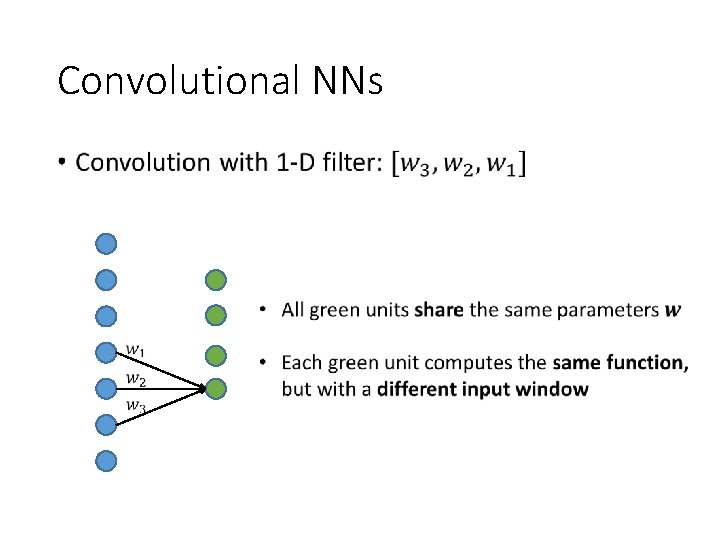
Convolutional NNs •
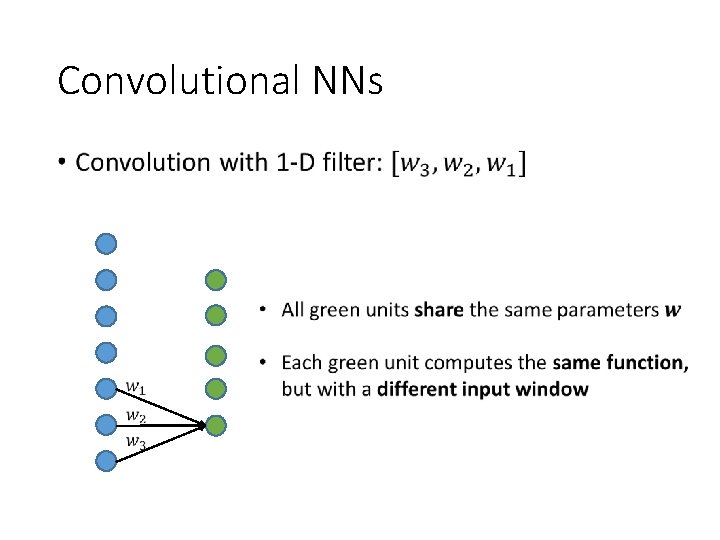
Convolutional NNs •
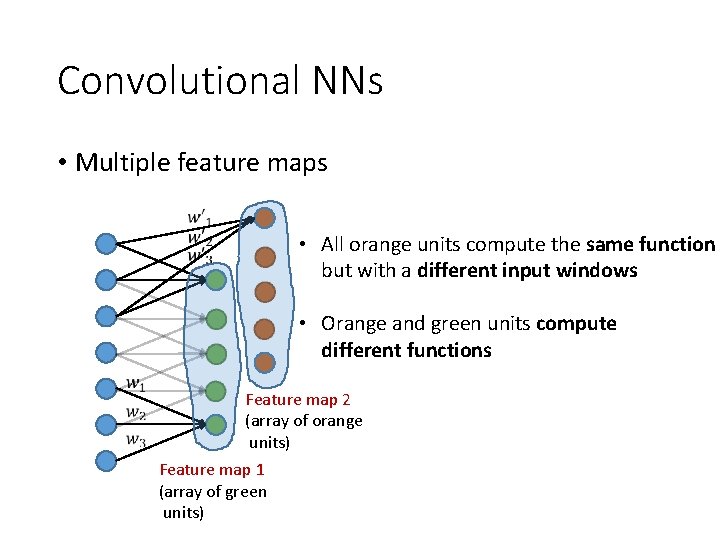
Convolutional NNs • Multiple feature maps • All orange units compute the same function but with a different input windows • Orange and green units compute different functions Feature map 2 (array of orange units) Feature map 1 (array of green units)
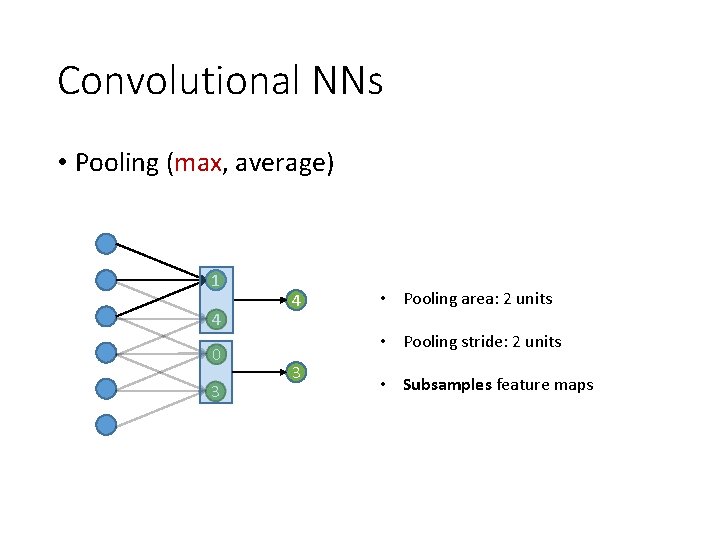
Convolutional NNs • Pooling (max, average) 1 4 0 3 4 • Pooling area: 2 units • Pooling stride: 2 units 3 • Subsamples feature maps
2 D input Pooling Convolution Image
1989 Backpropagation applied to handwritten zip code recognition , Lecun et al. , 1989
Historical perspective – 1980
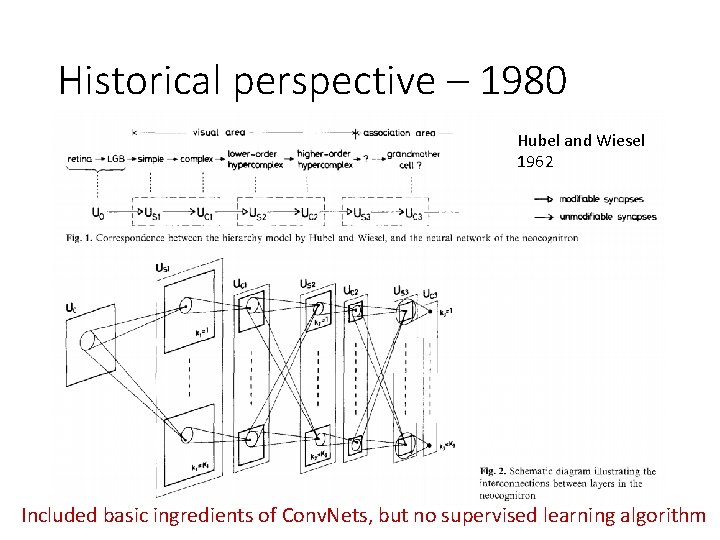
Historical perspective – 1980 Hubel and Wiesel 1962 Included basic ingredients of Conv. Nets, but no supervised learning algorithm
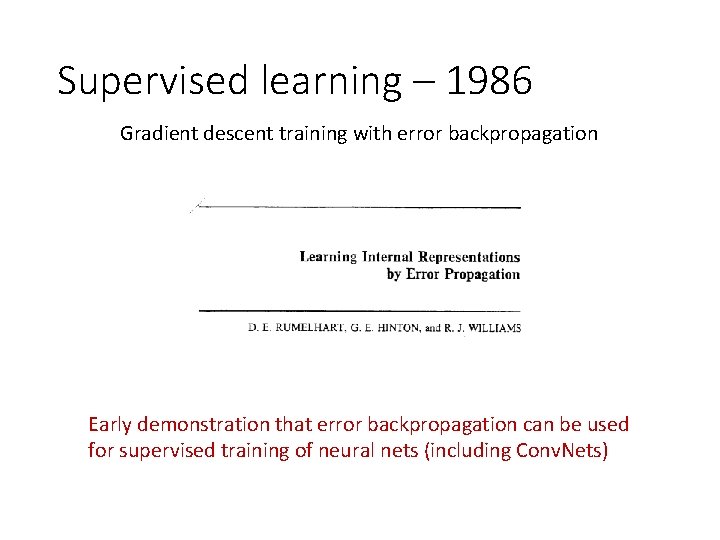
Supervised learning – 1986 Gradient descent training with error backpropagation Early demonstration that error backpropagation can be used for supervised training of neural nets (including Conv. Nets)
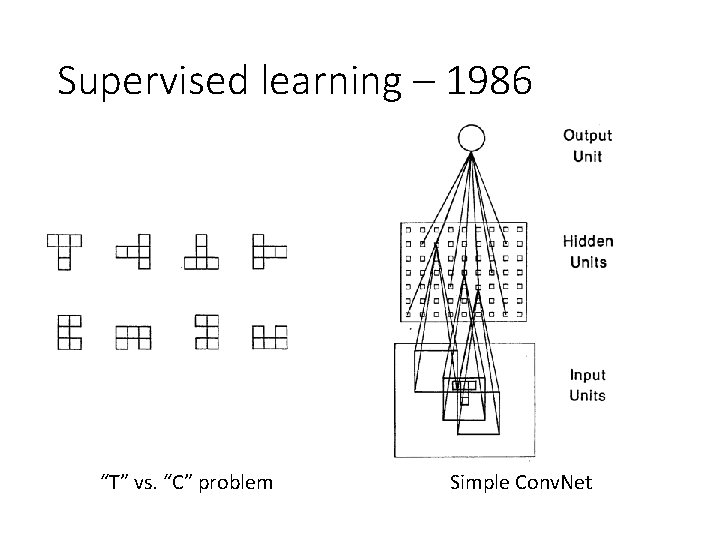
Supervised learning – 1986 “T” vs. “C” problem Simple Conv. Net
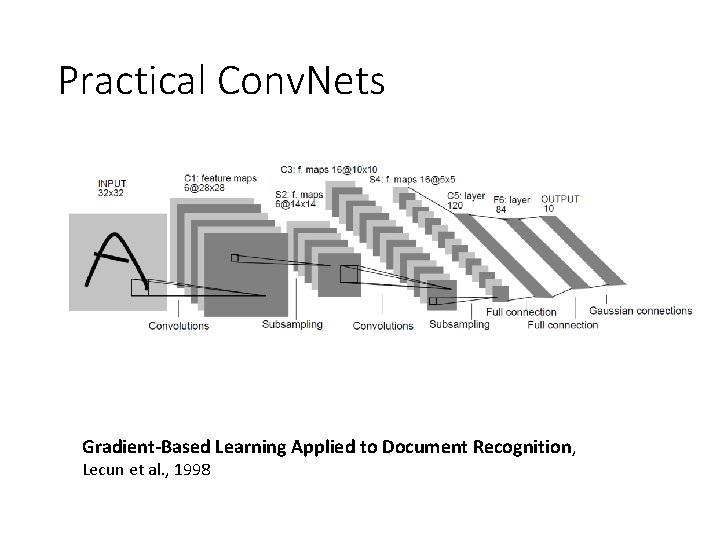
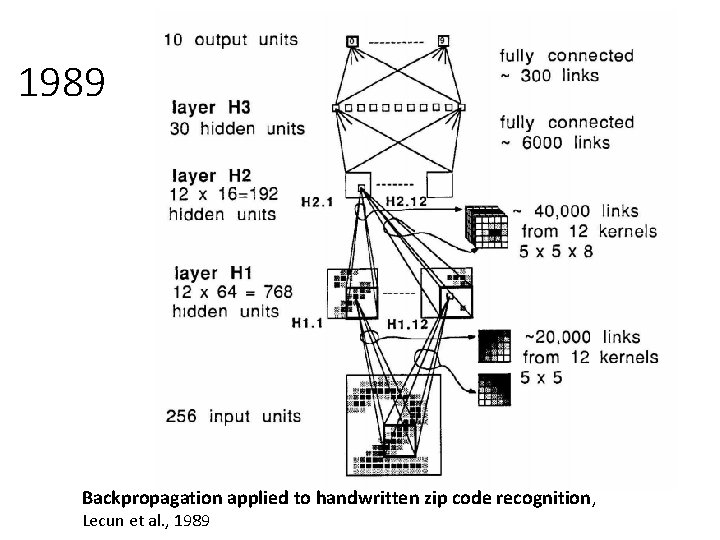
Practical Conv. Nets Gradient-Based Learning Applied to Document Recognition, Lecun et al. , 1998
Demo • http: //cs. stanford. edu/people/karpathy/convnetjs/ demo/mnist. html • Conv. Net. JS by Andrej Karpathy (Ph. D. student at Stanford) Software libraries • Caffe (C++, python, matlab) • Torch 7 (C++, lua) • Theano (python)
The fall of Conv. Nets • The rise of Support Vector Machines (SVMs) • Mathematical advantages (theory, convex optimization) • Competitive performance on tasks such as digit classification • Neural nets became unpopular in the mid 1990 s
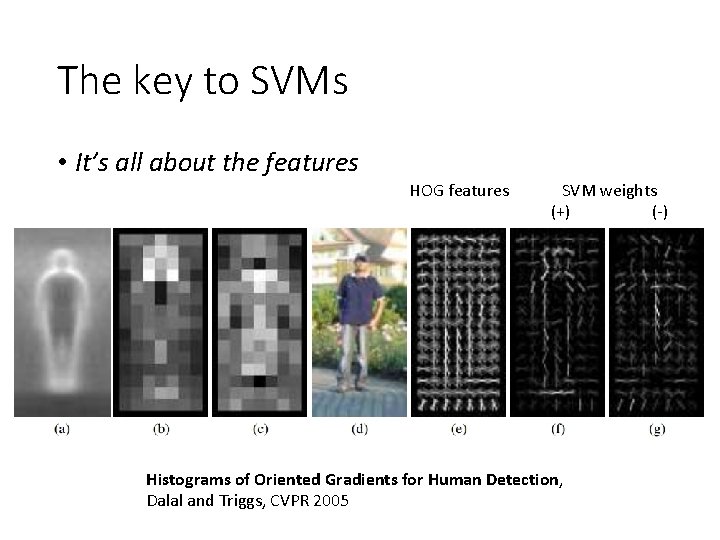
The key to SVMs • It’s all about the features HOG features SVM weights (+) (-) Histograms of Oriented Gradients for Human Detection, Dalal and Triggs, CVPR 2005
Core idea of “deep learning” • Input: the “raw” signal (image, waveform, …) • Features: hierarchy of features is learned from the raw input
• If SVMs killed neural nets, how did they come back (in computer vision)?
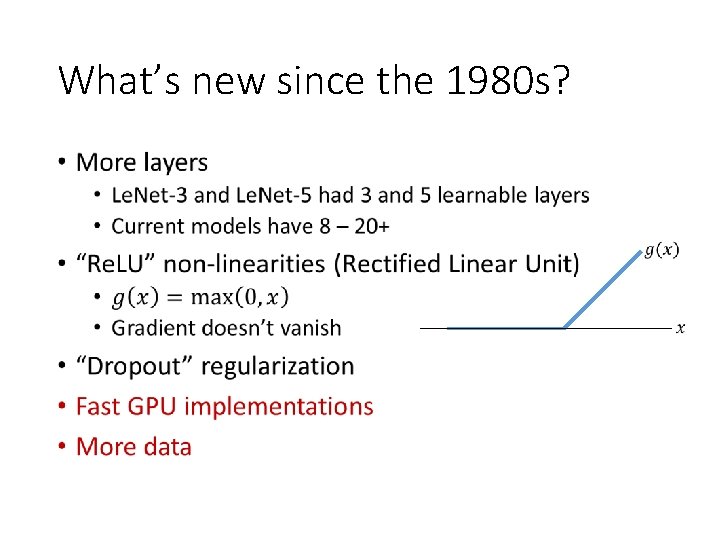
What’s new since the 1980 s? •
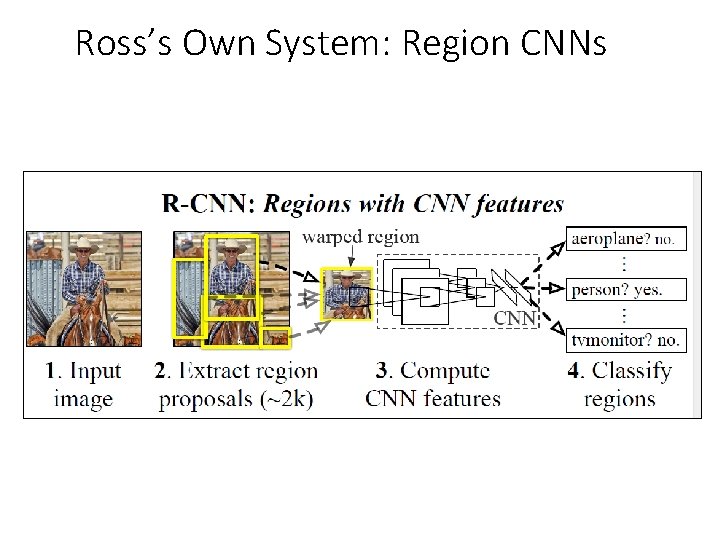
Ross’s Own System: Region CNNs
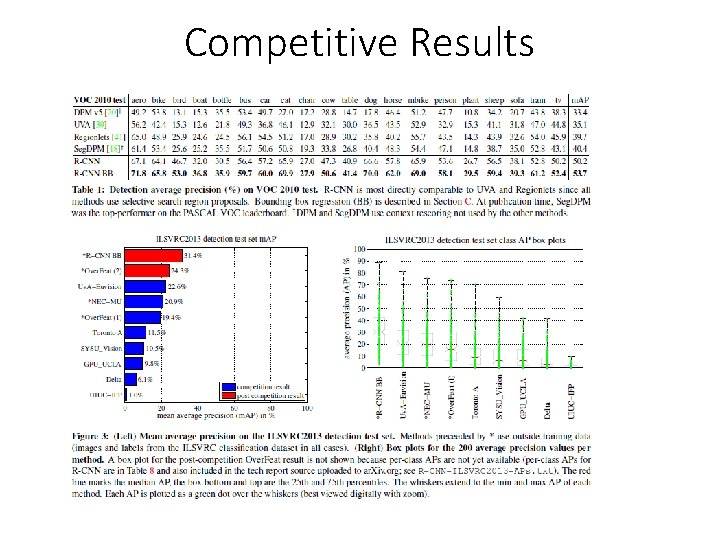
Competitive Results
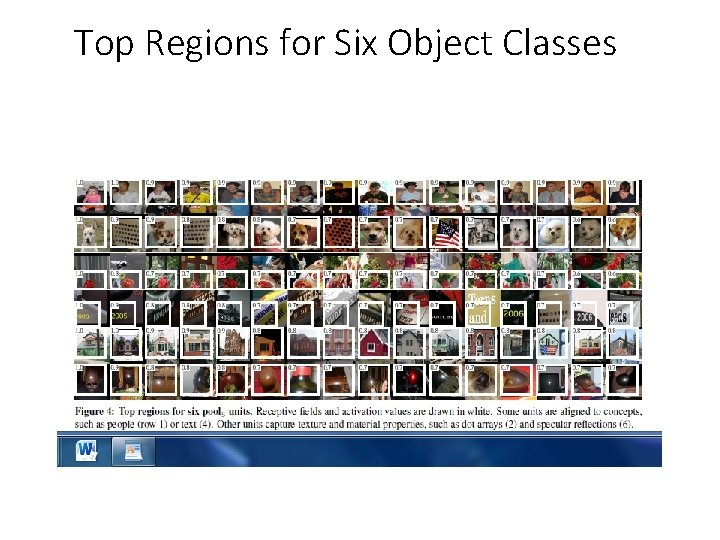
Top Regions for Six Object Classes
- Slides: 62