
Obesity Sensitivity Training as a Tool for Improving
Obesity Sensitivity Training as a Tool for Improving Patient Education Pam Webber and Mary Kinnebrew Fort Collins Family Medicine Residency Poudre Valley Health System Fort Collins, Colorado
Overview Weightism l Background on Federal Grant l Understanding complexity of problem l l Magnitude of problem l Societal and cultural factors Understanding the patient perspective l Opportunities to practice and evaluate skills l
Weight Bias Health professionals specializing in obesity were given an association test at a national obesity meeting l Pro-thin, anti-fat bias l Endorsed implicit stereotypes of lazy, stupid and worthless Schwartz, Chambliss, Brownell, Blair and Billington, (2002). Weight bias among health professionals specializing in obesity. Obesity Research, 11, 9 1033 -1039.
Tools for assessment http//implicit. harvard. edu/implicit/ l Scales l l BAOP Beliefs About Obese Persons l Attitudes Towards Obese Persons
Why care about sensitivity? l Stewart (1995) in the Canadian Medical Association Journal reviewed randomized controlled trials on patient physician education. l Correlation between effective physicianpatient communication and improved patient health outcomes l Effective communication included – showing support and empathy, asking about feelings, conveying clear information with emotional support
Why Care? l Beach et al (2005) Annals of Family Medicine used the Commonwealth 2001 Health Care Quality Survey of 6, 722 adults l Correlated involvement in decisions and treatment with dignity with patient satisfaction, adherence and receipt of optimal preventive care. l Being treated with dignity and being involved in decisions were independently associated with positive outcomes
Federal Training Grant Diversity Curriculum using the principle of cultural humility (Tervalon and Murray-Garcia, 1998, Journal of Health Care for the Poor and Underserved, 9(2), 117 -123. Residents more likely to involve patients in agenda setting l l l More likely to solicit patient perceptions related to illness More likely to involve patients in decision making Residents identified challenges with obese and chronic pain patients
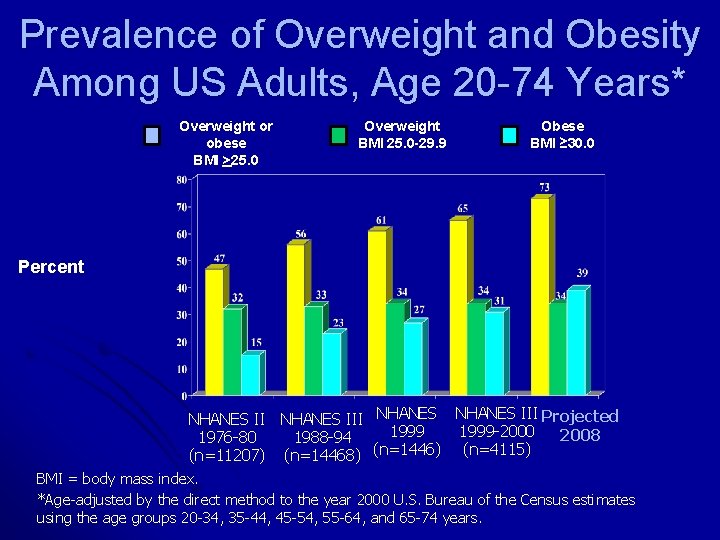
Prevalence of Overweight and Obesity Among US Adults, Age 20 -74 Years* Overweight or obese BMI >25. 0 Overweight BMI 25. 0 -29. 9 Obese BMI ≥ 30. 0 Percent NHANES III Projected 1999 -2000 2008 1976 -80 1988 -94 (n=1446) (n=4115) (n=11207) (n=14468) BMI = body mass index. *Age-adjusted by the direct method to the year 2000 U. S. Bureau of the Census estimates using the age groups 20 -34, 35 -44, 45 -54, 55 -64, and 65 -74 years.
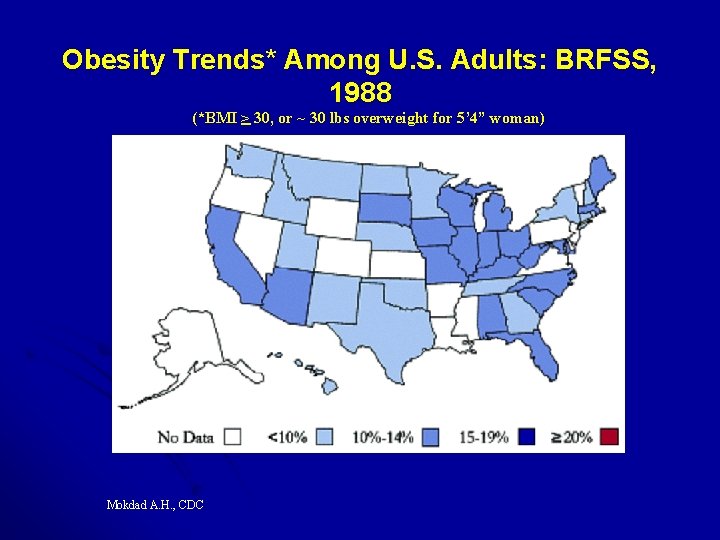
Obesity Trends* Among U. S. Adults: BRFSS, 1988 (*BMI > 30, or ~ 30 lbs overweight for 5’ 4” woman) Mokdad A. H. , CDC
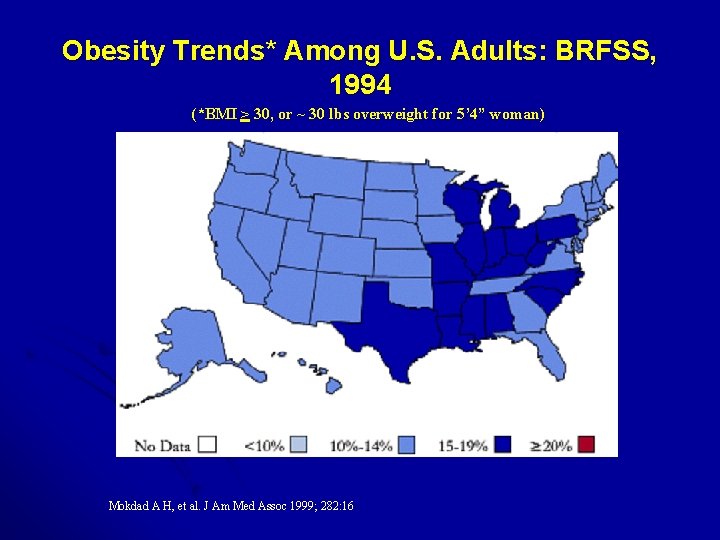
Obesity Trends* Among U. S. Adults: BRFSS, 1994 (*BMI > 30, or ~ 30 lbs overweight for 5’ 4” woman) Mokdad A H, et al. J Am Med Assoc 1999; 282: 16
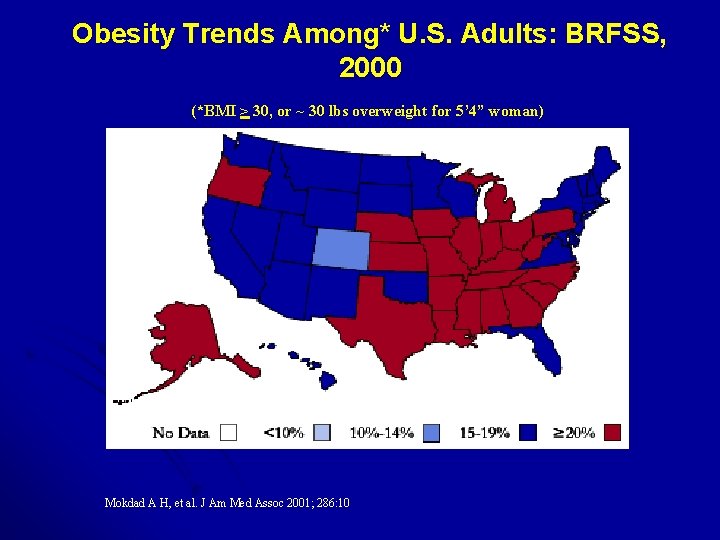
Obesity Trends Among* U. S. Adults: BRFSS, 2000 (*BMI > 30, or ~ 30 lbs overweight for 5’ 4” woman) Mokdad A H, et al. J Am Med Assoc 2001; 286: 10
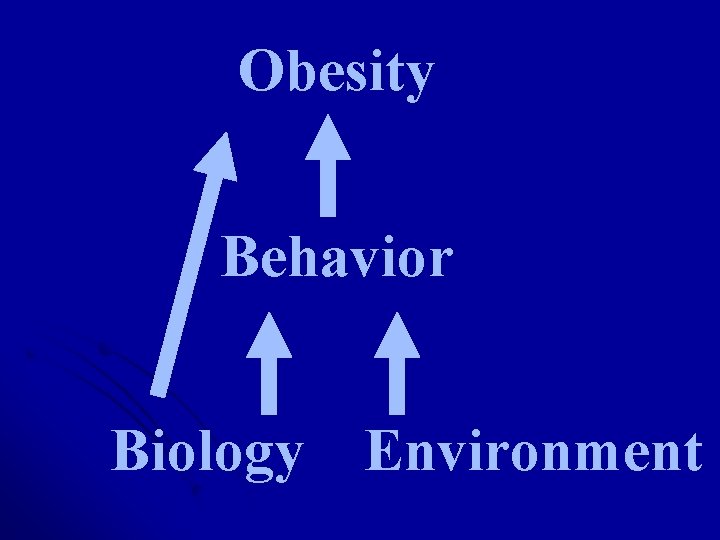
Obesity Behavior Biology Environment
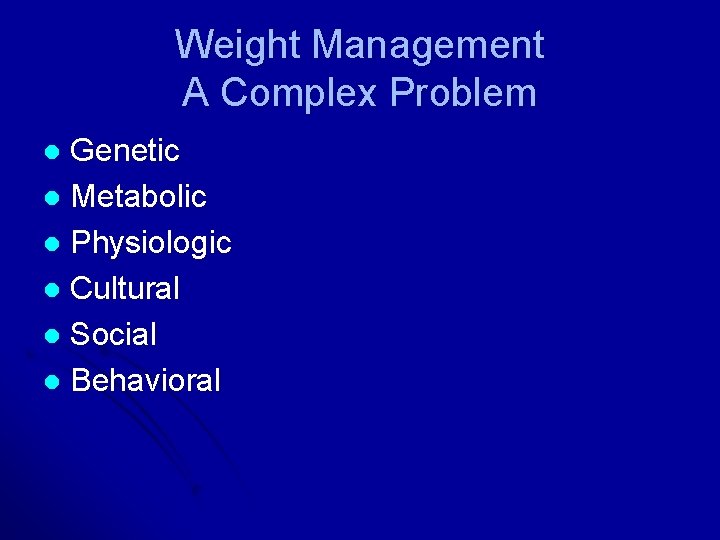
Weight Management A Complex Problem Genetic l Metabolic l Physiologic l Cultural l Social l Behavioral l
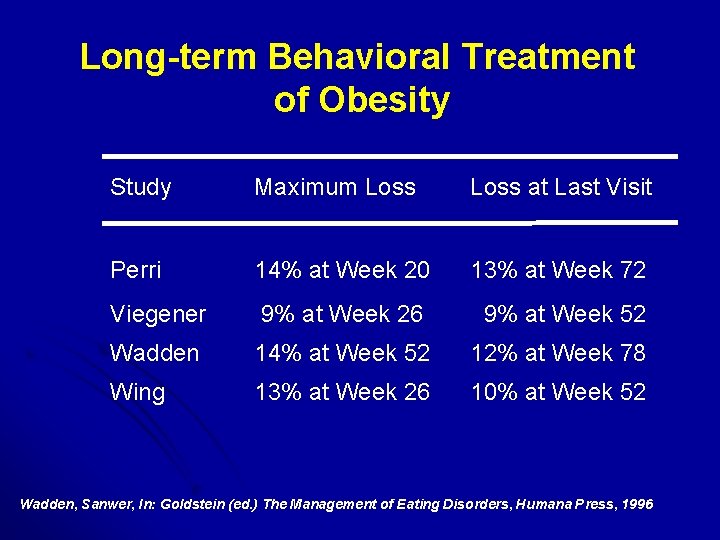
Long-term Behavioral Treatment of Obesity Study Maximum Loss at Last Visit Perri 14% at Week 20 13% at Week 72 Viegener 9% at Week 26 9% at Week 52 Wadden 14% at Week 52 12% at Week 78 Wing 13% at Week 26 10% at Week 52 Wadden, Sanwer, In: Goldstein (ed. ) The Management of Eating Disorders, Humana Press, 1996
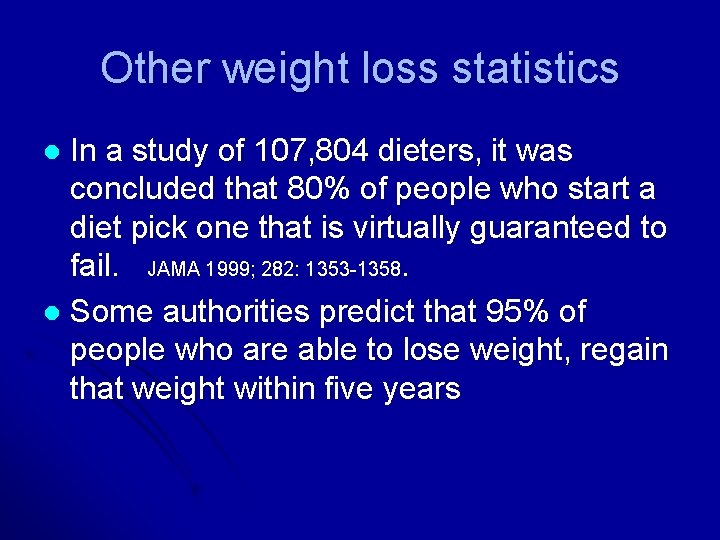
Other weight loss statistics In a study of 107, 804 dieters, it was concluded that 80% of people who start a diet pick one that is virtually guaranteed to fail. JAMA 1999; 282: 1353 -1358. l Some authorities predict that 95% of people who are able to lose weight, regain that weight within five years l
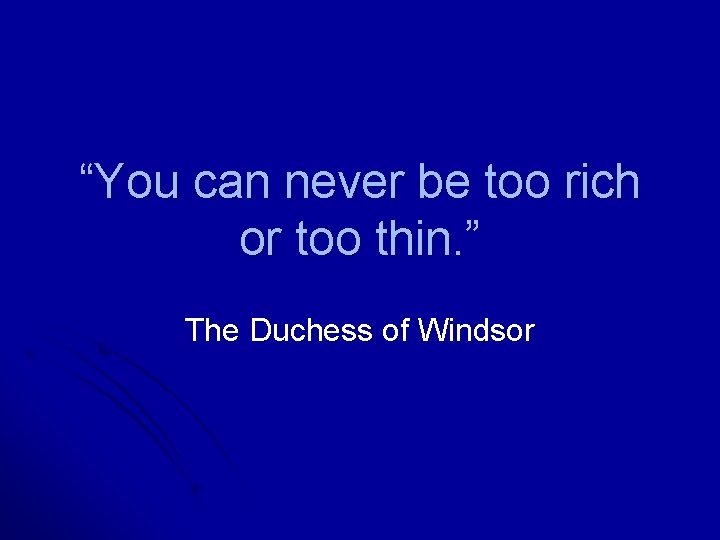
“You can never be too rich or too thin. ” The Duchess of Windsor
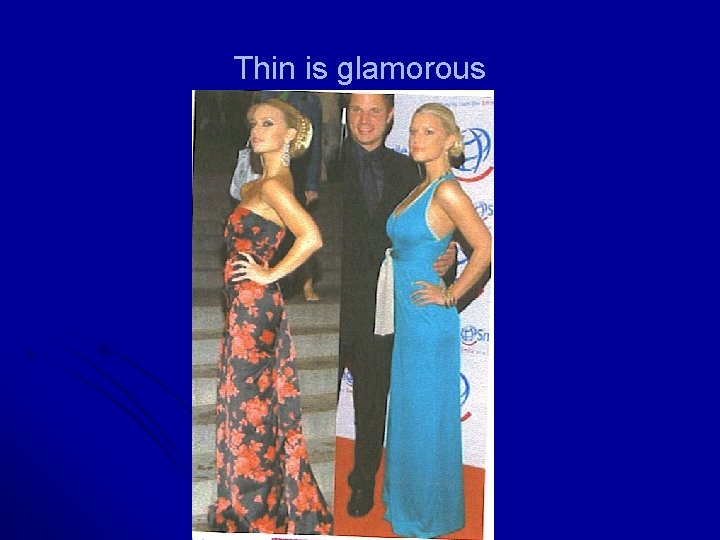
Thin is glamorous
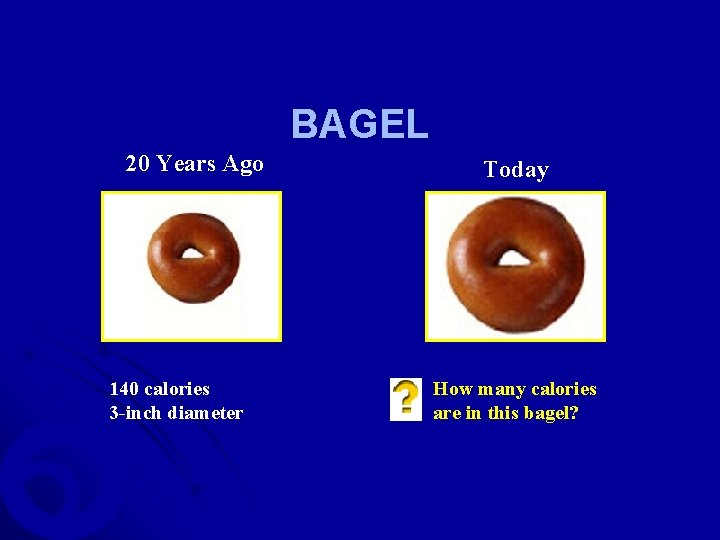
BAGEL 20 Years Ago 140 calories 3 -inch diameter Today How many calories are in this bagel?
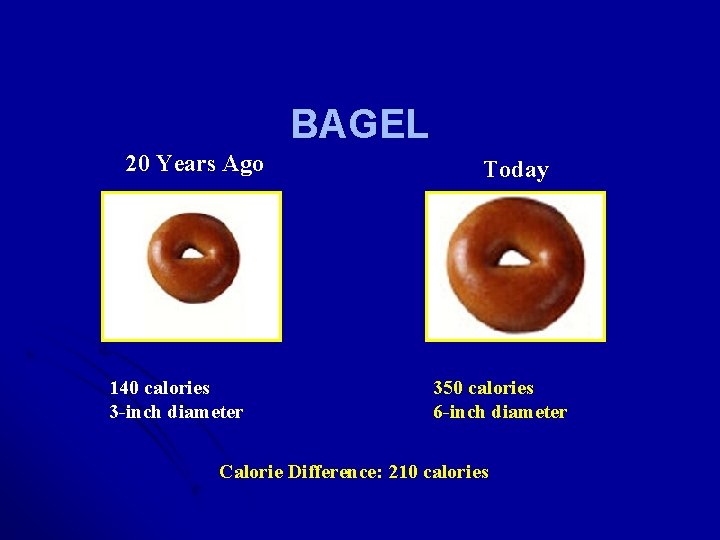
BAGEL 20 Years Ago 140 calories 3 -inch diameter Today 350 calories 6 -inch diameter Calorie Difference: 210 calories
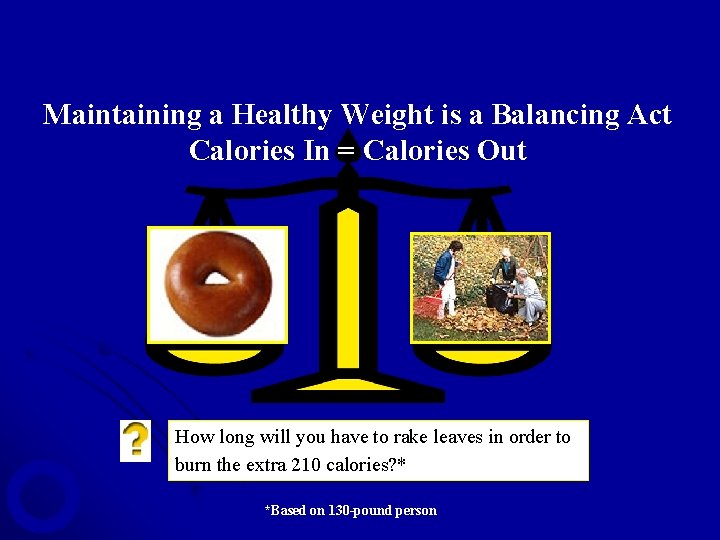
Maintaining a Healthy Weight is a Balancing Act Calories In = Calories Out How long will you have to rake leaves in order to burn the extra 210 calories? * *Based on 130 -pound person
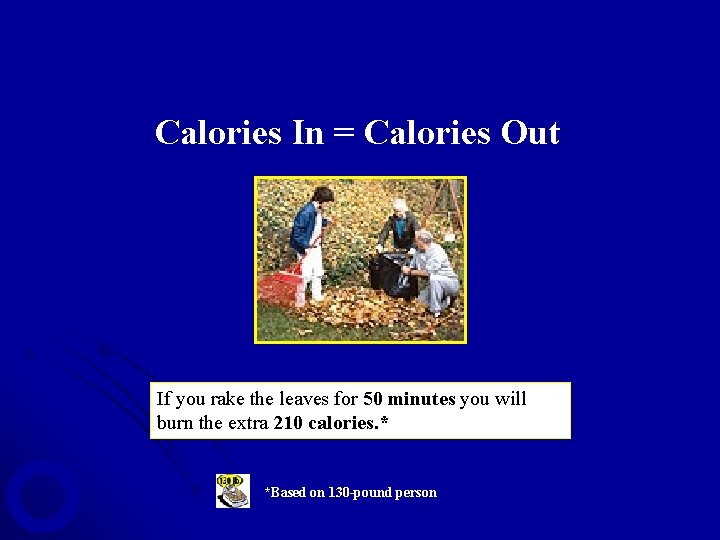
Calories In = Calories Out If you rake the leaves for 50 minutes you will burn the extra 210 calories. * *Based on 130 -pound person
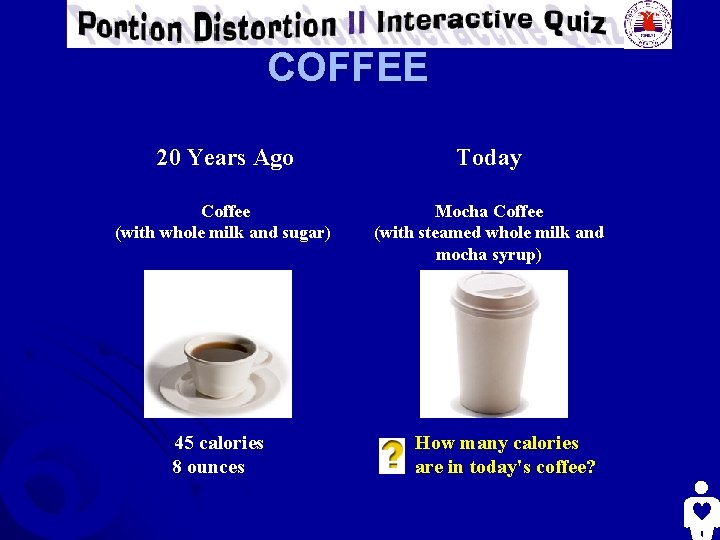
COFFEE 20 Years Ago Today Coffee (with whole milk and sugar) Mocha Coffee (with steamed whole milk and mocha syrup) 45 calories 8 ounces How many calories are in today's coffee?
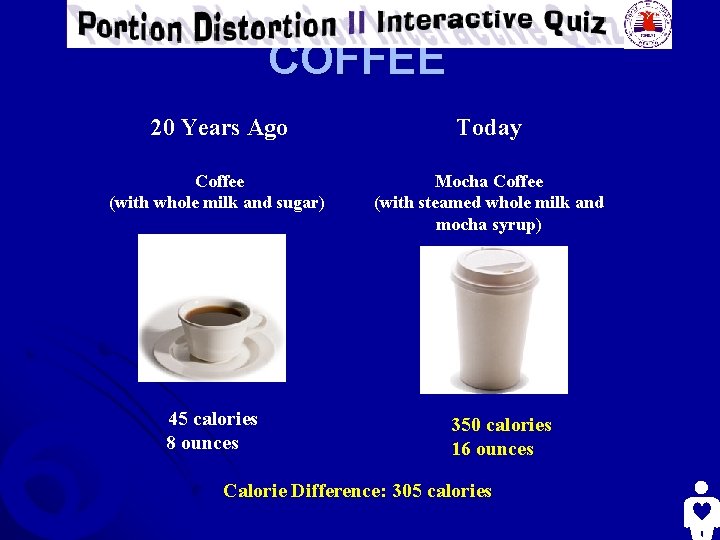
COFFEE 20 Years Ago Today Coffee (with whole milk and sugar) Mocha Coffee (with steamed whole milk and mocha syrup) 45 calories 8 ounces 350 calories 16 ounces Calorie Difference: 305 calories
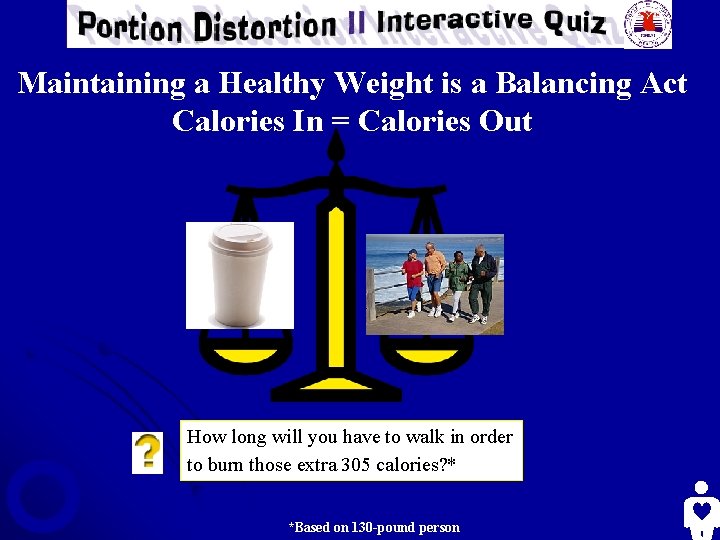
Maintaining a Healthy Weight is a Balancing Act Calories In = Calories Out How long will you have to walk in order to burn those extra 305 calories? * *Based on 130 -pound person
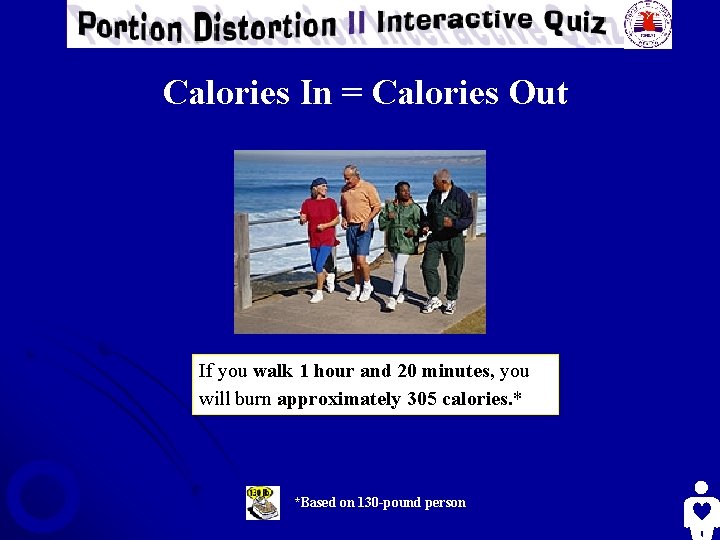
Calories In = Calories Out If you walk 1 hour and 20 minutes, you will burn approximately 305 calories. * *Based on 130 -pound person
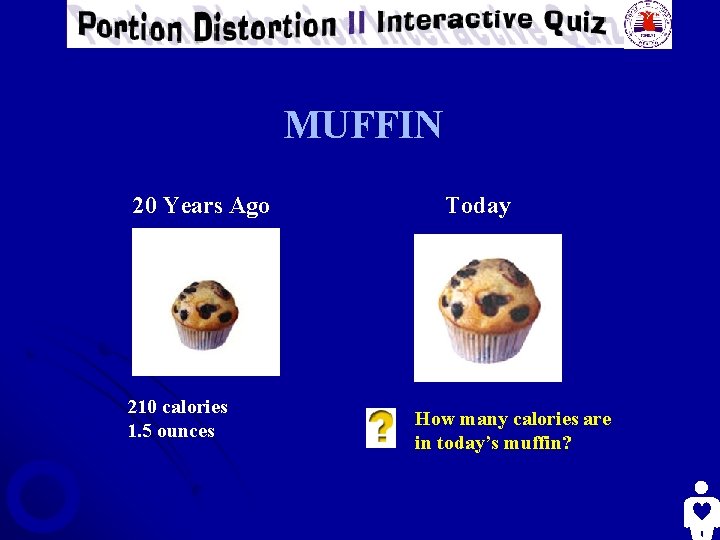
MUFFIN 20 Years Ago 210 calories 1. 5 ounces Today How many calories are in today’s muffin?
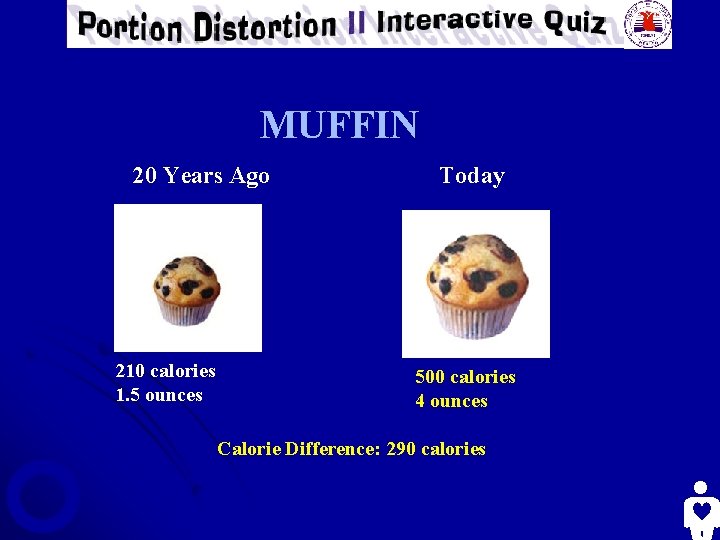
MUFFIN 20 Years Ago 210 calories 1. 5 ounces Today 500 calories 4 ounces Calorie Difference: 290 calories
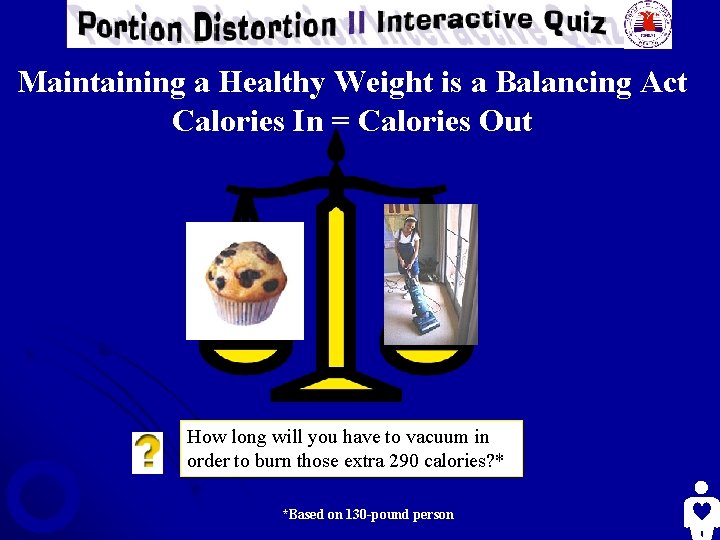
Maintaining a Healthy Weight is a Balancing Act Calories In = Calories Out How long will you have to vacuum in order to burn those extra 290 calories? * *Based on 130 -pound person
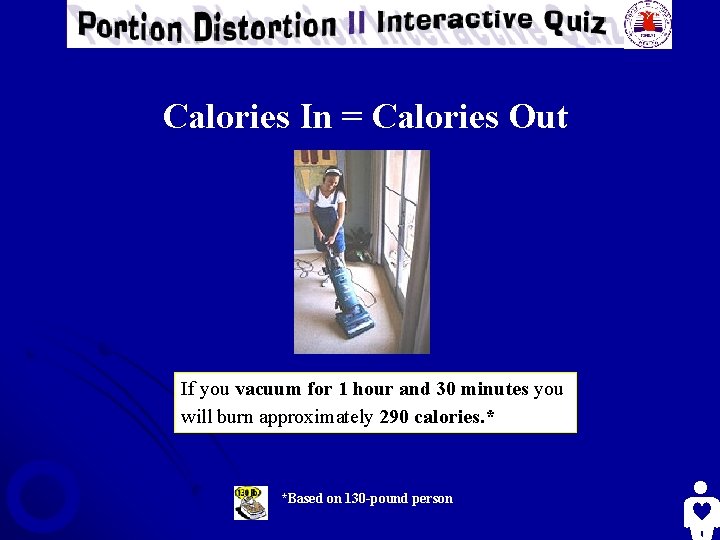
Calories In = Calories Out If you vacuum for 1 hour and 30 minutes you will burn approximately 290 calories. * *Based on 130 -pound person
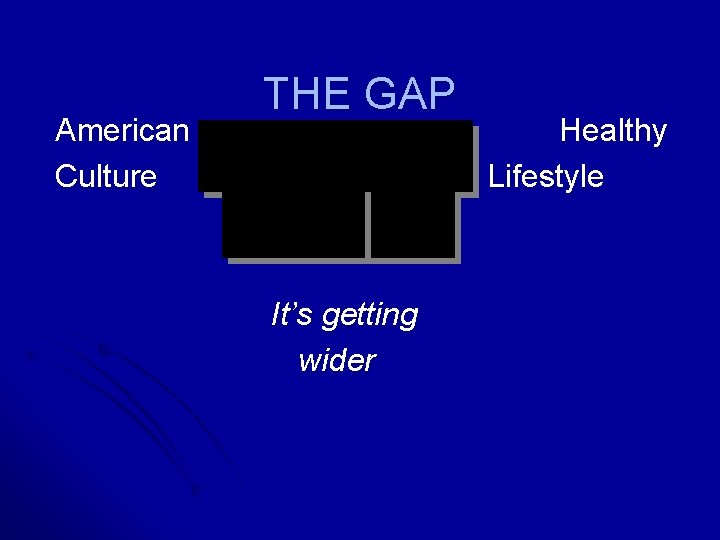
American Culture THE GAP It’s getting wider Healthy Lifestyle
Understanding the patient’s perspective Discussion of supportive language l Empathy Suits l l Visit l with physician while wearing suit Videotape l Different patient perspectives
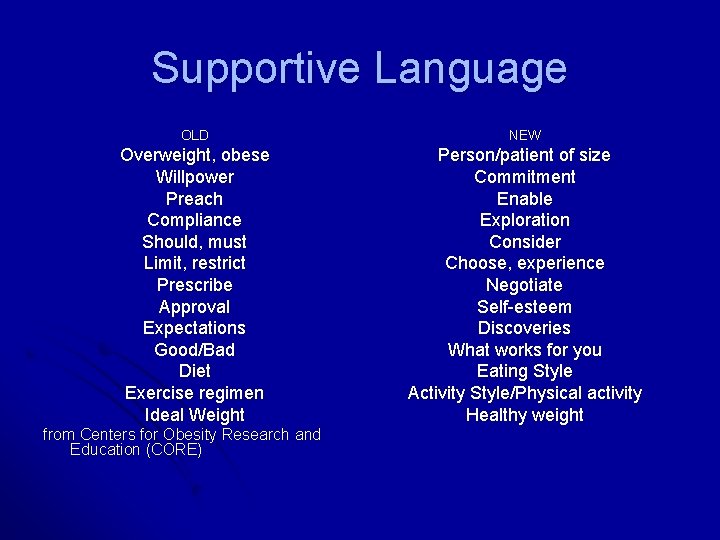
Supportive Language OLD NEW Overweight, obese Willpower Preach Compliance Should, must Limit, restrict Prescribe Approval Expectations Good/Bad Diet Exercise regimen Ideal Weight Person/patient of size Commitment Enable Exploration Consider Choose, experience Negotiate Self-esteem Discoveries What works for you Eating Style Activity Style/Physical activity Healthy weight from Centers for Obesity Research and Education (CORE)
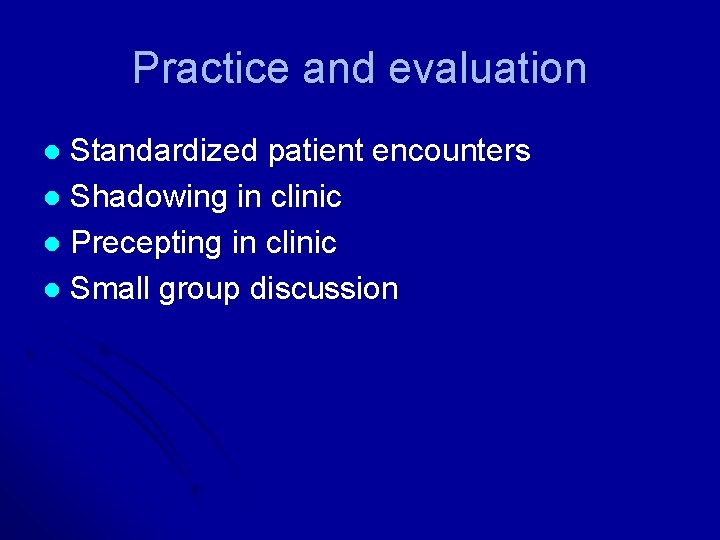
Practice and evaluation Standardized patient encounters l Shadowing in clinic l Precepting in clinic l Small group discussion l
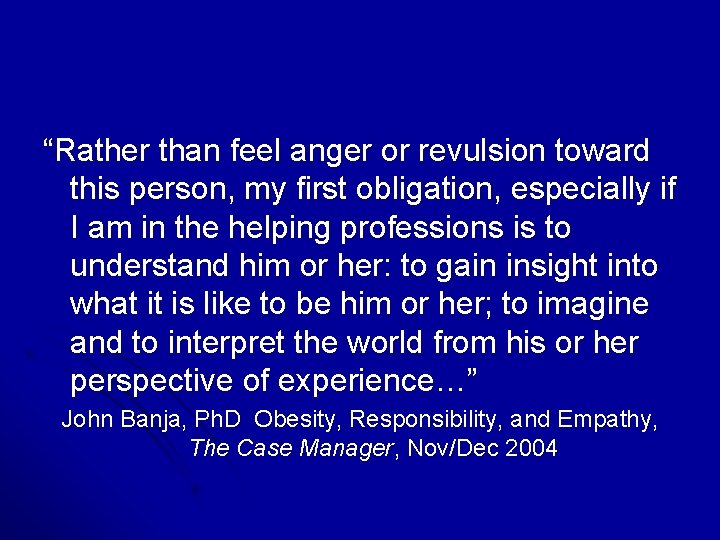
“Rather than feel anger or revulsion toward this person, my first obligation, especially if I am in the helping professions is to understand him or her: to gain insight into what it is like to be him or her; to imagine and to interpret the world from his or her perspective of experience…” John Banja, Ph. D Obesity, Responsibility, and Empathy, The Case Manager, Nov/Dec 2004
Contact Information Pam Webber Fort Collins Family Medicine Residency 1025 Pennock Place Fort Collins, Colorado 80524 webbpa@pvhs. org 485 -8800
- Slides: 36