
Obesity Healthy Eating Physical Activity Alison Mesler November
Obesity Healthy Eating Physical Activity Alison Mesler November 9

Walle http: //www. youtube. com/watch? v=h 1 BQPV-i. Ck. U through 2: 00
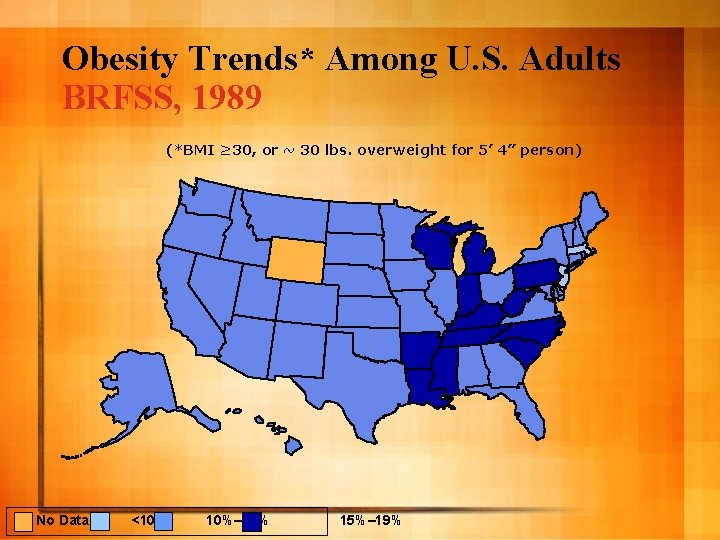
Obesity Trends* Among U. S. Adults BRFSS, 1989 (*BMI ≥ 30, or ~ 30 lbs. overweight for 5’ 4” person) No Data <10% 10%– 14% 15%– 19%
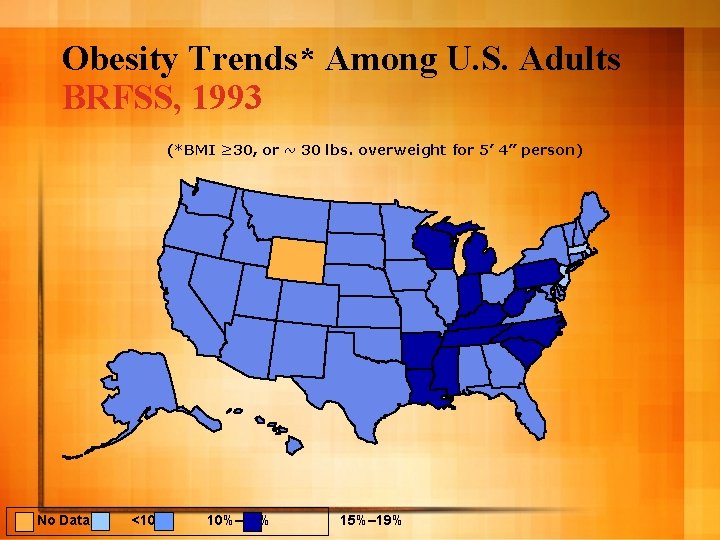
Obesity Trends* Among U. S. Adults BRFSS, 1993 (*BMI ≥ 30, or ~ 30 lbs. overweight for 5’ 4” person) No Data <10% 10%– 14% 15%– 19%
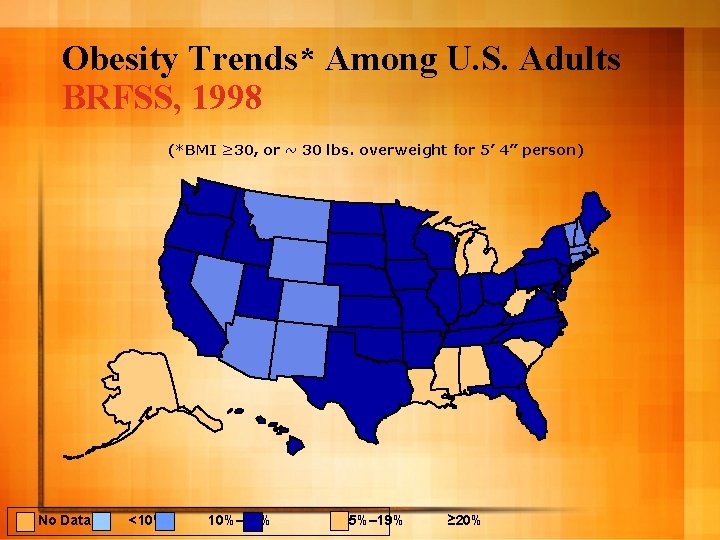
Obesity Trends* Among U. S. Adults BRFSS, 1998 (*BMI ≥ 30, or ~ 30 lbs. overweight for 5’ 4” person) No Data <10% 10%– 14% 15%– 19% ≥ 20%
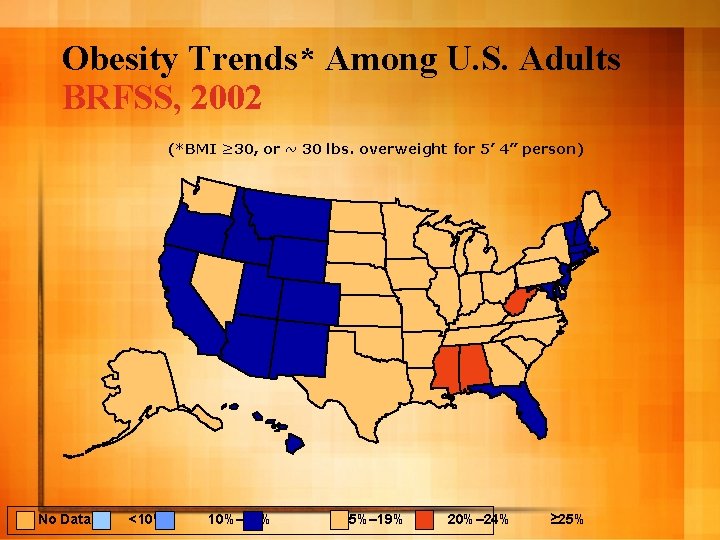
Obesity Trends* Among U. S. Adults BRFSS, 2002 (*BMI ≥ 30, or ~ 30 lbs. overweight for 5’ 4” person) No Data <10% 10%– 14% 15%– 19% 20%– 24% ≥ 25%
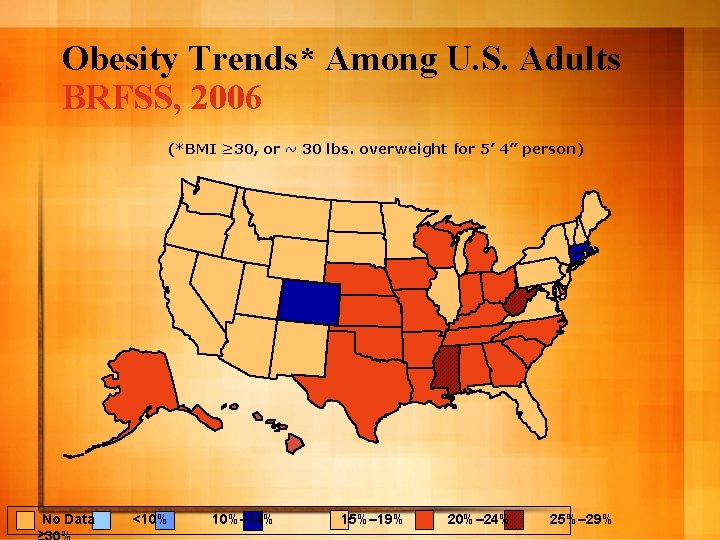
Obesity Trends* Among U. S. Adults BRFSS, 2006 (*BMI ≥ 30, or ~ 30 lbs. overweight for 5’ 4” person) No Data <10% 10%– 14% 15%– 19% 20%– 24% 25%– 29%
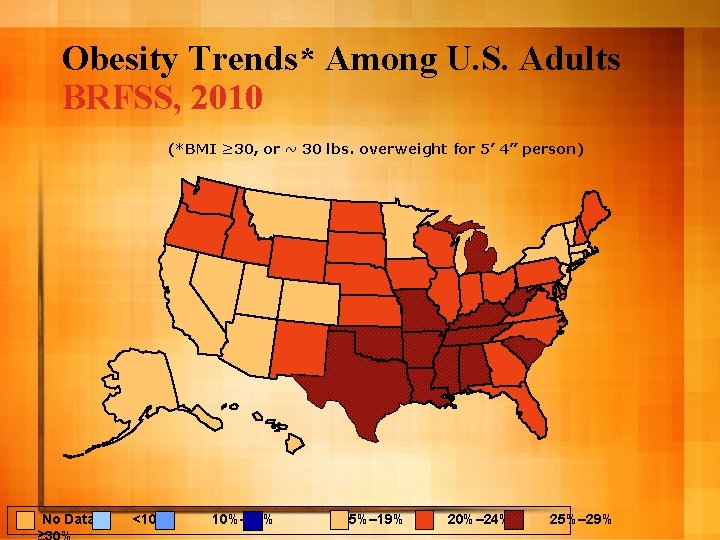
Obesity Trends* Among U. S. Adults BRFSS, 2010 (*BMI ≥ 30, or ~ 30 lbs. overweight for 5’ 4” person) No Data <10% 10%– 14% 15%– 19% 20%– 24% 25%– 29%
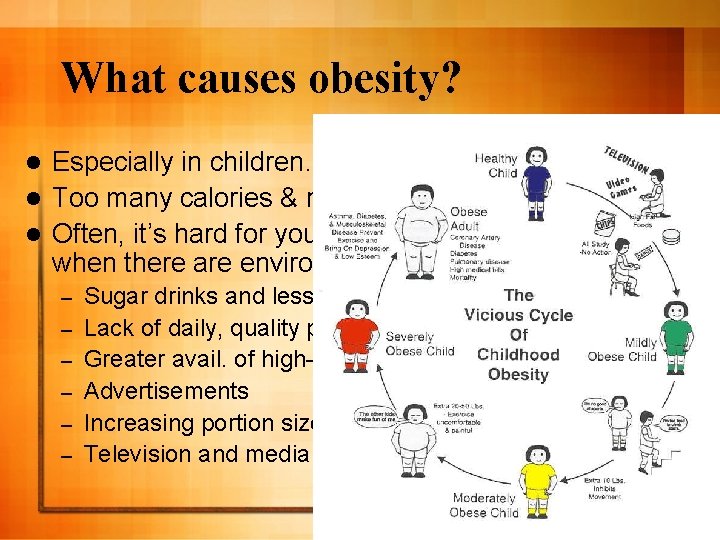
What causes obesity? Especially in children… l Too many calories & not enough physical activity. l Often, it’s hard for youth to make healthy choices when there are environmental influences such as: l – – – Sugar drinks and less healthy food in schools Lack of daily, quality physical activity in schools Greater avail. of high-energy foods & sugar drinks Advertisements Increasing portion sizes Television and media

How can we prevent obesity? !
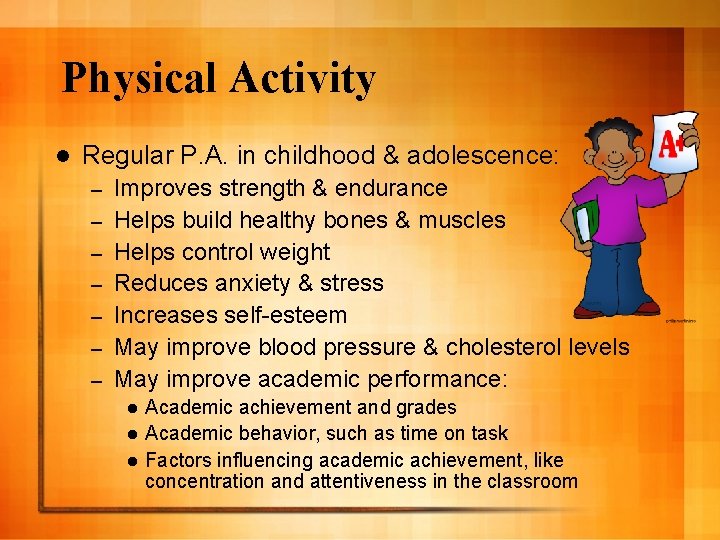
Physical Activity l Regular P. A. in childhood & adolescence: – – – – Improves strength & endurance Helps build healthy bones & muscles Helps control weight Reduces anxiety & stress Increases self-esteem May improve blood pressure & cholesterol levels May improve academic performance: Academic achievement and grades l Academic behavior, such as time on task l Factors influencing academic achievement, like concentration and attentiveness in the classroom l
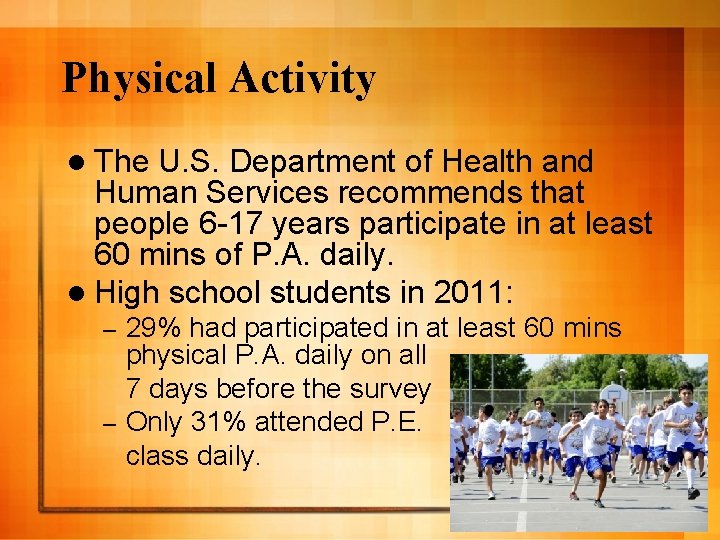
Physical Activity l The U. S. Department of Health and Human Services recommends that people 6 -17 years participate in at least 60 mins of P. A. daily. l High school students in 2011: 29% had participated in at least 60 mins physical P. A. daily on all 7 days before the survey – Only 31% attended P. E. class daily. –
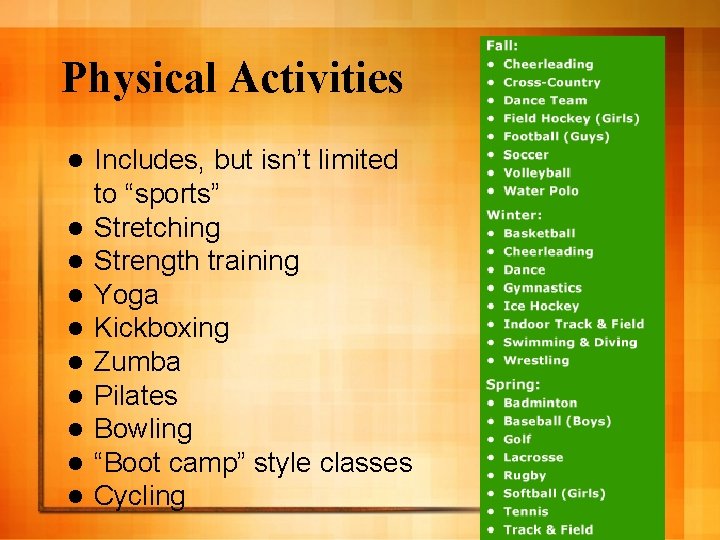
Physical Activities l l l l l Includes, but isn’t limited to “sports” Stretching Strength training Yoga Kickboxing Zumba Pilates Bowling “Boot camp” style classes Cycling
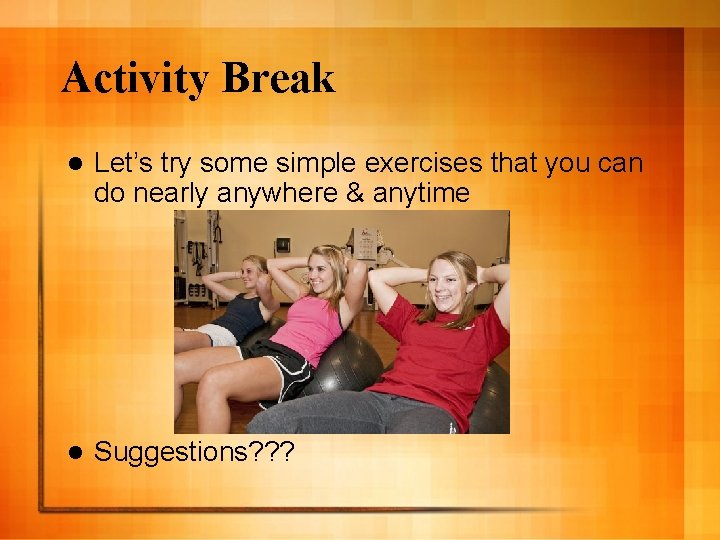
Activity Break l Let’s try some simple exercises that you can do nearly anywhere & anytime l Suggestions? ? ?
Eating “Healthy” To eat a “healthy diet” means to “consume a variety of foods balanced by a moderate intake of each food”. l Important to choose a variety of different foods in each food group l Focus on moderation, not elimination l Eat foods from the six major food groups l – – – Grains Dairy Meats - Fruits - Vegetables - Oils
My. Pyramid
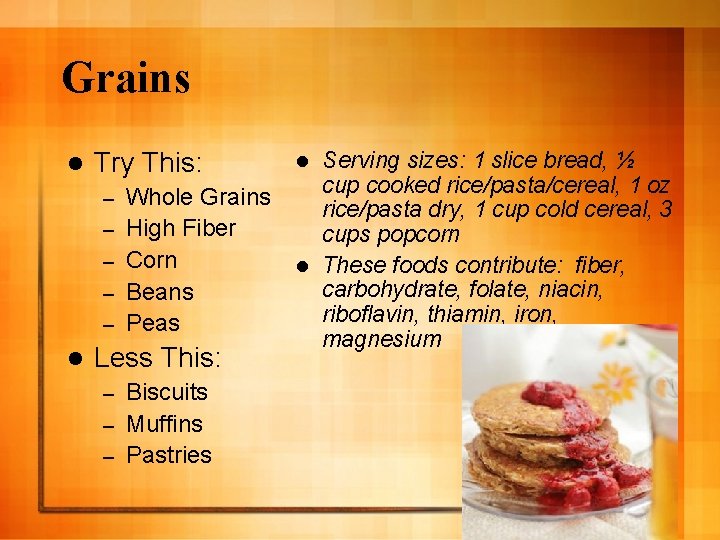
Grains l Try This: – – – l Whole Grains High Fiber Corn Beans Peas Less This: Biscuits – Muffins – Pastries – Serving sizes: 1 slice bread, ½ cup cooked rice/pasta/cereal, 1 oz rice/pasta dry, 1 cup cold cereal, 3 cups popcorn l These foods contribute: fiber, carbohydrate, folate, niacin, riboflavin, thiamin, iron, magnesium l
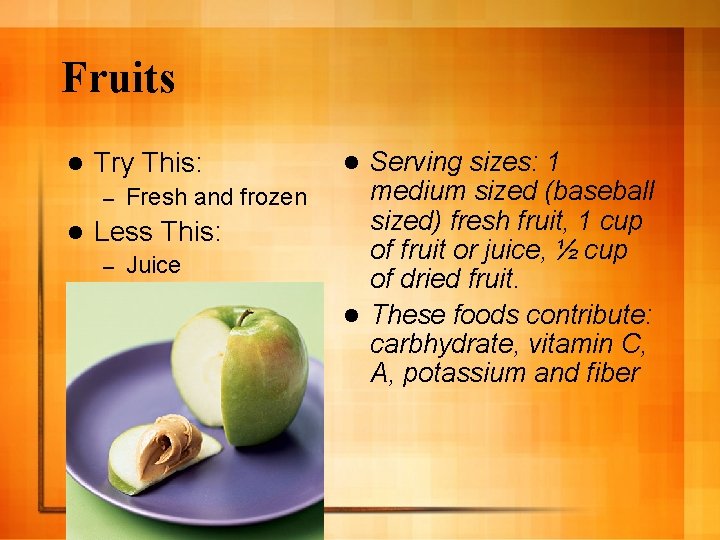
Fruits l Try This: – l Fresh and frozen Less This: – Juice Serving sizes: 1 medium sized (baseball sized) fresh fruit, 1 cup of fruit or juice, ½ cup of dried fruit. l These foods contribute: carbhydrate, vitamin C, A, potassium and fiber l
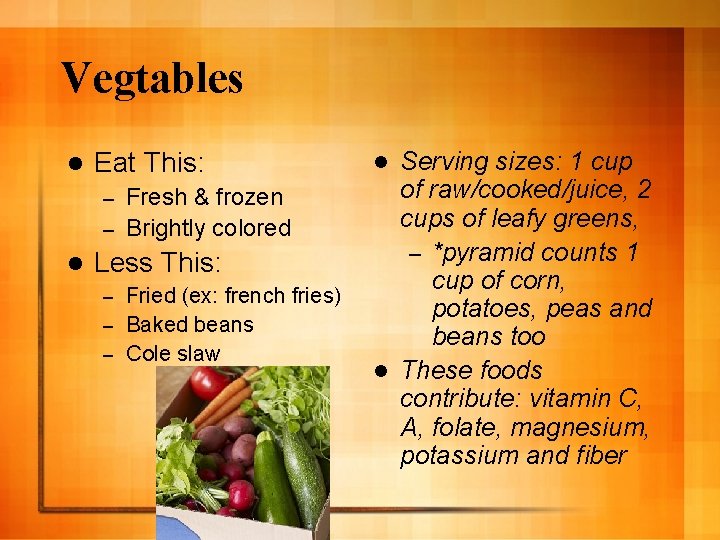
Vegtables l Eat This: Fresh & frozen – Brightly colored – l Less This: Fried (ex: french fries) – Baked beans – Cole slaw – Serving sizes: 1 cup of raw/cooked/juice, 2 cups of leafy greens, – *pyramid counts 1 cup of corn, potatoes, peas and beans too l These foods contribute: vitamin C, A, folate, magnesium, potassium and fiber l
Dairy l Eat/Drink This: Skim or 1% milk/cottage cheese – No-fat yogurt – l Less This: Chocolate Milk – Regular ice cream – Creamy yogurt with high sugar content – Serving size: 1 cup milk/yogurt/cottage cheese/pudding/ice cream, 2 slices of cheese l These foods contribute: protein, calcium, magnesium, riboflavin, vitamin B 12 as well as vitamins A and D when fortified. l
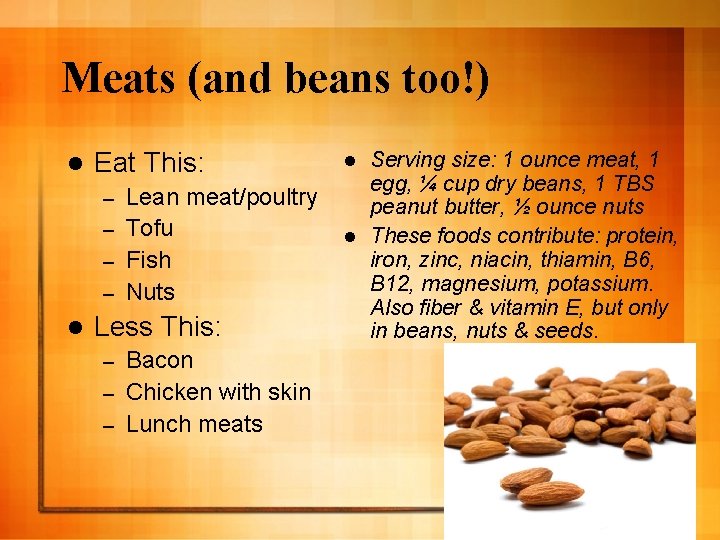
Meats (and beans too!) l Eat This: Lean meat/poultry – Tofu – Fish – Nuts – l Less This: Bacon – Chicken with skin – Lunch meats – Serving size: 1 ounce meat, 1 egg, ¼ cup dry beans, 1 TBS peanut butter, ½ ounce nuts l These foods contribute: protein, iron, zinc, niacin, thiamin, B 6, B 12, magnesium, potassium. Also fiber & vitamin E, but only in beans, nuts & seeds. l
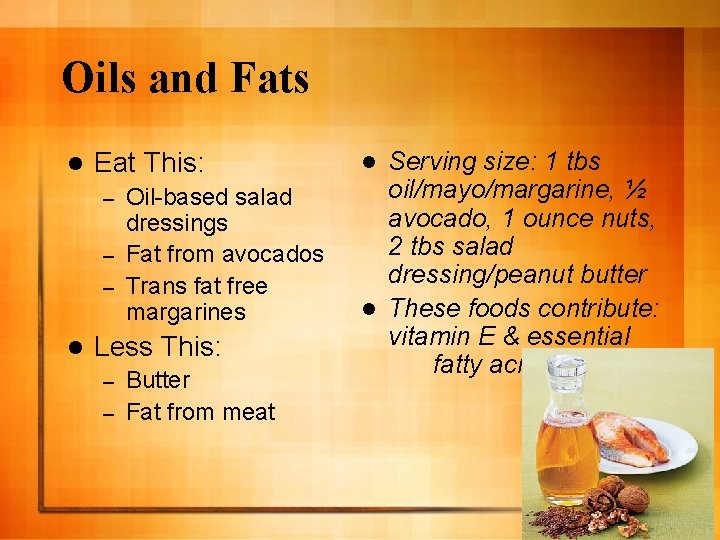
Oils and Fats l Eat This: Oil-based salad dressings – Fat from avocados – Trans fat free margarines – l Less This: Butter – Fat from meat – Serving size: 1 tbs oil/mayo/margarine, ½ avocado, 1 ounce nuts, 2 tbs salad dressing/peanut butter l These foods contribute: vitamin E & essential fatty acids l
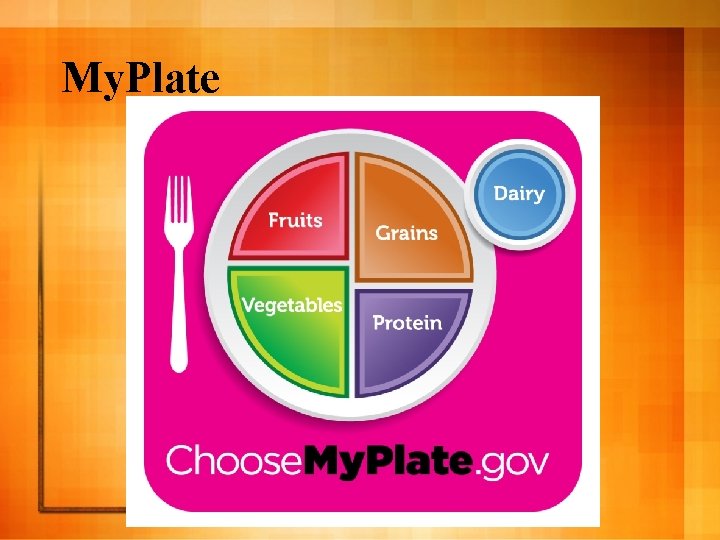
My. Plate
Activity Break l Design a meal plan using the information from My. Pyramid & My. Plate Cut out food photos from magazines – Arrange them into a day’s worth of meals, snacks included – Glue them onto poster – Write supporting nutritional facts and rational –
Review l http: //www. cdc. gov/CDCtv/Finding. Balance/
- Slides: 25