
Obesity and female malignancies Chiara Benedetto MD Ph
Obesity and female malignancies Chiara Benedetto MD, Ph. D, FCNGOF, FRCOG, FACOG, FEBCOG Chairman Ob. Gyn I, University of Torino, Italy
Obesity and Cancer It is estimated that approximately 20% of all cancers cases are related to obesity 15 -30% of weight loss in women is associated with a reduced risk of cancer Obesity is also predictive of increased cancer mortality M Arnold et al, Cancer Epidemiology 2016; C Benedetto et al, Best Pract Res Clin Obstet Gynaecol 2015; T Byers et al, Society of Endocrinology 2015
Obesity and Cancer For the WORLD CANCER RESEARCH FUND (WCRF) there is a convincing relationship between obesity and the risk of eleven cancers: breast in postmenopausal women ovary endometrium esophagus, gastric cardia, colon, rectum, biliary tract system, pancreas, kidney, multiple myeloma Kyrgiou et al, British Medical Journal 2017
Focus on Impact of obesity on the epidemiology and prognosis of… Postmenopausal breast cancer Endometrial cancer Ovarian cancer Pathogenetic mechanisms behind the relationship between obesity and female malignancies Impact of obesity on treatment
Focus on Impact of obesity on the epidemiology and prognosis of… Postmenopausal breast cancer Endometrial cancer Ovarian cancer Pathogenetic mechanisms behind the relationship between obesity and female malignancies Impact of obesity on treatment
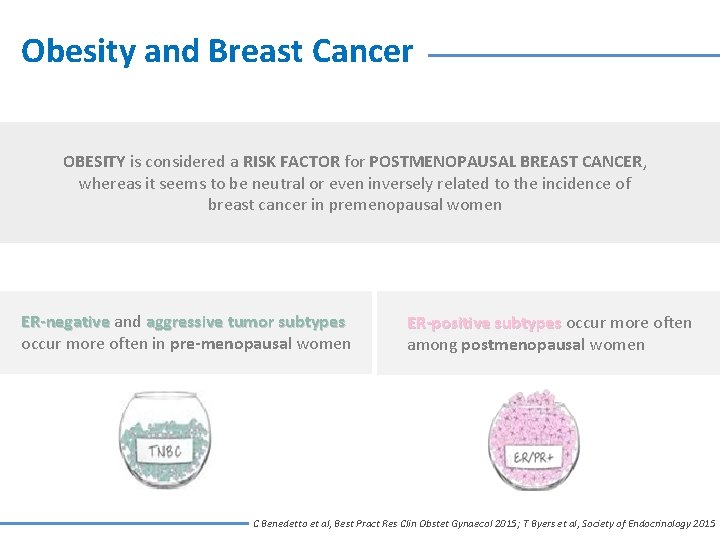
Obesity and Breast Cancer OBESITY is considered a RISK FACTOR for POSTMENOPAUSAL BREAST CANCER, whereas it seems to be neutral or even inversely related to the incidence of breast cancer in premenopausal women ER-negative and aggressive tumor subtypes occur more often in pre-menopausal women ER-positive subtypes occur more often among postmenopausal women C Benedetto et al, Best Pract Res Clin Obstet Gynaecol 2015; T Byers et al, Society of Endocrinology 2015
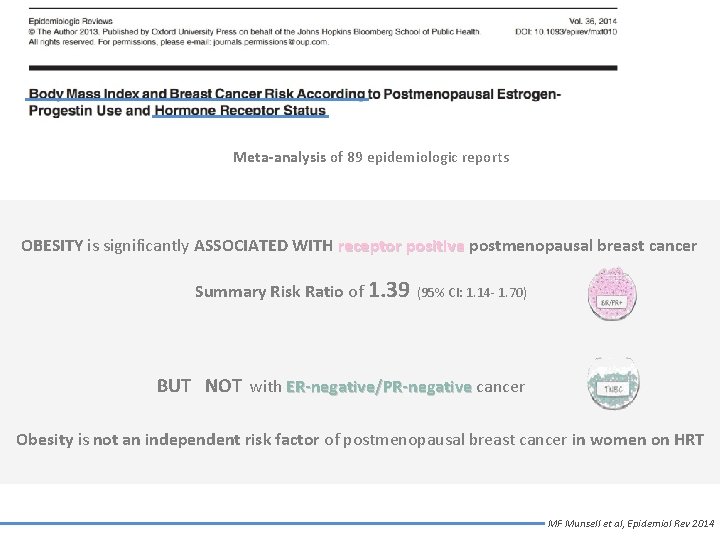
Meta-analysis of 89 epidemiologic reports OBESITY is significantly ASSOCIATED WITH receptor positive postmenopausal breast cancer Summary Risk Ratio of 1. 39 (95% CI: 1. 14 - 1. 70) BUT NOT with ER-negative/PR-negative cancer Obesity is not an independent risk factor of postmenopausal breast cancer in women on HRT MF Munsell et al, Epidemiol Rev 2014
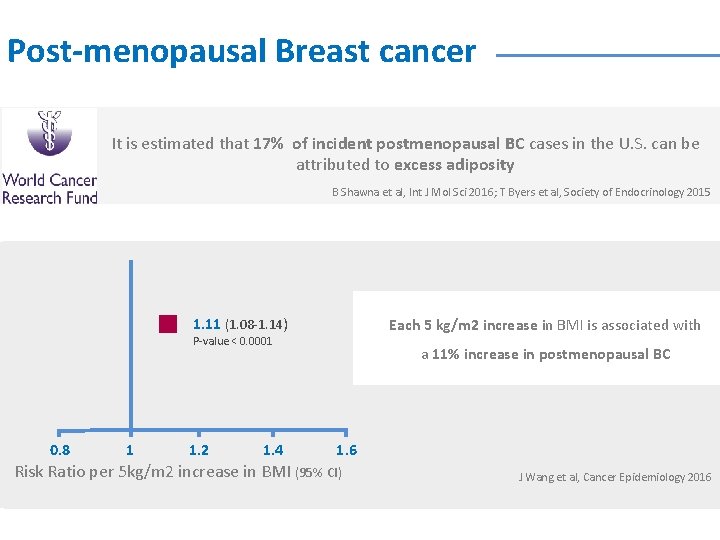
Post-menopausal Breast cancer It is estimated that 17% of incident postmenopausal BC cases in the U. S. can be attributed to excess adiposity B Shawna et al, Int J Mol Sci 2016; T Byers et al, Society of Endocrinology 2015 1. 11 (1. 08 -1. 14) Each 5 kg/m 2 increase in BMI is associated with P-value < 0. 0001 0. 8 1 1. 2 1. 4 a 11% increase in postmenopausal BC 1. 6 Risk Ratio per 5 kg/m 2 increase in BMI (95% CI) J Wang et al, Cancer Epidemiology 2016
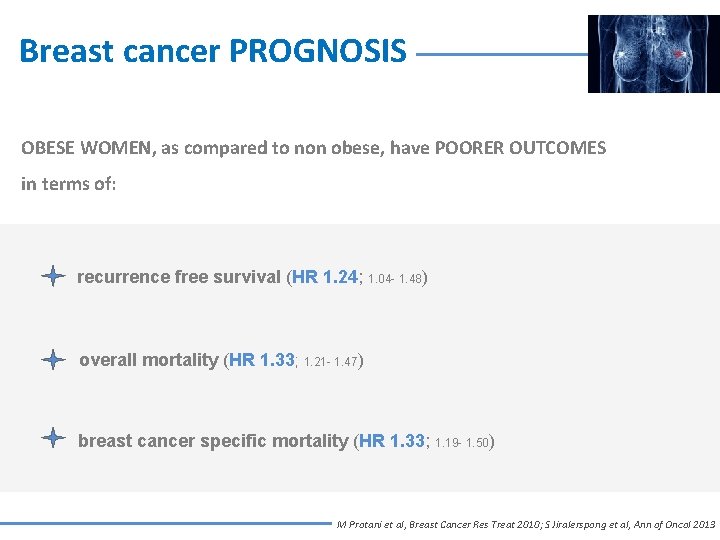
Breast cancer PROGNOSIS OBESE WOMEN, as compared to non obese, have POORER OUTCOMES in terms of: recurrence free survival (HR 1. 24; 1. 04 - 1. 48) overall mortality (HR 1. 33; 1. 21 - 1. 47) breast cancer specific mortality (HR 1. 33; 1. 19 - 1. 50) M Protani et al, Breast Cancer Res Treat 2010; S Jiralerspong et al, Ann of Oncol 2013
Obesity and poorer breast cancer prognosis POSSIBLE EXPLANATIONS Delayed diagnosis Patients with a BMI> 30 kg/m 2 have more advanced disease at diagnosis compared to patients with a BMI <25 kg/m 2 Lower response to and/or higher toxicity of cancer treatments Higher BMI is associated with lower pathologic complete response to neoadjuvant chemotherapy Higher BMI is associated with an increased Trastuzumab and anthracyclines - induced cardiotoxicity Chemo and endocrine therapies not adjusted to BMI Guenancia et al, 2016; Karatas et al, The Breast 2016; C Benedetto et al, Best Pract Res Clin Obstet Gynaecol 2015; MC Pladyon et al, JNCI 2015
Focus on Impact of obesity on the epidemiology and prognosis of… Postmenopausal breast cancer Endometrial cancer Ovarian cancer Pathogenetic mechanisms behind the relationship between obesity and female malignancies Impact of obesity on treatment
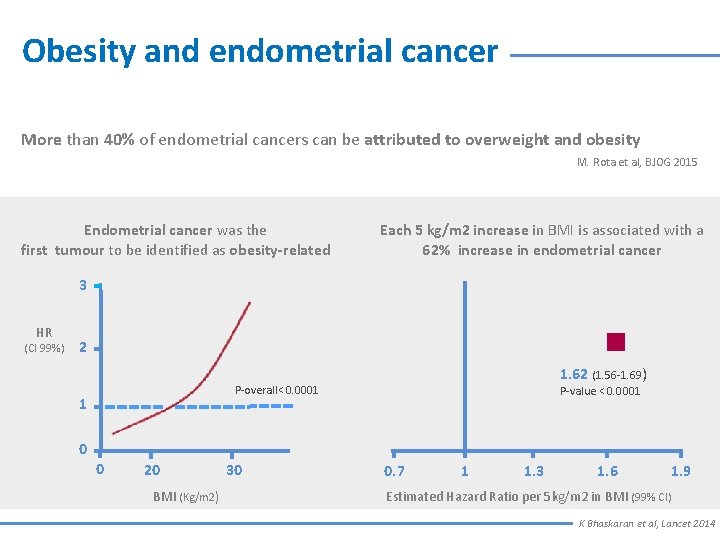
Obesity and endometrial cancer More than 40% of endometrial cancers can be attributed to overweight and obesity M. Rota et al, BJOG 2015 Endometrial cancer was the first tumour to be identified as obesity-related Each 5 kg/m 2 increase in BMI is associated with a 62% increase in endometrial cancer 3 HR (CI 99%) 2 1. 62 (1. 56 -1. 69) P-overall< 0. 0001 1 P-value < 0. 0001 0 0 20 BMI (Kg/m 2) 30 0. 7 1 1. 3 1. 6 1. 9 Estimated Hazard Ratio per 5 kg/m 2 in BMI (99% CI) K Bhaskaran et al, Lancet 2014
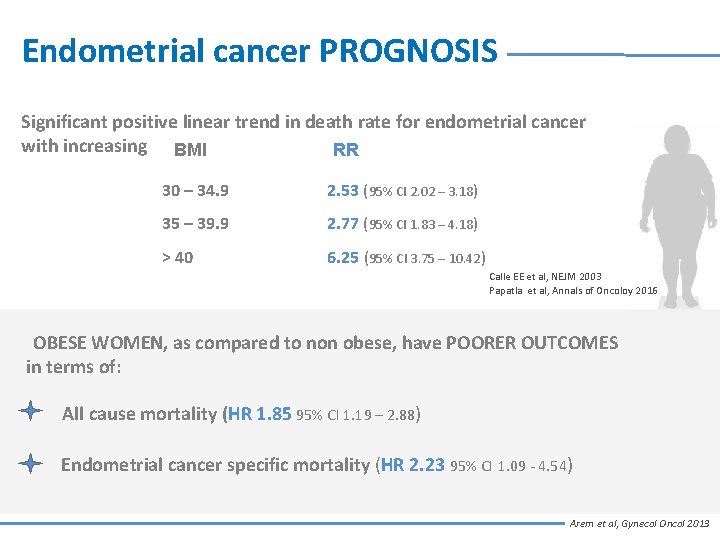
Endometrial cancer PROGNOSIS Significant positive linear trend in death rate for endometrial cancer with increasing BMI RR 30 – 34. 9 2. 53 (95% CI 2. 02 – 3. 18) 35 – 39. 9 2. 77 (95% CI 1. 83 – 4. 18) > 40 6. 25 (95% CI 3. 75 – 10. 42) Calle EE et al, NEJM 2003 Papatla et al, Annals of Oncoloy 2016 OBESE WOMEN, as compared to non obese, have POORER OUTCOMES in terms of: All cause mortality (HR 1. 85 95% CI 1. 19 – 2. 88) Endometrial cancer specific mortality (HR 2. 23 95% CI 1. 09 - 4. 54) Arem et al, Gynecol Oncol 2013
Focus on Impact of obesity on the epidemiology and prognosis of… Postmenopausal breast cancer Endometrial cancer Ovarian cancer Pathogenetic mechanisms behind the relationship between obesity and female malignancies Impact of obesity on treatment
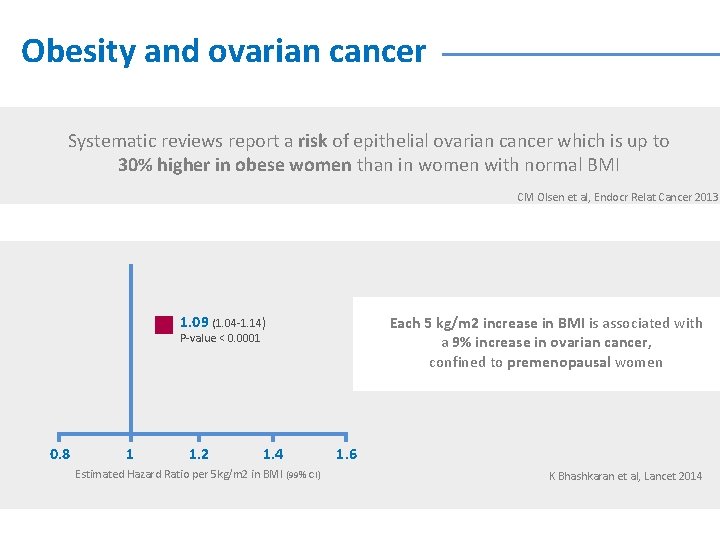
Obesity and ovarian cancer Systematic reviews report a risk of epithelial ovarian cancer which is up to 30% higher in obese women than in women with normal BMI CM Olsen et al, Endocr Relat Cancer 2013 1. 09 (1. 04 -1. 14) Each 5 kg/m 2 increase in BMI is associated with a 9% increase in ovarian cancer, confined to premenopausal women P-value < 0. 0001 0. 8 1 1. 2 1. 4 Estimated Hazard Ratio per 5 kg/m 2 in BMI (99% CI) 1. 6 K Bhashkaran et al, Lancet 2014
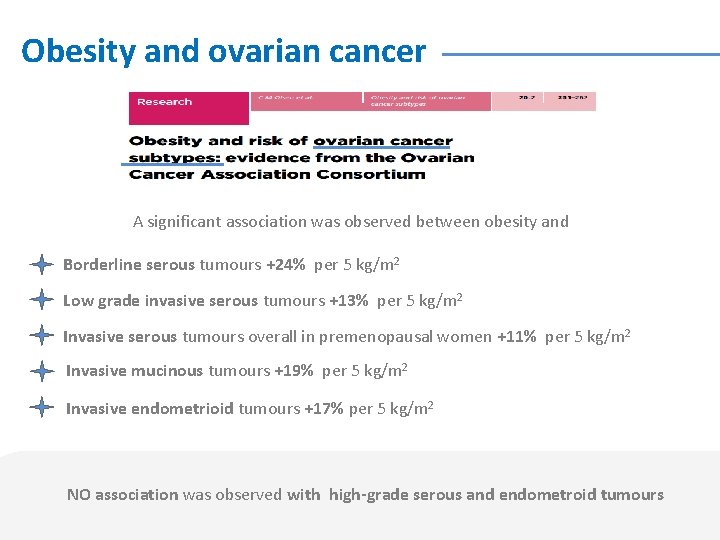
Obesity and ovarian cancer A significant association was observed between obesity and Borderline serous tumours +24% per 5 kg/m 2 Low grade invasive serous tumours +13% per 5 kg/m 2 Invasive serous tumours overall in premenopausal women +11% per 5 kg/m 2 Invasive mucinous tumours +19% per 5 kg/m 2 Invasive endometrioid tumours +17% per 5 kg/m 2 NO association was observed with high-grade serous and endometroid tumours
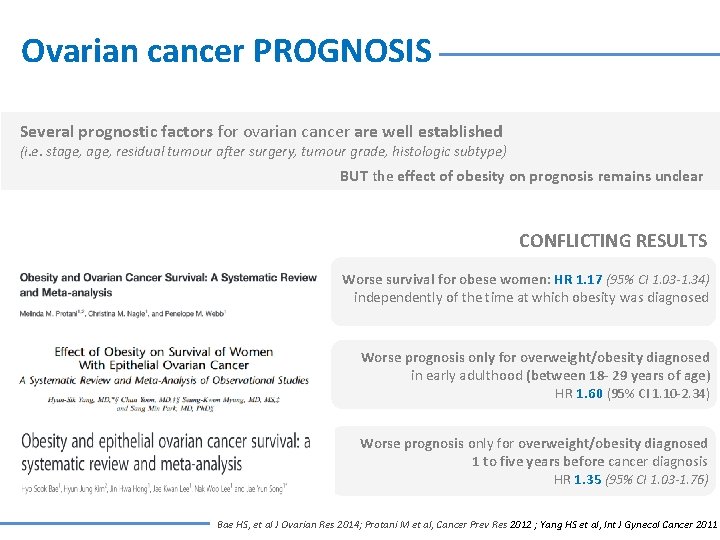
Ovarian cancer PROGNOSIS Several prognostic factors for ovarian cancer are well established (i. e. stage, residual tumour after surgery, tumour grade, histologic subtype) BUT the effect of obesity on prognosis remains unclear CONFLICTING RESULTS Worse survival for obese women: HR 1. 17 (95% CI 1. 03 -1. 34) independently of the time at which obesity was diagnosed Worse prognosis only for overweight/obesity diagnosed in early adulthood (between 18 - 29 years of age) HR 1. 60 (95% CI 1. 10 -2. 34) Worse prognosis only for overweight/obesity diagnosed 1 to five years before cancer diagnosis HR 1. 35 (95% CI 1. 03 -1. 76) Bae HS, et al J Ovarian Res 2014; Protani M et al, Cancer Prev Res 2012 ; Yang HS et al, Int J Gynecol Cancer 2011
Focus on Impact of obesity on the epidemiology and prognosis of… Postmenopausal breast cancer Endometrial cancer Ovarian cancer Pathogenetic mechanisms behind the relationship between obesity and female malignancies Impact of obesity on treatment
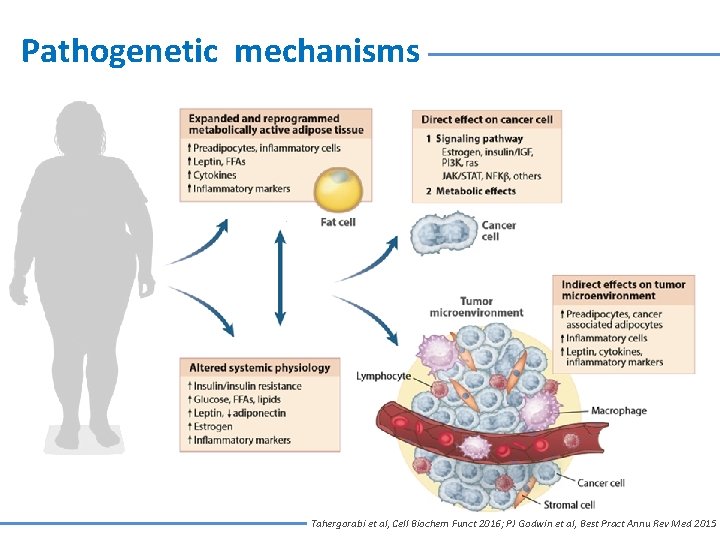
Pathogenetic mechanisms Tahergorabi et al, Cell Biochem Funct 2016; PJ Godwin et al, Best Pract Annu Rev Med 2015
Insulin and the IGF-1 axis High concentrations of both insulin and IGF-1 are associated with OBESITY INSULIN stimulates cell growth and division, IGF-1 synthesis and action IGF-1 regulates genes involved in cell proliferation, metabolism and DNA repair INSULIN-RESISTANCE and OBESITY lead to hyperglycaemia, which in turn favours the selection of malignant cell clones that use glucose for proliferation contributing to apoptosis resistance, oncogenesis, and tumor resistance to chemotherapy The use of metformin in obese women may be considered not only in the prevention of metabolic diseases, but also in the prevention of breast and endometrial cancer RCTs are still needed to prove its efficacy Tahergorabi et al, Cell Biochem Funct 2016; C Benedetto et al, Best Pract Res Clin Obstet Gynaecol 2015; MC Pladyon et al JNCI 2015
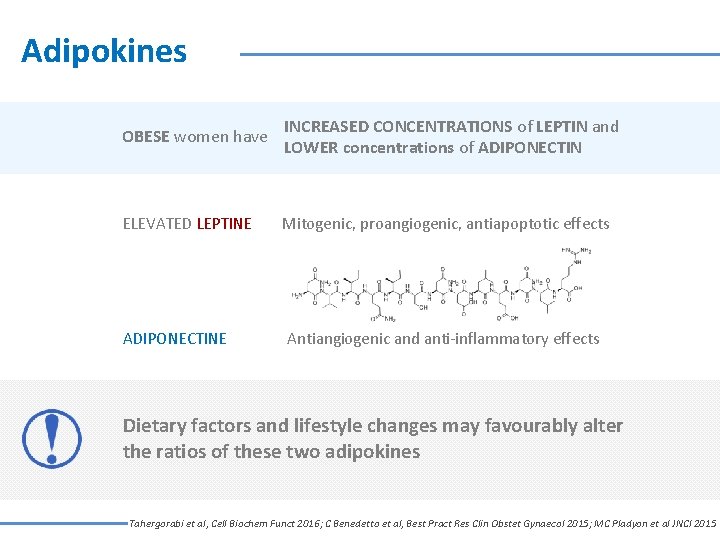
Adipokines OBESE women have INCREASED CONCENTRATIONS of LEPTIN and LOWER concentrations of ADIPONECTIN ELEVATED LEPTINE Mitogenic, proangiogenic, antiapoptotic effects ADIPONECTINE Antiangiogenic and anti-inflammatory effects Dietary factors and lifestyle changes may favourably alter the ratios of these two adipokines Tahergorabi et al, Cell Biochem Funct 2016; C Benedetto et al, Best Pract Res Clin Obstet Gynaecol 2015; MC Pladyon et al JNCI 2015
Focus on Impact of obesity on the epidemiology and prognosis of… Postmenopausal breast cancer Endometrial cancer Ovarian cancer Pathogenetic mechanisms behind the relationship between obesity and female malignancies Impact of obesity on treatment
MEDICAL treatment Chemotherapy in overweight and obese women may pose some clinical challenges, given the frequent presence of co-morbidities and the delicate balance between efficacy and toxicity Obese patients are more likely to receive reduced doses of chemotherapy compared to normal weight women and this may compromise progression-free survival and overall survival Chemotherapy should be calculated on actual body weight and clinicians should treat toxicities similarly in obese and non obese patients, with resumption of full weight-based doses as soon as toxicity has been resolved Karatas et al, The Breast 2016; C Benedetto et al, Best Pract Res Clin Obstet Gynaecol 2015
MEDICAL treatment BREAST CANCER Concerns have been raised that higher aromatase activity and higher estrogen levels in obese individuals may lead to reduced efficacy of aromatase inhibitors. Conflicting evidence regarding the extent to which estrogen levels are suppressed by these agents in obese vs non-obese individuals. It has been suggested that higher doses of aromatase inhibitors might be used in overweight patients OVARIAN CANCER A recent pilot study showed that obese women treated with chemotherapy and bevacizumab had a shorter recurrence-free survival than those treated with chemotherapy alone suggesting that obese women may not benefit significantly from bevacizumab adjuvant therapy C Benedetto et al, Best Pract Res Clin Obstet Gynaecol 2015
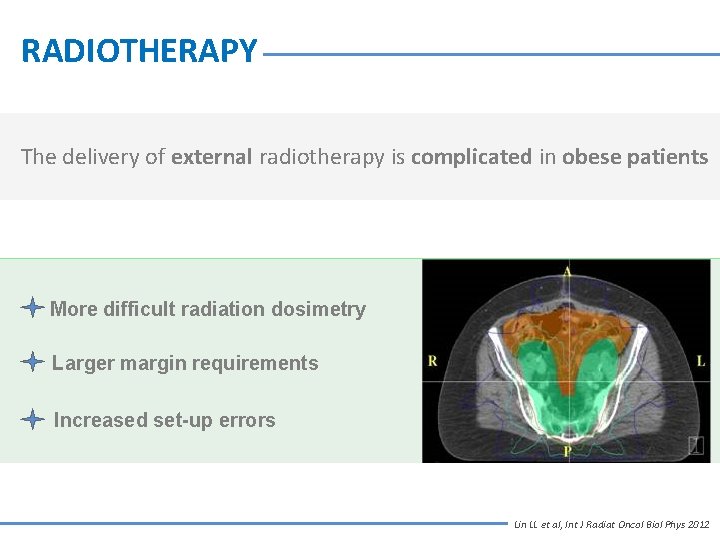
RADIOTHERAPY The delivery of external radiotherapy is complicated in obese patients More difficult radiation dosimetry Larger margin requirements Increased set-up errors Lin LL et al, Int J Radiat Oncol Biol Phys 2012
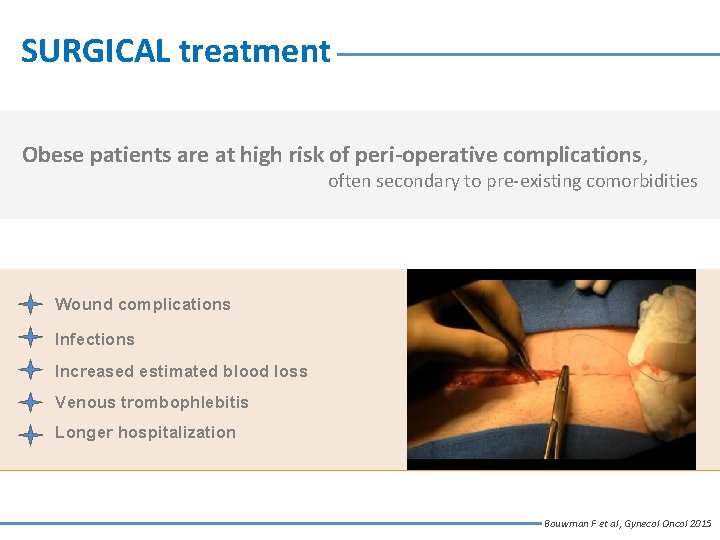
SURGICAL treatment Obese patients are at high risk of peri-operative complications , often secondary to pre-existing comorbidities Wound complications Infections Increased estimated blood loss Venous trombophlebitis Longer hospitalization Bouwman F et al, Gynecol Oncol 2015
SURGICAL treatment ENDOMETRIAL CANCER Obesity has a negative impact on surgical staging when lymphadenectomy is required CERVICAL CANCER Obese patients are more likely to undergo primary radiation therapy, even when they have relatively early disease as surgeons may refrain from operating on such patients OVARIAN CANCER Debulking surgery for ovarian cancer in obese patients is an operative challenge C Benedetto et al, Best Pract Res Clin Obstet Gynaecol 2015
SURGICAL treatment A minimally invasive approach would be preferable, particularly through the abdominal wall, BUT conversion to laparotomy is more frequent in obese patients compared to normal-weight controls Robotic surgery has been proposed as a useful alternative for obese women with gynecologic malignancies. Limited experience so far suggests that this type of surgery results in shorter operative time, increased lymph node retrieval and shorter hospitalization when compared to laparoscopy Radical surgery should be performed as in non obese patients after optimizing pre-operative clinical conditions. It is recommended that adequate lymph node dissection should not be omitted solely on the basis of obesity Bouwman F et al, Gynecol Oncol 2015
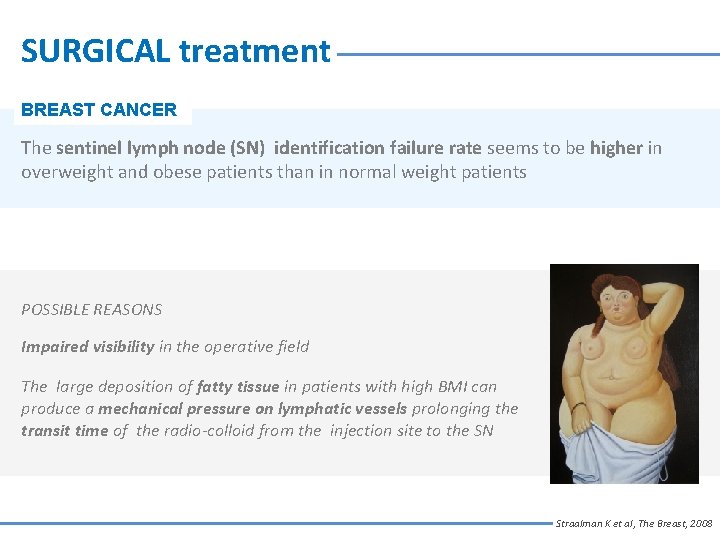
SURGICAL treatment BREAST CANCER The sentinel lymph node (SN) identification failure rate seems to be higher in overweight and obese patients than in normal weight patients POSSIBLE REASONS Impaired visibility in the operative field The large deposition of fatty tissue in patients with high BMI can produce a mechanical pressure on lymphatic vessels prolonging the transit time of the radio-colloid from the injection site to the SN Straalman K et al, The Breast, 2008
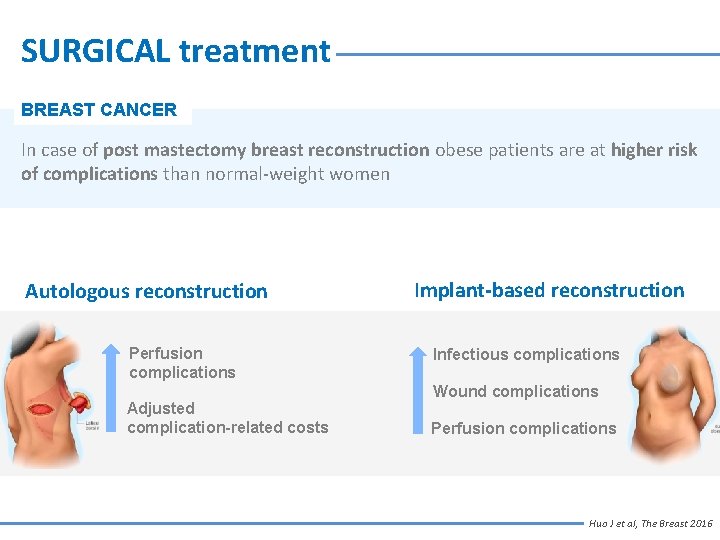
SURGICAL treatment BREAST CANCER In case of post mastectomy breast reconstruction obese patients are at higher risk of complications than normal-weight women Autologous reconstruction Perfusion complications Adjusted complication-related costs Implant-based reconstruction Infectious complications Wound complications Perfusion complications Huo J et al, The Breast 2016
Key messages Obesity represents a major under-recognized preventable risk factor for cancer development and mortality Obesity is associated with an increased risk of endometrial cancer, ER-PR positive post menopausal breast cancer and ovarian cancer Obesity is associated with an increased risk of cancer recurrence and mortality most likely due to suboptimal treatment and/or comorbidities Obese women are at hight risk of peri-operative complications
Key messages Chemotherapy doses should be calculated on actual body weight Adjuvant therapy with aromatase inhibitors in breast cancer may be less effective in obese patients Obese women with ovarian cancer may not benefit from bevacizumab adjuvant therapy Radical surgery should be performed as in non-obese patients after optimizing pre-operative clinical conditions last but not least….
Obese woman should be strongly encouraged to undergo regular cancer screening

Lifestyle changes preventing/treating obesity should be encouraged as part of cancer prevention!
- Slides: 34