
o i t a c i f i


- Slides: 34
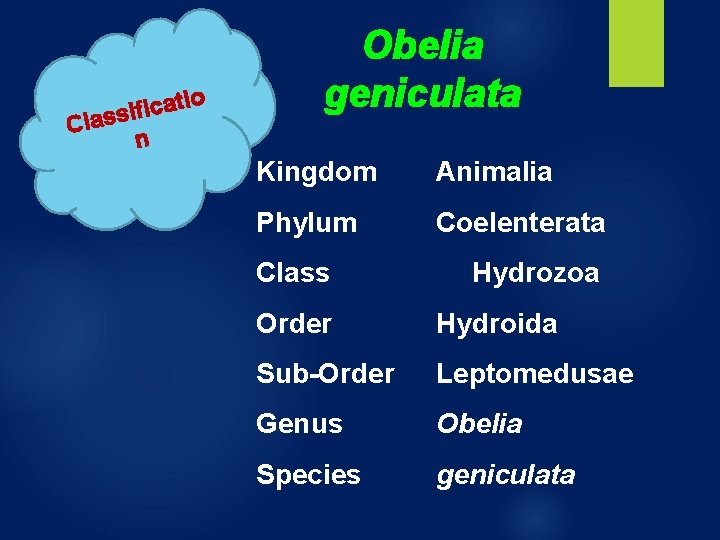
o i t a c i f i Class n Obelia geniculata Kingdom Animalia Phylum Coelenterata Class Hydrozoa Order Hydroida Sub-Order Leptomedusae Genus Obelia Species geniculata
HABIT AND HABITAT § Sedentary, marine colonial form found attached on the surface of sea weeds, molluscan shells, rocks and wooden piles in shallow water up to 80 metres in depth.
HABIT AND HABITAT § cosmopolitan in distribution, forming a whitish or light-brown plant-like fur in the sea; hence, the common name sea-fur is assigned to it.
STRUCTYRE
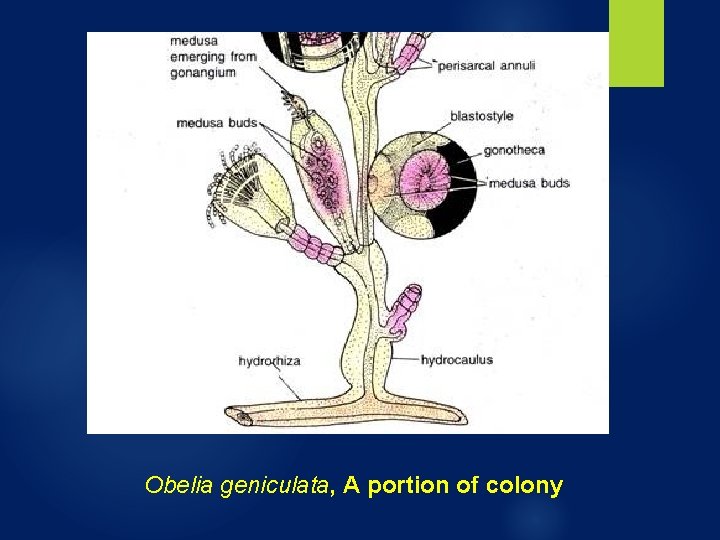
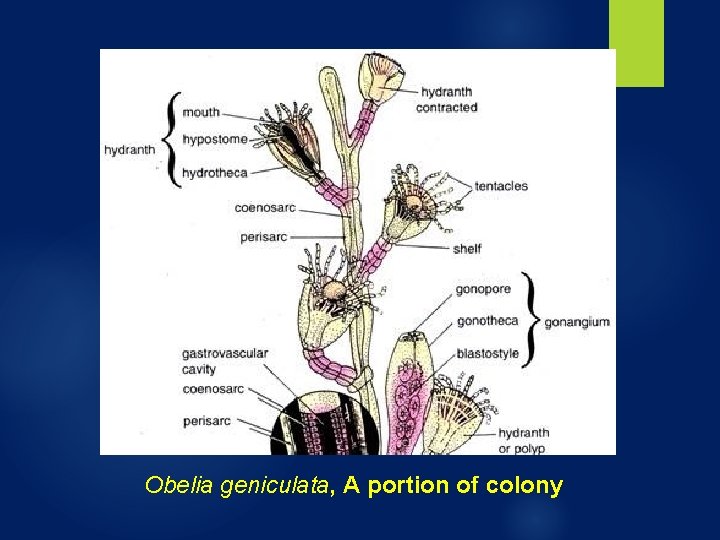
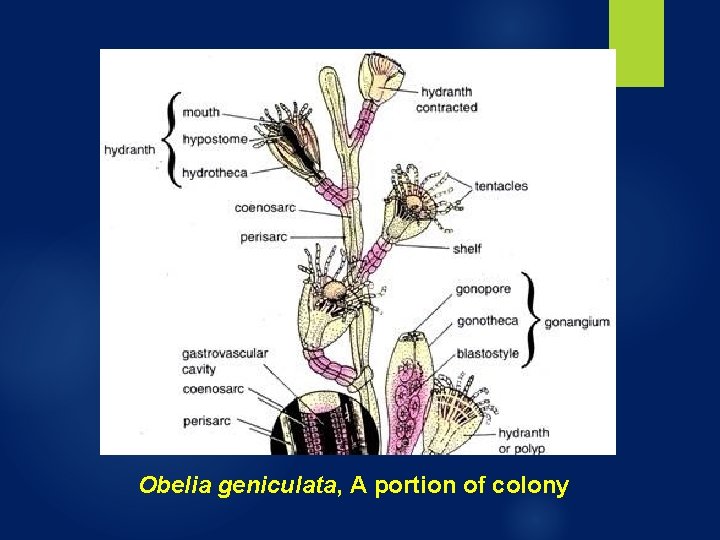
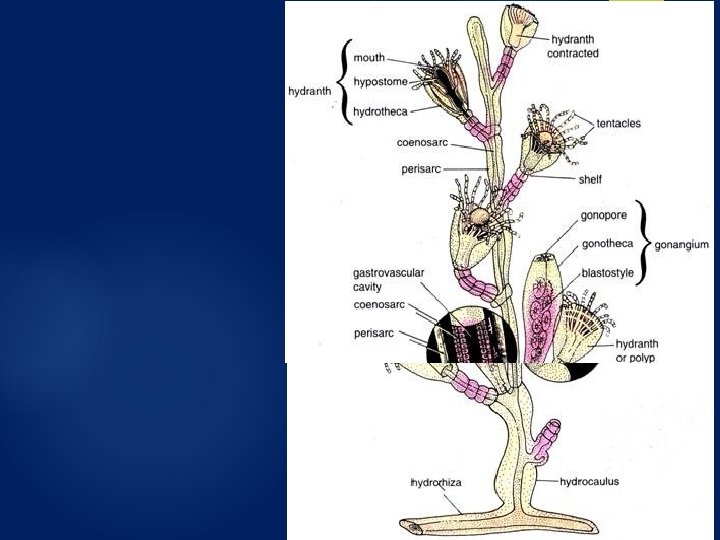
Obelia geniculata, A portion of colony
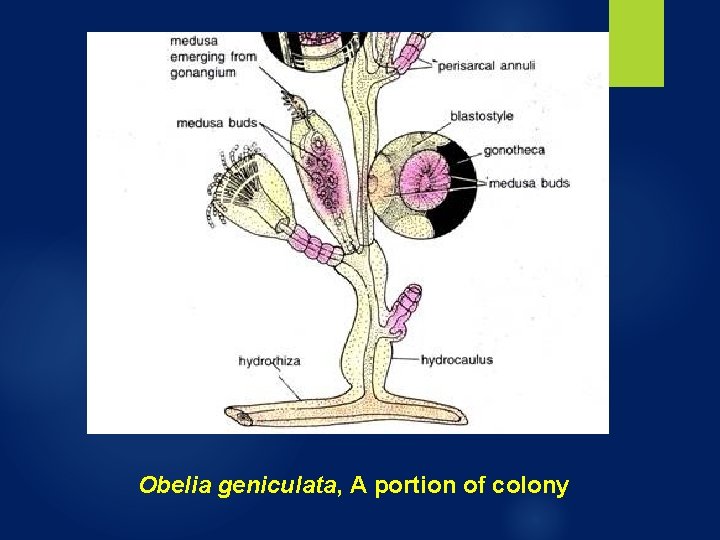
Obelia geniculata, A portion of colony
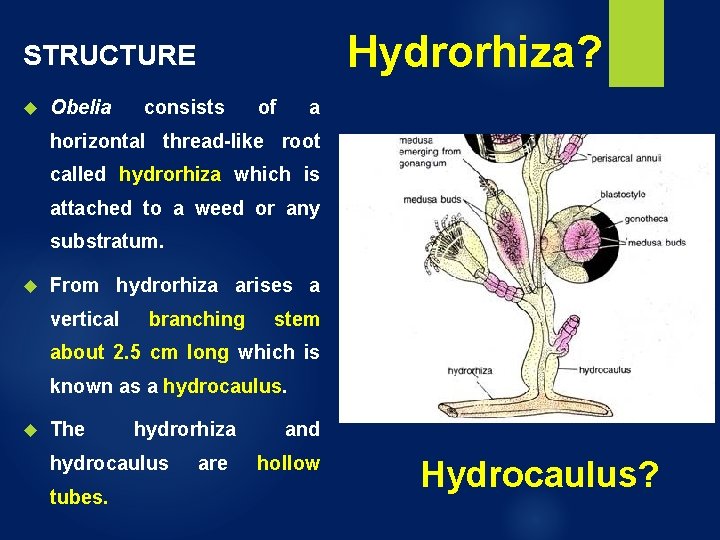
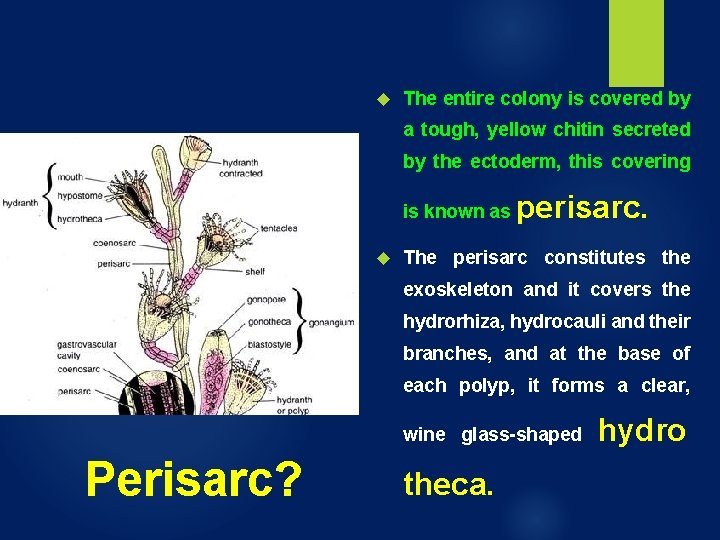
Hydrorhiza? STRUCTURE Obelia consists of a horizontal thread-like root called hydrorhiza which is attached to a weed or any substratum. From hydrorhiza arises a vertical branching stem about 2. 5 cm long which is known as a hydrocaulus. The hydrorhiza hydrocaulus tubes. are and hollow Hydrocaulus?
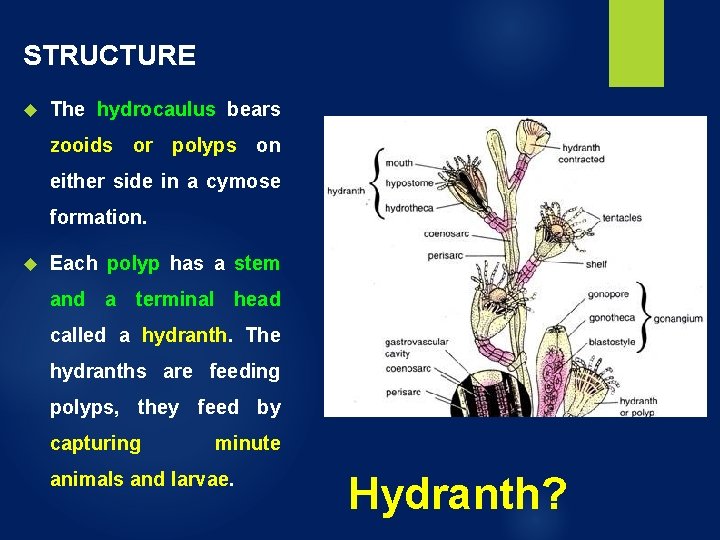
STRUCTURE The hydrocaulus bears zooids or polyps on either side in a cymose formation. Each polyp has a stem and a terminal head called a hydranth. The hydranths are feeding polyps, they feed by capturing minute animals and larvae. Hydranth?
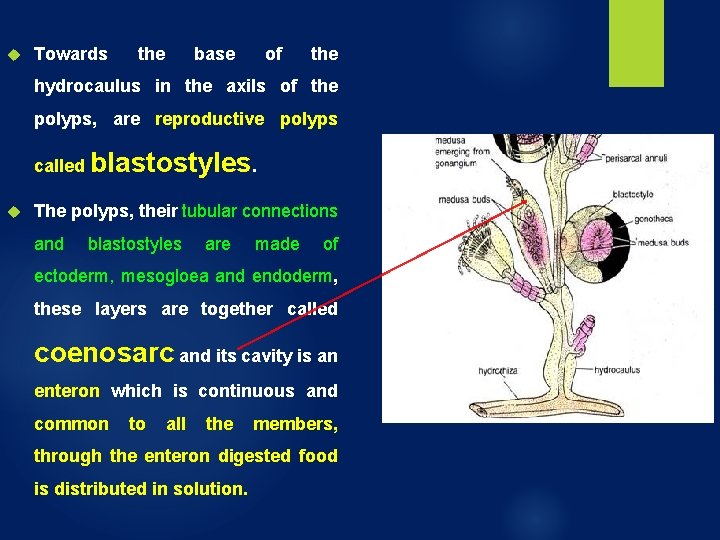
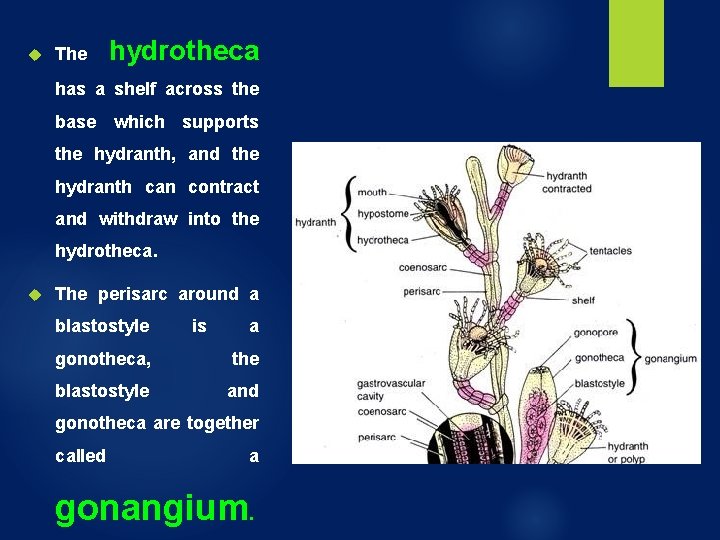
Towards the base of the hydrocaulus in the axils of the polyps, are reproductive polyps called blastostyles. The polyps, their tubular connections and blastostyles are made of ectoderm, mesogloea and endoderm, these layers are together called coenosarc and its cavity is an enteron which is continuous and common to all the members, through the enteron digested food is distributed in solution.
The entire colony is covered by a tough, yellow chitin secreted by the ectoderm, this covering is known as perisarc. The perisarc constitutes the exoskeleton and it covers the hydrorhiza, hydrocauli and their branches, and at the base of each polyp, it forms a clear, wine glass-shaped Perisarc? theca. hydro
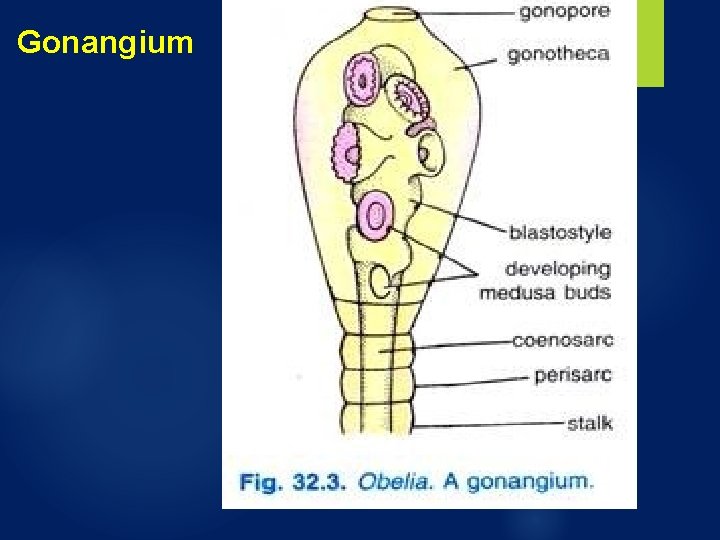
The hydrotheca has a shelf across the base which supports the hydranth, and the hydranth can contract and withdraw into the hydrotheca. The perisarc around a blastostyle is a gonotheca, the blastostyle and gonotheca are together called a gonangium.
Obelia geniculata, A portion of colony
Obelia geniculata, A portion of colony
The Obelia is a trimorphic colony, that is, having three kinds of zooids which are as follows: Polyps or hydranths (nutritive zooids) Gonangia or blastostyles (budding zooids) Medusae, (sexual zooids)
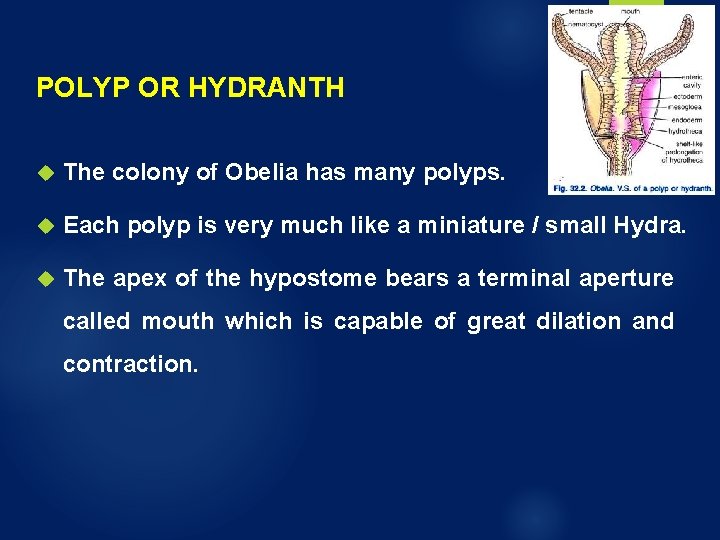
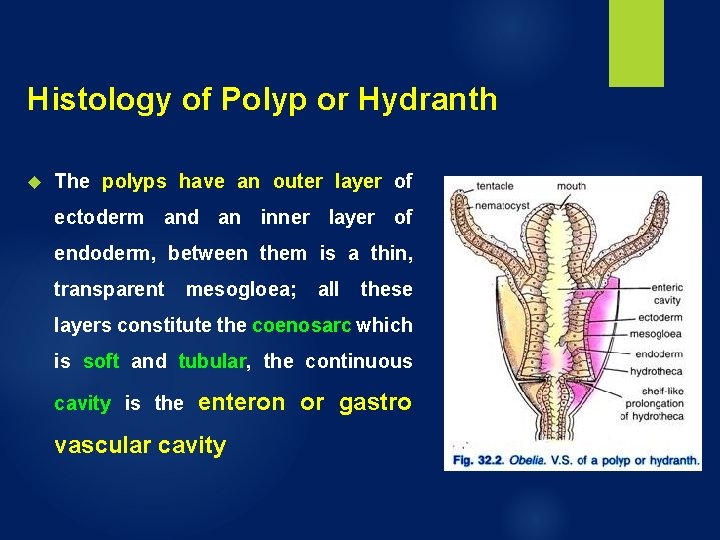
POLYP OR HYDRANTH The colony of Obelia has many polyps. Each polyp is very much like a miniature / small Hydra. The apex of the hypostome bears a terminal aperture called mouth which is capable of great dilation and contraction.
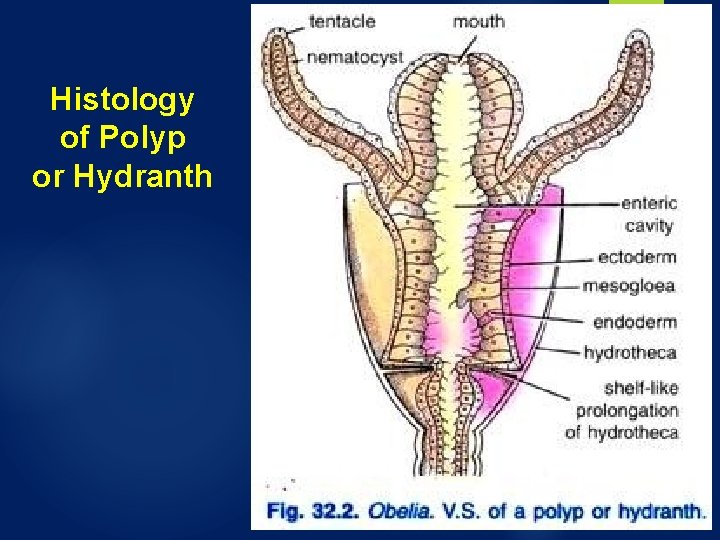
Histology of Polyp or Hydranth
Histology of Polyp or Hydranth The polyps have an outer layer of ectoderm and an inner layer of endoderm, between them is a thin, transparent mesogloea; all these layers constitute the coenosarc which is soft and tubular, the continuous cavity is the enteron or gastro vascular cavity
Gonangium
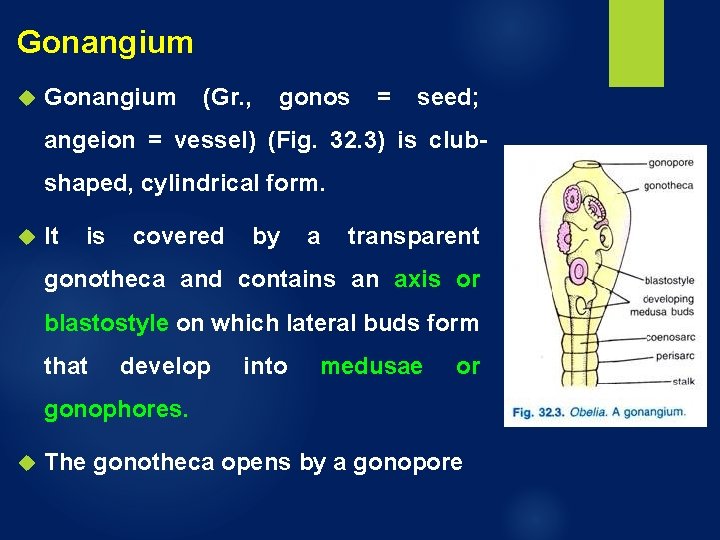
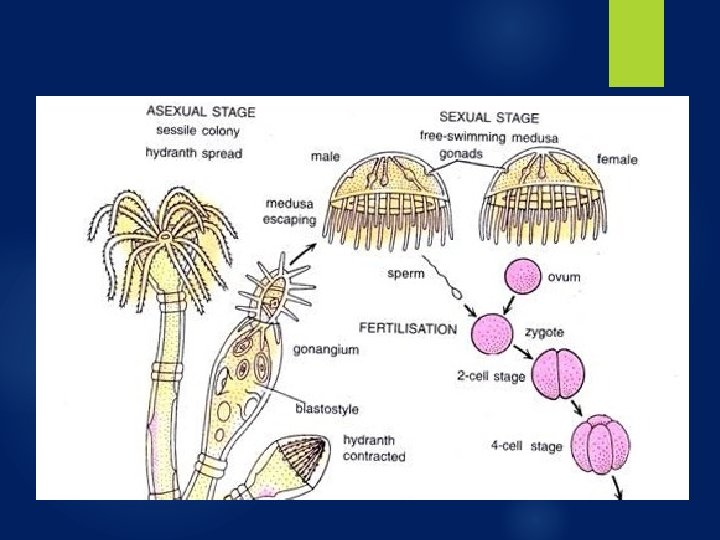
Gonangium (Gr. , gonos = seed; angeion = vessel) (Fig. 32. 3) is clubshaped, cylindrical form. It is covered by a transparent gonotheca and contains an axis or blastostyle on which lateral buds form that develop into medusae or gonophores. The gonotheca opens by a gonopore
M E D U S A
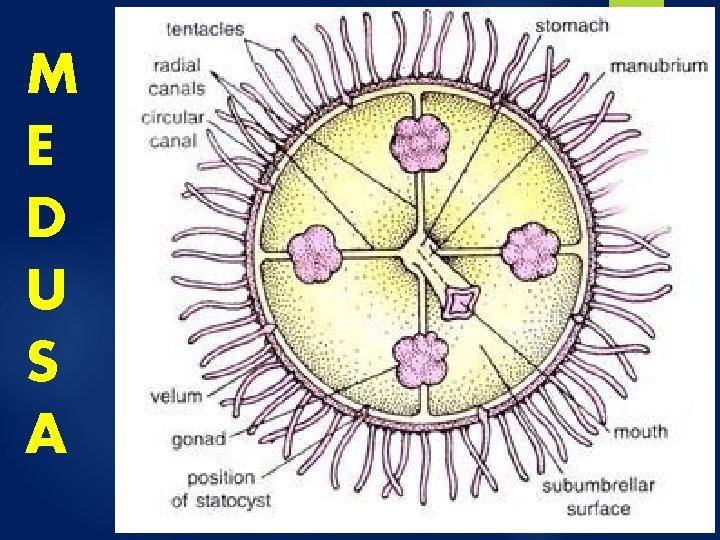
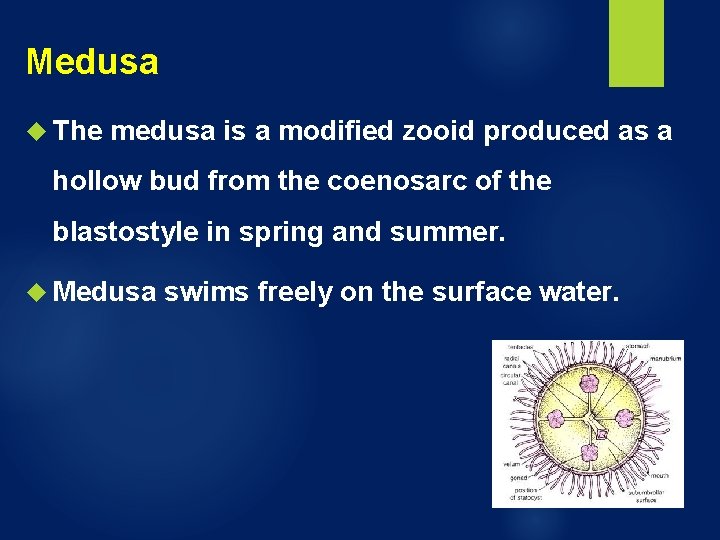
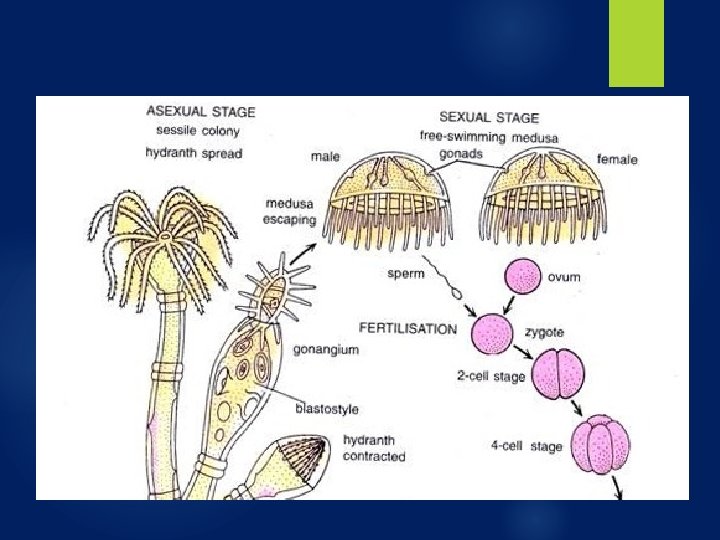
Medusa The medusa is a modified zooid produced as a hollow bud from the coenosarc of the blastostyle in spring and summer. Medusa swims freely on the surface water.
LIFE CYCLE
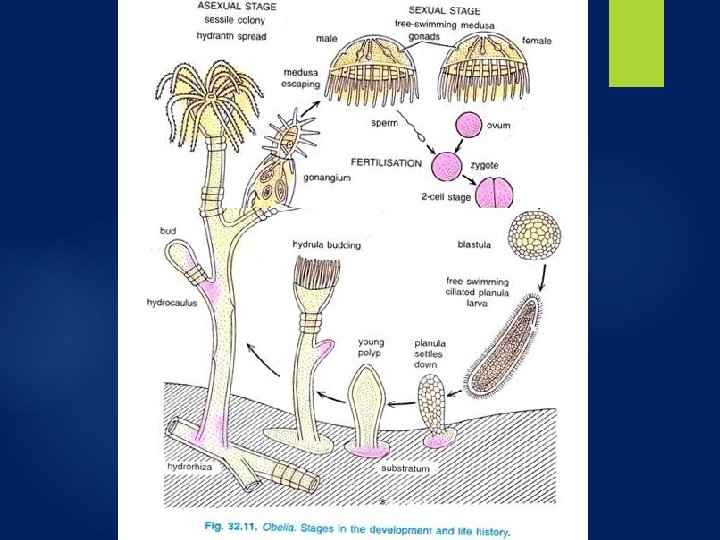
Life History of Obelia Fertilization usually takes place in open sea water where the gametes are set free. Sometimes, the sperms are carried into the female medusae with water currents and there they fertilize the eggs in situ. However, the parent medusae die soon after liberating their respective gametes.
Development The zygote undergoes complete or holoblastic and equal cleavage to form a single-layered blastula with a blastocoele. Some cells migrate into blastocoele, to form a solid gastrula known as stereo gastrula. Its outer cell layer becomes the ectoderm and inner cell mass the endoderm.
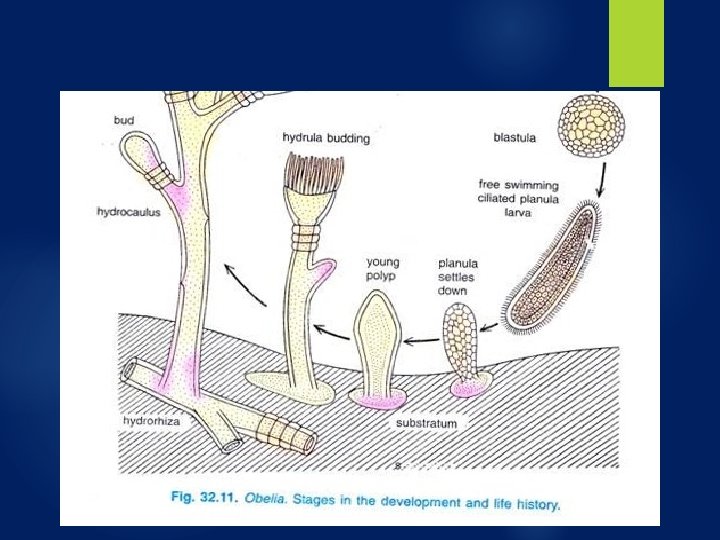
Development The gastrula elongates and. its outer layer of ectoderm cells becomes ciliated, and now it is called planula. Soon, a cavity called enteron develops in the solid endodermal cell mass by the process of delamination
Development and the planula becomes a two- layered larva having an outer ciliated ectodermal cells and an inner layer of endodermal cells
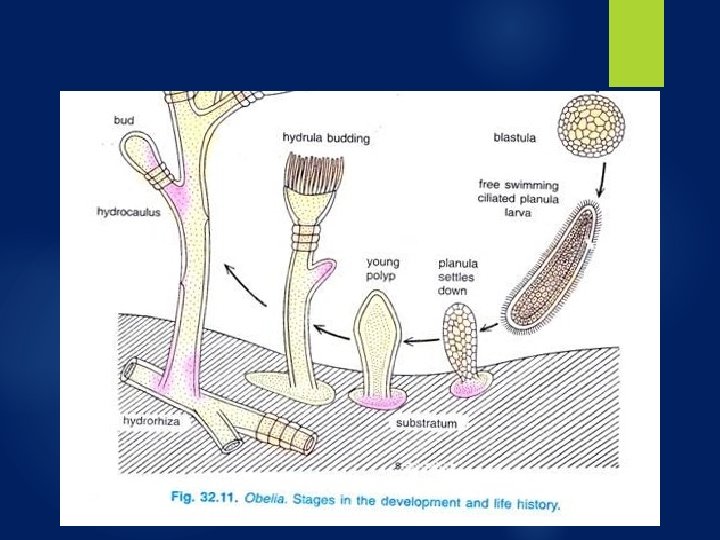
The planula after a short free- swimming existence settles on some solid object by its broader end. The free end forms a manubrium with a mouth and a circlet of tentacles.
Thus, a simple polyp or hydrula is formed which grows a hydrorhiza from its base, from which an Obelia colony is formed by budding. The free swimming planula stage in the life history of Obelia, helps in the dispersal of the species.