
O Brother Where Art Thou An Odyssey for
O Brother Where Art Thou: An Odyssey for Generalism Society of Teachers of Family Medicine N’awlins, 2011 Bob Phillips, MD MSPH Director
Objectives • The escapees: I’m with you fellars; mutual ‘tight spot’ – New health care workforce estimates – Patients and Primary Care • The Siren’s Song & the Cyclops – Why market forces are destroying primary care – Who’s accountable? • Redemption – Do we make a difference? • They’re singing our song – Federal workforce policy • The Pardon vs. Le Deluge • New Graham Center tools for workforce assessment and advocacy

With a little help from the Cohen Brothers…
A Word of Caution One of the risks of doing research is thinking you're an expert. A side effect is that others will too. Ron Epstein

Early Credits—The Graham Center Team • I work with some really smart, creative and cool people • This talk is about their work and their ideas • Bridget Teevan Kim Epperson • Dr. Andrew Bazemore Dr. Steve Petterson • Dr. Imam Xierali (nearly) Dr. Meiying Han • Dr. Jennifer Rankin Sean Finnegan • Adam Schertz Dr. Laura Makaroff • >120 Larry A. Green Visiting Scholars
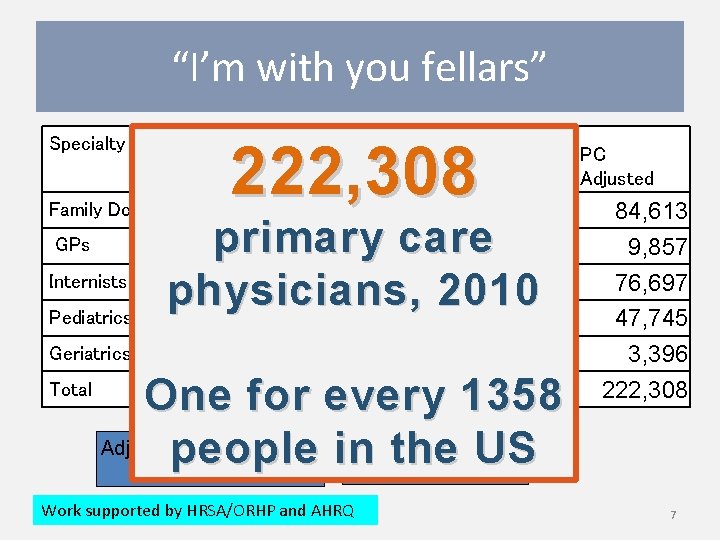
“I’m with you fellars” Specialty Family Docs GPs Internists Pediatrics Geriatrics Total 2010 unadjusted Overcount Adjusted 222, 308 92, 902 12, 245 100, 047 52, 720 3, 685 261, 599 89, 066 9, 870 95, 533 50, 258 3, 575 248, 302 PC Multiplier 0. 95 1. 00 0. 80 0. 95 primary care physicians, 2010 One for every 1358 for Adjustedpeople for retirements, in Adjusted the US hospitalists, etc deaths (JAMA) Work supported by HRSA/ORHP and AHRQ PC Adjusted 84, 613 9, 857 76, 697 47, 745 3, 396 222, 308 7
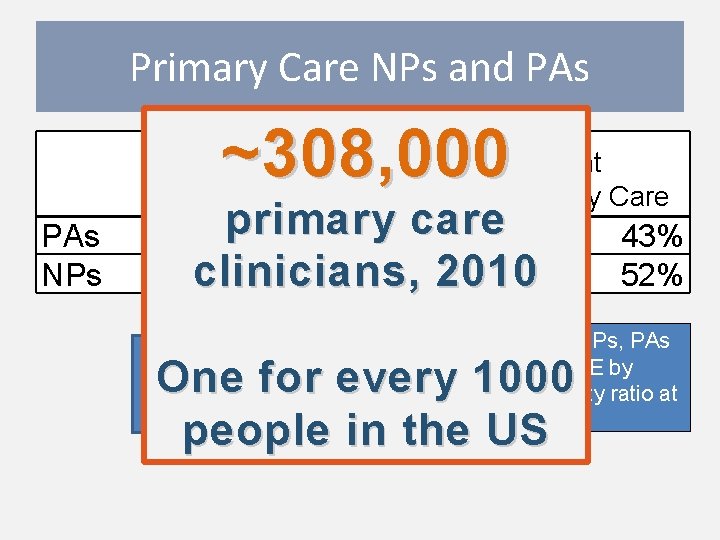
Primary Care NPs and PAs Number in Percent ~308, 000 Total Primary Care PAs NPs primary 30, 402 care 70, 383 106, 073 55, 625 clinicians, 2010 AAPA puts this figure closer to 24, 000 or 34% 43% 52% If you co-locate NPs, PAs and apportion FTE by physician specialty ratio at site One for every 1000 people in the US
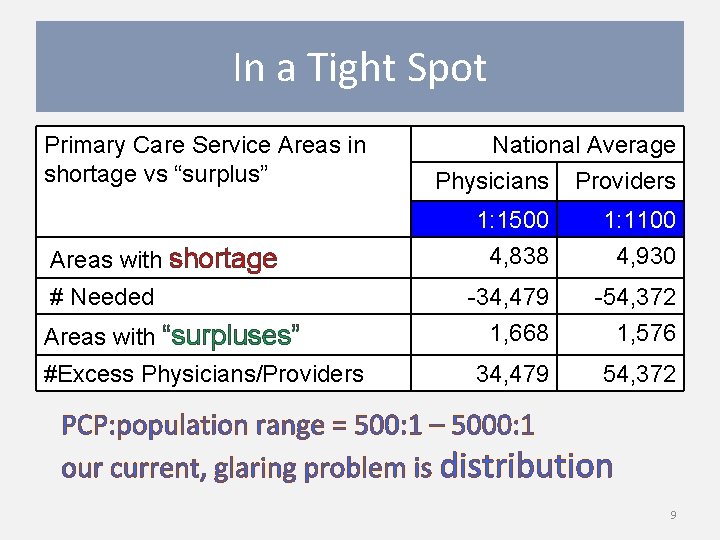
In a Tight Spot Primary Care Service Areas in shortage vs “surplus” Areas with shortage # Needed Areas with “surpluses” #Excess Physicians/Providers National Average Physicians Providers 1: 1500 4, 838 1: 1100 4, 930 -34, 479 1, 668 -54, 372 1, 576 34, 479 54, 372 PCP: population range = 500: 1 – 5000: 1 our current, glaring problem is distribution 9
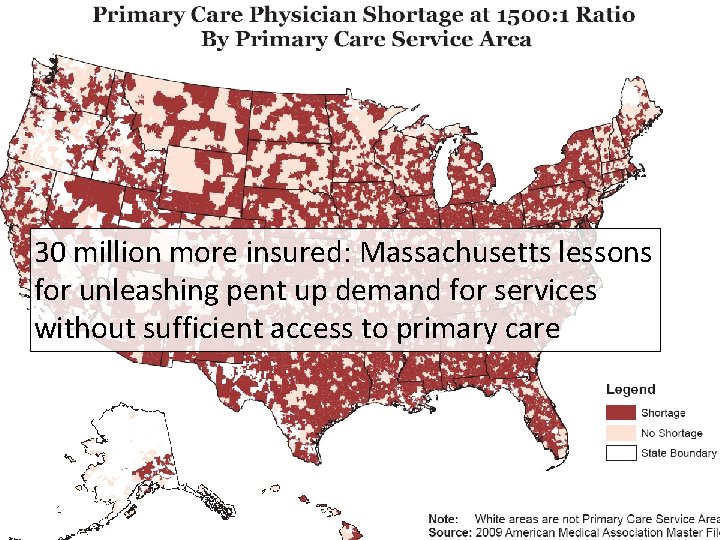
30 million more insured: Massachusetts lessons for unleashing pent up demand for services without sufficient access to primary care 10

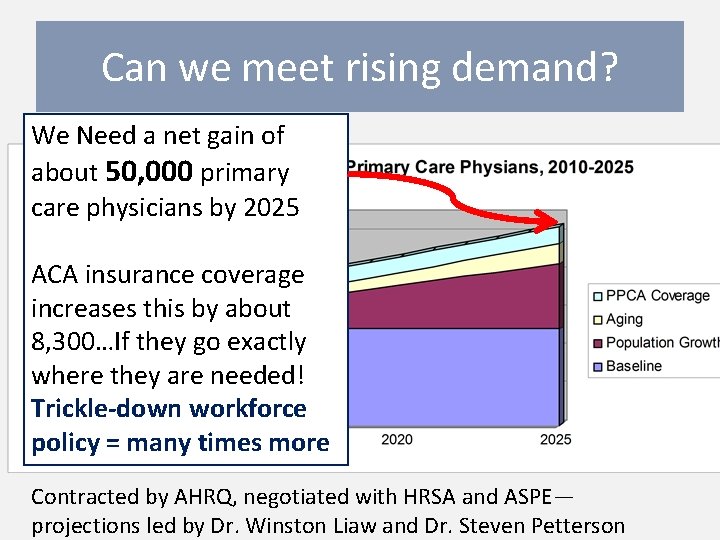
Can we meet rising demand? We Need a net gain of about 50, 000 primary care physicians by 2025 ACA insurance coverage increases this by about 8, 300…If they go exactly where they are needed! Trickle-down workforce policy = many times more Contracted by AHRQ, negotiated with HRSA and ASPE— projections led by Dr. Winston Liaw and Dr. Steven Petterson
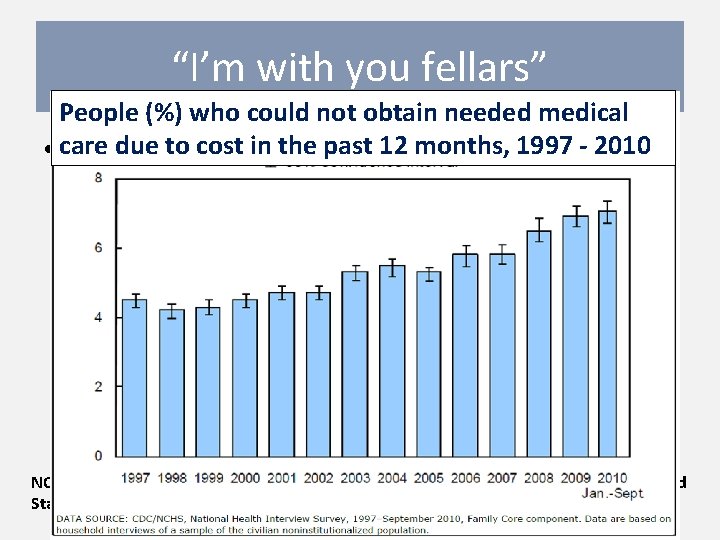
“I’m with you fellars” People (%) who could not obtain needed medical due to 62% cost of in the 12 months, 1997 - 2010 • care In 2008, the past 1. 1 billion ambulatory care visits were made to primary care delivery sites (53% if you exclude OB/Gyn) NCHS Data Brief Number 47, October 2010 Visits to Primary Care Delivery Sites: United States, 2008
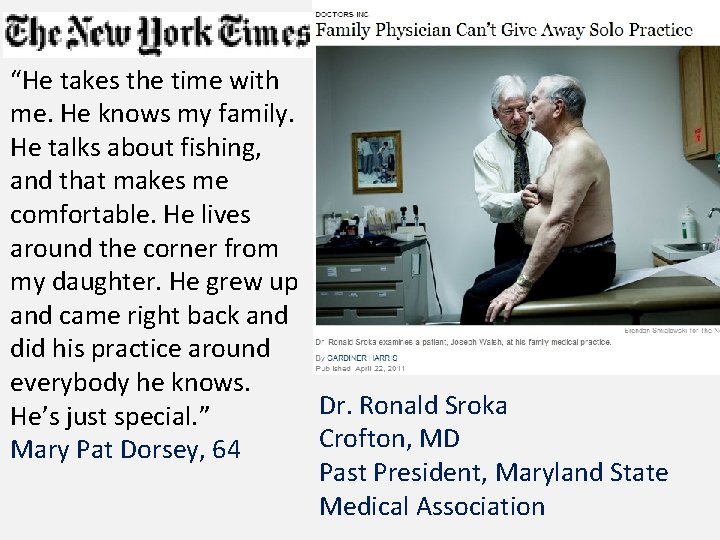
“Those of us who think “He takes the time with about and me. Hemedical knowserrors my family. cost have no nostalgia — in He talks about fishing, fact, we have outright and that disdain —makes for theme single comfortable. He. Marcus lives practitioner like Welby, ” around the corner from David J. Rothman, my daughter. Hepresident grew up of the Institute on Medicine and came right back and as a Profession at Columbia did his practice around University everybody he knows. He’s just special. ” Mary Pat Dorsey, 64 Dr. Ronald Sroka Crofton, MD Past President, Maryland State Medical Association

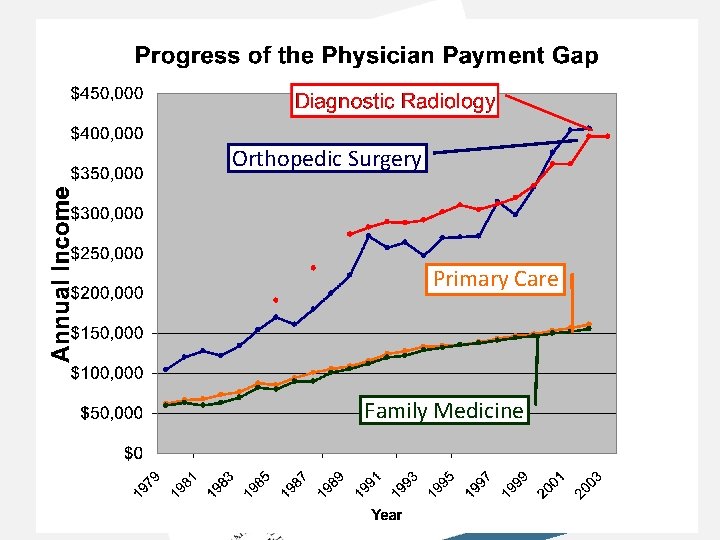
Orthopedic Surgery Primary Care Family Medicine
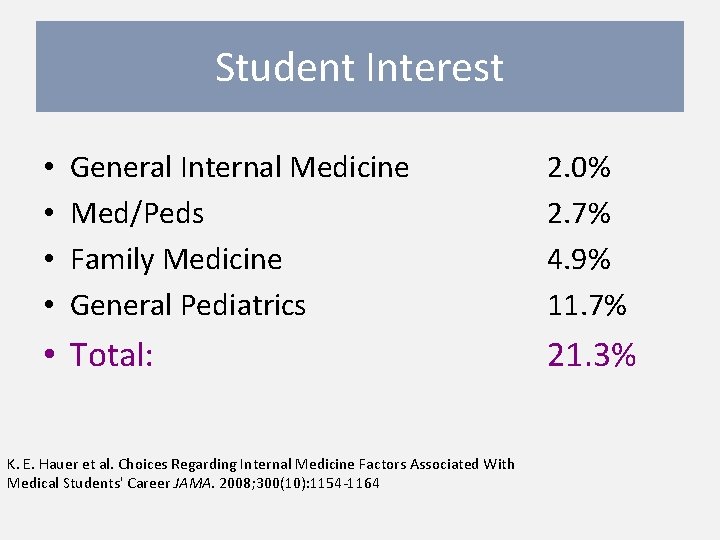
Student Interest • • General Internal Medicine Med/Peds Family Medicine General Pediatrics • Total: K. E. Hauer et al. Choices Regarding Internal Medicine Factors Associated With Medical Students' Career JAMA. 2008; 300(10): 1154 -1164 2. 0% 2. 7% 4. 9% 11. 7% 21. 3%
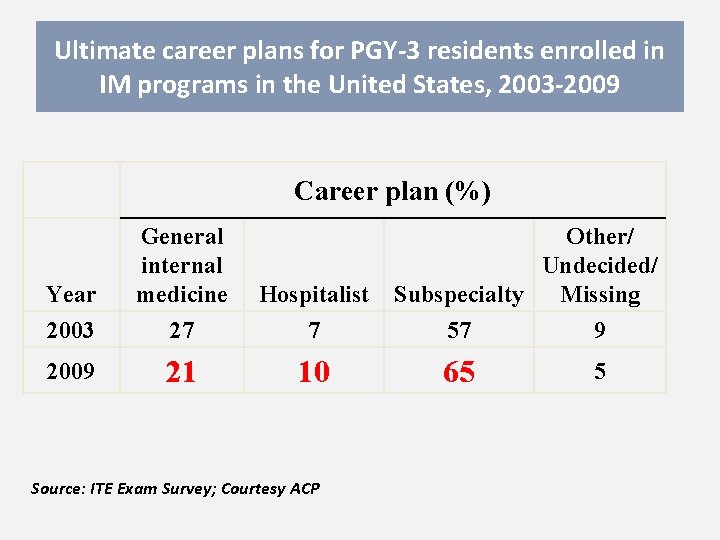
Ultimate career plans for PGY-3 residents enrolled in IM programs in the United States, 2003 -2009 Career plan (%) Year 2003 General internal medicine 27 Hospitalist 7 2009 21 10 Source: ITE Exam Survey; Courtesy ACP Other/ Undecided/ Subspecialty Missing 57 9 65 5
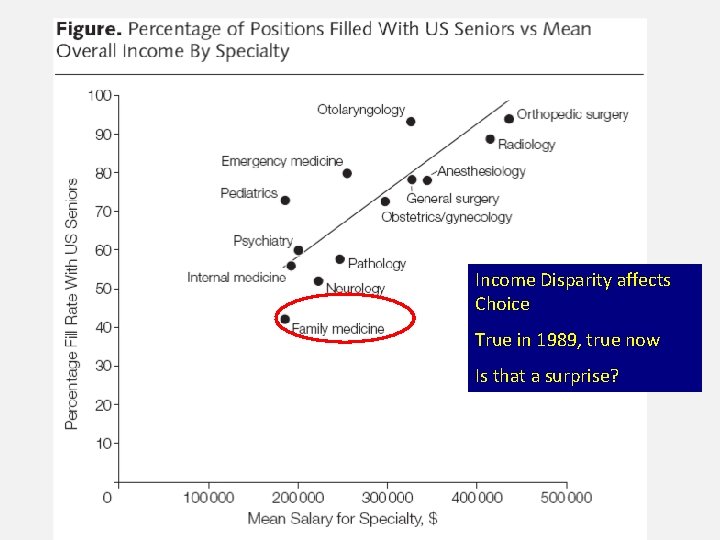
Income Disparity affects Choice True in 1989, true now Is that a surprise? M. H. Ebell. Future Salary and US Residency Fill Rate Revisited. JAMA. 2008; 300
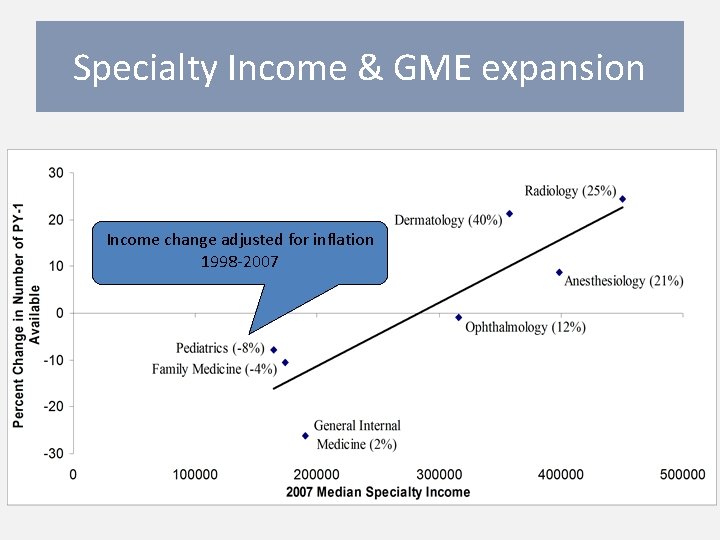
Specialty Income & GME expansion Income change adjusted for inflation 1998 -2007
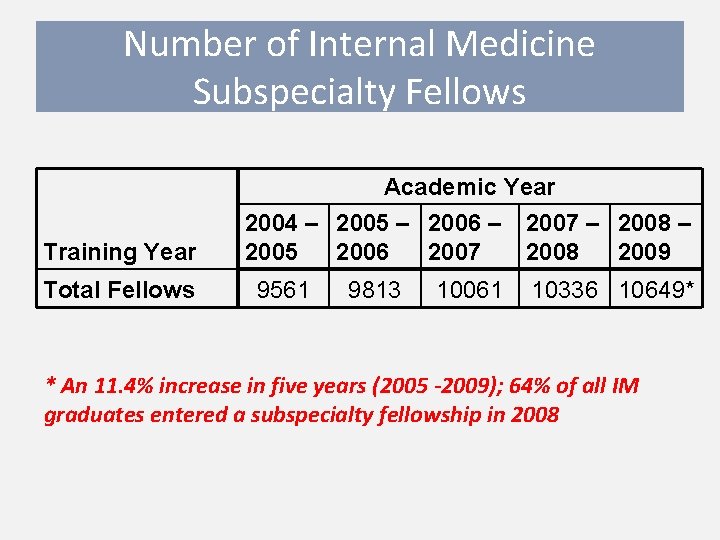
Number of Internal Medicine Subspecialty Fellows Academic Year Training Year Total Fellows 2004 – 2005 – 2006 – 2005 2006 2007 9561 9813 10061 2007 – 2008 2009 10336 10649* * An 11. 4% increase in five years (2005 -2009); 64% of all IM graduates entered a subspecialty fellowship in 2008
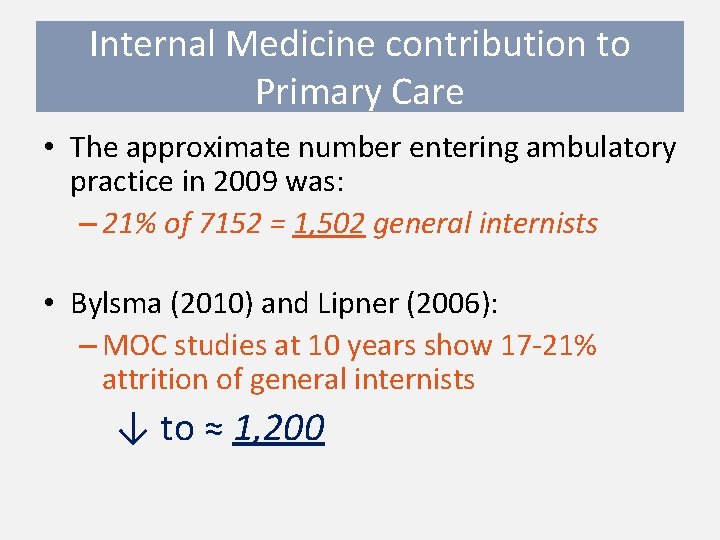
Internal Medicine contribution to Primary Care • The approximate number entering ambulatory practice in 2009 was: – 21% of 7152 = 1, 502 general internists • Bylsma (2010) and Lipner (2006): – MOC studies at 10 years show 17 -21% attrition of general internists ↓ to ≈ 1, 200
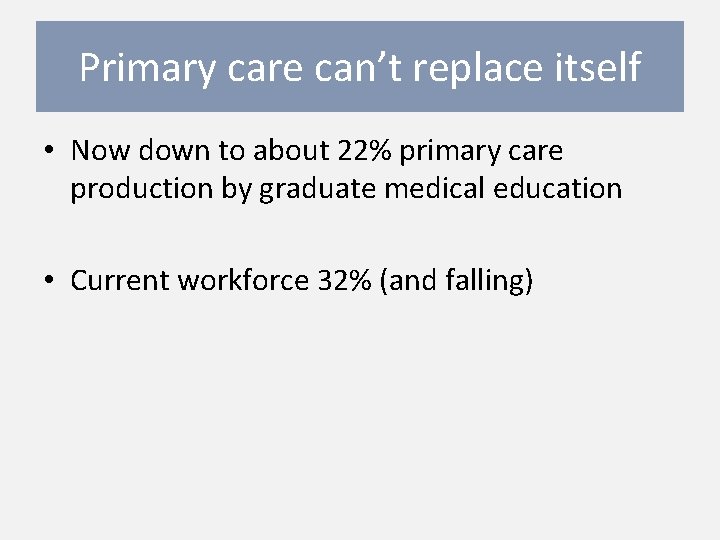
Primary care can’t replace itself • Now down to about 22% primary care production by graduate medical education • Current workforce 32% (and falling)
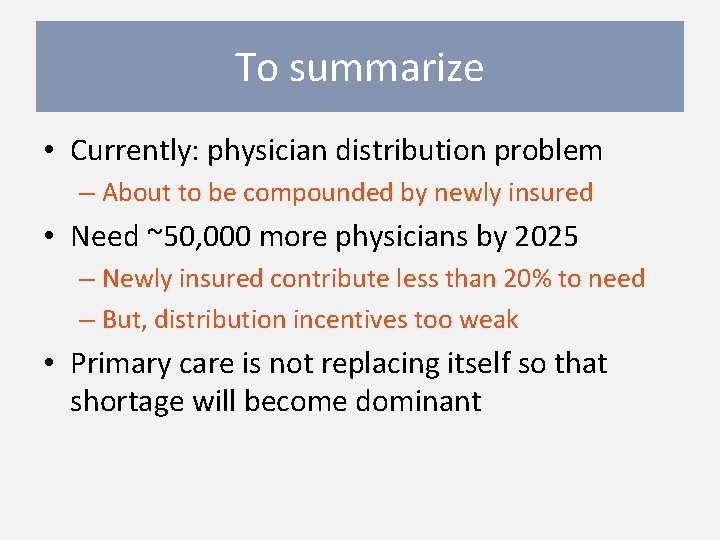
To summarize • Currently: physician distribution problem – About to be compounded by newly insured • Need ~50, 000 more physicians by 2025 – Newly insured contribute less than 20% to need – But, distribution incentives too weak • Primary care is not replacing itself so that shortage will become dominant


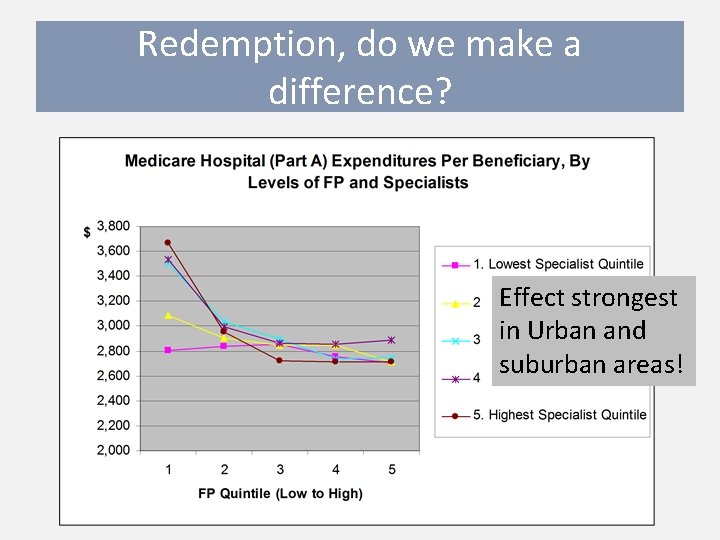
Redemption, do we make a difference? Effect strongest in Urban and suburban areas!
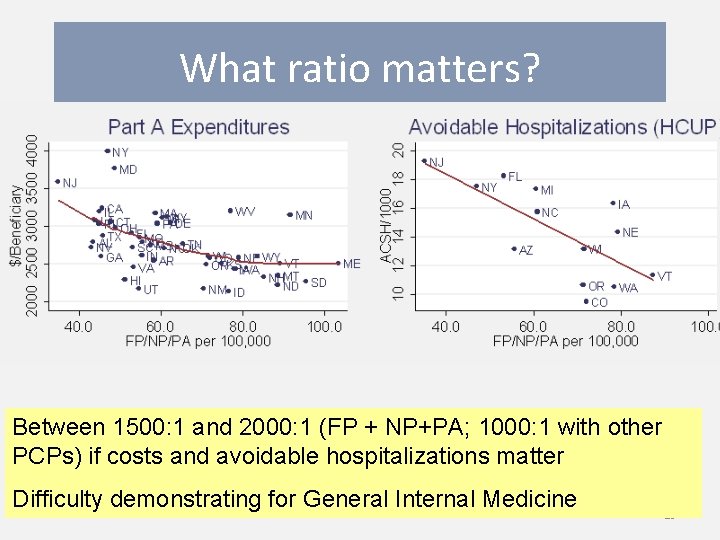
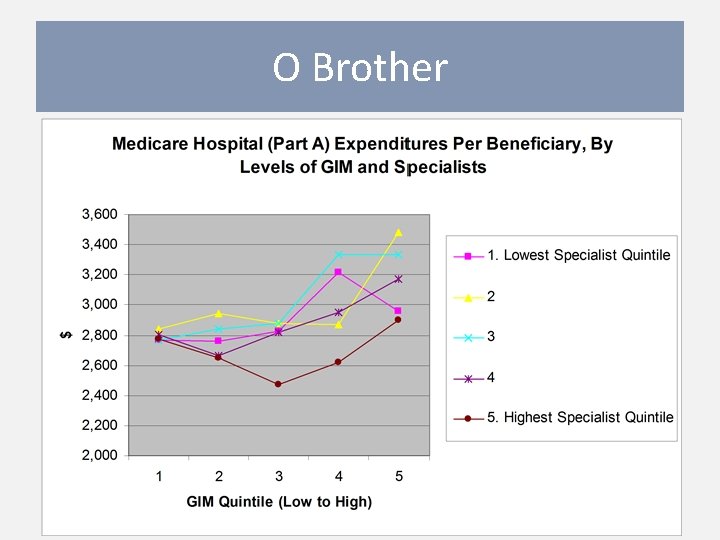
What ratio matters? Between 1500: 1 and 2000: 1 (FP + NP+PA; 1000: 1 with other PCPs) if costs and avoidable hospitalizations matter Difficulty demonstrating for General Internal Medicine 29
O Brother
What implication for workforce? • Smaller patient panels = more clinicians – Best demos of Patient Centered Medical Home bear this out – Veteran’s Administration and Department of Defense quickly moving to smaller panels – Alternatively, build out primary care teams to focus physicians on complex care and maintaining relationships (Geisinger) • General Internal Medicine training reform – ABIM has said as much
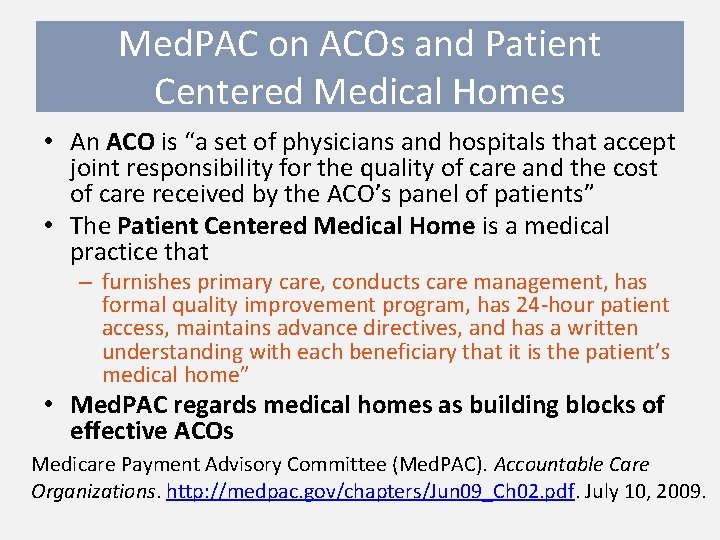
Med. PAC on ACOs and Patient Centered Medical Homes • An ACO is “a set of physicians and hospitals that accept joint responsibility for the quality of care and the cost of care received by the ACO’s panel of patients” • The Patient Centered Medical Home is a medical practice that – furnishes primary care, conducts care management, has formal quality improvement program, has 24 -hour patient access, maintains advance directives, and has a written understanding with each beneficiary that it is the patient’s medical home” • Med. PAC regards medical homes as building blocks of effective ACOs Medicare Payment Advisory Committee (Med. PAC). Accountable Care Organizations. http: //medpac. gov/chapters/Jun 09_Ch 02. pdf. July 10, 2009.
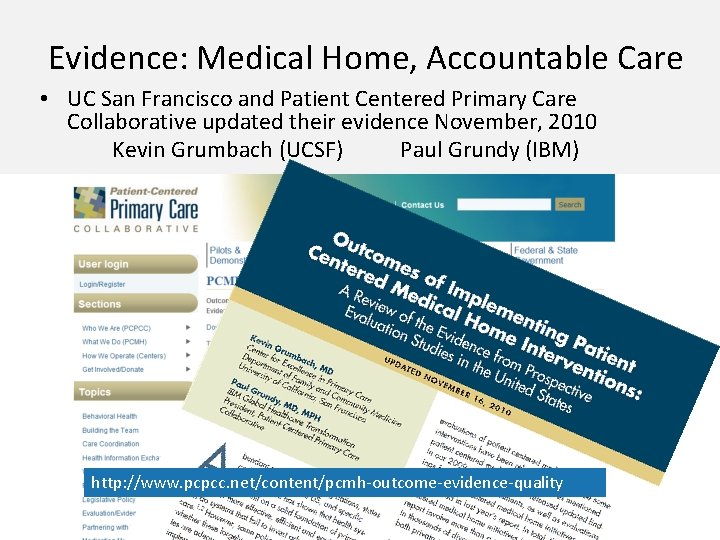
Evidence: Medical Home, Accountable Care • UC San Francisco and Patient Centered Primary Care Collaborative updated their evidence November, 2010 Kevin Grumbach (UCSF) Paul Grundy (IBM) http: //www. pcpcc. net/content/pcmh-outcome-evidence-quality
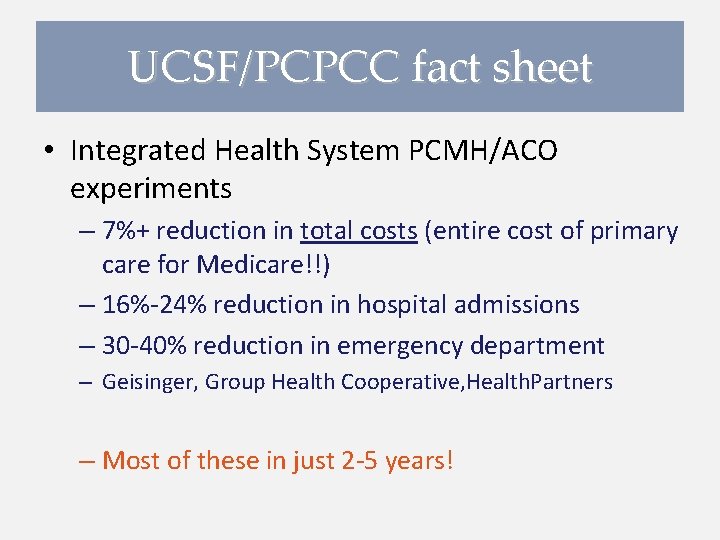
UCSF/PCPCC fact sheet • Integrated Health System PCMH/ACO experiments – 7%+ reduction in total costs (entire cost of primary care for Medicare!!) – 16%-24% reduction in hospital admissions – 30 -40% reduction in emergency department – Geisinger, Group Health Cooperative, Health. Partners – Most of these in just 2 -5 years!
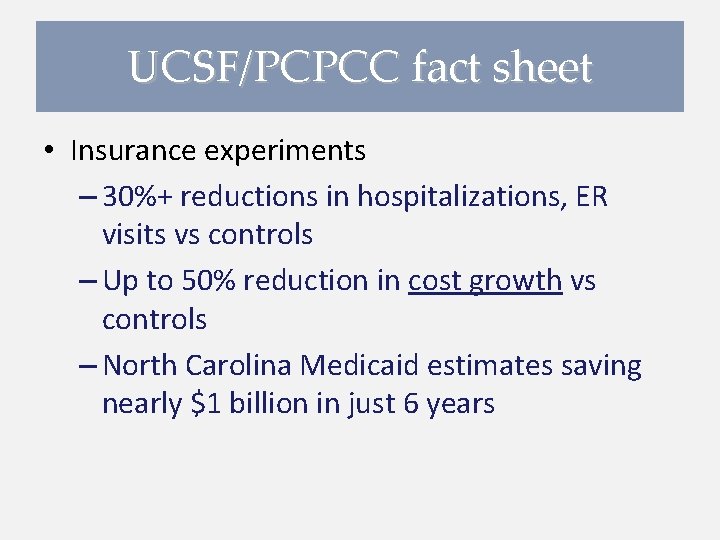
UCSF/PCPCC fact sheet • Insurance experiments – 30%+ reductions in hospitalizations, ER visits vs controls – Up to 50% reduction in cost growth vs controls – North Carolina Medicaid estimates saving nearly $1 billion in just 6 years
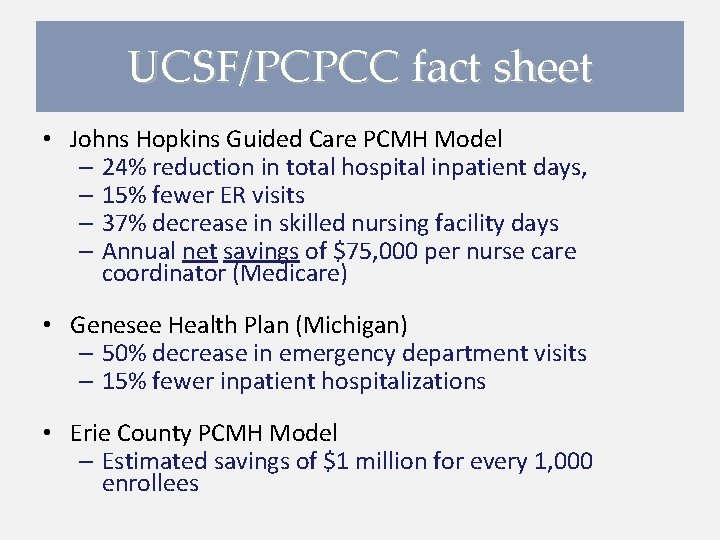
UCSF/PCPCC fact sheet • Johns Hopkins Guided Care PCMH Model – 24% reduction in total hospital inpatient days, – 15% fewer ER visits – 37% decrease in skilled nursing facility days – Annual net savings of $75, 000 per nurse care coordinator (Medicare) • Genesee Health Plan (Michigan) – 50% decrease in emergency department visits – 15% fewer inpatient hospitalizations • Erie County PCMH Model – Estimated savings of $1 million for every 1, 000 enrollees
Special issue Journal of Ambulatory Care Management • January 2011
To summarize • Growing evidence of its importance to cost and quality—especially Family Medicine • Basis of the demonstrations with measurable, beneficial outcomes • Growing coalition of business, payors making our case

They are singing our song • Distribution – Expanded National Health Service Corps, CHCs – Revising shortage & underservice designation • Payment – Primary Care Incentive Payment – Medicaid-Medicare parity (for a while) • Pipeline HRSA investing $250 million in primary care expansion Relaxed rules on outpatient training, preceptors Teaching Health Centers COGME and Med. Pac weigh in on payment and GME funding reform – GME Accountability – –
They are singing our song • Distribution – Revising shortage & underservice designation • Payment – Primary Care Incentive Payment • Pipeline – GME Accountability
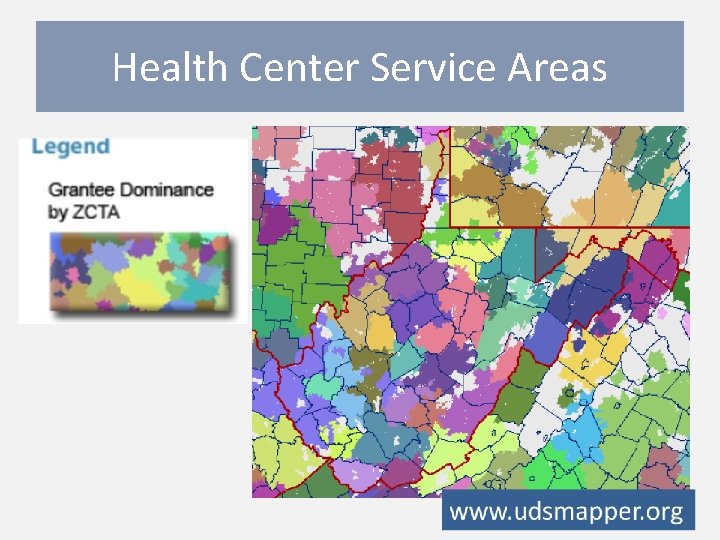
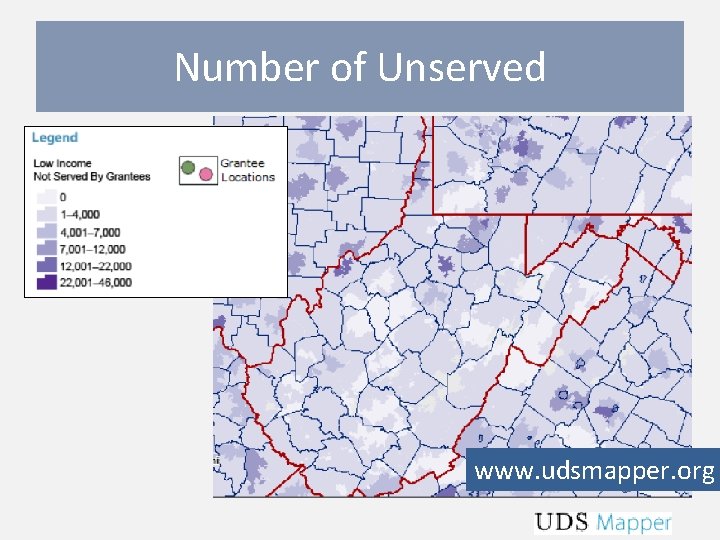
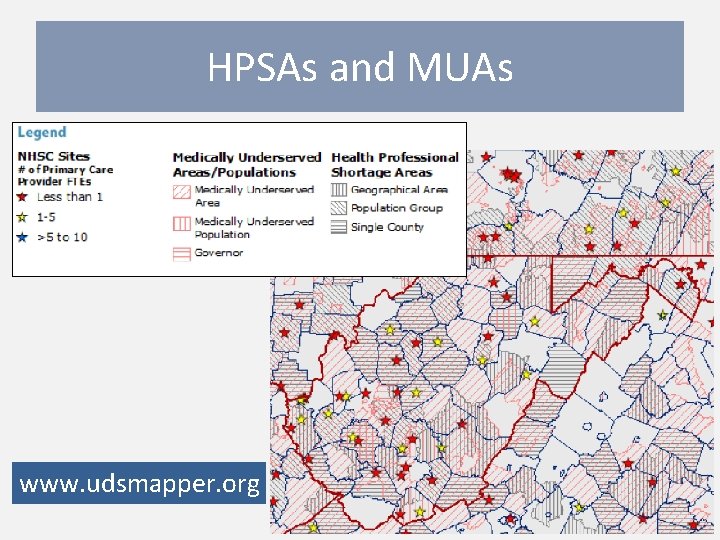
Shortage & Underservice • Process for designating Health Profession Shortage Areas (HPSA) and Medically Underserve Areas (MUA) unchanged 34 years • Used by 38+ Federal programs for placing resources • Failed twice in last 12 years • Negotiated Rule-Making Committee – 28 people, no chair, 14 months, Fed Arbitration Board – Imagine a medical school curriculum committee facilitated by the Engineering school
Where it stands • Very close to finalizing – geographic and population measures of health outcomes, access barriers (and risk of these) – Provider measures (will include NPs, PAs, Nurse Midwives) • Graham Center contributing a great deal to geographic modeling • Impact testing next • UDS Mapper
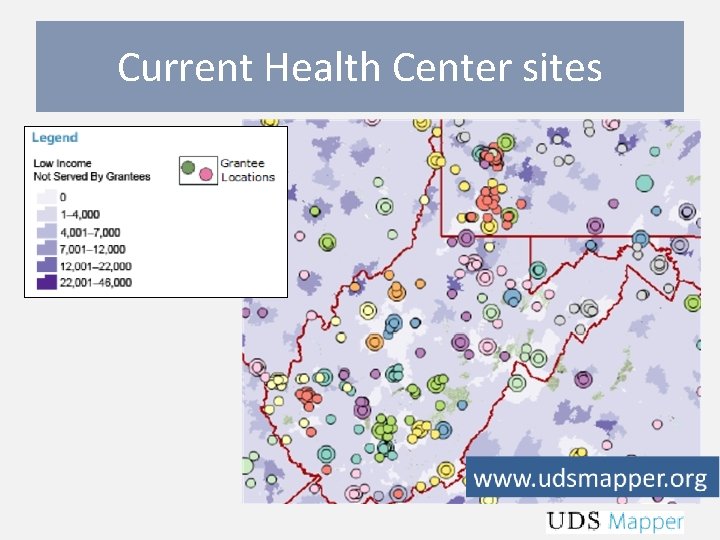
Current Health Center sites
Health Center Service Areas
Number of Unserved www. udsmapper. org
HPSAs and MUAs www. udsmapper. org
They are singing our song • Distribution – Revising shortage & underservice designation • Payment – Primary Care Incentive Payment • Pipeline – GME Accountability
Primary Care Incentive Payments • Graham Center was able to show that the criteria for “Primary Care” were too narrow – Most rural family physicians were not eligible • Able to demonstrate that broader scope of practice associated with LOWER Medicare costs – CMS changed rule, making ~25, 000 more FPs eligible ($50 -100 million) • Now working with AAFP Govt Relations to make the case for increasing size of incentive
They are singing our song • Distribution – Revising shortage & underservice designation • Payment – Primary Care Incentive Payment • Pipeline – GME Accountability
Education Accountability • Dr. Petterson (RGC) worked with Fitz Mullan to do the Medical School Social Accountability study – Macy Foundation funds Med School Mapper • Med. Pac says GME “unnaccountable” 1989, 2010 • ACA assigned development of accountability measures to COGME • Data from Graham Center helped AAFP and “family” defeat GME expansion bill—presented at AAMC and just published Academic Medicine • Macy Foundation funds RGC/GWU GME Social Accountability Study
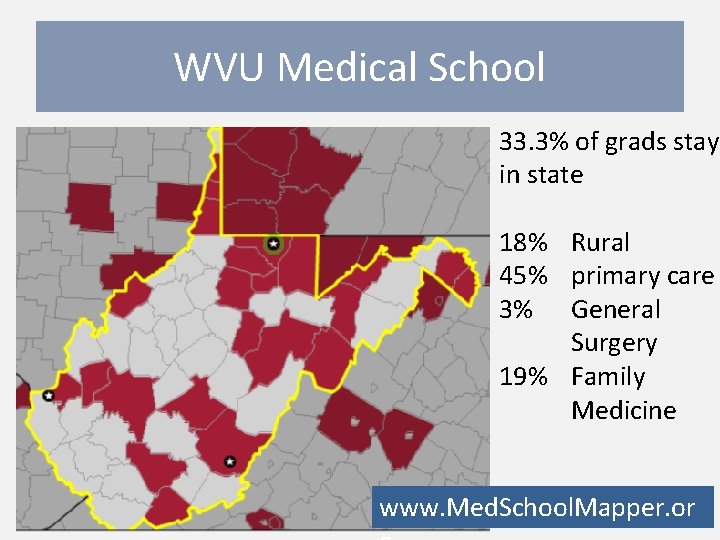
WVU Medical School 33. 3% of grads stay in state 18% Rural 45% primary care 3% General Surgery 19% Family Medicine www. Med. School. Mapper. or
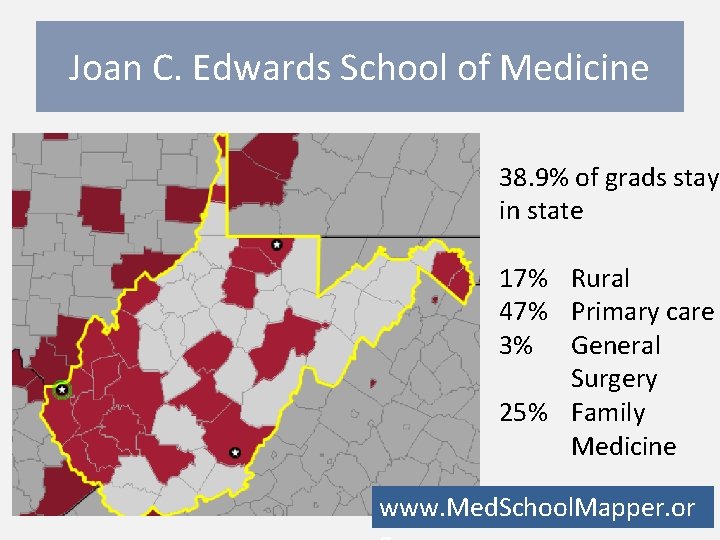
Joan C. Edwards School of Medicine 38. 9% of grads stay in state 17% Rural 47% Primary care 3% General Surgery 25% Family Medicine www. Med. School. Mapper. or
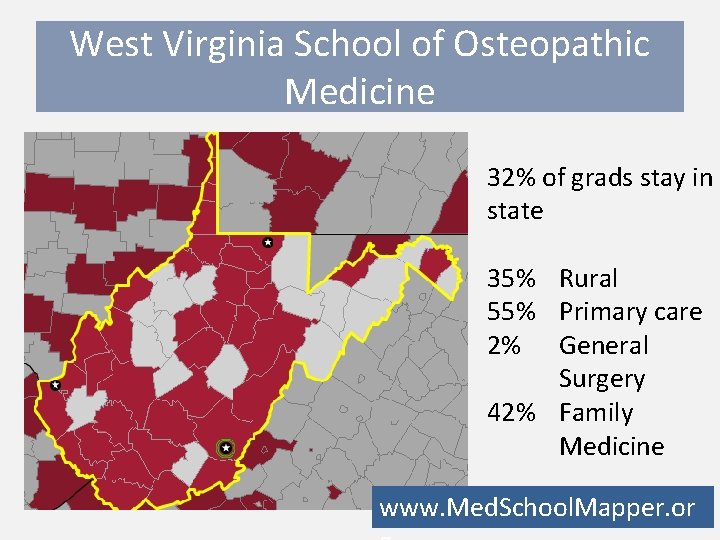
West Virginia School of Osteopathic Medicine 32% of grads stay in state 35% Rural 55% Primary care 2% General Surgery 42% Family Medicine www. Med. School. Mapper. or
Resident Physician Shortage Reductino Act of 2009 • Introduced in both the U. S. House and Senate during health reform • 15% increase in Medicare-funded GME – 15, 000 positions – ~$1. 5 billion annually • Criteria: – Hospital 10 or more positions above GME Cap – at least 25% of its full-time equivalent residents in primary care and general surgery
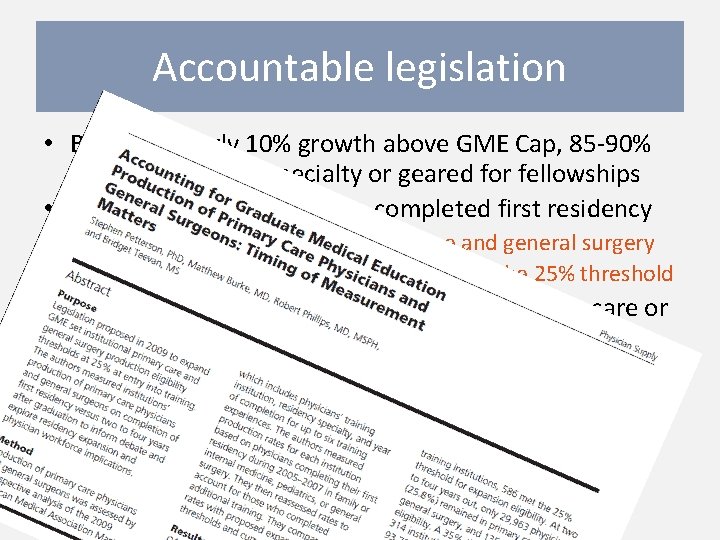
Accountable legislation • By 2009, nearly 10% growth above GME Cap, 85 -90% of these were subspecialty or geared for fellowships • 2005 -7: 116, 004 physicians completed first residency – 54, 245 (46. 8%) were in primary care and general surgery – And 586 of 683 training institutions met the 25% threshold • 2 -4 years later, only 25. 8% were still in primary care or general surgery – 135 institutions lost eligibility • A 35% threshold eliminated 314 institutions that train 81% of residents Family Medicine said “NO”
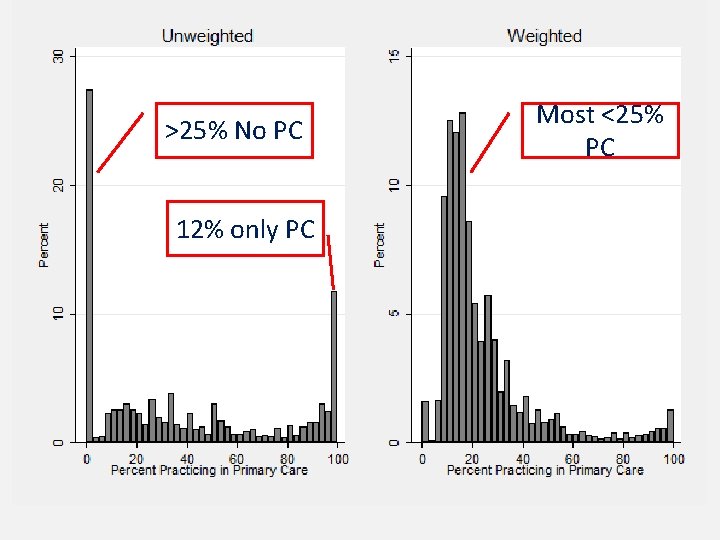
GME Accountability Measures Most <25% >25% No PC • Josiah Macy Jr. Foundation funded study. PC – RGC/George Washington University 12% onlya. PC • Kicked off with Qualitative, Key-Informants – Dr. Anjani Reddy, Sonia Lazreg, Rebecca Etz • Quantitative Analysis just starting • Will be used to rank all teaching hospitals on several measures
Summary • Rapidly approaching capacity to rank teaching hospitals by measures of “public good” • May help Med. PAC get more specific with GME reallocation recommendations • Primary care financing and distribution policies are improved but not sufficient • The Graham Center will continue to build tools for the family to improve understanding and advocacy

Pardon or Deluge: we’ll get there
- Slides: 58