
NYU Medical Grand Rounds Clinical Vignette Michael Chu

- Slides: 13
NYU Medical Grand Rounds Clinical Vignette Michael Chu MD, PGY-2 5/20/09
Chief Complaint 71 year old male with difficult to control hypertension for approximately 15 years
History of Present Illness The patient was noted by his primary care physician to have difficult to control hypertension despite being treated with five antihypertensive medications The patient was largely asymptomatic Noted to require potassium supplementation to maintain normal potassium levels
Additional History Past Medical History: – Hypertension – Type II Diabetes Mellitus – Glaucoma – Diverticulosis Past Surgical History: – none
Additional History Social History: – Previous tobacco use, quit 10 -15 years prior – 1 -2 drinks of alcohol 3 -4 times per week – Works as a plumber and owns business Family History: – No history of heart disease or diabetes in the family – Sister died of a brain tumor in her 70 s
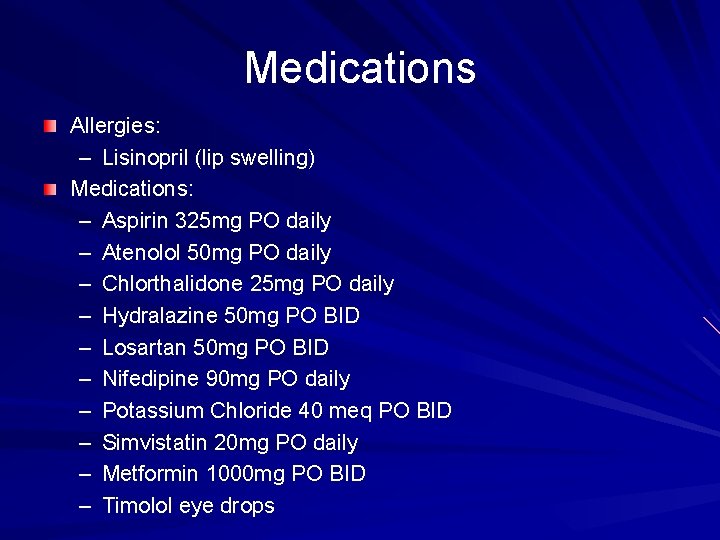
Medications Allergies: – Lisinopril (lip swelling) Medications: – Aspirin 325 mg PO daily – Atenolol 50 mg PO daily – Chlorthalidone 25 mg PO daily – Hydralazine 50 mg PO BID – Losartan 50 mg PO BID – Nifedipine 90 mg PO daily – Potassium Chloride 40 meq PO BID – Simvistatin 20 mg PO daily – Metformin 1000 mg PO BID – Timolol eye drops
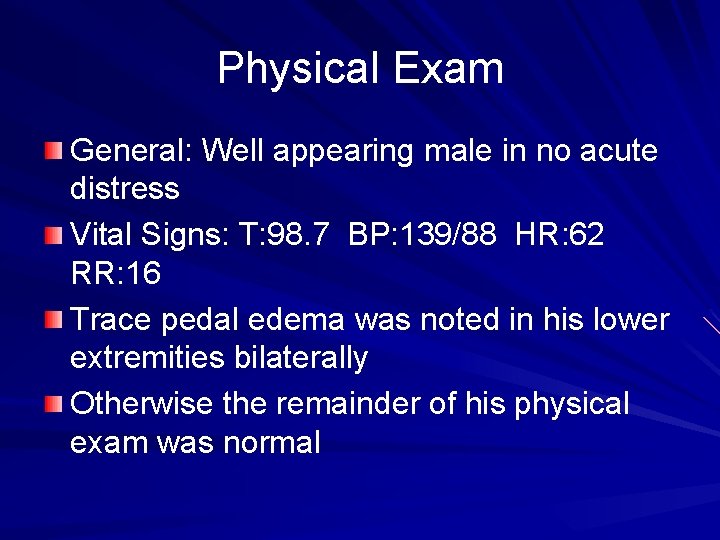
Physical Exam General: Well appearing male in no acute distress Vital Signs: T: 98. 7 BP: 139/88 HR: 62 RR: 16 Trace pedal edema was noted in his lower extremities bilaterally Otherwise the remainder of his physical exam was normal
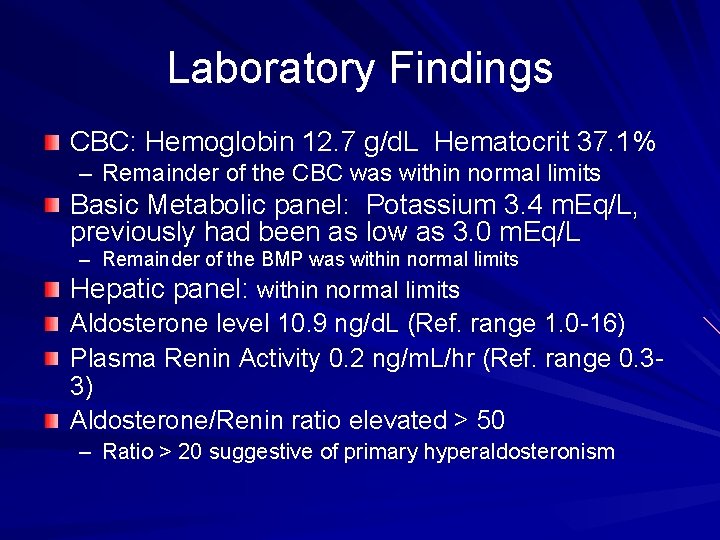
Laboratory Findings CBC: Hemoglobin 12. 7 g/d. L Hematocrit 37. 1% – Remainder of the CBC was within normal limits Basic Metabolic panel: Potassium 3. 4 m. Eq/L, previously had been as low as 3. 0 m. Eq/L – Remainder of the BMP was within normal limits Hepatic panel: within normal limits Aldosterone level 10. 9 ng/d. L (Ref. range 1. 0 -16) Plasma Renin Activity 0. 2 ng/m. L/hr (Ref. range 0. 33) Aldosterone/Renin ratio elevated > 50 – Ratio > 20 suggestive of primary hyperaldosteronism
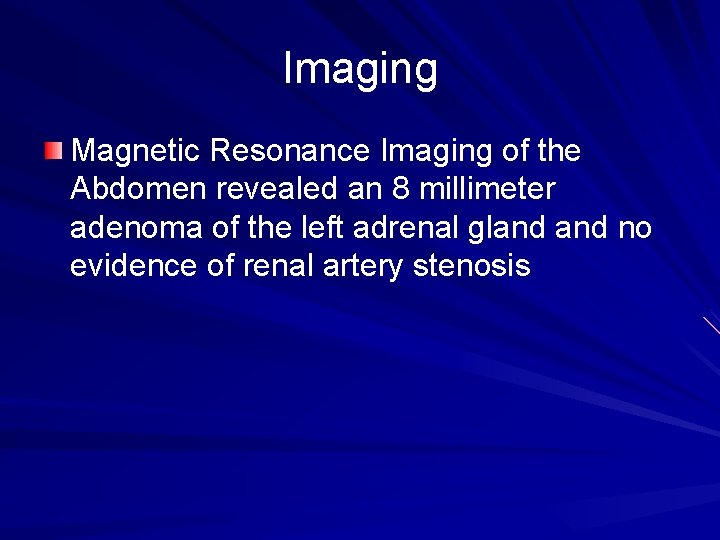
Imaging Magnetic Resonance Imaging of the Abdomen revealed an 8 millimeter adenoma of the left adrenal gland no evidence of renal artery stenosis
Differential Diagnosis Hyperfunctioning adenoma, such as a pheochromocytoma or aldosterone secreting tumor Non-functioning adenoma Bilateral adrenal hyperplasia Adrenal cancer Metastatic cancer Myelolipoma
Clinic Course The patient was referred to the endocrinology clinic for further management and repeat lab testing was performed Aldosterone level 28. 3 ng/d. L Plasma Renin Activity level 0. 48 ng/m. L/hr Aldosterone/Renin ratio elevated > 50 24 hour urine catecholamine and metanephrines was within normal limits Salt loading testing was performed and serum aldosterone level was noted to be non-suppressed
Clinic Course It was recommended for the patient to undergo adrenal vein sampling to differentiate between an aldosterone secreting adenoma and bilateral adrenal hyperplasia, however the patient opted for medical management The patient was started on spironolactone therapy Since beginning spironolactone, the was able to come off of Chlorthalidone, Hydralazine and potassium supplementation
Final Diagnosis Primary Hyperaldosteronism