
Nutritional types A The nutritional types of microorganisms
- Slides: 12
Nutritional types
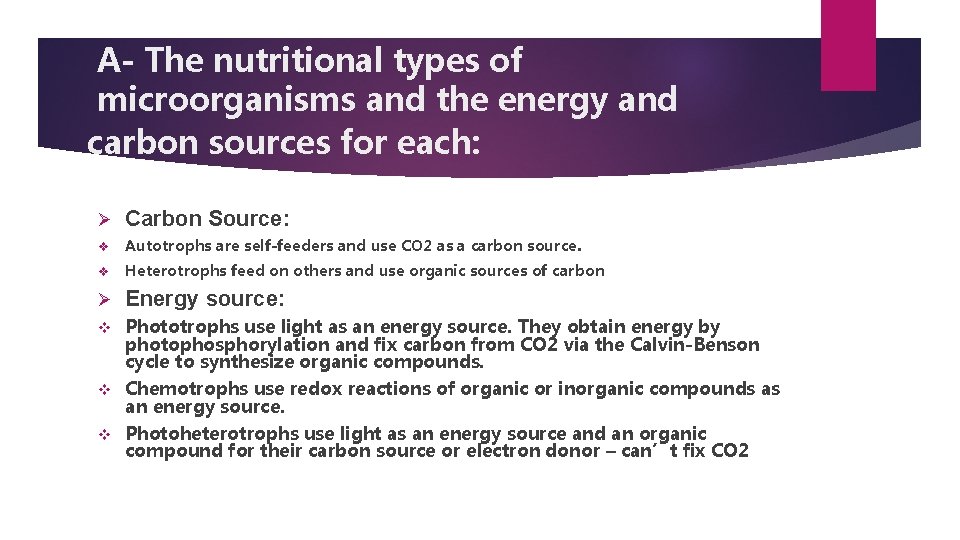
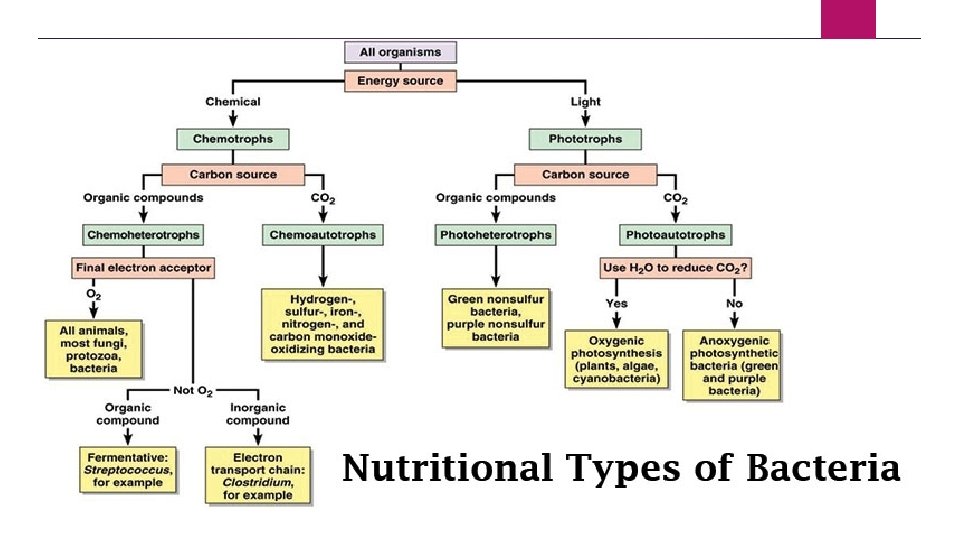
A- The nutritional types of microorganisms and the energy and carbon sources for each: Ø Carbon Source: v Autotrophs are self-feeders and use CO 2 as a carbon source. v Heterotrophs feed on others and use organic sources of carbon Ø Energy source: v Phototrophs use light as an energy source. They obtain energy by photophosphorylation and fix carbon from CO 2 via the Calvin-Benson cycle to synthesize organic compounds. v Chemotrophs use redox reactions of organic or inorganic compounds as an energy source. v Photoheterotrophs use light as an energy source and an organic compound for their carbon source or electron donor – can’t fix CO 2
B-The nutritional types of Algae On the basis of the nutritional strategies, algae are classified to four groups:
1. Photoautotrophs Following our definition of the term algae, most algal groups are considered photoautotrophs, that is, depending entirely upon their photosynthetic apparatus for their metabolic necessities, using sunlight as the source of energy, and CO 2 as the carbon source to produce carbohydrates and ATP.
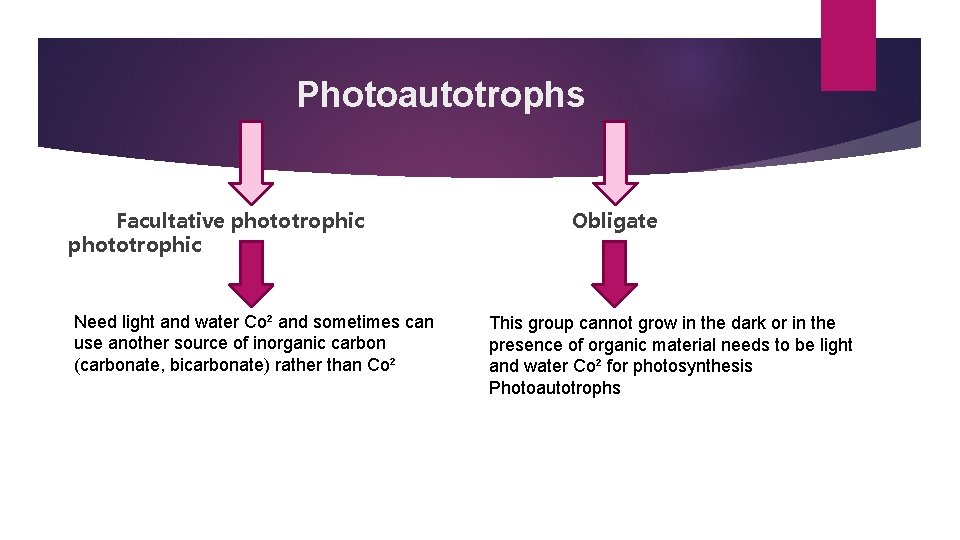
Photoautotrophs Facultative phototrophic Need light and water Co² and sometimes can use another source of inorganic carbon (carbonate, bicarbonate) rather than Co² Obligate This group cannot grow in the dark or in the presence of organic material needs to be light and water Co² for photosynthesis Photoautotrophs
2 - Heterotrophs Most algal divisions contain colorless heterotropic species that can obtain organic carbon from the external environment either by taking up dissolved substances (osmotrophy) or by engulfing bacteria and other cells as particulate prey (phagotrophy).
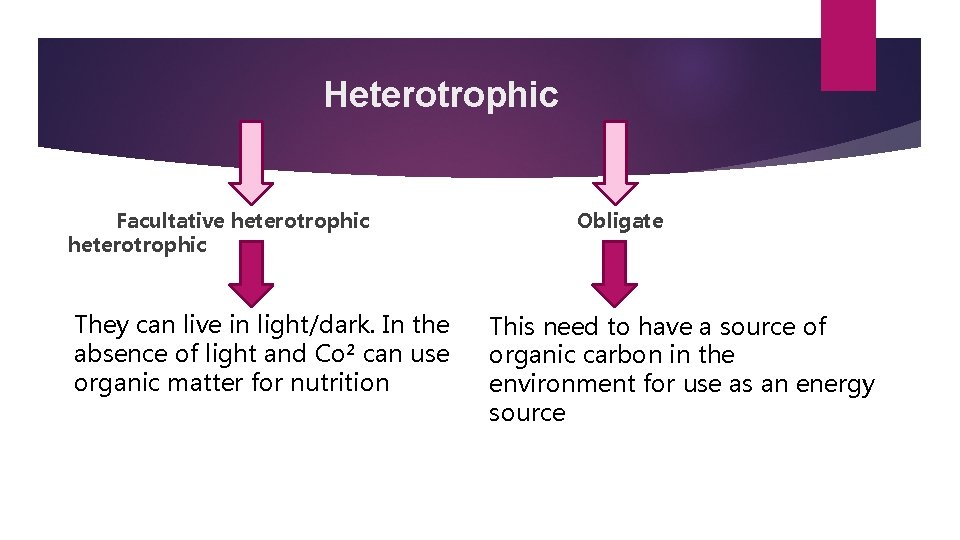
Heterotrophic Facultative heterotrophic They can live in light/dark. In the absence of light and Co² can use organic matter for nutrition Obligate This need to have a source of organic carbon in the environment for use as an energy source
3 - Auxotrophic Algae that cannot synthesize essential components such as the vitamins of the B 12 complex or fatty acids also exist, and have to import them; these algae are defined auxotrophic.
4 - Phototrophic A few of heterotrophic microalgae as have the ability to swallow food particles or small microorganism and has digested and then flouted the secretion into the cell. Examples of this group of algae Euglenophyta.
5 - Mixotrophs However, it is widely accepted that algae use a complex spectrum of nutritional strategies, combining photoautotrophy and heterotrophy, which is referred to as mixotrophy. Some mixotrophs are mainly photosynthetic and only occasionally use an organic energy source. Other mixotrophs meet most of their nutritional demand by phagotrophy, but may use some of the products of photosynthesis from sequestered prey chloroplasts.
? Compare between 1 - Mixotrophic and Phototrophic 2 - Facultative heterotrophic and Obligate heterotrophic Complete: - 1 - Algae that cannot synthesize essential components these algae are defined as. ………… 2 - Most algal divisions contain colorless heterotopic species that can obtain organic carbon from …… 3 -algae need organic carbon in the environment for use as an energy source called ………………. . Put (√) or (×) 1 - Phototrophs use light as an energy source. They obtain energy by photophosphorylation