
Nutritional support in NICUPICU A Norouzy Assistant Professor


- Slides: 33
Nutritional support in NICU/PICU A Norouzy Assistant Professor in Clinical Nutrition Mashad Medical School
NICU
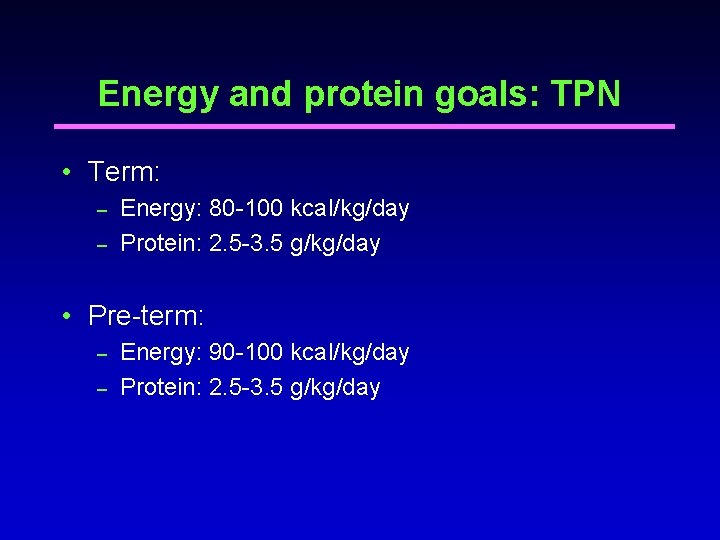
Energy and protein goals: TPN • Term: – – Energy: 80 -100 kcal/kg/day Protein: 2. 5 -3. 5 g/kg/day • Pre-term: – – Energy: 90 -100 kcal/kg/day Protein: 2. 5 -3. 5 g/kg/day
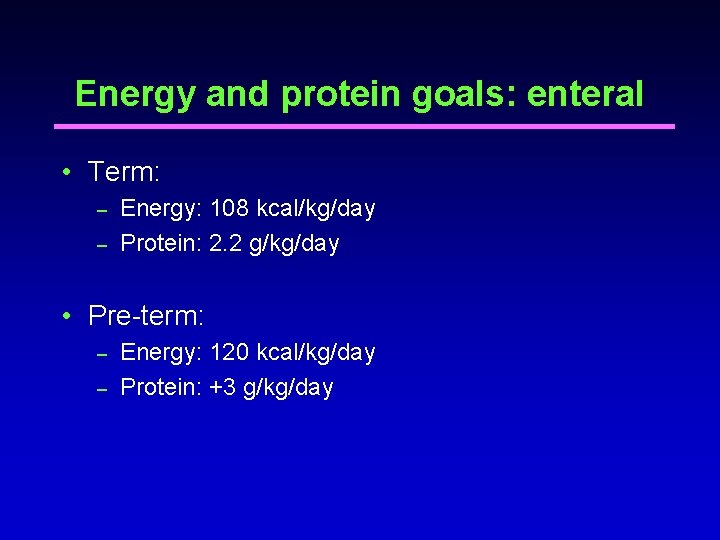
Energy and protein goals: enteral • Term: – – Energy: 108 kcal/kg/day Protein: 2. 2 g/kg/day • Pre-term: – – Energy: 120 kcal/kg/day Protein: +3 g/kg/day
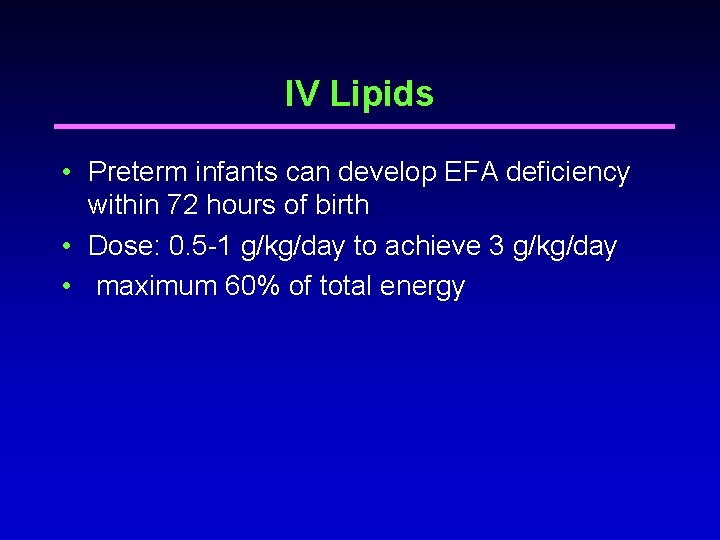
IV Lipids • Preterm infants can develop EFA deficiency within 72 hours of birth • Dose: 0. 5 -1 g/kg/day to achieve 3 g/kg/day • maximum 60% of total energy
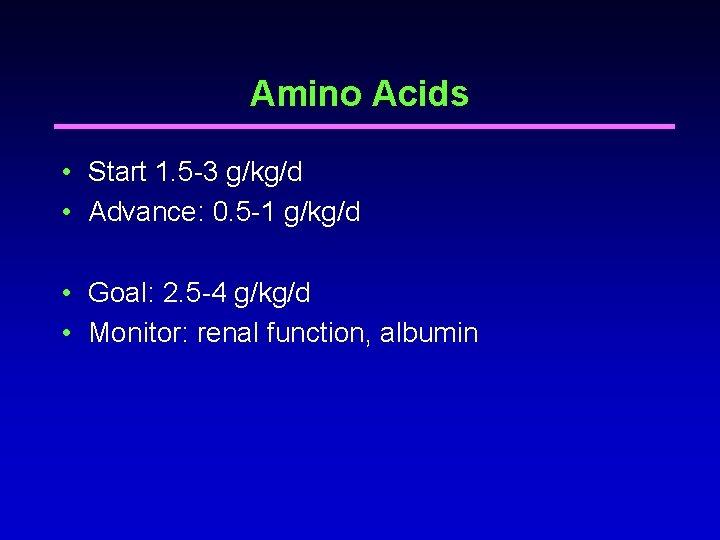
Amino Acids • Start 1. 5 -3 g/kg/d • Advance: 0. 5 -1 g/kg/d • Goal: 2. 5 -4 g/kg/d • Monitor: renal function, albumin
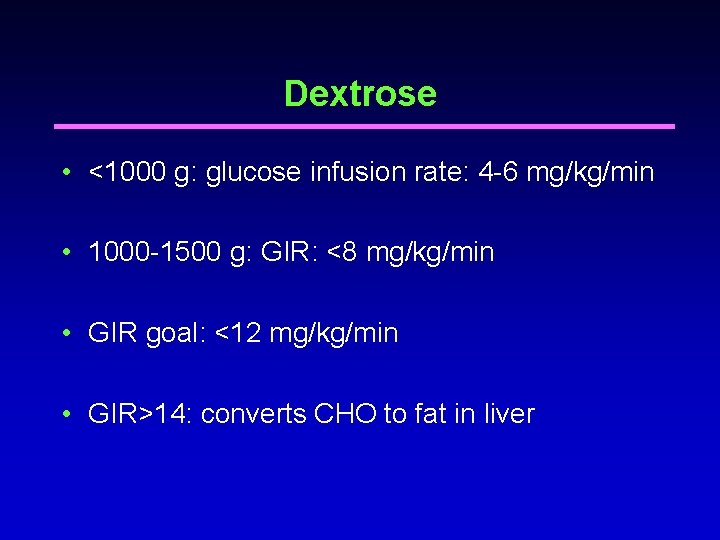
Dextrose • <1000 g: glucose infusion rate: 4 -6 mg/kg/min • 1000 -1500 g: GIR: <8 mg/kg/min • GIR goal: <12 mg/kg/min • GIR>14: converts CHO to fat in liver
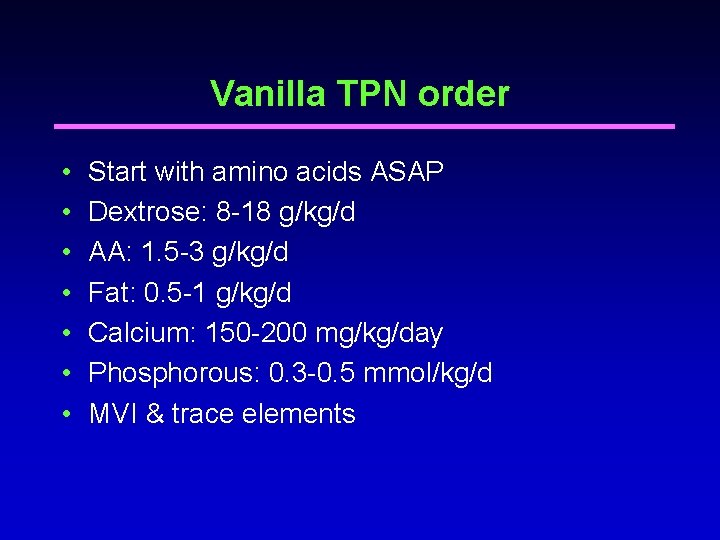
Vanilla TPN order • • Start with amino acids ASAP Dextrose: 8 -18 g/kg/d AA: 1. 5 -3 g/kg/d Fat: 0. 5 -1 g/kg/d Calcium: 150 -200 mg/kg/day Phosphorous: 0. 3 -0. 5 mmol/kg/d MVI & trace elements
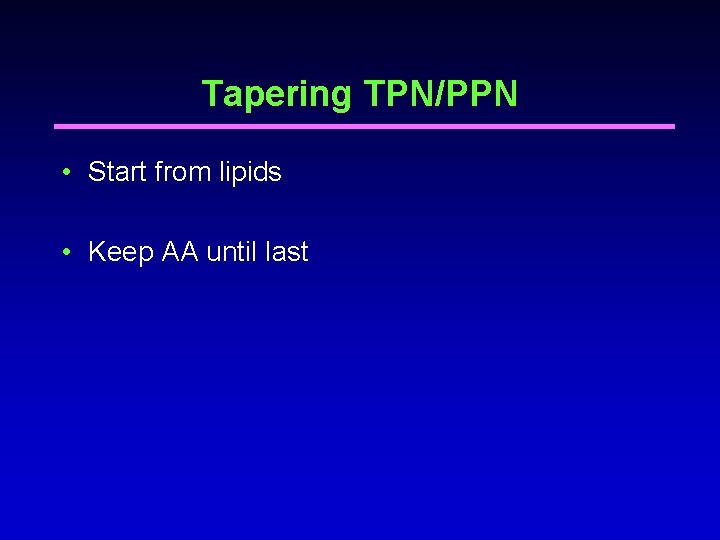
Tapering TPN/PPN • Start from lipids • Keep AA until last
Enteral nutrition • BMF or formula • Trophic feed or full feed
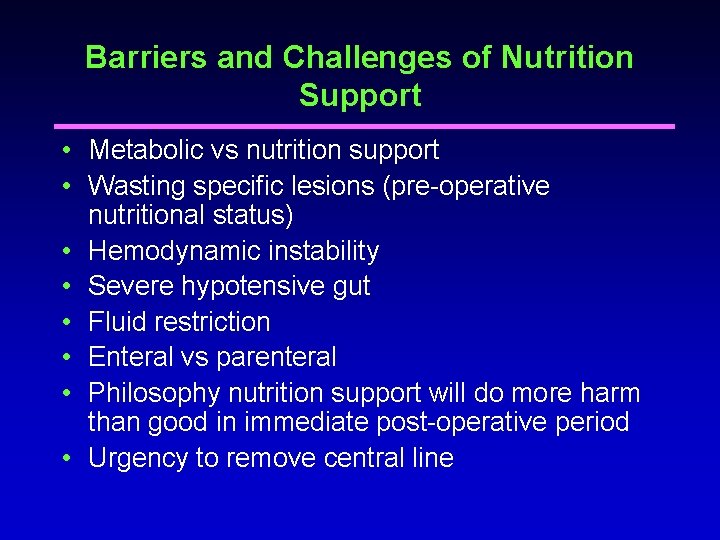
Barriers and Challenges of Nutrition Support • Metabolic vs nutrition support • Wasting specific lesions (pre-operative nutritional status) • Hemodynamic instability • Severe hypotensive gut • Fluid restriction • Enteral vs parenteral • Philosophy nutrition support will do more harm than good in immediate post-operative period • Urgency to remove central line
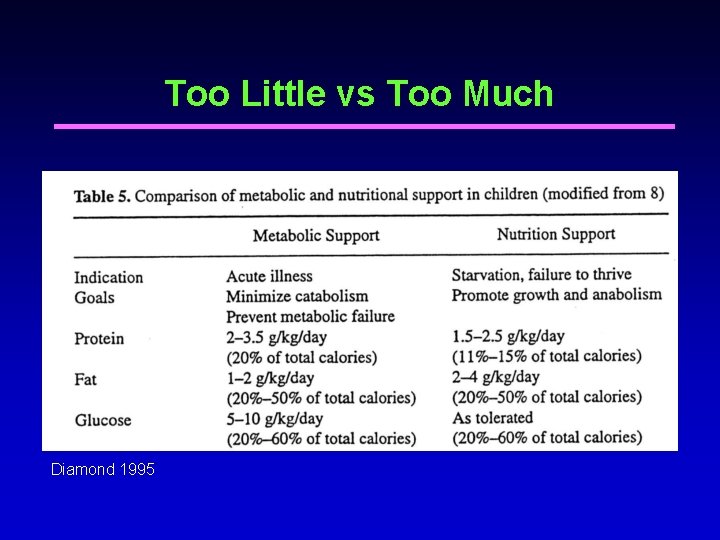
Too Little vs Too Much Diamond 1995
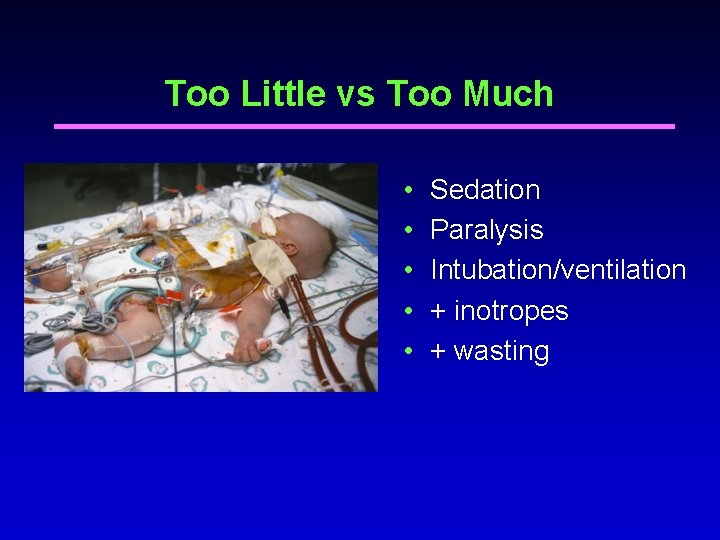
Too Little vs Too Much • • • Sedation Paralysis Intubation/ventilation + inotropes + wasting
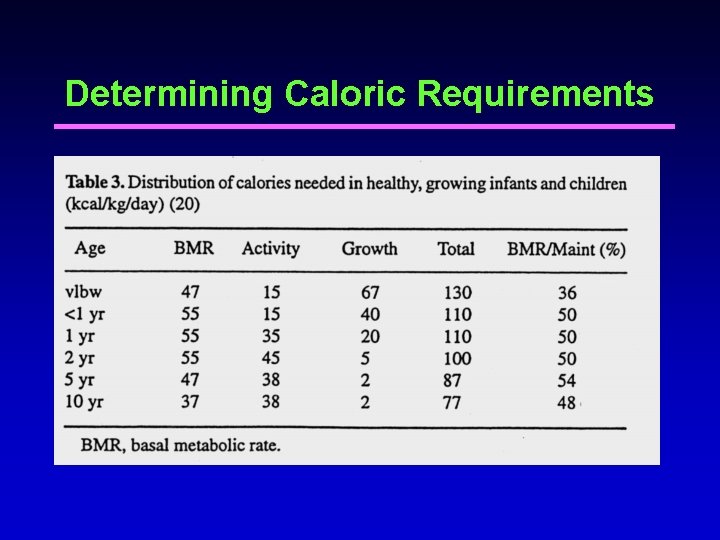
Determining Caloric Requirements
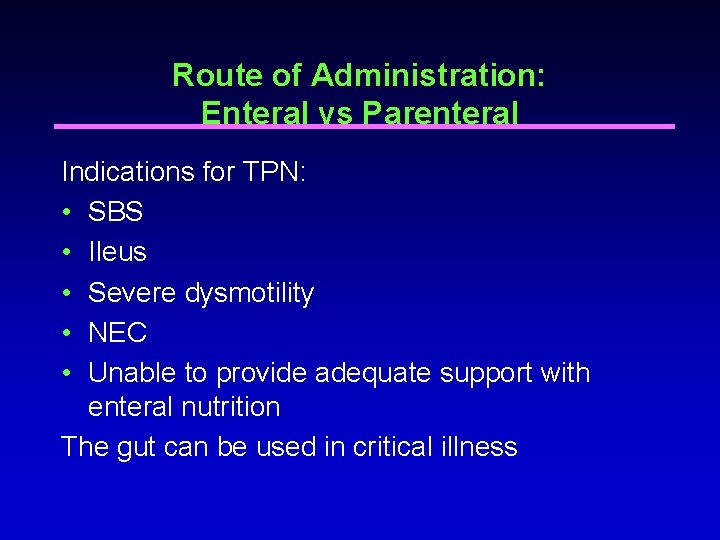
Route of Administration: Enteral vs Parenteral Indications for TPN: • SBS • Ileus • Severe dysmotility • NEC • Unable to provide adequate support with enteral nutrition The gut can be used in critical illness
Journal of Pediatric Gastroenterology and Nutrition. 41: S 1 -S 4
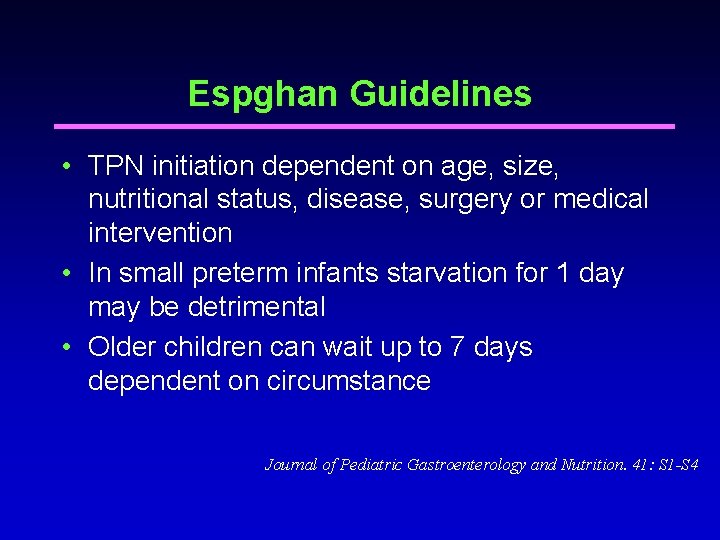
Espghan Guidelines • TPN initiation dependent on age, size, nutritional status, disease, surgery or medical intervention • In small preterm infants starvation for 1 day may be detrimental • Older children can wait up to 7 days dependent on circumstance Journal of Pediatric Gastroenterology and Nutrition. 41: S 1 -S 4
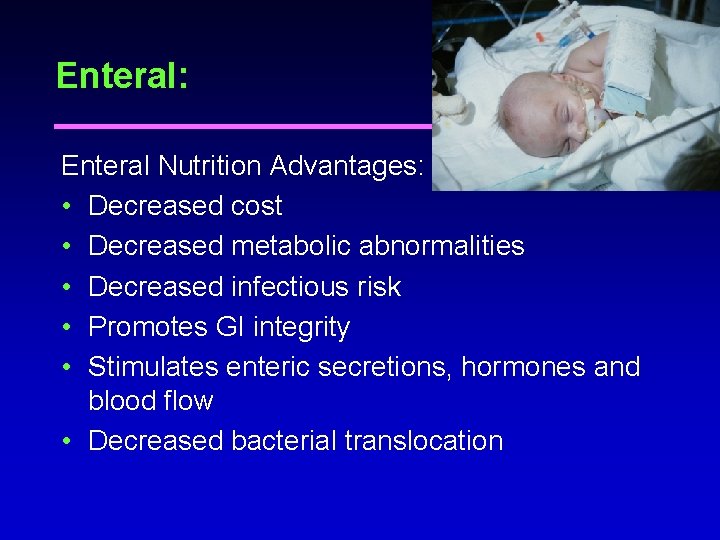
Enteral: Enteral Nutrition Advantages: • Decreased cost • Decreased metabolic abnormalities • Decreased infectious risk • Promotes GI integrity • Stimulates enteric secretions, hormones and blood flow • Decreased bacterial translocation
Enteral: Critically ill pediatric patients have multiple factors that decrease gastric emptying: • Formula osmolarity • Fat content • Lipid carbon chain length • Medications (narcotics, benzodiazepines, sedatives) Continuous feeds are best Small bowel feeds very successful
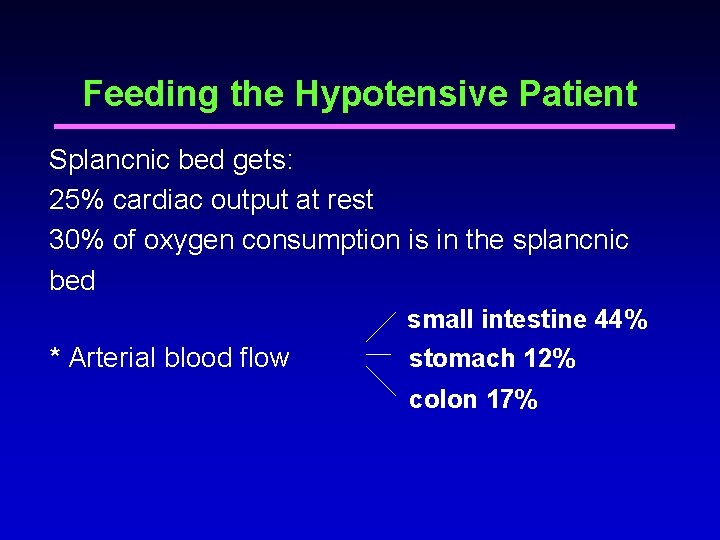
Feeding the Hypotensive Patient Splancnic bed gets: 25% cardiac output at rest 30% of oxygen consumption is in the splancnic bed small intestine 44% * Arterial blood flow stomach 12% colon 17%
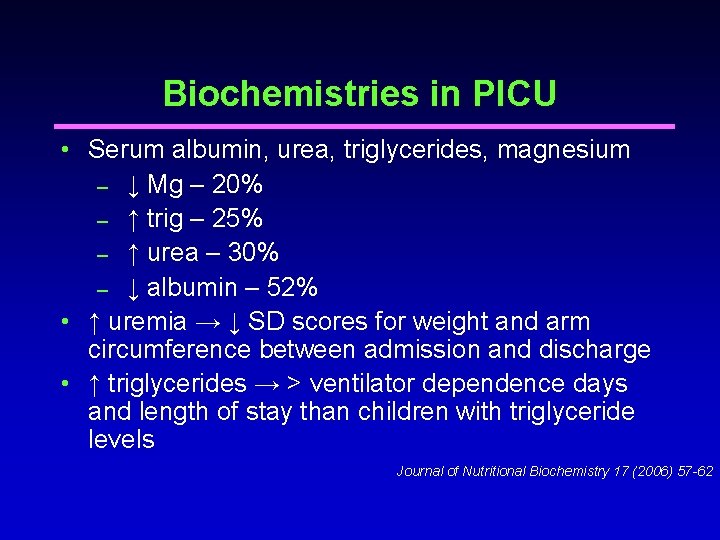
Biochemistries in PICU • Serum albumin, urea, triglycerides, magnesium – ↓ Mg – 20% – ↑ trig – 25% – ↑ urea – 30% – ↓ albumin – 52% • ↑ uremia → ↓ SD scores for weight and arm circumference between admission and discharge • ↑ triglycerides → > ventilator dependence days and length of stay than children with triglyceride levels Journal of Nutritional Biochemistry 17 (2006) 57 -62
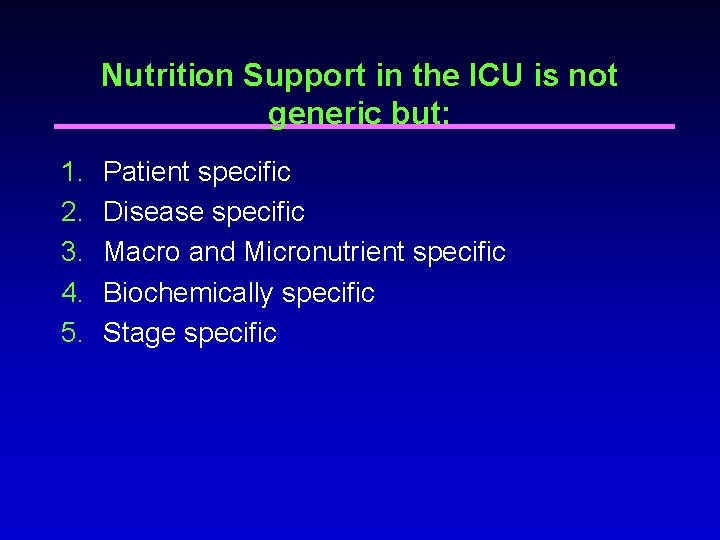
Nutrition Support in the ICU is not generic but: 1. 2. 3. 4. 5. Patient specific Disease specific Macro and Micronutrient specific Biochemically specific Stage specific
Nutritional Support of the VLBW Infant
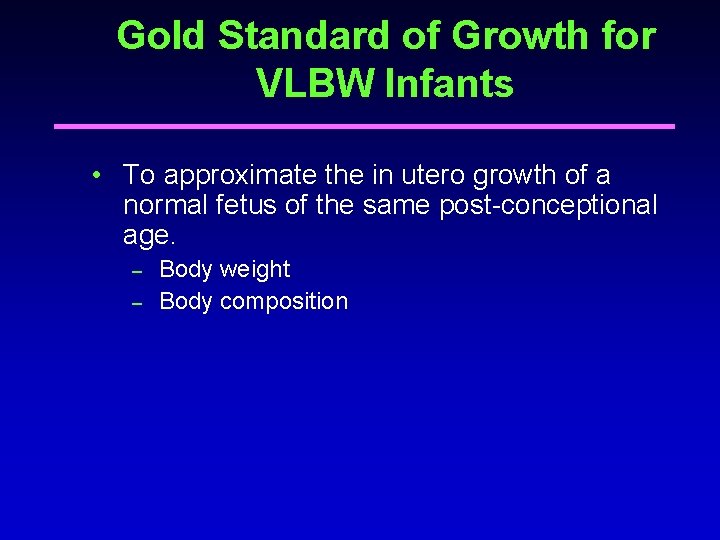
Gold Standard of Growth for VLBW Infants • To approximate the in utero growth of a normal fetus of the same post-conceptional age. – – Body weight Body composition
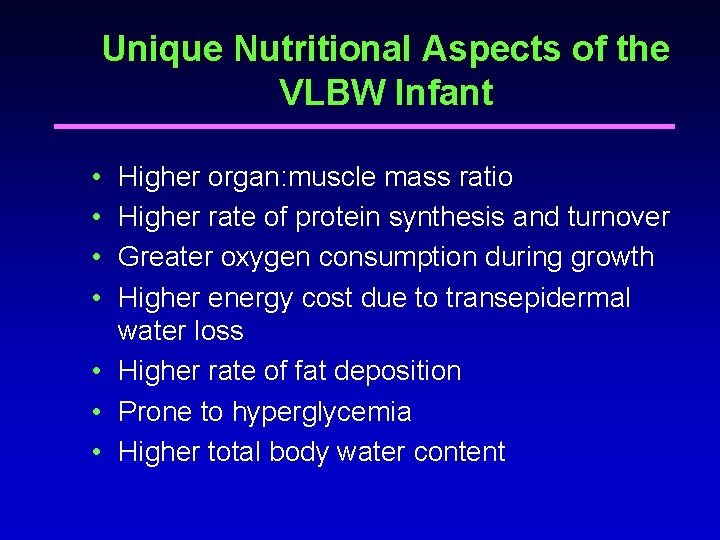
Unique Nutritional Aspects of the VLBW Infant • • Higher organ: muscle mass ratio Higher rate of protein synthesis and turnover Greater oxygen consumption during growth Higher energy cost due to transepidermal water loss • Higher rate of fat deposition • Prone to hyperglycemia • Higher total body water content
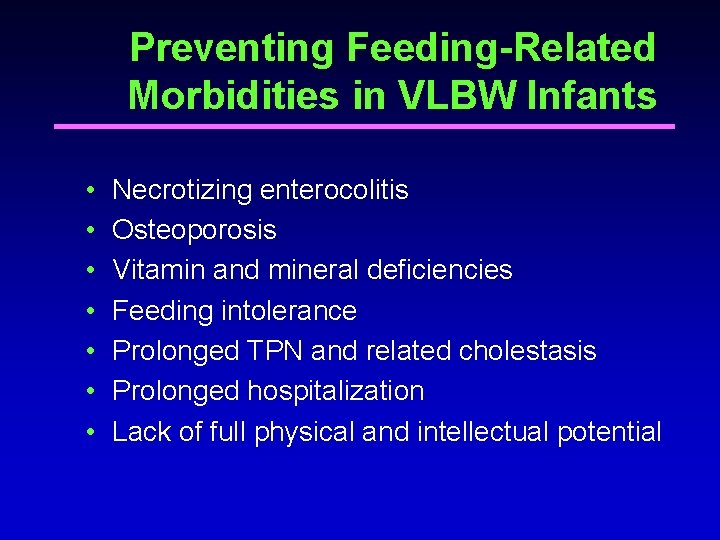
Preventing Feeding-Related Morbidities in VLBW Infants • • Necrotizing enterocolitis Osteoporosis Vitamin and mineral deficiencies Feeding intolerance Prolonged TPN and related cholestasis Prolonged hospitalization Lack of full physical and intellectual potential
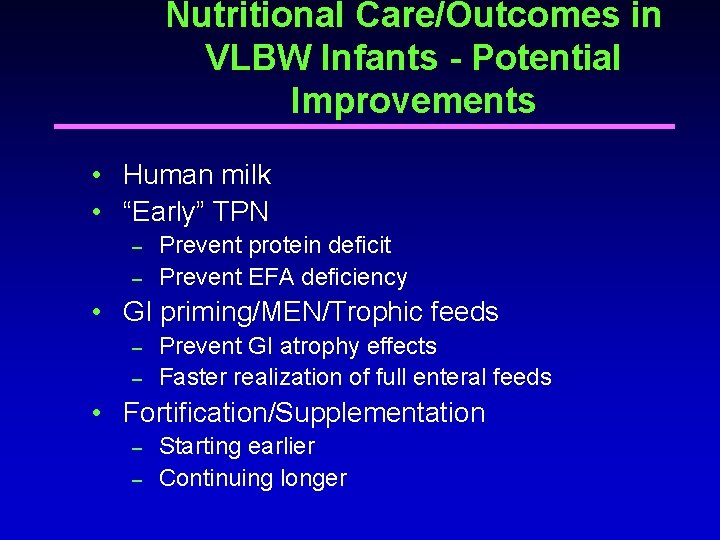
Nutritional Care/Outcomes in VLBW Infants - Potential Improvements • Human milk • “Early” TPN – – Prevent protein deficit Prevent EFA deficiency • GI priming/MEN/Trophic feeds – – Prevent GI atrophy effects Faster realization of full enteral feeds • Fortification/Supplementation – – Starting earlier Continuing longer
Parenteral Nutrition for VLBW Infants
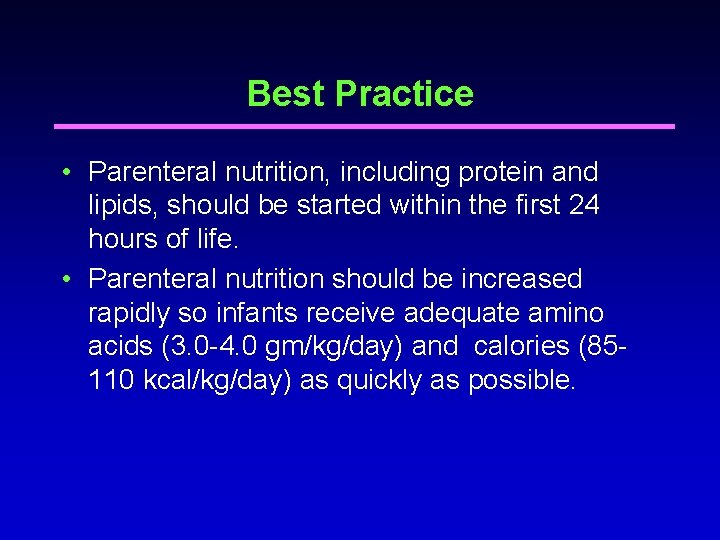
Best Practice • Parenteral nutrition, including protein and lipids, should be started within the first 24 hours of life. • Parenteral nutrition should be increased rapidly so infants receive adequate amino acids (3. 0 -4. 0 gm/kg/day) and calories (85110 kcal/kg/day) as quickly as possible.
Best Practice • Start parenteral lipids within the first 24 hours of life. Lipids can be started at doses as high as 2 g/kg/d. Lipids can be increased to doses as high as 3. 0 -3. 5 g/kg/day over the first few days of life.
Establishing Enteral Feedings
Best Practice • Human milk should be used whenever possible as the enteral feeding of choice for VLBW infants.
Best Practice • Enteral feeds, in the form of trophic or minimal enteral feeds (also called GI priming), should be initiated within 1 -2 days after birth, except when there are clear contraindications such as a congenital anomaly precluding feeding (e. g. omphalocele or gastroschisis), or evidence of GI dysfunction associated with hypoxic-ischemic compromise.