
Nutritional Strategies to Reduce Nutrient Excretion and Odor
- Slides: 44
Nutritional Strategies to Reduce Nutrient Excretion and Odor in Beef, Dairy, and Swine Operations Dr. Greg Lardy NDSU Animal and Range Sciences
or Precision Nutrition for Livestock Feeding Operations NDSU Animal and Range Sciences
Outline • Introduction • What nutrients should we be concerned with? • Phosphorus • Nitrogen • Dietary strategies to minimize excretion NDSU Animal and Range Sciences
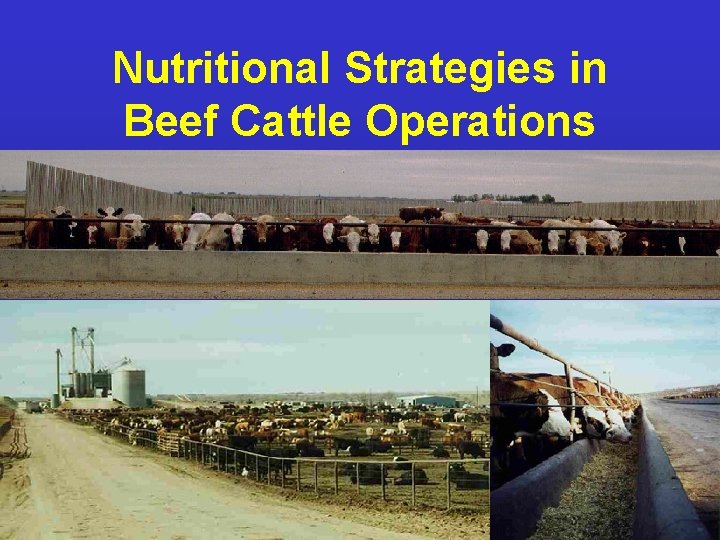
Nutritional Strategies in Beef Cattle Operations NDSU Animal and Range Sciences
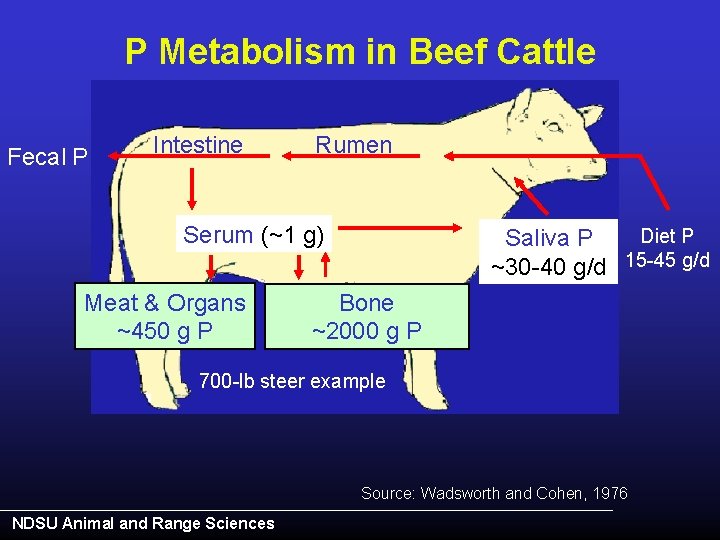
P Metabolism in Beef Cattle Fecal P Intestine Rumen Serum (~1 g) Meat & Organs ~450 g P Diet P Saliva P ~30 -40 g/d 15 -45 g/d Bone ~2000 g P 700 -lb steer example Source: Wadsworth and Cohen, 1976 NDSU Animal and Range Sciences
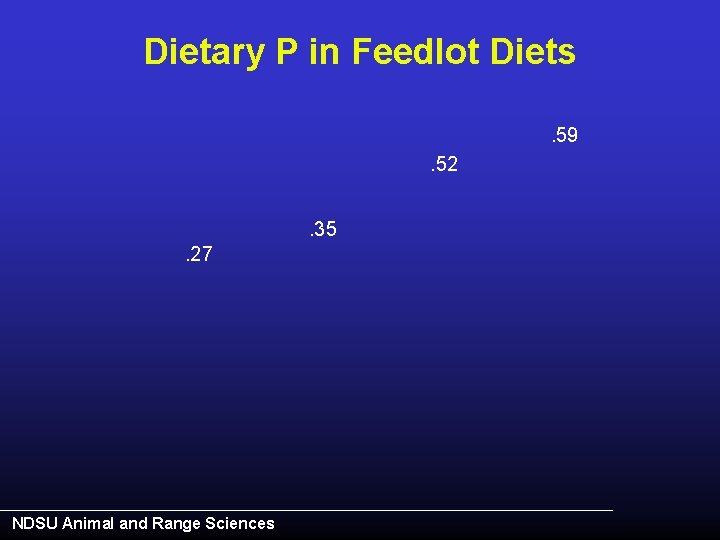
Dietary P in Feedlot Diets. 59. 52. 35. 27 NDSU Animal and Range Sciences
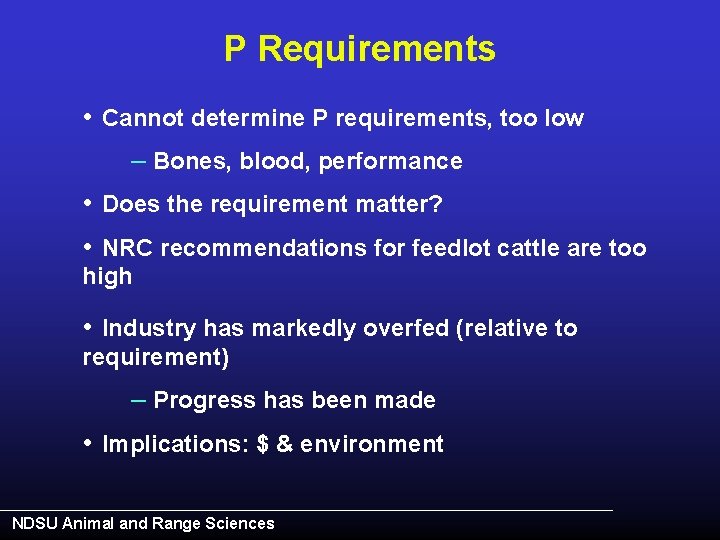
P Requirements • Cannot determine P requirements, too low – Bones, blood, performance • Does the requirement matter? • NRC recommendations for feedlot cattle are too high • Industry has markedly overfed (relative to requirement) – Progress has been made • Implications: $ & environment NDSU Animal and Range Sciences
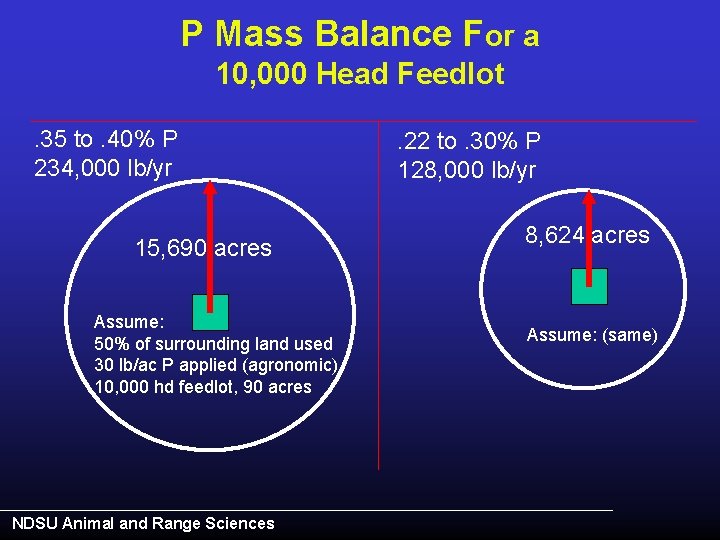
P Mass Balance For a 10, 000 Head Feedlot. 35 to. 40% P 234, 000 lb/yr 15, 690 acres Assume: 50% of surrounding land used 30 lb/ac P applied (agronomic) 10, 000 hd feedlot, 90 acres NDSU Animal and Range Sciences . 22 to. 30% P 128, 000 lb/yr 8, 624 acres Assume: (same)
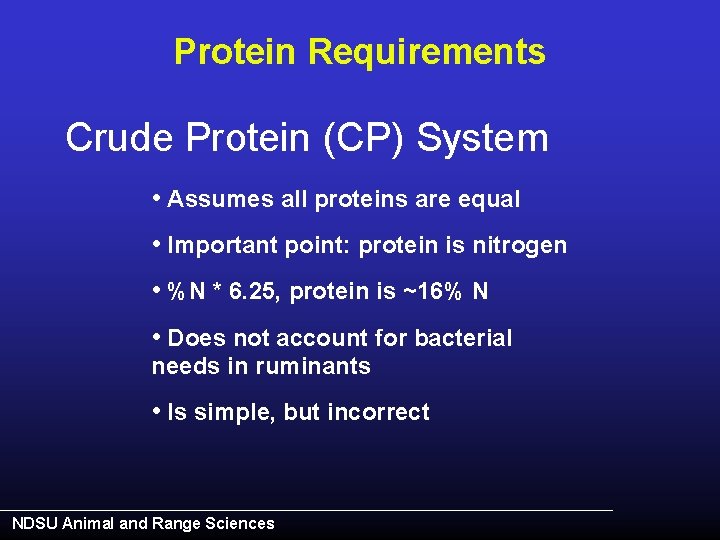
Protein Requirements Crude Protein (CP) System • Assumes all proteins are equal • Important point: protein is nitrogen • %N * 6. 25, protein is ~16% N • Does not account for bacterial needs in ruminants • Is simple, but incorrect NDSU Animal and Range Sciences
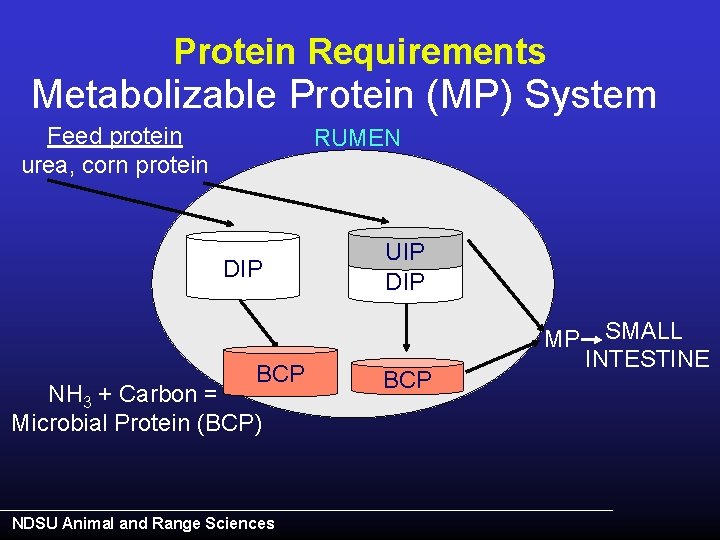
Protein Requirements Metabolizable Protein (MP) System Feed protein urea, corn protein RUMEN DIP UIP DIP MP BCP NH 3 + Carbon = Microbial Protein (BCP) NDSU Animal and Range Sciences BCP SMALL INTESTINE
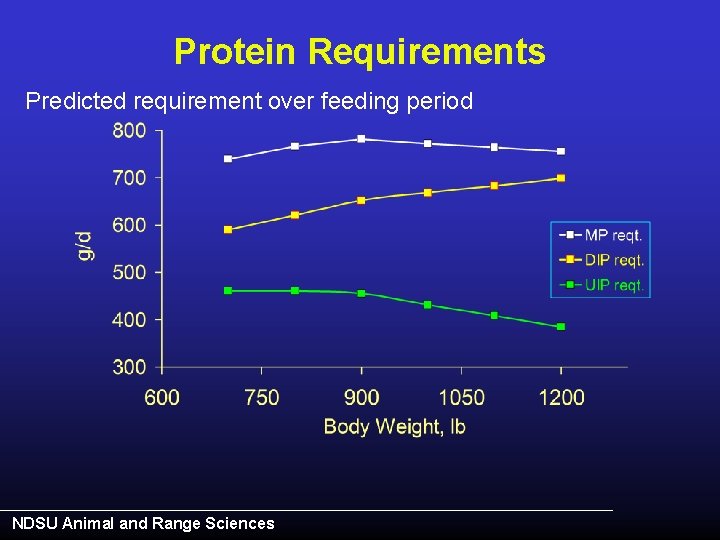
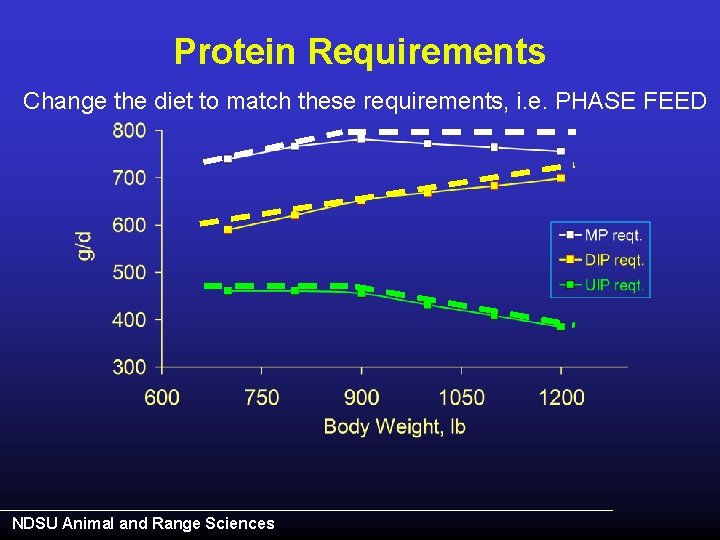
Protein Requirements Predicted requirement over feeding period NDSU Animal and Range Sciences
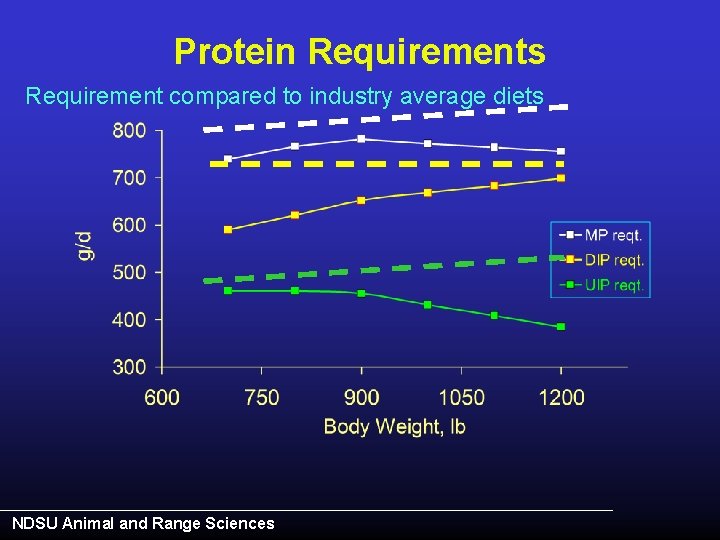
Protein Requirements Requirement compared to industry average diets NDSU Animal and Range Sciences
Protein Requirements Change the diet to match these requirements, i. e. PHASE FEED NDSU Animal and Range Sciences
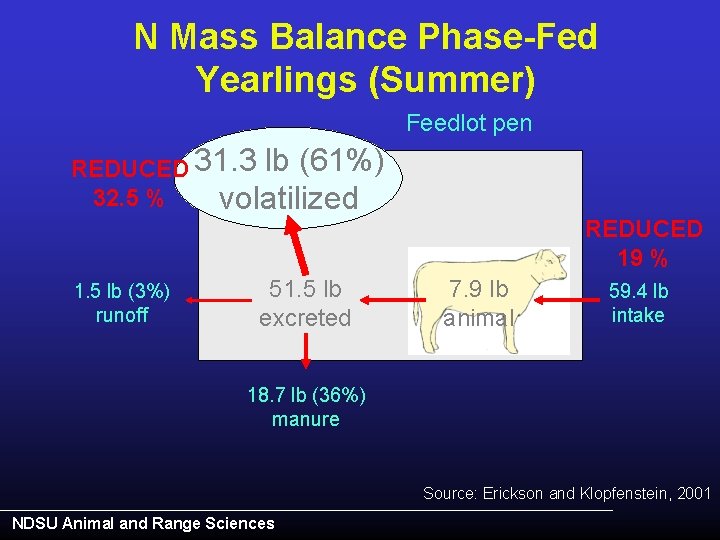
N Mass Balance Phase-Fed Yearlings (Summer) Feedlot pen REDUCED 31. 3 lb (61%) 32. 5 % volatilized 1. 5 lb (3%) runoff 51. 5 lb excreted REDUCED 19 % 7. 9 lb animal 59. 4 lb intake 18. 7 lb (36%) manure Source: Erickson and Klopfenstein, 2001 NDSU Animal and Range Sciences
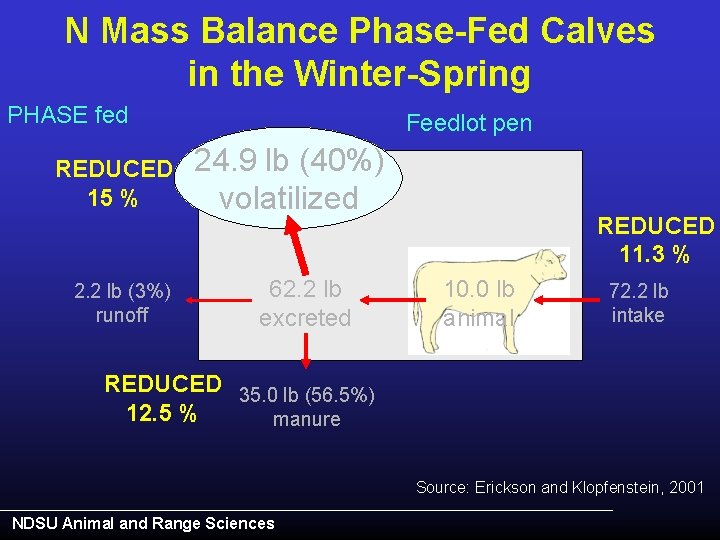
N Mass Balance Phase-Fed Calves in the Winter-Spring PHASE fed REDUCED 15 % 2. 2 lb (3%) runoff Feedlot pen 24. 9 lb (40%) volatilized 62. 2 lb excreted REDUCED 11. 3 % 10. 0 lb animal 72. 2 lb intake REDUCED 35. 0 lb (56. 5%) 12. 5 % manure Source: Erickson and Klopfenstein, 2001 NDSU Animal and Range Sciences
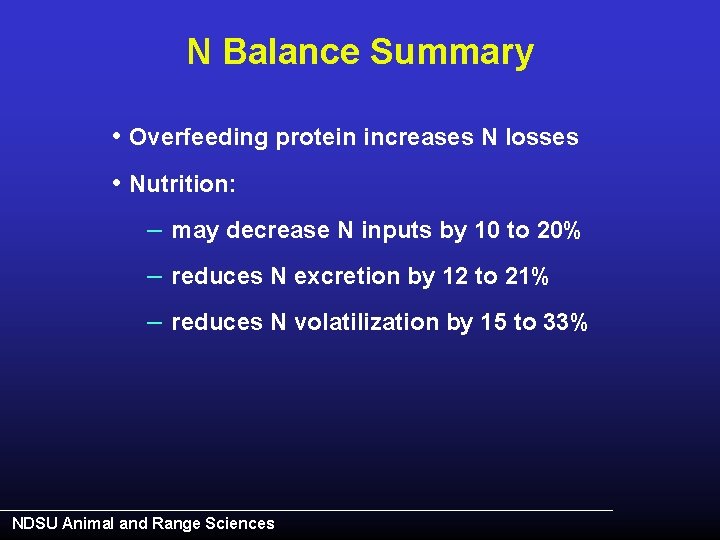
N Balance Summary • Overfeeding protein increases N losses • Nutrition: – may decrease N inputs by 10 to 20% – reduces N excretion by 12 to 21% – reduces N volatilization by 15 to 33% NDSU Animal and Range Sciences
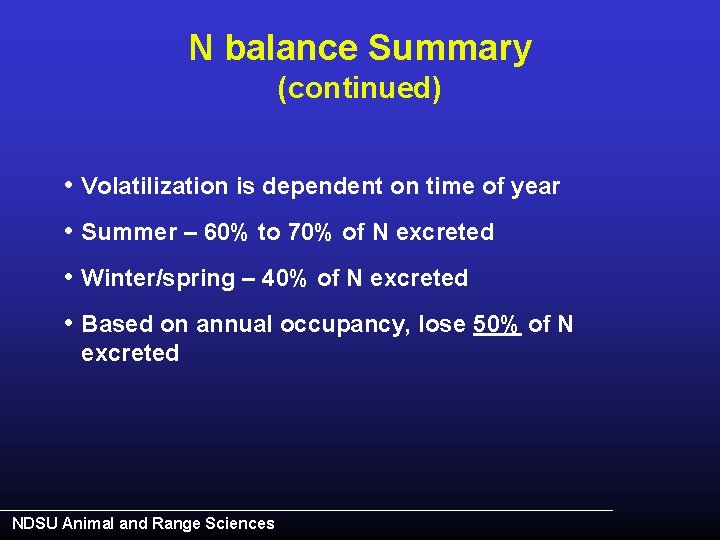
N balance Summary (continued) • Volatilization is dependent on time of year • Summer – 60% to 70% of N excreted • Winter/spring – 40% of N excreted • Based on annual occupancy, lose 50% of N excreted NDSU Animal and Range Sciences
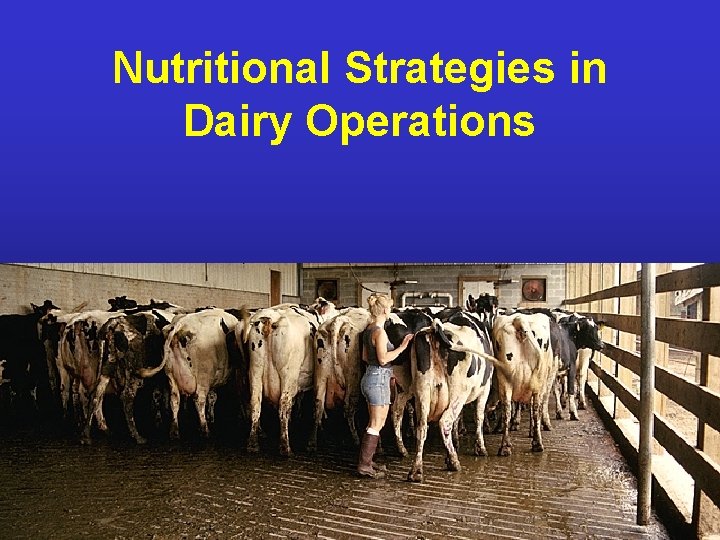
Nutritional Strategies in Dairy Operations NDSU Animal and Range Sciences
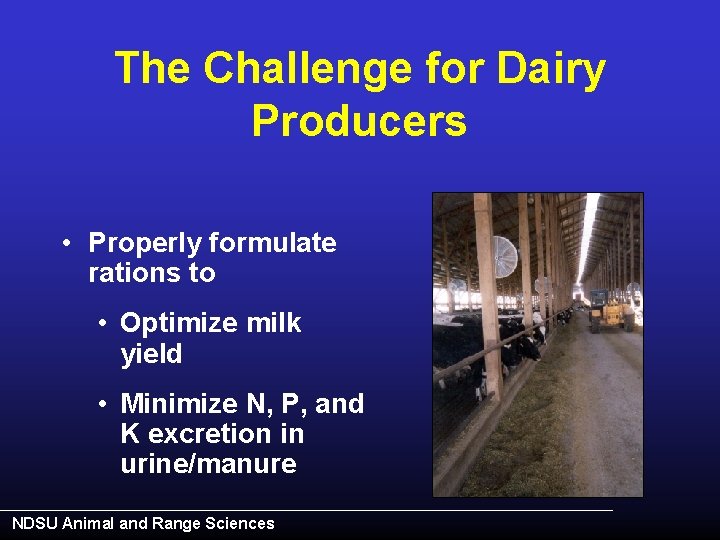
The Challenge for Dairy Producers • Properly formulate rations to • Optimize milk yield • Minimize N, P, and K excretion in urine/manure NDSU Animal and Range Sciences
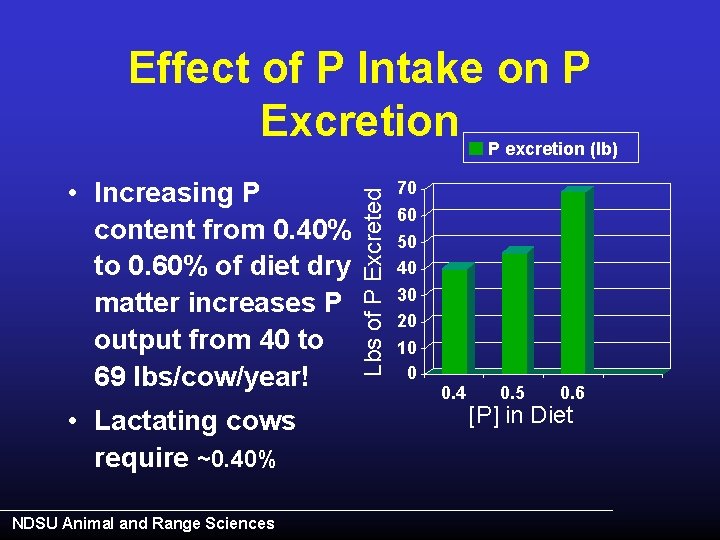
• Increasing P content from 0. 40% to 0. 60% of diet dry matter increases P output from 40 to 69 lbs/cow/year! • Lactating cows require ~0. 40% NDSU Animal and Range Sciences Lbs of P Excreted Effect of P Intake on P Excretion P excretion (lb) 70 60 50 40 30 20 10 0 0. 4 0. 5 0. 6 [P] in Diet
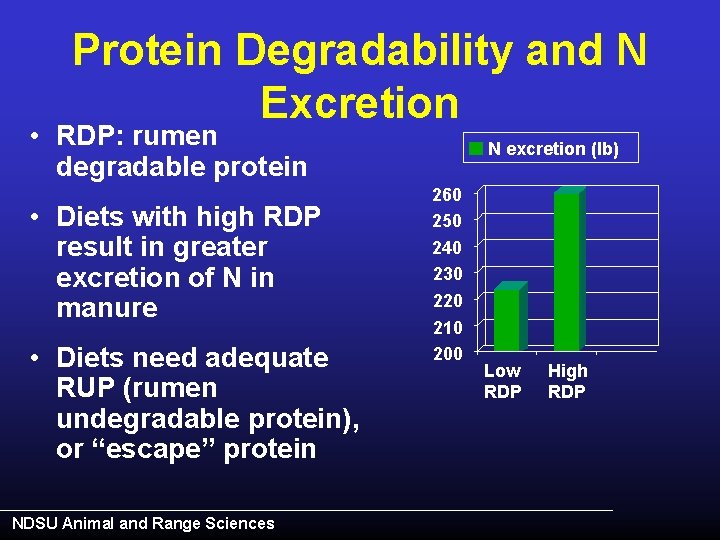
Protein Degradability and N Excretion • RDP: rumen degradable protein • Diets with high RDP result in greater excretion of N in manure • Diets need adequate RUP (rumen undegradable protein), or “escape” protein NDSU Animal and Range Sciences N excretion (lb) 260 250 240 230 220 210 200 Low RDP High RDP
The Bottom Line Ø The amount of N, P, and K in the diet has a HUGE effect on the yearly excretion of these nutrients NDSU Animal and Range Sciences
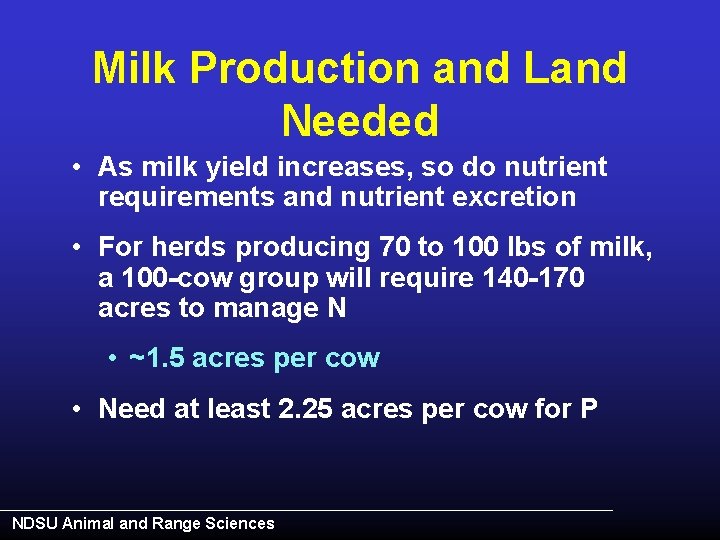
Milk Production and Land Needed • As milk yield increases, so do nutrient requirements and nutrient excretion • For herds producing 70 to 100 lbs of milk, a 100 -cow group will require 140 -170 acres to manage N • ~1. 5 acres per cow • Need at least 2. 25 acres per cow for P NDSU Animal and Range Sciences
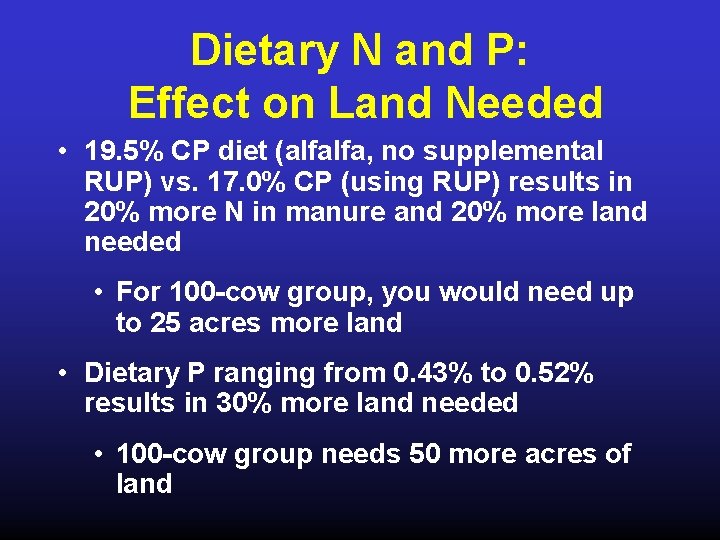
Dietary N and P: Effect on Land Needed • 19. 5% CP diet (alfalfa, no supplemental RUP) vs. 17. 0% CP (using RUP) results in 20% more N in manure and 20% more land needed • For 100 -cow group, you would need up to 25 acres more land • Dietary P ranging from 0. 43% to 0. 52% results in 30% more land needed • 100 -cow group needs 50 more acres of land
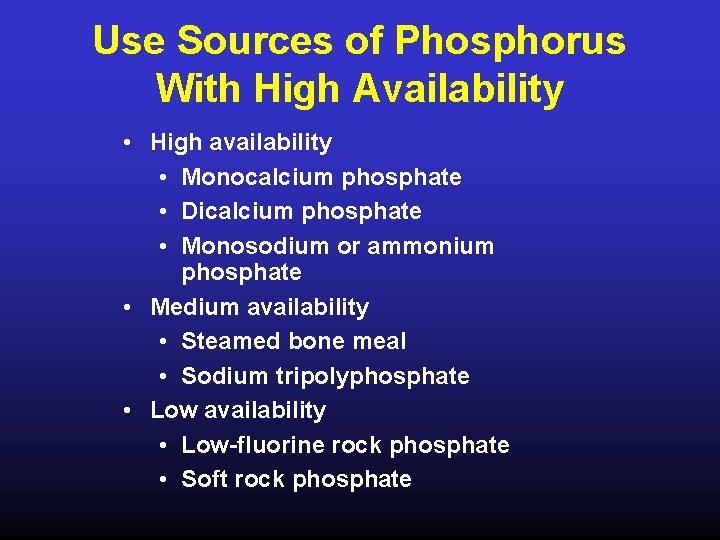
Use Sources of Phosphorus With High Availability • High availability • Monocalcium phosphate • Dicalcium phosphate • Monosodium or ammonium phosphate • Medium availability • Steamed bone meal • Sodium tripolyphosphate • Low availability • Low-fluorine rock phosphate • Soft rock phosphate
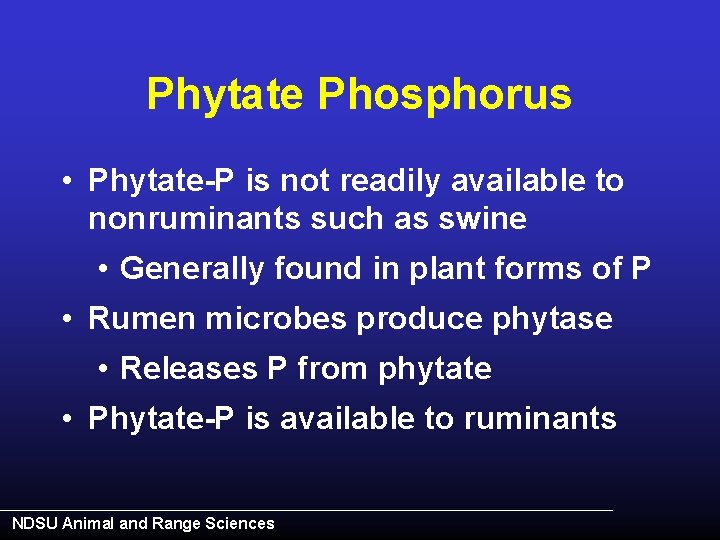
Phytate Phosphorus • Phytate-P is not readily available to nonruminants such as swine • Generally found in plant forms of P • Rumen microbes produce phytase • Releases P from phytate • Phytate-P is available to ruminants NDSU Animal and Range Sciences
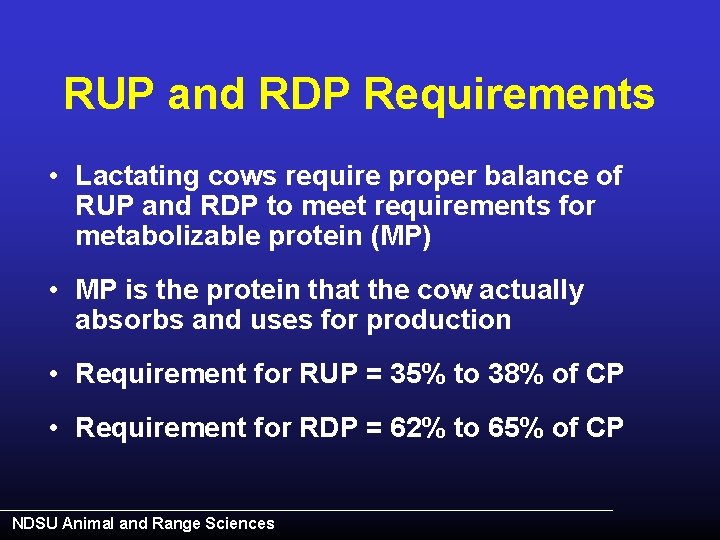
RUP and RDP Requirements • Lactating cows require proper balance of RUP and RDP to meet requirements for metabolizable protein (MP) • MP is the protein that the cow actually absorbs and uses for production • Requirement for RUP = 35% to 38% of CP • Requirement for RDP = 62% to 65% of CP NDSU Animal and Range Sciences
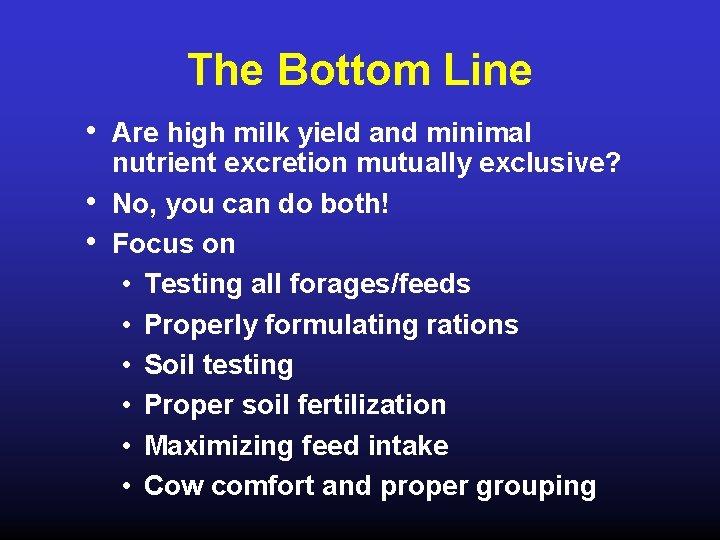
The Bottom Line • Are high milk yield and minimal • • nutrient excretion mutually exclusive? No, you can do both! Focus on • Testing all forages/feeds • Properly formulating rations • Soil testing • Proper soil fertilization • Maximizing feed intake • Cow comfort and proper grouping
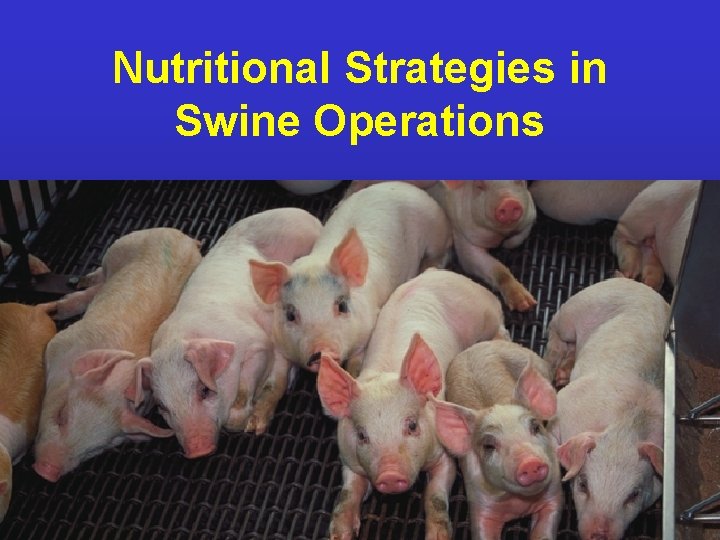
Nutritional Strategies in Swine Operations NDSU Animal and Range Sciences
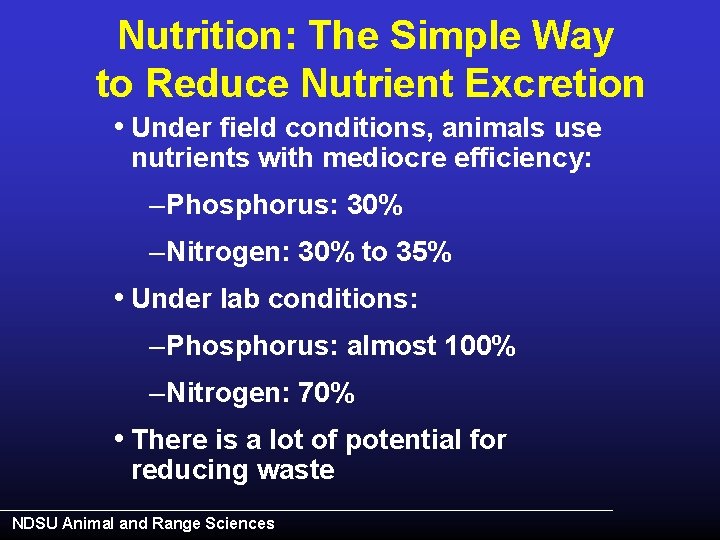
Nutrition: The Simple Way to Reduce Nutrient Excretion • Under field conditions, animals use nutrients with mediocre efficiency: – Phosphorus: 30% – Nitrogen: 30% to 35% • Under lab conditions: – Phosphorus: almost 100% – Nitrogen: 70% • There is a lot of potential for reducing waste NDSU Animal and Range Sciences
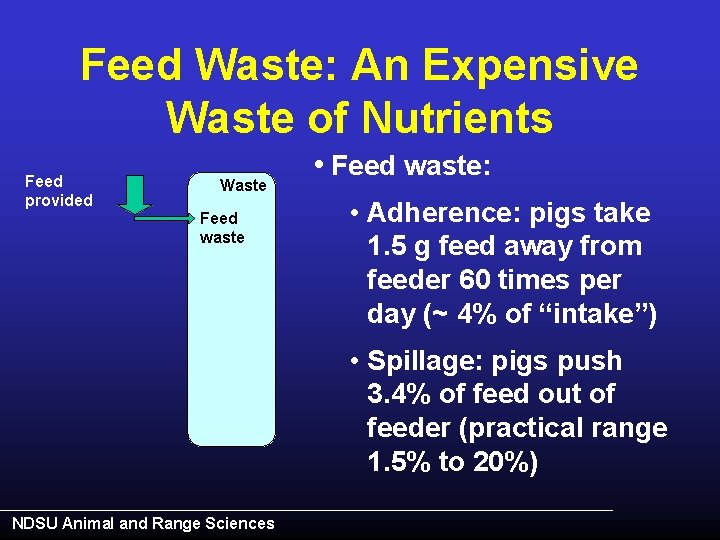
Feed Waste: An Expensive Waste of Nutrients Feed provided Waste Feed waste • Feed waste: • Adherence: pigs take 1. 5 g feed away from feeder 60 times per day (~ 4% of “intake”) • Spillage: pigs push 3. 4% of feed out of feeder (practical range 1. 5% to 20%) NDSU Animal and Range Sciences
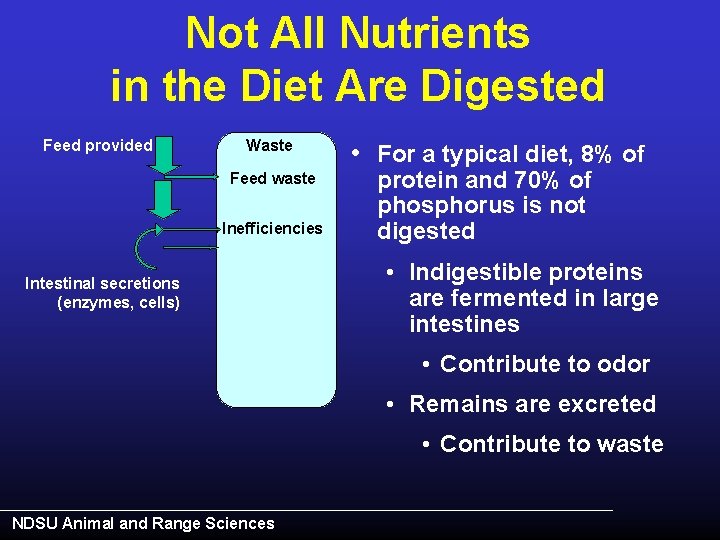
Not All Nutrients in the Diet Are Digested Feed provided Waste Feed waste Inefficiencies Intestinal secretions (enzymes, cells) • For a typical diet, 8% of protein and 70% of phosphorus is not digested • Indigestible proteins are fermented in large intestines • Contribute to odor • Remains are excreted • Contribute to waste NDSU Animal and Range Sciences
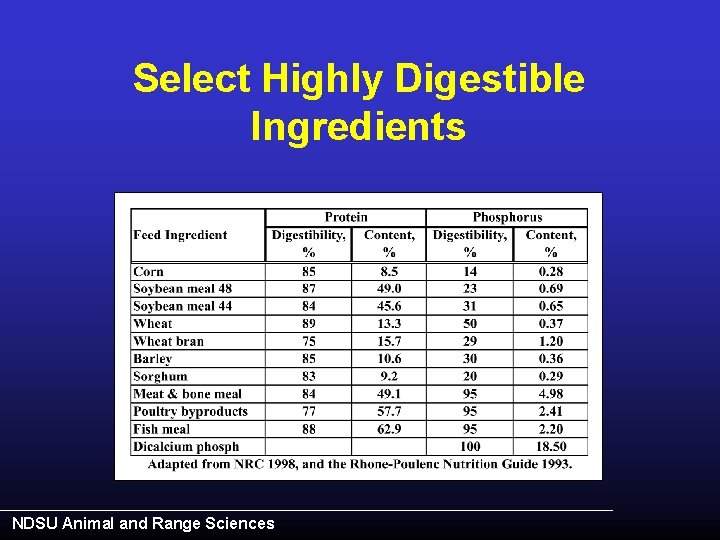
Select Highly Digestible Ingredients NDSU Animal and Range Sciences
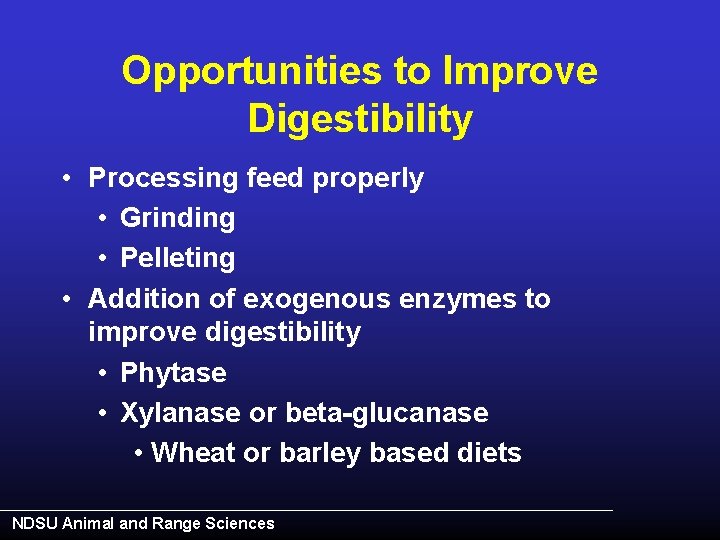
Opportunities to Improve Digestibility • Processing feed properly • Grinding • Pelleting • Addition of exogenous enzymes to improve digestibility • Phytase • Xylanase or beta-glucanase • Wheat or barley based diets NDSU Animal and Range Sciences
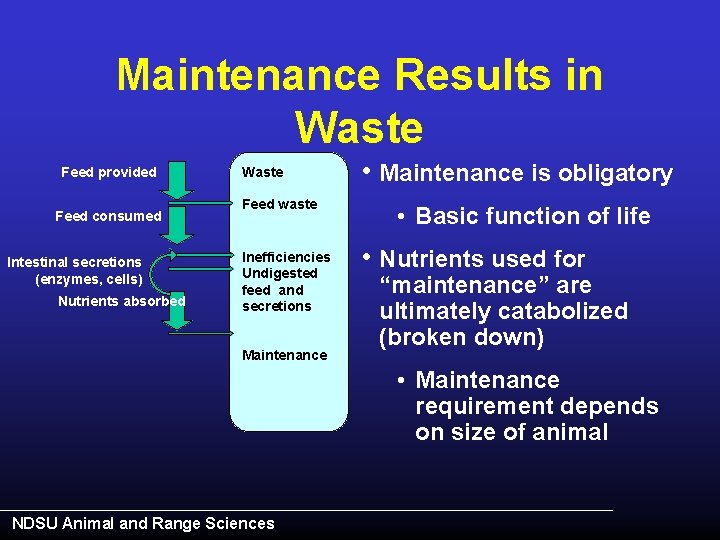
Maintenance Results in Waste Feed provided Feed consumed Intestinal secretions (enzymes, cells) Nutrients absorbed Waste Feed waste Inefficiencies Undigested feed and secretions Maintenance • Maintenance is obligatory • Basic function of life • Nutrients used for “maintenance” are ultimately catabolized (broken down) • Maintenance requirement depends on size of animal NDSU Animal and Range Sciences
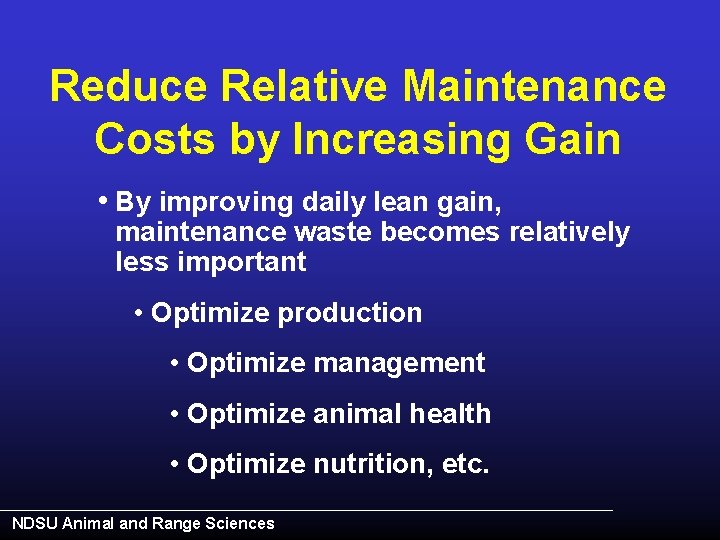
Reduce Relative Maintenance Costs by Increasing Gain • By improving daily lean gain, maintenance waste becomes relatively less important • Optimize production • Optimize management • Optimize animal health • Optimize nutrition, etc. NDSU Animal and Range Sciences
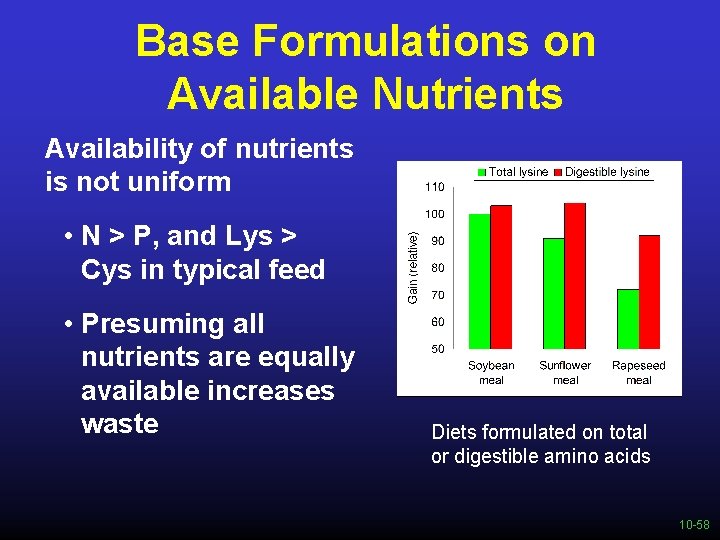
Base Formulations on Available Nutrients Availability of nutrients is not uniform • N > P, and Lys > Cys in typical feed • Presuming all nutrients are equally available increases waste Diets formulated on total or digestible amino acids 10 -58
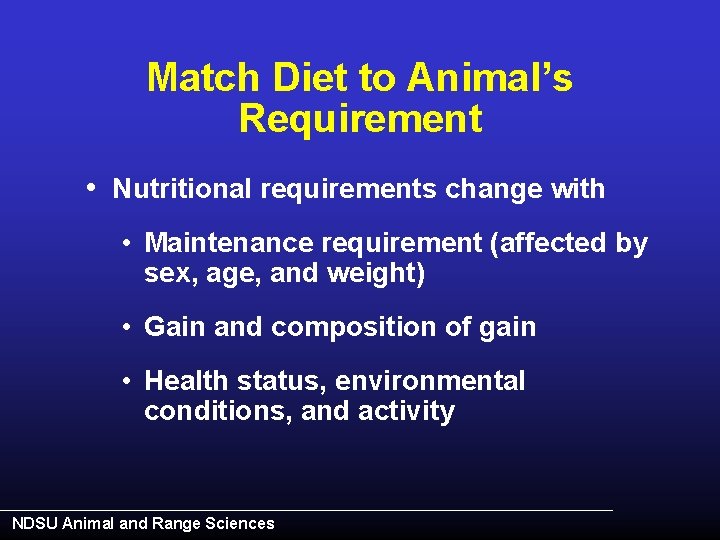
Match Diet to Animal’s Requirement • Nutritional requirements change with • Maintenance requirement (affected by sex, age, and weight) • Gain and composition of gain • Health status, environmental conditions, and activity NDSU Animal and Range Sciences
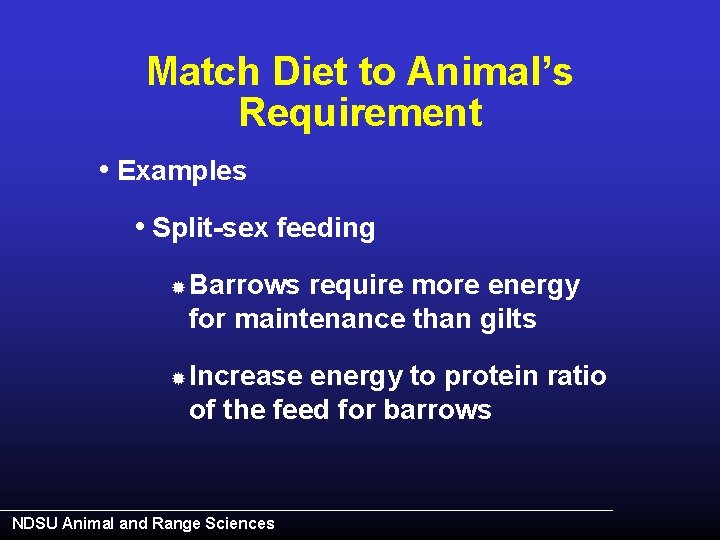
Match Diet to Animal’s Requirement • Examples • Split-sex feeding ® Barrows require more energy for maintenance than gilts ® Increase energy to protein ratio of the feed for barrows NDSU Animal and Range Sciences
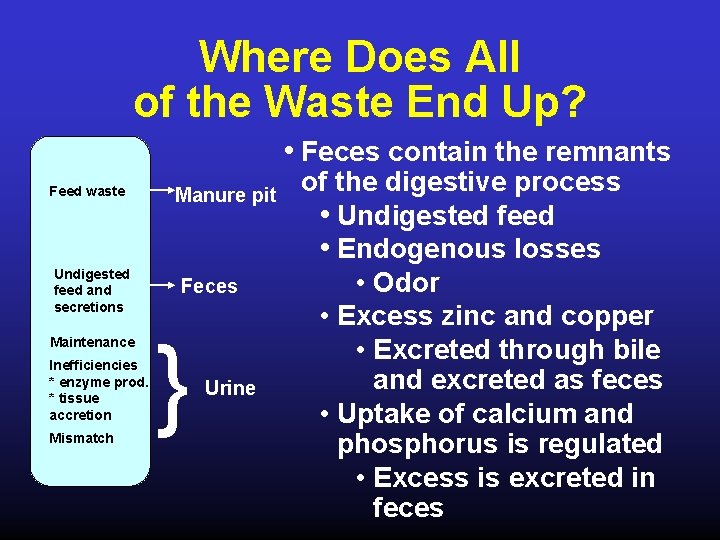
Where Does All of the Waste End Up? • Feces contain the remnants Feed waste Undigested feed and secretions Maintenance Inefficiencies * enzyme prod. * tissue accretion Mismatch Manure pit Feces } Urine of the digestive process • Undigested feed • Endogenous losses • Odor • Excess zinc and copper • Excreted through bile and excreted as feces • Uptake of calcium and phosphorus is regulated • Excess is excreted in feces
Where Does All of the Waste End Up? • Urine contains the remnants of metabolism • Urea from protein breakdown • Some diverted to feces • Excess potassium, sodium, and chlorine NDSU Animal and Range Sciences
Summary • Nitrogen and phosphorus are key nutrients to focus on • Nutrient excretion can be reduced by proper nutrition • Feed to animal’s requirements • Test feedstuffs • Reduce feed waste NDSU Animal and Range Sciences
Questions? ? NDSU Animal and Range Sciences
Acknowledgements This presentation was adapted from the LPES curriculum which is available at: http: //www. lpes. org/ NDSU Animal and Range Sciences