
Nutritional Intervention ACCAHA Hypertension Guidelines Kim Allan Williams





- Slides: 58
Nutritional Intervention: ACC/AHA Hypertension Guidelines Kim Allan Williams, Sr. , M. D. , MACC, FAHA, MASNC, FESC James B. Herrick Professor Chief, Division of Cardiology Rush University Medical Center Past President, American College of Cardiology NO DISCLOSURES
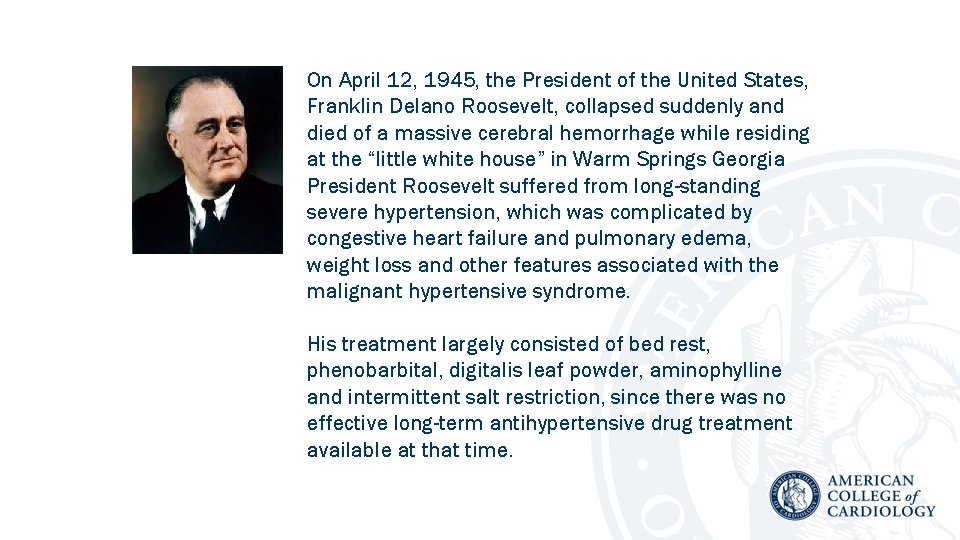
On April 12, 1945, the President of the United States, Franklin Delano Roosevelt, collapsed suddenly and died of a massive cerebral hemorrhage while residing at the “little white house” in Warm Springs Georgia President Roosevelt suffered from long-standing severe hypertension, which was complicated by congestive heart failure and pulmonary edema, weight loss and other features associated with the malignant hypertensive syndrome. His treatment largely consisted of bed rest, phenobarbital, digitalis leaf powder, aminophylline and intermittent salt restriction, since there was no effective long-term antihypertensive drug treatment available at that time.
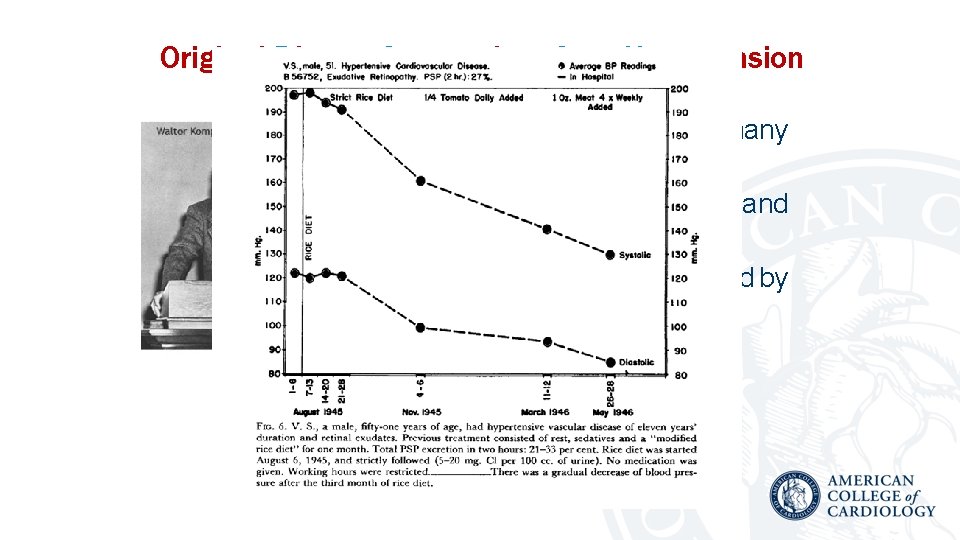
Original Dietary Approach to Stop Hypertension • Came to USA from Germany in 1930. • Treated patients with rice and fruit • Dramatic results challenged by establishment
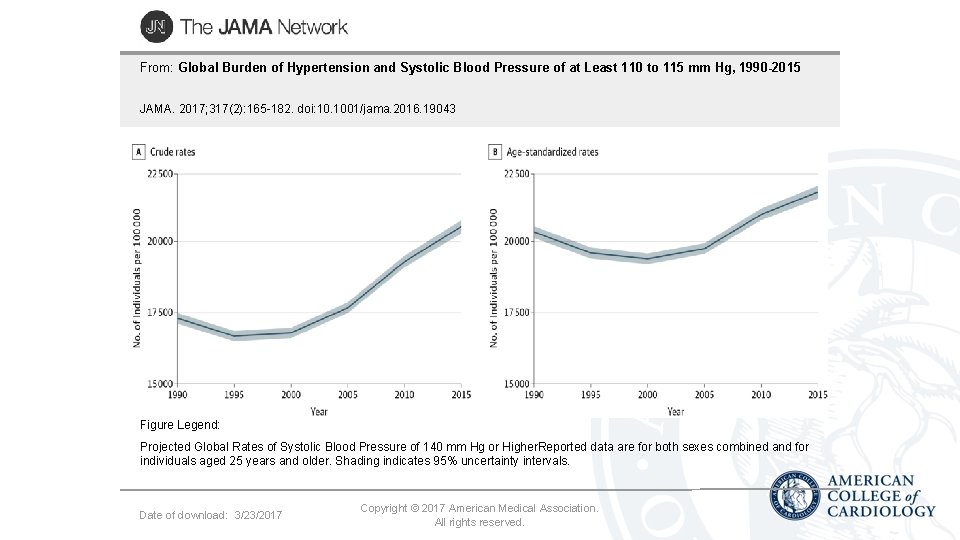
From: Global Burden of Hypertension and Systolic Blood Pressure of at Least 110 to 115 mm Hg, 1990 -2015 JAMA. 2017; 317(2): 165 -182. doi: 10. 1001/jama. 2016. 19043 Figure Legend: Projected Global Rates of Systolic Blood Pressure of 140 mm Hg or Higher. Reported data are for both sexes combined and for individuals aged 25 years and older. Shading indicates 95% uncertainty intervals. Date of download: 3/23/2017 Copyright © 2017 American Medical Association. All rights reserved.
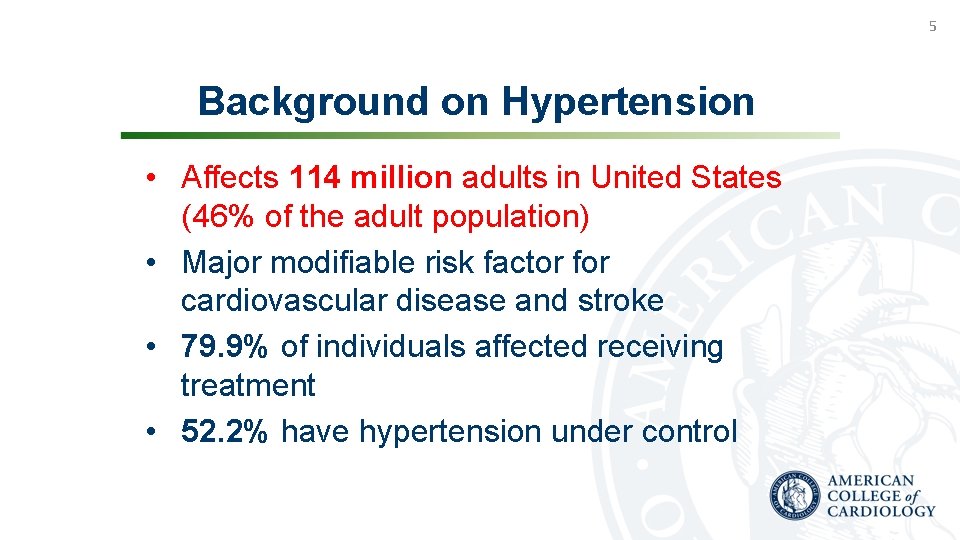
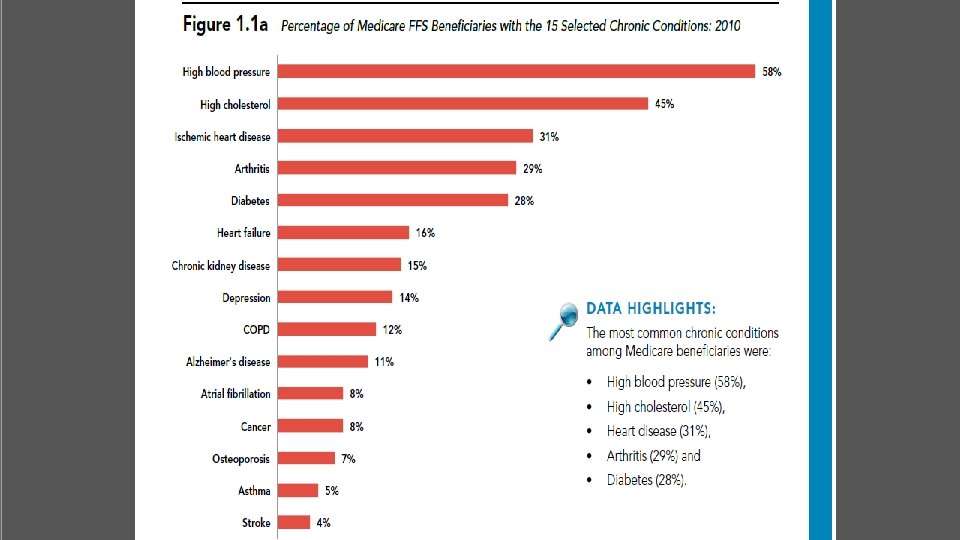
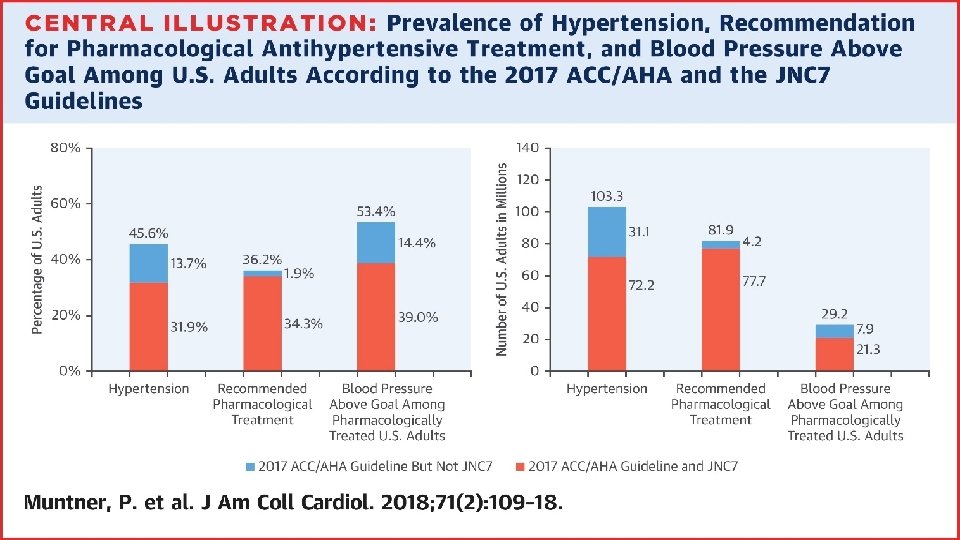
5 Background on Hypertension • Affects 114 million adults in United States (46% of the adult population) • Major modifiable risk factor for cardiovascular disease and stroke • 79. 9% of individuals affected receiving treatment • 52. 2% have hypertension under control
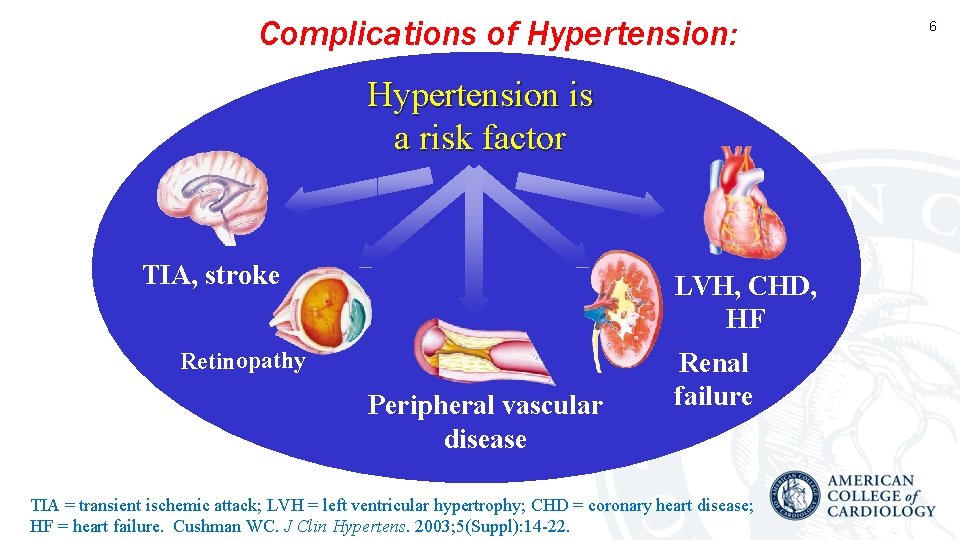
Complications of Hypertension: Hypertension is a risk factor TIA, stroke LVH, CHD, HF Retinopathy Peripheral vascular disease Renal failure TIA = transient ischemic attack; LVH = left ventricular hypertrophy; CHD = coronary heart disease; HF = heart failure. Cushman WC. J Clin Hypertens. 2003; 5(Suppl): 14 -22. 6
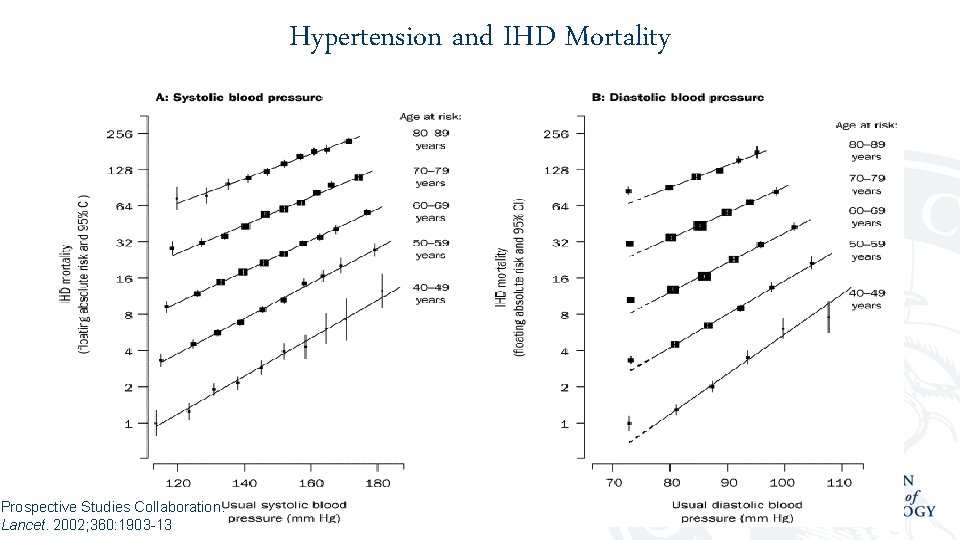
Hypertension and IHD Mortality Prospective Studies Collaboration. Lancet. 2002; 360: 1903 -13
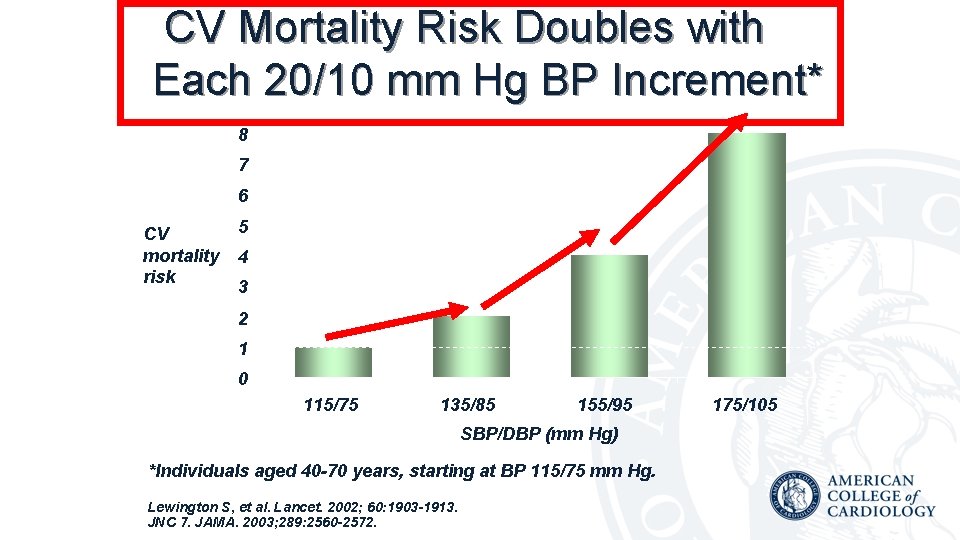
CV Mortality Risk Doubles with Each 20/10 mm Hg BP Increment* 8 7 6 CV mortality risk 5 4 3 2 1 0 115/75 135/85 155/95 SBP/DBP (mm Hg) *Individuals aged 40 -70 years, starting at BP 115/75 mm Hg. Lewington S, et al. Lancet. 2002; 60: 1903 -1913. JNC 7. JAMA. 2003; 289: 2560 -2572. 175/105
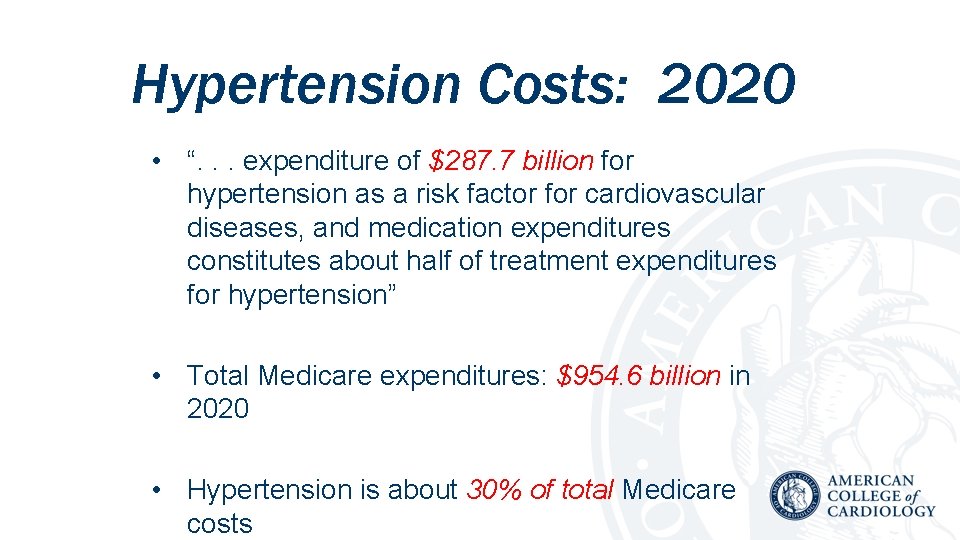
Hypertension Costs: 2020 • “. . . expenditure of $287. 7 billion for hypertension as a risk factor for cardiovascular diseases, and medication expenditures constitutes about half of treatment expenditures for hypertension” • Total Medicare expenditures: $954. 6 billion in 2020 • Hypertension is about 30% of total Medicare costs
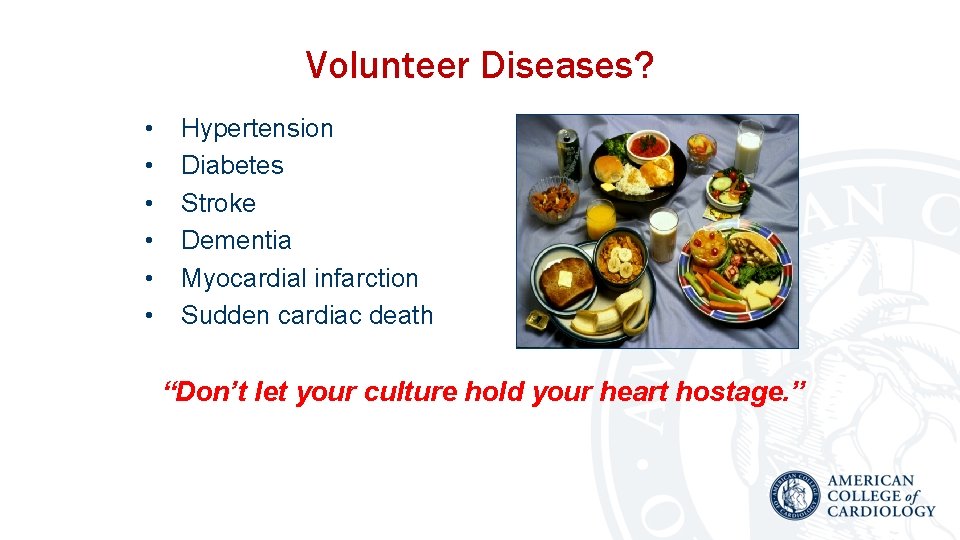
Volunteer Diseases? • • • Hypertension Diabetes Stroke Dementia Myocardial infarction Sudden cardiac death “Don’t let your culture hold your heart hostage. ”
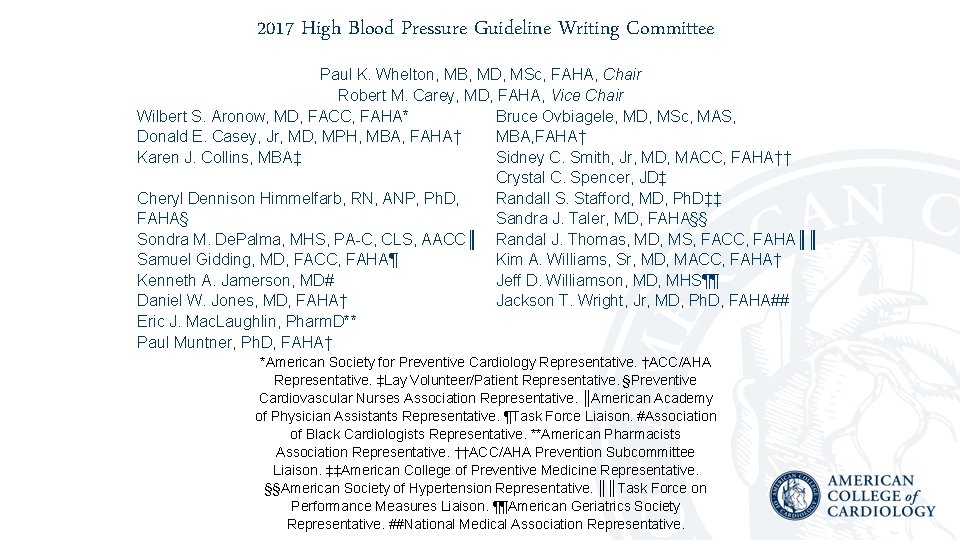
2017 High Blood Pressure Guideline Writing Committee Paul K. Whelton, MB, MD, MSc, FAHA, Chair Robert M. Carey, MD, FAHA, Vice Chair Wilbert S. Aronow, MD, FACC, FAHA* Bruce Ovbiagele, MD, MSc, MAS, Donald E. Casey, Jr, MD, MPH, MBA, FAHA† Karen J. Collins, MBA‡ Sidney C. Smith, Jr, MD, MACC, FAHA†† Crystal C. Spencer, JD‡ Cheryl Dennison Himmelfarb, RN, ANP, Ph. D, Randall S. Stafford, MD, Ph. D‡‡ FAHA§ Sandra J. Taler, MD, FAHA§§ Sondra M. De. Palma, MHS, PA-C, CLS, AACC║ Randal J. Thomas, MD, MS, FACC, FAHA║║ Samuel Gidding, MD, FACC, FAHA¶ Kim A. Williams, Sr, MD, MACC, FAHA† Kenneth A. Jamerson, MD# Jeff D. Williamson, MD, MHS¶¶ Daniel W. Jones, MD, FAHA† Jackson T. Wright, Jr, MD, Ph. D, FAHA## Eric J. Mac. Laughlin, Pharm. D** Paul Muntner, Ph. D, FAHA† *American Society for Preventive Cardiology Representative. †ACC/AHA Representative. ‡Lay Volunteer/Patient Representative. §Preventive Cardiovascular Nurses Association Representative. ║American Academy of Physician Assistants Representative. ¶Task Force Liaison. #Association of Black Cardiologists Representative. **American Pharmacists Association Representative. ††ACC/AHA Prevention Subcommittee Liaison. ‡‡American College of Preventive Medicine Representative. §§American Society of Hypertension Representative. ║║Task Force on Performance Measures Liaison. ¶¶American Geriatrics Society Representative. ##National Medical Association Representative.
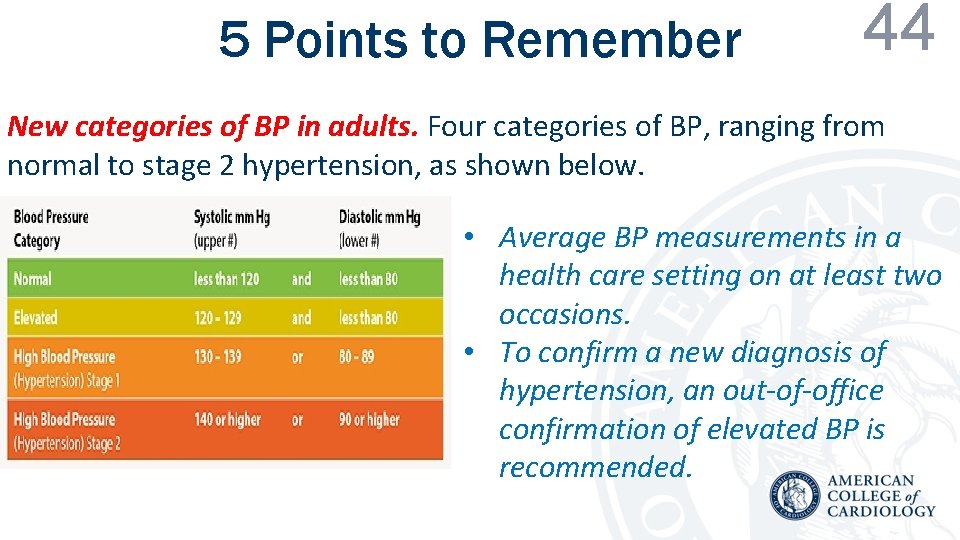
Changes in BP Categories from JNC 7 to the New Guideline SBP <120 120– 129 130– 139 140– 159 ≥ 160 and or or Or DBP JNC 7 <80 80– 89 90 -99 ≥ 100 Normal BP Prehypertension Stage 1 hypertension Stage 2 hypertension 2017 ACC/AHA Normal BP Elevated BP Stage 1 hypertension Stage 2 hypertension The categorization of BP should be based on the average of ≥ 2 readings on ≥ 2 occasions following a standardized protocol. Adults with SBP and DBP in two categories are designated into the higher category.
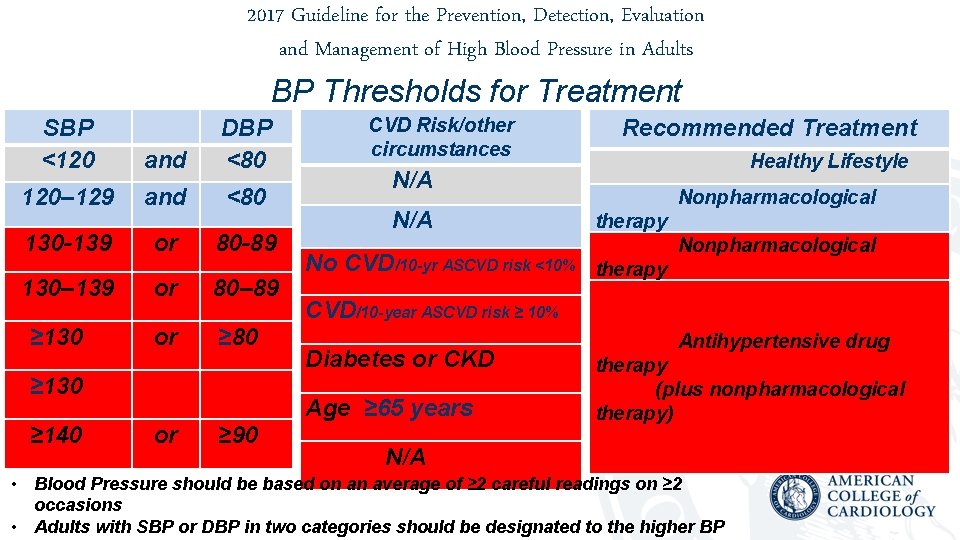
2017 Guideline for the Prevention, Detection, Evaluation and Management of High Blood Pressure in Adults BP Thresholds for Treatment SBP <120 and DBP <80 120– 129 and <80 130 -139 or 80 -89 130– 139 or 80– 89 or ≥ 80 ≥ 130 ≥ 140 CVD Risk/other circumstances ≥ 90 Healthy Lifestyle N/A Nonpharmacological therapy No CVD/10 -yr ASCVD risk <10% therapy Nonpharmacological CVD/10 -year ASCVD risk ≥ 10% Diabetes or CKD Age ≥ 65 years or Recommended Treatment Antihypertensive drug therapy (plus nonpharmacological therapy) N/A • Blood Pressure should be based on an average of ≥ 2 careful readings on ≥ 2 occasions • Adults with SBP or DBP in two categories should be designated to the higher BP
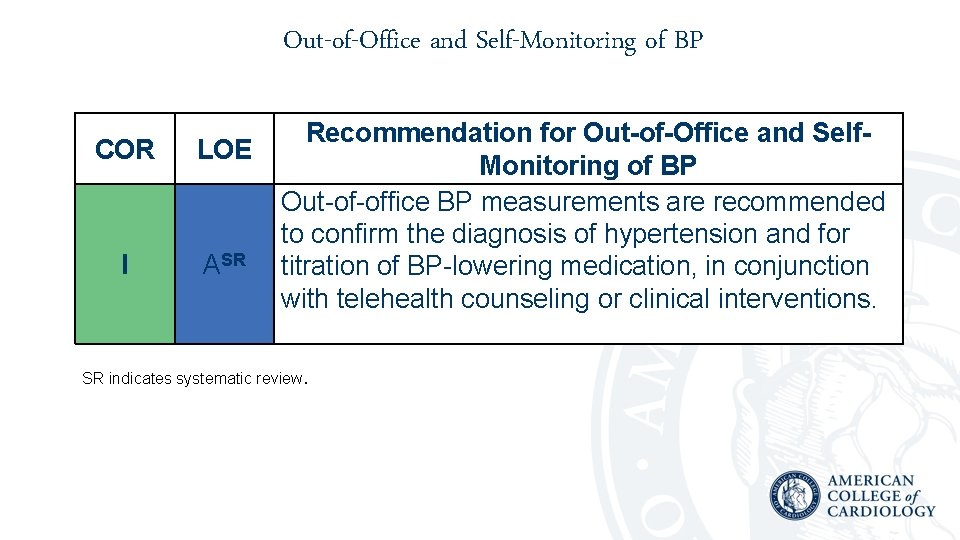
Out-of-Office and Self-Monitoring of BP COR LOE I ASR Recommendation for Out-of-Office and Self. Monitoring of BP Out-of-office BP measurements are recommended to confirm the diagnosis of hypertension and for titration of BP-lowering medication, in conjunction with telehealth counseling or clinical interventions. SR indicates systematic review.
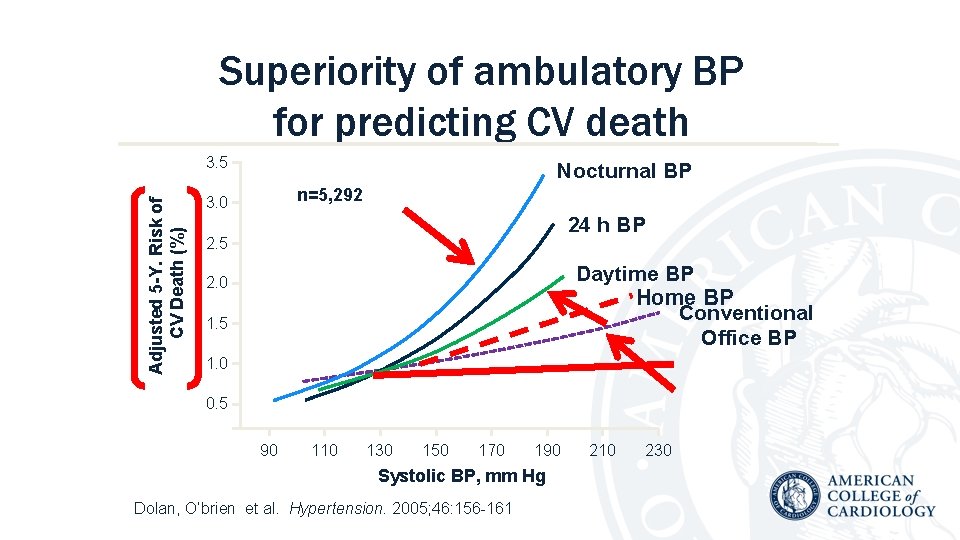
Superiority of ambulatory BP for predicting CV death Adjusted 5 -Y. Risk of CV Death (%) 3. 5 Nocturnal BP n=5, 292 3. 0 24 h BP 2. 5 Daytime BP Home BP Conventional Office BP 2. 0 1. 5 1. 0 0. 5 90 110 130 150 170 190 Systolic BP, mm Hg Dolan, O’brien et al. Hypertension. 2005; 46: 156 -161 210 230
Significance of Out of Office BP Readings • • Guideline calls for greater use of out of office BP measurements (ABPM or HBPM) for both the diagnosis and management of hypertension. A major reason is to identify patients on no antihypertensive medication with: – White Coat Hypertension (WCH) with elevated office BPs who may not require drug treatment and – Masked Hypertension (MH) with normal office readings who should be considered for drug treatment In addition, in those on antihypertensive medications, to identify – White Coat Effect (WCE) – where office BPs are significantly higher than out of office readings Masked Uncontrolled Hypertension (MUCH) – where office readings indicate adequate BP control but of office readings are elevated
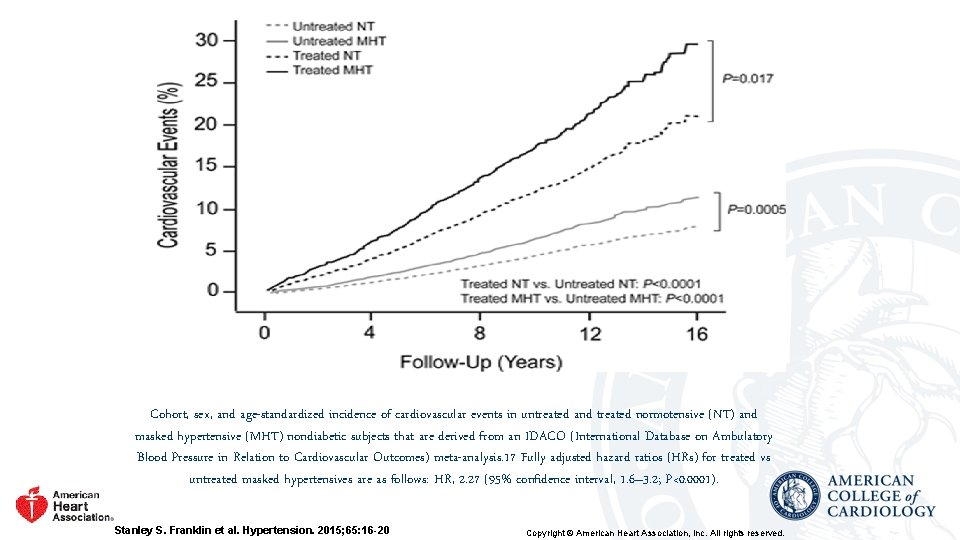
Cohort, sex, and age-standardized incidence of cardiovascular events in untreated and treated normotensive (NT) and masked hypertensive (MHT) nondiabetic subjects that are derived from an IDACO (International Database on Ambulatory Blood Pressure in Relation to Cardiovascular Outcomes) meta-analysis. 17 Fully adjusted hazard ratios (HRs) for treated vs untreated masked hypertensives are as follows: HR, 2. 27 (95% confidence interval, 1. 6– 3. 2; P<0. 0001). Stanley S. Franklin et al. Hypertension. 2015; 65: 16 -20 Copyright © American Heart Association, Inc. All rights reserved.
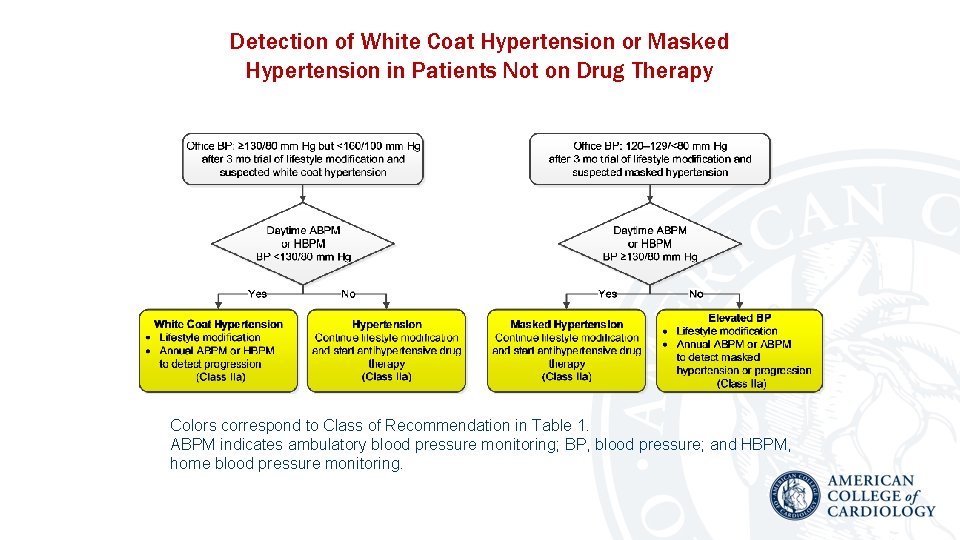
Detection of White Coat Hypertension or Masked Hypertension in Patients Not on Drug Therapy Colors correspond to Class of Recommendation in Table 1. ABPM indicates ambulatory blood pressure monitoring; BP, blood pressure; and HBPM, home blood pressure monitoring.
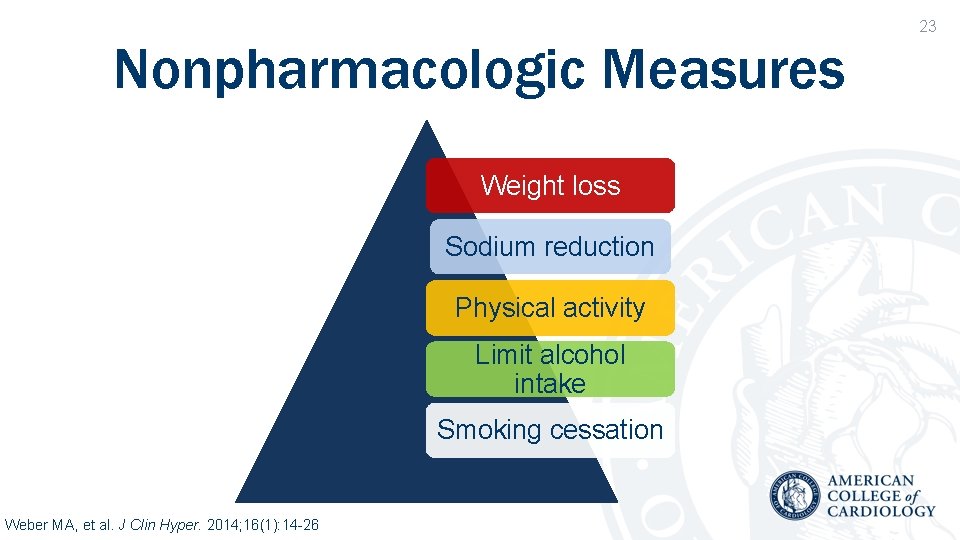
Nonpharmacologic Measures Weight loss Sodium reduction Physical activity Limit alcohol intake Smoking cessation Weber MA, et al. J Clin Hyper. 2014; 16(1): 14 -26 23
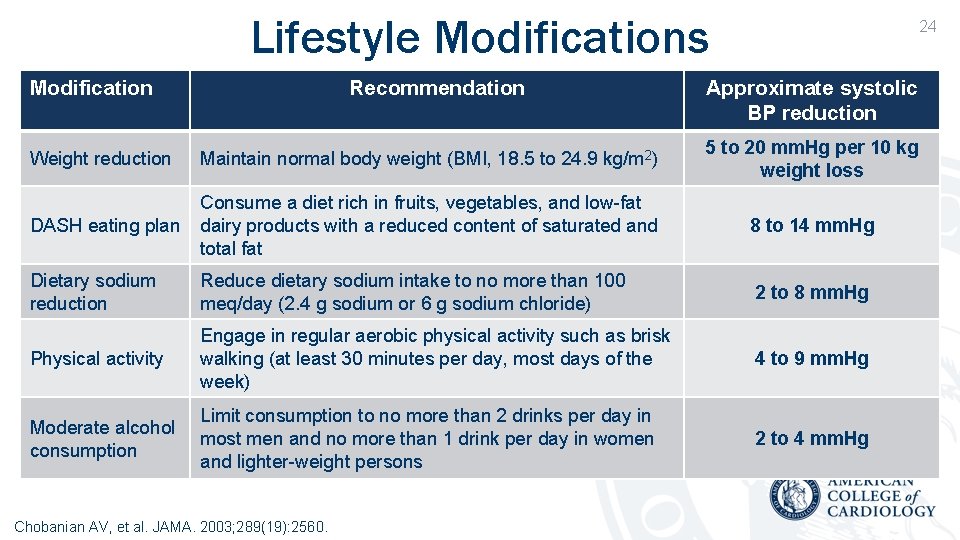
Lifestyle Modifications Modification Recommendation 24 Approximate systolic BP reduction Weight reduction Maintain normal body weight (BMI, 18. 5 to 24. 9 kg/m 2) 5 to 20 mm. Hg per 10 kg weight loss DASH eating plan Consume a diet rich in fruits, vegetables, and low-fat dairy products with a reduced content of saturated and total fat 8 to 14 mm. Hg Dietary sodium reduction Reduce dietary sodium intake to no more than 100 meq/day (2. 4 g sodium or 6 g sodium chloride) 2 to 8 mm. Hg Physical activity Engage in regular aerobic physical activity such as brisk walking (at least 30 minutes per day, most days of the week) 4 to 9 mm. Hg Moderate alcohol consumption Limit consumption to no more than 2 drinks per day in most men and no more than 1 drink per day in women and lighter-weight persons 2 to 4 mm. Hg Chobanian AV, et al. JAMA. 2003; 289(19): 2560.
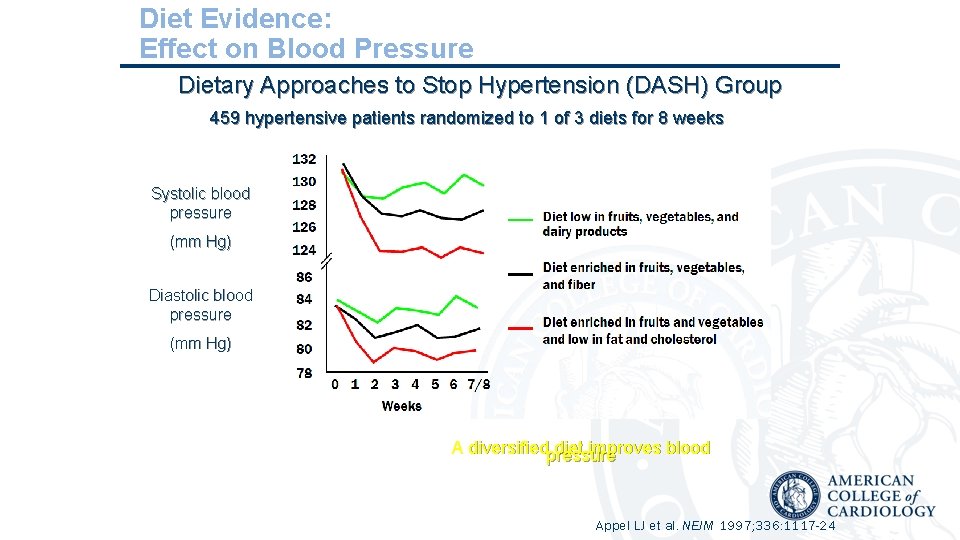
Diet Evidence: Effect on Blood Pressure Dietary Approaches to Stop Hypertension (DASH) Group 459 hypertensive patients randomized to 1 of 3 diets for 8 weeks Systolic blood pressure (mm Hg) Diastolic blood pressure (mm Hg) A diversified diet improves blood pressure Appel LJ et al. NEJM 1997; 336: 1117 -24
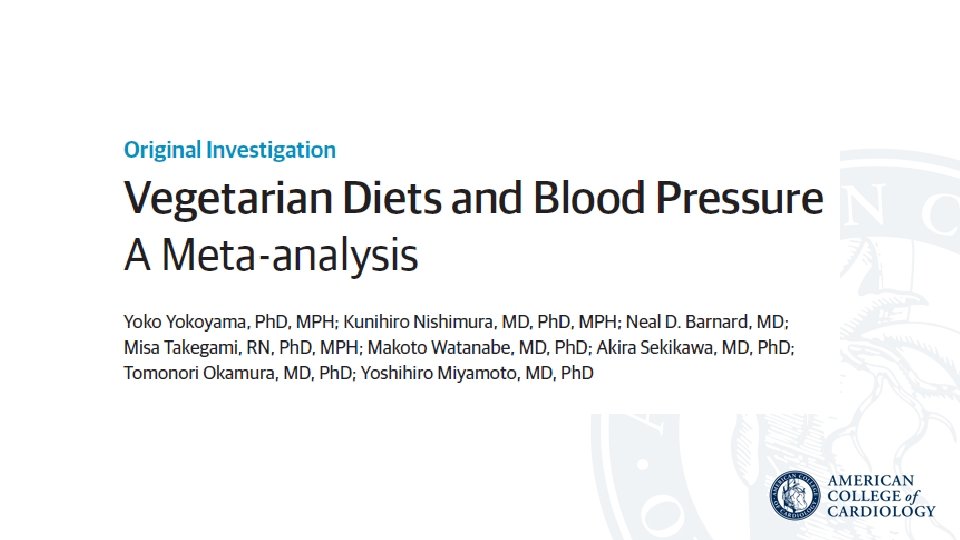
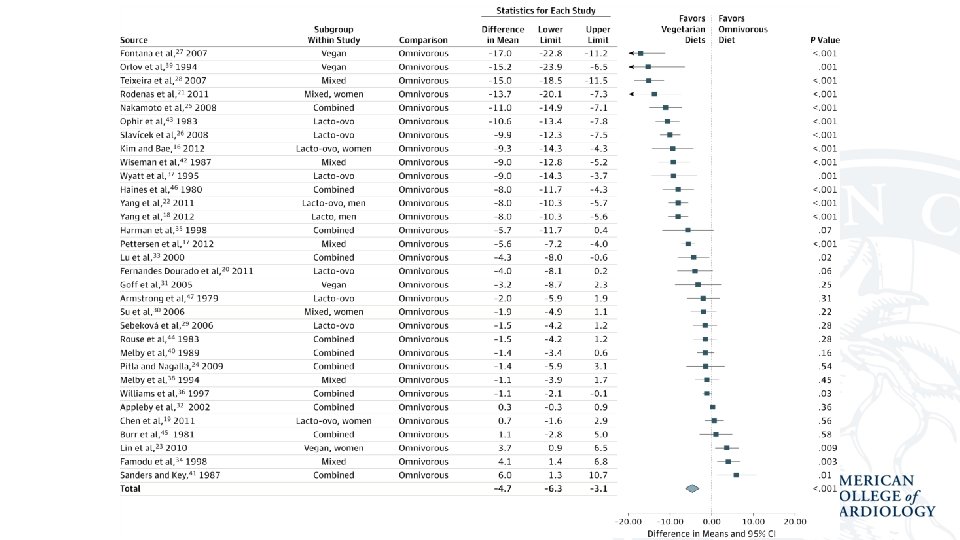
From: Vegetarian Diets and Blood Pressure: A Meta-analysis JAMA Intern Med. 2014; 174(4): 577 -587. doi: 10. 1001/jamainternmed. 2013. 14547 Date of download: 8/15/2015 Copyright © 2015 American Medical Association. All rights reserved.
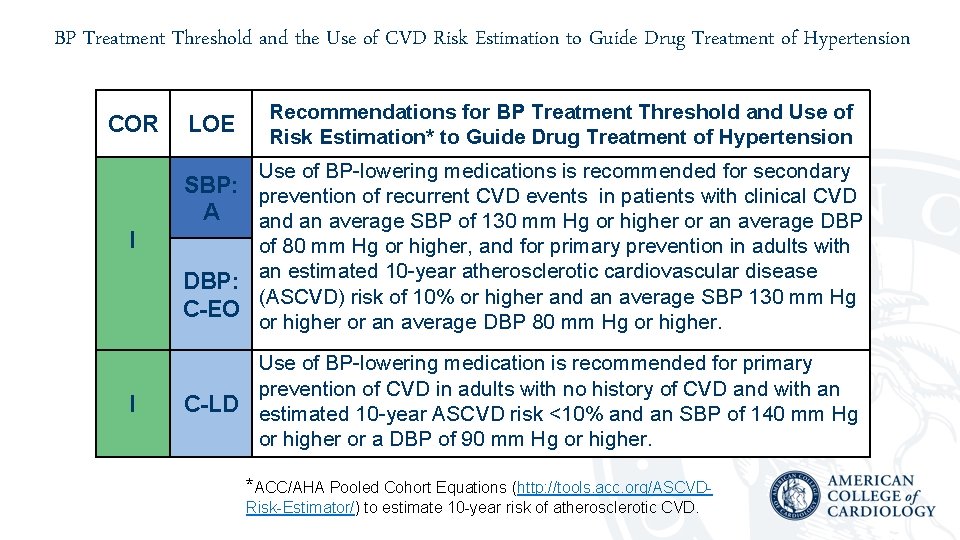
BP Treatment Threshold and the Use of CVD Risk Estimation to Guide Drug Treatment of Hypertension COR LOE Recommendations for BP Treatment Threshold and Use of Risk Estimation* to Guide Drug Treatment of Hypertension I Use of BP-lowering medications is recommended for secondary SBP: prevention of recurrent CVD events in patients with clinical CVD A and an average SBP of 130 mm Hg or higher or an average DBP of 80 mm Hg or higher, and for primary prevention in adults with DBP: an estimated 10 -year atherosclerotic cardiovascular disease (ASCVD) risk of 10% or higher and an average SBP 130 mm Hg C-EO or higher or an average DBP 80 mm Hg or higher. I Use of BP-lowering medication is recommended for primary prevention of CVD in adults with no history of CVD and with an C-LD estimated 10 -year ASCVD risk <10% and an SBP of 140 mm Hg or higher or a DBP of 90 mm Hg or higher. *ACC/AHA Pooled Cohort Equations (http: //tools. acc. org/ASCVDRisk-Estimator/) to estimate 10 -year risk of atherosclerotic CVD.
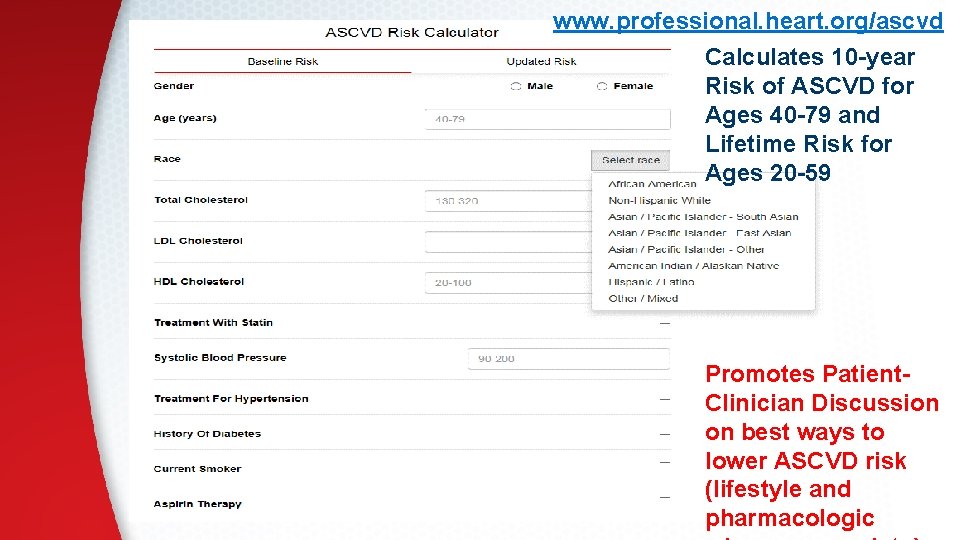
www. professional. heart. org/ascvd Calculates 10 -year Risk of ASCVD for Ages 40 -79 and Lifetime Risk for Ages 20 -59 Promotes Patient. Clinician Discussion on best ways to lower ASCVD risk (lifestyle and pharmacologic
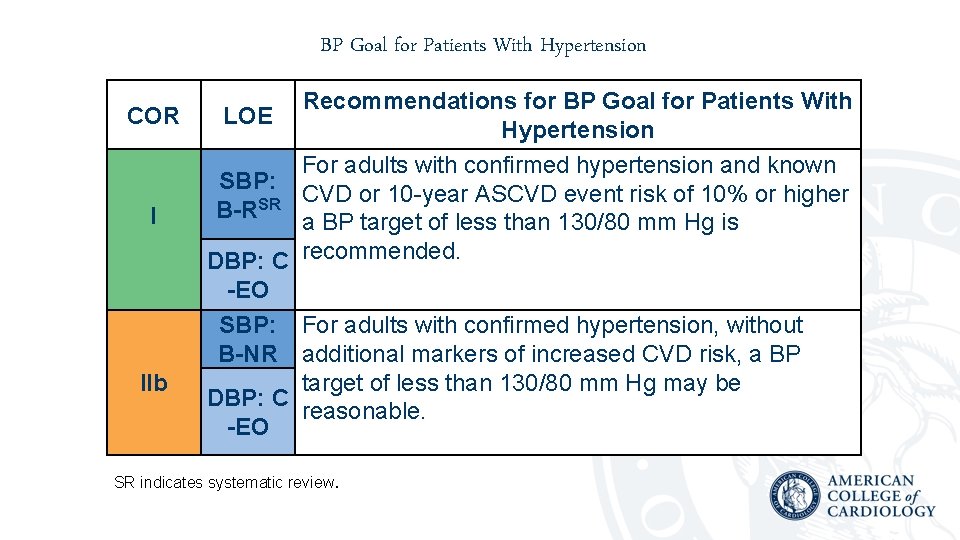
BP Goal for Patients With Hypertension COR I IIb Recommendations for BP Goal for Patients With Hypertension For adults with confirmed hypertension and known SBP: CVD or 10 -year ASCVD event risk of 10% or higher SR B-R a BP target of less than 130/80 mm Hg is DBP: C recommended. -EO SBP: For adults with confirmed hypertension, without B-NR additional markers of increased CVD risk, a BP target of less than 130/80 mm Hg may be DBP: C reasonable. -EO LOE SR indicates systematic review.
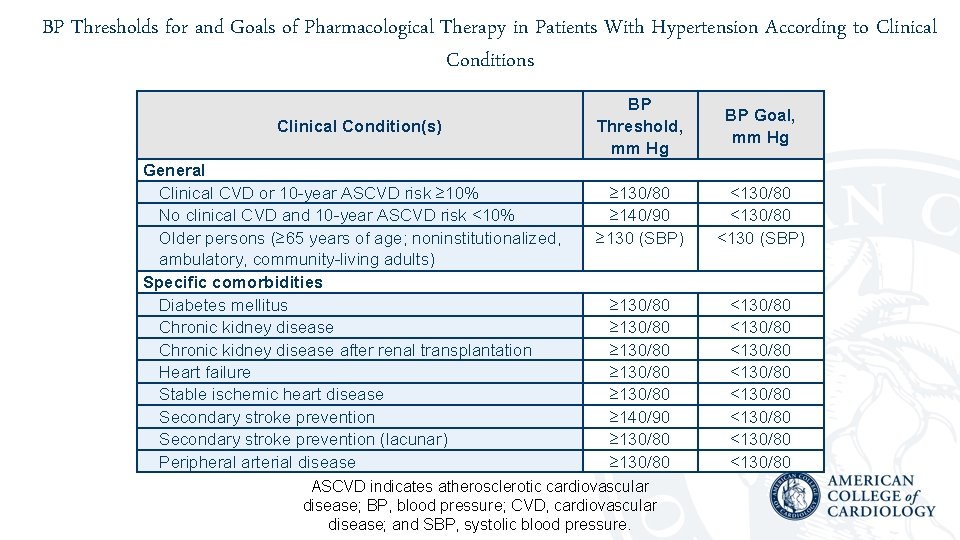
BP Thresholds for and Goals of Pharmacological Therapy in Patients With Hypertension According to Clinical Conditions Clinical Condition(s) General Clinical CVD or 10 -year ASCVD risk ≥ 10% No clinical CVD and 10 -year ASCVD risk <10% Older persons (≥ 65 years of age; noninstitutionalized, ambulatory, community-living adults) Specific comorbidities Diabetes mellitus Chronic kidney disease after renal transplantation Heart failure Stable ischemic heart disease Secondary stroke prevention (lacunar) Peripheral arterial disease BP Threshold, mm Hg BP Goal, mm Hg ≥ 130/80 ≥ 140/90 ≥ 130 (SBP) <130/80 <130 (SBP) ≥ 130/80 ≥ 130/80 ≥ 140/90 ≥ 130/80 <130/80 <130/80 ASCVD indicates atherosclerotic cardiovascular disease; BP, blood pressure; CVD, cardiovascular disease; and SBP, systolic blood pressure.
Race and Ethnicity • African American men have a higher prevalence of hypertension than Hispanic Americans, whites and Native Americans and other subgroups • Hypertension control rates are lower for African Americans, Hispanic Americans and Asian Americans compared to whites
Race and Ethnicity • African Americans: more nonfatal stroke (HR=1. 3), fatal strokes (1. 8), HF (1. 5), and ESRD (4. 3, APOL-1 gene mutation) • Hispanic Americans: high rate of comorbid CVD risk factors (i. e. , obesity, DM). • The rate of renal decline associated with this genotype appears to be largely unresponsive to either BP lowering or renin-angiotensin system inhibition
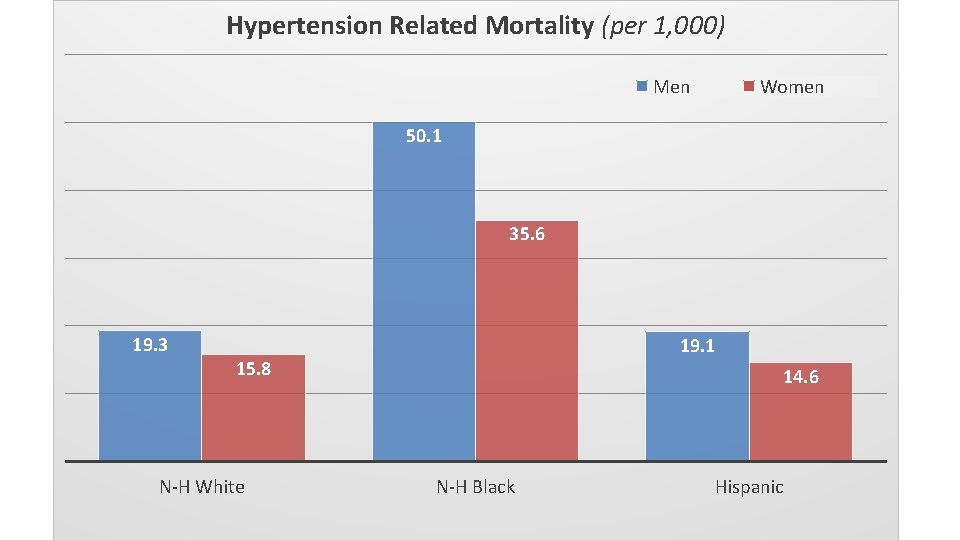
Hypertension Related Mortality (per 1, 000) Men Women 50. 1 35. 6 19. 3 19. 1 15. 8 N-H White 14. 6 N-H Black Hispanic
40 Guidelines: First-Line Antihypertensive Drug Classes Guideline ACEi ARB b-B CCB Diuretic ESH/ESC 1 JBS 32 (<55 y) X (≥ 55 y) X NICE 3 (<55 y) X (>55 y) X JNC 84 X AHA/ACC 5 X a No more beta blockers CCBs recommended as first-line antihypertensive therapy in all guidelines ACEi, angiotensin-converting enzyme inhibitor; ARB, angiotensin receptor blocker; β-B, β-blocker; CCB, calcium channel blocker a. Thiazide recommended for most patients. All guidelines recommend specific classes in selected groups of patients 1. ESH/ESC Eur Heart J 2013; 34: 2159– 2219; 2. Joint British Societies. Heart 2014; 100: ii 1–ii 67. 3. NICE Clinical Guideline 127. 2011; 4. James PA, et al. JAMA 2014; 311: 507– 520. 5. Go AS, et al. J Am Coll Cardiol 2014; 63: 1230– 1238
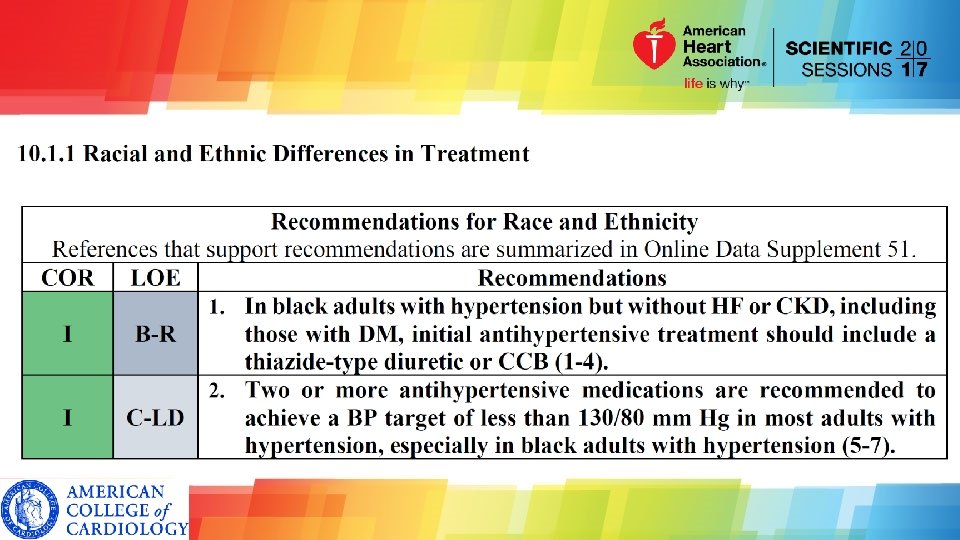
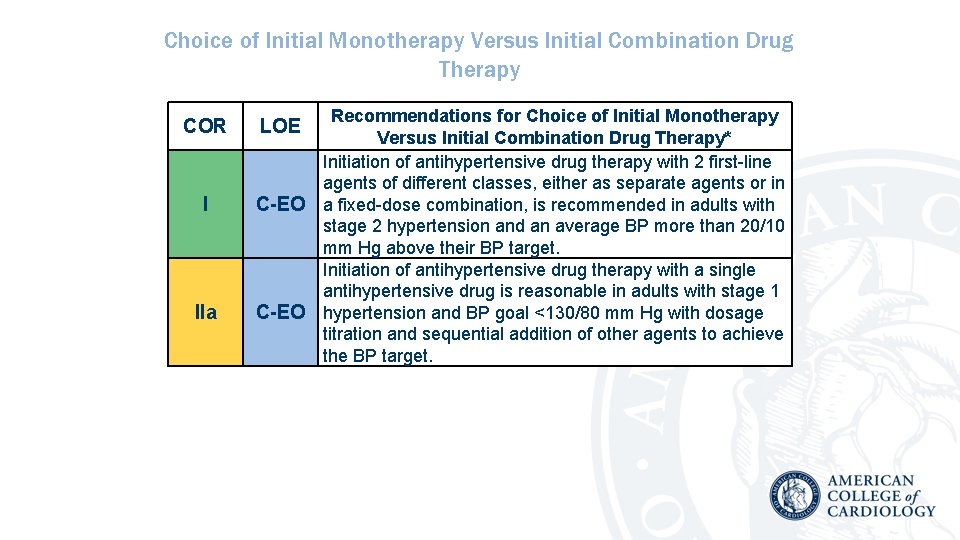
Choice of Initial Monotherapy Versus Initial Combination Drug Therapy COR I IIa Recommendations for Choice of Initial Monotherapy Versus Initial Combination Drug Therapy* Initiation of antihypertensive drug therapy with 2 first-line agents of different classes, either as separate agents or in C-EO a fixed-dose combination, is recommended in adults with stage 2 hypertension and an average BP more than 20/10 mm Hg above their BP target. Initiation of antihypertensive drug therapy with a single antihypertensive drug is reasonable in adults with stage 1 C-EO hypertension and BP goal <130/80 mm Hg with dosage titration and sequential addition of other agents to achieve the BP target. LOE
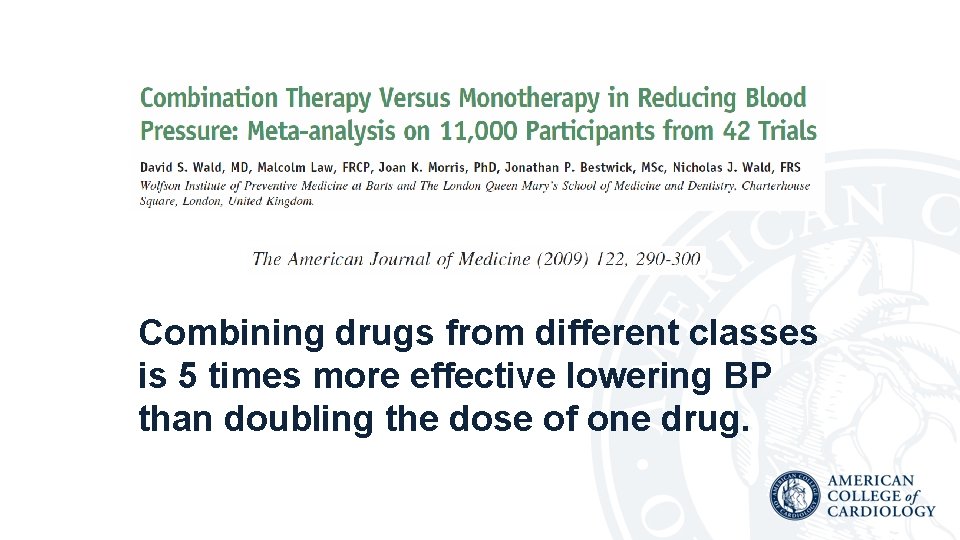
Combining drugs from different classes is 5 times more effective lowering BP than doubling the dose of one drug.
Blood Pressure (BP) Thresholds and Recommendations for Treatment and Follow-Up Patients on BP lowering drugs should be seen on at least a monthly basis until controlled Patients with DM and/or CKD are automatically placed in the high-risk stage 2 category.
5 Points to Remember 44 New categories of BP in adults. Four categories of BP, ranging from normal to stage 2 hypertension, as shown below. • Average BP measurements in a health care setting on at least two occasions. • To confirm a new diagnosis of hypertension, an out-of-office confirmation of elevated BP is recommended.
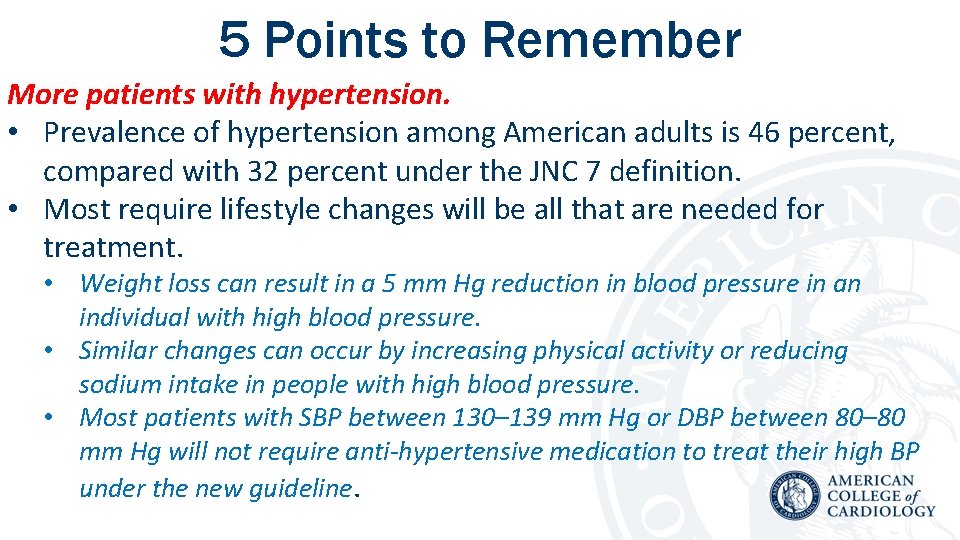
5 Points to Remember More patients with hypertension. • Prevalence of hypertension among American adults is 46 percent, compared with 32 percent under the JNC 7 definition. • Most require lifestyle changes will be all that are needed for treatment. • Weight loss can result in a 5 mm Hg reduction in blood pressure in an individual with high blood pressure. • Similar changes can occur by increasing physical activity or reducing sodium intake in people with high blood pressure. • Most patients with SBP between 130– 139 mm Hg or DBP between 80– 80 mm Hg will not require anti-hypertensive medication to treat their high BP under the new guideline.
5 Points to Remember Adjust treatment based on BP category and cardiovascular risk. • All patients with high BP should be treated with nonpharmacological interventions: • a heart-healthy diet • sodium reduction • potassium supplementation (preferably through diet) • increased physical activity with a structured exercise program • drinking alcohol in moderation • BP-lowering medications recommended based on stage of hypertension, a patient’s medical history or estimated 10 -year CVD risk that is greater than or equal to 10 percent using the ACC/AHA Risk Estimator.
5 Points to Remember Treatment targets for patients with hypertension. • Adults with confirmed hypertension and known CVD or a 10 -year ASCVD event risk of 10 percent or higher, the recommended BP target is less than 130/80 mm Hg. • For adults with confirmed hypertension, but no additional markers of increased CVD risk, a target of less than 130/80 mm Hg may be reasonable. • Considering the totality of the available evidence, a lower BP target is generally better than a higher BP target
5 Points to Remember Have patients self-monitor BP. • Because office BP measurements are often higher than ambulatory or at-home BPs, the guideline emphasizes the need for patients to take their own BP measurement outside of the clinical setting to confirm the diagnosis of hypertension and to help titrate BPlowering medication. • This should be done in conjunction with telehealth counseling or clinical interventions. • SMBP can differentiate between sustained, white coat and masked hypertension.
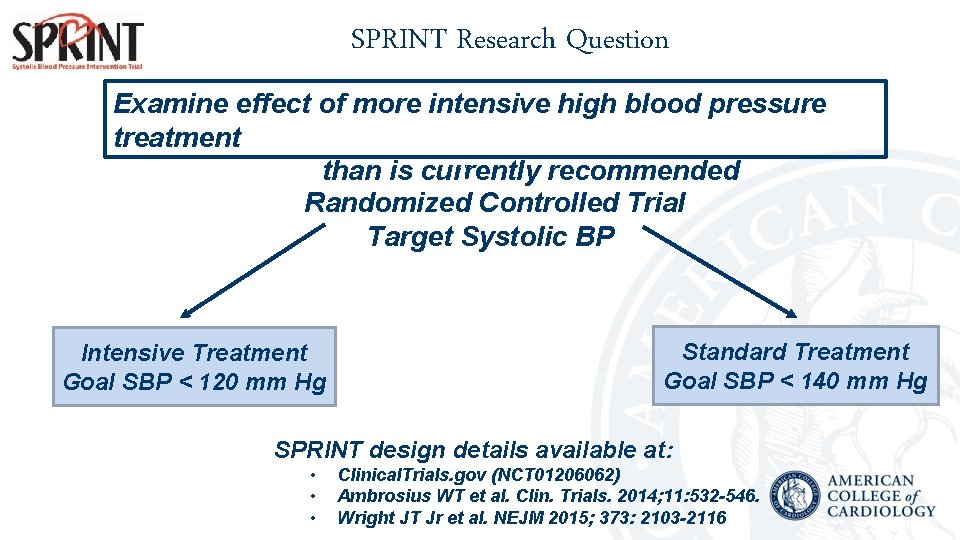
SPRINT Research Question Examine effect of more intensive high blood pressure treatment than is currently recommended Randomized Controlled Trial Target Systolic BP Intensive Treatment Goal SBP < 120 mm Hg Standard Treatment Goal SBP < 140 mm Hg SPRINT design details available at: • • • Clinical. Trials. gov (NCT 01206062) Ambrosius WT et al. Clin. Trials. 2014; 11: 532 -546. Wright JT Jr et al. NEJM 2015; 373: 2103 -2116
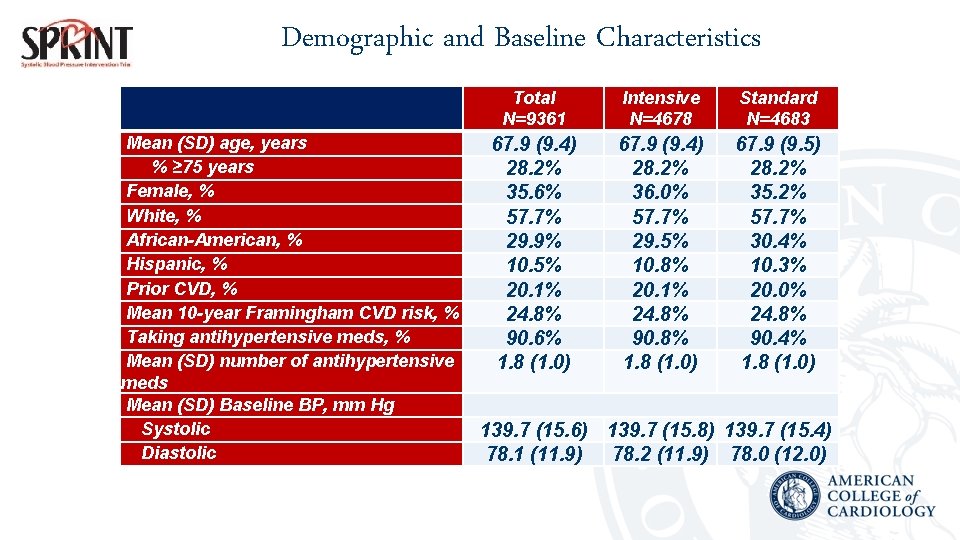
Demographic and Baseline Characteristics Mean (SD) age, years % ≥ 75 years Female, % White, % African-American, % Hispanic, % Prior CVD, % Mean 10 -year Framingham CVD risk, % Taking antihypertensive meds, % Mean (SD) number of antihypertensive meds Mean (SD) Baseline BP, mm Hg Systolic Diastolic Total N=9361 Intensive N=4678 Standard N=4683 67. 9 (9. 4) 28. 2% 35. 6% 57. 7% 29. 9% 10. 5% 20. 1% 24. 8% 90. 6% 1. 8 (1. 0) 67. 9 (9. 4) 28. 2% 36. 0% 57. 7% 29. 5% 10. 8% 20. 1% 24. 8% 90. 8% 1. 8 (1. 0) 67. 9 (9. 5) 28. 2% 35. 2% 57. 7% 30. 4% 10. 3% 20. 0% 24. 8% 90. 4% 1. 8 (1. 0) 139. 7 (15. 6) 139. 7 (15. 8) 139. 7 (15. 4) 78. 1 (11. 9) 78. 2 (11. 9) 78. 0 (12. 0)
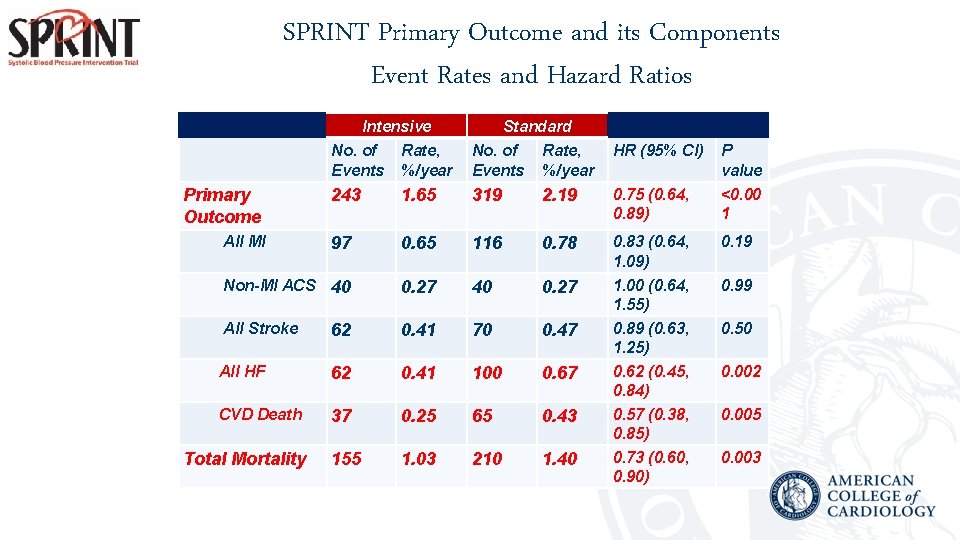
SPRINT Primary Outcome and its Components Event Rates and Hazard Ratios Intensive Standard No. of Events Rate, %/year HR (95% CI) 243 1. 65 319 2. 19 0. 75 (0. 64, 0. 89) 97 0. 65 116 0. 78 Non-MI ACS 40 0. 27 All Stroke 62 0. 41 70 0. 47 All HF 62 0. 41 100 0. 67 CVD Death 37 0. 25 65 0. 43 155 1. 03 210 1. 40 0. 83 (0. 64, 1. 09) 1. 00 (0. 64, 1. 55) 0. 89 (0. 63, 1. 25) 0. 62 (0. 45, 0. 84) 0. 57 (0. 38, 0. 85) 0. 73 (0. 60, 0. 90) Primary Outcome All MI Total Mortality P value <0. 00 1 0. 19 0. 99 0. 50 0. 002 0. 005 0. 003
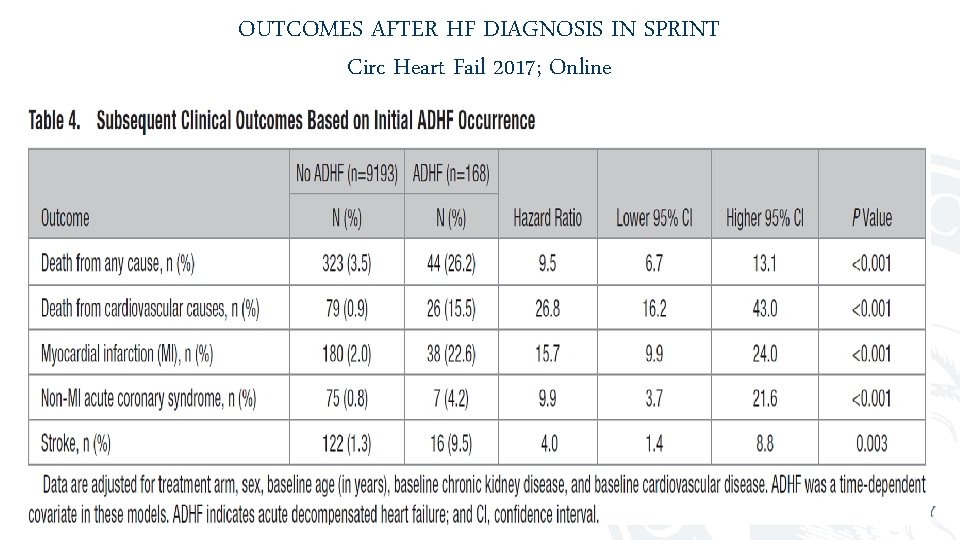
OUTCOMES AFTER HF DIAGNOSIS IN SPRINT Circ Heart Fail 2017; Online
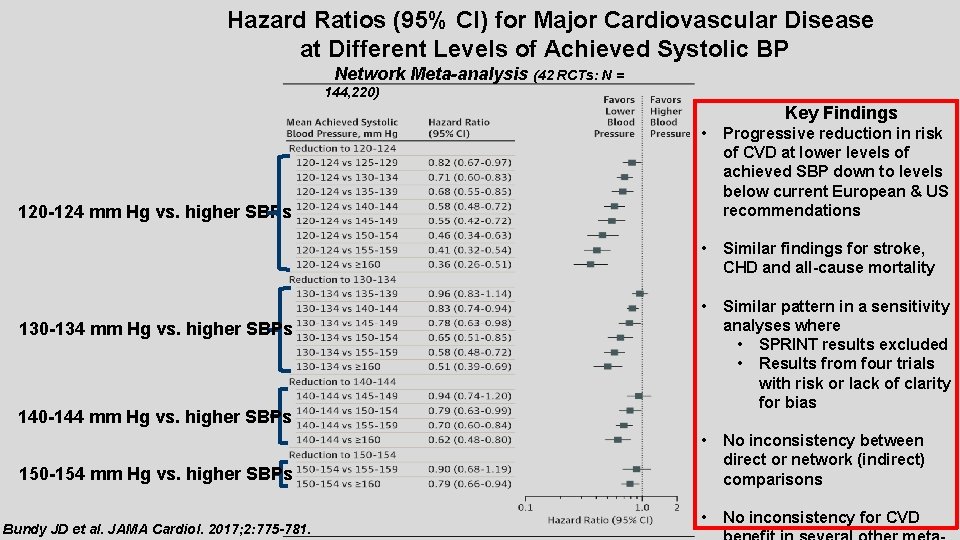
Hazard Ratios (95% CI) for Major Cardiovascular Disease at Different Levels of Achieved Systolic BP Network Meta-analysis (42 RCTs: N = 144, 220) Key Findings • Progressive reduction in risk of CVD at lower levels of achieved SBP down to levels below current European & US recommendations • Similar findings for stroke, CHD and all-cause mortality • Similar pattern in a sensitivity analyses where • SPRINT results excluded • Results from four trials with risk or lack of clarity for bias • No inconsistency between direct or network (indirect) comparisons • No inconsistency for CVD 120 -124 mm Hg vs. higher SBPs 130 -134 mm Hg vs. higher SBPs 140 -144 mm Hg vs. higher SBPs 150 -154 mm Hg vs. higher SBPs Bundy JD et al. JAMA Cardiol. 2017; 2: 775 -781.
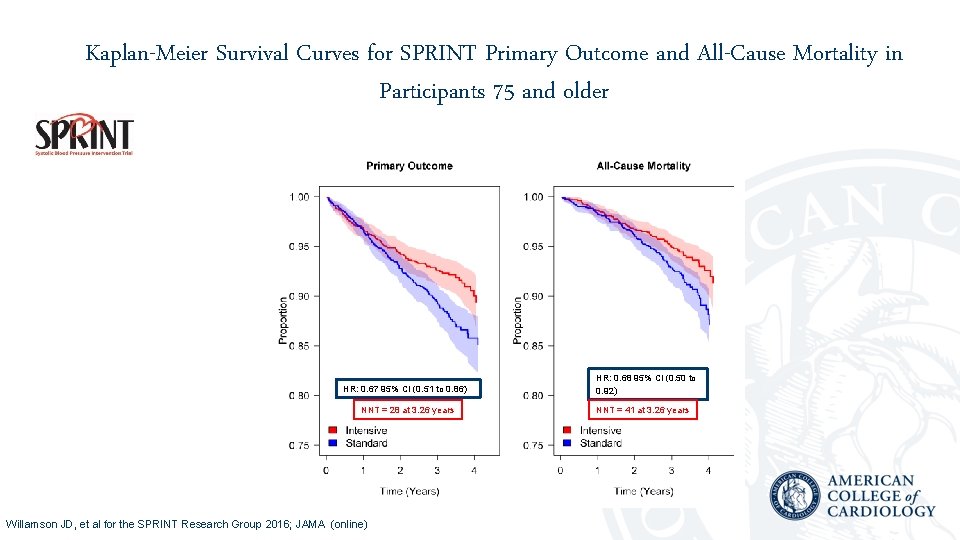
Kaplan-Meier Survival Curves for SPRINT Primary Outcome and All-Cause Mortality in Participants 75 and older HR: 0. 67 95% CI (0. 51 to 0. 86) NNT = 28 at 3. 26 years Willamson JD, et al for the SPRINT Research Group 2016; JAMA (online) HR: 0. 68 95% CI (0. 50 to 0. 92) NNT = 41 at 3. 26 years
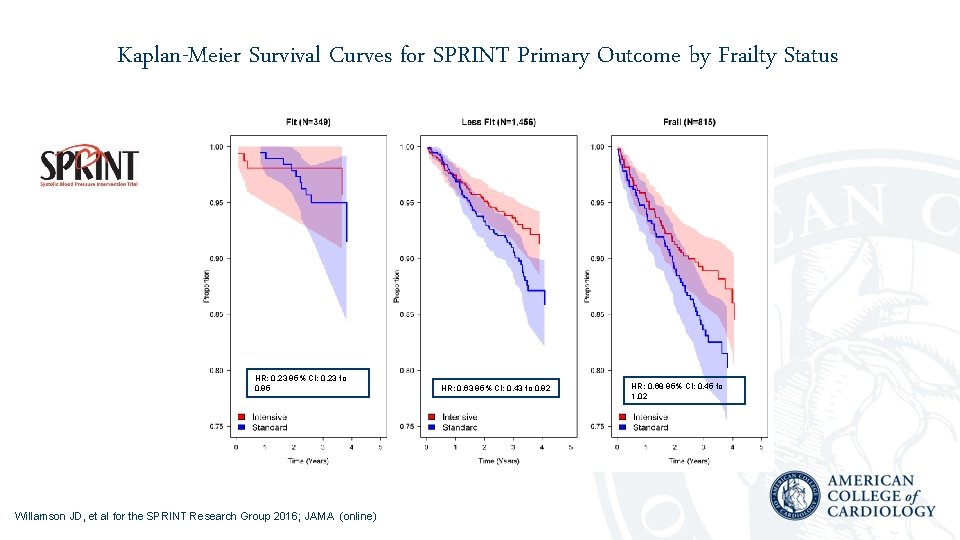
Kaplan-Meier Survival Curves for SPRINT Primary Outcome by Frailty Status HR: 0. 23 95% CI: 0. 23 to 0. 95 HR: 0. 63 95% CI: 0. 43 to 0. 92 HR: 0. 68 95% CI: 0. 45 to 1. 02 p for interaction (ns) Willamson JD, et al for the SPRINT Research Group 2016; JAMA (online)
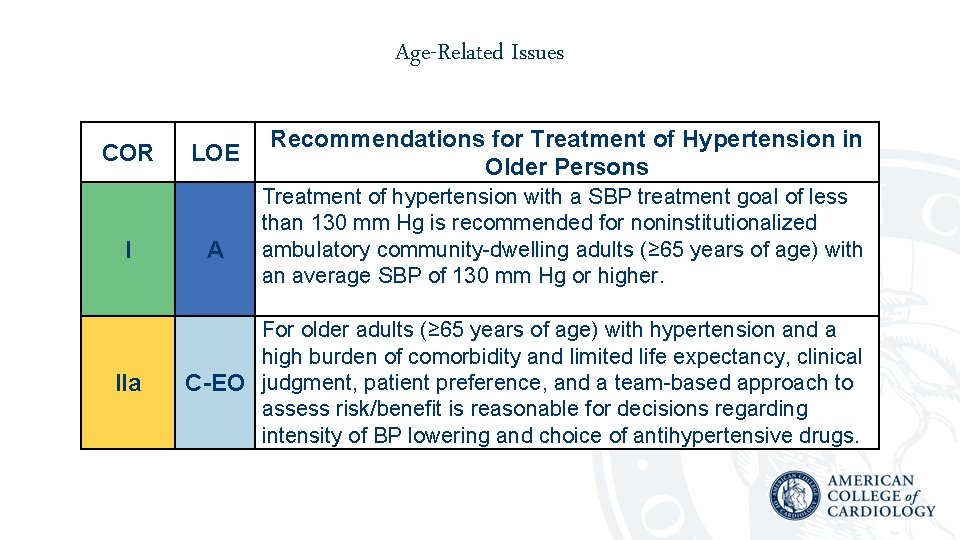
Age-Related Issues COR I IIa LOE A Recommendations for Treatment of Hypertension in Older Persons Treatment of hypertension with a SBP treatment goal of less than 130 mm Hg is recommended for noninstitutionalized ambulatory community-dwelling adults (≥ 65 years of age) with an average SBP of 130 mm Hg or higher. For older adults (≥ 65 years of age) with hypertension and a high burden of comorbidity and limited life expectancy, clinical C-EO judgment, patient preference, and a team-based approach to assess risk/benefit is reasonable for decisions regarding intensity of BP lowering and choice of antihypertensive drugs.
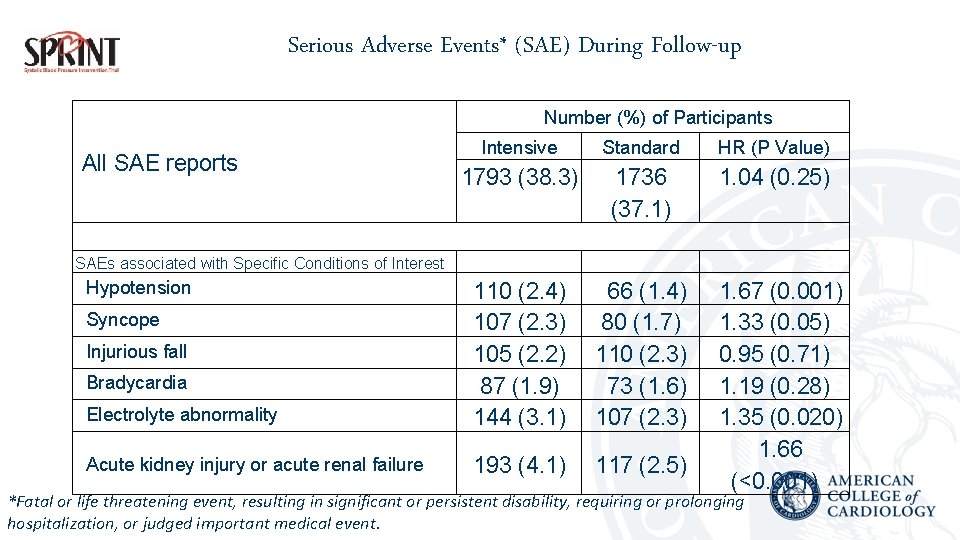
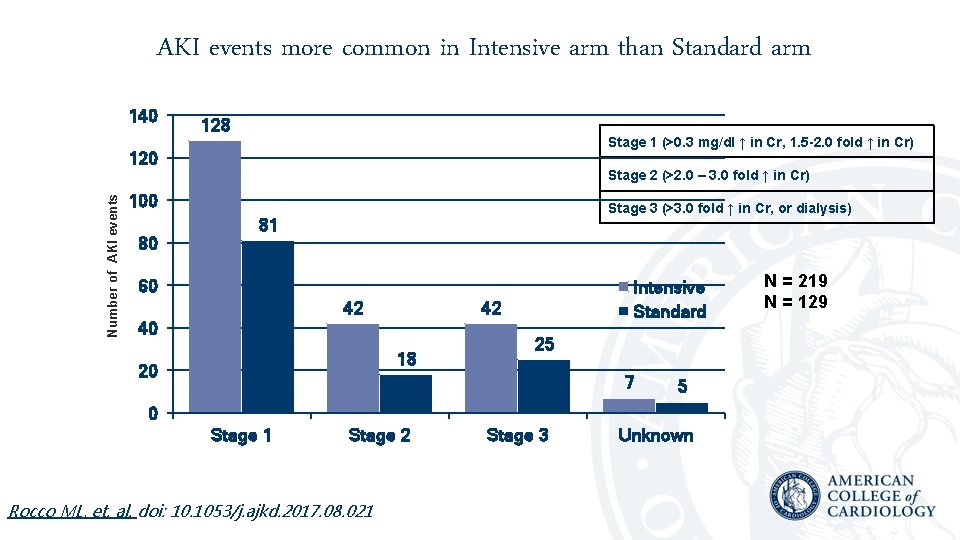
Serious Adverse Events* (SAE) During Follow-up Number (%) of Participants All SAE reports Intensive Standard HR (P Value) 1793 (38. 3) 1736 (37. 1) 1. 04 (0. 25) SAEs associated with Specific Conditions of Interest Hypotension Electrolyte abnormality 110 (2. 4) 107 (2. 3) 105 (2. 2) 87 (1. 9) 144 (3. 1) Acute kidney injury or acute renal failure 193 (4. 1) Syncope Injurious fall Bradycardia 66 (1. 4) 1. 67 (0. 001) 80 (1. 7) 1. 33 (0. 05) 110 (2. 3) 0. 95 (0. 71) 73 (1. 6) 1. 19 (0. 28) 107 (2. 3) 1. 35 (0. 020) 1. 66 117 (2. 5) (<0. 001) *Fatal or life threatening event, resulting in significant or persistent disability, requiring or prolonging hospitalization, or judged important medical event.
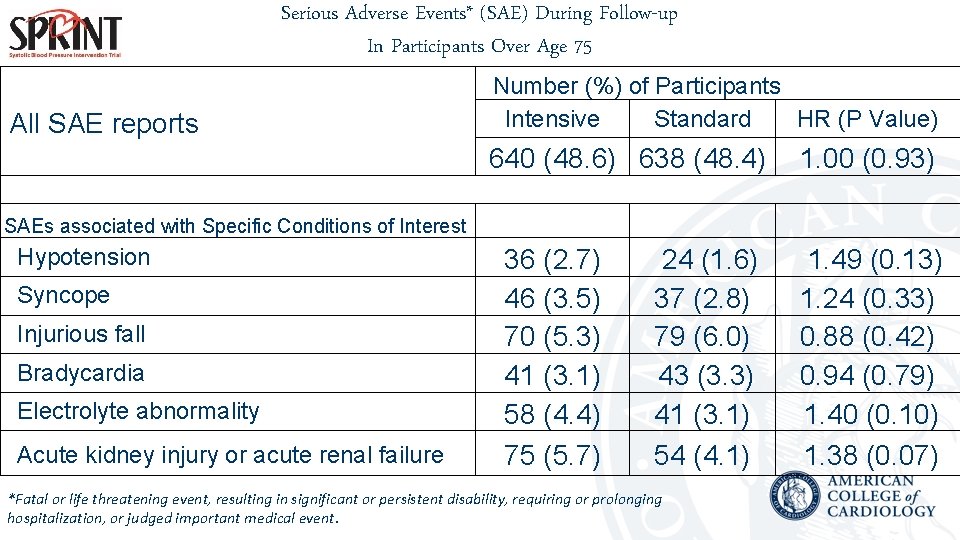
Serious Adverse Events* (SAE) During Follow-up In Participants Over Age 75 All SAE reports Number (%) of Participants Intensive Standard HR (P Value) 640 (48. 6) 638 (48. 4) 1. 00 (0. 93) SAEs associated with Specific Conditions of Interest Hypotension Syncope Injurious fall Bradycardia Electrolyte abnormality Acute kidney injury or acute renal failure 36 (2. 7) 46 (3. 5) 70 (5. 3) 41 (3. 1) 58 (4. 4) 75 (5. 7) 24 (1. 6) 37 (2. 8) 79 (6. 0) 43 (3. 3) 41 (3. 1) 54 (4. 1) *Fatal or life threatening event, resulting in significant or persistent disability, requiring or prolonging hospitalization, or judged important medical event. 1. 49 (0. 13) 1. 24 (0. 33) 0. 88 (0. 42) 0. 94 (0. 79) 1. 40 (0. 10) 1. 38 (0. 07)
AKI events more common in Intensive arm than Standard arm 140 128 Stage 1 (>0. 3 mg/dl ↑ in Cr, 1. 5 -2. 0 fold ↑ in Cr) Number of AKI events 120 Stage 2 (>2. 0 – 3. 0 fold ↑ in Cr) 100 80 Stage 3 (>3. 0 fold ↑ in Cr, or dialysis) 81 60 42 42 40 18 20 Intensive Standard 25 7 5 0 Stage 1 Stage 2 Rocco ML, et. al. doi: 10. 1053/j. ajkd. 2017. 08. 021 Stage 3 Unknown N = 219 N = 129
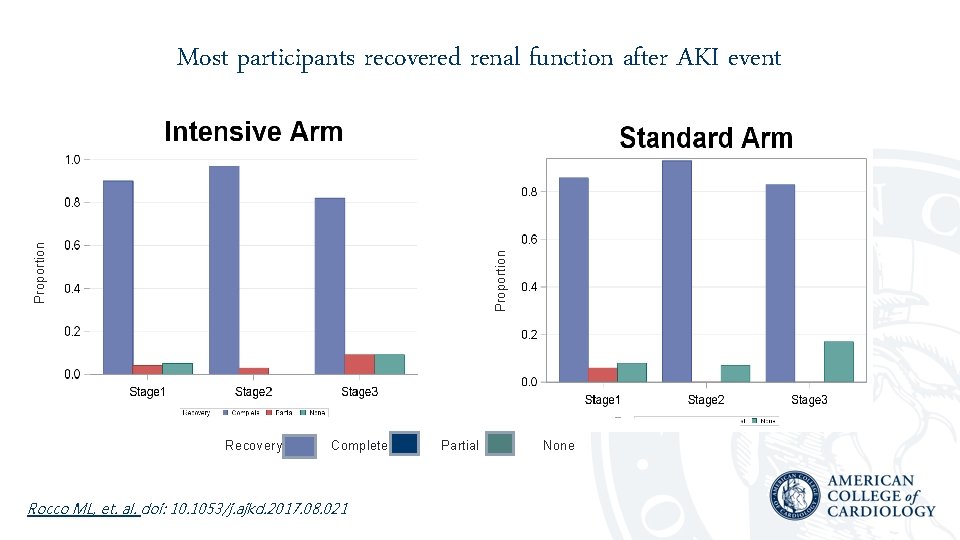
Proportion Most participants recovered renal function after AKI event Recovery: Complete Partial None Rocco ML, et. al. doi: 10. 1053/j. ajkd. 2017. 08. 021
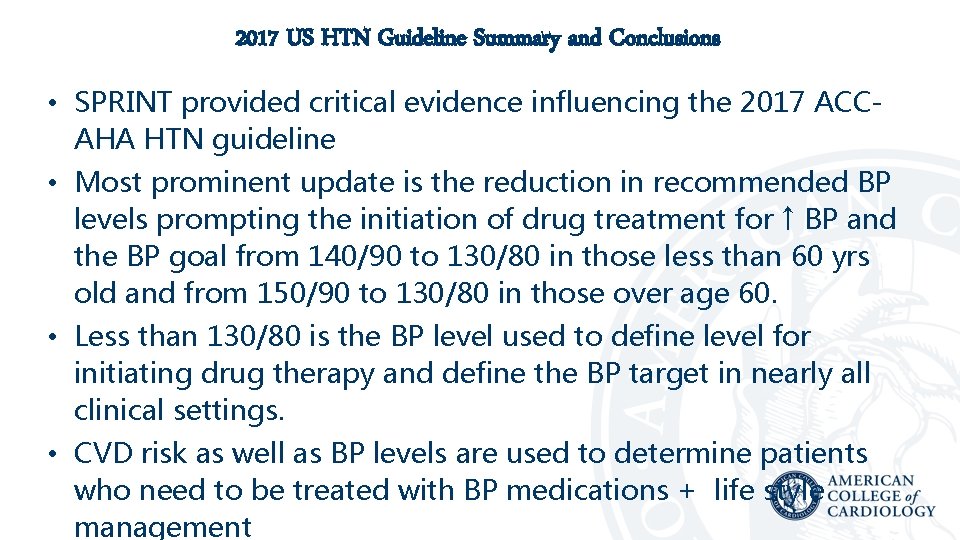
2017 US HTN Guideline Summary and Conclusions • SPRINT provided critical evidence influencing the 2017 ACCAHA HTN guideline • Most prominent update is the reduction in recommended BP levels prompting the initiation of drug treatment for ↑ BP and the BP goal from 140/90 to 130/80 in those less than 60 yrs old and from 150/90 to 130/80 in those over age 60. • Less than 130/80 is the BP level used to define level for initiating drug therapy and define the BP target in nearly all clinical settings. • CVD risk as well as BP levels are used to determine patients who need to be treated with BP medications + life style management
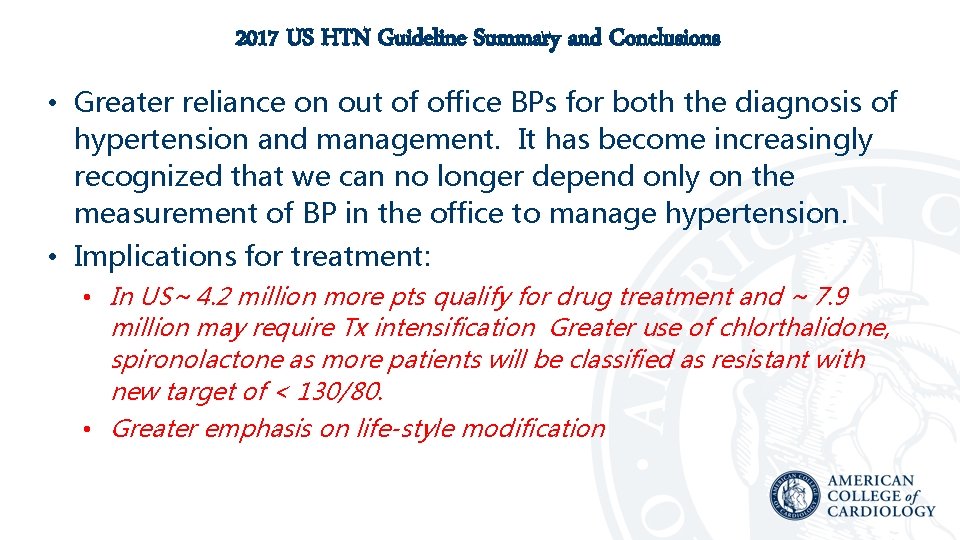
2017 US HTN Guideline Summary and Conclusions • Greater reliance on out of office BPs for both the diagnosis of hypertension and management. It has become increasingly recognized that we can no longer depend only on the measurement of BP in the office to manage hypertension. • Implications for treatment: • In US~ 4. 2 million more pts qualify for drug treatment and ~ 7. 9 million may require Tx intensification Greater use of chlorthalidone, spironolactone as more patients will be classified as resistant with new target of < 130/80. • Greater emphasis on life-style modification
THANK YOU