
Nutritional Anemia in Bangladesh Problems and Solutions Dr
Nutritional Anemia in Bangladesh: Problems and Solutions Dr Tahmeed Ahmed Director Centre for Nutrition & Food Security ICDDR, B Professor, Public Health Nutrition James P. Grant School of Public Health, BRAC University
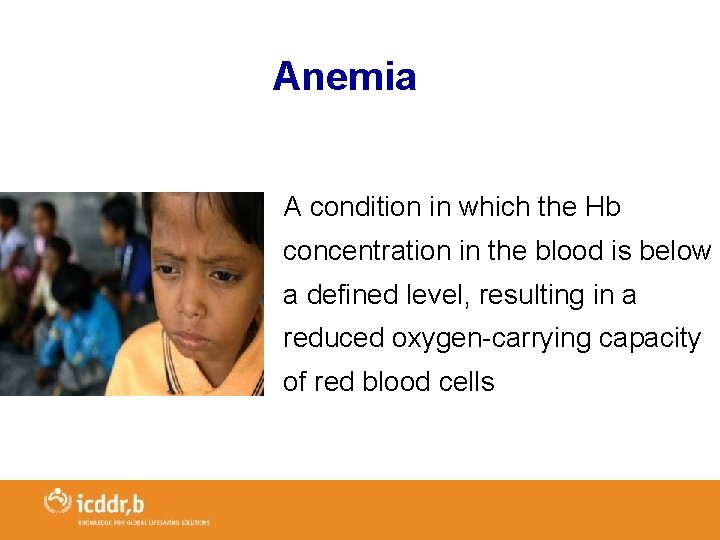
Anemia A condition in which the Hb concentration in the blood is below a defined level, resulting in a reduced oxygen-carrying capacity of red blood cells
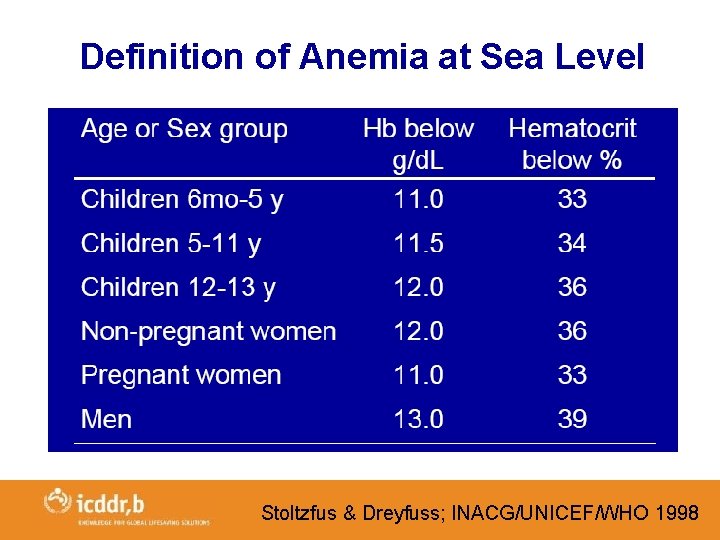
Definition of Anemia at Sea Level Stoltzfus & Dreyfuss; INACG/UNICEF/WHO 1998
Consequences of Anemia • Poor immune function and increased morbidity from infection • Fatigue and lower physical work capacity • Poor physical growth • Impaired learning and school achievement Brabin BJ 2001 Grantham-Mc. Gregor S 2001
Consequences of Anemia in Pregnancy • Increased risk of complications during delivery, including prolonged labor, preterm delivery, LBW and maternal and neonatal deaths • Infants of mothers with iron deficiency anemia are more likely to have low iron stores and to become anemic Brabin BJ 2001 Grantham-Mc. Gregor S 2001
Anemia causes huge economic loss • Results in productivity loss • Economic cost of anemia in Bangladesh is estimated to be 7. 9% of GDP Christian P 2005 UN/SCN 2004
What are the causes of anemia? • • • Iron deficiency – dietary deficiency, loss of iron Hookworm Vitamin deficiencies, eg vitamin B 12, folic acid Malaria Hemoglobinopathies, eg thalassemia Chronic infections, such as TB, HIV
Iron Deficiency Anemia • Iron deficiency is the most important cause of anemia • 60% of all anemia is due to iron deficiency Stoltzfus R 1998, Black RE 2008
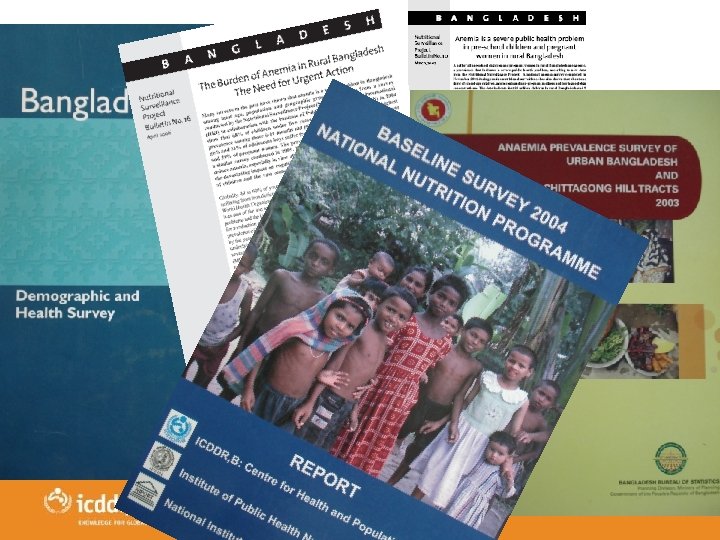
Review of Anemia Control Program • Review of literature, survey reports • Meta analyses • Communication with stake holders from public, private and research sectors • 22 interviews - NNP, DGFP, IPHN, IEDCR, CMSD, NIPORT, EDCL, UNICEF, MI, BRAC, ICDDR, B • Informal round table discussion at ICDDR, B
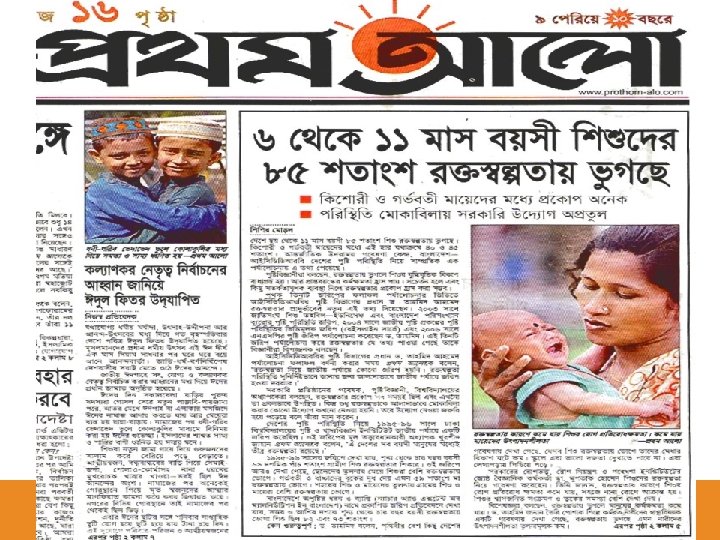
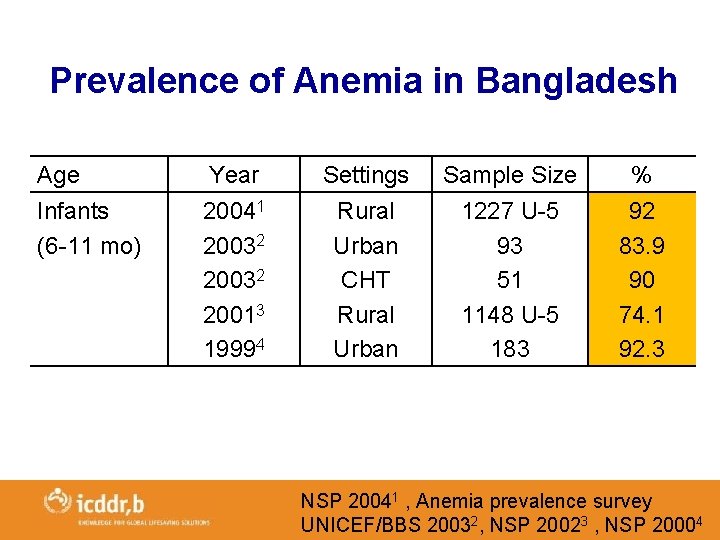
Prevalence of Anemia in Bangladesh Age Infants (6 -11 mo) Year 20041 20032 20013 19994 Settings Rural Urban CHT Rural Urban Sample Size 1227 U-5 93 51 1148 U-5 183 % 92 83. 9 90 74. 1 92. 3 NSP 20041 , Anemia prevalence survey UNICEF/BBS 20032, NSP 20023 , NSP 20004
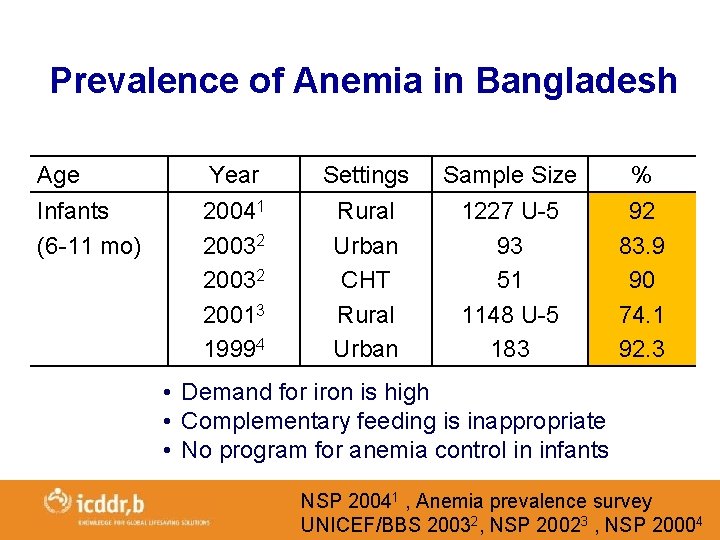
Prevalence of Anemia in Bangladesh Age Infants (6 -11 mo) Year 20041 20032 20013 19994 Settings Rural Urban CHT Rural Urban Sample Size 1227 U-5 93 51 1148 U-5 183 % 92 83. 9 90 74. 1 92. 3 • Demand for iron is high • Complementary feeding is inappropriate • No program for anemia control in infants NSP 20041 , Anemia prevalence survey UNICEF/BBS 20032, NSP 20023 , NSP 20004
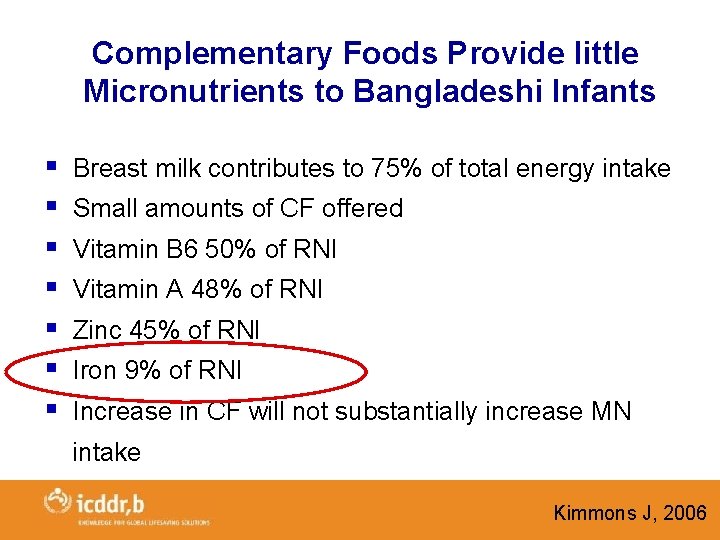
Complementary Foods Provide little Micronutrients to Bangladeshi Infants § § § § Breast milk contributes to 75% of total energy intake Small amounts of CF offered Vitamin B 6 50% of RNI Vitamin A 48% of RNI Zinc 45% of RNI Iron 9% of RNI Increase in CF will not substantially increase MN intake Kimmons J, 2006
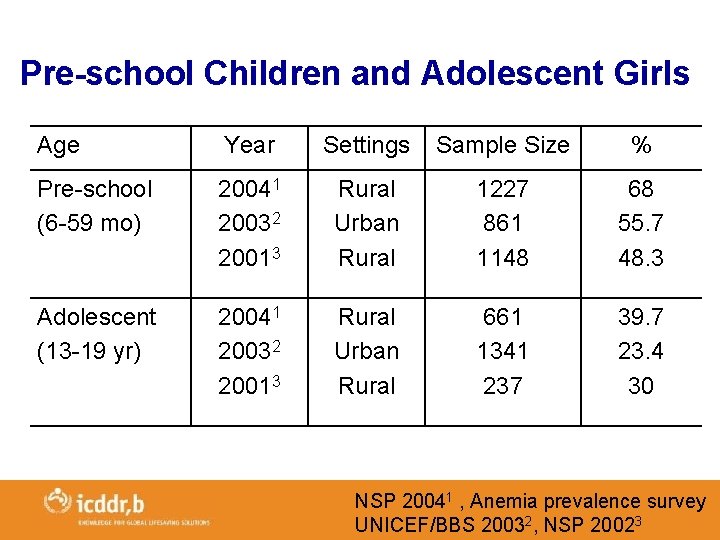
Pre-school Children and Adolescent Girls Age Year Settings Sample Size % Pre-school (6 -59 mo) 20041 20032 20013 Rural Urban Rural 1227 861 1148 68 55. 7 48. 3 Adolescent (13 -19 yr) 20041 20032 20013 Rural Urban Rural 661 1341 237 39. 7 23. 4 30 NSP 20041 , Anemia prevalence survey UNICEF/BBS 20032, NSP 20023
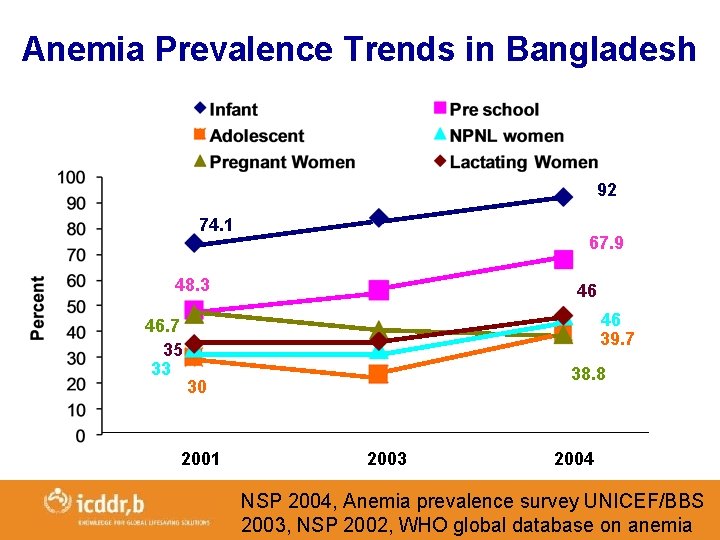
Anemia Prevalence Trends in Bangladesh 92 74. 1 67. 9 48. 3 46. 7 35 33 46 46 39. 7 38. 8 30 2001 2003 2004 NSP 2004, Anemia prevalence survey UNICEF/BBS 2003, NSP 2002, WHO global database on anemia
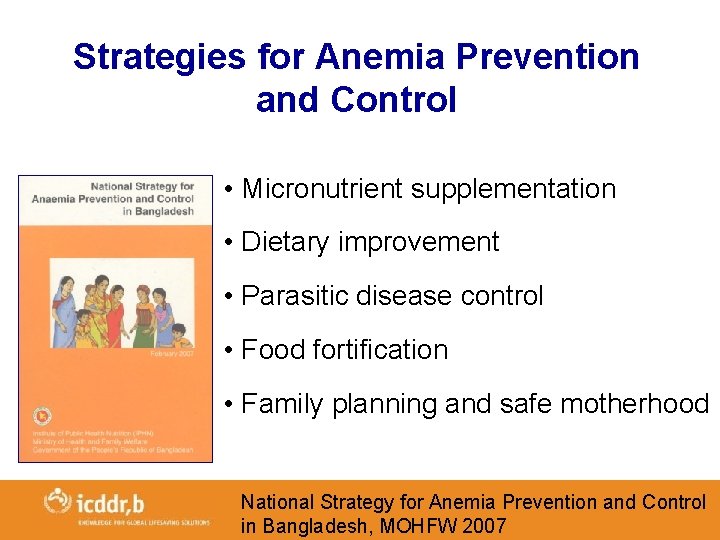
Strategies for Anemia Prevention and Control • Micronutrient supplementation • Dietary improvement • Parasitic disease control • Food fortification • Family planning and safe motherhood National Strategy for Anemia Prevention and Control in Bangladesh, MOHFW 2007
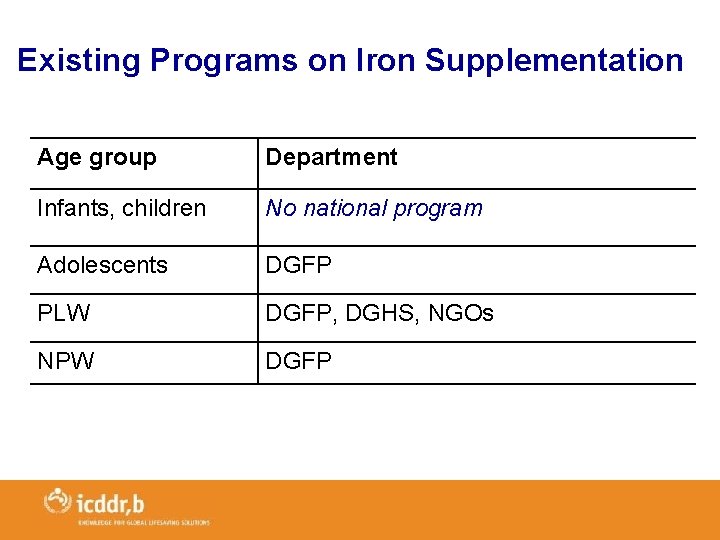
Existing Programs on Iron Supplementation Age group Department Infants, children No national program Adolescents DGFP PLW DGFP, DGHS, NGOs NPW DGFP
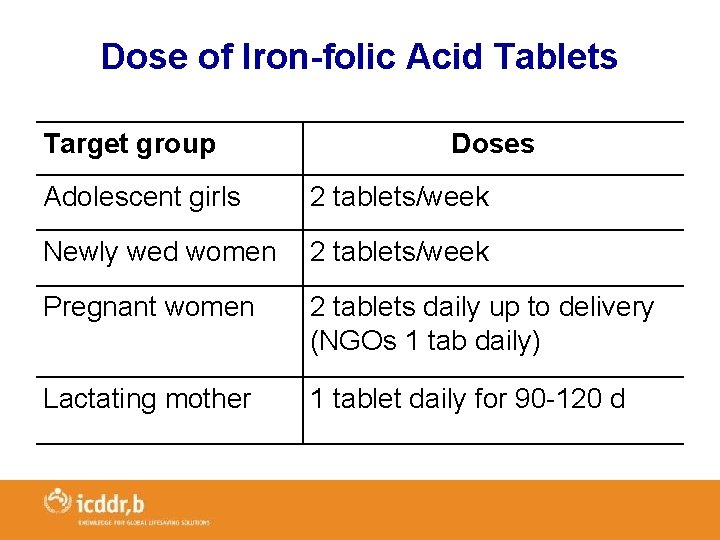
Dose of Iron-folic Acid Tablets Target group Doses Adolescent girls 2 tablets/week Newly wed women 2 tablets/week Pregnant women 2 tablets daily up to delivery (NGOs 1 tab daily) Lactating mother 1 tablet daily for 90 -120 d
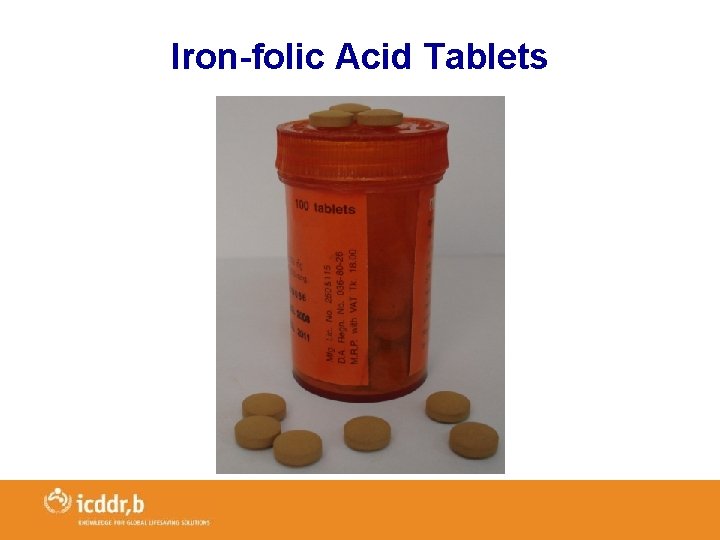
Iron-folic Acid Tablets
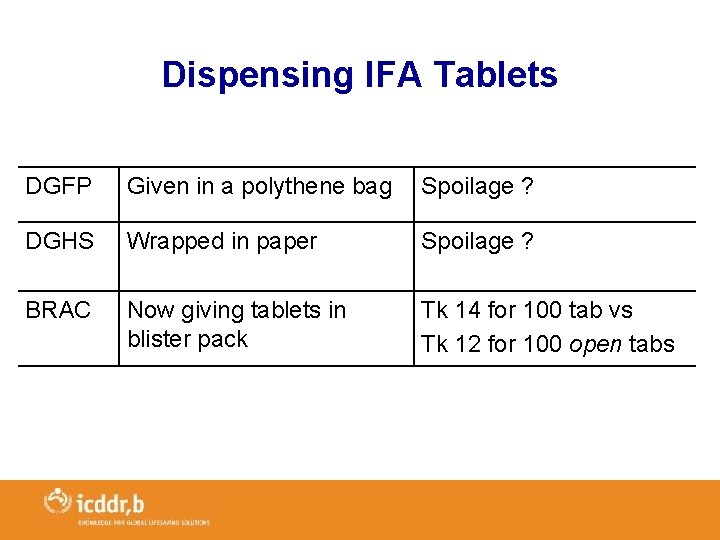
Dispensing IFA Tablets DGFP Given in a polythene bag Spoilage ? DGHS Wrapped in paper Spoilage ? BRAC Now giving tablets in blister pack Tk 14 for 100 tab vs Tk 12 for 100 open tabs
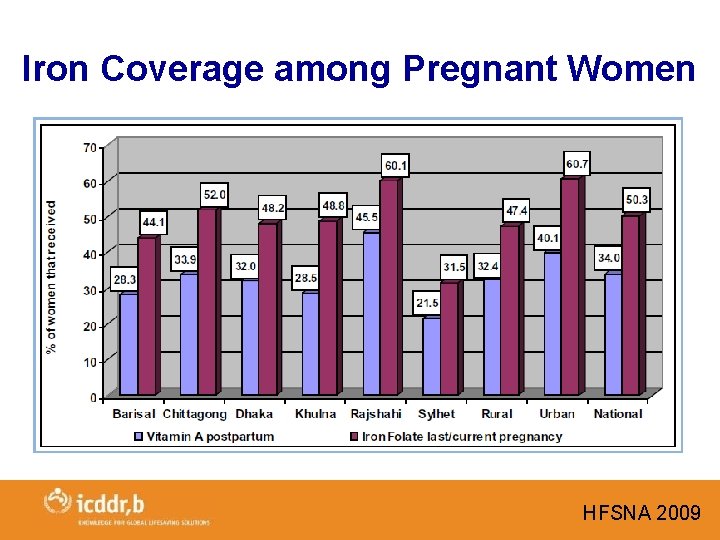
Iron Coverage among Pregnant Women HFSNA 2009
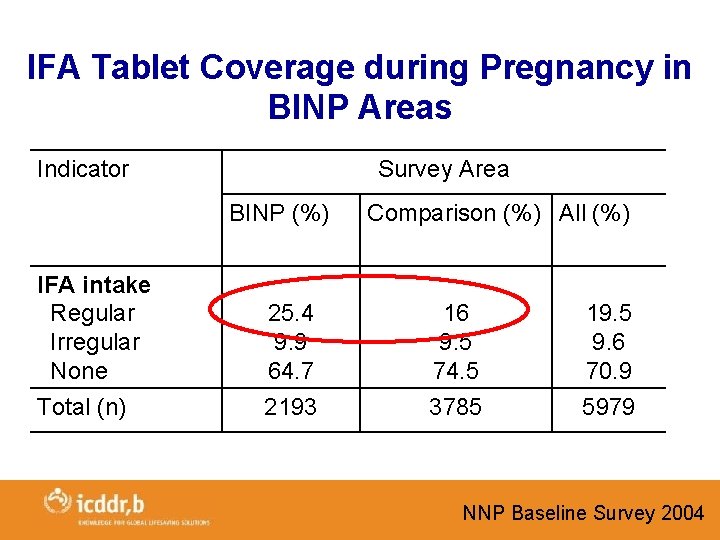
IFA Tablet Coverage during Pregnancy in BINP Areas Indicator Survey Area BINP (%) IFA intake Regular Irregular None Total (n) 25. 4 9. 9 64. 7 2193 Comparison (%) All (%) 16 9. 5 74. 5 3785 19. 5 9. 6 70. 9 5979 NNP Baseline Survey 2004
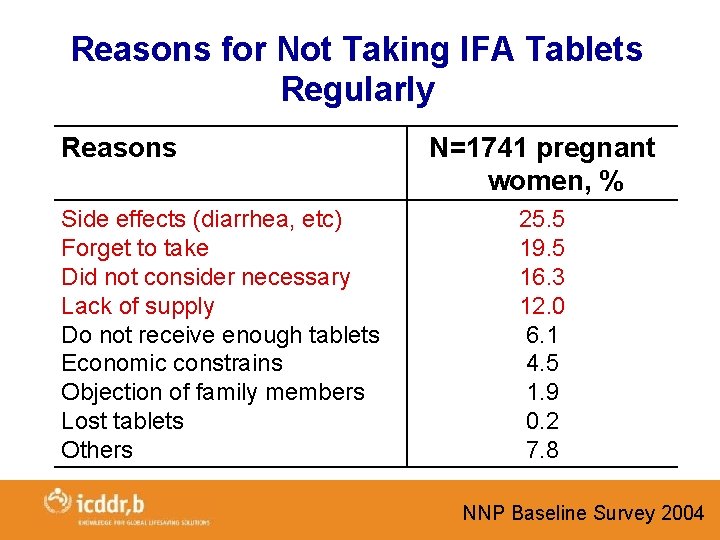
Reasons for Not Taking IFA Tablets Regularly Reasons Side effects (diarrhea, etc) Forget to take Did not consider necessary Lack of supply Do not receive enough tablets Economic constrains Objection of family members Lost tablets Others N=1741 pregnant women, % 25. 5 19. 5 16. 3 12. 0 6. 1 4. 5 1. 9 0. 2 7. 8 NNP Baseline Survey 2004
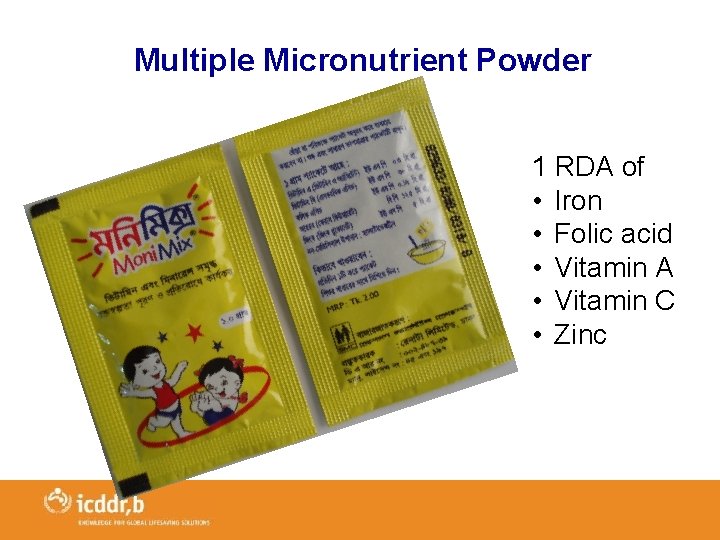
Multiple Micronutrient Powder 1 RDA of • Iron • Folic acid • Vitamin A • Vitamin C • Zinc
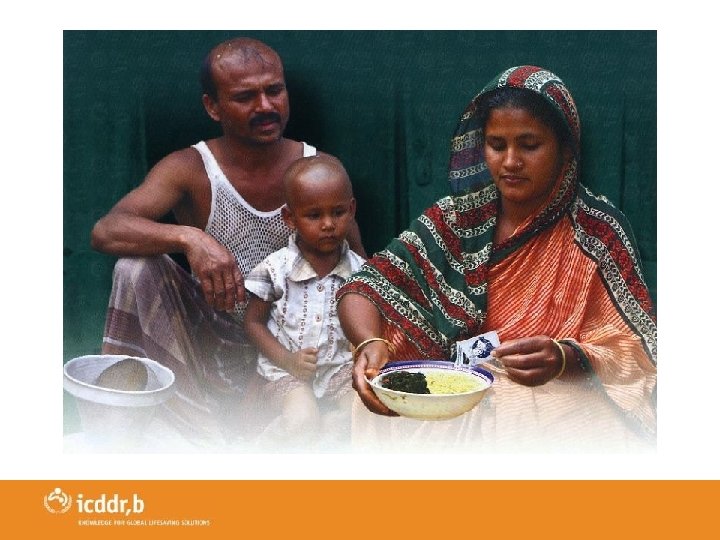
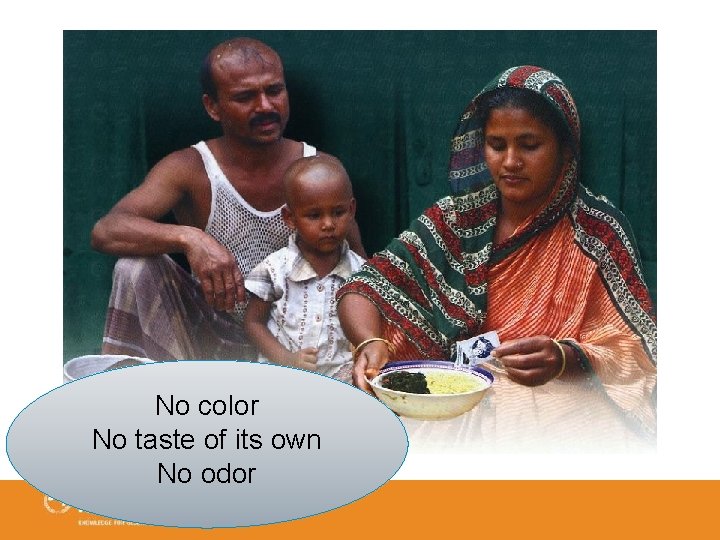
No color No taste of its own No odor
Children with the following conditions are excluded: • Any acute illness • Severe cough • Breathlessness • Severe visible wasting
What can we do to control anemia?
Comprehensive Nutrition Actions Required • Increase exclusive breastfeeding rates • Improve complementary feeding practices by using various foods rich in iron • Consider home-based fortification of CF using multiple micronutrient powder • Coordination of efforts of different agencies and the private sector in control of anemia
• Promote factors that will increase coverage of IFA supplementation among adolescent girls, pregnant & lactating women – – – Effective counseling Sustained supply Appropriate packaging Mass media coverage Trained workforce
- Slides: 31