
Nutrition What are the 6 essential nutrients Nutrition



- Slides: 13
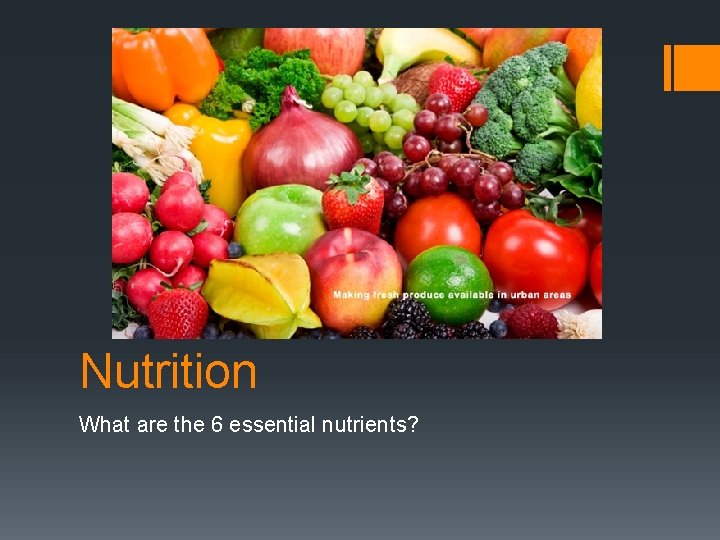
Nutrition What are the 6 essential nutrients?
Nutrition § Calorie – the units of energy that fuel our bodies § Nutrients – substances needed for our bodies to function properly
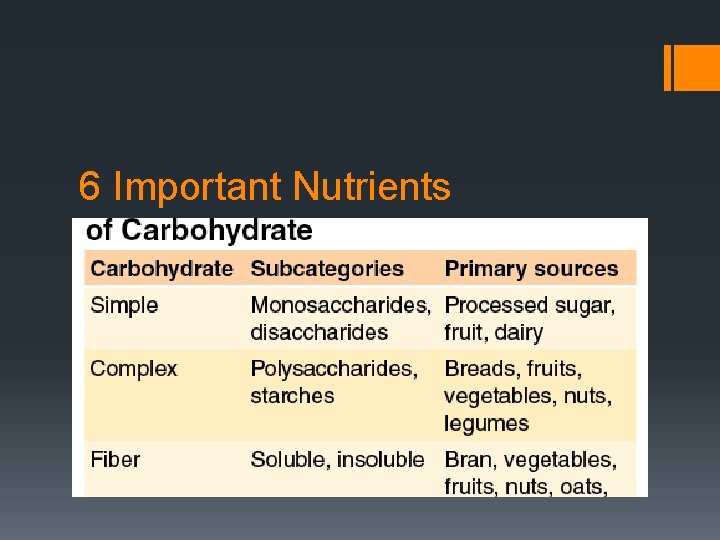
6 most important Nutrients § 1. Carbohydrates – The body’s preferred source of energy. § Sugars, Starches, and Fibers § During digestion, carbs are broken down into glucose (fuel sugar). The glucose is transferred through your blood stream to different areas where it’s broken down into energy. § Glucose isn’t used right away, it is stored in the liver or muscles as a starch called GLYCOGEN. Or it is stored as body fat. § 45% - 65% of your caloric intake should be carbs
6 Important Nutrients
6 Important Nutrients § 2. Fats (Lipids) – Provides long term energy, insulation, and cushioning. § § Carry fat soluble vitamins into the bloodstream Provides essential fatty acids Helps satisfy hunger, but takes longer to digest. Under 30% of your daily caloric intake
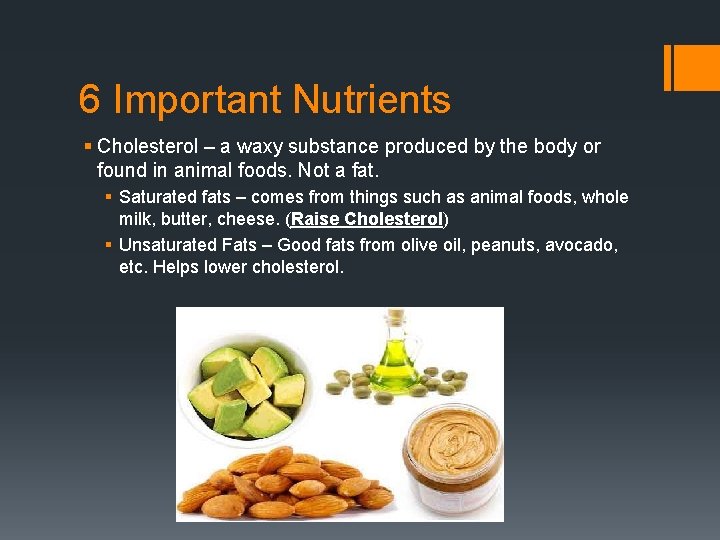
6 Important Nutrients § Cholesterol – a waxy substance produced by the body or found in animal foods. Not a fat. § Saturated fats – comes from things such as animal foods, whole milk, butter, cheese. (Raise Cholesterol) § Unsaturated Fats – Good fats from olive oil, peanuts, avocado, etc. Helps lower cholesterol.
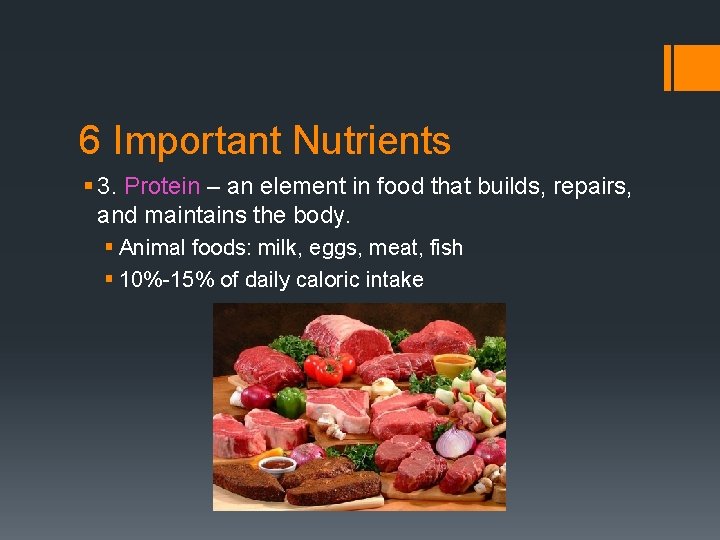
6 Important Nutrients § 3. Protein – an element in food that builds, repairs, and maintains the body. § Animal foods: milk, eggs, meat, fish § 10%-15% of daily caloric intake
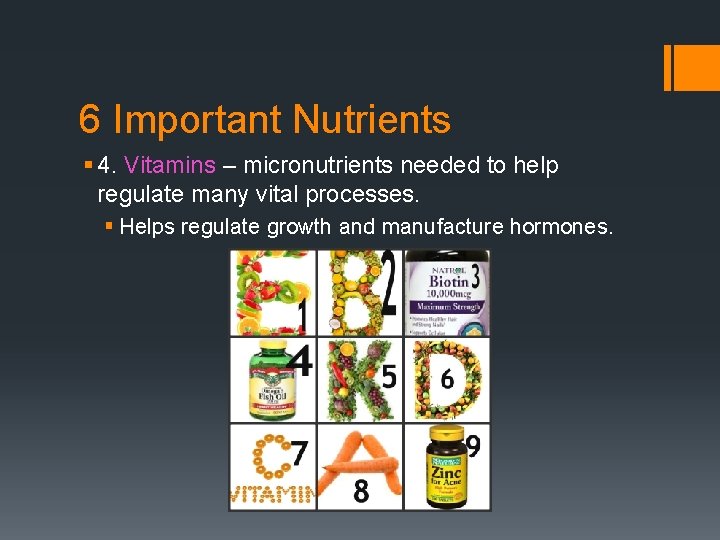
6 Important Nutrients § 4. Vitamins – micronutrients needed to help regulate many vital processes. § Helps regulate growth and manufacture hormones.
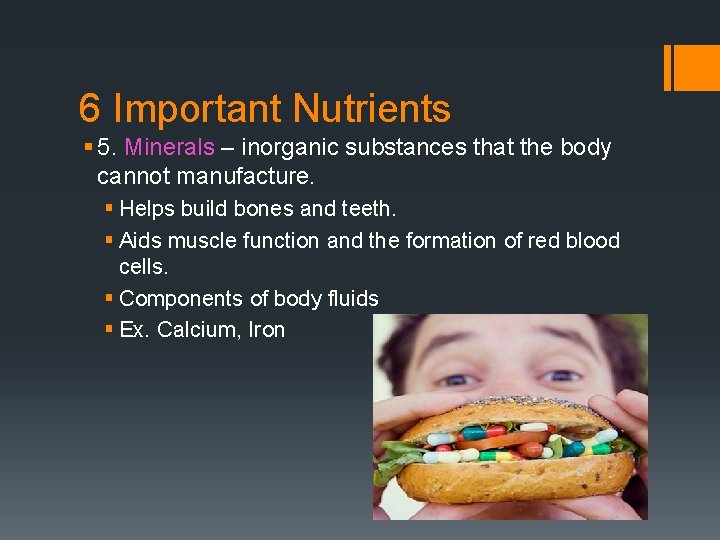
6 Important Nutrients § 5. Minerals – inorganic substances that the body cannot manufacture. § Helps build bones and teeth. § Aids muscle function and the formation of red blood cells. § Components of body fluids § Ex. Calcium, Iron
6 Important Nutrients § 6. Water – The bodies most essential nutrient § Regulator § Transports waste from cells § Lubricates joints and mucous membranes § Swallow, digest, absorb nutrients, and eliminates waste. § Temperature control § 2/3 of our body is made of water § Dehydration – excessive water loss from body