
Nutrition The life function by which organisms obtain
Nutrition The life function by which organisms obtain materials for Energy, Growth, Repair and other Life Functions
I. Nutrition and Nutrients Nutrition: the study of food and its effects on the body. A. Nutrients – Substances in food that supply the energy and raw materials for growth repair and maintenance. 1. Water- the most important nutrient. -Water is essential for many of the body’s chemical reactions. -Water makes up the majority of fluids such as blood. -Water is constantly being lost to the environment as breath vapor, urine and sweat.
I. Nutrition and Nutrients 2. Carbohydrates- The main source of energy for cellular respiration. 3. Proteins- Raw materials for growth, repair and control of the body. 4. Lipids- Insulate the body, protect organs and store excess food energy. 5. Vitamins- Organic molecules that help regulate the body’s chemical reactions. 6. Minerals- Inorganic nutrients that the body needs to function properly.
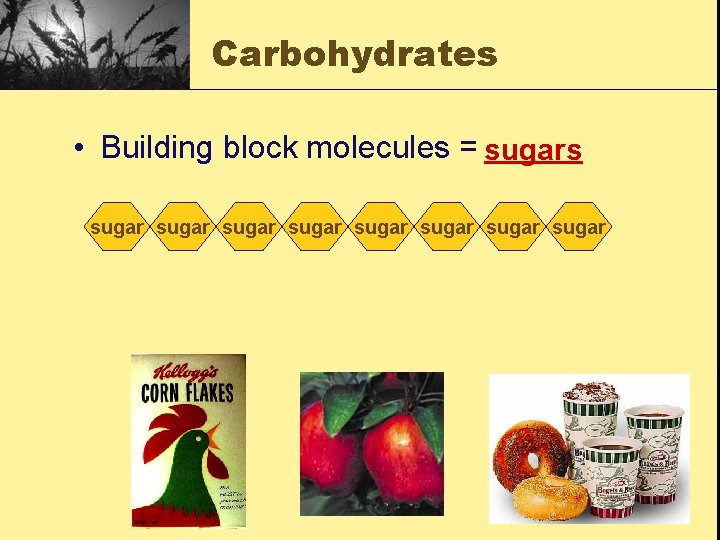
Carbohydrates • Building block molecules = sugars sugar sugar
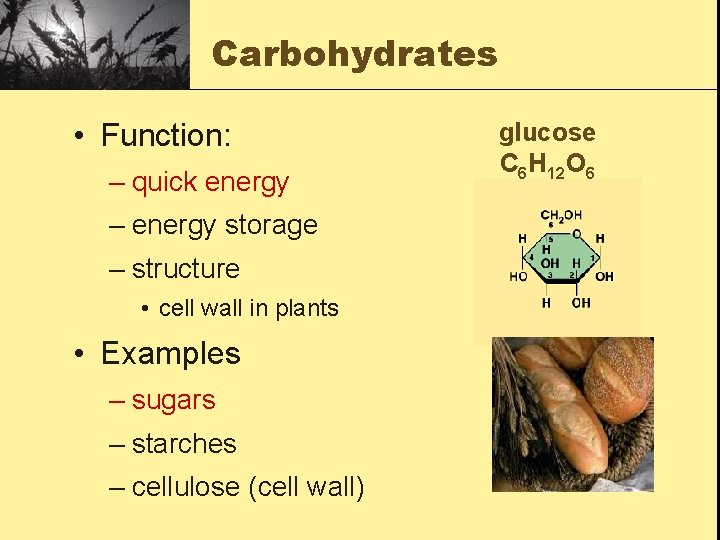
Carbohydrates • Function: – quick energy – energy storage – structure • cell wall in plants • Examples – sugars – starches – cellulose (cell wall) glucose C 6 H 12 O 6
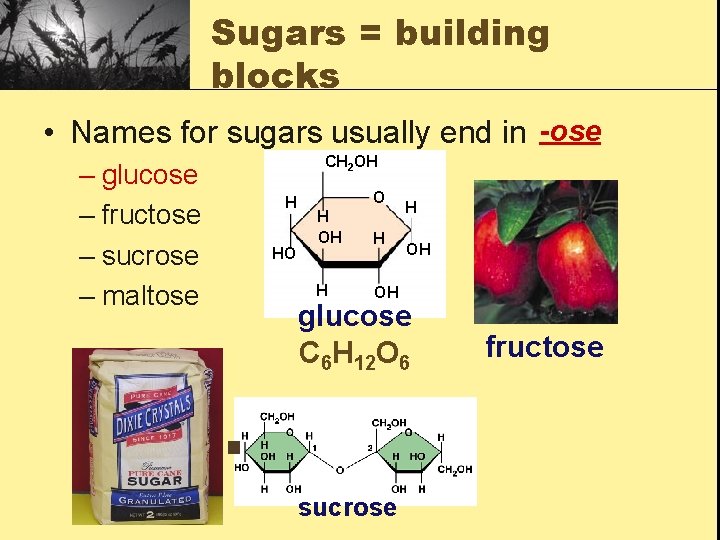
Sugars = building blocks • Names for sugars usually end in -ose – glucose – fructose – sucrose – maltose CH 2 OH H HO O H OH glucose C 6 H 12 O 6 sucrose fructose
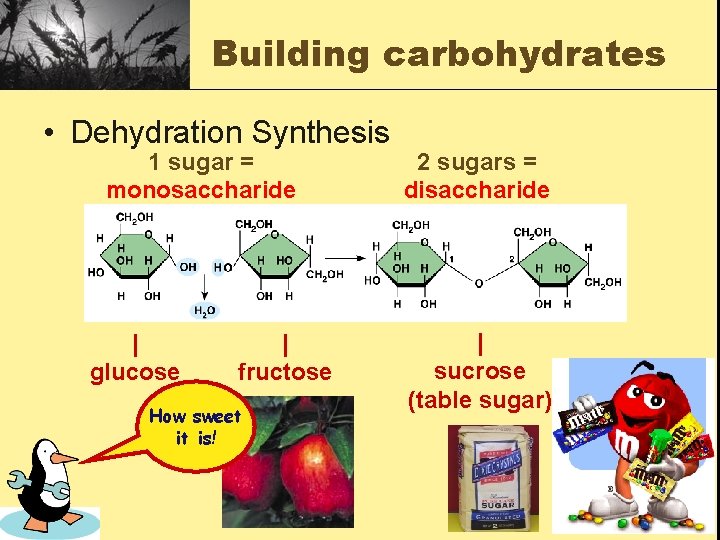
Building carbohydrates • Dehydration Synthesis 1 sugar = monosaccharide | glucose | fructose How sweet it is! 2 sugars = disaccharide | sucrose (table sugar)
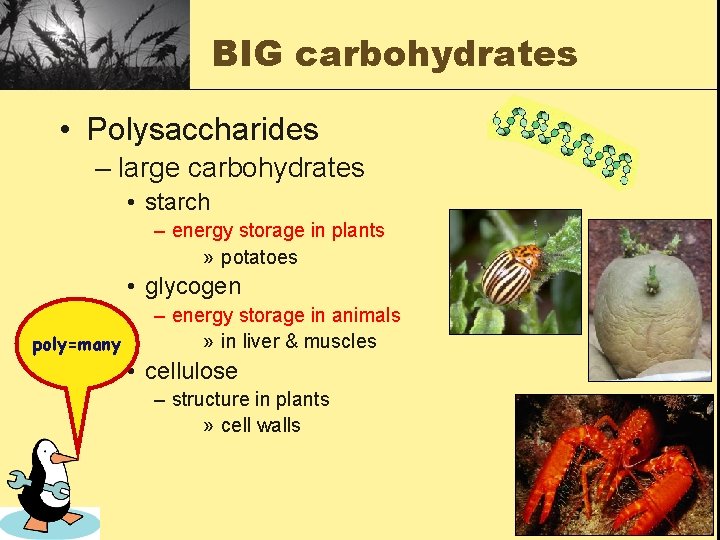
BIG carbohydrates • Polysaccharides – large carbohydrates • starch – energy storage in plants » potatoes • glycogen poly=many – energy storage in animals » in liver & muscles • cellulose – structure in plants » cell walls
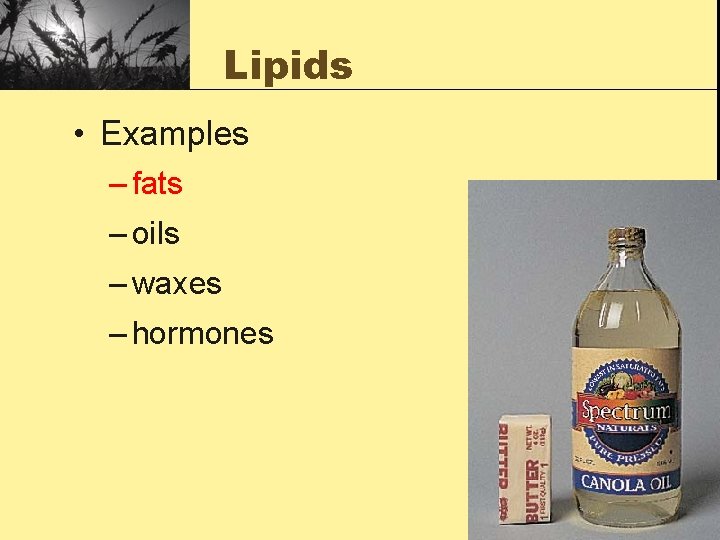
Lipids • Examples – fats – oils – waxes – hormones 2003 -2004
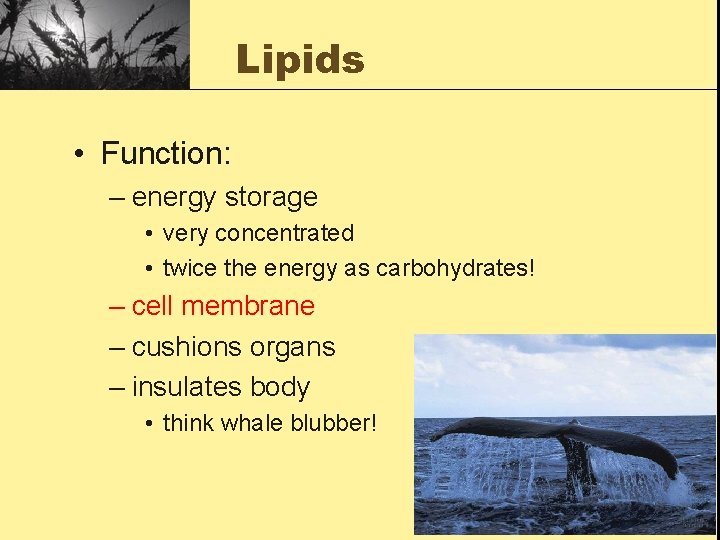
Lipids • Function: – energy storage • very concentrated • twice the energy as carbohydrates! – cell membrane – cushions organs – insulates body • think whale blubber! 2003 -2004
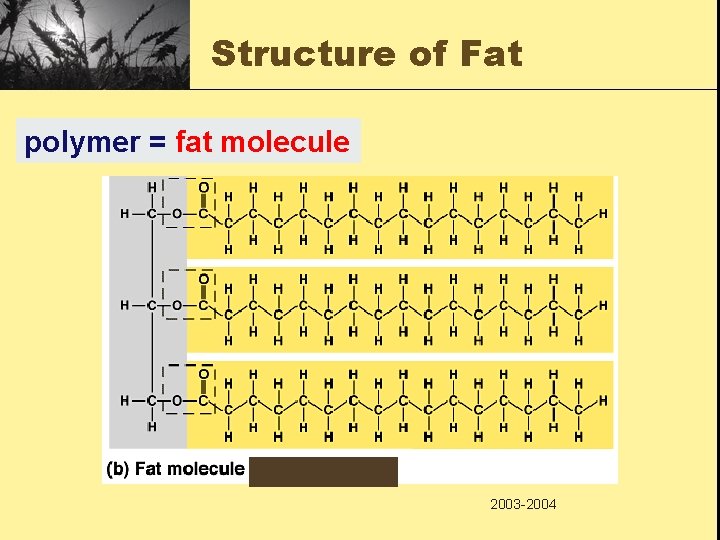
Structure of Fat polymer = fat molecule 2003 -2004
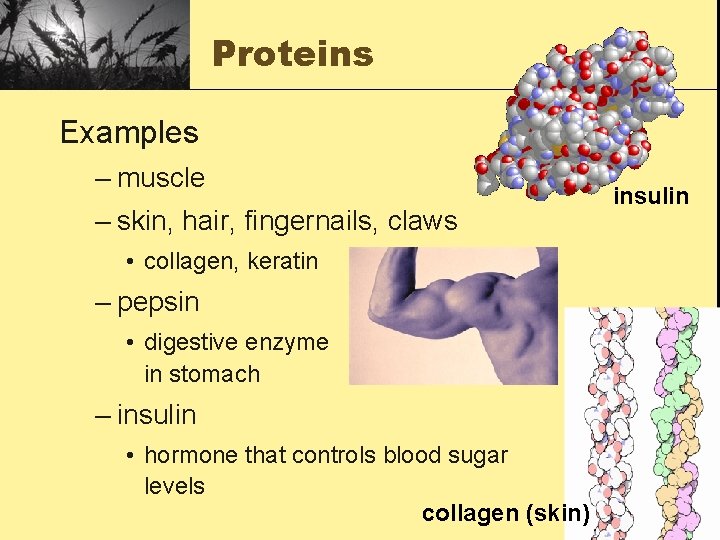
Proteins Examples – muscle – skin, hair, fingernails, claws • collagen, keratin – pepsin • digestive enzyme in stomach – insulin • hormone that controls blood sugar levels collagen (skin) insulin
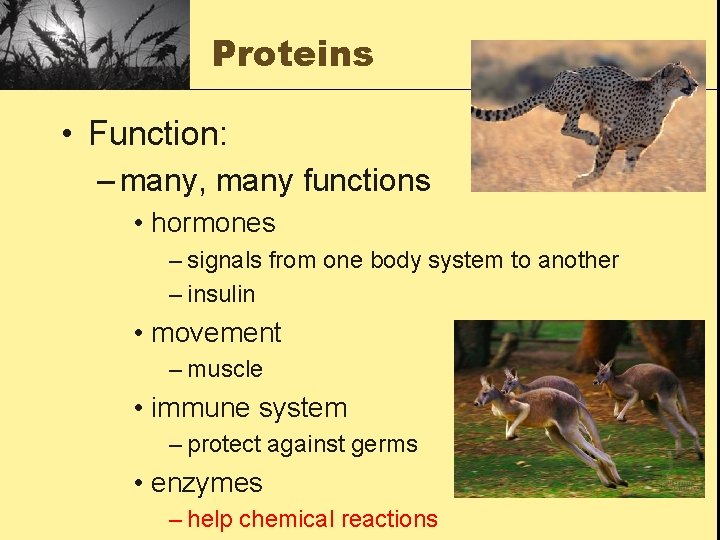
Proteins • Function: – many, many functions • hormones – signals from one body system to another – insulin • movement – muscle • immune system – protect against germs • enzymes – help chemical reactions
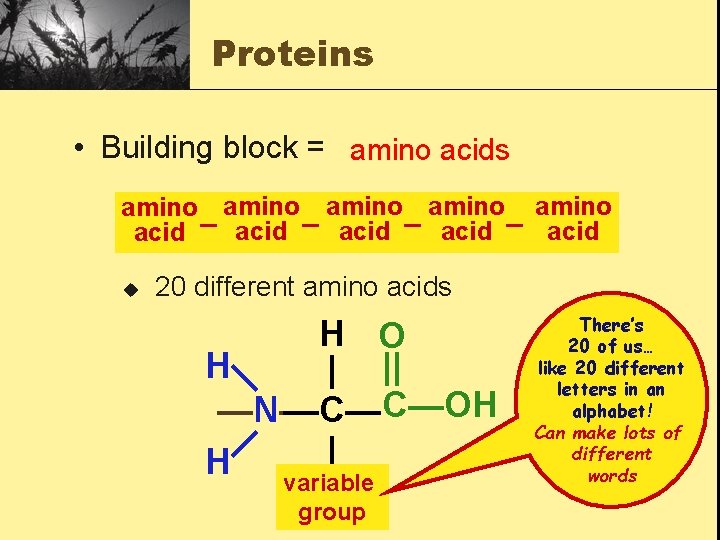
Proteins • Building block = amino acids amino amino acid – acid u 20 different amino acids H O H | || —N— —C—C—OH | H variable group There’s 20 of us… like 20 different letters in an alphabet! Can make lots of different words
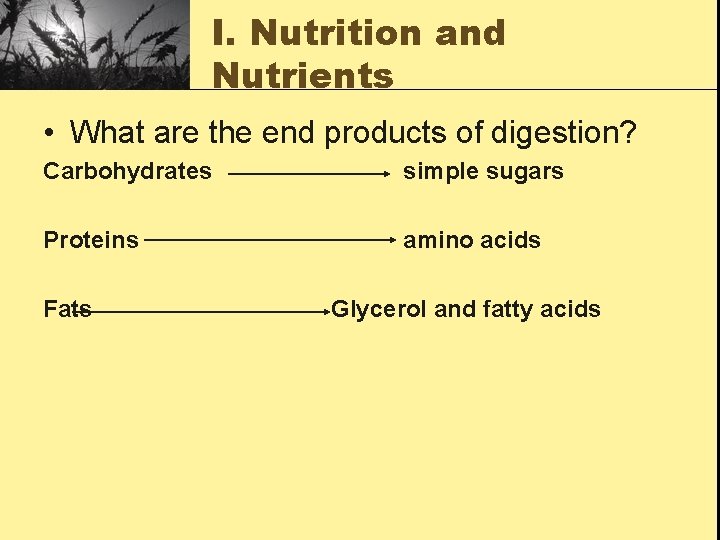
I. Nutrition and Nutrients • What are the end products of digestion? Carbohydrates simple sugars Proteins amino acids Fats Glycerol and fatty acids
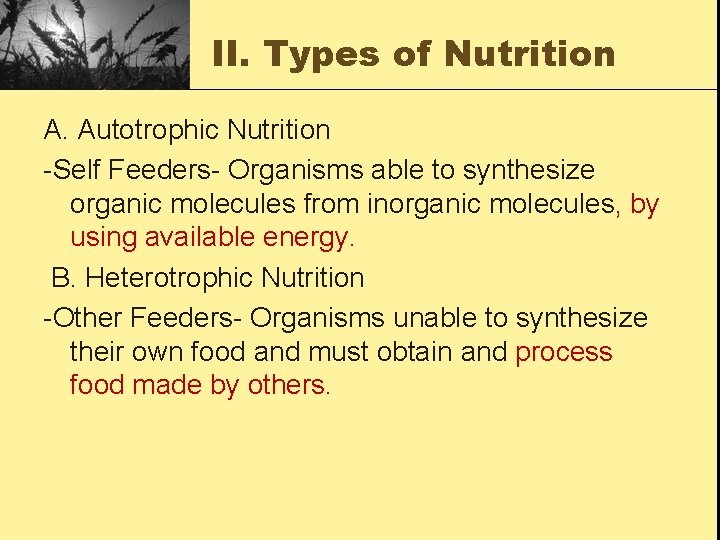
II. Types of Nutrition A. Autotrophic Nutrition -Self Feeders- Organisms able to synthesize organic molecules from inorganic molecules, by using available energy. B. Heterotrophic Nutrition -Other Feeders- Organisms unable to synthesize their own food and must obtain and process food made by others.
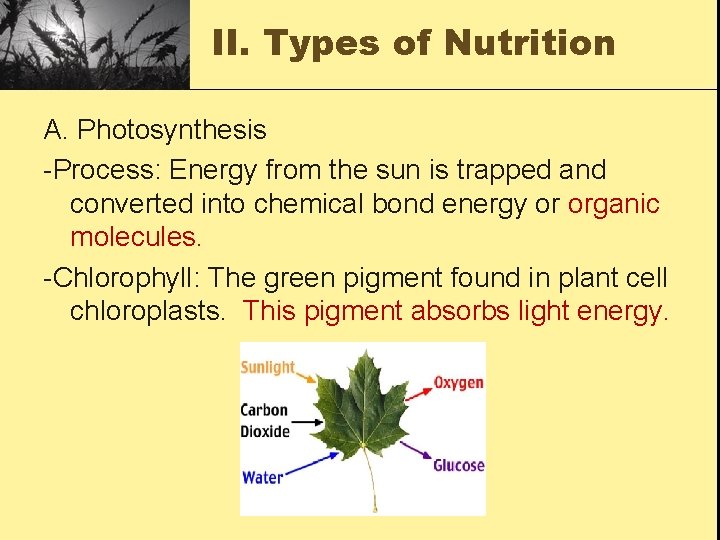
II. Types of Nutrition A. Photosynthesis -Process: Energy from the sun is trapped and converted into chemical bond energy or organic molecules. -Chlorophyll: The green pigment found in plant cell chloroplasts. This pigment absorbs light energy.
II. Types of Nutrition -Results: Glucose is made through the process of photosynthesis. Glucose (C 6 H 12 O 6) is used for: • A source of energy for respiration. • It also can be converted into starch or fat for long term energy storage.
II. Heterotrophic Nutrition 1. Ingestion- When organisms take in preformed organic molecules (food) from the environment. Digestion - Food is broken down into smaller substances that are small enough to be absorbed by the organism. -Mechanical Digestion: Physically breaking foods into smaller pieces. Usually by chewing or grinding
II. Heterotrophic Nutrition -Chemical Digestion: Using chemicals called enzymes to break chemical bonds so that foods are broken down into particles small enough to absorb into the cells. 3. Egestion – Indigestible food parts are eliminated from the body.
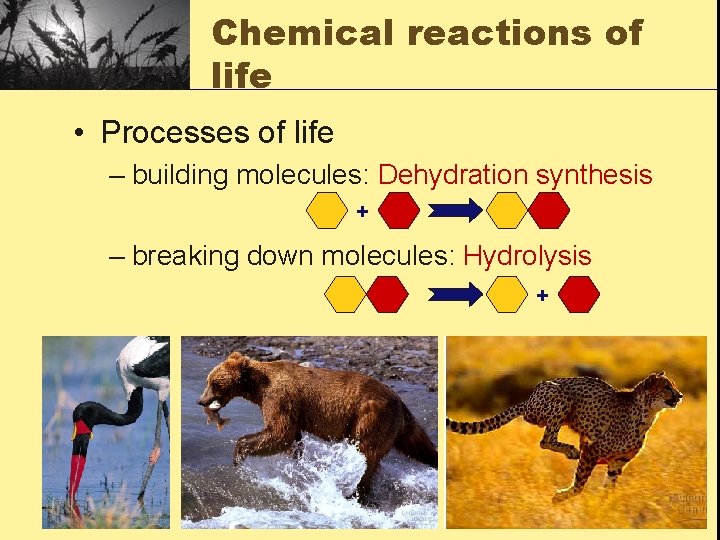
Chemical reactions of life • Processes of life – building molecules: Dehydration synthesis + – breaking down molecules: Hydrolysis +
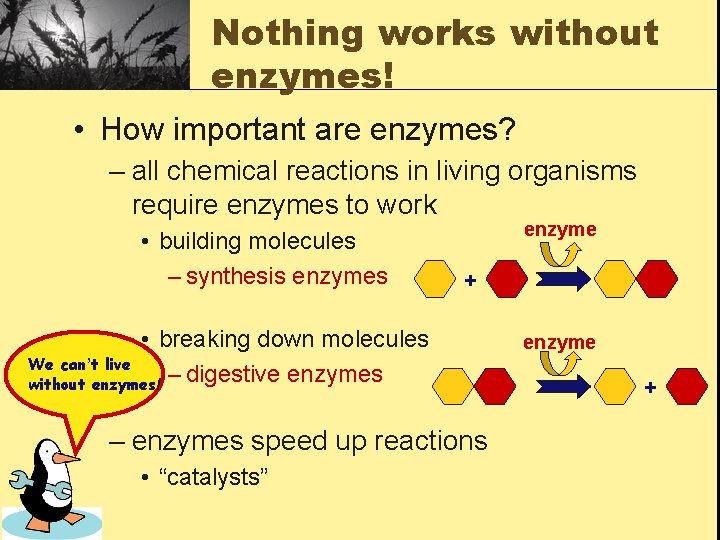
Nothing works without enzymes! • How important are enzymes? – all chemical reactions in living organisms require enzymes to work • building molecules – synthesis enzyme + • breaking down molecules We can’t live without enzymes! – digestive enzymes – enzymes speed up reactions • “catalysts” enzyme +
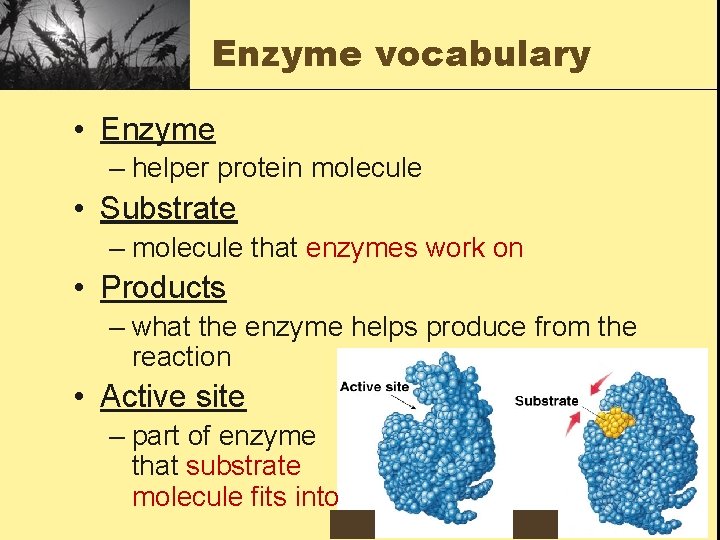
Enzyme vocabulary • Enzyme – helper protein molecule • Substrate – molecule that enzymes work on • Products – what the enzyme helps produce from the reaction • Active site – part of enzyme that substrate molecule fits into
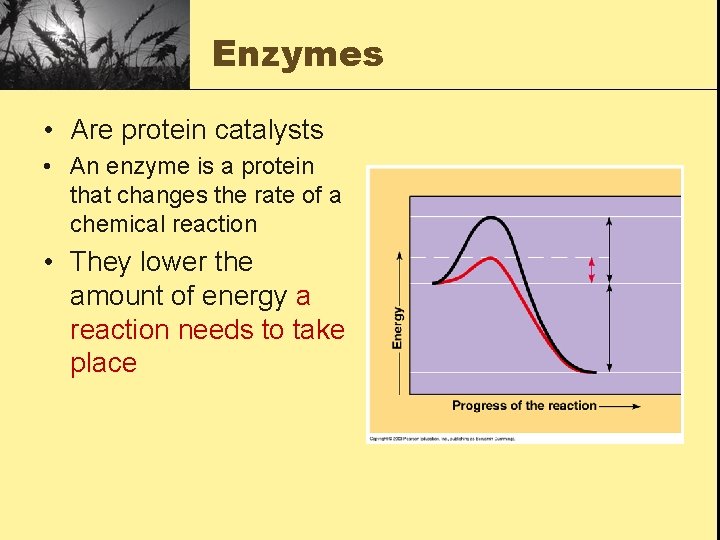
Enzymes • Are protein catalysts • An enzyme is a protein that changes the rate of a chemical reaction • They lower the amount of energy a reaction needs to take place
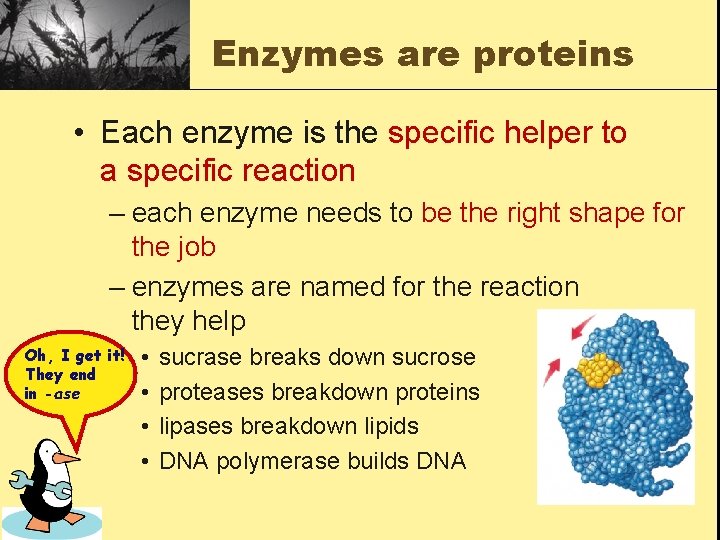
Enzymes are proteins • Each enzyme is the specific helper to a specific reaction – each enzyme needs to be the right shape for the job – enzymes are named for the reaction they help Oh, I get it! They end in -ase • • sucrase breaks down sucrose proteases breakdown proteins lipases breakdown lipids DNA polymerase builds DNA
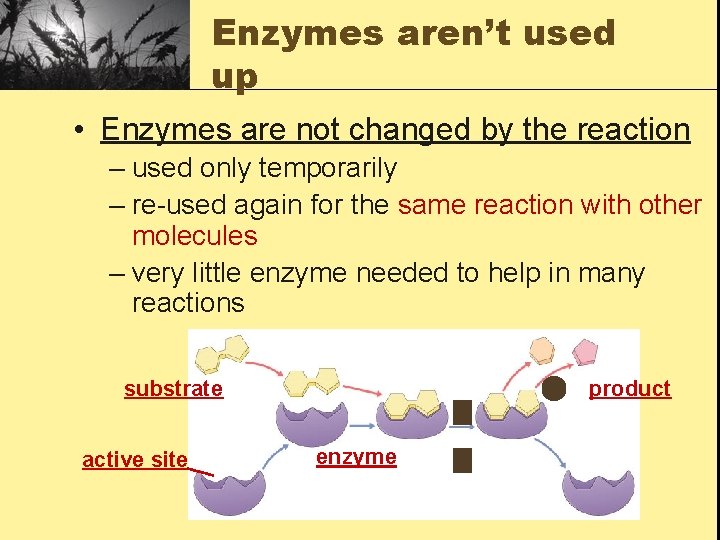
Enzymes aren’t used up • Enzymes are not changed by the reaction – used only temporarily – re-used again for the same reaction with other molecules – very little enzyme needed to help in many reactions substrate active site product enzyme
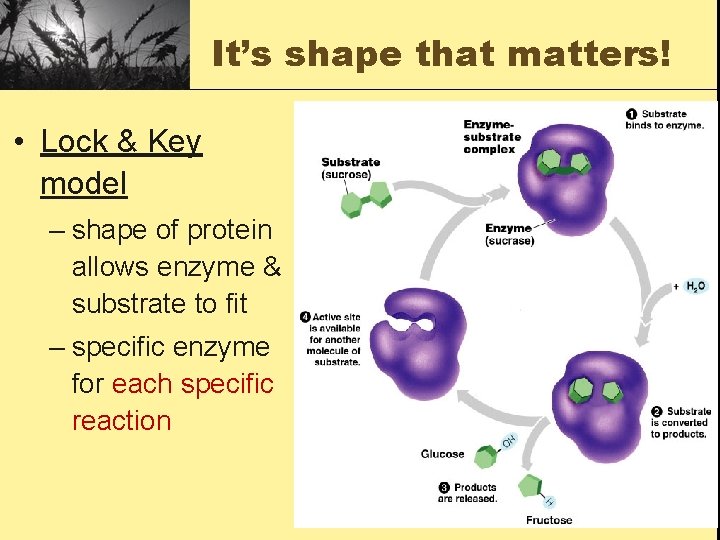
It’s shape that matters! • Lock & Key model – shape of protein allows enzyme & substrate to fit – specific enzyme for each specific reaction
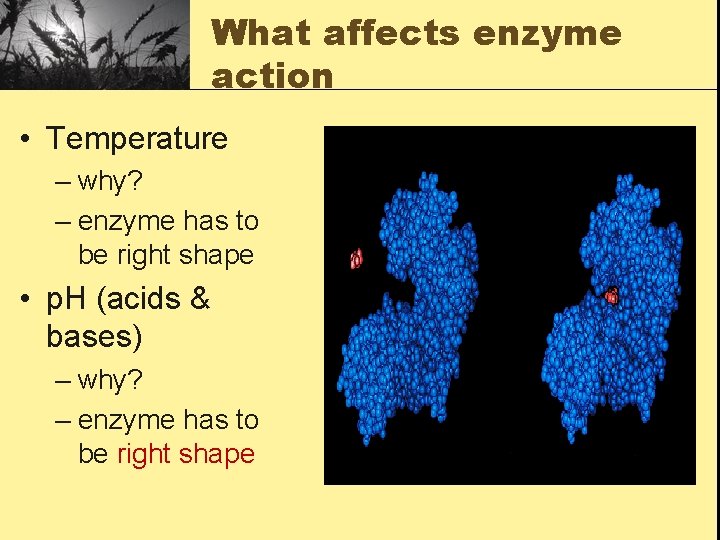
What affects enzyme action • Temperature – why? – enzyme has to be right shape • p. H (acids & bases) – why? – enzyme has to be right shape
Temperature • Effect on rates of enzyme activity – Best temperature • human enzymes – 35°- 40°C (body temp = 37°C) – Raise temperature (boiling) • denature protein = unfold = lose shape – Lower temperature T° • Lowers activity of enzyme
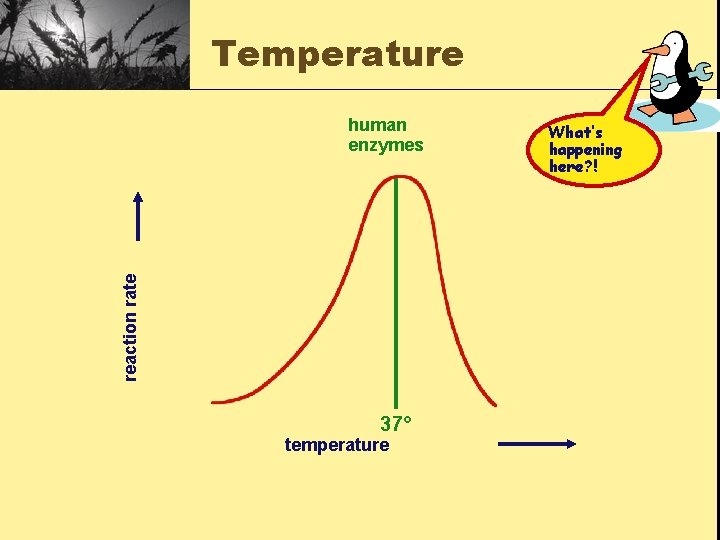
Temperature reaction rate human enzymes 37° temperature What’s happening here? !
p. H • Effect on rates of enzyme activity – changes in p. H changes protein shape~ denatures – most human enzymes = p. H 6 -8 • depends on where in body • pepsin (stomach) = p. H 3 • trypsin (small intestines) = p. H 8
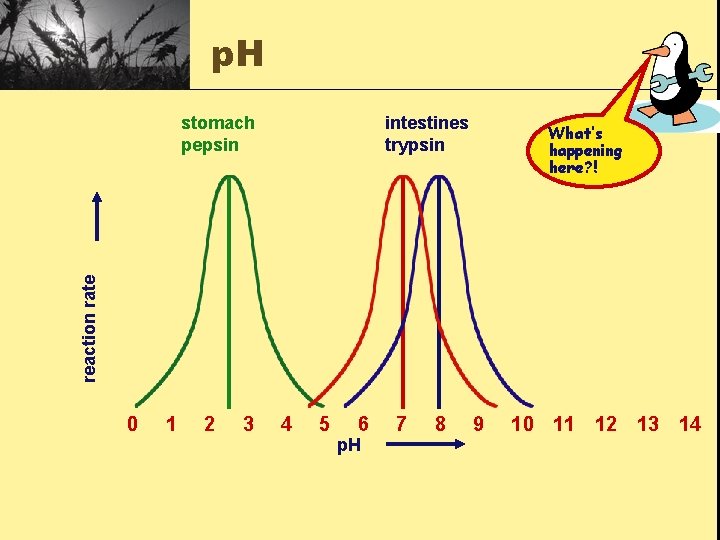
p. H intestines trypsin What’s happening here? ! reaction rate stomach pepsin 0 1 2 3 4 5 6 p. H 7 8 9 10 11 12 13 14
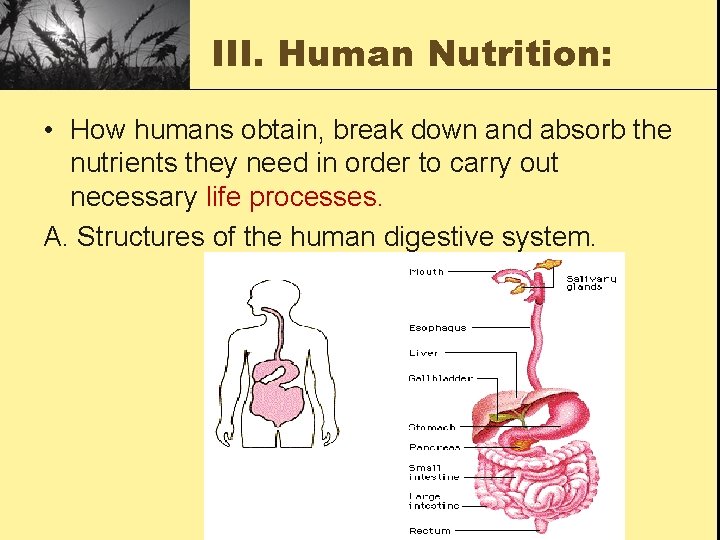
III. Human Nutrition: • How humans obtain, break down and absorb the nutrients they need in order to carry out necessary life processes. A. Structures of the human digestive system.
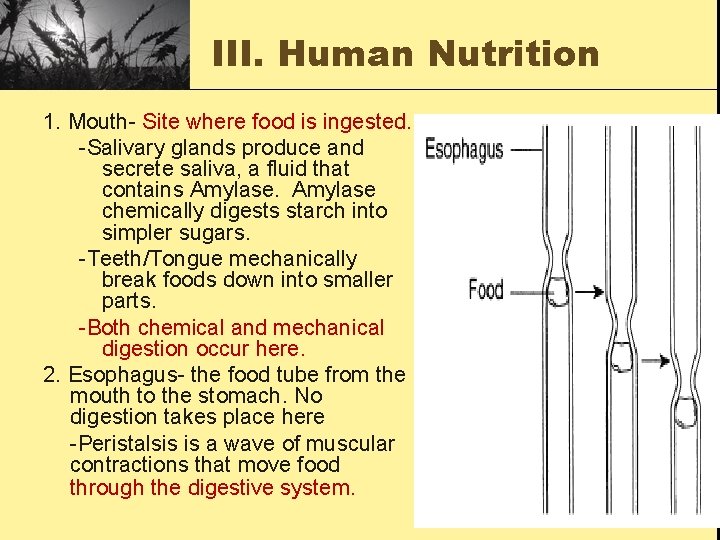
III. Human Nutrition 1. Mouth- Site where food is ingested. -Salivary glands produce and secrete saliva, a fluid that contains Amylase chemically digests starch into simpler sugars. -Teeth/Tongue mechanically break foods down into smaller parts. -Both chemical and mechanical digestion occur here. 2. Esophagus- the food tube from the mouth to the stomach. No digestion takes place here -Peristalsis is a wave of muscular contractions that move food through the digestive system.
III. Human Nutrition 3. Stomach- Muscular sac-like organ used to temporarily store and digest food. – The stomach churns and mixes the food into a liquid while acids and enzymes chemically digest proteins. • Both chemical and mechanical digestion occur here. – Mucus protects the lining of the stomach from being digested along with the proteins in the food. 4. Small Intestine- A long narrow tube where digestion is completed and nutrients are absorbed into the bloodstream
III. Human Nutrition • Enzymes from the Pancreas complete the chemical digestion of foods: – – Protease + Proteins = Amino Acids Lipases + Lipids = Fatty Acids and Glycerol Disacchridases + Disaccharides = simple sugars These nutrients are small enough to be absorbed into the cells of the small intestine. – Absorption is aided by Villi, small fingerlike projections that increase the surface area inside the small intestine. • Capillaries are small blood vessels that carry nutrients to the rest of the body.
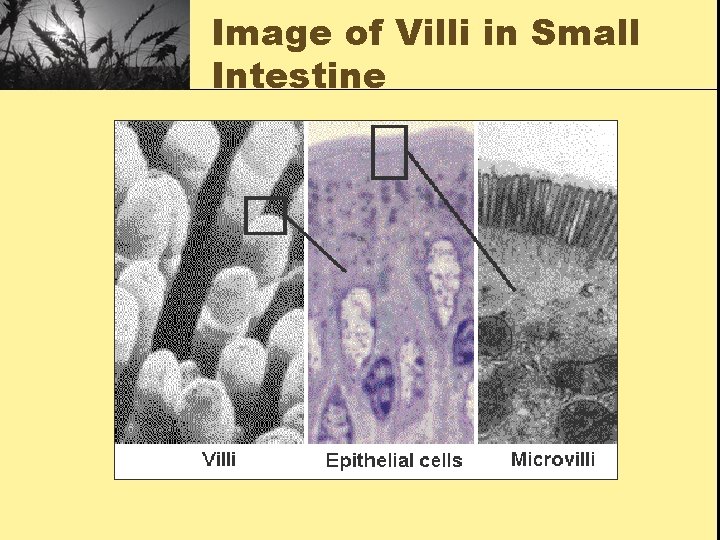
Image of Villi in Small Intestine
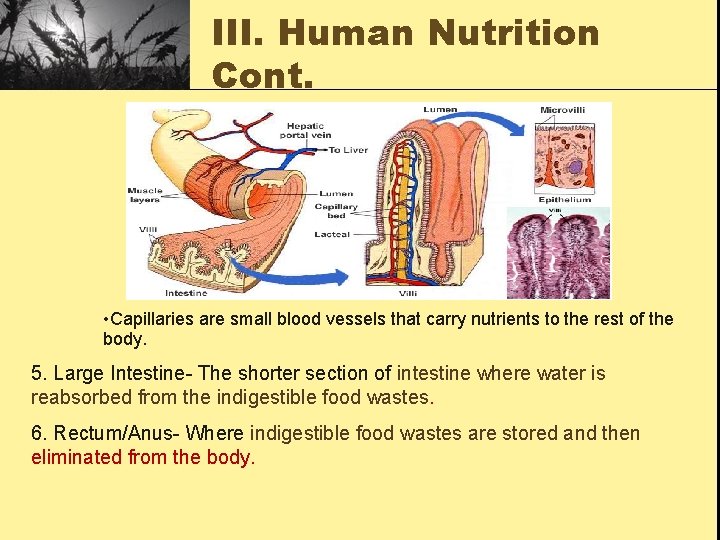
III. Human Nutrition Cont. • Capillaries are small blood vessels that carry nutrients to the rest of the body. 5. Large Intestine- The shorter section of intestine where water is reabsorbed from the indigestible food wastes. 6. Rectum/Anus- Where indigestible food wastes are stored and then eliminated from the body.
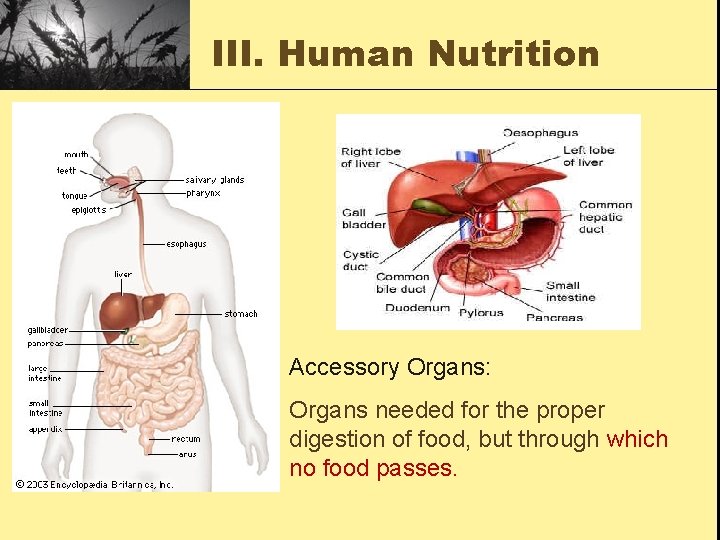
III. Human Nutrition Accessory Organs: Organs needed for the proper digestion of food, but through which no food passes.
III. Human Nutrition • Liver - Produces bile, which emulsifies fats and oils. Gallbladder-Stores bile Pancreas - Produces several enzymes for the small intestine.
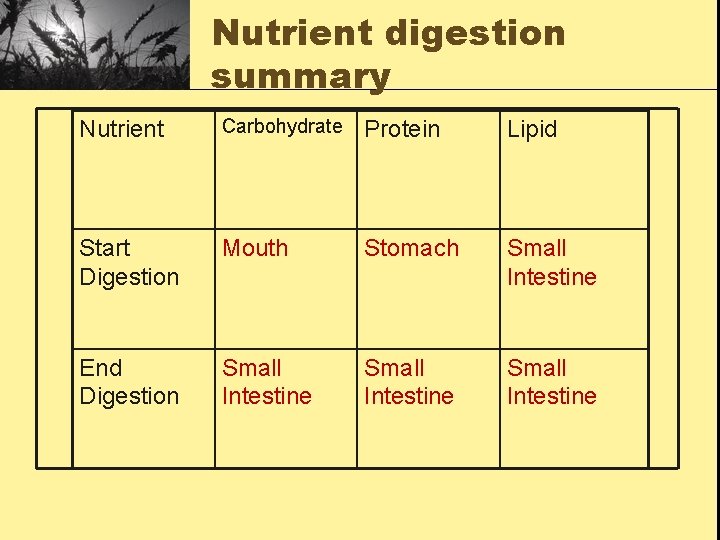
Nutrient digestion summary Nutrient Carbohydrate Protein Lipid Start Digestion Mouth Stomach Small Intestine End Digestion Small Intestine
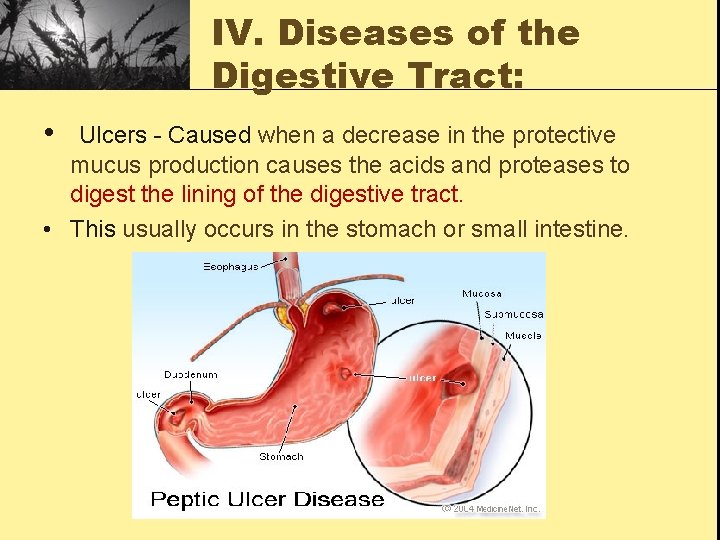
IV. Diseases of the Digestive Tract: • Ulcers - Caused when a decrease in the protective mucus production causes the acids and proteases to digest the lining of the digestive tract. • This usually occurs in the stomach or small intestine.
IV. Diseases of the Digestive Tract: • Diarrhea - Occurs when food moves too quickly through the large intestine. The large intestine does not have enough time to absorb excess water. Water is lost to the body resulting in dehydration. • Constipation - Occurs when food moves too slowly through the large intestine and too much water is absorbed back into the body.
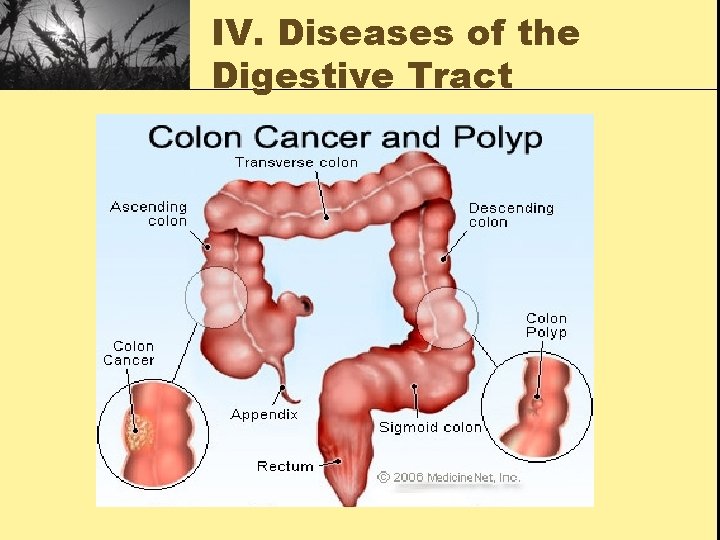
IV. Diseases of the Digestive Tract
IV. Diseases of the Digestive Tract GERD- occurs when stomach acid backs up into the esophagus, causes burning and holes in the tissue Appendicitis-inflammation of the appendix due to bacterial infection
- Slides: 45