
NUTRITION THE DIGESTIVE SYSTEM Nutrition n the process
- Slides: 34
NUTRITION THE DIGESTIVE SYSTEM
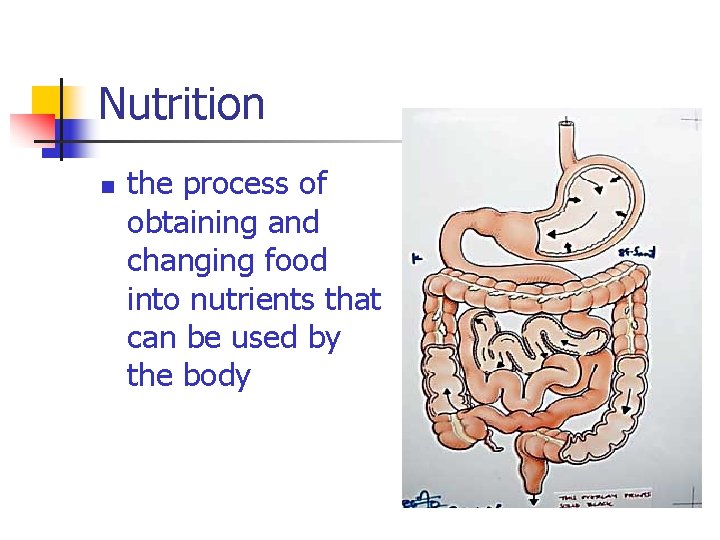
Nutrition n the process of obtaining and changing food into nutrients that can be used by the body
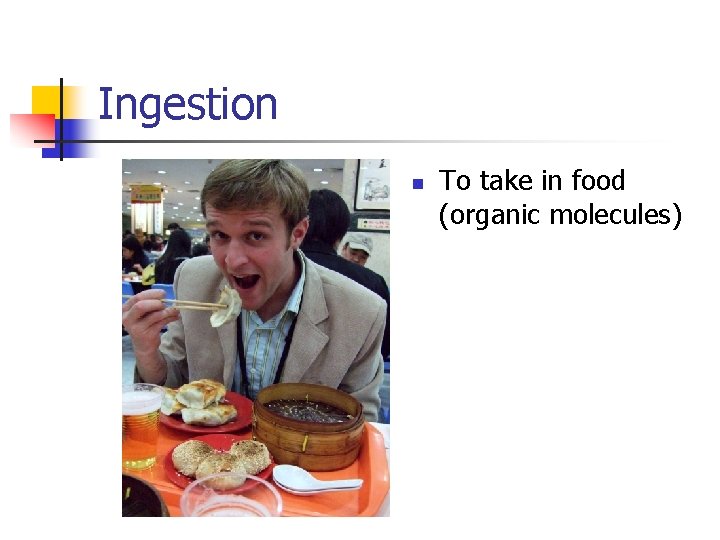
Ingestion n To take in food (organic molecules)
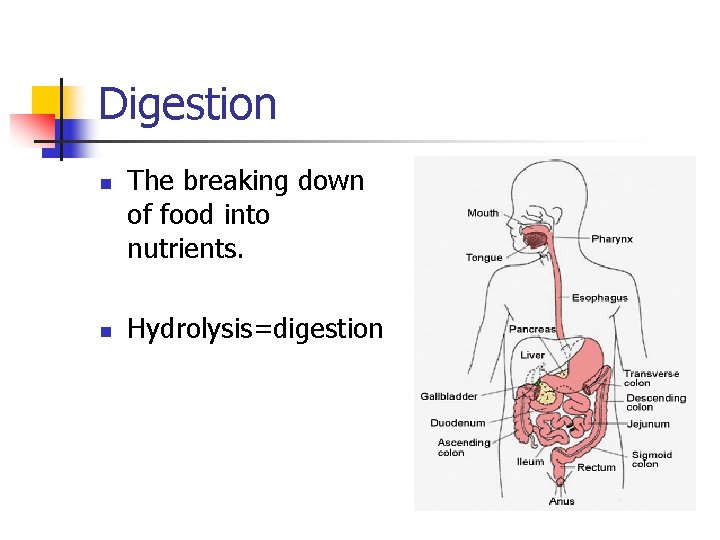
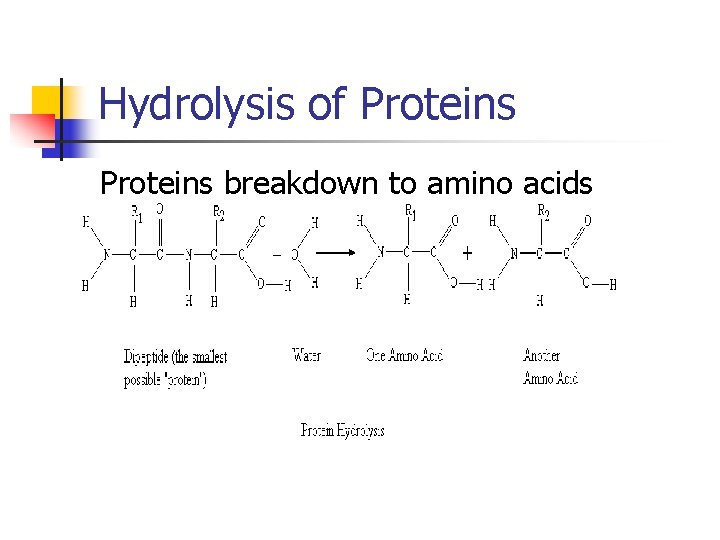
Digestion n n The breaking down of food into nutrients. Hydrolysis=digestion
Egestion n The process of releasing solid waste
Heterotroph n n An organism that obtains preformed organic molecules from the environment. An organism that must find and consume food
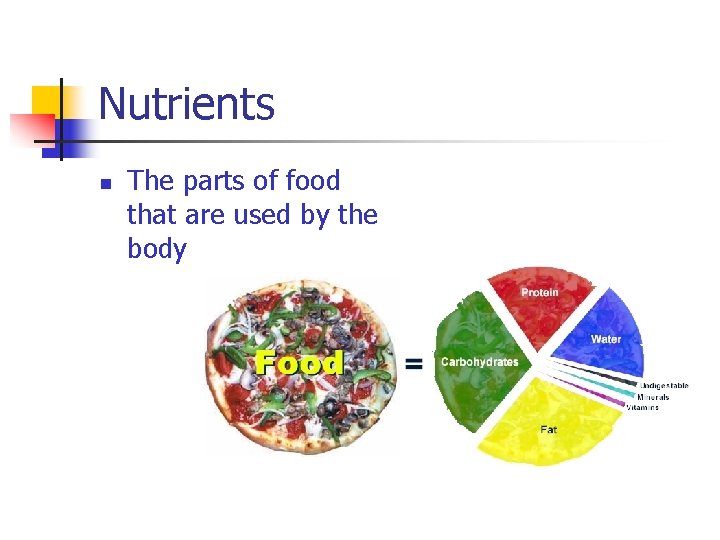
Nutrients n The parts of food that are used by the body
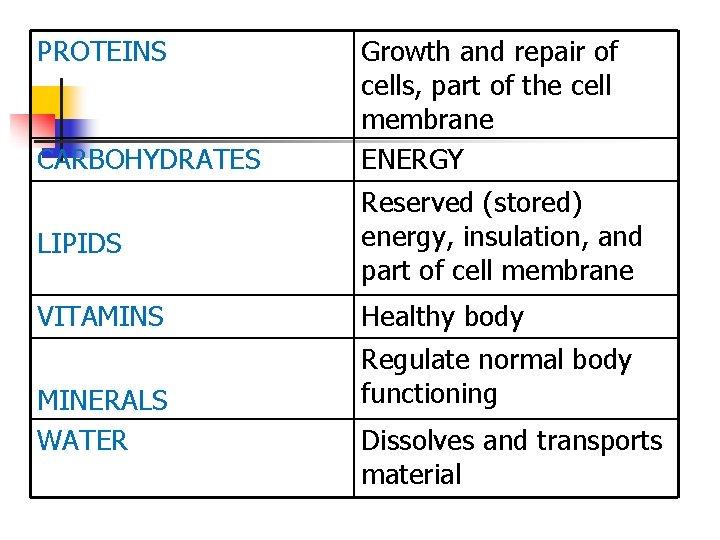
PROTEINS CARBOHYDRATES Growth and repair of cells, part of the cell membrane ENERGY LIPIDS Reserved (stored) energy, insulation, and part of cell membrane VITAMINS Healthy body MINERALS WATER Regulate normal body functioning Dissolves and transports material
Hydrolysis of Proteins breakdown to amino acids
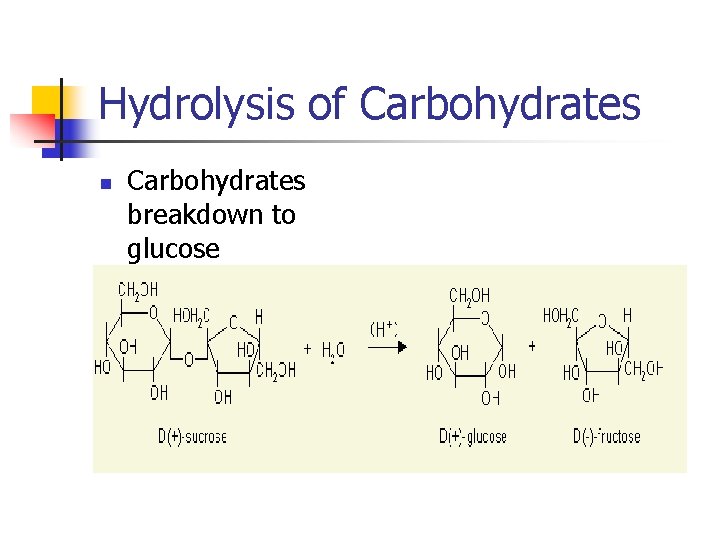
Hydrolysis of Carbohydrates n Carbohydrates breakdown to glucose
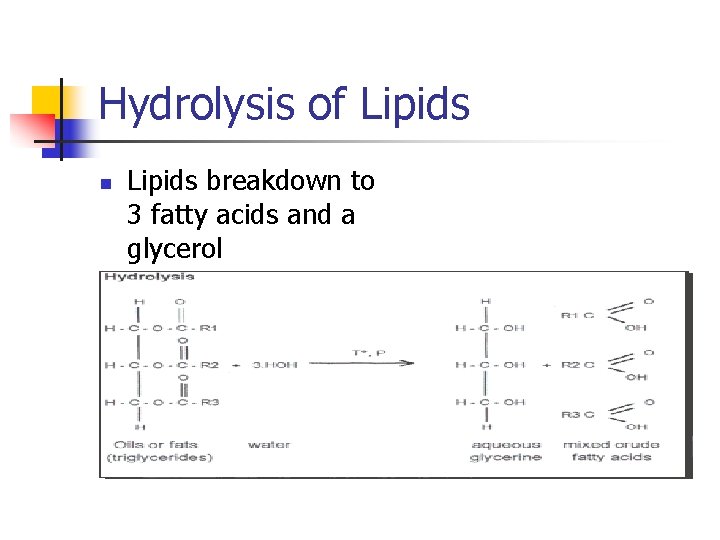
Hydrolysis of Lipids n Lipids breakdown to 3 fatty acids and a glycerol
Roughage Indigestible material
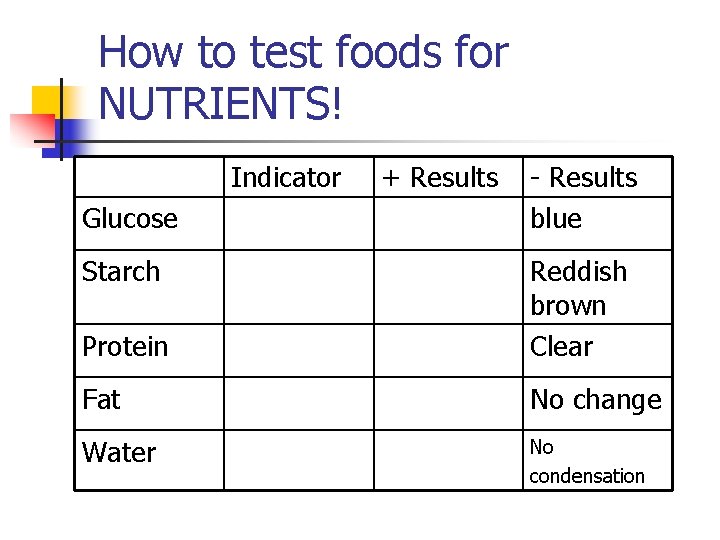
How to test foods for NUTRIENTS! Indicator Glucose Starch + Results - Results blue Protein Reddish brown Clear Fat No change Water No condensation
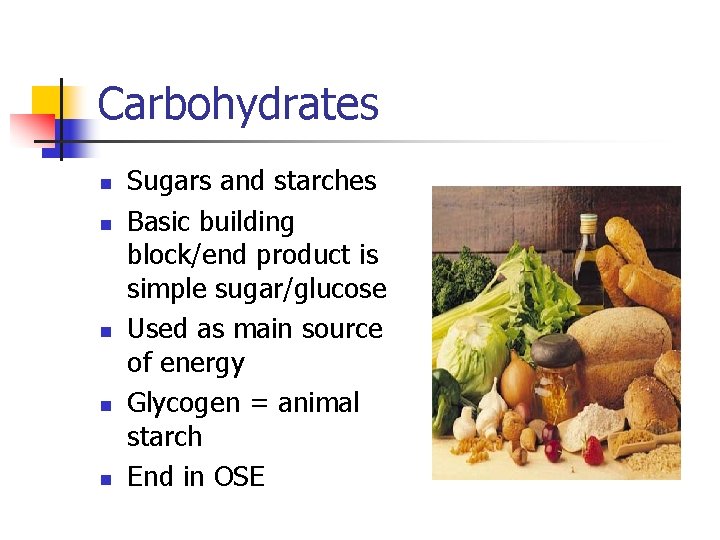
Carbohydrates n n n Sugars and starches Basic building block/end product is simple sugar/glucose Used as main source of energy Glycogen = animal starch End in OSE
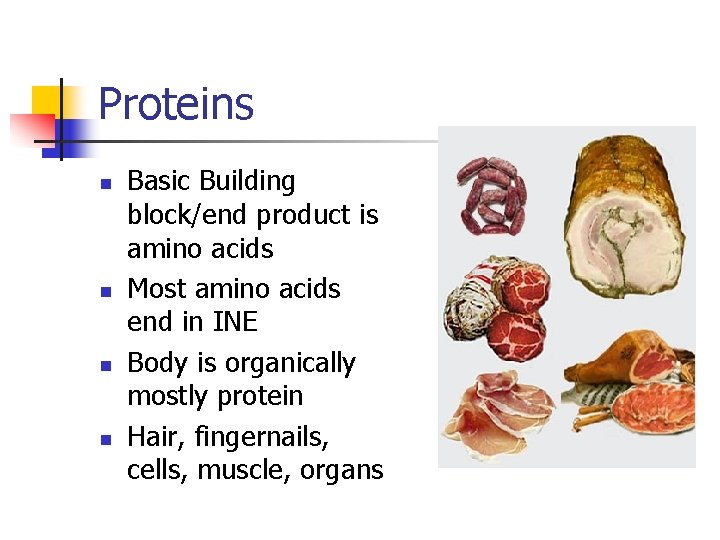
Proteins n n Basic Building block/end product is amino acids Most amino acids end in INE Body is organically mostly protein Hair, fingernails, cells, muscle, organs
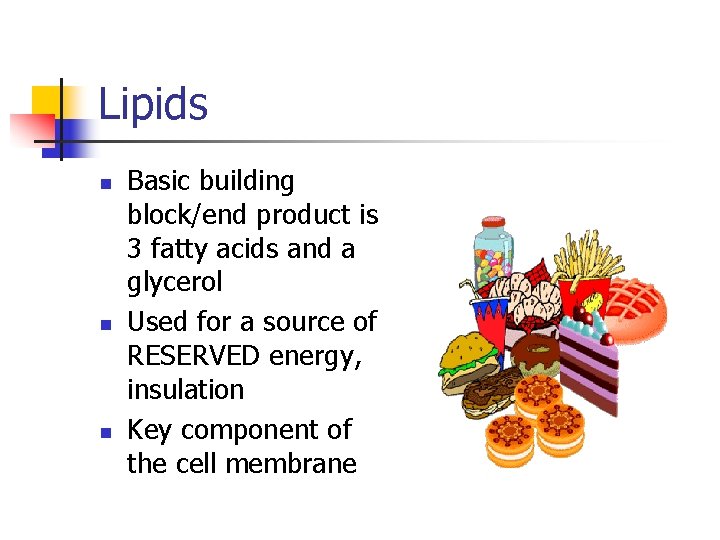
Lipids n n n Basic building block/end product is 3 fatty acids and a glycerol Used for a source of RESERVED energy, insulation Key component of the cell membrane
Mineral n n n Part of hemoglobin Development of strong teeth/bones Makes up ATP/DNA and RNA Muscle contraction Fight tooth decay n Iron (Fe) Calcium (Ca) n Phosphorous (P) n n n Potassium (K) Fluoride (F)
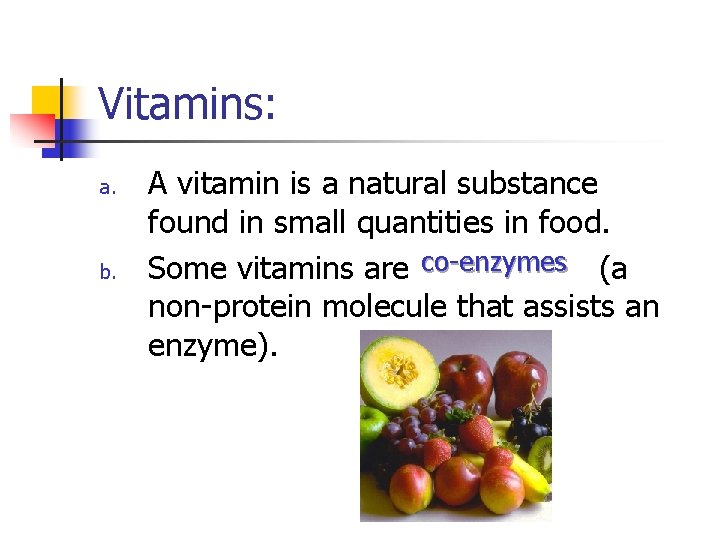
Vitamins: a. b. A vitamin is a natural substance found in small quantities in food. Some vitamins are co-enzymes (a non-protein molecule that assists an enzyme).
Vitamins n n Prevents colds Sunshine vitamin/Healthy teeth and bones Blood clotting Vision n n Vitamin C Vitamin D Vitamin K Vitamin A
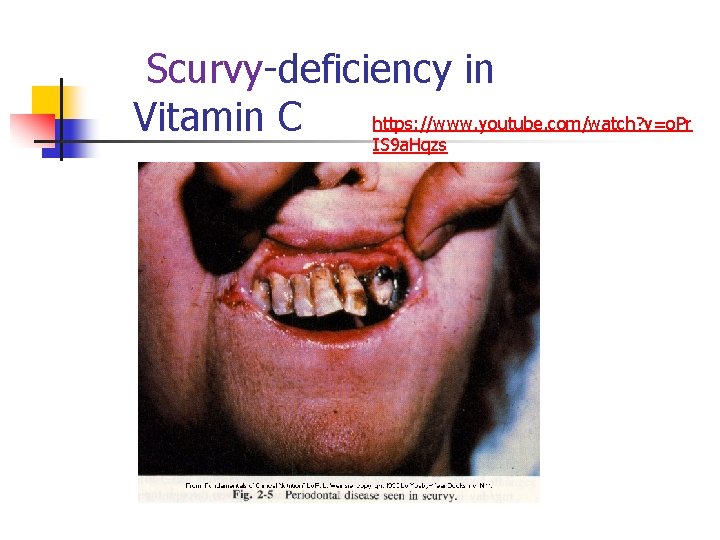
Scurvy-deficiency in https: //www. youtube. com/watch? v=o. Pr Vitamin C IS 9 a. Hqzs
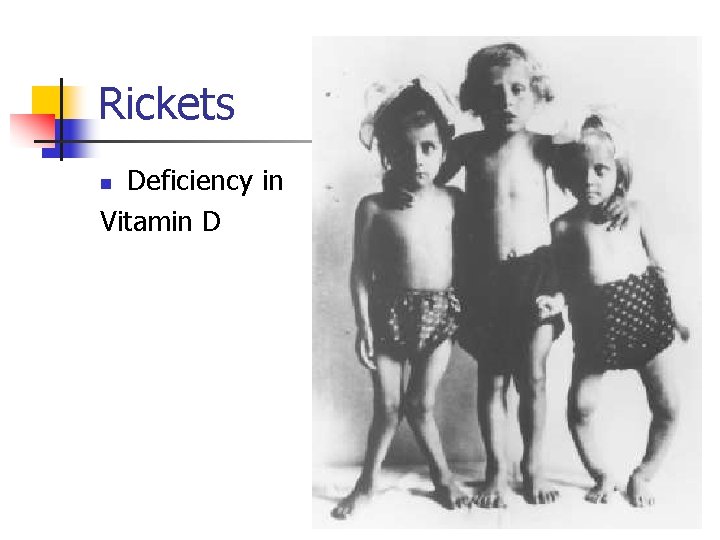
Rickets Deficiency in Vitamin D n
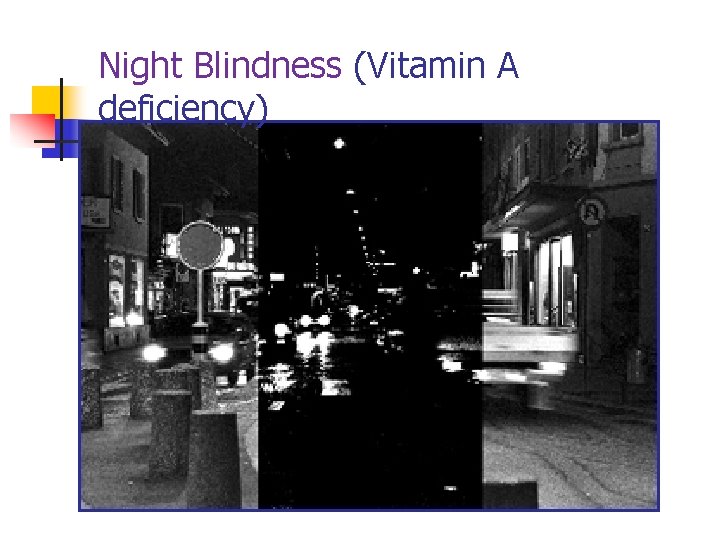
Night Blindness (Vitamin A deficiency)
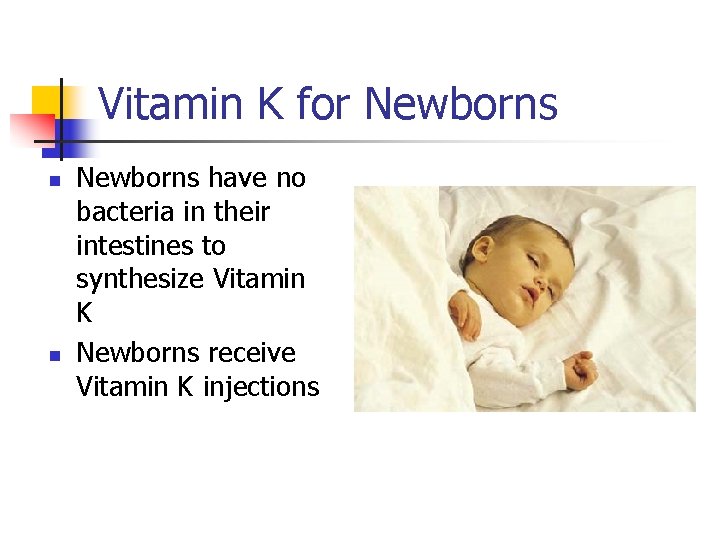
Vitamin K for Newborns n n Newborns have no bacteria in their intestines to synthesize Vitamin K Newborns receive Vitamin K injections
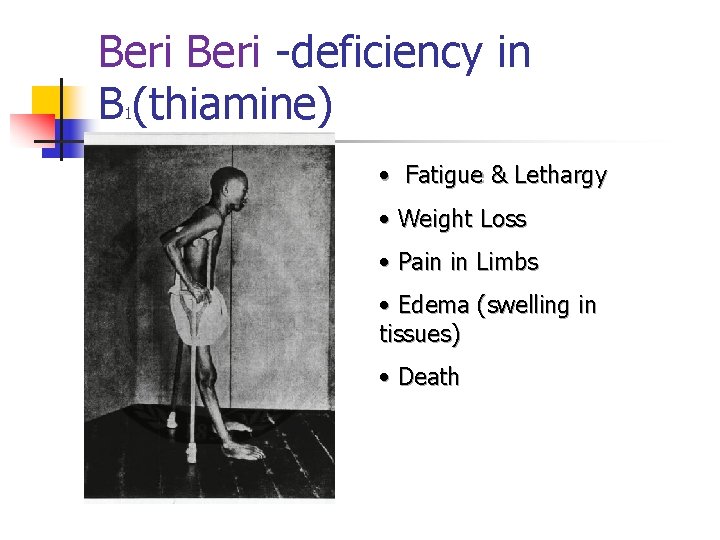
Beri -deficiency in B (thiamine) 1 • Fatigue & Lethargy • Weight Loss • Pain in Limbs • Edema (swelling in tissues) • Death
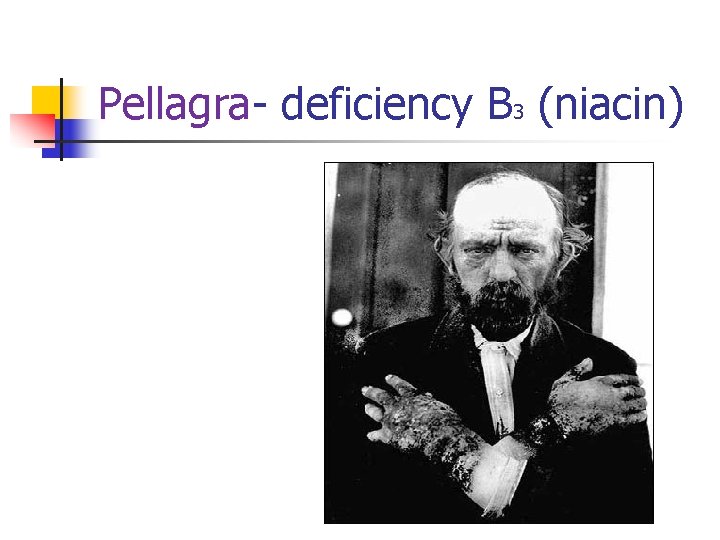
Pellagra- deficiency B 3 (niacin)
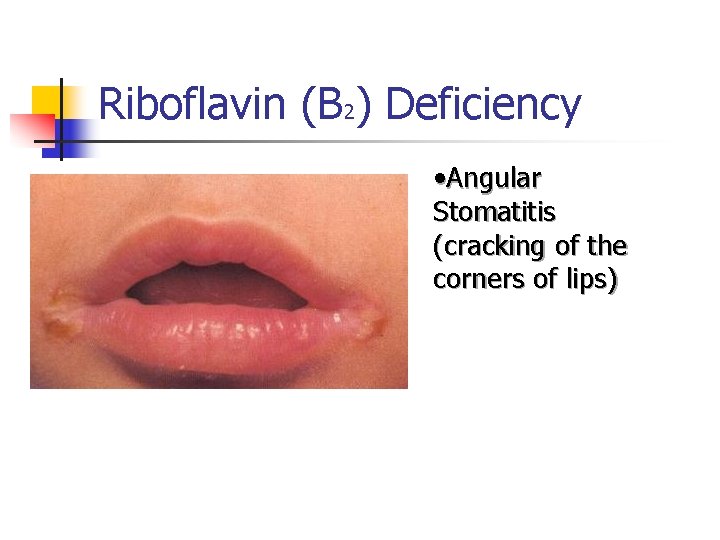
Riboflavin (B 2) Deficiency • Angular Stomatitis (cracking of the corners of lips)
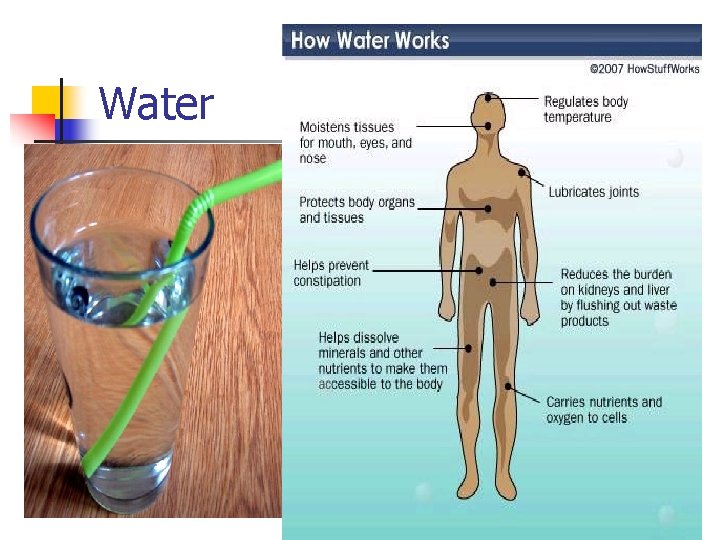
Water
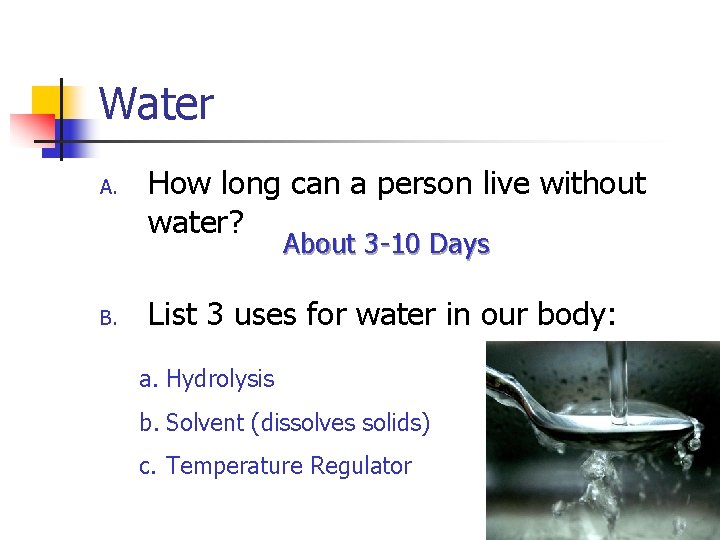
Water A. How long can a person live without water? About 3 -10 Days B. List 3 uses for water in our body: a. Hydrolysis b. Solvent (dissolves solids) c. Temperature Regulator
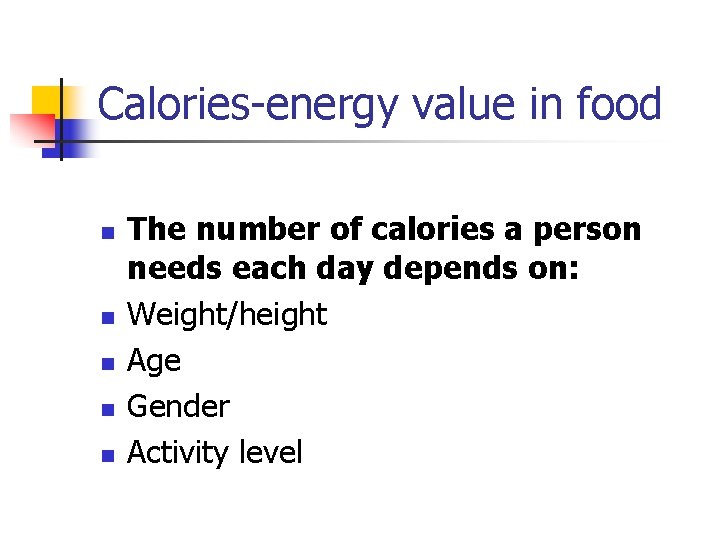
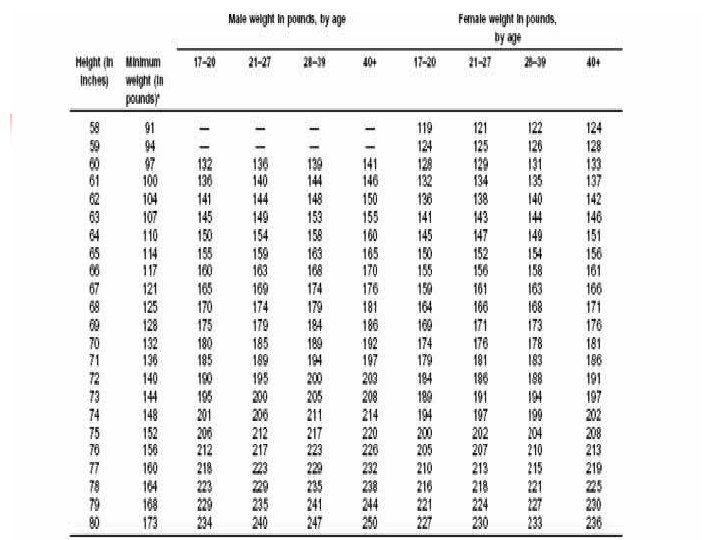
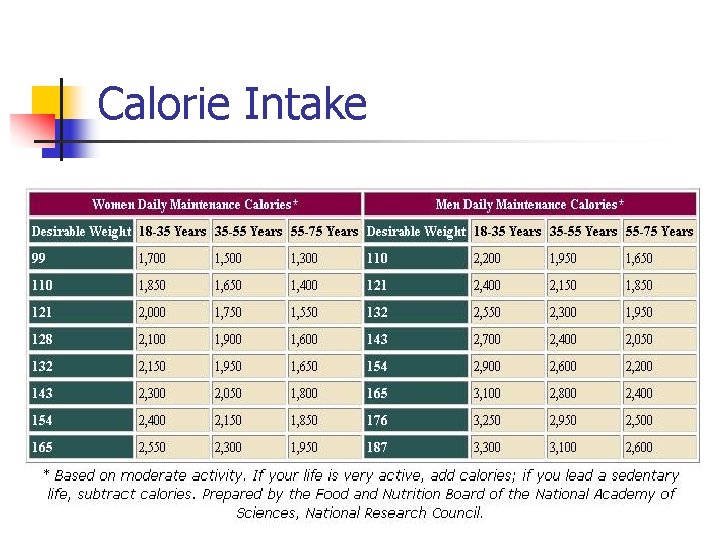
Calories-energy value in food n n n The number of calories a person needs each day depends on: Weight/height Age Gender Activity level
Calorie Intake