
Nutrition Labels What are you really eating Food
Nutrition Labels What are you really eating?
Food Labels throughout the years!! Before the 1970’s, food labels were not regulated or mandatory! In 1973 the FDA mandated nutritional labeling on certain packaged foods, which included added nutrients In 1989 the FDA, revised the labeling to what we’ve seen in todays food products In 2016 the food label has changed to be better legible. Food labels are now much easier to read/understand with highlighted/bold contents.
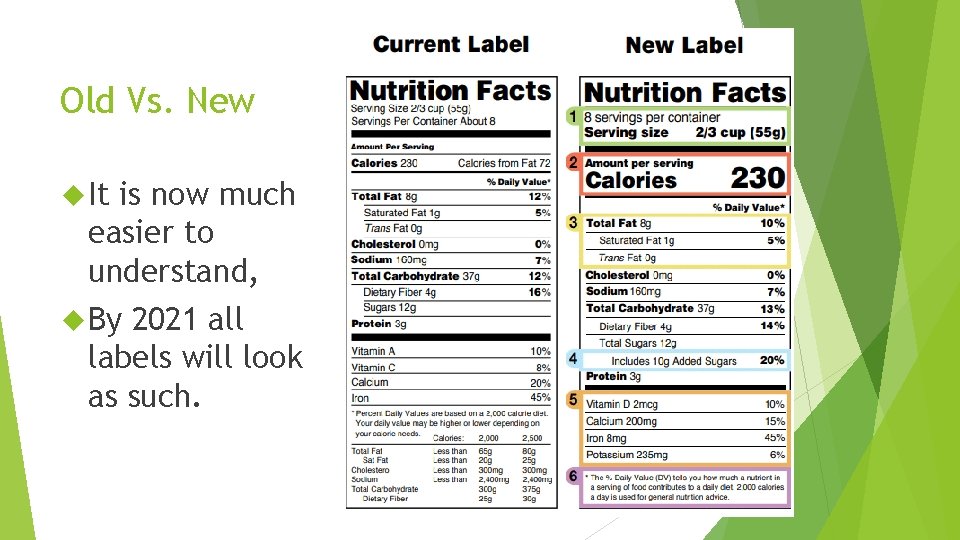
Old Vs. New It is now much easier to understand, By 2021 all labels will look as such.
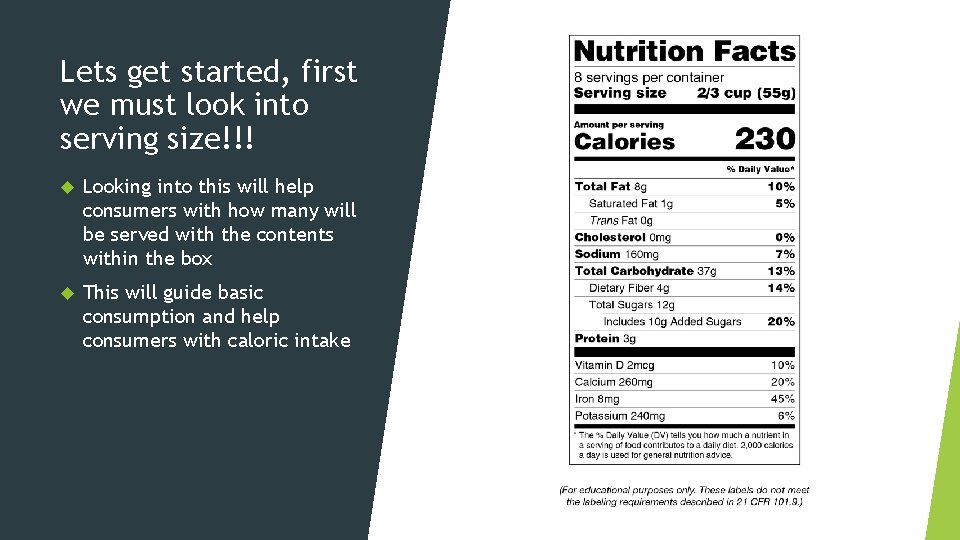
Lets get started, first we must look into serving size!!! Looking into this will help consumers with how many will be served with the contents within the box This will guide basic consumption and help consumers with caloric intake
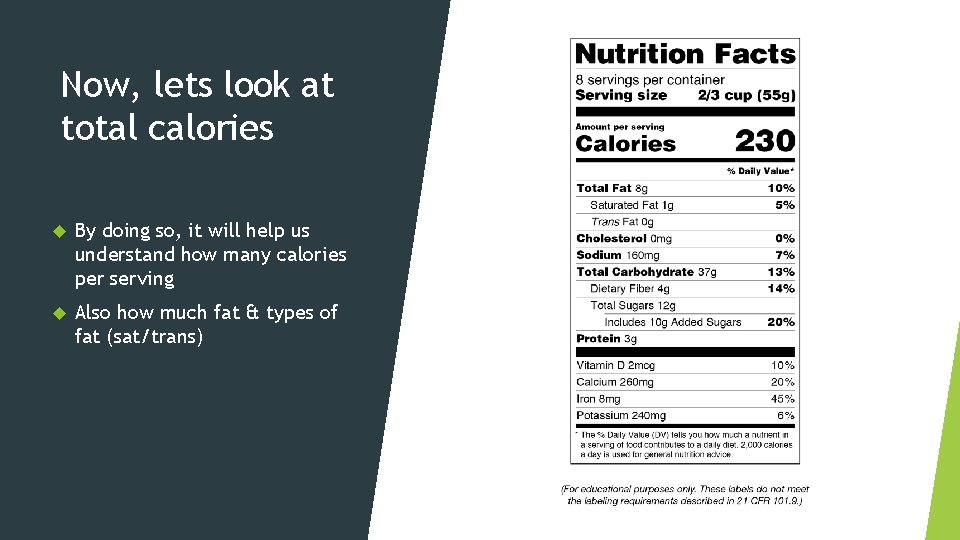
Now, lets look at total calories By doing so, it will help us understand how many calories per serving Also how much fat & types of fat (sat/trans)

Check the percentage values Check Daily Values (DV) within the 2, 000 calories a day Check sodium levels Sodium intake is typically 1500 -2000 mg per day If sodium is less 5% or below = low sodium If sodium is between 6 -19% = medium sodium If sodium is above 20% = high sodium
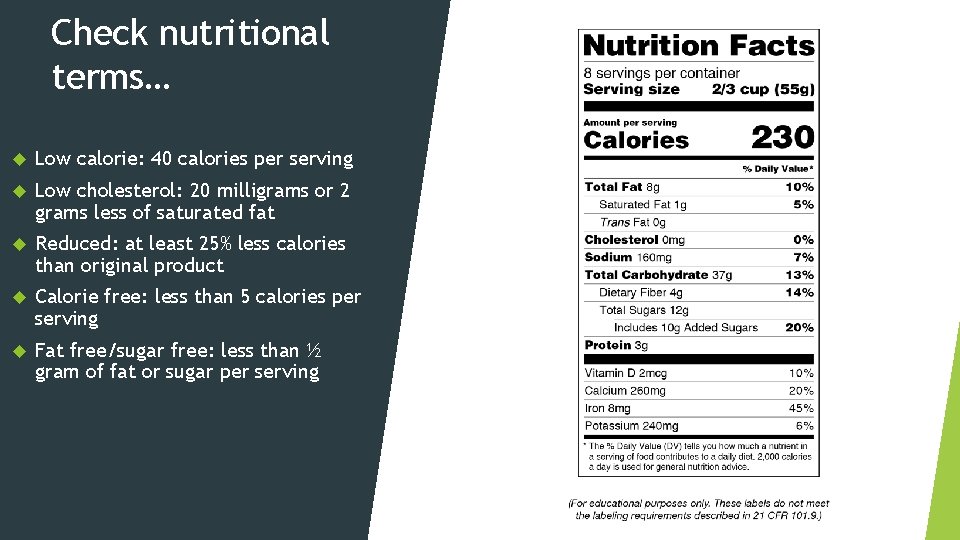
Check nutritional terms… Low calorie: 40 calories per serving Low cholesterol: 20 milligrams or 2 grams less of saturated fat Reduced: at least 25% less calories than original product Calorie free: less than 5 calories per serving Fat free/sugar free: less than ½ gram of fat or sugar per serving
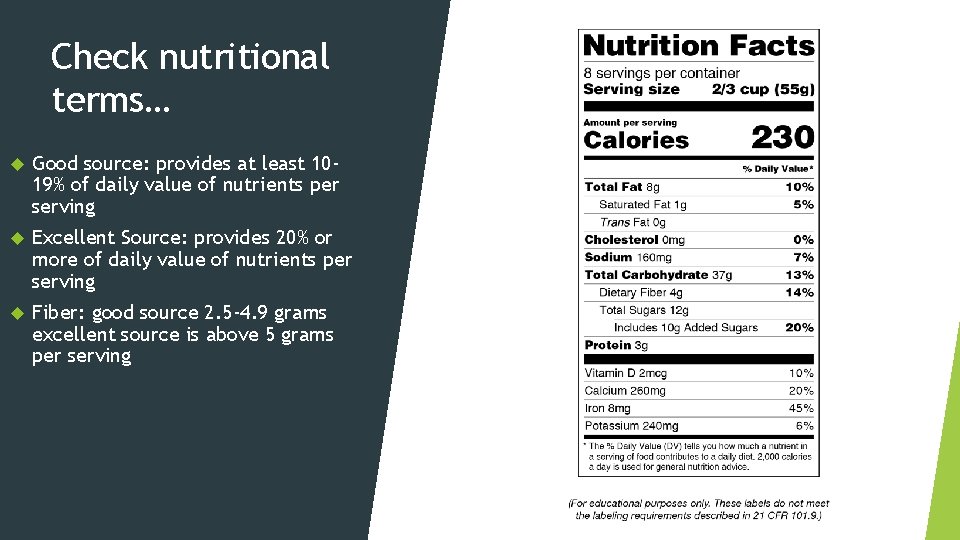
Check nutritional terms… Good source: provides at least 1019% of daily value of nutrients per serving Excellent Source: provides 20% or more of daily value of nutrients per serving Fiber: good source 2. 5 -4. 9 grams excellent source is above 5 grams per serving
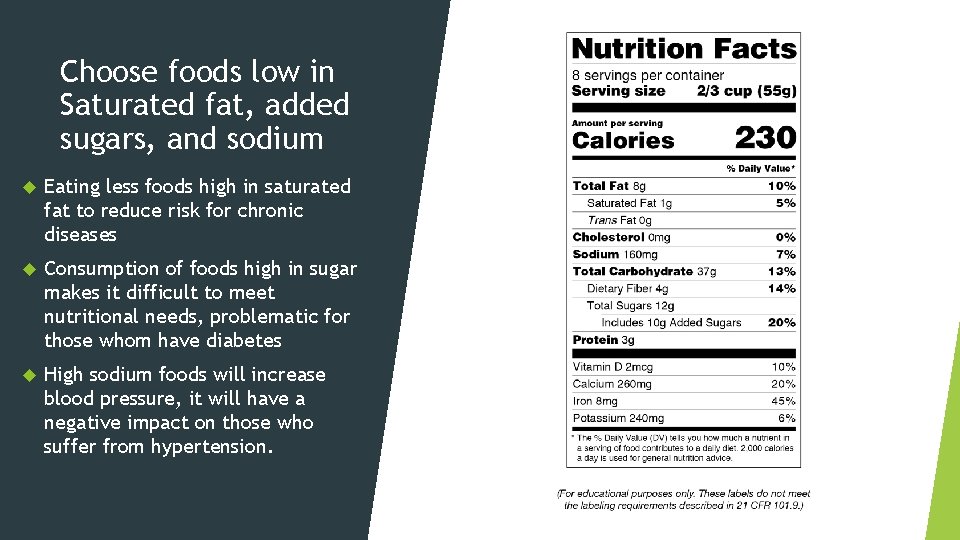
Choose foods low in Saturated fat, added sugars, and sodium Eating less foods high in saturated fat to reduce risk for chronic diseases Consumption of foods high in sugar makes it difficult to meet nutritional needs, problematic for those whom have diabetes High sodium foods will increase blood pressure, it will have a negative impact on those who suffer from hypertension.
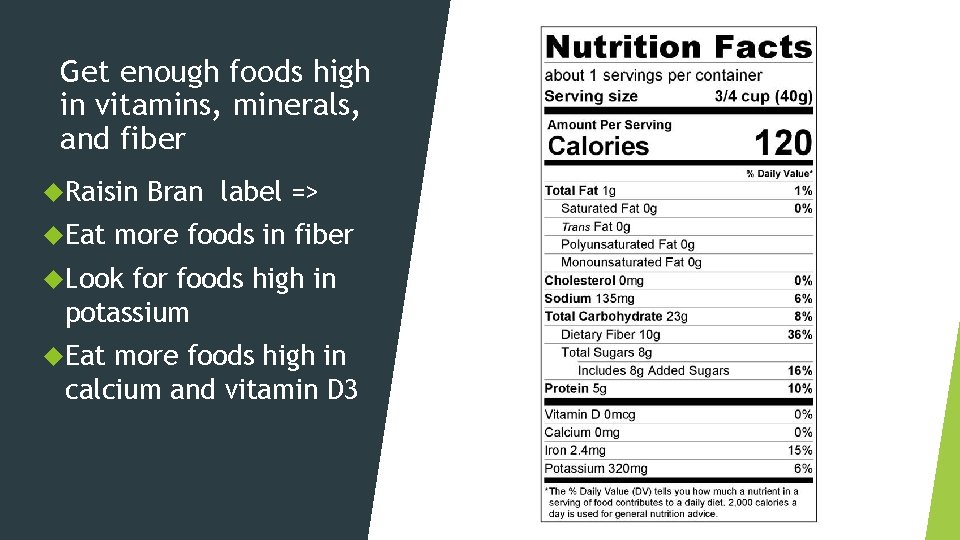
Get enough foods high in vitamins, minerals, and fiber Raisin Eat Bran label => more foods in fiber Look for foods high in potassium Eat more foods high in calcium and vitamin D 3
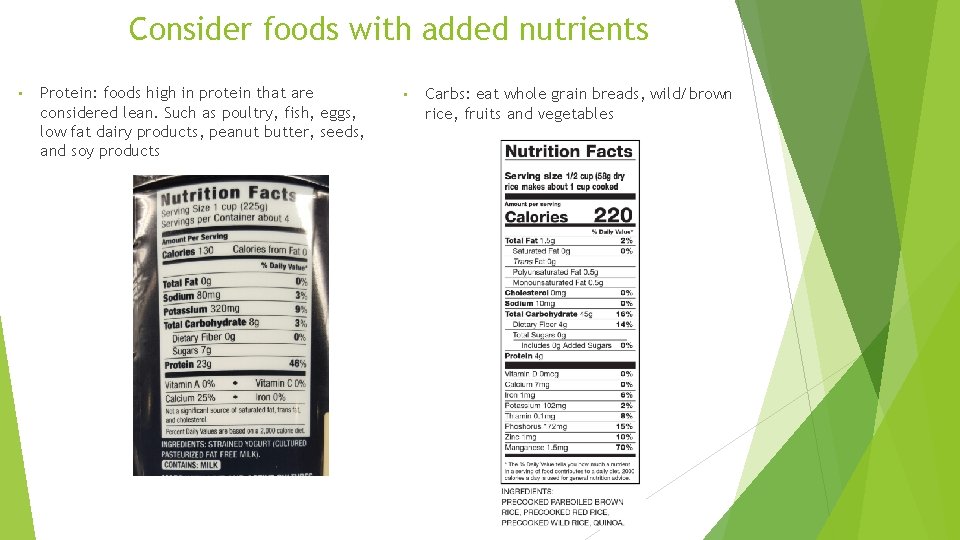
Consider foods with added nutrients • Protein: foods high in protein that are considered lean. Such as poultry, fish, eggs, low fat dairy products, peanut butter, seeds, and soy products • Carbs: eat whole grain breads, wild/brown rice, fruits and vegetables
Make it easier!!!! 5/20 Rule 5/20 5% 20% Rule: or below of daily value nutrition is low or more of daily value nutrition is high
Ingredients to look for!! Vitamin D = helps with calcium High in protein High in fiber Vitamin C = immune system Vitamin A = vision, immune system Iron = hemoglobin (blood transport) Calcium = great for bones Potassium = electrolyte Riboflavin = breaks down energy source (foods) and energy supply Folate = bodies cells Niacin = benefits body Vitamin B 12 = helps bodies cells Vitamin B 6 = helps CNS Vitamin B 1 = uses carbs as energy
Ingredients to stay away from!! Yellow #5: has been shown changes in behavior (restlessness, difficulty sleeping) Blue #1: contains cancer causing substances Some dairy products contain wood pulp (cellulose). Typically ice creams and cheese. Foods with artificial flavoring, ingredients, and coloring Refined grains Yellow #6: contains cancer causing substances Red #40: also contains cancer causing substances Sodium Nitrite: molecules can morph into cancer causing cells Trans Fats: turns unsaturated oils into solids fats, leads to health problems Hydrogenated oils: unhealthy oils
Don’t fall for it!! Low fat = reduced fat, but typically have more sugar Zero trans fat = less than. 5 grams per serving Light = reduced calories, might be replaced other substitutes Fruit flavored = most don’t contain fruit, chemical made to taste like fruit Gluten-free = does not mean healthy. Product does not contain wheat, spelt, rye, barley. Multigrain = most likely means refined grain, unless it states whole grain
- Slides: 15