
NUTRITION IN ANIMALS Types of digestive systems WHAT
- Slides: 17
NUTRITION IN ANIMALS Types of digestive systems
WHAT IS DIGESTION? Digestion is the mechanical and chemical breakdown of food into smaller components that are more easily absorbed into a blood stream, for instance. Digestion is a form of catabolism: a breakdown of large food molecules to smaller ones.
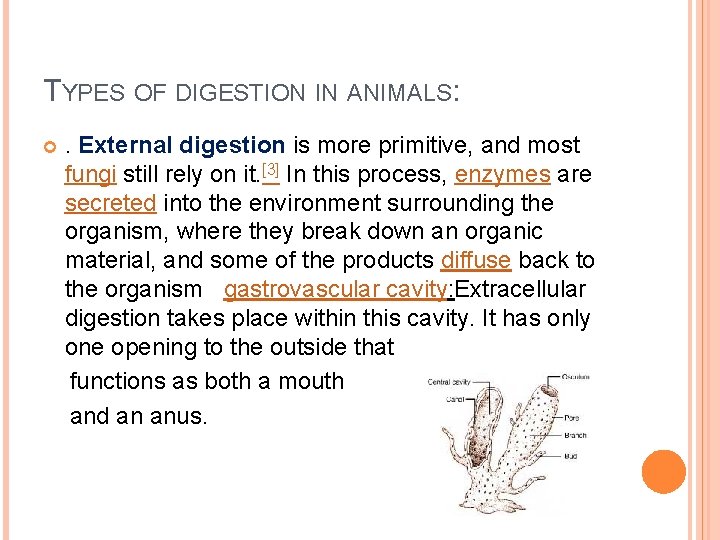
TYPES OF DIGESTION IN ANIMALS: . External digestion is more primitive, and most fungi still rely on it. [3] In this process, enzymes are secreted into the environment surrounding the organism, where they break down an organic material, and some of the products diffuse back to the organism gastrovascular cavity: Extracellular digestion takes place within this cavity. It has only one opening to the outside that functions as both a mouth and an anus.
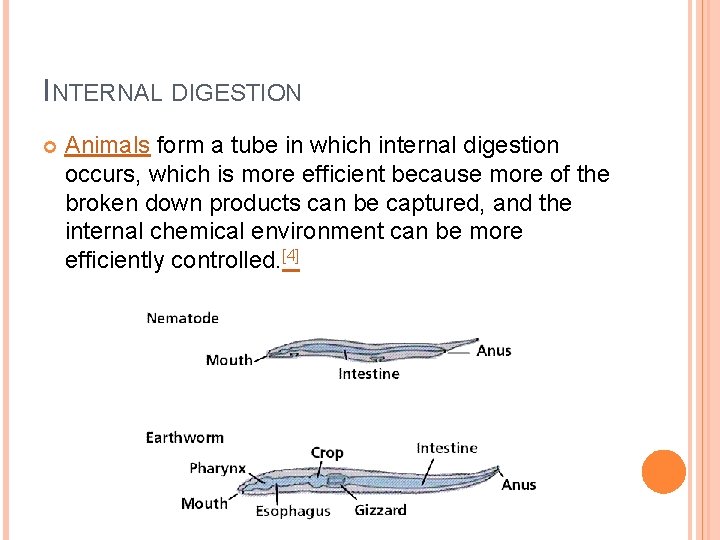
INTERNAL DIGESTION Animals form a tube in which internal digestion occurs, which is more efficient because more of the broken down products can be captured, and the internal chemical environment can be more efficiently controlled. [4]
STAGES IN THE DIGESTIVE PROCESS Breaking these large molecules into smaller components involves: Ingestion: the intake of food movement: propels food through the digestive system secretion: release of digestive juices in response to a specific stimulus digestion: breakdown of food into molecular components small enough to cross the plasma membrane absorption: passage of the molecules into the body's interior and their passage throughout the body elimination: removal of undigested food and wastes
CUTANEUS RESPIRATION: GAS EXCHANGE CARRIED OUT THROUGH THE SKIN. IS The Body Surface: moist skin Flatworms and annelids use their outer surfaces as gas exchange surfaces. Earthworms have a series of thin-walled blood vessels known as capillaries. Gas exchange occurs at capillaries located throughout the body as well as those in the respiratory surface. Adult Amphibians use their skin as a respiratory surface.
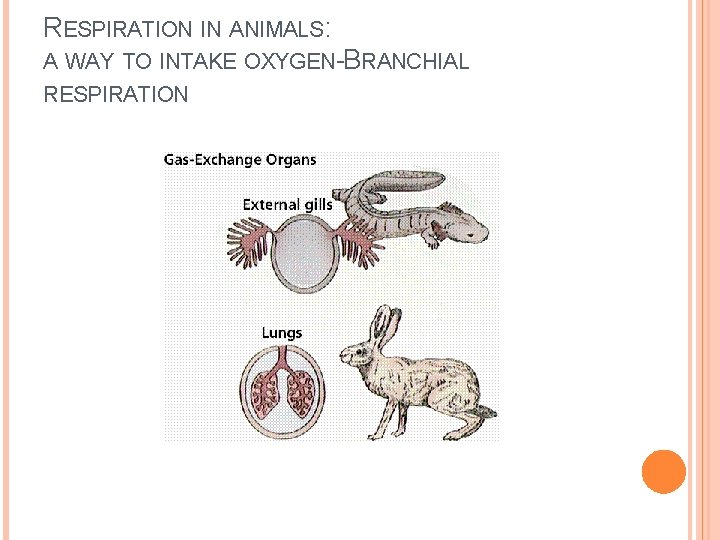
RESPIRATION IN ANIMALS: A WAY TO INTAKE OXYGEN-BRANCHIAL RESPIRATION
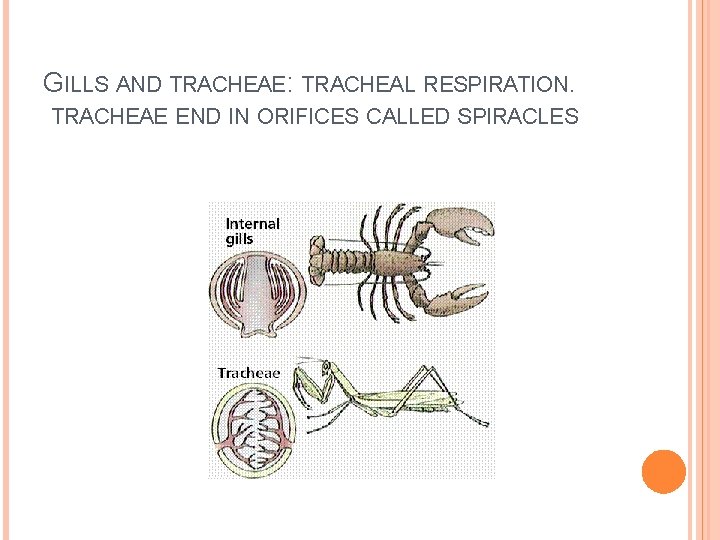
GILLS AND TRACHEAE: TRACHEAL RESPIRATION. TRACHEAE END IN ORIFICES CALLED SPIRACLES
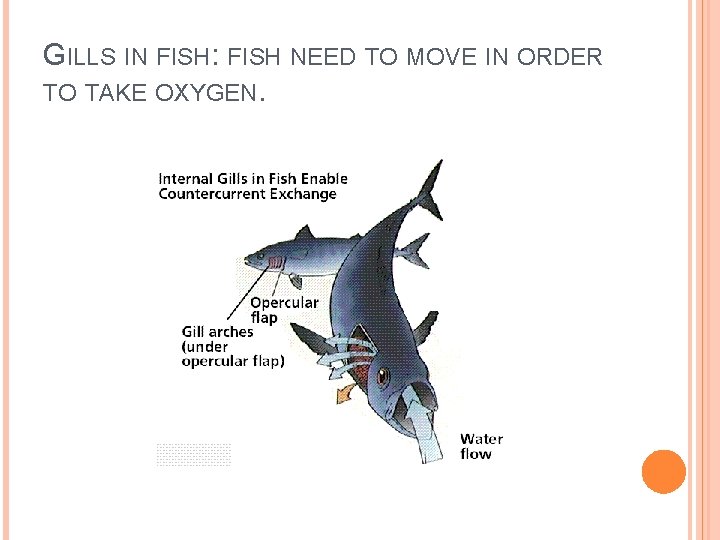
GILLS IN FISH: FISH NEED TO MOVE IN ORDER TO TAKE OXYGEN.
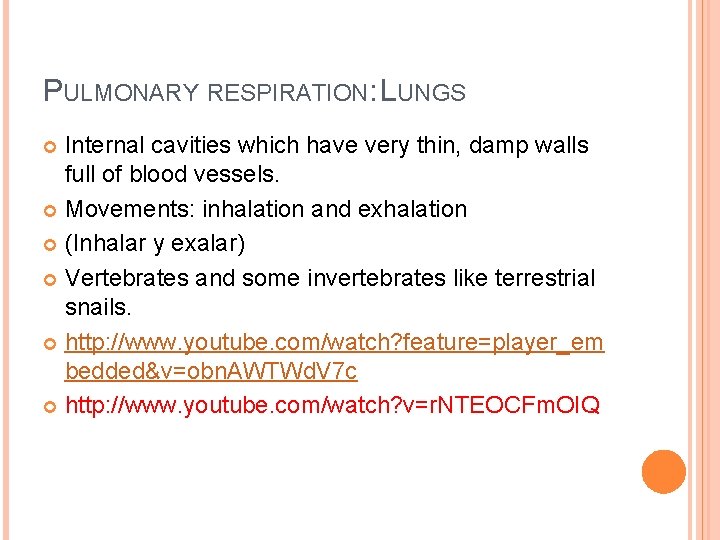
PULMONARY RESPIRATION: LUNGS Internal cavities which have very thin, damp walls full of blood vessels. Movements: inhalation and exhalation (Inhalar y exalar) Vertebrates and some invertebrates like terrestrial snails. http: //www. youtube. com/watch? feature=player_em bedded&v=obn. AWTWd. V 7 c http: //www. youtube. com/watch? v=r. NTEOCFm. OIQ
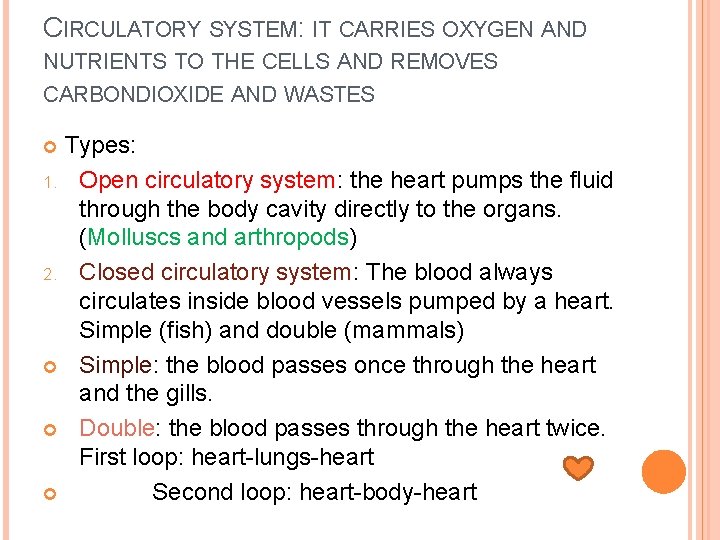
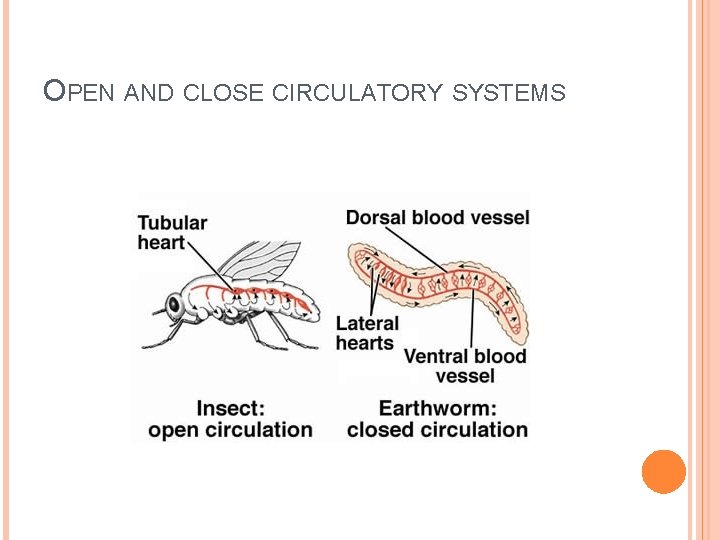
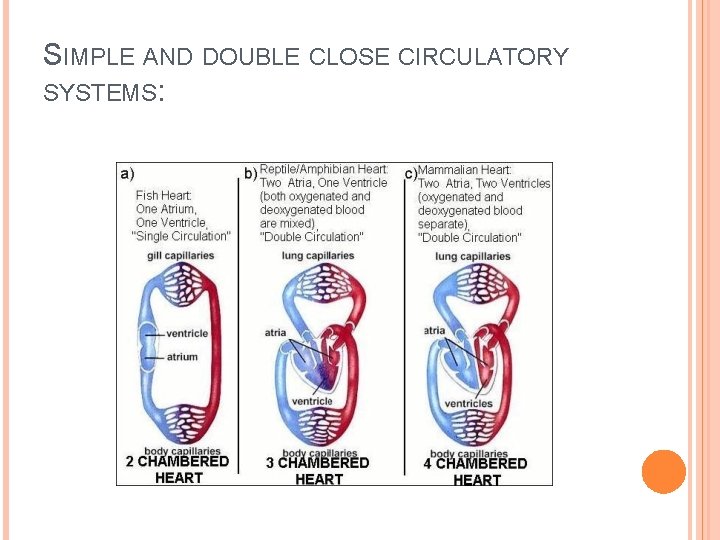
CIRCULATORY SYSTEM: IT CARRIES OXYGEN AND NUTRIENTS TO THE CELLS AND REMOVES CARBONDIOXIDE AND WASTES Types: 1. Open circulatory system: the heart pumps the fluid through the body cavity directly to the organs. (Molluscs and arthropods) 2. Closed circulatory system: The blood always circulates inside blood vessels pumped by a heart. Simple (fish) and double (mammals) Simple: the blood passes once through the heart and the gills. Double: the blood passes through the heart twice. First loop: heart-lungs-heart Second loop: heart-body-heart
OPEN AND CLOSE CIRCULATORY SYSTEMS
SIMPLE AND DOUBLE CLOSE CIRCULATORY SYSTEMS:
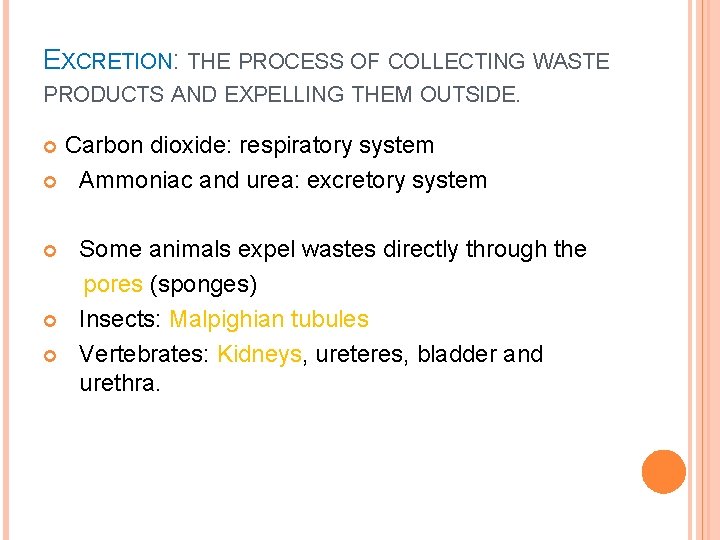
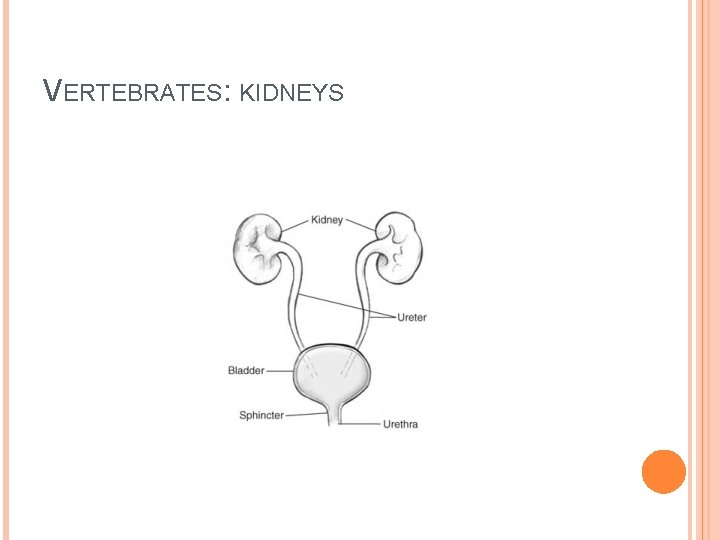
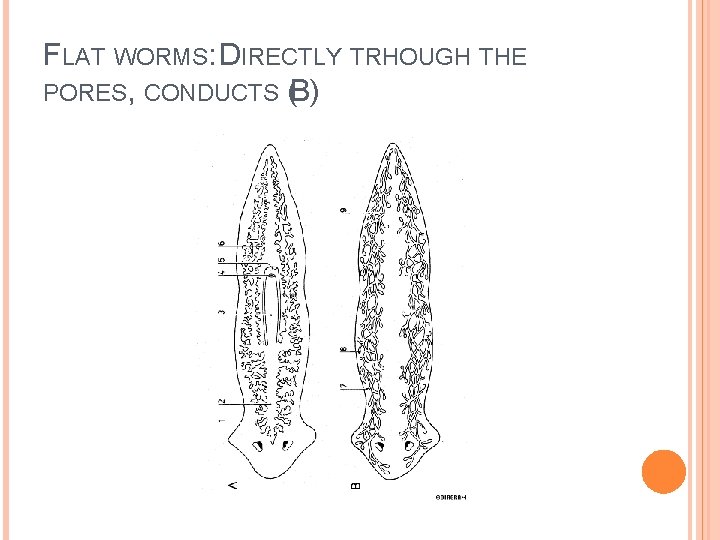
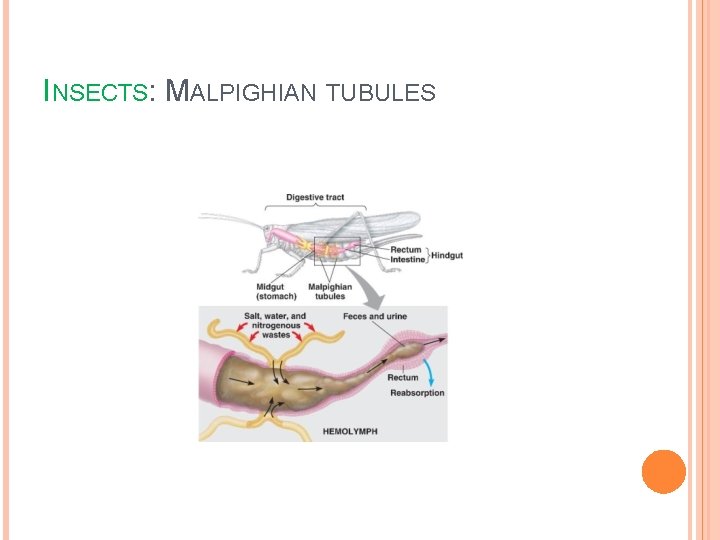
EXCRETION: THE PROCESS OF COLLECTING WASTE PRODUCTS AND EXPELLING THEM OUTSIDE. Carbon dioxide: respiratory system Ammoniac and urea: excretory system Some animals expel wastes directly through the pores (sponges) Insects: Malpighian tubules Vertebrates: Kidneys, ureteres, bladder and urethra.
VERTEBRATES: KIDNEYS
FLAT WORMS: DIRECTLY TRHOUGH THE PORES, CONDUCTS (B)
INSECTS: MALPIGHIAN TUBULES