
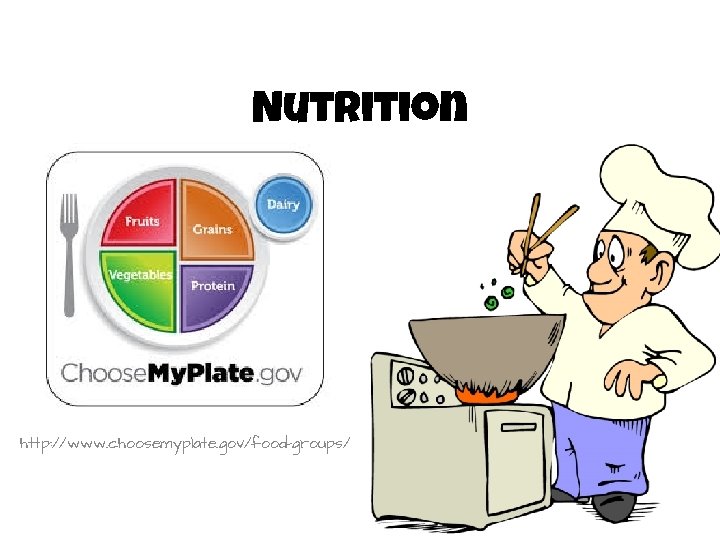
Nutrition http www choosemyplate govfoodgroups FOOD GROUPS FRUITS

- Slides: 26
Nutrition http: //www. choosemyplate. gov/food-groups/
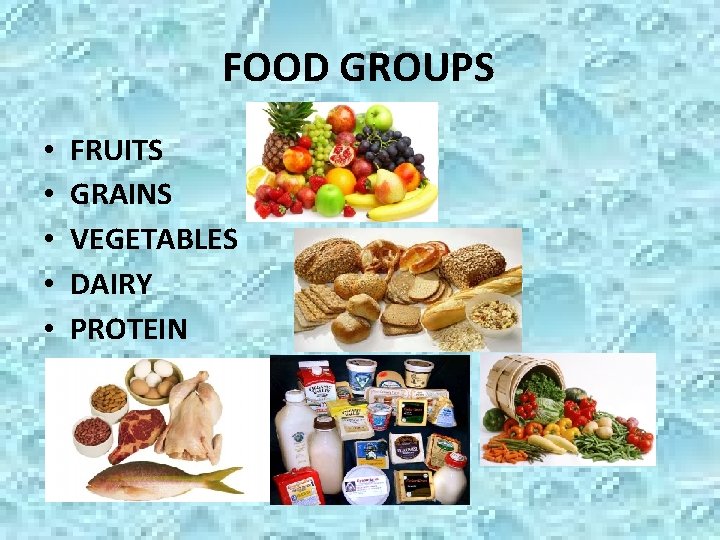
FOOD GROUPS • • • FRUITS GRAINS VEGETABLES DAIRY PROTEIN
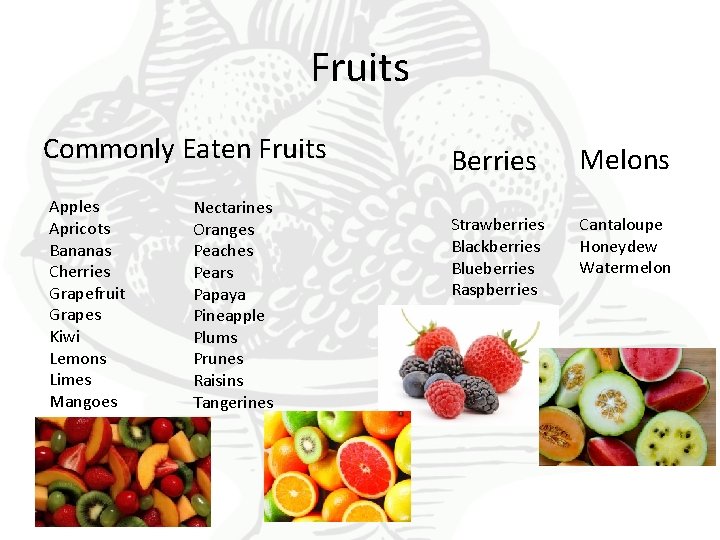
Fruits Commonly Eaten Fruits Apples Apricots Bananas Cherries Grapefruit Grapes Kiwi Lemons Limes Mangoes Nectarines Oranges Peaches Pears Papaya Pineapple Plums Prunes Raisins Tangerines Berries Melons Strawberries Blackberries Blueberries Raspberries Cantaloupe Honeydew Watermelon
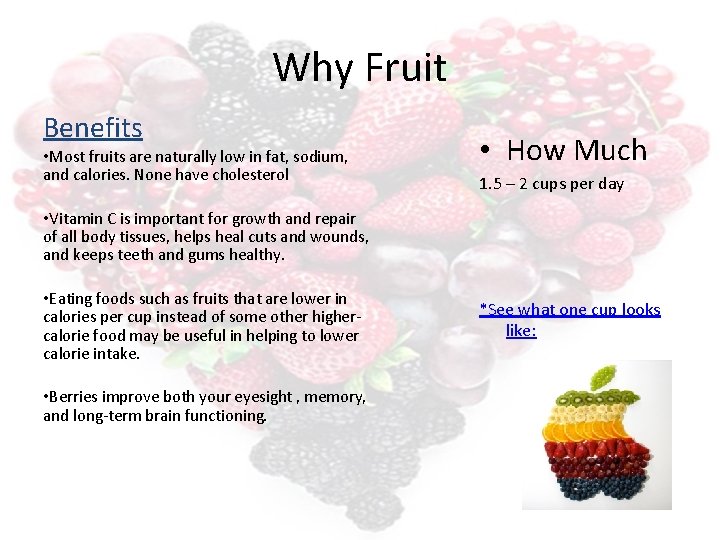
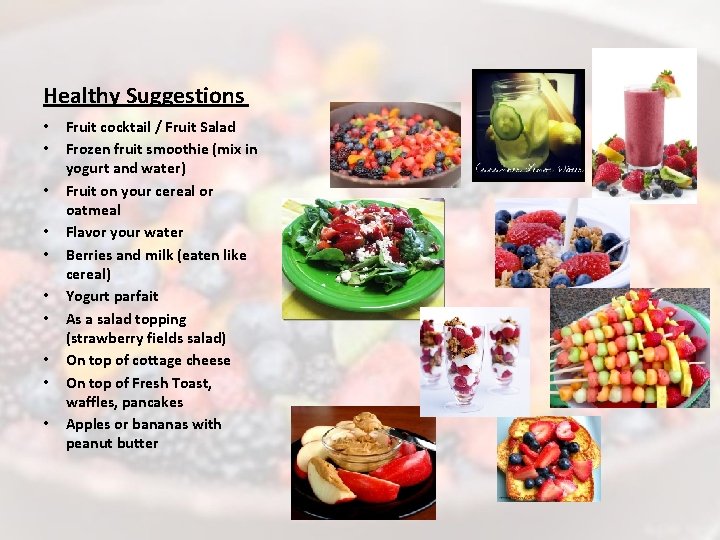
Why Fruit Benefits • Most fruits are naturally low in fat, sodium, and calories. None have cholesterol • How Much 1. 5 – 2 cups per day • Vitamin C is important for growth and repair of all body tissues, helps heal cuts and wounds, and keeps teeth and gums healthy. • Eating foods such as fruits that are lower in calories per cup instead of some other highercalorie food may be useful in helping to lower calorie intake. • Berries improve both your eyesight , memory, and long-term brain functioning. *See what one cup looks like:
Healthy Suggestions • • • Fruit cocktail / Fruit Salad Frozen fruit smoothie (mix in yogurt and water) Fruit on your cereal or oatmeal Flavor your water Berries and milk (eaten like cereal) Yogurt parfait As a salad topping (strawberry fields salad) On top of cottage cheese On top of Fresh Toast, waffles, pancakes Apples or bananas with peanut butter
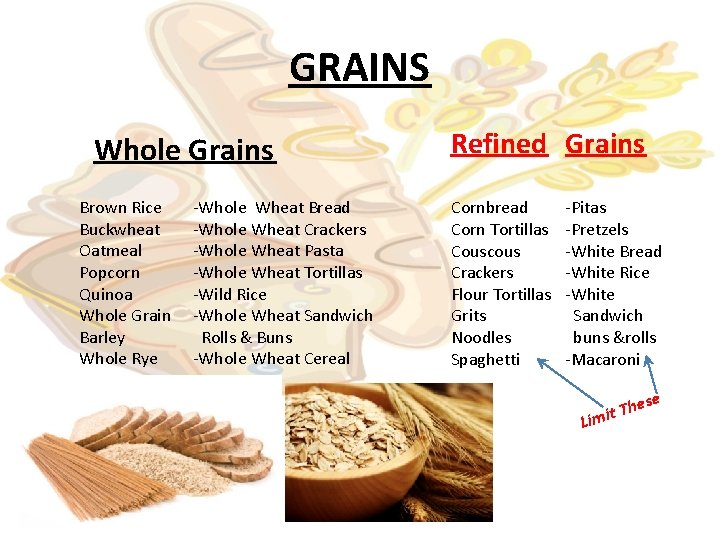
GRAINS Whole Grains Brown Rice Buckwheat Oatmeal Popcorn Quinoa Whole Grain Barley Whole Rye -Whole Wheat Bread -Whole Wheat Crackers -Whole Wheat Pasta -Whole Wheat Tortillas -Wild Rice -Whole Wheat Sandwich Rolls & Buns -Whole Wheat Cereal Refined Grains Cornbread Corn Tortillas Couscous Crackers Flour Tortillas Grits Noodles Spaghetti -Pitas -Pretzels -White Bread -White Rice -White Sandwich buns &rolls -Macaroni ese h T t Limi
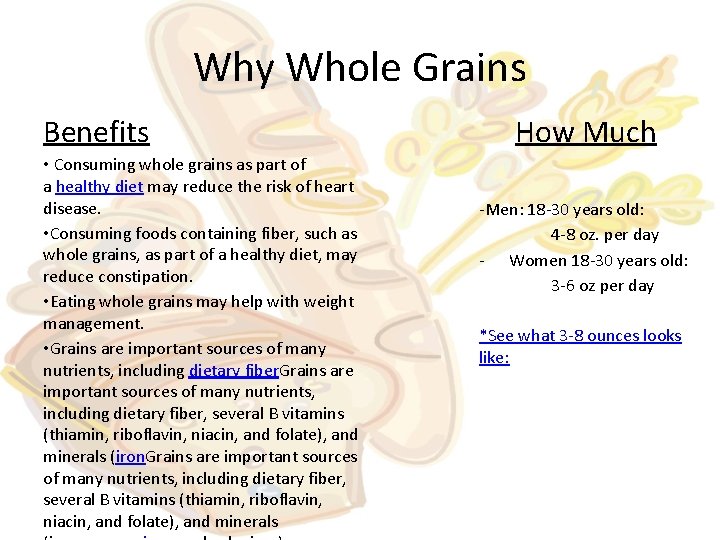
Why Whole Grains Benefits • Consuming whole grains as part of a healthy diet may reduce the risk of heart disease. • Consuming foods containing fiber, such as whole grains, as part of a healthy diet, may reduce constipation. • Eating whole grains may help with weight management. • Grains are important sources of many nutrients, including dietary fiber. Grains are important sources of many nutrients, including dietary fiber, several B vitamins (thiamin, riboflavin, niacin, and folate), and minerals (iron. Grains are important sources of many nutrients, including dietary fiber, several B vitamins (thiamin, riboflavin, niacin, and folate), and minerals How Much -Men: 18 -30 years old: 4 -8 oz. per day - Women 18 -30 years old: 3 -6 oz per day *See what 3 -8 ounces looks like:
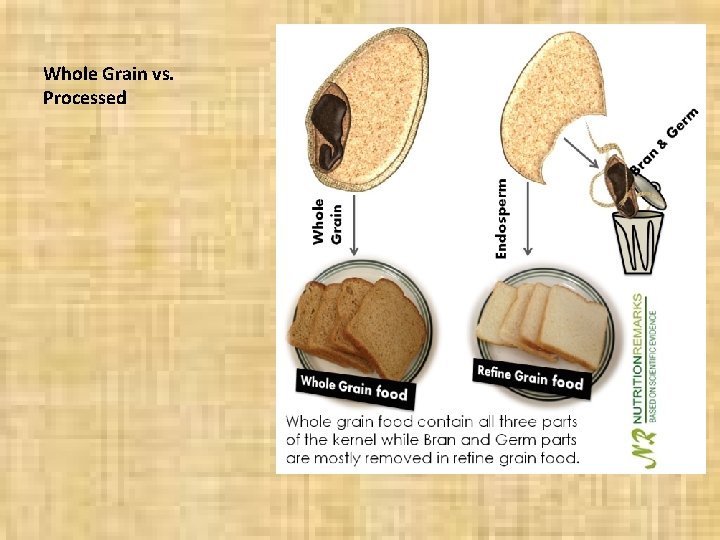
Whole Grain vs. Processed
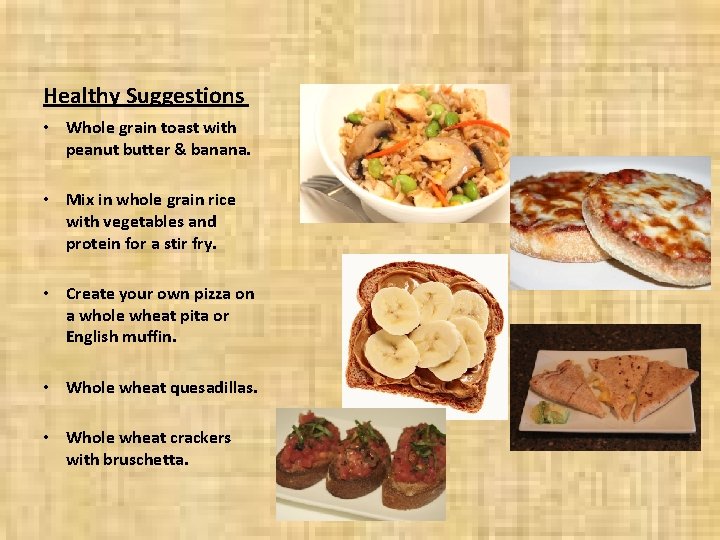
Healthy Suggestions • Whole grain toast with peanut butter & banana. • Mix in whole grain rice with vegetables and protein for a stir fry. • Create your own pizza on a whole wheat pita or English muffin. • Whole wheat quesadillas. • Whole wheat crackers with bruschetta.
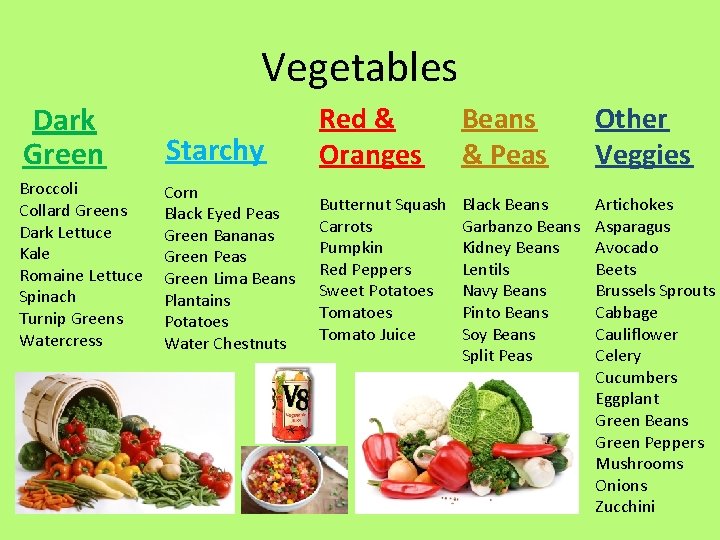
Vegetables Dark Green Broccoli Collard Greens Dark Lettuce Kale Romaine Lettuce Spinach Turnip Greens Watercress Starchy Corn Black Eyed Peas Green Bananas Green Peas Green Lima Beans Plantains Potatoes Water Chestnuts Red & Oranges Beans & Peas Other Veggies Butternut Squash Carrots Pumpkin Red Peppers Sweet Potatoes Tomato Juice Black Beans Garbanzo Beans Kidney Beans Lentils Navy Beans Pinto Beans Soy Beans Split Peas Artichokes Asparagus Avocado Beets Brussels Sprouts Cabbage Cauliflower Celery Cucumbers Eggplant Green Beans Green Peppers Mushrooms Onions Zucchini
Why Vegetables Benefits • Eating a diet rich in vegetables and fruits as part of an overall healthy diet may reduce risk for heart disease, including heart attack and stroke and may protect against certain types of cancers. • Diets rich in foods containing fiber, such as some vegetables and fruits, may reduce the risk of heart disease, obesity, and type 2 diabetes. • Vegetables are important sources of many nutrients, including potassium, dietary fiber, folate (folic acid), vitamin A, and vitamin C. • Vitamin A keeps eyes and skin healthy and helps to protect against infections. How Much -Men: (14 -30 years old) 3 cups per day - Women (14 -30 years old) 2. 5 cups per day *See what 2. 5 - 3 cups looks like:
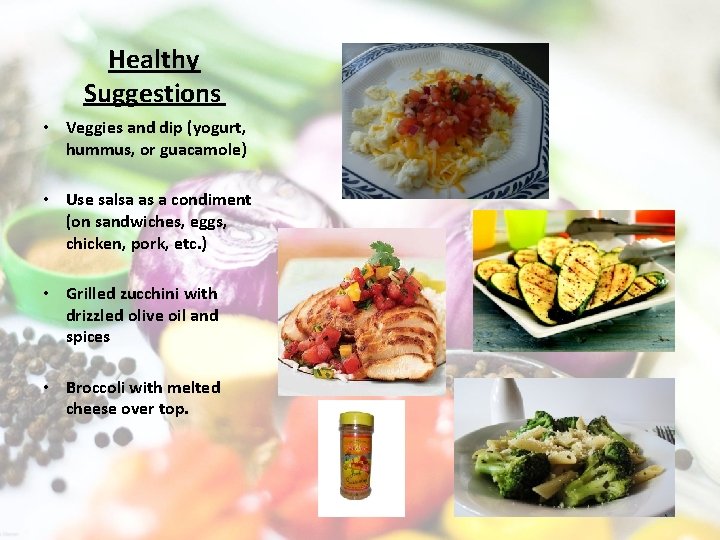
Healthy Suggestions • Veggies and dip (yogurt, hummus, or guacamole) • Use salsa as a condiment (on sandwiches, eggs, chicken, pork, etc. ) • Grilled zucchini with drizzled olive oil and spices • Broccoli with melted cheese over top.
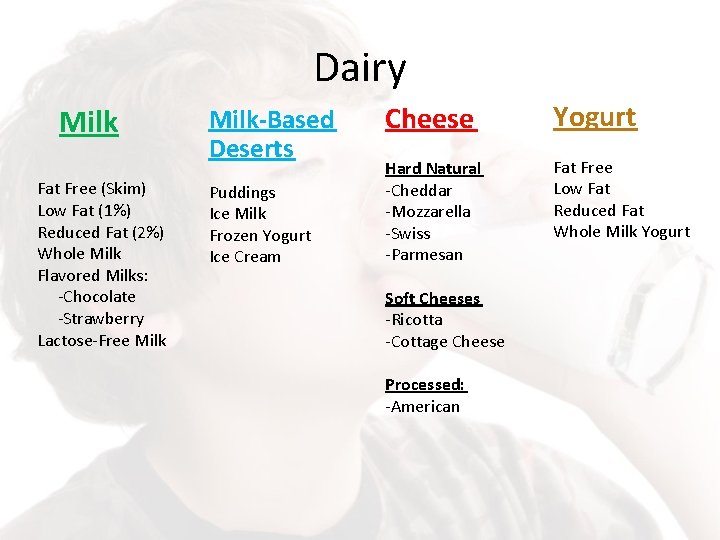
Dairy Milk Fat Free (Skim) Low Fat (1%) Reduced Fat (2%) Whole Milk Flavored Milks: -Chocolate -Strawberry Lactose-Free Milk-Based Deserts Puddings Ice Milk Frozen Yogurt Ice Cream Cheese Yogurt Hard Natural -Cheddar -Mozzarella -Swiss -Parmesan Fat Free Low Fat Reduced Fat Whole Milk Yogurt Soft Cheeses -Ricotta -Cottage Cheese Processed: -American
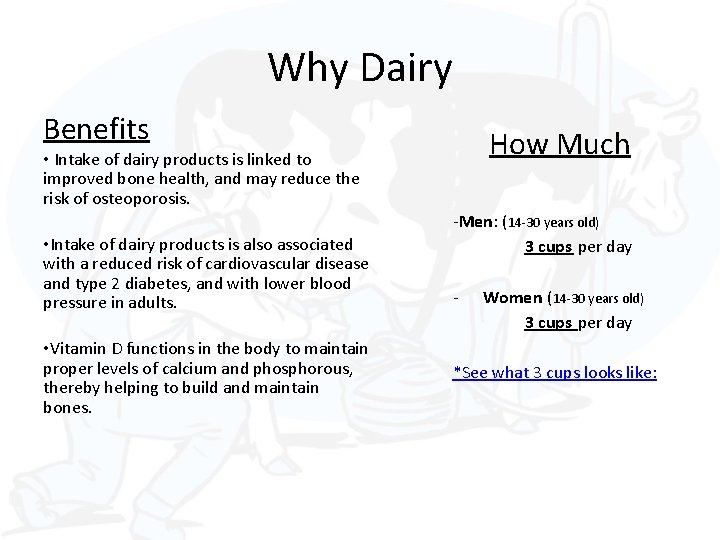
Why Dairy Benefits • Intake of dairy products is linked to improved bone health, and may reduce the risk of osteoporosis. • Intake of dairy products is also associated with a reduced risk of cardiovascular disease and type 2 diabetes, and with lower blood pressure in adults. • Vitamin D functions in the body to maintain proper levels of calcium and phosphorous, thereby helping to build and maintain bones. How Much -Men: (14 -30 years old) 3 cups per day - Women (14 -30 years old) 3 cups per day *See what 3 cups looks like:
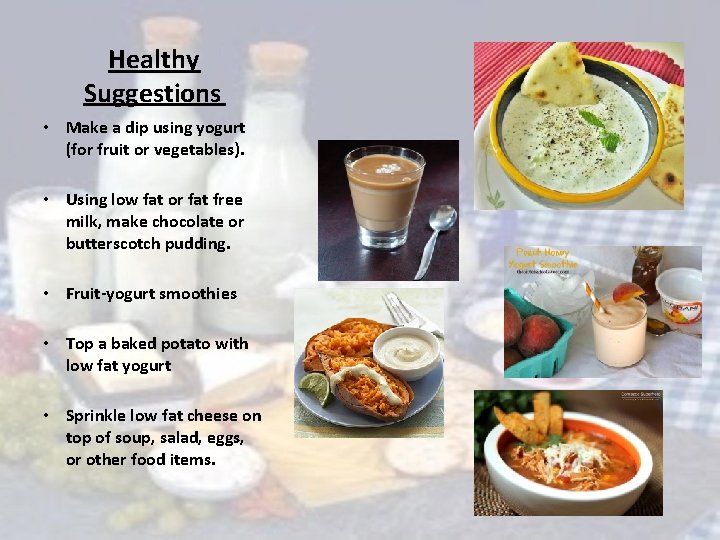
Healthy Suggestions • Make a dip using yogurt (for fruit or vegetables). • Using low fat or fat free milk, make chocolate or butterscotch pudding. • Fruit-yogurt smoothies • Top a baked potato with low fat yogurt • Sprinkle low fat cheese on top of soup, salad, eggs, or other food items.
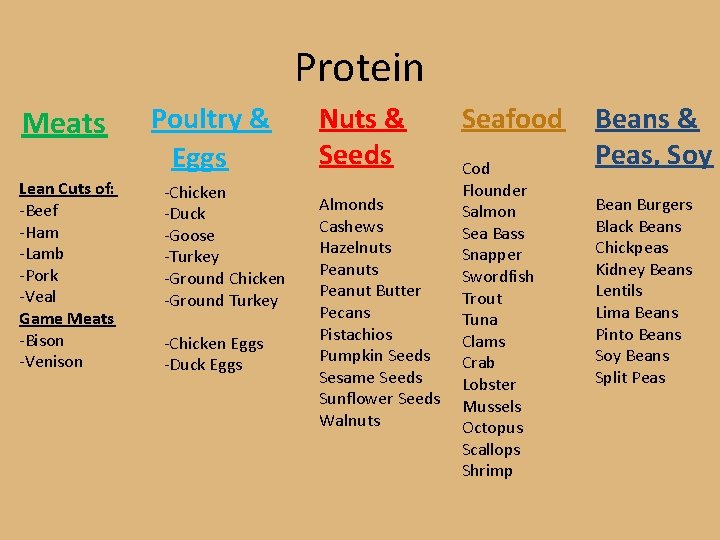
Protein Meats Lean Cuts of: -Beef -Ham -Lamb -Pork -Veal Game Meats -Bison -Venison Poultry & Eggs -Chicken -Duck -Goose -Turkey -Ground Chicken -Ground Turkey -Chicken Eggs -Duck Eggs Nuts & Seeds Almonds Cashews Hazelnuts Peanut Butter Pecans Pistachios Pumpkin Seeds Sesame Seeds Sunflower Seeds Walnuts Seafood Cod Flounder Salmon Sea Bass Snapper Swordfish Trout Tuna Clams Crab Lobster Mussels Octopus Scallops Shrimp Beans & Peas, Soy Bean Burgers Black Beans Chickpeas Kidney Beans Lentils Lima Beans Pinto Beans Soy Beans Split Peas
Why Protein Benefits • Proteins function as building blocks for bones, muscles, cartilage, skin, and blood. They are also building blocks for enzymes, hormones, and vitamins. Proteins are one of three nutrients that provide calories (the others are fat and carbohydrates). • B vitamins found in this food group serve a variety of functions in the body. They help the body release energy, play a vital role in the function of the nervous system, aid in the formation of red blood cells, and help build tissues. • EPA and DHA are omega-3 fatty acids found in varying amounts in seafood. Eating 8 ounces per week of seafood may help reduce the risk for heart disease. How Much -Men: (14 -30 years old) 6. 5 oz. per day - Women (14 -30 years old) 5 -5. 5 oz. per day *See what 5. 5 -6. 5 oz. looks like:
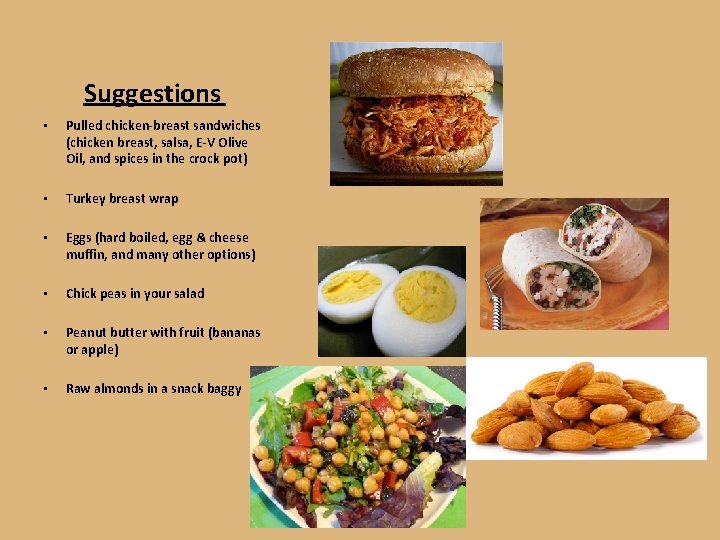
Suggestions • Pulled chicken-breast sandwiches (chicken breast, salsa, E-V Olive Oil, and spices in the crock pot) • Turkey breast wrap • Eggs (hard boiled, egg & cheese muffin, and many other options) • Chick peas in your salad • Peanut butter with fruit (bananas or apple) • Raw almonds in a snack baggy
Snacks • http: //kidshealth. org/Page. Manager. jsp? dn=Kids. Health&lic=1&ps=207&cat_id=20132&article_set=20393 TIPS: 1. Save time by slicing up veggies in advance 2. Grab a glass of milk for a snack – either low-fat or fat-free. 3. Go for whole grains – either bread, toast, mini-bagel, or English muffin. Just try to make it whole wheat. 4. Nibble on Lean Protein – Choose deli meats, unsalted nuts, or eggs to snack on. 5. Keep an eye on the size – Remember, snacks should not be an extra meal. It should just hold you over until your next meal. 6. Fruits are quick and easy! 7. Consider convenience – Single serving containers such as low-fat yogurt or individually wrapped string cheese can be a great after school snack.
“Eat This… Not That” …The Game Visit the website: http: //www. slideshare. net/beth ecatalyst/eat-this-not-that -Select either Breakfast, Lunch, Dinner, or Dessert.
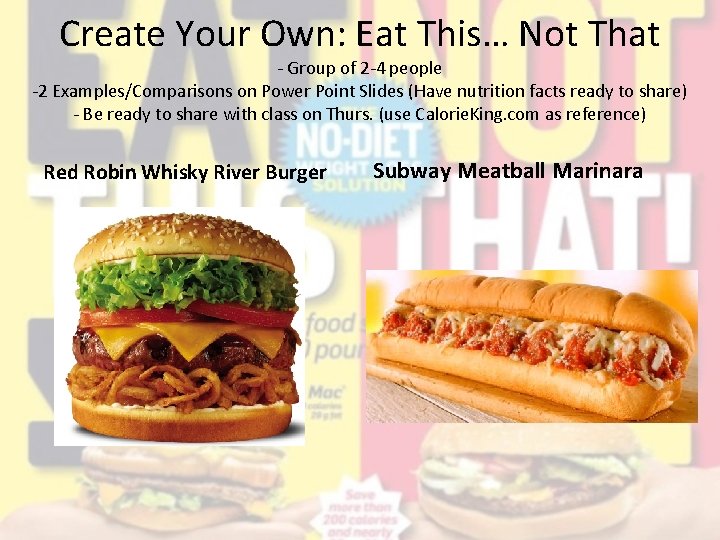
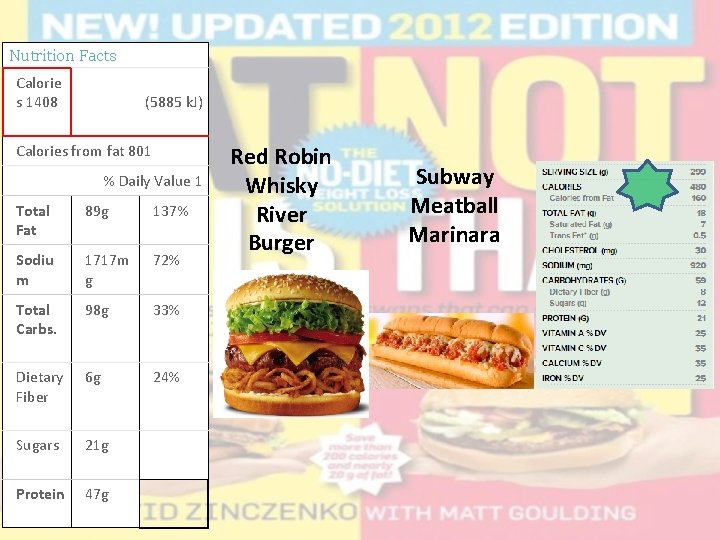
Create Your Own: Eat This… Not That - Group of 2 -4 people -2 Examples/Comparisons on Power Point Slides (Have nutrition facts ready to share) - Be ready to share with class on Thurs. (use Calorie. King. com as reference) Red Robin Whisky River Burger Subway Meatball Marinara
Nutrition Facts Calorie s 1408 (5885 k. J) Calories from fat 801 % Daily Value 1 Total Fat 89 g 137% Sodiu m 1717 m g 72% Total Carbs. 98 g 33% Dietary Fiber 6 g 24% Sugars 21 g Protein 47 g Red Robin Whisky River Burger Subway Meatball Marinara
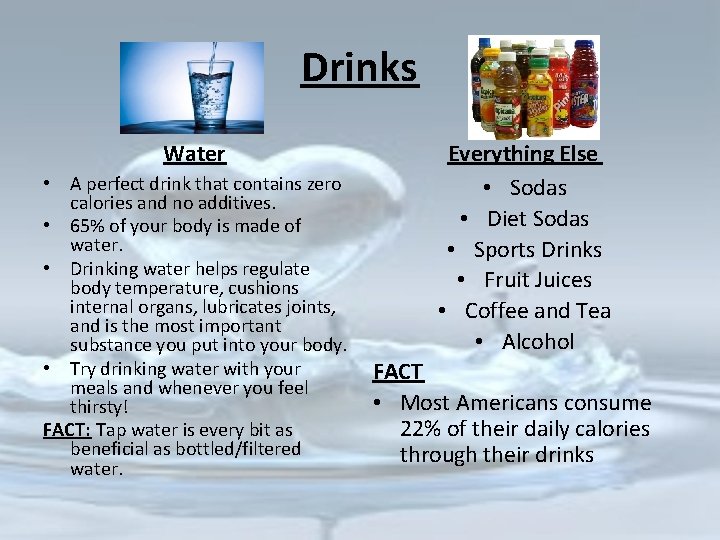
Drinks Water • A perfect drink that contains zero calories and no additives. • 65% of your body is made of water. • Drinking water helps regulate body temperature, cushions internal organs, lubricates joints, and is the most important substance you put into your body. • Try drinking water with your meals and whenever you feel thirsty! FACT: Tap water is every bit as beneficial as bottled/filtered water. Everything Else • Sodas • Diet Sodas • Sports Drinks • Fruit Juices • Coffee and Tea • Alcohol FACT • Most Americans consume 22% of their daily calories through their drinks
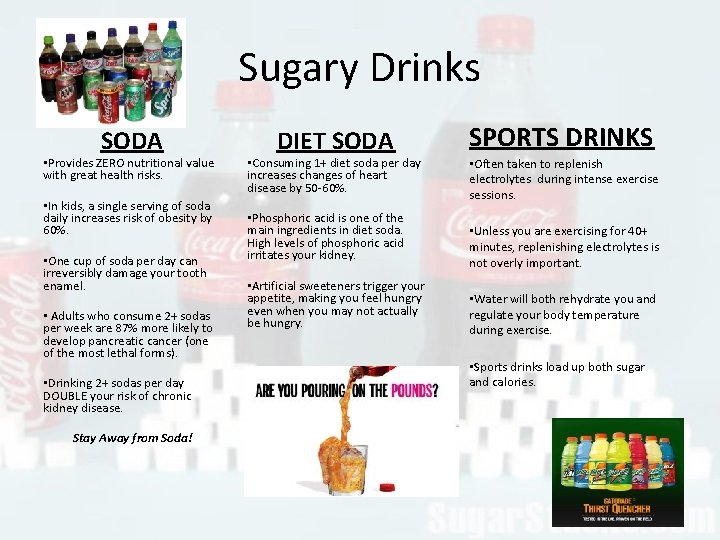
Sugary Drinks SODA • Provides ZERO nutritional value with great health risks. • In kids, a single serving of soda daily increases risk of obesity by 60%. • One cup of soda per day can irreversibly damage your tooth enamel. • Adults who consume 2+ sodas per week are 87% more likely to develop pancreatic cancer (one of the most lethal forms). • Drinking 2+ sodas per day DOUBLE your risk of chronic kidney disease. Stay Away from Soda! DIET SODA • Consuming 1+ diet soda per day increases changes of heart disease by 50 -60%. • Phosphoric acid is one of the main ingredients in diet soda. High levels of phosphoric acid irritates your kidney. • Artificial sweeteners trigger your appetite, making you feel hungry even when you may not actually be hungry. SPORTS DRINKS • Often taken to replenish electrolytes during intense exercise sessions. • Unless you are exercising for 40+ minutes, replenishing electrolytes is not overly important. • Water will both rehydrate you and regulate your body temperature during exercise. • Sports drinks load up both sugar and calories.
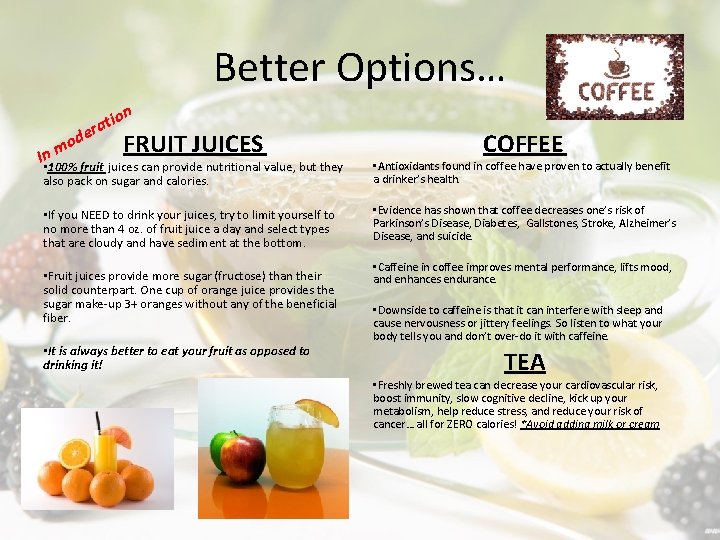
Better Options… io rat de o m n FRUIT JUICES I • n 100% fruit juices can provide nutritional value, but they also pack on sugar and calories. • If you NEED to drink your juices, try to limit yourself to no more than 4 oz. of fruit juice a day and select types that are cloudy and have sediment at the bottom. • Fruit juices provide more sugar (fructose) than their solid counterpart. One cup of orange juice provides the sugar make-up 3+ oranges without any of the beneficial fiber. • It is always better to eat your fruit as opposed to drinking it! COFFEE • Antioxidants found in coffee have proven to actually benefit a drinker’s health. • Evidence has shown that coffee decreases one’s risk of Parkinson’s Disease, Diabetes, Gallstones, Stroke, Alzheimer’s Disease, and suicide. • Caffeine in coffee improves mental performance, lifts mood, and enhances endurance. • Downside to caffeine is that it can interfere with sleep and cause nervousness or jittery feelings. So listen to what your body tells you and don’t over-do it with caffeine. TEA • Freshly brewed tea can decrease your cardiovascular risk, boost immunity, slow cognitive decline, kick up your metabolism, help reduce stress, and reduce your risk of cancer… all for ZERO calories! *Avoid adding milk or cream
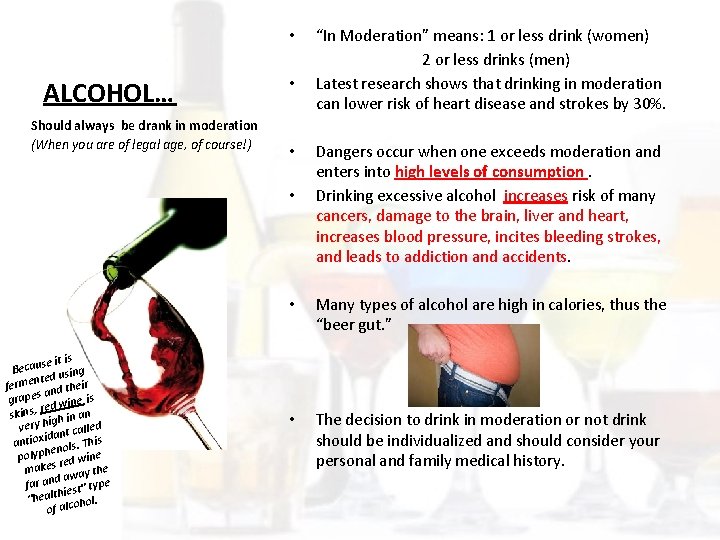
• ALCOHOL… Should always be drank in moderation (When you are of legal age, of course!) • • • se it is Becau using nted ferme nd their sa grape d wine is re skins, gh in an i very h t called idan antiox nols. This e polyph red wine makes way the da far an est” type hi “healt ohol. of alc “In Moderation” means: 1 or less drink (women) 2 or less drinks (men) Latest research shows that drinking in moderation can lower risk of heart disease and strokes by 30%. Dangers occur when one exceeds moderation and enters into high levels of consumption. Drinking excessive alcohol increases risk of many cancers, damage to the brain, liver and heart, increases blood pressure, incites bleeding strokes, and leads to addiction and accidents. • Many types of alcohol are high in calories, thus the “beer gut. ” • The decision to drink in moderation or not drink should be individualized and should consider your personal and family medical history.