
Nutrition for Performance Why do we need food
- Slides: 23
Nutrition for Performance
Why do we need food? § Food has 3 main functions for the body: § a) provide energy § b) promotes growth & maintenance of tissues § c) regulates processes in the body
Why do we eat? § We eat for health, performance, appearance, psychological reasons, & emotional reasons (HALT) § H ungry § A ngry § L onely § T ired
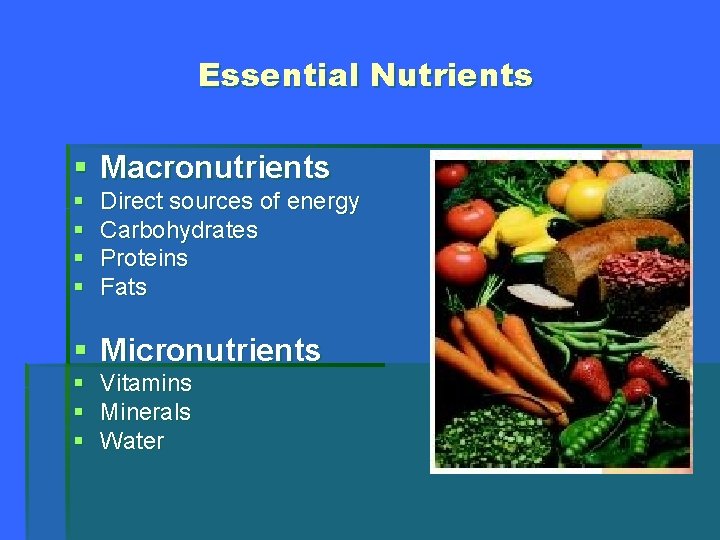
Essential Nutrients § Macronutrients § § Direct sources of energy Carbohydrates Proteins Fats § Micronutrients § § § Vitamins Minerals Water
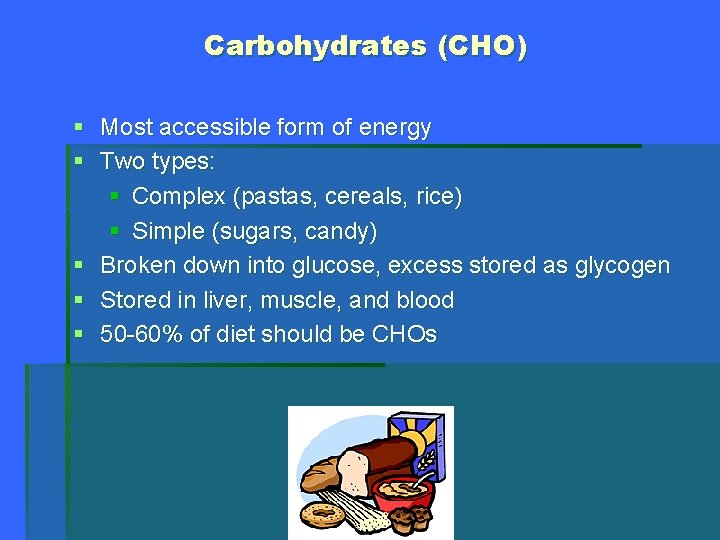
Carbohydrates (CHO) § Most accessible form of energy § Two types: § Complex (pastas, cereals, rice) § Simple (sugars, candy) § Broken down into glucose, excess stored as glycogen § Stored in liver, muscle, and blood § 50 -60% of diet should be CHOs
Proteins (PRO) § Two types: § Complete (animal products, meat, dairy) § Incomplete (plant products, nuts, beans, vegetables) § Energy nutrient § Broken down into 22 amino acids; 9 are essential § 15 -20% of diet should be Proteins
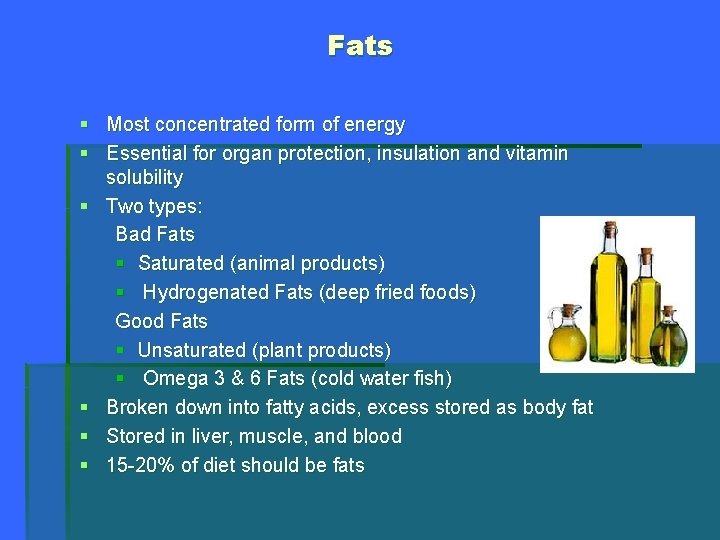
Fats § Most concentrated form of energy § Essential for organ protection, insulation and vitamin solubility § Two types: Bad Fats § Saturated (animal products) § Hydrogenated Fats (deep fried foods) Good Fats § Unsaturated (plant products) § Omega 3 & 6 Fats (cold water fish) § Broken down into fatty acids, excess stored as body fat § Stored in liver, muscle, and blood § 15 -20% of diet should be fats
Vitamins § Essential for metabolism, growth and development of the body § Not a source of energy § Effective in minute quantities § Regulators of metabolic processes, play a role in energy transformation § Fat-soluble: A, D, E, and K § Water-soluble: B and C
Minerals § From earth’s waters and topsoil and absorbed by plants we eat § Seven key minerals: calcium, phosphorous, magnesium, sodium, potassium, chloride, and sulfur § Important for: § - maintaining bone density § - building tissue § - muscle contractions § - oxygen transport
Water § § § § Essential for temperature regulation Aids in digestion 65% of total body weight for males 55% of total body weight for females Aids in all metabolic activity Medium for chemical reactions We can survive for only a short time without water An individual needs 6 -8 glasses/day
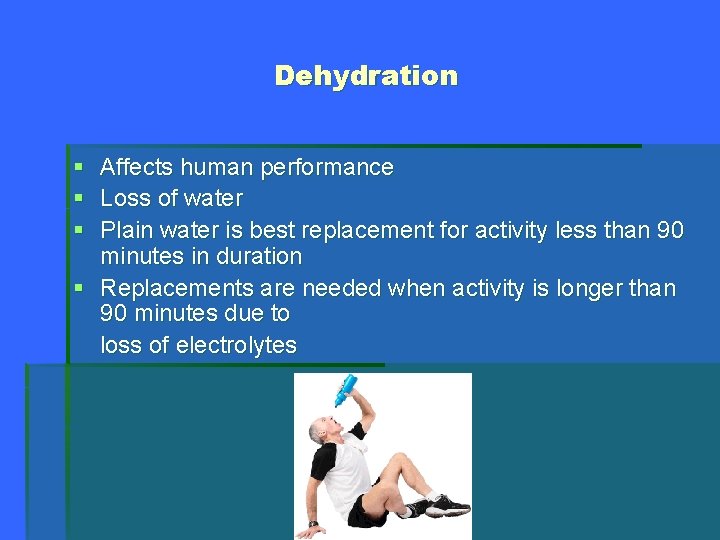
Dehydration § Affects human performance § Loss of water § Plain water is best replacement for activity less than 90 minutes in duration § Replacements are needed when activity is longer than 90 minutes due to loss of electrolytes
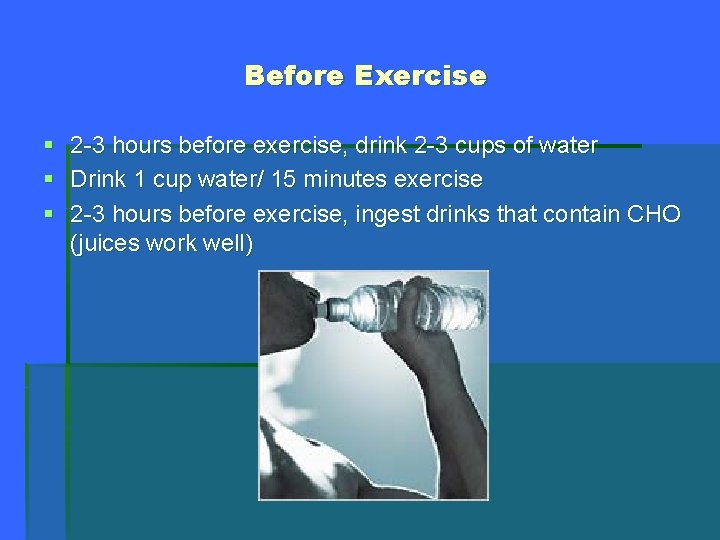
Before Exercise § § § 2 -3 hours before exercise, drink 2 -3 cups of water Drink 1 cup water/ 15 minutes exercise 2 -3 hours before exercise, ingest drinks that contain CHO (juices work well)
After Exercise § Fluid loss should be regained within two hours after exercise § Should contain carbohydrates § Necessary to rebuild glycogen and electrolyte stores
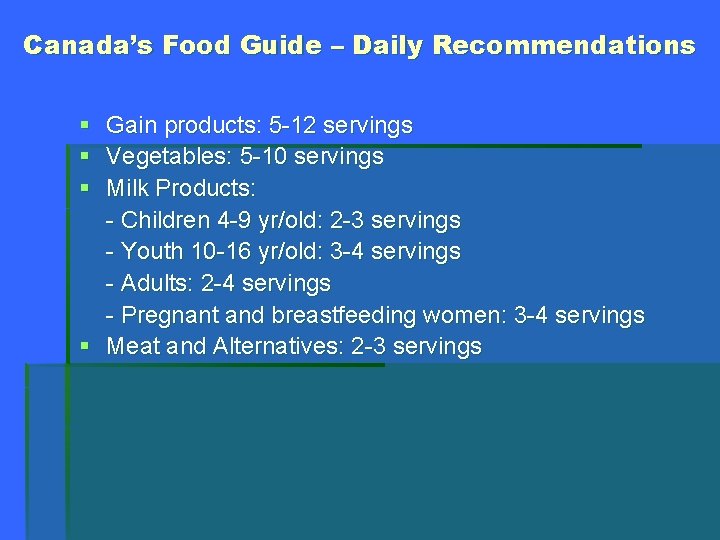
Canada’s Food Guide – Daily Recommendations § § § Gain products: 5 -12 servings Vegetables: 5 -10 servings Milk Products: - Children 4 -9 yr/old: 2 -3 servings - Youth 10 -16 yr/old: 3 -4 servings - Adults: 2 -4 servings - Pregnant and breastfeeding women: 3 -4 servings § Meat and Alternatives: 2 -3 servings
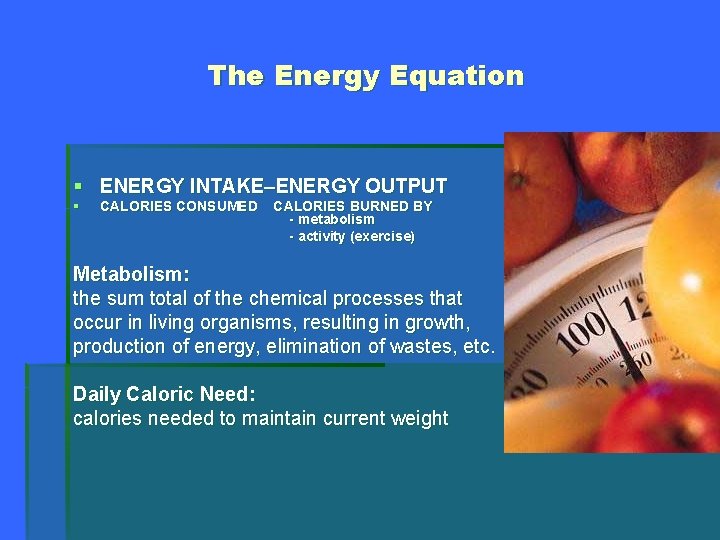
The Energy Equation § ENERGY INTAKE–ENERGY OUTPUT § CALORIES CONSUMED CALORIES BURNED BY - metabolism - activity (exercise) Metabolism: the sum total of the chemical processes that occur in living organisms, resulting in growth, production of energy, elimination of wastes, etc. Daily Caloric Need: calories needed to maintain current weight
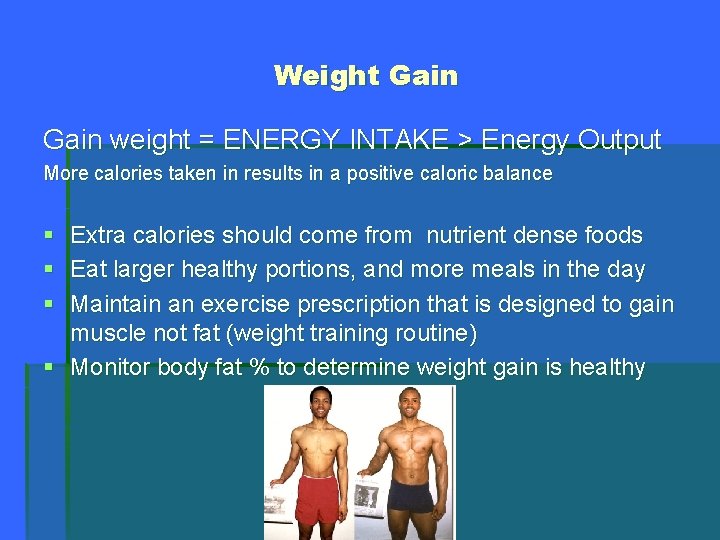
Weight Gain weight = ENERGY INTAKE > Energy Output More calories taken in results in a positive caloric balance § § § Extra calories should come from nutrient dense foods Eat larger healthy portions, and more meals in the day Maintain an exercise prescription that is designed to gain muscle not fat (weight training routine) § Monitor body fat % to determine weight gain is healthy
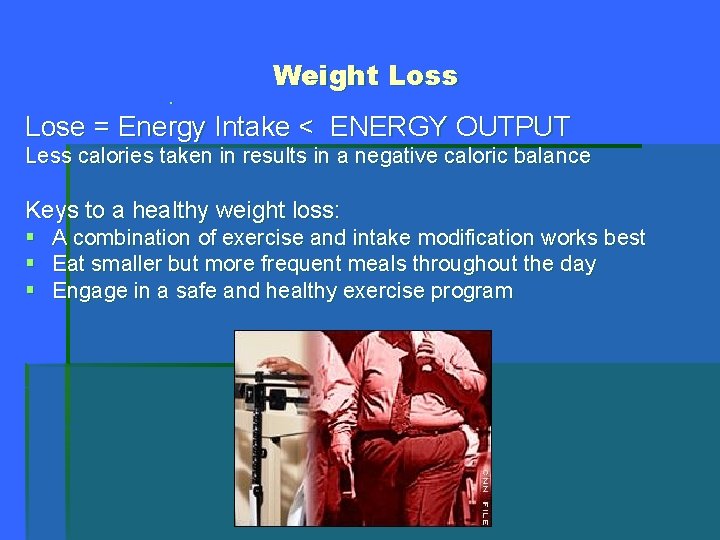
Weight Loss § Lose = Energy Intake < ENERGY OUTPUT Less calories taken in results in a negative caloric balance Keys to a healthy weight loss: § § § A combination of exercise and intake modification works best Eat smaller but more frequent meals throughout the day Engage in a safe and healthy exercise program
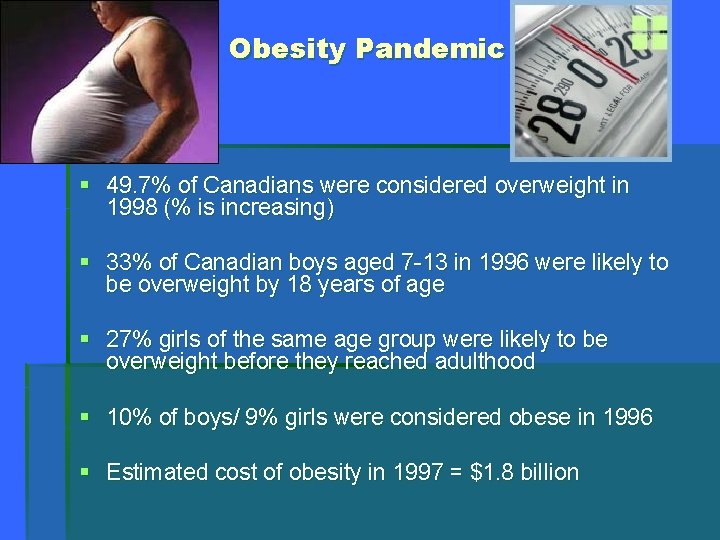
Obesity Pandemic § 49. 7% of Canadians were considered overweight in 1998 (% is increasing) § 33% of Canadian boys aged 7 -13 in 1996 were likely to be overweight by 18 years of age § 27% girls of the same age group were likely to be overweight before they reached adulthood § 10% of boys/ 9% girls were considered obese in 1996 § Estimated cost of obesity in 1997 = $1. 8 billion
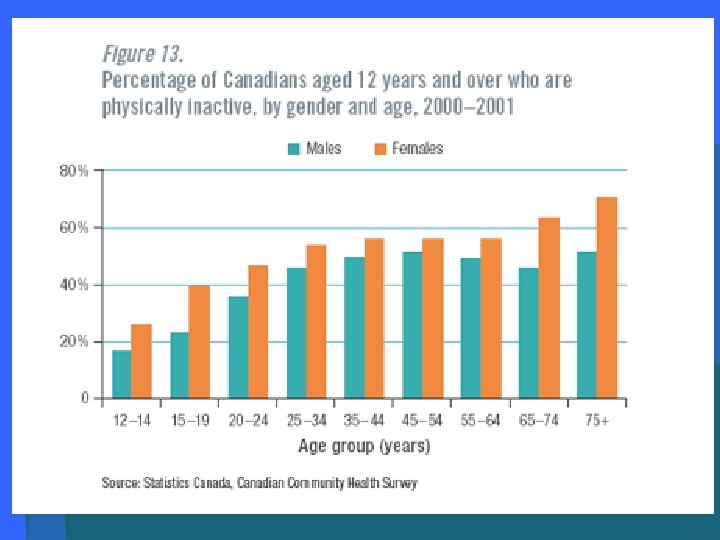
Inactivity of Canadians § An alarming increase in obesity in the past 20 years due largely to Canadians inactivity § > 55% of Canadians are inactive § <33% of Canadians exercise § 250, 000 deaths/ year due to sedentary lifestyle § Only 50% of people trying to lose weight are at adequate activity levels, most just yo-yo diet
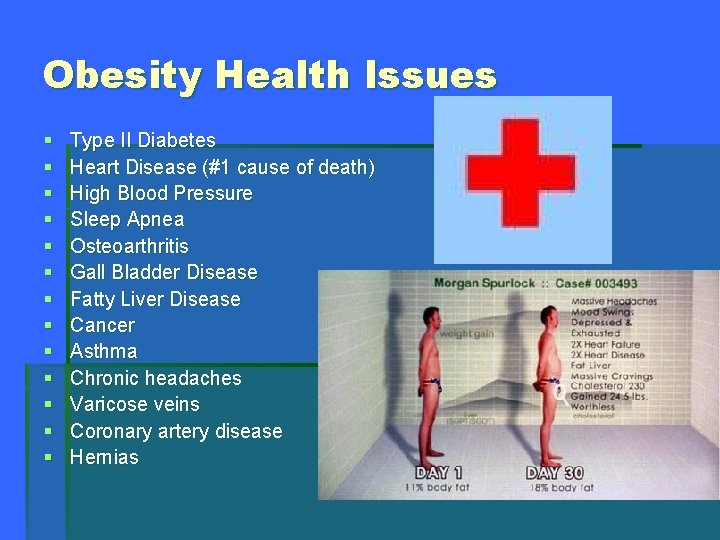
Obesity Health Issues § § § § Type II Diabetes Heart Disease (#1 cause of death) High Blood Pressure Sleep Apnea Osteoarthritis Gall Bladder Disease Fatty Liver Disease Cancer Asthma Chronic headaches Varicose veins Coronary artery disease Hernias
Fad Diets § § Numerous diets (Atkins, The Zone, etc) There is no magic bullet to weight loss “To change your diet, you must change your behavior (relationship with food” It must be an active lifestyle choice: 1) Regulate a healthy balanced meal intake 2) Increase the activity to increase the metabolism
Key Nutrition Tips Everyone knows nutrition is a pivotal part of maximizing an individuals performance. The two main key are: 1) When you eat - The body is in an anaerobic state (wants to build & repair damaged muscle) due to increased insulin levels. If you eat within the first hour of your exercise/ training, you can improve your recovery time 100% - Breakfast is very important in giving energy to the body 2) What you eat - Forget about the supplements!!! - A nutritionally balanced meal of lean protein, complex & simple carbs to replenish the energy stores depleted from exercise