
Nutrition for a Healthy Lifestyle Objectives Upon completion

Nutrition for a Healthy Lifestyle
Objectives Upon completion of this session, you will: • Understand the components and importance of a healthy diet • Learn techniques and ingredients for heart and HIV friendly cooking
What is a healthy diet? • One that maintains or improves overall health. • Emphasizes fruit, vegetables, whole grains and low-fat dairy. • Includes lean meat, fish, poultry, beans, eggs and nuts. • Low in saturated fat, trans fats, cholesterol, salt and added sugar.
Benefits of healthy eating. Why is it important? • • • Effective weight loss solution. Helps prevent and fight disease. Fewer bleeds. Reduces health care costs. Increased energy levels and productivity. Promotes a “go getter” lifestyle.
5 main components of a healthy diet • • • Proteins Carbohydrates Fats Vitamins & Minerals Water
Proteins • 10 -35% of total calories should come from protein. • Good sources: – Lean meat – Poultry & fish – Eggs – Low-fat cheese, yogurt & milk
Carbohydrates • 40 -65% of total calories should come from carbohydrates. • Fiber is a type of carbohydrate. • Good sources of carbohydrates & fiber – Fruits and vegetables – Whole grains, including brown rice – nuts
Fats • 20 -35% of total calories should come from fat. • 4 types of fat: – Saturated fat – Trans fat – Polyunsaturated fat – Monounsaturated fat
Vitamins & Minerals • Needed in smaller amounts by the body. • Play an important role in protecting cells from damage. – Contribute to strong bones – Normal blood clotting
Water • Essential for life • Needed to: – Maintain normal blood pressure – Carry nutrients to cells – Act as a lubricant in joints – Maintain normal body temperature
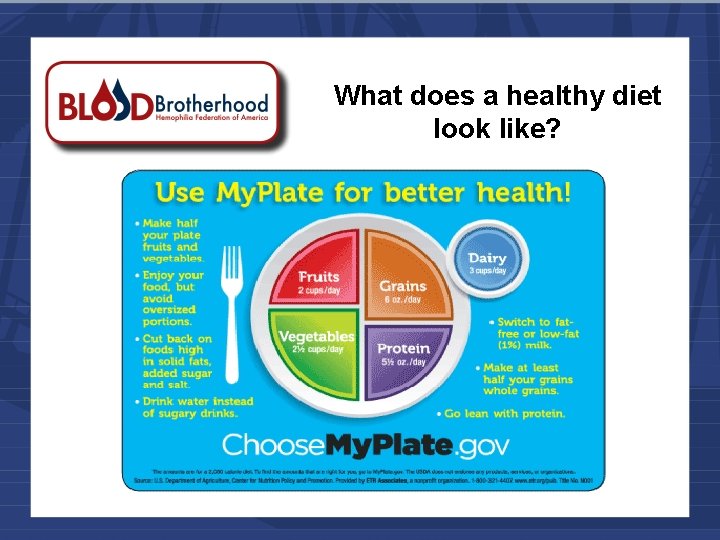
What does a healthy diet look like?
My. Plate guidelines • Portion control • At least ½ plate consists of fruits and vegetables • At least ½ grains should be whole grains • Fat free or low fat milk & dairy • Foods that are low in sodium • Choose water instead of soda or high sugar drinks
HEART HEALTHY & HIV FRIENDLY COOKING
Ingredients • Fats – Choose fats high in Omega-3 fatty acids. • raises HDL, lowers cholesterol • salmon, nuts, flax, olive oil, avocado – limit fats that come from animal sources (saturated fat) • replace with beans (high in fiber, low in fat)
• Fruits & Veggies – High in fiber – Lower cholesterol – Choose brightly colored fruits and vegetables as they contain more vitamins
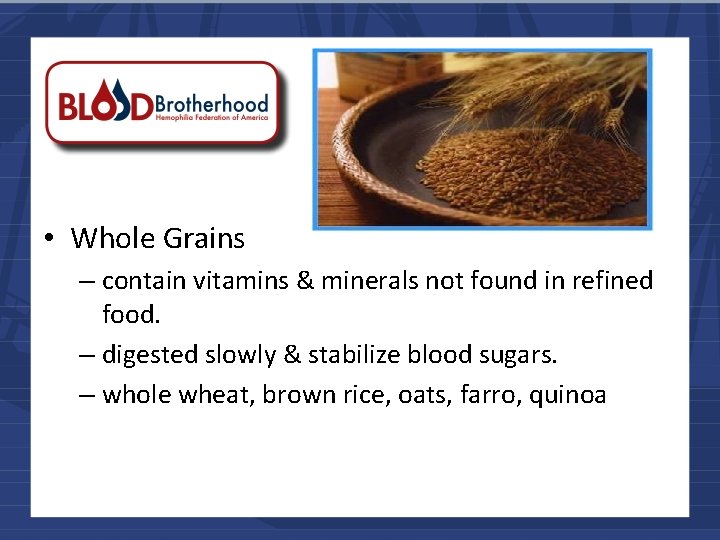
• Whole Grains – contain vitamins & minerals not found in refined food. – digested slowly & stabilize blood sugars. – whole wheat, brown rice, oats, farro, quinoa
• Sodium (salt) – decrease sodium intake. – high sodium levels cause water retention that can increase blood pressure. – used as a preservative in foods. Read labels. – choosing fresh foods is the best way to cut sodium from diet.
Techniques for Healthy Cooking • • Steaming or stir frying Baking, broiling, grilling or roasting Poaching Add herbs and spices
Other safety considerations • Be sure to do thorough hand washing before and after handling food. • Be sure work areas and surfaces are clean prior to and after use. • Be sure eggs are cooked through and not runny.
• Be sure meat and poultry are cooked until no longer pink and to at least 165 degrees F. to prevent food borne illness like Salmonella and Listeria.
Summary • A healthy diet consists of proteins, carbohydrates, healthy fats, vitamins & minerals and water. • Adopting a healthy eating pattern will help keep you at an ideal weight, to be healthier, feel stronger and provide you with general wellness.
• Eating a variety of nutrient dense foods including bright colored fruits & vegetables, whole grains, poultry, fish, nuts and low fat dairy will provide you with the most benefit for heart healthy eating. • Cooking foods naturally & thoroughly without adding any additional fat or sodium are the best ways to keep them nutrient rich, healthy and delicious.
THANK YOU!
- Slides: 23