
Nutrition Focused Physical Exam Identifying Malnutrition The application
- Slides: 23
Nutrition Focused Physical Exam: Identifying Malnutrition The application of hand grip strength in dietetic practice Jane Mc. Clinchy Principal Lecturer University of Hertfordshire
Content • The equipment and methods used to assess hand grip strength • The research relating to the use of hand grip strength and the assessment of nutritional status • Relate this to dietetic practice
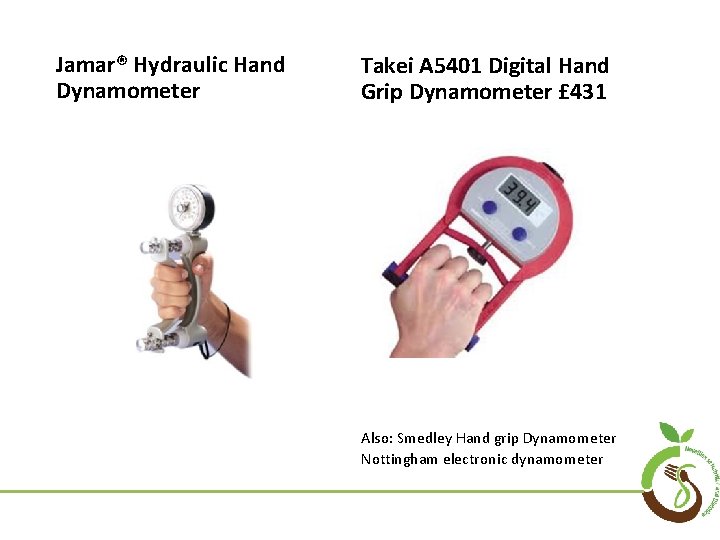
Jamar® Hydraulic Hand Dynamometer Takei A 5401 Digital Hand Grip Dynamometer £ 431 Also: Smedley Hand grip Dynamometer Nottingham electronic dynamometer
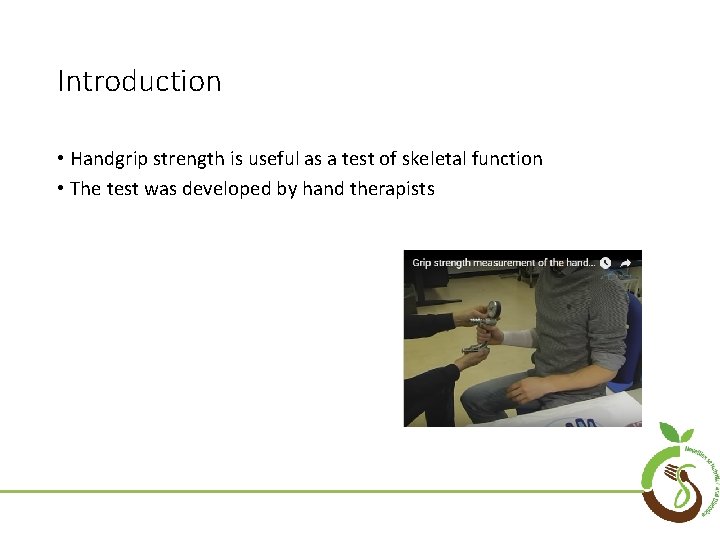
Introduction • Handgrip strength is useful as a test of skeletal function • The test was developed by hand therapists
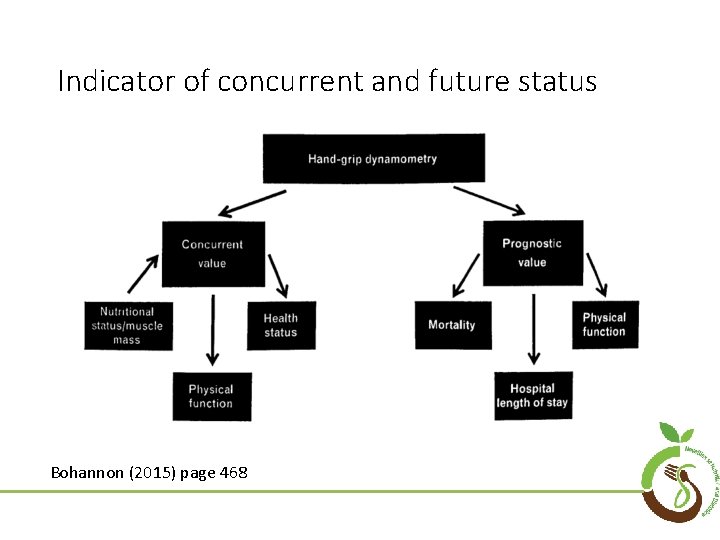
Indicator of concurrent and future status Bohannon (2015) page 468
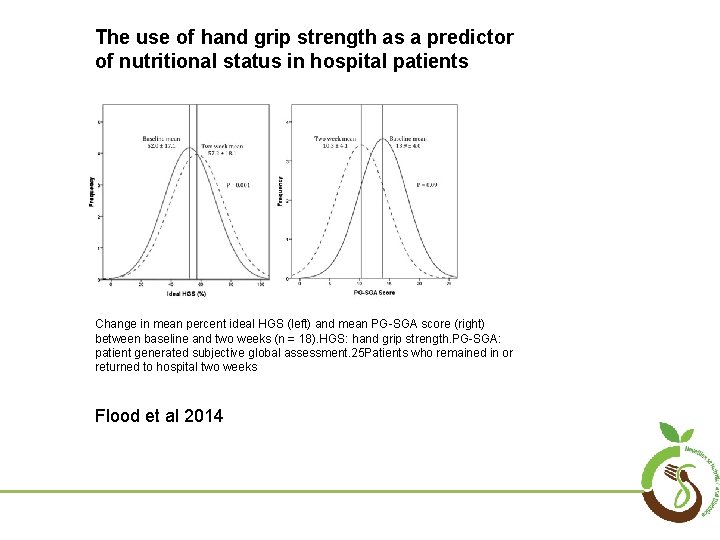
The use of hand grip strength as a predictor of nutritional status in hospital patients Change in mean percent ideal HGS (left) and mean PG-SGA score (right) between baseline and two weeks (n = 18). HGS: hand grip strength. PG-SGA: patient generated subjective global assessment. 25 Patients who remained in or returned to hospital two weeks Flood et al 2014
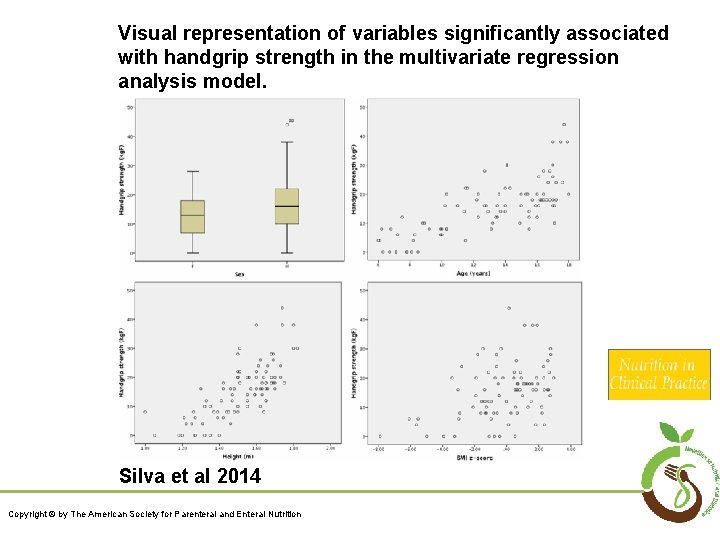
Visual representation of variables significantly associated with handgrip strength in the multivariate regression analysis model. Silva et al 2014 Copyright © by The American Society for Parenteral and Enteral Nutrition
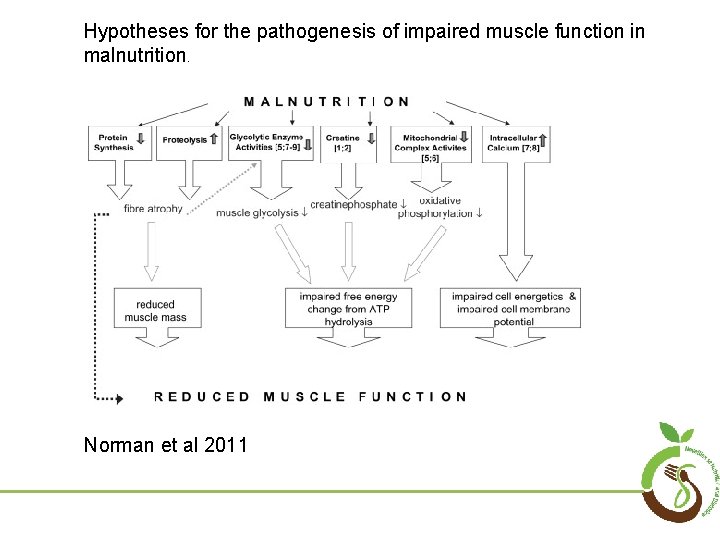
Hypotheses for the pathogenesis of impaired muscle function in malnutrition. Norman et al 2011
Recommended use in dietetics? • For diagnosing ‘severe’ malnutrition (White et al 2012) • Screening for malnutrition in patients with renal disease (Wright and Jones, 2010) • Nutritional status and disease severity in adults with cystic fibrosis (Mead et al. , 2014) • Prognostic predictor in: • Haemodialysis patients (Isoyama et al. , 2012) • Alcoholic liver disease (Plauth et al. , 2006) • Liver disease (Alvares-da-Silva and Reverbel da Silveira. , 2005) • Potential to show impact of intervention (Gandy, 2014)
Application to dietetics • Where changes in fluid status make BMI unreliable • For auditing the outcome of our clinics • Would like to use it more frequently • Plan to review the values being used Specialist areas • Liver patients • Haemodialysis patients • Children and adults with cystic fibrosis • GI Clinic • Malnutrition in the elderly
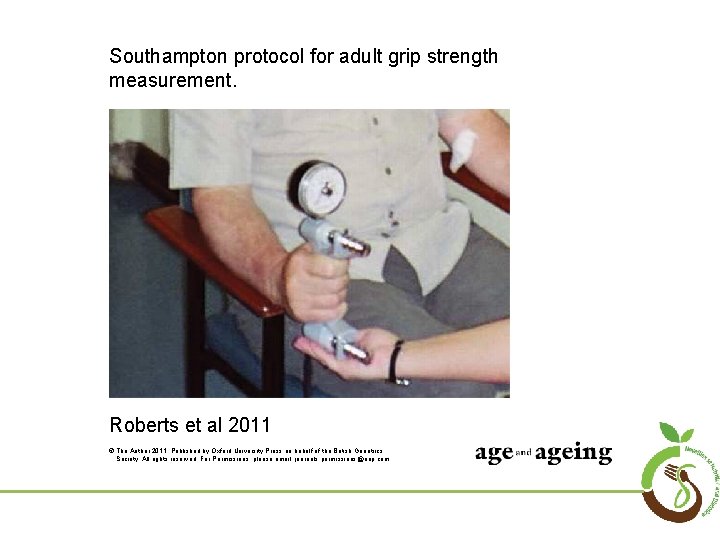
Southampton protocol for adult grip strength measurement. Roberts et al 2011 © The Author 2011. Published by Oxford University Press on behalf of the British Geriatrics Society. All rights reserved. For Permissions, please email: journals. permissions@oup. com
Measurement top tips • Calibrate the equipment • Set to kg • Use the same method • Standing or sitting does not seem to matter (see Dodds et al 2014) • Dominant vs non dominant –studies vary • Aiming to get the maximal grip strength • Give patients time to get used to the equipment • Compare to normative values for your population
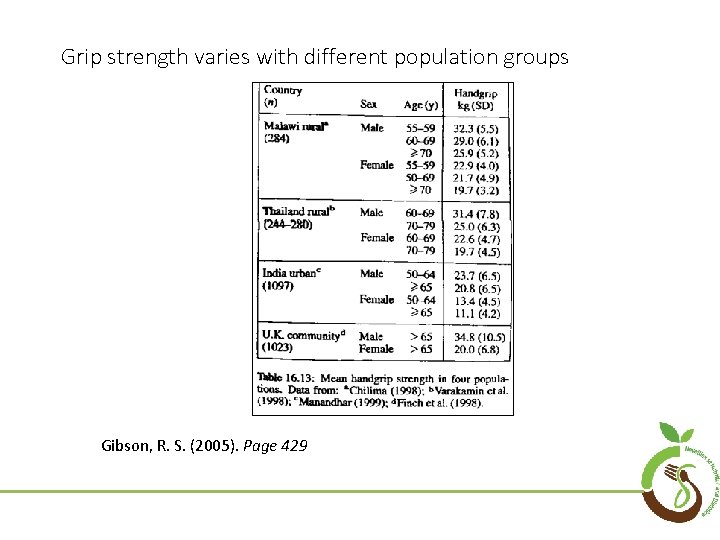
Grip strength varies with different population groups Gibson, R. S. (2005). Page 429
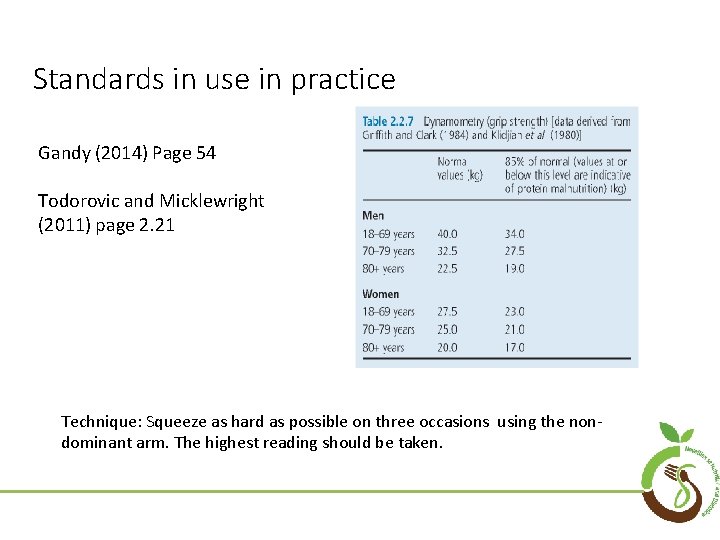
Standards in use in practice Gandy (2014) Page 54 Todorovic and Micklewright (2011) page 2. 21 Technique: Squeeze as hard as possible on three occasions using the nondominant arm. The highest reading should be taken.
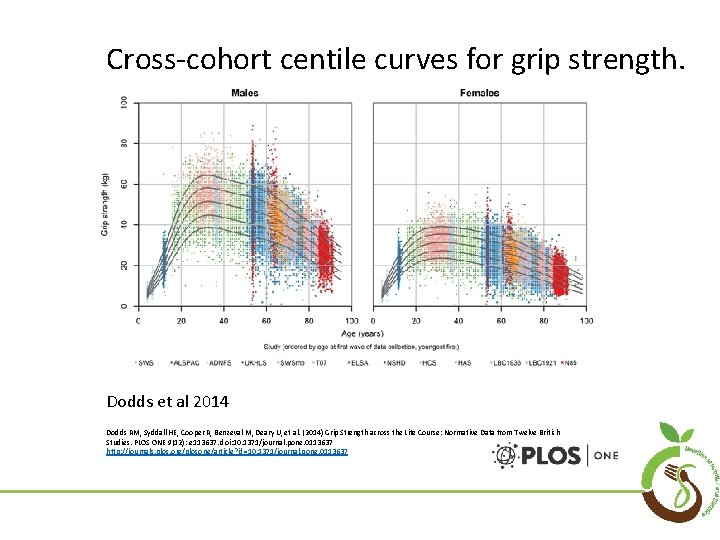
Cross-cohort centile curves for grip strength. Dodds et al 2014 Dodds RM, Syddall HE, Cooper R, Benzeval M, Deary IJ, et al. (2014) Grip Strength across the Life Course: Normative Data from Twelve British Studies. PLOS ONE 9(12): e 113637. doi: 10. 1371/journal. pone. 0113637 http: //journals. plos. org/plosone/article? id=10. 1371/journal. pone. 0113637
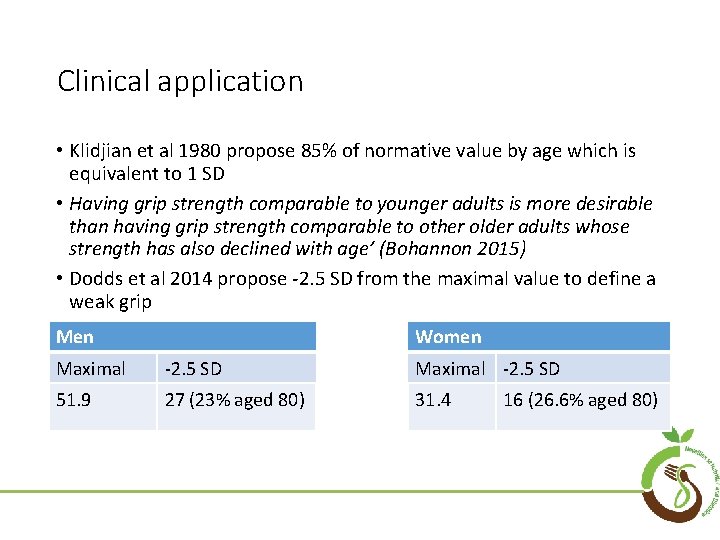
Clinical application • Klidjian et al 1980 propose 85% of normative value by age which is equivalent to 1 SD • Having grip strength comparable to younger adults is more desirable than having grip strength comparable to other older adults whose strength has also declined with age’ (Bohannon 2015) • Dodds et al 2014 propose -2. 5 SD from the maximal value to define a weak grip Men Women Maximal -2. 5 SD 51. 9 27 (23% aged 80) 31. 4 16 (26. 6% aged 80)
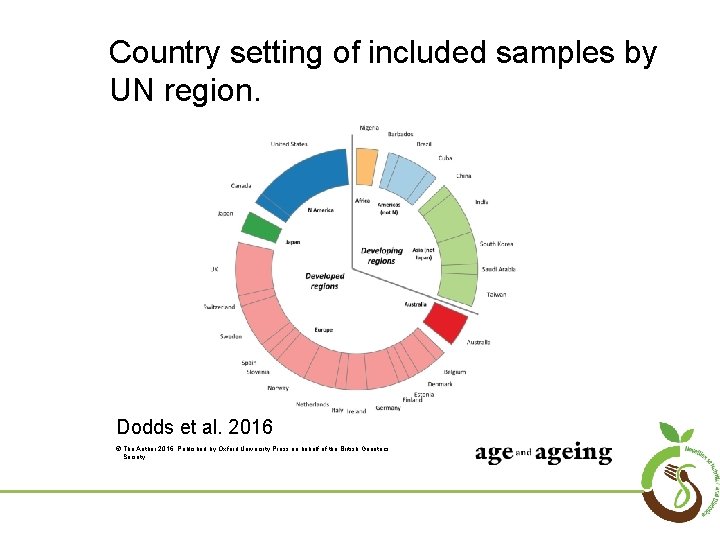
Country setting of included samples by UN region. Dodds et al. 2016 © The Author 2016. Published by Oxford University Press on behalf of the British Geriatrics Society.
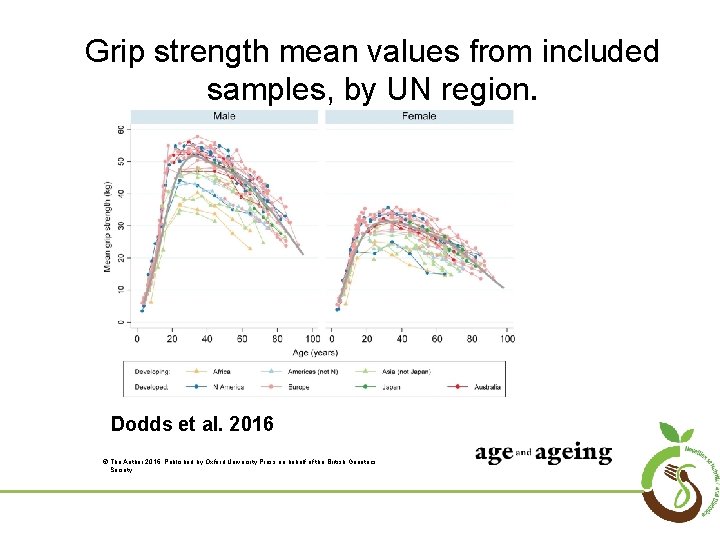
Grip strength mean values from included samples, by UN region. Dodds et al. 2016 © The Author 2016. Published by Oxford University Press on behalf of the British Geriatrics Society.
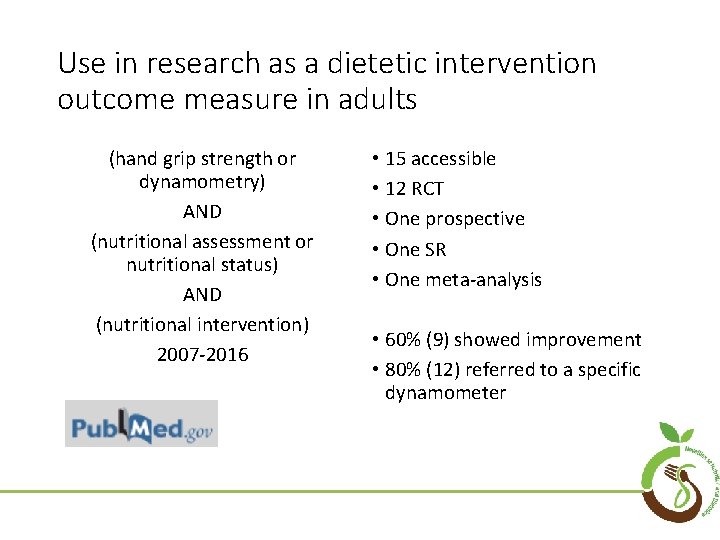
Use in research as a dietetic intervention outcome measure in adults (hand grip strength or dynamometry) AND (nutritional assessment or nutritional status) AND (nutritional intervention) 2007 -2016 • 15 accessible • 12 RCT • One prospective • One SR • One meta-analysis • 60% (9) showed improvement • 80% (12) referred to a specific dynamometer
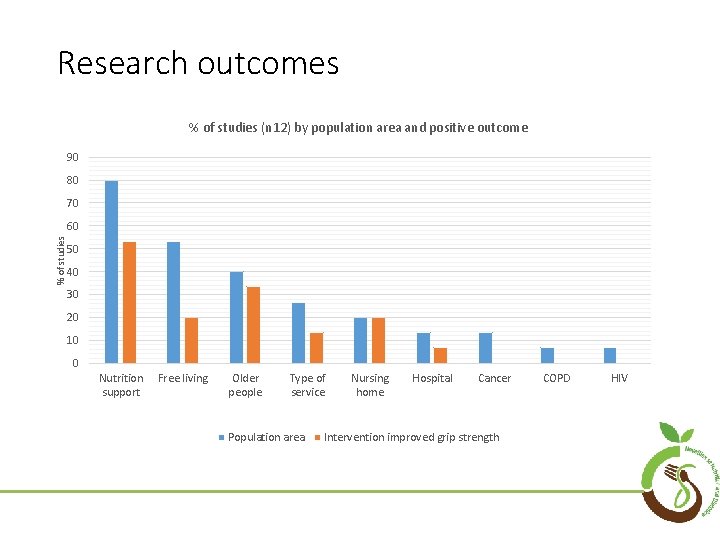
Research outcomes % of studies (n 12) by population area and positive outcome 90 80 70 % of studies 60 50 40 30 20 10 0 Nutrition support Free living Older people Type of service Population area Nursing home Hospital Cancer Intervention improved grip strength COPD HIV
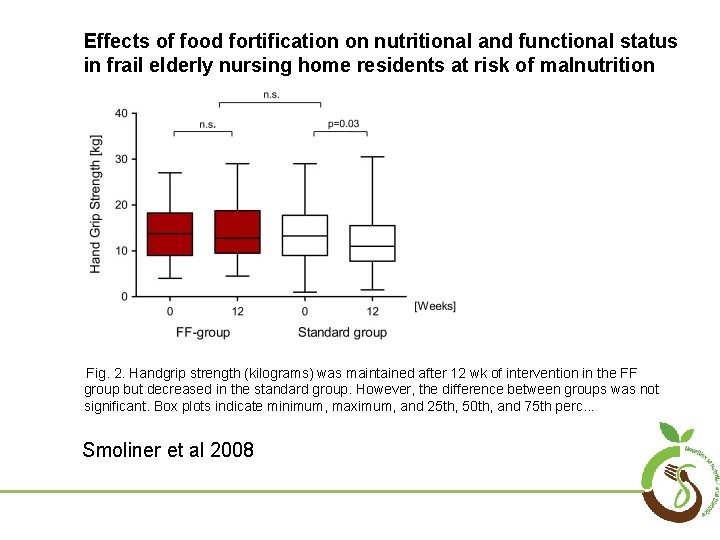
Effects of food fortification on nutritional and functional status in frail elderly nursing home residents at risk of malnutrition Fig. 2. Handgrip strength (kilograms) was maintained after 12 wk of intervention in the FF group but decreased in the standard group. However, the difference between groups was not significant. Box plots indicate minimum, maximum, and 25 th, 50 th, and 75 th perc. . . Smoliner et al 2008
Conclusion • Standard method • Normative values for your community • Use 1 SD to define weak grip • Simple ‘bedside’ / clinical parameter • Useful in dietetics as a tool to monitor nutritional status • Alongside other methods
References • Álvares-da-Silva, M. á. R. , & Reverbel da Silveira, T. (2005). Comparison between handgrip strength, subjective global assessment, and prognostic nutritional index in assessing malnutrition and predicting clinical outcome in cirrhotic outpatients. Nutrition, 21(2), 113 -117. doi: http: //dx. doi. org/10. 1016/j. nut. 2004. 02. 002 • Bohannon, R. W. (2015). Muscle strength: clinical and prognostic value of hand-grip dynamometry. Current Opinion in Clinical Nutrition & Metabolic Care, 18(5), 465 -470. doi: 10. 1097/mco. 0000000202 • Dodds, R. M. , Syddall, H. E. , Cooper, R. , Benzeval, M. , Deary, I. J. , Dennison, E. M. , . . . Sayer, A. A. (2014). Grip Strength across the Life Course: Normative Data from Twelve British Studies. PLo. S One, 9(12), e 113637. doi: 10. 1371/journal. pone. 0113637 • Dodds, R. M. , Syddall, H. E. , Cooper, R. , Kuh, D. , Cooper, C. , & Sayer, A. A. (2016). Global variation in grip strength: a systematic review and metaanalysis of normative data. Age and Ageing, 45(2), 209 -216. doi: 10. 1093/ageing/afv 192 • Flood, A. , Chung, A. , Parker, H. , Kearns, V. , & O’Sullivan, T. A. (2014). The use of hand grip strength as a predictor of nutrition status in hospital patients. Clinical Nutrition, 33(1), 106 -114. doi: http: //dx. doi. org/10. 1016/j. clnu. 2013. 003 • Gandy, J. (2014). Manual of dietetic practice (5 th ed. ). Hoboken: Wiley. pagexx • Gibson, R. S. (2005). Principles of nutritional assessment (2 nd ed. ). New York Oxford University Press. • Isoyama, N. , Qureshi, A. R. , Avesani, C. M. , Lindholm, B. , Bàràny, P. , Heimbürger, O. , . . . Carrero, J. J. (2014). Comparative Associations of Muscle Mass and Muscle Strength with Mortality in Dialysis Patients. Clinical Journal of the American Society of Nephrology, 9(10), 1720 -1728. doi: 10. 2215/cjn. 10261013 • Martín-Ponce, E. , Hernández-Betancor, I. , González-Reimers, E. , Hernández-Luis, R. , Martínez-Riera, A. , & Santolaria, F. (2014). Prognostic value of physical function tests: hand grip strength and six-minute walking test in elderly hospitalized patients. Scientific Reports, 4, 7530. doi: 10. 1038/srep 07530 • Mead, L. , Watson, H. , Cousins, C. , Haworth, C. , White, H. , & Floto, R. A. (2014). Handgrip strength is associated with disease severity in adults with CF. J Cyst Fibrosis, 13(2), S 101. • Norman, K. , Stobaus, N. , Gonzalez, M. C. , Schulzke, J. D. , & Pirlich, M. (2011). Hand grip strength: outcome predictor and marker of nutritional status. Clin Nutr, 30(2), 135 -142. doi: 10. 1016/j. clnu. 2010. 09. 010 • Plauth, M. , Cabré, E. , Riggio, O. , Assis-Camilo, M. , Pirlich, M. , Kondrup, J. , . . . Nolte, W. ESPEN Guidelines on Enteral Nutrition: Liver disease. Clinical Nutrition, 25(2), 285 -294. doi: 10. 1016/j. clnu. 2006. 018 • Roberts, H. C. , Denison, H. J. , Martin, H. J. , Patel, H. P. , Syddall, H. , Cooper, C. , & Sayer, A. A. (2011). A review of the measurement of grip strength in clinical and epidemiological studies: towards a standardised approach. Age and Ageing. doi: 10. 1093/ageing/afr 051 • Silva, C. , Amaral, T. F. , Silva, D. , Oliveira, B. M. P. M. , & Guerra, A. (2014). Handgrip Strength and Nutrition Status in Hospitalized Pediatric Patients. Nutrition in Clinical Practice, 29(3), 380 -385. doi: 10. 1177/0884533614528985 • Smoliner, C. , Norman, K. , Scheufele, R. , Hartig, W. , Pirlich, M. , & Lochs, H. (2008). Effects of food fortification on nutritional and functional status in frail elderly nursing home residents at risk of malnutrition. Nutrition, 24(11 -12), 1139 -1144. doi: 10. 1016/j. nut. 2008. 06. 024 • White, J. V. , Guenter, P. , Jensen, G. , Malone, A. , Schofield, M. , Group, A. M. W. , . . . Directors, a. t. A. S. P. E. N. B. o. (2012). Consensus Statement: Academy of Nutrition and Dietetics and American Society for Parenteral and Enteral Nutrition: Characteristics Recommended for the Identification and Documentation of Adult Malnutrition (Undernutrition). Journal of Parenteral and Enteral Nutrition, 36(3), 275 -283. doi: 10. 1177/0148607112440285 • Wright, M. , & Jones, C. (2010). The UK Renal Association. Clinical practice guidelines: nutrition in CKD. www. renal. org/guidelines: The UK Renal Association.