
Nutrition Eating Drinking Children with disabilities What difficulties
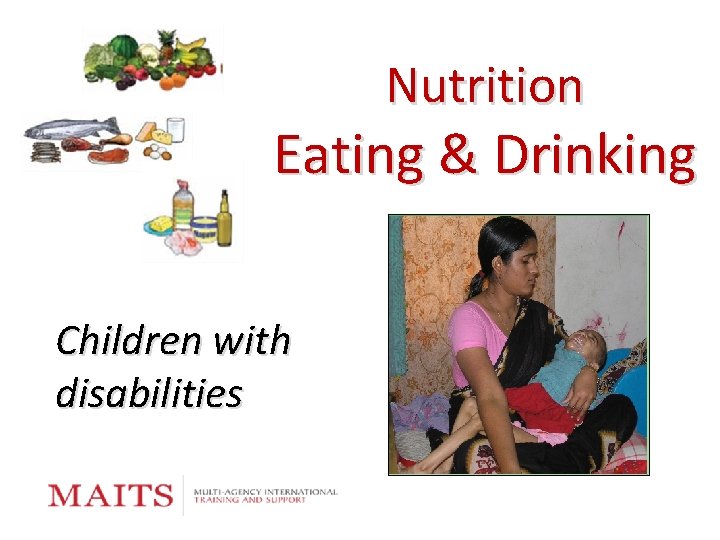
Nutrition Eating & Drinking Children with disabilities
What difficulties do your children have with eating & drinking?
Difficulties children with disabilities have 1. Chewing 2. Swallowing - coughing / choking / chest infections 3. Communication – can’t indicate hungry, full etc. 4. Self-feeding – unable to self-feed OR puts too much in the mouth at once OR eats too quickly 5. Vomiting / regurgitation (‘reflux’) 6. Fussy eating or refusal to eat
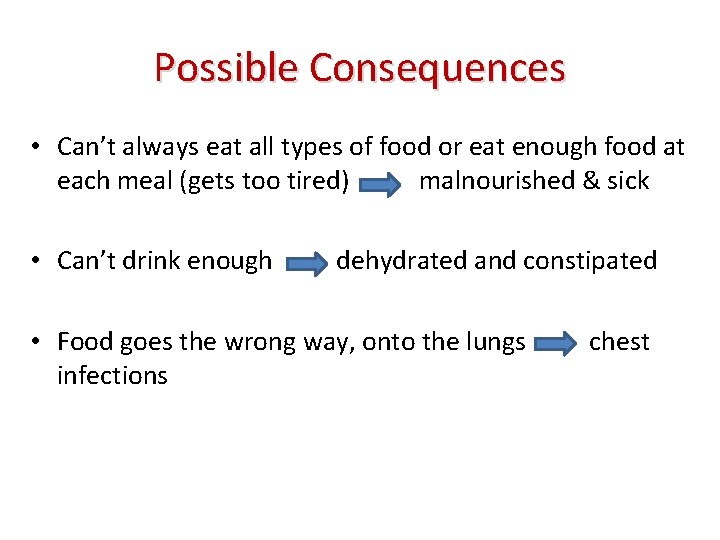
Possible Consequences • Can’t always eat all types of food or eat enough food at each meal (gets too tired) malnourished & sick • Can’t drink enough dehydrated and constipated • Food goes the wrong way, onto the lungs infections chest
• What are the biggest issues for you? • How do you get round them?
Nutrition • Why is nutrition important for children? – Survival, growth and development – Good health – Energy – Mental ability – Well-being .
How do we achieve good nutrition? • Enough food • Good food What is good food?
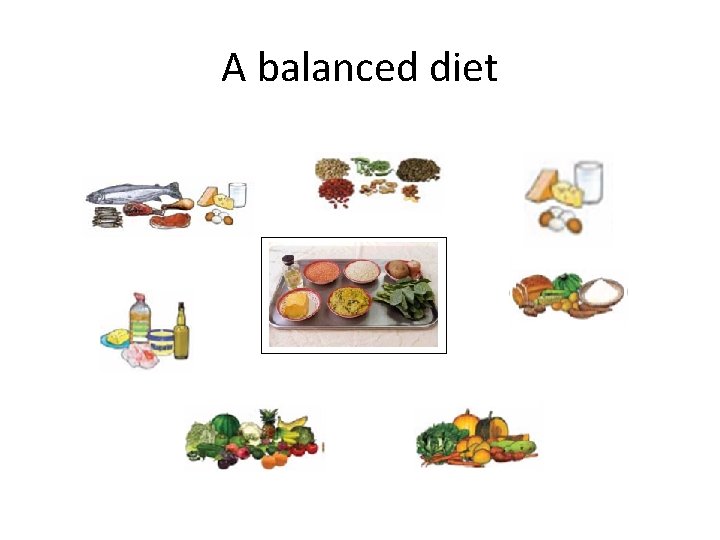
A balanced diet
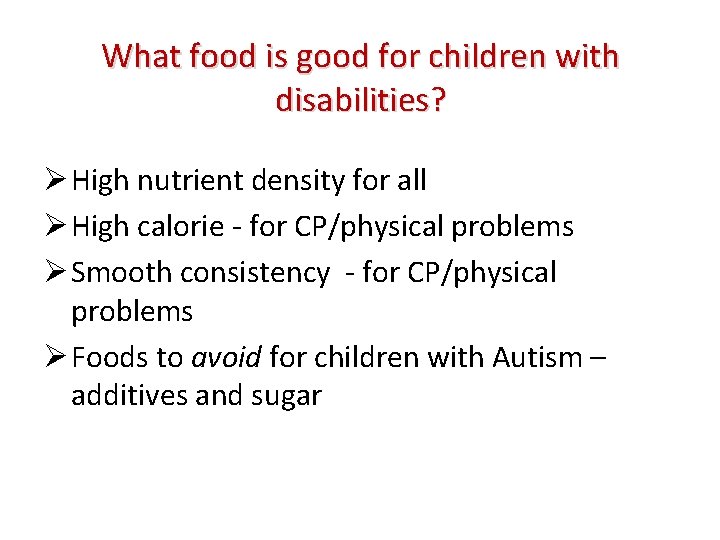
What food is good for children with disabilities? Ø High nutrient density for all Ø High calorie - for CP/physical problems Ø Smooth consistency - for CP/physical problems Ø Foods to avoid for children with Autism – additives and sugar
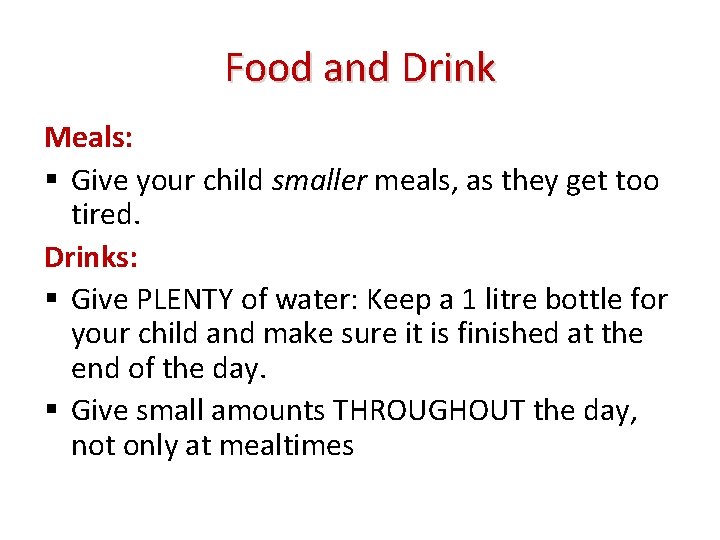
Food and Drink Meals: Give your child smaller meals, as they get too tired. Drinks: Give PLENTY of water: Keep a 1 litre bottle for your child and make sure it is finished at the end of the day. Give small amounts THROUGHOUT the day, not only at mealtimes
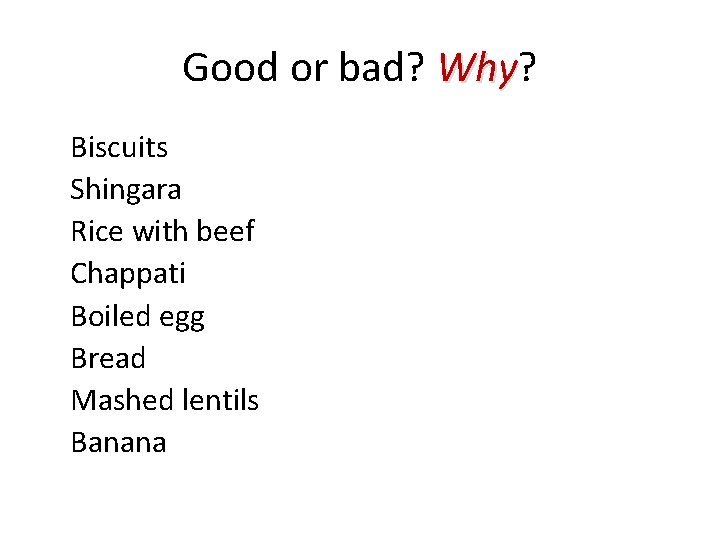
Good or bad? Why Biscuits Shingara Rice with beef Chappati Boiled egg Bread Mashed lentils Banana
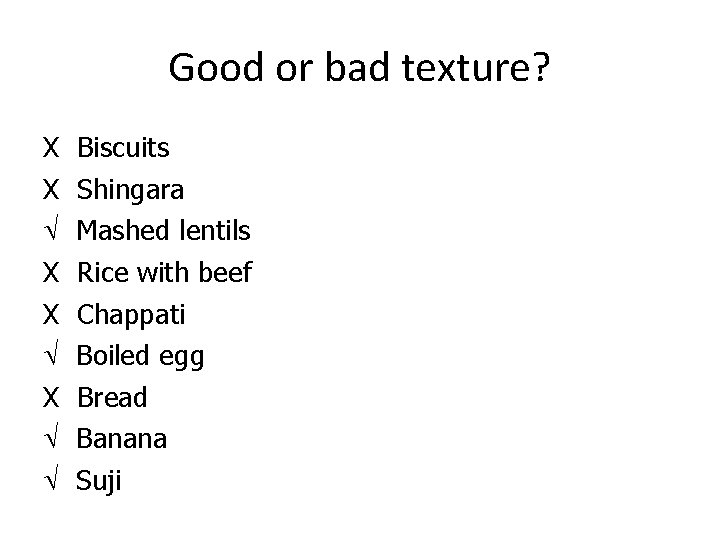
Good or bad texture? X X X Biscuits Shingara Mashed lentils Rice with beef Chappati Boiled egg Bread Banana Suji
What local recipes? • • What do your children eat? How could you modify the nutrient value? How could you modify the consistency? What snacks can you give between meals to compensate for the smaller meals your child eats? Discuss local recipes: - Modifications to increase calories & nutrients - Modifications needed for appropriate consistency (see Guidelines for details)
Communication How do your children know it is time to eat? How can they tell you they are hungry/thirsty? How do they say they are full or want more? Can you offer choices? ‘Total Communication’
Total Communication This means using several forms of communication at once, to help your child understand you, and to model methods they can use. Start with: • Talking & Objects & Gestures Later: • Talking & Pictures & Signs

Objects of Reference
PRACTICAL During the break • Feed your partner sitting slouched - give the food quickly. • Lean your head back when you drink your tea and swallow your food • Try feeding partner when they are blind-folded Describe to the group what it was like - discuss…
What else? • • • Environment, hygiene & teeth-cleaning Positioning Utensils Support with self-feeding Responsive feeding methods – self or other
Hygiene Discuss: • Hand-washing (flowing source + soap or ash + air dry – avoid shared towel) • Utensils (rinse in good water & dry in sun) • Washing children’s hands (same way as yours) • Washing children’s face before eating • Wiping table clean (use clean cloth) • Clean teeth of children at risk of chest infection before eating as well as after
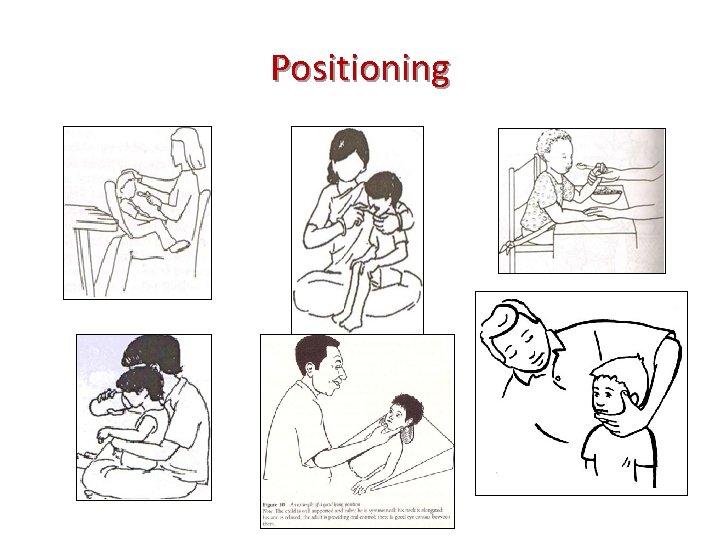
Positioning
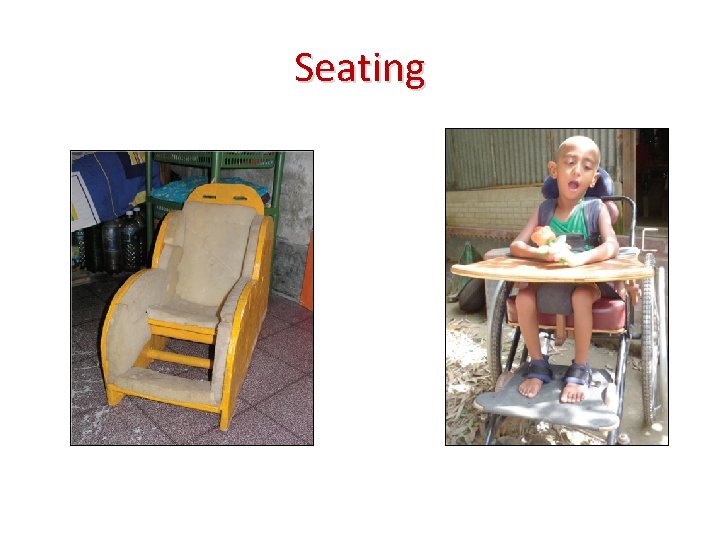
Seating
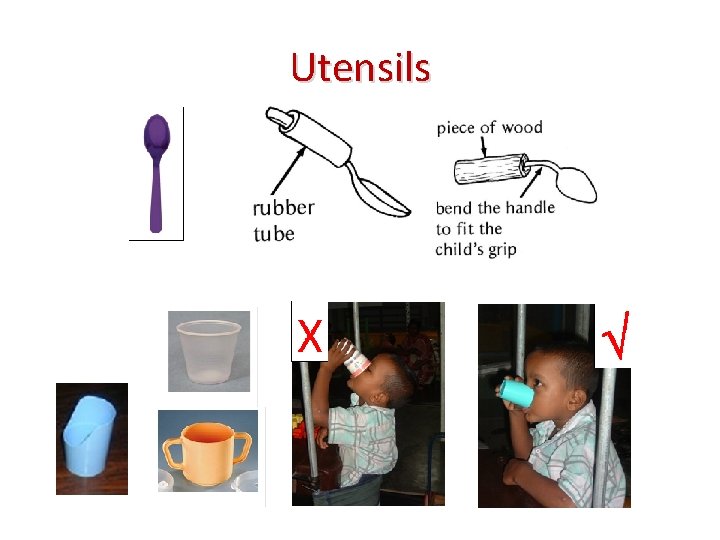
Utensils
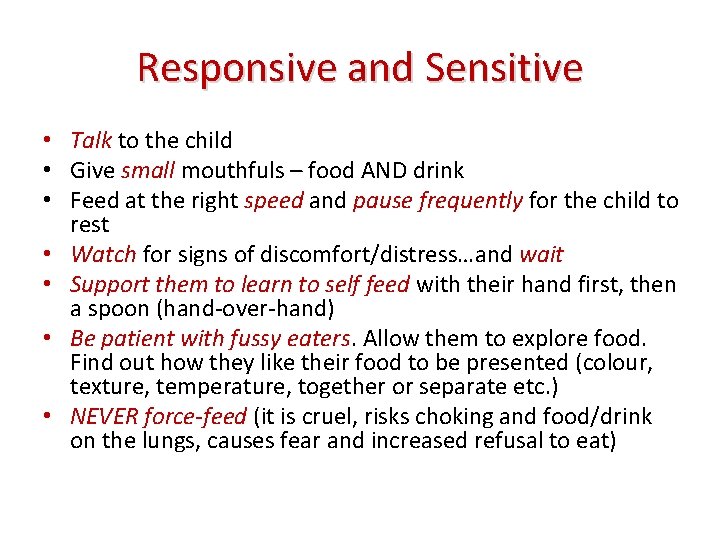
Responsive and Sensitive • Talk to the child • Give small mouthfuls – food AND drink • Feed at the right speed and pause frequently for the child to rest • Watch for signs of discomfort/distress…and wait • Support them to learn to self feed with their hand first, then a spoon (hand-over-hand) • Be patient with fussy eaters. Allow them to explore food. Find out how they like their food to be presented (colour, texture, temperature, together or separate etc. ) • NEVER force-feed (it is cruel, risks choking and food/drink on the lungs, causes fear and increased refusal to eat)
Seeking medical help • • Frequent vomiting / regurgitation Epilepsy Severe malnutrition or dehydration Chest infection
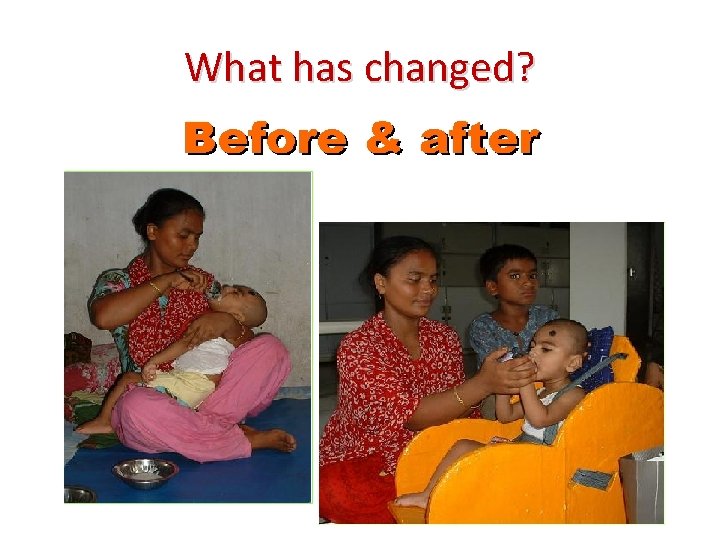
What has changed?
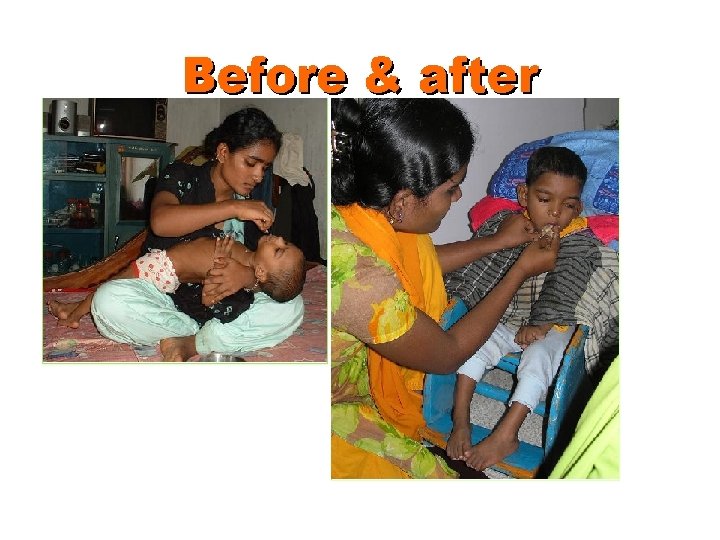
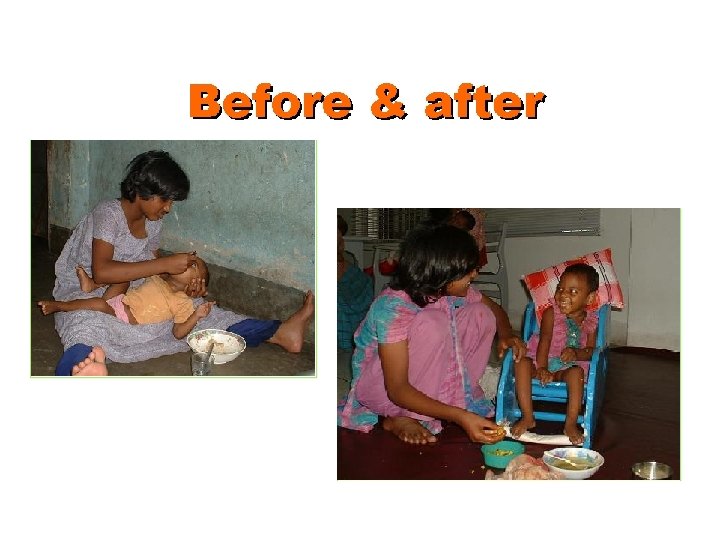
Watch videos Before: what suggestions would you give for change After: what has changed? What is good about this. Is there anything you would still like to change further?
What will you do differently? Remember: It will take time for you and your child to get used to a new way of feeding. Be patient and keep trying because it is really worth it! In time, mealtimes will be easier and your child will be happier and healthier.
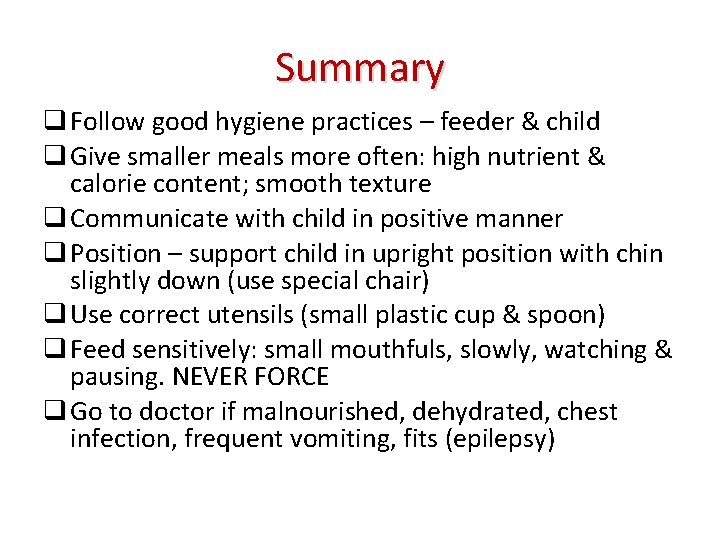
Summary Follow good hygiene practices – feeder & child Give smaller meals more often: high nutrient & calorie content; smooth texture Communicate with child in positive manner Position – support child in upright position with chin slightly down (use special chair) Use correct utensils (small plastic cup & spoon) Feed sensitively: small mouthfuls, slowly, watching & pausing. NEVER FORCE Go to doctor if malnourished, dehydrated, chest infection, frequent vomiting, fits (epilepsy)

Educational Video Drama
FEEDBACK A. Knowledge before 1. low 2. medium 3. high B. Knowledge after 1. low 2. medium 3. high C. Training was 1. not very useful 2. somewhat useful 3. very useful
- Slides: 32