
Nutrition Chapter 47 1 Nutrients Carbohydrates Proteins Lipidsfats
Nutrition Chapter 47 1
Nutrients – Carbohydrates – Proteins – Lipids/fats – Vitamins – Minerals – Water 2
Carbohydrates • Sugar (simple) • Starches (complex) • Fiber • Function • Food sources 3
Proteins • Essential amino acids • Nonessential amino acids • Incomplete proteins • Function • Food sources 4
Lipids (fats) • Saturated fats • Unsaturated fats • Triglycerides • Cholesterol • Function 5
Vitamins • Fat soluble – A, D, E, K • Water soluble – C and B complex vitamin • See vitamin/mineral handout • Supplements 6
Minerals • Inorganic elements found in nature • See vitamin/mineral handout • Supplements Vitamin/mineral Handout 7
Energy Balance • Caloric value • Metabolism • Basal metabolic rate (BMR) • Resting energy expenditure (REE) 8
Body Mass and Body Weight • Ideal Body Weight (IBW) – Box 47 -1 pg 1131 • Body Mass Index (BMI) – Box 47 -2 pg. 1131 • Percent body fat
Other Factors that Influence Nutrition • Development • Gender • Ethnicity and culture – Culturally responsive care pg. 1132 • Beliefs about food • Personal preferences • Religious practices 10
Other Factors that Influence Nutrition • • Lifestyle Economics Medications & therapy Health Alcohol consumption Advertising Psychological factors 11

Developmental Nutritional Needs • • Neonates to 1 year Demand feeding Regurgitation (spitting up) Introduction of solid foods – No honey • Bottle mouth syndrome 12
Developmental Nutritional Needs • Toddlers • Preschoolers 13
Developmental Nutritional Needs • School Age Children – Balanced diet of about 2400 Kcal – Breakfast – Teach child about healthful eating – Poor eating habits obesity 14
Developmental Nutritional Needs • Adolescent’s needs • Anoxeria nervosa • Bulimia 15
Developmental Nutritional Needs • Young Adult • Middle aged adult 16
Developmental Nutritional Needs • Older Adult 17
Standards for a Healthy Diet • Dietary Guidelines USDA – Shift to plant-based foods – Reduce foods with added sugars & fats – Exercise regularly – Consume foods daily with vitamin D, calcium, potassium, and fiber
Standards for a Healthy Diet – Keep fat to 20% - 35% of total calories • < 7% saturated fatty acids/day • < 300 mg cholesterol/day – Consume less than 1, 500 mg sodium/day – Moderate alcohol, if drink
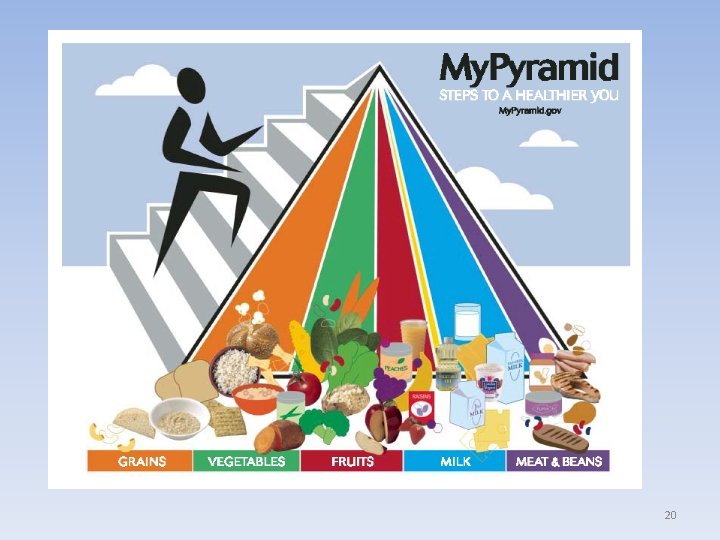
20
Recommended Daily Intake based on back USDA guidelines(pg. 1140) My Pyramid My Plate 21

22
Vegetarian Diets (pg. 1142) • • • Lacto-Ovo Lacto Ovo Pesco Vegan 23
Altered Nutrition • Malnutrition • Overnutrition – Overweight, obese • Undernutrition
Nutritional Assessment (pg. 1143) • • History Measurements Physical exam Lab values 25
Nursing Diagnosis • Impaired nutrition: less than body requirements • Impaired nutrition: greater than body requirements • Readiness of enhanced nutrition • Ineffective coping • Deficient fluid volume • Excess fluid volume • Deficient knowledge • Impaired swallowing • Risk for aspiration 26
Goals • Regain specified weight AEB weight gain of ½ to 1 pound per week • Maintain or restore optimal nutritional status AEB consumption of at least 50% of a pureed diet at each meal. • Will decrease weight AEB weight reduction of 1 -2 pounds per week • Will verbalize methods to manage stress, such as relaxation exercises by discharge. 27
Special Diets (pg. 1151) As discussed in clinical learning lab • • • Regular NPO Clear liquids Full liquids Soft diet – Pureed diet • • Diet as tolerated Calorie restricted Fat restricted Sodium restricted • Dysphagia 28

QUESTIONS? ? 29
- Slides: 29