
Nutrition Carbohydrates Chapter 10 Lesson 2 Pg 258
Nutrition: Carbohydrates Chapter 10 Lesson 2 Pg. 258 -260
Carbohydrates Objective 1 : Describe the functions of the simple and complex carbohydrates Objective 2 : Describe the relationship between glucose and glycogen Objective 3 : Describe the difference between type 1 and type 2 diabetes Objective 4 : Identify the benefits of fiber
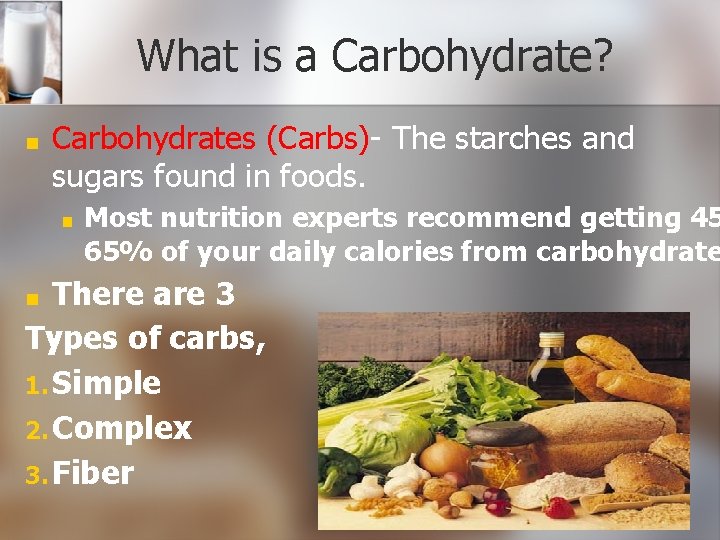
What is a Carbohydrate? ■ Carbohydrates (Carbs)- The starches and sugars found in foods. ■ Most nutrition experts recommend getting 45 65% of your daily calories from carbohydrate There are 3 Types of carbs, 1. Simple 2. Complex 3. Fiber ■
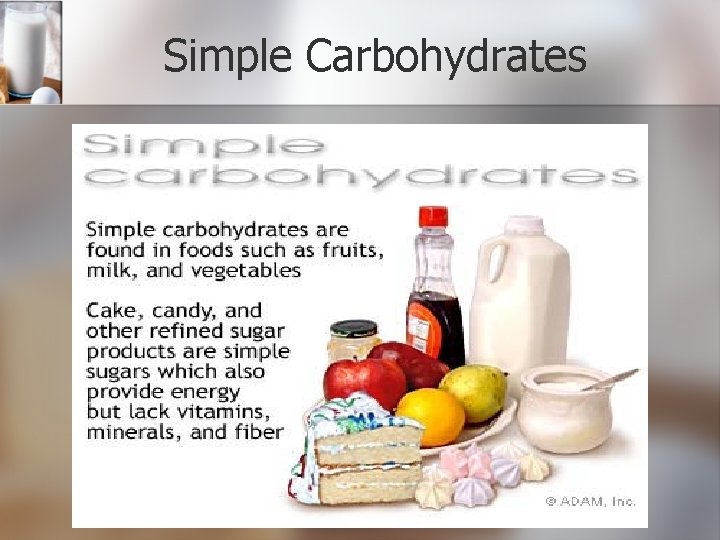
Simple Carbohydrates ■ What are simple carbohydrates ? ■ ■ Also know as EMPTY CALORIES Sugars; fructose and lactose Found primarily in fruit and milk Most familiar; Sucrose ■ ■ ■ Found naturally; plants Refined to make table sugar Sucrose is also added to manufactured foods ■ http: //abcnews. go. com/GMA/video/sugar-bad-health-weight-alcohol-15496307 ■ https: //www. youtube. com/watch? v=Rd 8 djv. Mh. EI 4

Simple Carbohydrates
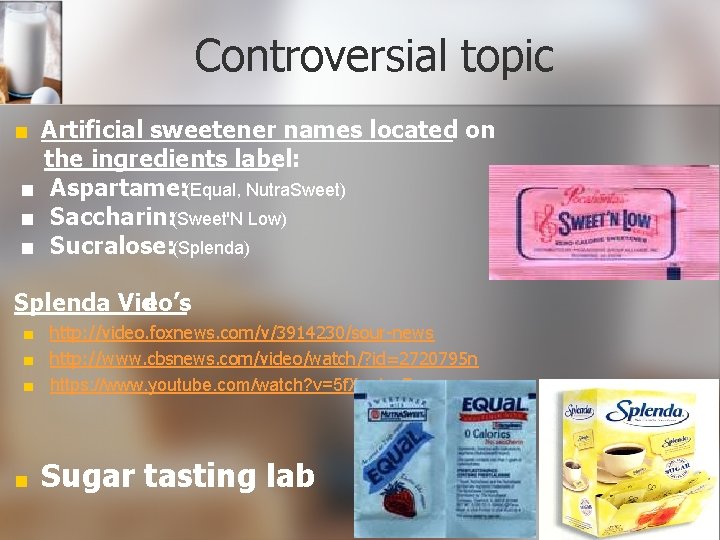
Controversial topic ■ Artificial sweetener names located on the ingredients label: ■ Aspartame: (Equal, Nutra. Sweet) ■ Saccharin: (Sweet'N Low) ■ Sucralose: (Splenda) Splenda Vid eo’s ■ http: //video. foxnews. com/v/3914230/sour-news ■ http: //www. cbsnews. com/video/watch/? id=2720795 n ■ https: //www. youtube. com/watch? v=5 f. Xnxipc. Bgs ■ Sugar tasting lab

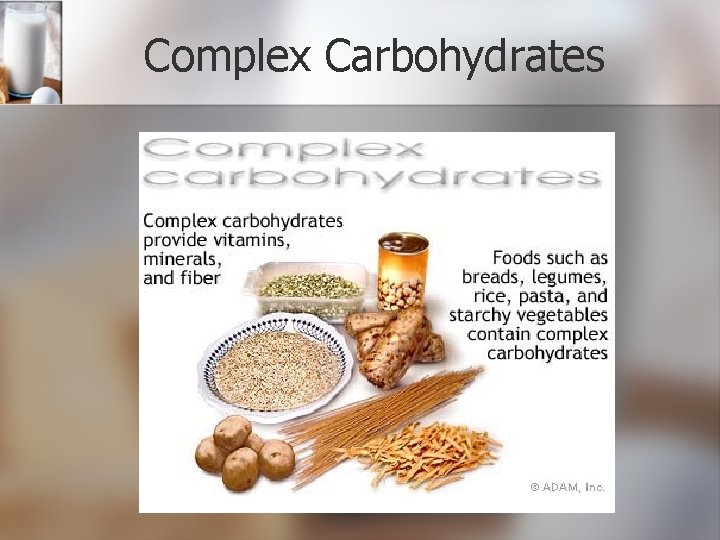
Complex Carbohydrates ■ ■ Complex Carbs, or Starches are long chains of sugars linked together. (long term energy compared to sugars) ■ Found primarily in; whole grains, nuts, seeds, legumes and tubers (root veggies) Did you know? ■ Your body must break down complex carbs to simple carbs before it can use them for energy.
Complex Carbohydrates
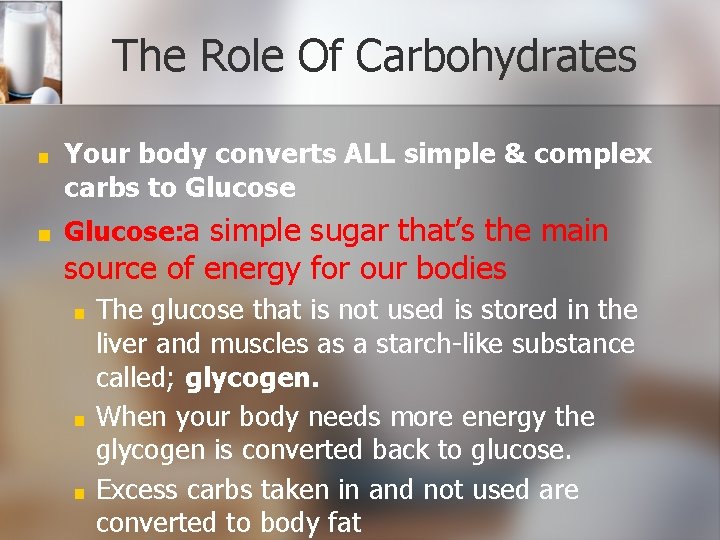
The Role Of Carbohydrates ■ Your body converts ALL simple & complex carbs to Glucose ■ Glucose: a simple sugar that’s the main source of energy for our bodies ■ ■ ■ The glucose that is not used is stored in the liver and muscles as a starch-like substance called; glycogen. When your body needs more energy the glycogen is converted back to glucose. Excess carbs taken in and not used are converted to body fat
Diabetes ■ ■ The pancreas makes the right amount of insulin to move glucose out from the blood to the cells. Insulin: helps glucose enter the body’s cells, where it can be used for energy or stored for future use. Type 1: the body’s immune system begins destroying the cells of the pancreas that produces insulin. Type 2: Over time, the body loses the ability to create enough insulin in response to meals.
Diabetes Video clips ■ Type 2 diabetes video clip: ■ http: //www. youtube. com/watch? v=n. BJN 7 DH 83 HA ■ Type 1 Diabetes video clip ■ http: //www. youtube. com/watch? v=Xm 0 CK_Upi-4 GABRIS DIABETES VIDEO: https: //www. youtube. com/watch? v=4 r 5 O 3 Nk. SXt. Y
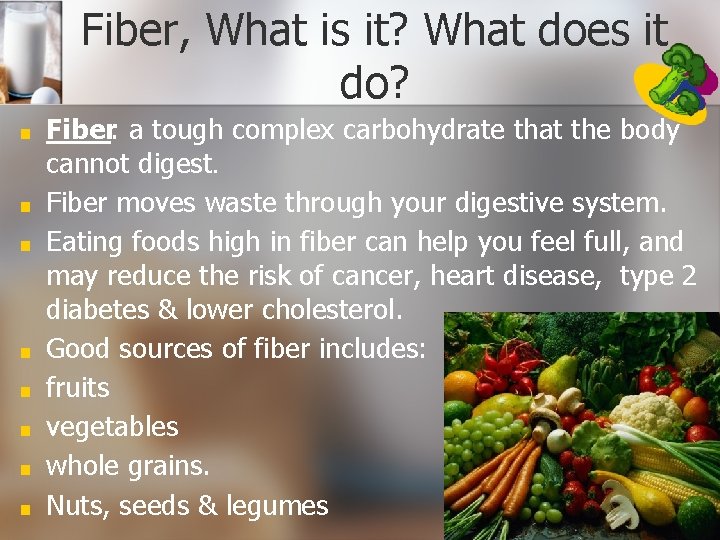
Fiber, What is it? What does it do? ■ ■ ■ ■ Fiber: a tough complex carbohydrate that the body cannot digest. Fiber moves waste through your digestive system. Eating foods high in fiber can help you feel full, and may reduce the risk of cancer, heart disease, type 2 diabetes & lower cholesterol. Good sources of fiber includes: fruits vegetables whole grains. Nuts, seeds & legumes
- Slides: 13