
NUTRITION Brandon Aucker DC MS University of Bridgeport
NUTRITION Brandon Aucker, DC, MS University of Bridgeport College of Chiropractic

YOU ARE WHAT YOU EAT Foundational principles of chiropractic: Vitalism – the body is self-regulating, self-healing* Holism – whole is greater than the sum of the parts What you eat will either make you more or less healthy. Those are your only options. Choose wisely!

CAR ANALOGY My 2009 Subaru Forester started to make a weird noise while shifting gears and now seems to just rev really high and won’t go above 30 MPH. I decided to throw a post on Facebook and most people said it needs fluid so I added that. No luck… I called a mechanic, who said he needs to run diagnostics first, but my car insurance won’t pay to fix it so I put that idea on the backburner. I have been driving around in first gear for the past week with the motor revving really high, which can’t be good because my check engine light comes on and sometimes the motor will bellow smoke. Maybe I’ll try to fix it myself. I googled it and found a video on how to replace a transmission for a 2006 Ford Taurus so I could try doing that. I don’t have the proper tools so I will use whatever I have. Actually, I don’t even have the right diagnostic equipment to even know if that’s the problem. Maybe the mechanic will test it and I can then fix it myself. Maybe he will let me borrow his tools, as well. I've never fixed a transmission so I will spend hours and hours trying to figure it out. How ridiculous does this sound? Why wouldn't I just go see a mechanic that fixes transmissions all day, every day?
THE FACTS • Processed foods are unhealthy for you • The body likes balance/homeostasis • The Standard American Diet = SAD • Optimal diet = balance of whole or real foods
GENERAL OVERVIEW • • • Carbohydrates Fiber Fats Protein Water Calories/glycemic index
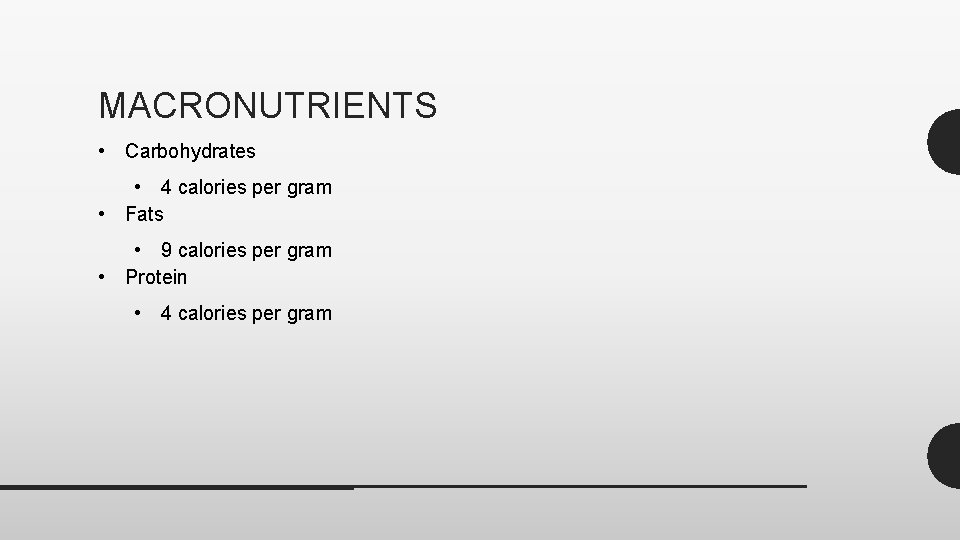
MACRONUTRIENTS • Carbohydrates • 4 calories per gram • Fats • 9 calories per gram • Protein • 4 calories per gram
CARBOHYDRATES • Simple carbs • Made up of 1 -2 sugar molecules • Raise blood sugar quickly as they are easy to break down • Fructose (fruit), Lactose & Galactose (dairy), and Maltose (grains) • found in processed foods, such as table sugar, candy, syrups and sweetened beverages • When added to foods, provide no nutritional value • Natural sources containing these DO have nutritional value
CARBOHYDRATES • Complex carbs (starches) • Made up of longer chain sugar molecules • Raise blood sugar slowly as they take time to break down • Sources: legumes, grains, peas, and potatoes • The healthiest complex carbs are found in natural sources, as opposed to the processed/refined versions • Typically contain high levels of fiber
CARBOHYDRATES • Refined carbs • breads, pasta, baked goods, etc. • equivalent to eating sugar in terms of how the body processes it because blood sugar spikes quickly and dips quickly • Grain consumption has steadily risen in the past 70 years; however, the grain we consume has been thoroughly refined • It contains GMOs, the mineral density of wheat has dramatically declined, and it contains phytic acid (considered an anti-nutrient because it blocks absorption of magnesium, calcium, and zinc) • Refined means one or more parts of the whole grain were removed to extend shelf life – most often, nutrients are stripped out then the grain is “enriched” with vitamins
SOLUBLE FIBER • Indigestible part of carbohydrates so it helps: • Keep you full – reduces overeating • Pull cholesterol away from the heart • Fiber interferes with bile acid in the intestines and causes it to be eliminated as waste LDL is pulled from the blood to make new bile acid… • For every 1 -2 g soluble fiber per day, LDL is lowered by 1%. . . • But does this even matter? ? • Promotes bowel regularity • Helps regulate blood glucose levels
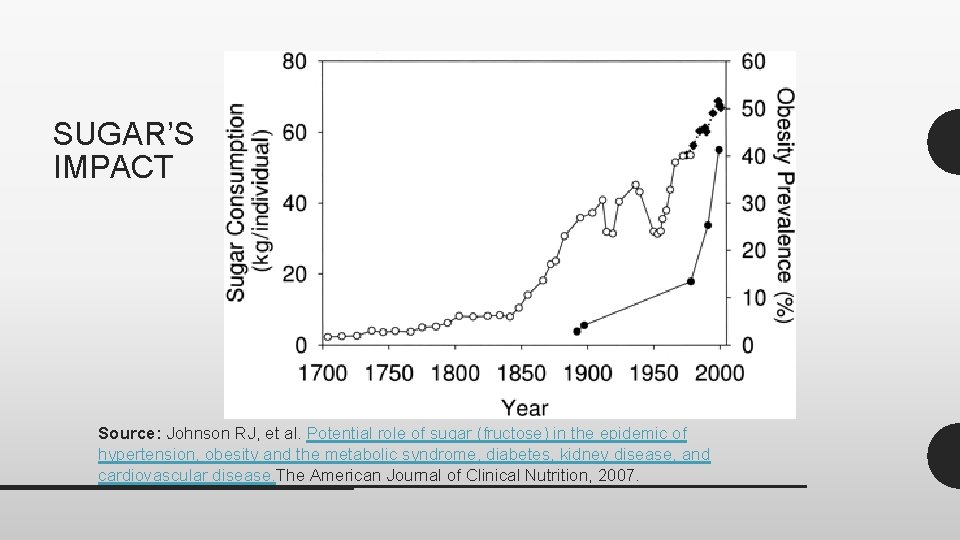
SUGAR’S IMPACT Source: Johnson RJ, et al. Potential role of sugar (fructose) in the epidemic of hypertension, obesity and the metabolic syndrome, diabetes, kidney disease, and cardiovascular disease. The American Journal of Clinical Nutrition, 2007.
SUGAR’S IMPACT • In 1822 the average American ate 2 teaspoons per day, by 1995 the average American eats 40 teaspoons per day! • Excessive sugar depletes the body of B vitamins (fatigue, irritability, nerve damage) • Lowered immune system: • One WBC can kill 14 pathogens but after: • 6 tsp can only kill 10, 12 tsp can only kill 5, and 24 tsp can only kill 1
FATS MONOUNSATURATE D OMEGA-3 FATTY ACIDS POLYUNSATURATED OMEGA-6 SATURATED TRANS
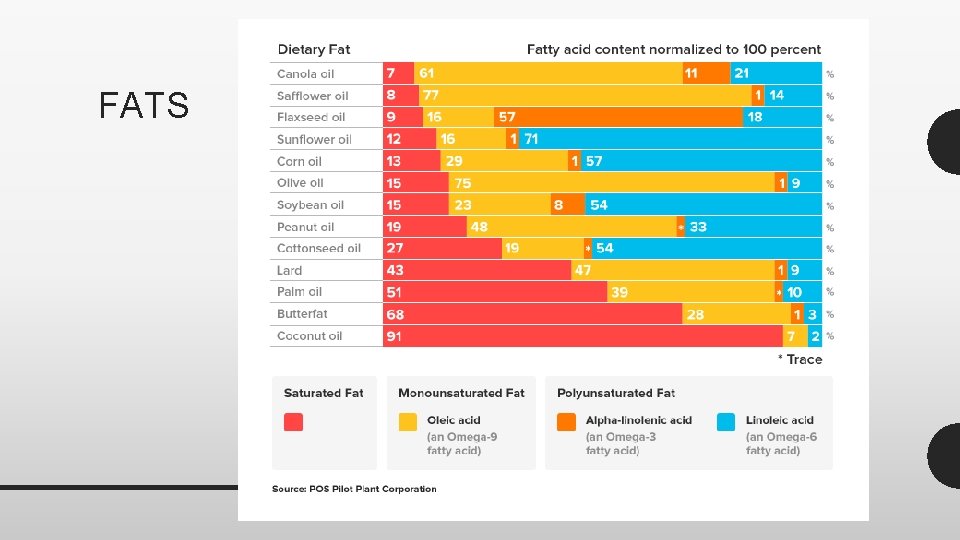
FATS
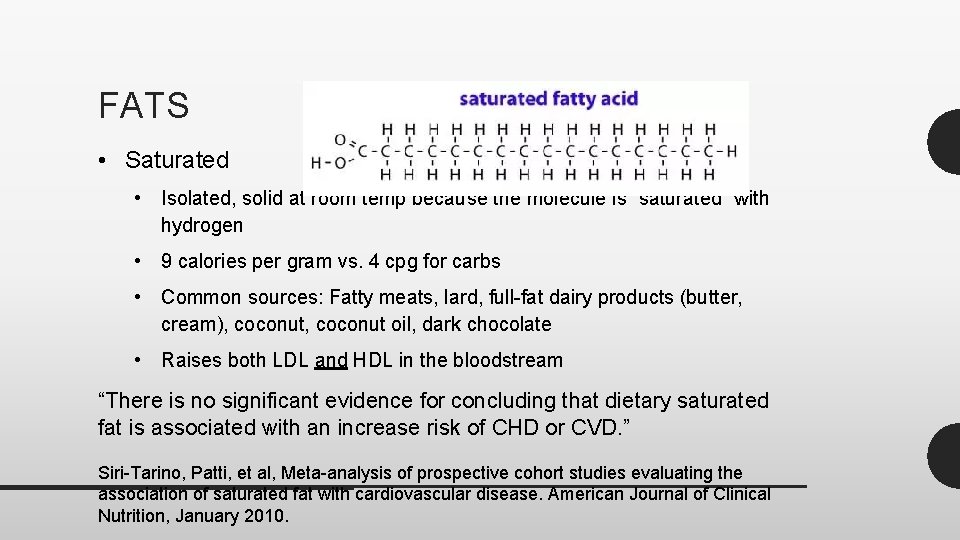
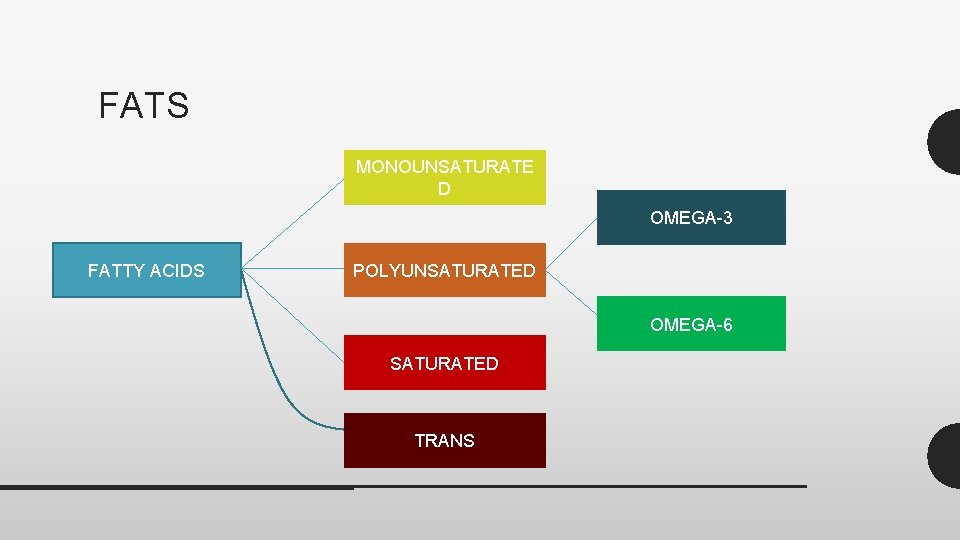
FATS • Saturated • Isolated, solid at room temp because the molecule is “saturated” with hydrogen • 9 calories per gram vs. 4 cpg for carbs • Common sources: Fatty meats, lard, full-fat dairy products (butter, cream), coconut oil, dark chocolate • Raises both LDL and HDL in the bloodstream “There is no significant evidence for concluding that dietary saturated fat is associated with an increase risk of CHD or CVD. ” Siri-Tarino, Patti, et al, Meta-analysis of prospective cohort studies evaluating the association of saturated fat with cardiovascular disease. American Journal of Clinical Nutrition, January 2010.
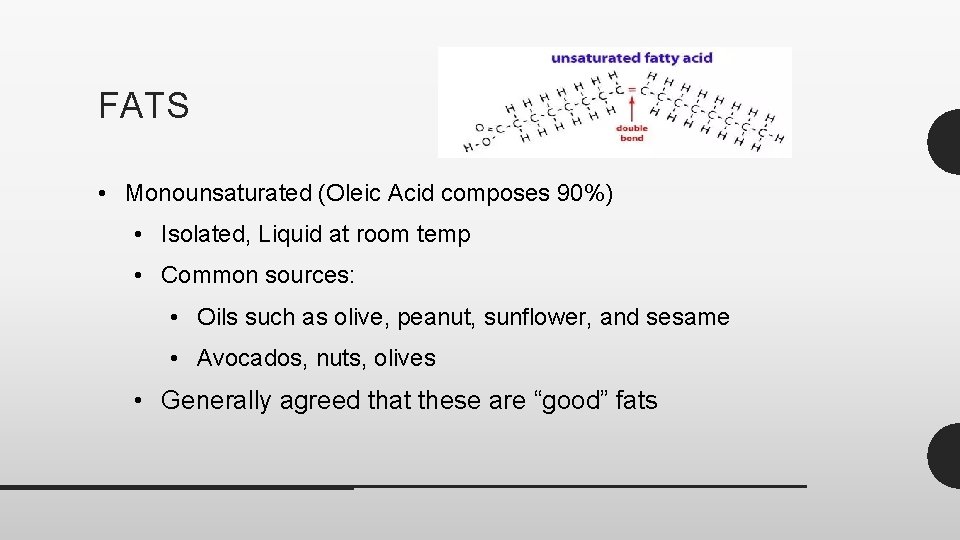
FATS • Monounsaturated (Oleic Acid composes 90%) • Isolated, Liquid at room temp • Common sources: • Oils such as olive, peanut, sunflower, and sesame • Avocados, nuts, olives • Generally agreed that these are “good” fats
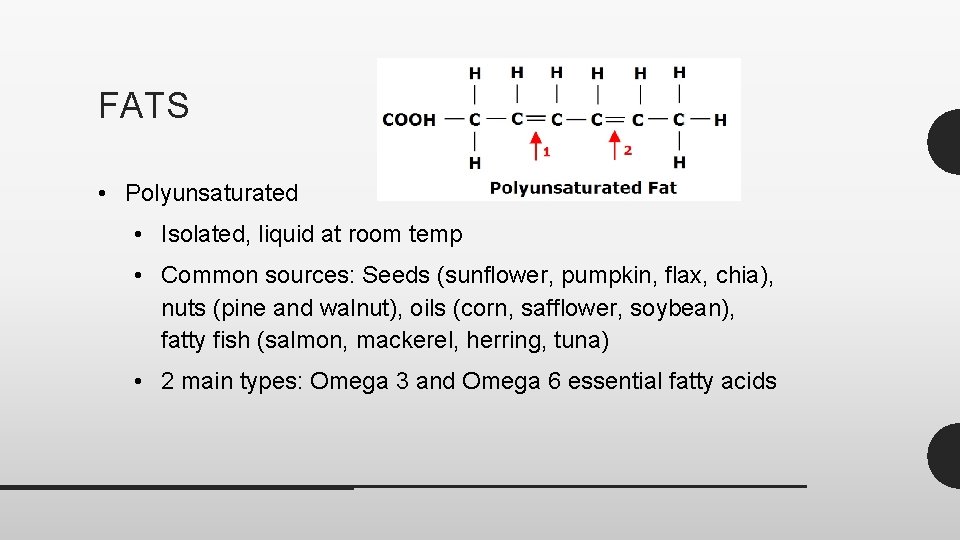
FATS • Polyunsaturated • Isolated, liquid at room temp • Common sources: Seeds (sunflower, pumpkin, flax, chia), nuts (pine and walnut), oils (corn, safflower, soybean), fatty fish (salmon, mackerel, herring, tuna) • 2 main types: Omega 3 and Omega 6 essential fatty acids
FATS • PUFA - Omega 6 • Linoleic, gamma-linoleic, arachidonic • Sources: red meats & corn, sunflower, and safflower oils • Proposed to be pro-inflammatory because the body converts linoleic acid into arachidonic acid, which is a precursor for inflammation-promoting compounds (thromboxanes, prostaglandins, and leukotrienes)
FATS • PUFA - Omega 3 • EPA, ALA, DHA • Sources: fish and plants (fatty fish, walnuts, flax seed, etc. ) • Proposed to be anti-inflammatory because within cell membranes omega 3 fatty acids will promote secretion of anti-inflammatory prostaglandins and less potent leukotrienes
FATS • Omega-6 fatty acids do not promote low-grade inflammation • CRP, levels were measured from 1, 287 healthy, 42 -60 year-old men at the onset of the Kuopio Ischaemic Heart Disease Risk Factor Study in 1984 -1989 at the University of Eastern Finland. • low serum linoleic acid level was associated with higher serum CRP levels • high intake of linoleic acid does not increase inflammatory responses, nor has a significant impact on arachidonic acid levels University of Eastern Finland. "Omega-6 fatty acids do not promote low-grade inflammation. " Science. Daily, 13 November 2017. <www. sciencedaily. com/releases/2017/11/171113095430. htm>.
FATS • Trans-fats • Officially banned in the U. S. in 2018 • Industrial process that adds hydrogen to liquid vegetable oils • Sources: man-made: margarine, packaged snack foods, frying oils for fast food; natural (small amounts): some meats and dairy products • Canola Oil – man-made plant crossbreed genetically modified to improve oil quality and increase tolerance to herbicides
PROTEIN • Broken down into amino acids to help build, repair, and maintain • Plant based: grains, lentils, legumes, nuts, avocados, soy, hemp, rice, pea • Animal based: red meat (deer, bison, beef, pork), poultry (chickens, turkey), fish, eggs, dairy products
PLANT PROTEIN VS. ANIMAL PROTEIN • Most are incomplete (lack at • High levels of iron and least one essential amino acid)** • Contains fiber • Phytonutrients and antioxidants vitamin B 12 • Higher in saturated fats and cholesterol**
WATER • “The body’s solution to pollution is dilution. ” • Benefits: • Appetite control ● Detoxification • Fatigue ● Waste elimination • ½ your body weight in ounces of water per day
GLYCEMIC INDEX • Ranking of carbohydrates according to the extent they raise blood glucose after eating • 0 -100 scale • Three classifications • Low: 55 or less • Moderate: 56 -79 • High: 70+ • Determined by feeding 10 or more patients 50 grams of a digestible carbohydrate then measuring the effect on their blood glucose over a two hour period
LOW GI VS. HIGH GI • Low GI Carbohydrates • All non-starchy vegetables, legumes, whole grains, and most fruit • Digested and released slowly for sustained energy • Fat and fiber tend to lower the GI • High GI Carbohydrates • Are digested, absorbed, and metabolised rapidly causing quick and short bursts in blood glucose levels • Typically processed foods such as white breads, instant oatmeal, pretzels, short grain white rice • Should be avoided by patients with diabetes or eaten with low GI foods to balance the load
OTHER CONSIDERATIONS • GI can change • GI increases as fruits and vegetables ripen • Preparation method can impact GI i. e. mashed potatoes have a higher GI than baked, juice is higher than whole fruit, al dente pasta has a lower GI than longer cooked pasta • Other foods eaten at the same time • Consuming lower index foods at the same time will bring down the overall load of the meal • Don’t skip nutrient dense foods for lower GI foods • Glycemic Load • Multiplying the GI by the amount (grams) of carbohydrate consumed and dividing by 100
OTHER CONSIDERATIONS • Does not apply to sugars • Sucrose (table sugar) ranks higher than fructose • Agave Nectar his high concentrations of fructose, but ranks very low on the GI • Therefore, we cannot fully rely on the glycemic index
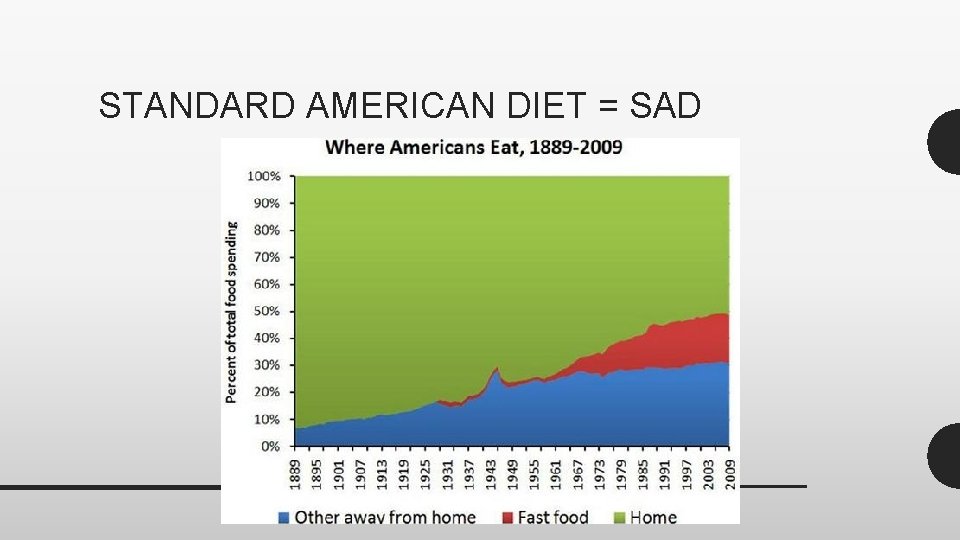
STANDARD AMERICAN DIET = SAD • Food can be: plant, animal, or processed • 63% of Americans diets are primarily processed • Over half of the calories that make up a typical daily diet are made up of sugar and refined carbohydrate due to the low-fat mentality
STANDARD AMERICAN DIET = SAD • Overfed and undernourished due to high intake of processed meats, pre-packaged foods, fried foods, dairy products, refined grains, sugars including high fructose corn syrup, and high sugar drinks • Regarding fruit juice vs. soda: “There is no difference. When you take fruit and squeeze it, you throw the fiber in the garbage. That was the good part of the fruit. The juice is nature's way of getting you to eat your fiber. ” – Robert Lustig, M. D. , M. S. L. . is Professor emeritus of Pediatrics, Division of Endocrinology at the University of California, San Francisco (UCSF)
THE MYTH ABOUT FATS • Eating bad fats increases LDL and leads to atherosclerosis, right? • Sugar/carb consumption blood sugar spike increased triglycerides small, dense LDLs fatty deposits in arteries stroke, heart disease, fatty liver, dementia, etc. • **Fat is not part of this equation …. regardless…
THE MYTH ABOUT FATS • The usual argument in support of the lipid hypothesis is that numerous studies of young and middle-aged people have shown that high [total cholesterol] or LDL [cholesterol] predict future CVD…This is correct, but association is not the same as causation. ” • “The research that has targeted LDL is terribly flawed. Not only is there a lack of evidence of causal link between LDL and heart disease, the statistical approach statin advocates have used to demonstrate benefits has been deceptive. " Ravnskov, Diamond, et al (2018) LDL-C does not cause cardiovascular disease: a comprehensive review of the current literature, Expert Review of Clinical Pharmacology, 11: 10, 959 -970, DOI: 10. 1080/17512433. 2018. 1519391
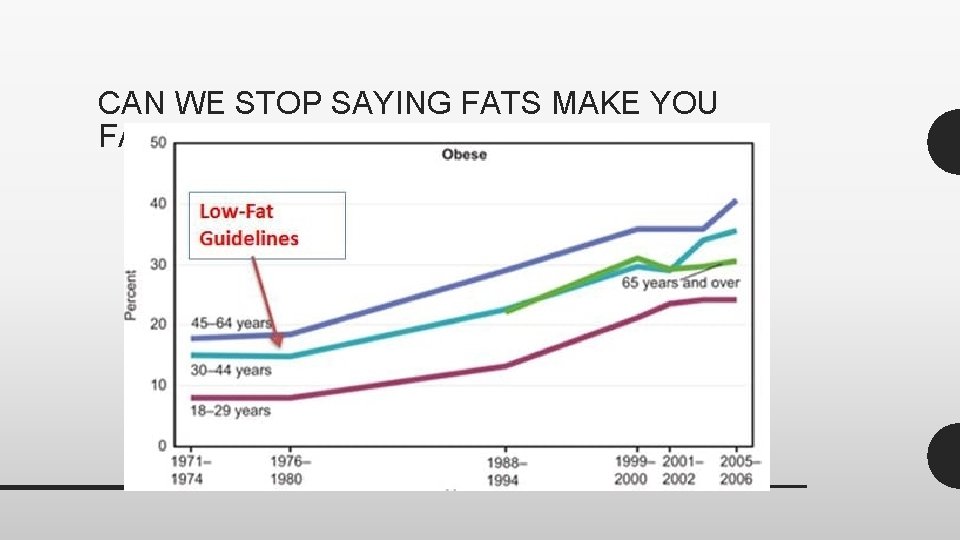
CAN WE STOP SAYING FATS MAKE YOU FAT?
INFLAMMATION – TOO MUCH OF A GOOD THING IS NOT A GOOD THING! • “Inflammation is the cornerstone of the body’s healing response. It’s the way the body gets more nourishment and immune activity to an area that’s injured or under attack, but inflammation is so powerful and so potentially destructive that it’s very important that it stay where it’s supposed to stay and end where it’s supposed to end. If inflammation escapes it’s boundaries of time and space – if it serves no purpose – it becomes productive of disease…” - Andrew Weil, MD
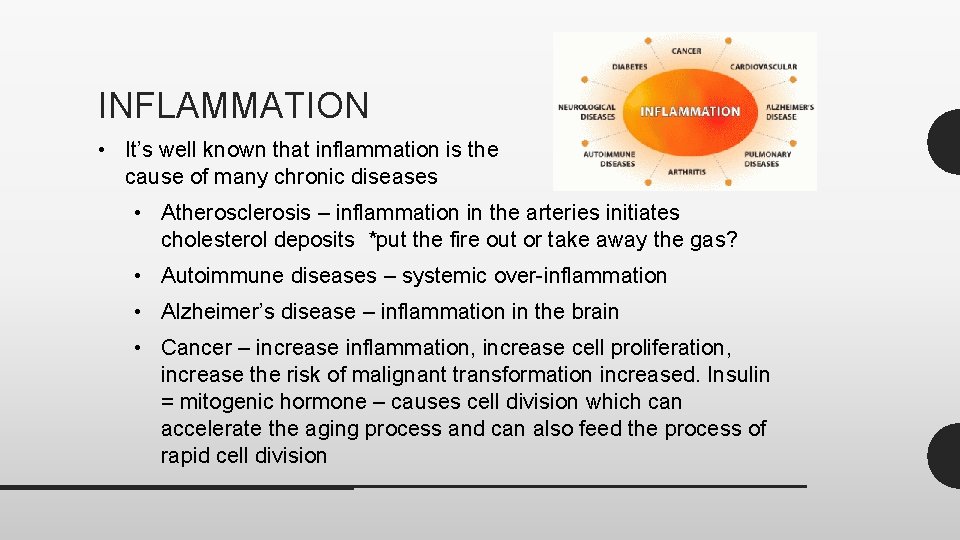
INFLAMMATION • It’s well known that inflammation is the cause of many chronic diseases • Atherosclerosis – inflammation in the arteries initiates cholesterol deposits *put the fire out or take away the gas? • Autoimmune diseases – systemic over-inflammation • Alzheimer’s disease – inflammation in the brain • Cancer – increase inflammation, increase cell proliferation, increase the risk of malignant transformation increased. Insulin = mitogenic hormone – causes cell division which can accelerate the aging process and can also feed the process of rapid cell division
FOODS THAT ARE • PROINFLAMMATORY Sugars, sweeteners, and alcohol • Seed oils – canola – peanut – soybean – sunflower • Grains (processed) – flour – wheat – cereals • Legumes – beans – lentils – corn – safflower – sesame – etc. – breads – oats – peanuts Do we see a trend here?
STANDARD AMERICAN DIET = SAD
THE SAND CASTLE ANALOGY • • • Wave = stressors that increase inflammation Sand castle = body You = repair process Moat = gut lining At first, the poor diet choices (waves) may hit the body (castle) in which you (repair process) are able to handle it and rebuild. Over time, the waves come crashing harder and quicker, until you are unable to repair the castle. Maybe your moat (gut lining) at first repels the water, but over time leaks like a sieve to funnel the waves into the body. • This is chronic systemic inflammation.
YES, LEAKY GUT IS REAL • Healthy gut bacteria produce short-chain fatty acids and proteins that help keep your intestinal wall strong – tight junctions • Proinflammatory foods, which includes foods you are allergic to, cause an inflammatory response in the small intestine and can weaken these tight junctions • A good gut flora will help breakdown macromolecules. When this is compromised, proteins will leak into the bloodstream causing Ig. G immune response, Ig. A reaction, and B&T cells being released into the bloodstream to look for invasive proteins • These proteins may look similar to actual cells in the body and be attacked!
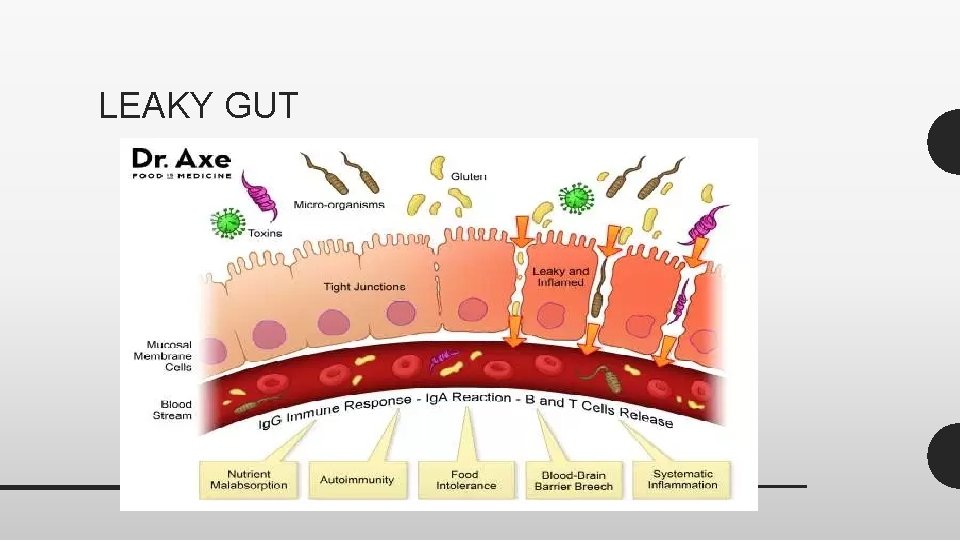
LEAKY GUT
LEAKY GUT SYMPTOMS • • • Bloating Food sensitivities Thyroid conditions Fatigue Joint pain Headaches Skin issues like rosacea and acne Digestive problems Weight gain
PROBIOTICS ARE GREAT WHEN USED • PROPERLY Probiotics are the new buzz because of leaky gut, however… • Picture your tight junctions as a fine mesh strainer. With repetitive injury these tight junctions open up and we’re now dealing with larger holes. Just like macromolecules can slip in, so can the probiotics. • The key to optimal restoration is a good intestinal rehabilitation plan: • diagnostics (stool, urine, and blood tests) to determine nutritional/vitamin deficiencies, pathogens/bad bacteria • The next steps usually are: remove negative foods, restore deficiencies, eradicate pathogens, restore gut flora • Clean eating is key during this entire process • Dr. James Kendel has a great presentation going into the whole leaky gut rehabilitation process… CHECK IT OUT!
7 FOODS FOR HEALING LEAKY GUT • • Bone Broth, 8 oz 2 x a day Kefir or fermented yogurt Fermented vegetables Coconut oil Wild-caught fish (like salmon) Flax seeds Steamed vegetables or vegetables in the crockpot (broccoli, cauliflower, celery carrots, cabbage and squash)
OPTIMAL DIET IS BASED ON REAL FOOD • We learned some real foods may be proinflammatory, so we should LIMIT these • However, the most important factor is to remove processed, refined foods and high amounts of sugars • Let’s look at some great examples of real foods for our diet
ANIMAL PROTEINS – 20 -30% OF DIET • Red meats – rich in iron and B vitamins, excellent fat profile • Beef, goat, lamb, bison, venison • Poultry & Pork – higher PUFA than red meat, more affordable • Chicken, turkey, goose, duck, pheasant, pork • Seafood – rich in iodine, selenium, and Omega-3 • Salmon, tuna, grouper, shrimp, mussels, etc. • Organ meats – nutrient dens, more affordable • Processed meats - added sugar or preservatives, use sparingly • Ham, bacon, salami • Eggs – high levels vitamin A, D, E, & B 12, selenium, choline • Yolks contain most of the nutrients including Omega-3 EFA
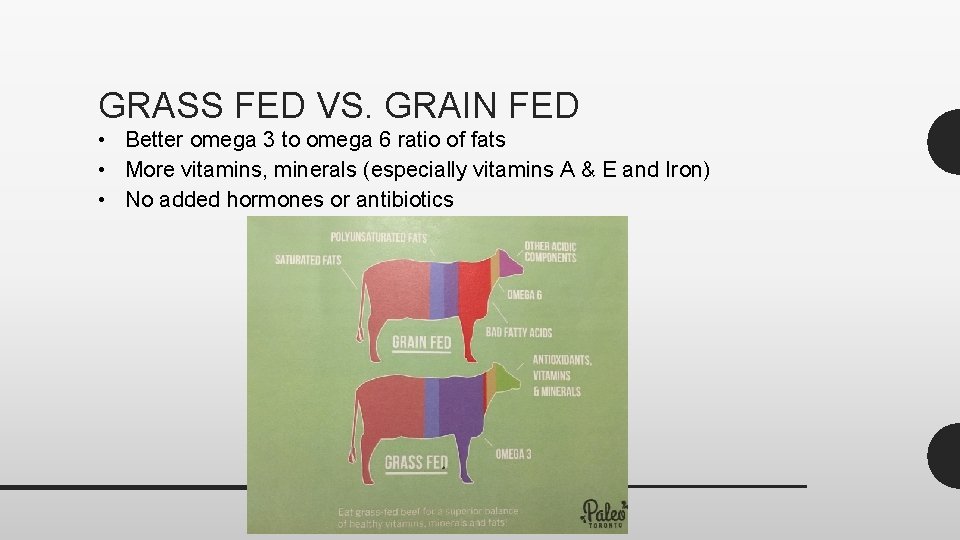
GRASS FED VS. GRAIN FED • Better omega 3 to omega 6 ratio of fats • More vitamins, minerals (especially vitamins A & E and Iron) • No added hormones or antibiotics
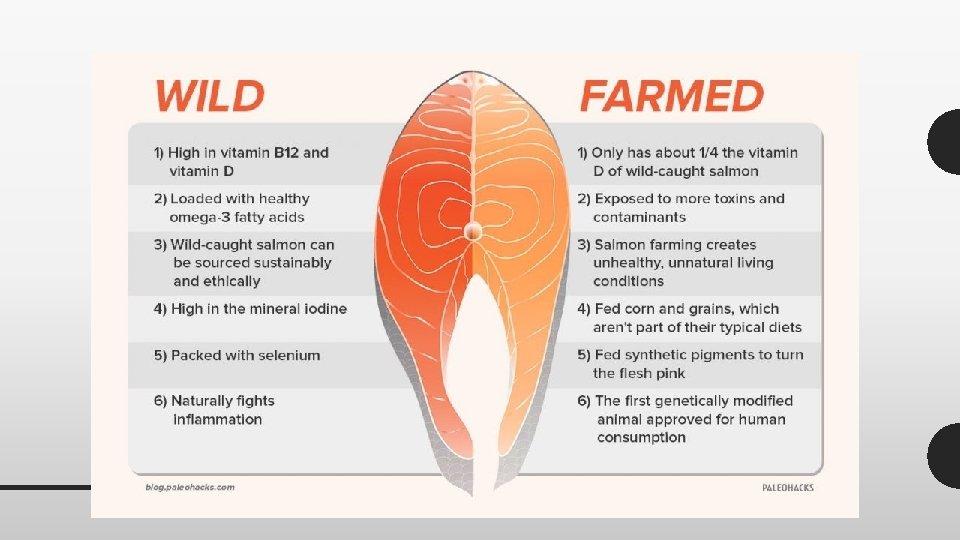
WILD CAUGHT VS. FARMED • Omega 3 and astaxanthin rich diets (algae, krill, plankton) • Natural lifestyle with plenty of migrant and upstream swimming • No antibiotics or other harmful additives
VEGETABLES – 70 -80% OF DIET • Bright red & orange – carotenoids (precursor of vitamin A), several powerful antioxidants, many have high vitamin C • Red peppers, tomatoes, sweet potatoes, carrots, squash • Deep red & purple – antioxidants, several different micronutrients • Eggplant, beets, purple kale, red leaf lettuce, purple carrots • Green – micronutrients (Vitamin K, C, A, manganese, etc. ) • Leafy greens, broccoli, cucumber, asparagus, brussels, peppers • White – Vitamin C and K • Mushrooms, cauliflower, parsnips, onions, potatoes
LEAFY GREENS Vitamin A Vitamin C Vitamin K Kale 206% 134% 684% Spinach 56% 14% 181% Swiss Chard 44% 18% 374% Collard Greens 48% 21% 230% Turnip Greens 127% 55% 173% Broccoli 11% 125% 11% Bok Choy 63% 52% 63% • Kale: Copper 10%, Manganese 26% • Spinach: Manganese 13%, Folate 15% • Etc.
SOURCES OF FAT • Coconut oil, butter, ghee, avocado oil, and olive oil are great sources of fat and can be used for flavoring dishes • Butter Vs. Ghee • Ghee = clarified butter • Milk solids removed • Dairy sensitive patients are typically okay with Ghee
SOURCES OF FAT • Coconut oil • Medium chain fatty acids – easy to digest and give quick energy boost • Ketogenic – encourage body to burn fats for energy • Lauric Acid – potent antimicrobial, antibacterial, antifungal, and antiviral properties • Stable at high temperatures
SOURCES OF FAT • Grass-fed butter • CLA (conjugated linoleic acid) which is a natural trans fat that shows promise for it’s cancer fighting properties and ability to support the immune system, cardiac health, and weight loss • Vitamin K 2 helps utilize calcium for strengthening bones • Butyric acid – SCFA with metabolic benefits like improving insulin sensitivity
SOURCES OF FAT • Olive Oil • Some labeled “extra-virgin” are actually contaminated with cheaper oils like canola oil to thin them • Need to be protected from light and < 1 year old • High concentration monounsaturated fats – not ideal for high temperatures • Rich in natural antioxidants called polyphenols
NUTS AND SEEDS • Most nuts are high in Omega 6 PUFA, which we typically get enough of from our diet (remember, the body likes balance including Omega 3 to Omega 6 ratio) • Phytic acid – chemical that binds to minerals in food and prevents them from being absorbed (This is another reason why legumes are on the naughty list) • Peanuts are legumes, not nuts and actually one of the worst legumes you can eat • In small amounts, can deliver nutrition and variety in the diet
MEAL PREPARATION • Cook once for the entire week • Proteins can be flavored differently with different herbs/spices • Steam or bake large batches of veggies • Cauliflower can be mashed or riced for an alternative • Make “cereals” – shredded coconuts, walnuts, almond slivers, fruits (try to avoid dehydrated as they are high in sugar) • Breakfast does not need to be “breakfast foods”
IN SUMMATION • The body likes balance • You have three options with food: animal, plant, processed • Ideally we want a diet that consists of 20 -30% protein and 70 -80% of vegetables • With vegetables, we want to eat the rainbow of colors • Avoid added sugars, processed foods, GI irritating foods (glutens, legumes, etc. ), seed oils and vegetable oils, limit or avoid dairy • Easy hints for new recipes, you can google “paleo” or “ancestral” • “paleo meatloaf”, “ancestral salmon recipes”, etc.
- Slides: 57