
NUTRITION AND DISEASE What you need to know

- Slides: 17
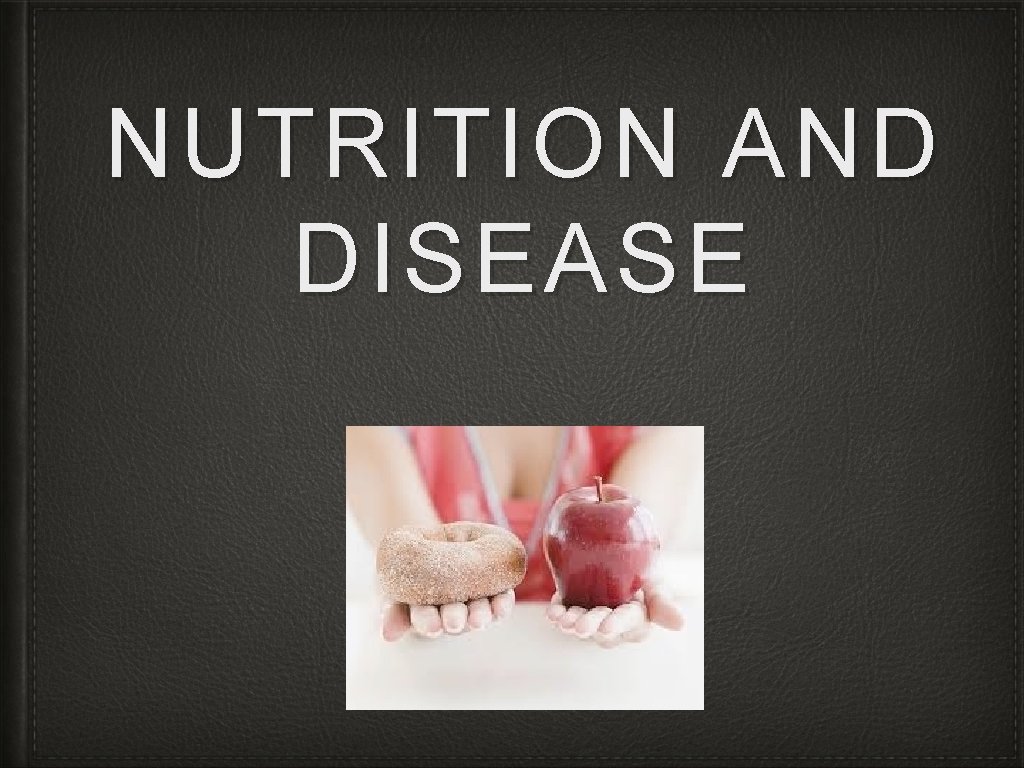
NUTRITION AND DISEASE
What you need to know: I will: • be able to describe the causes and symptoms of nutrient deficiencies and excesses • understand how specific illnesses, diseases, or medical treatments affect people’s nutritional needs • be able to explain why certain eating practices are associated with the prevention and management of particular health conditions
Dr. Harmonie, ND Naturopathic Doctor and Clinic Director at Natural Choice Medical Clinic http: //www. naturalchoicemedicalclinic. com/ Canadian College of Naturopathic Medicine ND, Naturopathic Medicine 2009 - 2013 Queen’s University BCmp (Hons. ), Biomedical Computing 2005 - 2009
Vocabulary • Deficiency – not having something that is needed. E. g. you don’t eat enough Vitamin C so you are Vitamin C deficient OR have a vitamin C deficiency. • Lethargy - A state of sluggishness, inactivity, and apathy when you eat A LOT of food, what do you feel like doing? (not-caring). E. g. • Simple carbohydrates – easy to digest, made up of sugars such as honey and cane sugar fruit, • Irritable – having a lack of patience, easily get annoyed, general feeling of crankiness E. g. when your teachers are tired they have a lot less patience for silliness in the class room. • Edema – swelling caused by fluid build up. E. g. when you sprain your ankle and it swells up to twice it’s size.
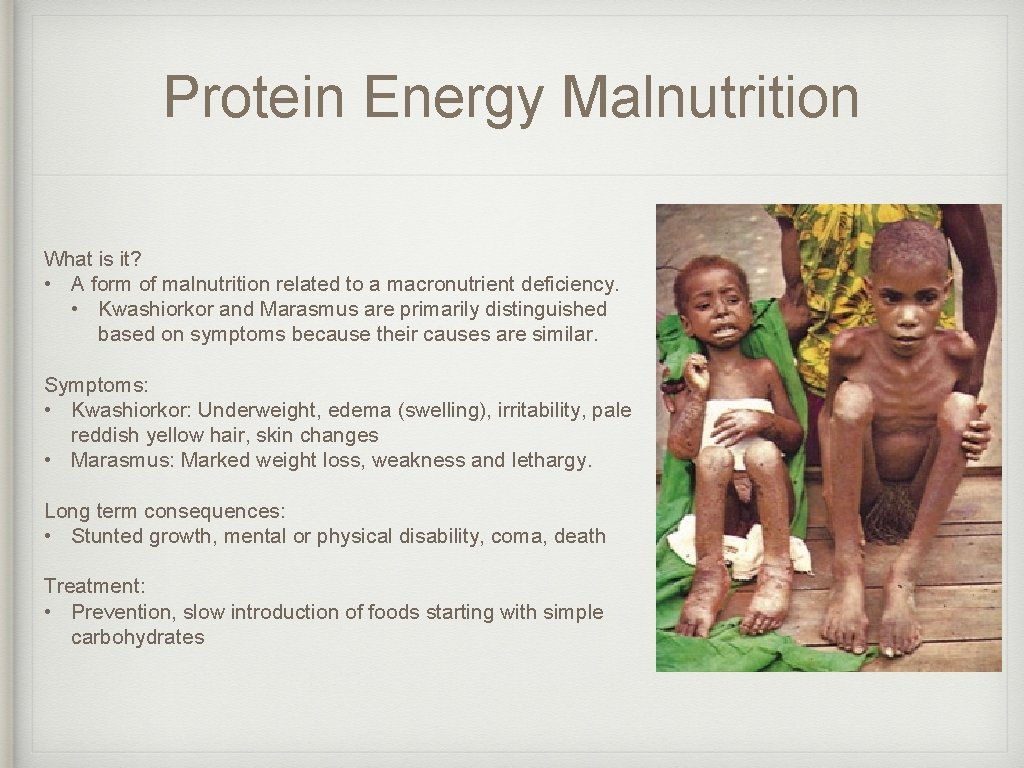
Protein Energy Malnutrition What is it? • A form of malnutrition related to a macronutrient deficiency. • Kwashiorkor and Marasmus are primarily distinguished based on symptoms because their causes are similar. Symptoms: • Kwashiorkor: Underweight, edema (swelling), irritability, pale reddish yellow hair, skin changes • Marasmus: Marked weight loss, weakness and lethargy. Long term consequences: • Stunted growth, mental or physical disability, coma, death Treatment: • Prevention, slow introduction of foods starting with simple carbohydrates
Group Work • What is it? • Does it have another name? What causes it? • Symptoms? • Prevention (ie how and where would one get more of that nutrient)? • Long term consequences?
B 12 Deficiency • What is it? • Vitamin b 12 = cobalamin • Not enough vitamin b 12 • Symptoms • Anemia: megaloblastic anemia, macrocytic anemia =anemia with big blood cells • Dizziness, depression, low energy, fatigue, tingling or numbness in hands and feet • Prevention • Eating foods high in vitamin b 12: animal foods • Long term consequences • neurological problems ie confusion and dementia; can become irreversible
Iron deficiency What is it? • Causes iron deficiency anemia, microcytic anemia = anemia with small blood cells • Common in pregnancy, • Can result from heavy menstruation as well as blood loss in general Symptoms • Brittle nails, swelling and soreness of tongue, enlarged spleen, frequent infections, low energy, fatigue, muscle weakness, restless leg syndrome Prevention • Consume foods rich in iron: liver, whole grains, green leafy vegetables, blackstrap molasses, iron supplements • Stop bleeding Long term consequences • heart and lung failure, increased risk of infection
Vitamin C deficiency What is it? • Also called scurvy • Not enough fruits and vegetables with vitamin c • Historically more common in sailors and pirates • Symptoms • Bone pain, shortness of breath, depression, loss of teeth, bleeding gums Prevention • Eat more fruit and vegetables, oranges, peppers, kiwi Long term consequences • Megaloblastic anemia, osteoporosis, bleeding under the skin/bruising, cardiac disease (disease of the heart)
Vitamin D deficiency What is it? • Vitamin D = fat soluble vitamins • Vitamin D is also called the sunshine vitamin • Vitamin D deficiency is common in Canada • Cause: If exposure to sunlight is limited Symptoms • Muscle cramps, chronic low back pain, fatigue, muscle weakness including the heart muscle Prevention • Foods rich in vitamin D: fish oil, salmon, vitamin D fortified foods ie: milk, supplementation Long term consequences • Severe vitamin D deficiency in children = Rickets, adults = osteomalacia • Rickets: softening and deformation of the bones in children, muscle weakness • Cancer, depression, mortality (increased risk of death), poor bone health
Calcium deficiency What is it? • Body lacking calcium = hypocalcemia • If the body is low in calcium, it will take calcium from the bones, weakening the bones and causing osteoporosis Symptoms • Delayed growth of bones in children and teens, deformation of bones, osteoporosis in older adults (thinning of bones) Prevention • Consuming foods high in calcium: milk, cheese, beans, nuts, small fish with the bones ie sardines, green leafy vegetables Long term consequences • Risk of high blood pressure • Fractures from weakened bones: significant cause of death in the elderly
Metabolic syndrome • Also called syndrome X • Combination of several pathologies: • Obesity • Diabetes • High blood pressure • High cholesterol • All dietary related problems • High sugar intake, high intake of processed foods with saturated and trans fats • Treatment: reduce above-mentioned foods, decrease weight, exercise, increase omega 3 fatty acids Inflammation – when something red, sore, heat and swollen. E. g. when you are sick and your nose is stuffed up and you can’t breathe. Your nose is inflamed. Saturated Fats – fats found in animals and some plants and oils (coconuts, palm oil) Trans Fats – created when food is processed.
Cancer • A tumour works to steal nutrients away from the body in order to grow • This can result in wasting called cachexia • People with cancer have an increased protein requirement of 1 - 1. 5 g of protein per kilogram of body weight each day compared to the 0. 8 g per kg required for the average person. • Cancer is also characterized by a lot of inflammation, if we reduce inflammation we can help to battle the cancer • Healthy fats like omega 3 fatty acids found in fish can help to decrease inflammation • Fruits & vegetables are an essential part of a healthy, cancer-fighting diet. • They are high in vitamins, minerals, & other phytochemicals, which have been shown to help prevent cancer growth, are essential for immune system functioning. Immune System – the bodily system that protects the body from foreign substances, cells, and tissues. It’s the system that keeps you from getting the flu or a cold
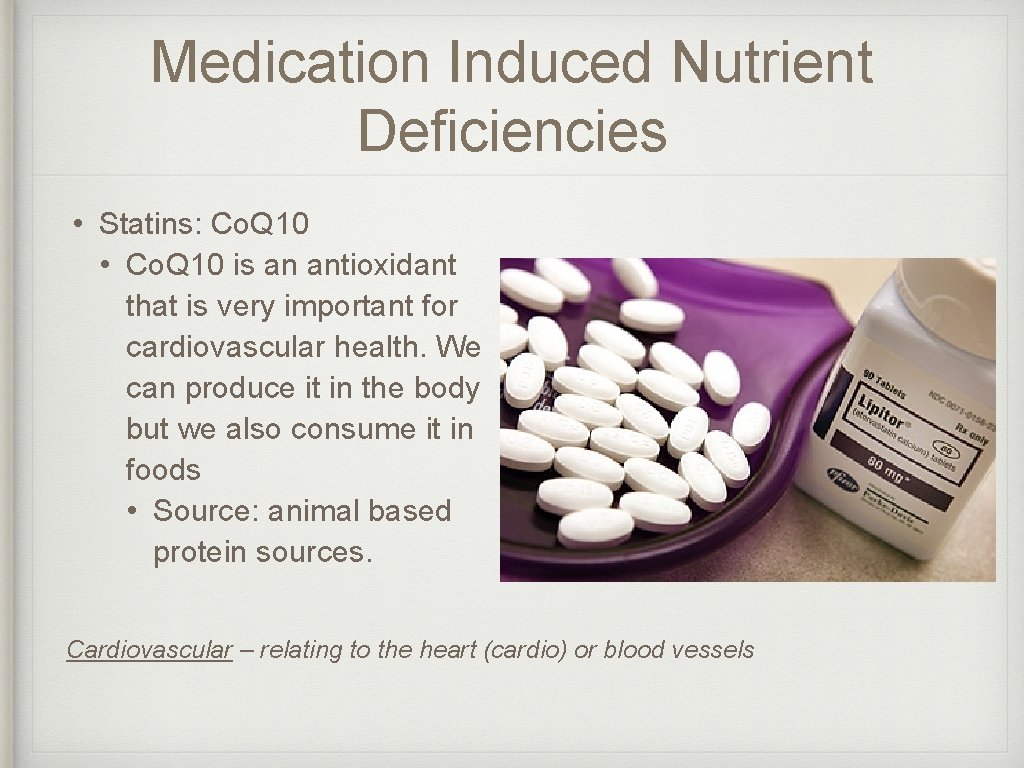
Medication Induced Nutrient Deficiencies • Statins: Co. Q 10 • Co. Q 10 is an antioxidant that is very important for cardiovascular health. We can produce it in the body but we also consume it in foods • Source: animal based protein sources. Cardiovascular – relating to the heart (cardio) or blood vessels
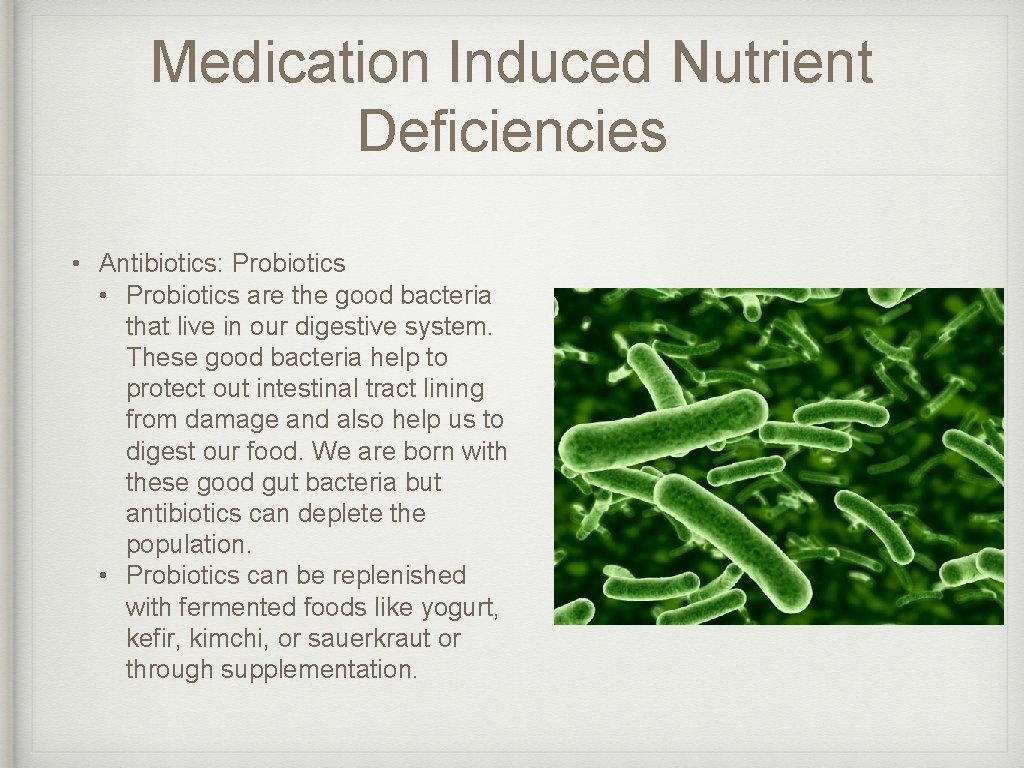
Medication Induced Nutrient Deficiencies • Antibiotics: Probiotics • Probiotics are the good bacteria that live in our digestive system. These good bacteria help to protect out intestinal tract lining from damage and also help us to digest our food. We are born with these good gut bacteria but antibiotics can deplete the population. • Probiotics can be replenished with fermented foods like yogurt, kefir, kimchi, or sauerkraut or through supplementation.
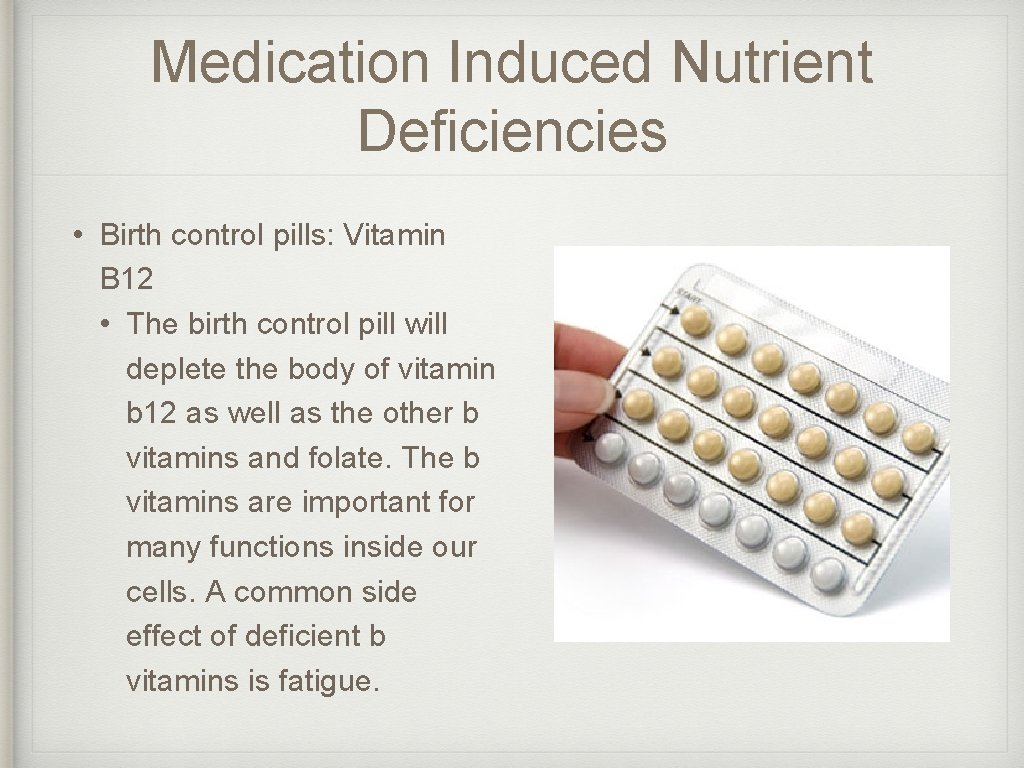
Medication Induced Nutrient Deficiencies • Birth control pills: Vitamin B 12 • The birth control pill will deplete the body of vitamin b 12 as well as the other b vitamins and folate. The b vitamins are important for many functions inside our cells. A common side effect of deficient b vitamins is fatigue.
Review