
Nutrition and Cystic Fibrosis Module 1 Cystic Fibrosis
Nutrition and Cystic Fibrosis Module 1: Cystic Fibrosis Overview
Learning Objectives • Describe the pathophysiology of cystic fibrosis, and specifically how the disease process alters nutrient digestion, absorption, and metabolism. • Utilize cystic fibrosis resources including the Cystic Fibrosis Foundation (CFF) website. • Discuss the interprofessional team approach in working with CF patients and their families. • Describe Life Course Theory (LCT) and how this is used on the context of CF care.

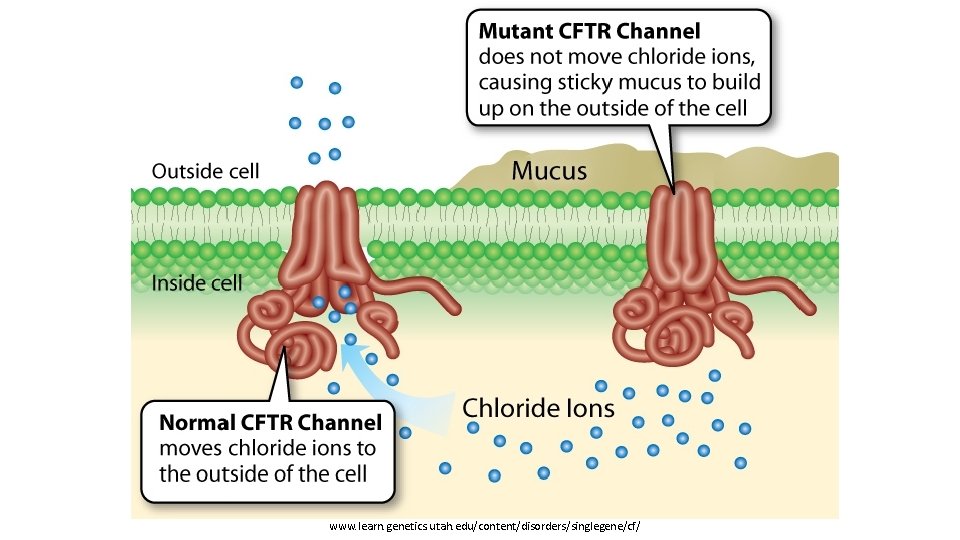
What is cystic fibrosis (CF)? • Genetic, autosomal recessive disorder • Mutations in cystic fibrosis transmembrane regulator (CFTR) gene • Changes in the CFTR protein result in production of thick mucous in epithelial tissues including in the digestive tract, respiratory tract, and sweat glands • Watch the video demonstrating function of CFTR in lung cell (link under “Reference Material” for Module 1) • There are five classes of mutations (I-V), with class I, II and III mutations resulting in more severe disease www. learn. genetics. utah. edu
www. learn. genetics. utah. edu/content/disorders/singlegene/cf/

How is CF diagnosed? • Newborn screening for most common genetic mutations • Results are confirmed with sweat chloride test or additional genetic testing • Early detection results in improved health outcomes www. cff. org
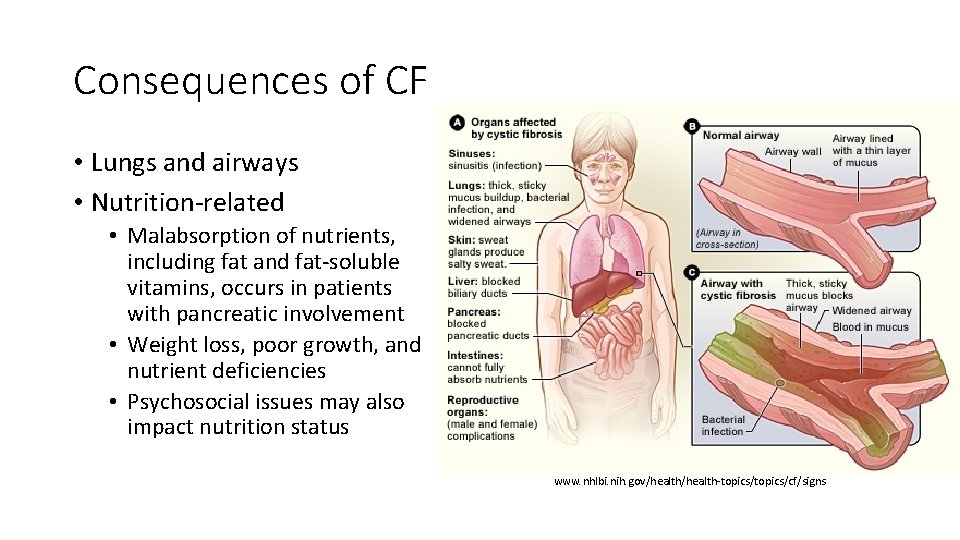
Consequences of CF • Lungs and airways • Nutrition-related • Malabsorption of nutrients, including fat and fat-soluble vitamins, occurs in patients with pancreatic involvement • Weight loss, poor growth, and nutrient deficiencies • Psychosocial issues may also impact nutrition status www. nhlbi. nih. gov/health-topics/cf/signs
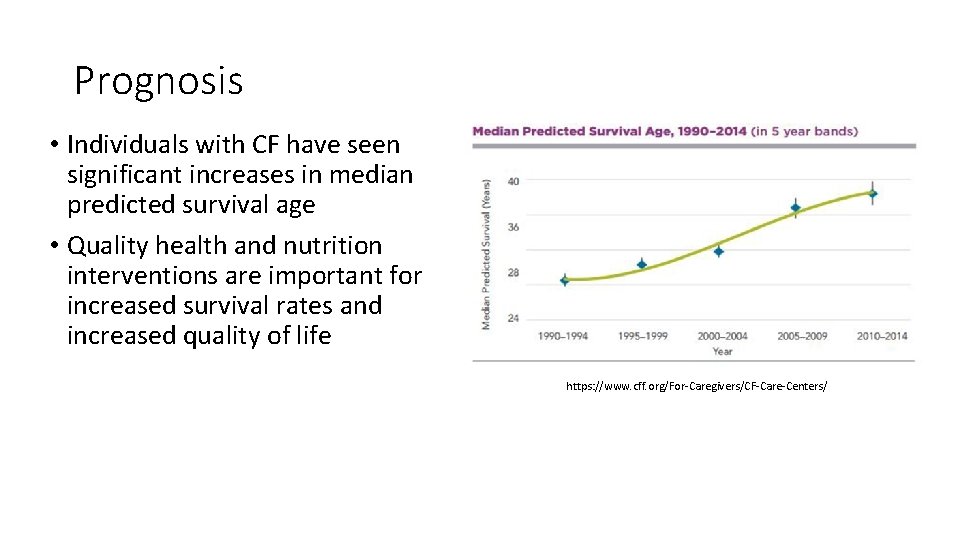
Prognosis • Individuals with CF have seen significant increases in median predicted survival age • Quality health and nutrition interventions are important for increased survival rates and increased quality of life https: //www. cff. org/For-Caregivers/CF-Care-Centers/
CF and the GI Tract • Recall that the GI tract, and specifically the small intestine is where most nutrient digestion and absorption occurs • Most CF patients are pancreatic insufficient - thick mucous in the pancreas blocks the release of digestive enzymes leading to severe malabsorption in the gut • Pancreatic enzyme replacement therapy (PERT) provides the necessary digestive enzymes • Prescription digestive enzymes taken by mouth immediately before meals • Pill burden can be high, as several pills may be required each meal and snack • Adherence to PERT can vary and must be assessed at each CF clinic visit
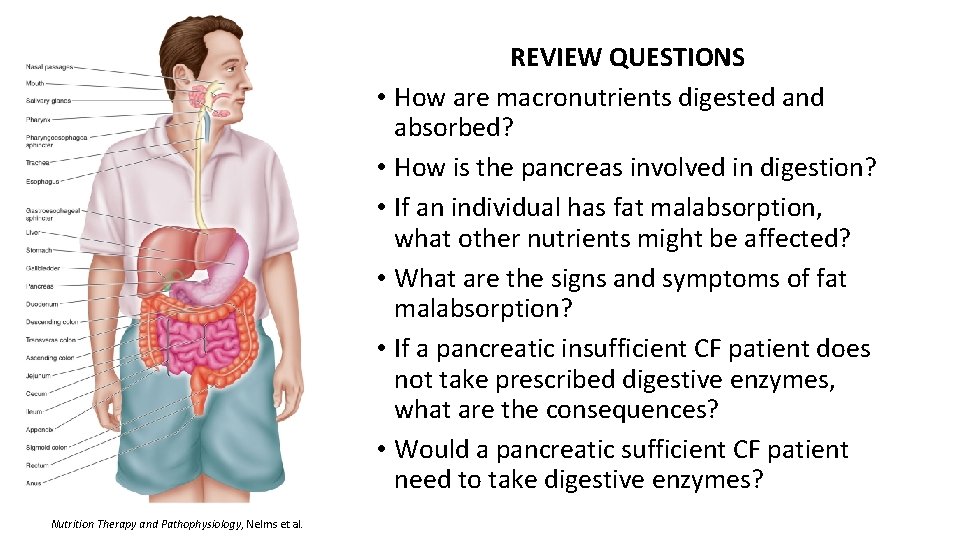
REVIEW QUESTIONS • How are macronutrients digested and absorbed? • How is the pancreas involved in digestion? • If an individual has fat malabsorption, what other nutrients might be affected? • What are the signs and symptoms of fat malabsorption? • If a pancreatic insufficient CF patient does not take prescribed digestive enzymes, what are the consequences? • Would a pancreatic sufficient CF patient need to take digestive enzymes? Nutrition Therapy and Pathophysiology, Nelms et al.
CF and Nutrition • Poor nutritional status is associated with worse clinical outcomes • Medical nutrition therapy (MNT) is critical component of CF management • High kilocalories (kcals), high fat diets are typically recommended • Dietary supplements and nutrition support may be needed to reach energy requirements and support weight maintenance/gain • Scandishakes, Ensure, Boost Plus, and pediatric oral supplements • Enteral nutrition support indicated in failure to thrive, low weight, poor weight gain, and anorexia
CF and Nutrition • CF patients regularly complete a pulmonary function test (PFT) at each CF clinic visit that measures lung function • FEV 1 = the amount of air that can be forcefully blown out of the lungs in 1 second • FEV 1 is a good measure of how much mucus is blocking the large airways • Check out the CCF website information “Basics of Lung Care” • Watch the video of an actual CF patient completing his PFTs • BMI is inversely correlated with lung function as measure by FEV 1 • It is unclear if low BMI causes suppressed lung function or vice versa • Patients and parent/caregivers should be educated on the connection to BMI and lung function
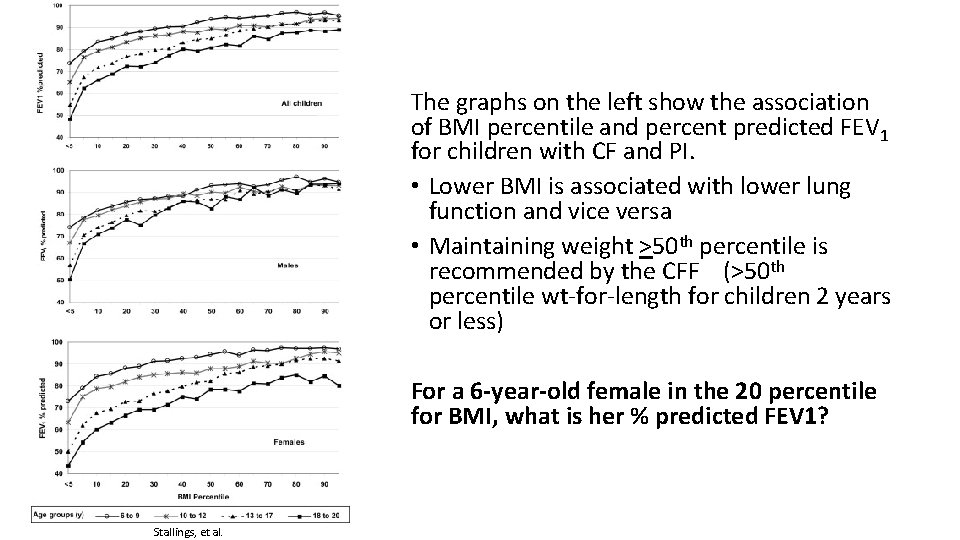
The graphs on the left show the association of BMI percentile and percent predicted FEV 1 for children with CF and PI. • Lower BMI is associated with lower lung function and vice versa • Maintaining weight >50 th percentile is recommended by the CFF (>50 th percentile wt-for-length for children 2 years or less) For a 6 -year-old female in the 20 percentile for BMI, what is her % predicted FEV 1? Stallings, et al.
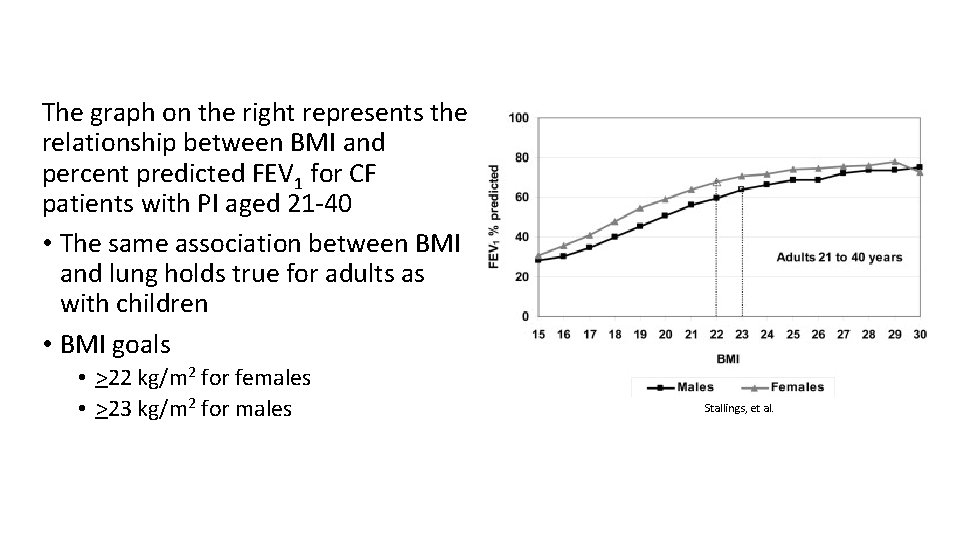
The graph on the right represents the relationship between BMI and percent predicted FEV 1 for CF patients with PI aged 21 -40 • The same association between BMI and lung holds true for adults as with children • BMI goals • >22 kg/m 2 for females • >23 kg/m 2 for males Stallings, et al.
Energy Requirement in CF • REE typically increased in CF 105 -130% of expected • Generally hypermetabolic • Individualized assessment required to determine accurate estimate of energy needs • CFF guidelines call for energy needs 110 -200% estimated energy requirements for age and gender • Recommended kcal adjustment in increments of 10% above estimated energy requirements
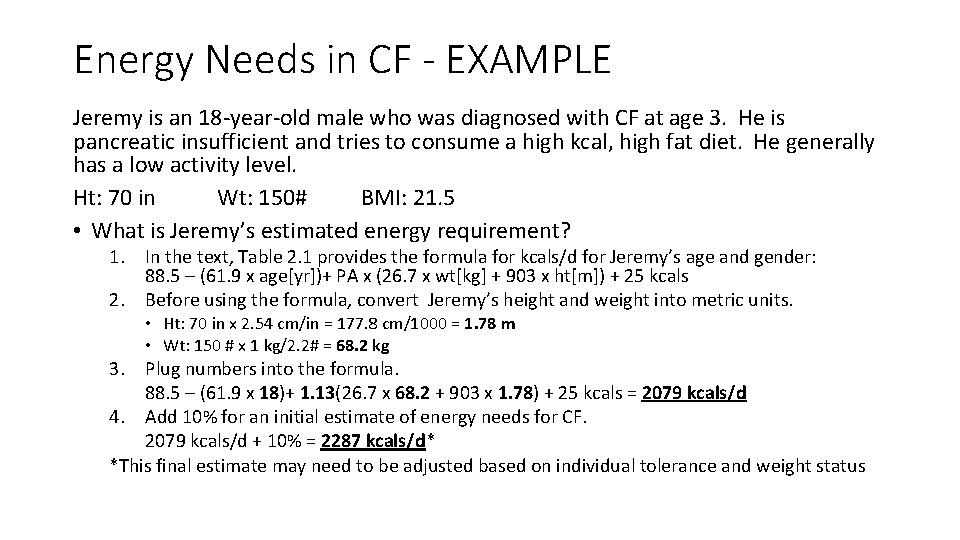
Energy Needs in CF - EXAMPLE Jeremy is an 18 -year-old male who was diagnosed with CF at age 3. He is pancreatic insufficient and tries to consume a high kcal, high fat diet. He generally has a low activity level. Ht: 70 in Wt: 150# BMI: 21. 5 • What is Jeremy’s estimated energy requirement? 1. In the text, Table 2. 1 provides the formula for kcals/d for Jeremy’s age and gender: 88. 5 – (61. 9 x age[yr])+ PA x (26. 7 x wt[kg] + 903 x ht[m]) + 25 kcals 2. Before using the formula, convert Jeremy’s height and weight into metric units. • Ht: 70 in x 2. 54 cm/in = 177. 8 cm/1000 = 1. 78 m • Wt: 150 # x 1 kg/2. 2# = 68. 2 kg 3. Plug numbers into the formula. 88. 5 – (61. 9 x 18)+ 1. 13(26. 7 x 68. 2 + 903 x 1. 78) + 25 kcals = 2079 kcals/d 4. Add 10% for an initial estimate of energy needs for CF. 2079 kcals/d + 10% = 2287 kcals/d* *This final estimate may need to be adjusted based on individual tolerance and weight status
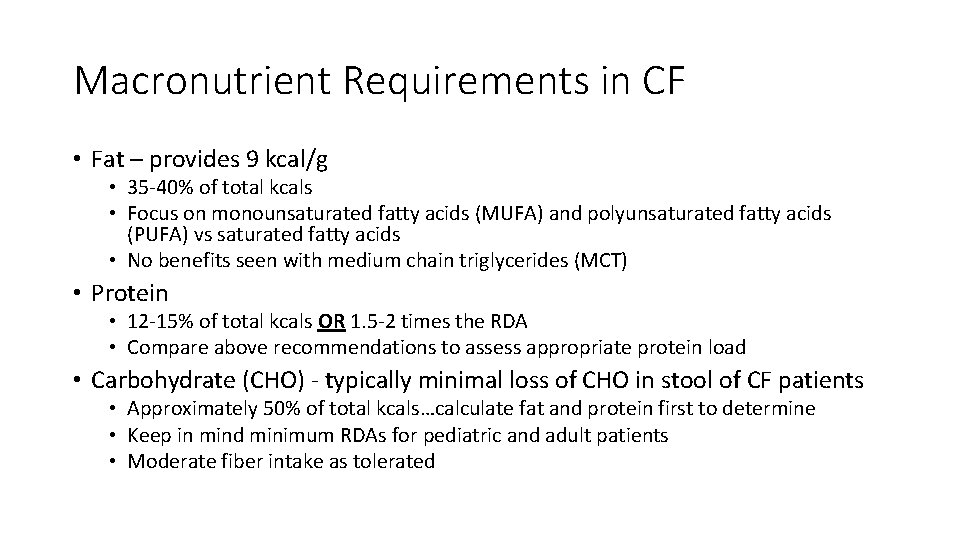
Macronutrient Requirements in CF • Fat – provides 9 kcal/g • 35 -40% of total kcals • Focus on monounsaturated fatty acids (MUFA) and polyunsaturated fatty acids (PUFA) vs saturated fatty acids • No benefits seen with medium chain triglycerides (MCT) • Protein • 12 -15% of total kcals OR 1. 5 -2 times the RDA • Compare above recommendations to assess appropriate protein load • Carbohydrate (CHO) - typically minimal loss of CHO in stool of CF patients • Approximately 50% of total kcals…calculate fat and protein first to determine • Keep in mind minimum RDAs for pediatric and adult patients • Moderate fiber intake as tolerated
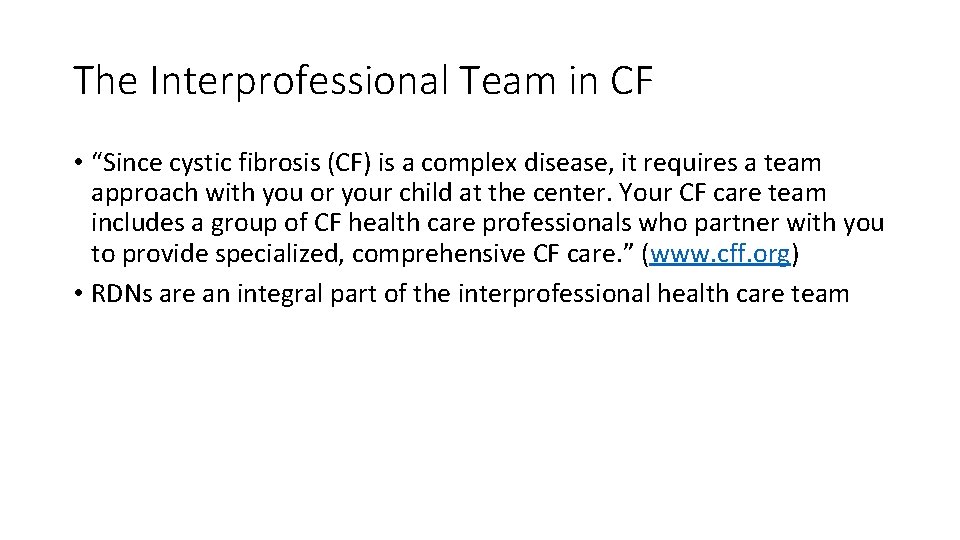
The Interprofessional Team in CF • “Since cystic fibrosis (CF) is a complex disease, it requires a team approach with you or your child at the center. Your CF care team includes a group of CF health care professionals who partner with you to provide specialized, comprehensive CF care. ” (www. cff. org) • RDNs are an integral part of the interprofessional health care team
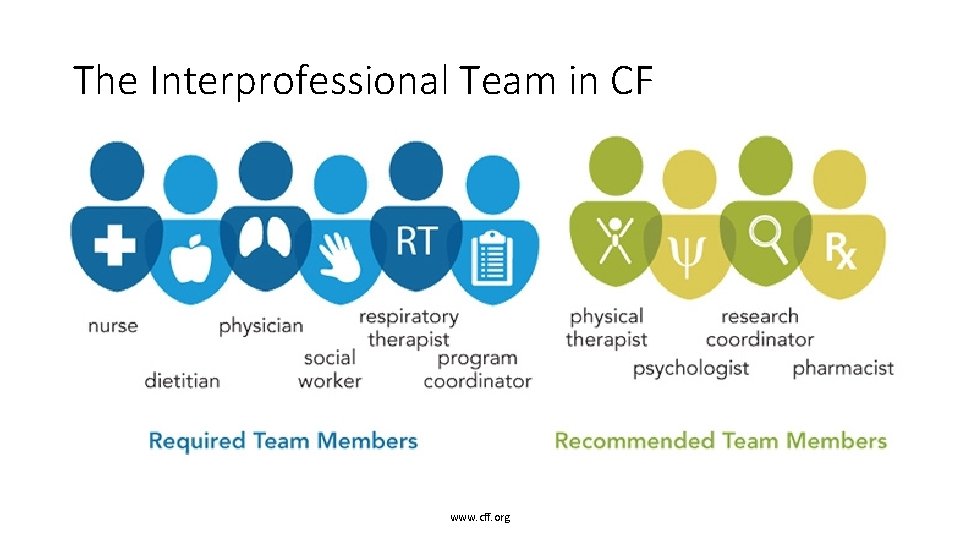
The Interprofessional Team in CF www. cff. org
The Role of the RDN in CF • Helps patients gain or maintain a healthy weight • Develops a nutritional plan that is high in calories, protein, vitamins and minerals • Recommends fat-soluble vitamins, pancreatic enzymes and additional dietary supplements • Works with patients to meet nutritional goals, which may include tube feeding • Helps patients manage CF-related diabetes (CFRD) and bone diseases like osteoporosis www. cff. org/Living-with-CF/Your-CF-Care-Team/
References • Nutrition in Cystic Fibrosis, Yen and Radmer Leonard - Chapters 1 -3 • Cystic Fibrosis Foundation – www. cff. org • University of Utah Health Sciences, Genetic Science Learning Center www. learn. genetics. utah. edu • National Heart, Lung and Blood Institute - www. nhlbi. nih. gov • Nutrition Therapy and Pathophysiology, Nelms et al. , 2 nd Ed – Chapter 14 • Stallings et al. Evidence-based practice recommendations for nutritionrelated management of children and adults with cystic fibrosis and pancreatic insufficiency: results of a systematic review. J Am Diet Assoc. 2008; 108(5): 832 -9.
- Slides: 20