
Nutrition and Cardiovascular Disease CVD 4 September 2015
Nutrition and Cardiovascular Disease (CVD) 4 September 2015 DEAKIN MEDICAL SCHOOL HME 102 Public Health Medicine Prof Caryl Nowson Slide 1 Deakin University CRICOS Provider Code: 00113 B
Learning Objectives • • • Describe the nutritional risk factors contributing to CVD risk Understand the evidence base indicating that lifestyle risk factors contribute to CVD risk including: • Dyslipidemia • Hypertension • Type 2 diabetes • (Obesity covered elsewhere) Describe the nutritional population approaches being implemented worldwide to reduce CVD risk Understand the systemic factors that prevent individual nutritional behaviour change Describe the recommended dietary approaches to reduce CVD risk at the individual and population level in Australia Public Health Medicine DEAKIN MEDICAL SCHOOL Nutrition and Cardiovascular Disease (CVD) – Slide 2 Deakin University CRICOS Provider Code: 00113 B
Cardiovascular Disease • Heart, Stroke & Vascular Disease • 30% of 58 million deaths globally (2005) – equal to infectious diseases, nutritional deficiencies, maternal and perinatal conditions combined • 46% deaths < 70 years – Kills more Australians than any other disease group – 3. 67 million Australians affected – 1. 10 million long term disability as a result – Increased by 18. 2% over last decade – Aboriginal &Torres Strait Islanders 2. 6 x likely to die – More disadvantaged groups more likely to die Public Health Medicine DEAKIN MEDICAL SCHOOL Nutrition and Cardiovascular Disease (CVD) – Slide 3 Deakin University CRICOS Provider Code: 00113 B

CVD Risk factors • 90% of all Australians have at least 1 risk factor for heart, stroke and vascular disease – 60% overweight or obese – 54% insufficiently active – 51% high blood cholesterol – 30% high blood pressure – 13% drink at levels harmful to health – 8% have diabetes (AIHW NHS 2004 -2005) Public Health Medicine DEAKIN MEDICAL SCHOOL Nutrition and Cardiovascular Disease (CVD) – Slide 4 Deakin University CRICOS Provider Code: 00113 B

Dyslipidemia • • Abnormal: Total cholesterol >5. 5 mmol/L HDL cholesterol <1. 0 mmol/L men, < 1. 3 mmol/L women LDL cholesterol > 3. 5 mmol/L Serum total cholesterol = LDL + HDL + Triglycerides High serum LDL cholesterol – atherogenic High serum Triglycerides –atherogenic Low HDL cholesterol – atherogoneic http: //www. abs. gov. au/ausstats/abs@. nsf/Lookup/4364. 0. 55. 005 Chapter 3002011 -12 Public Health Medicine DEAKIN MEDICAL SCHOOL Nutrition and Cardiovascular Disease (CVD) – Slide 5 Deakin University CRICOS Provider Code: 00113 B
Dyslipidemia: Australia • 2011– 12: 1/3 adults (32. 8% or 5. 6 million people) high total cholesterol levels and high LDL levels • Only 10. 1% self-reported having high cholesterol as a current long-term health condition • Further 19. 1%: total cholesterol level close to the abnormal cut off (5. 0– 5. 4 mmol/L range) • Proportion of people with high total cholesterol peaked at 55– 64 years (47. 8%) • Overall there was no significant difference in rates of total cholesterol for men and women. http: //www. abs. gov. au/ausstats/abs@. nsf/Lookup/4364. 0. 55. 005 Chapter 3002011 -12 Public Health Medicine DEAKIN MEDICAL SCHOOL Nutrition and Cardiovascular Disease (CVD) – Slide 6 Deakin University CRICOS Provider Code: 00113 B
Dyslipidemia: lifestyle risk factors • • Current smokers more likely high cholesterol (38. 1% v never smoked 30. 4%) Obese adults (37. 0% v 25. 8% normal weight or underweight) 84. 7% with high total cholesterol also high LDL cholesterol, and high triglycerides (22. 9% compared with 9. 5%) Hypertensives: higher total cholesterol that those with normal blood pressure (40. 8% v 31. 0%) High levels of LDL cholesterol were more common among men (35. 0%) than women (31. 6%) Those with high LDL cholesterol were more likely to have high triglycerides than those with normal LDL levels (15. 7% compared with 11. 7%) No association between high LDL cholesterol and lower than normal HDL 'good' cholesterol. http: //www. abs. gov. au/ausstats/abs@. nsf/Lookup/4364. 0. 55. 005 Chapter 3002011 -12 Public Health Medicine DEAKIN MEDICAL SCHOOL Nutrition and Cardiovascular Disease (CVD) – Slide 7 Deakin University CRICOS Provider Code: 00113 B
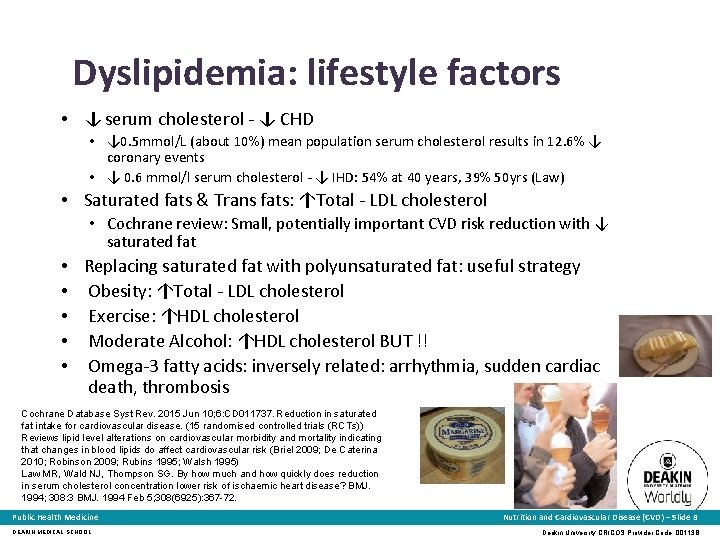
Dyslipidemia: lifestyle factors • ↓ serum cholesterol - ↓ CHD • ↓ 0. 5 mmol/L (about 10%) mean population serum cholesterol results in 12. 6% ↓ coronary events • ↓ 0. 6 mmol/l serum cholesterol - ↓ IHD: 54% at 40 years, 39% 50 yrs (Law) • Saturated fats & Trans fats: ↑Total - LDL cholesterol • Cochrane review: Small, potentially important CVD risk reduction with ↓ saturated fat • Replacing saturated fat with polyunsaturated fat: useful strategy • Obesity: ↑Total - LDL cholesterol • Exercise: ↑HDL cholesterol • Moderate Alcohol: ↑HDL cholesterol BUT !! • Omega-3 fatty acids: inversely related: arrhythmia, sudden cardiac death, thrombosis Cochrane Database Syst Rev. 2015 Jun 10; 6: CD 011737. Reduction in saturated fat intake for cardiovascular disease. (15 randomised controlled trials (RCTs)) Reviews lipid level alterations on cardiovascular morbidity and mortality indicating that changes in blood lipids do affect cardiovascular risk (Briel 2009; De Caterina 2010; Robinson 2009; Rubins 1995; Walsh 1995) Law MR, Wald NJ, Thompson SG. By how much and how quickly does reduction in serum cholesterol concentration lower risk of ischaemic heart disease? BMJ. 1994; 308: 3 BMJ. 1994 Feb 5; 308(6925): 367 -72. Public Health Medicine DEAKIN MEDICAL SCHOOL Nutrition and Cardiovascular Disease (CVD) – Slide 8 Deakin University CRICOS Provider Code: 00113 B
1. Which of the following foods does NOT contain significant amounts of saturated fatty acids? A. B. C. D. E. Public Health Medicine DEAKIN MEDICAL SCHOOL Whole roasted chicken Shortbread biscuits Full cream milk Cheddar Cheese Home cooked chips in Canola oil Nutrition and Cardiovascular Disease (CVD) – Slide 9 Deakin University CRICOS Provider Code: 00113 B

Saturated Fats • • Solid at room temperature. mainly found in animal products Stearic acid: C 18: O saturated fat Animal-based sources of saturated fats: Dairy foods – such as butter, cream, regular-fat milk and cheese Oleic acid: C 18: 1 w 9 Meat – such as fatty cuts of beef, pork and mono unsaturated fat lamb, processed meats like salami, and chicken (especially chicken skin) Plant-derived saturated fats: Palm oil, Cooking margarine, Coconut, Coconut milk and cream Oleic acid: C 18: 2 w 6 Deep fried take away foods, Cakes, poly unsaturated fat Biscuits, Pastries and pies http: //www. heartfoundation. org. au/healthy-eating/fats/Pages/saturated-fats. aspx Public Health Medicine DEAKIN MEDICAL SCHOOL Nutrition and Cardiovascular Disease (CVD) – Slide 10 Deakin University CRICOS Provider Code: 00113 B
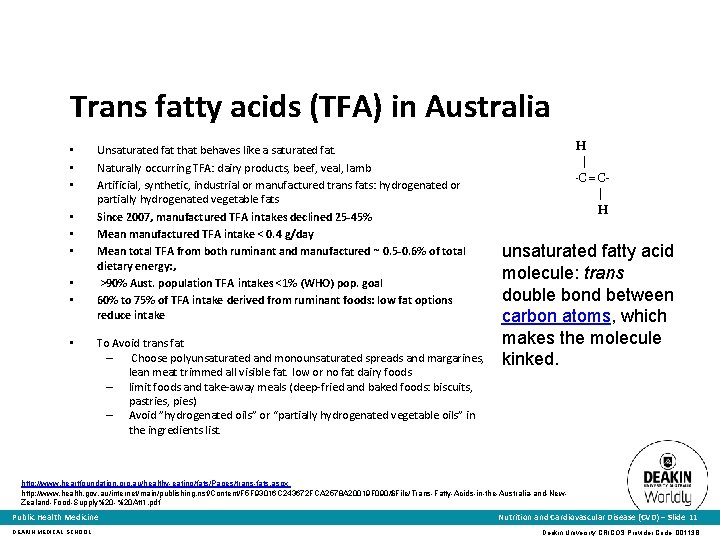
Trans fatty acids (TFA) in Australia • • • Unsaturated fat that behaves like a saturated fat. Naturally occurring TFA: dairy products, beef, veal, lamb Artificial, synthetic, industrial or manufactured trans fats: hydrogenated or partially hydrogenated vegetable fats Since 2007, manufactured TFA intakes declined 25 -45% Mean manufactured TFA intake < 0. 4 g/day Mean total TFA from both ruminant and manufactured ~ 0. 5 -0. 6% of total dietary energy: , >90% Aust. population TFA intakes <1% (WHO) pop. goal 60% to 75% of TFA intake derived from ruminant foods: low fat options reduce intake To Avoid trans fat – Choose polyunsaturated and monounsaturated spreads and margarines, lean meat trimmed all visible fat. low or no fat dairy foods – limit foods and take-away meals (deep-fried and baked foods: biscuits, pastries, pies) – Avoid ”hydrogenated oils” or “partially hydrogenated vegetable oils” in the ingredients list. unsaturated fatty acid molecule: trans double bond between carbon atoms, which makes the molecule kinked. http: //www. heartfoundation. org. au/healthy-eating/fats/Pages/trans-fats. aspx http: //www. health. gov. au/internet/main/publishing. nsf/Content/F 5 F 93016 C 243672 FCA 2578 A 20019 F 090/$File/Trans-Fatty-Acids-in-the-Australia-and-New. Zealand-Food-Supply%20 -%20 Att 1. pdf Public Health Medicine DEAKIN MEDICAL SCHOOL Nutrition and Cardiovascular Disease (CVD) – Slide 11 Deakin University CRICOS Provider Code: 00113 B
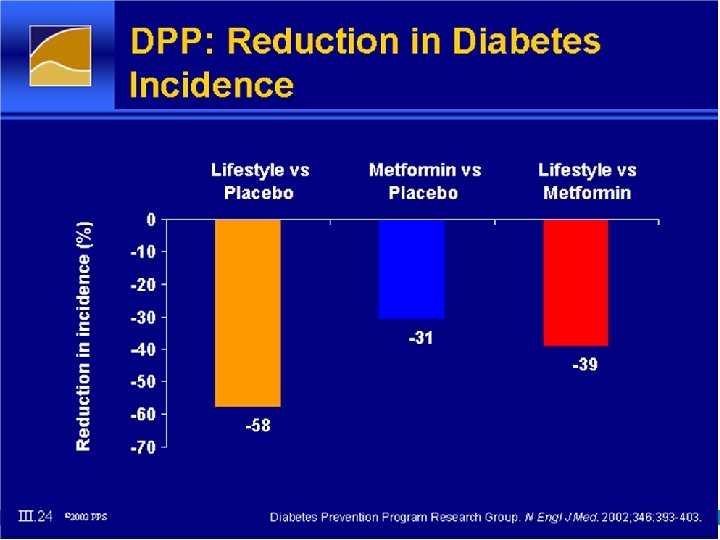
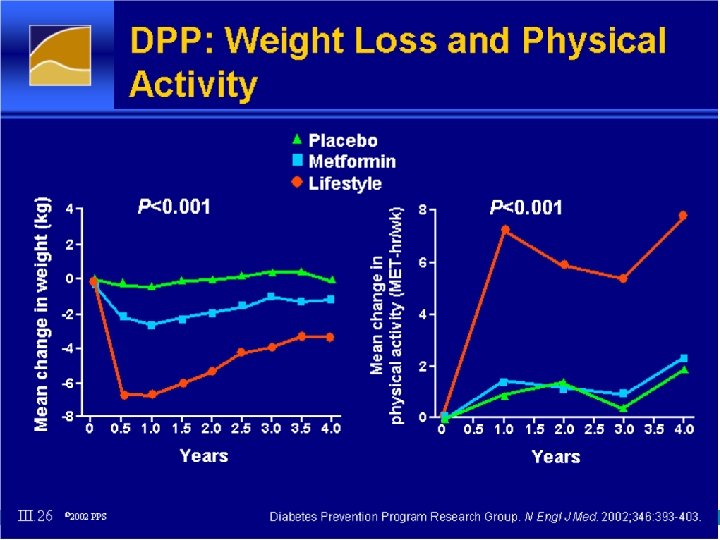
Diabetes Prevention: Lifestyle Diabetes Prevention Program (DPP) • 3, 234 subjects, age 51, BMI 34. 0 kg/m 2 • impaired glucose tolerance • Randomised to intensive lifestyle modification, metformin or placebo: follow-up 2. 8 yrs • Diabetes incidence: – 11. 0% placebo – 7. 8% metformin – 4. 8% lifestyle intervention (58% reduction) • Weight loss was only 7% of initial body weight • >30 mins per day activity • <30% energy from fat • <10% energy from saturated fat • Fibre >15 g/1000 kj Public Health Medicine DEAKIN MEDICAL SCHOOL Nutrition and Cardiovascular Disease (CVD) – Slide 12 Deakin University CRICOS Provider Code: 00113 B
Public Health Medicine DEAKIN MEDICAL SCHOOL Nutrition and Cardiovascular Disease (CVD) – Slide 13 13 Deakin University CRICOS Provider Code: 00113 B
Public Health Medicine DEAKIN MEDICAL SCHOOL Nutrition and Cardiovascular Disease (CVD) – Slide 14 14 Deakin University CRICOS Provider Code: 00113 B
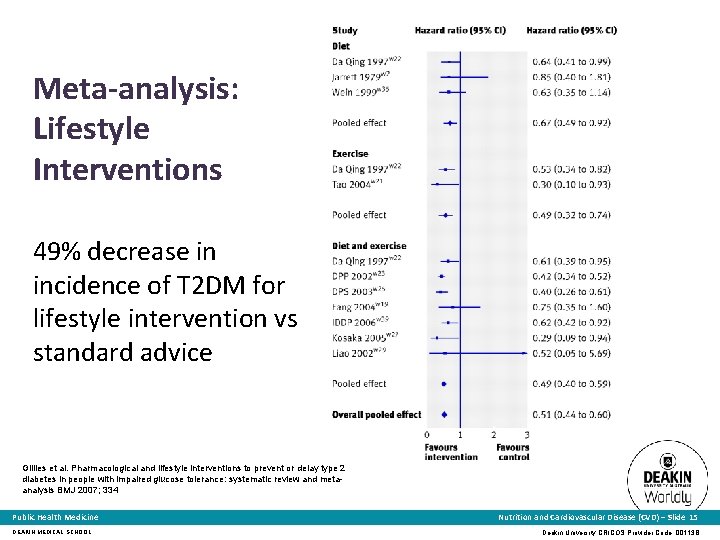
Meta-analysis: Lifestyle Interventions 49% decrease in incidence of T 2 DM for lifestyle intervention vs standard advice Gillies et al. Pharmacological and lifestyle interventions to prevent or delay type 2 diabetes in people with impaired glucose tolerance: systematic review and metaanalysis BMJ 2007; 334 Public Health Medicine DEAKIN MEDICAL SCHOOL Nutrition and Cardiovascular Disease (CVD) – Slide 15 Deakin University CRICOS Provider Code: 00113 B
2. How often do you add salt in cooking? A. B. C. D. Public Health Medicine DEAKIN MEDICAL SCHOOL Never Rarely Sometimes Often Nutrition and Cardiovascular Disease (CVD) – Slide 16 Deakin University CRICOS Provider Code: 00113 B
3. How often do you add salt at the table? A. Never B. Rarely C. Sometimes D. Often Public Health Medicine DEAKIN MEDICAL SCHOOL Nutrition and Cardiovascular Disease (CVD) – Slide 17 Deakin University CRICOS Provider Code: 00113 B
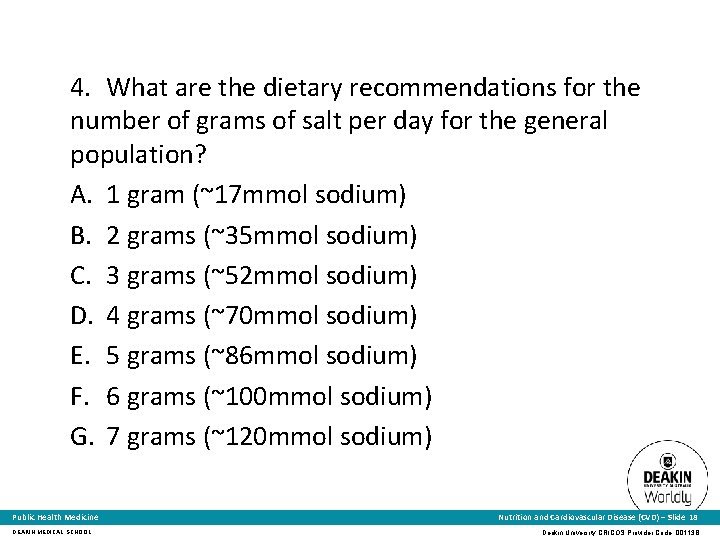
4. What are the dietary recommendations for the number of grams of salt per day for the general population? A. 1 gram (~17 mmol sodium) B. 2 grams (~35 mmol sodium) C. 3 grams (~52 mmol sodium) D. 4 grams (~70 mmol sodium) E. 5 grams (~86 mmol sodium) F. 6 grams (~100 mmol sodium) G. 7 grams (~120 mmol sodium) Public Health Medicine DEAKIN MEDICAL SCHOOL Nutrition and Cardiovascular Disease (CVD) – Slide 18 Deakin University CRICOS Provider Code: 00113 B
5. Which of the following the major food groups make the largest contribution to average intakes of dietary sodium in Australia? A. B. C. D. Public Health Medicine DEAKIN MEDICAL SCHOOL Vegemite and savoury spreads Soft Drinks Breads and Cereals Fish and Seafood Nutrition and Cardiovascular Disease (CVD) – Slide 19 Deakin University CRICOS Provider Code: 00113 B
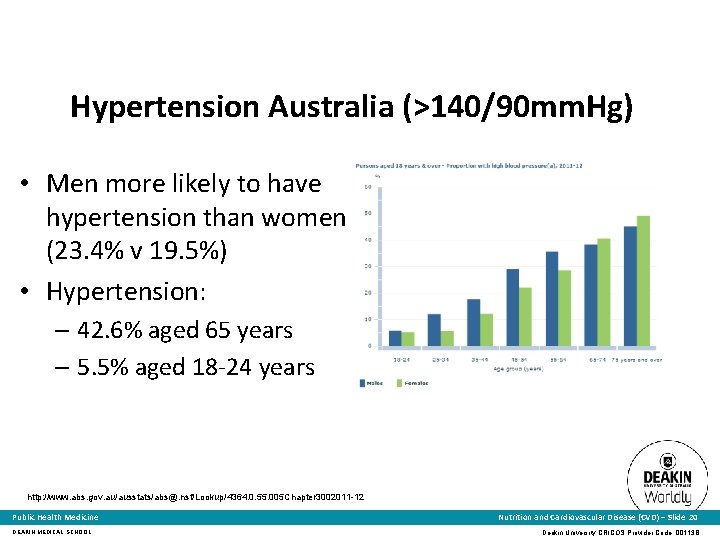
Hypertension Australia (>140/90 mm. Hg) • Men more likely to have hypertension than women (23. 4% v 19. 5%) • Hypertension: – 42. 6% aged 65 years – 5. 5% aged 18 -24 years http: //www. abs. gov. au/ausstats/abs@. nsf/Lookup/4364. 0. 55. 005 Chapter 3002011 -12 Public Health Medicine DEAKIN MEDICAL SCHOOL Nutrition and Cardiovascular Disease (CVD) – Slide 20 Deakin University CRICOS Provider Code: 00113 B
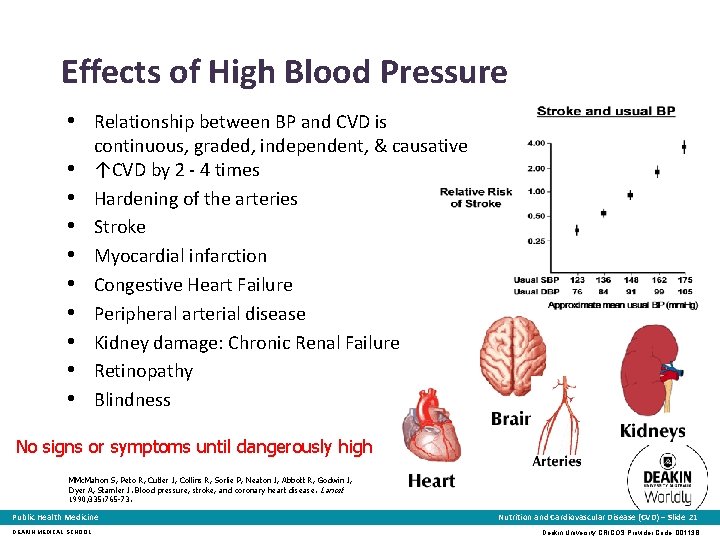
Effects of High Blood Pressure • Relationship between BP and CVD is • • • continuous, graded, independent, & causative ↑CVD by 2 - 4 times Hardening of the arteries Stroke Myocardial infarction Congestive Heart Failure Peripheral arterial disease Kidney damage: Chronic Renal Failure Retinopathy Blindness No signs or symptoms until dangerously high MMc. Mahon S, Peto R, Cutler J, Collins R, Sorlie P, Neaton J, Abbott R, Godwin J, Dyer A, Stamler J. Blood pressure, stroke, and coronary heart disease. Lancet 1990; 335: 765 -73. Public Health Medicine DEAKIN MEDICAL SCHOOL Nutrition and Cardiovascular Disease (CVD) – Slide 21 Deakin University CRICOS Provider Code: 00113 B
Stroke & Hypertension: Australia • Strokes – 40, 000 stroke each year – 70% first ever stroke • leading cause of long-term disability in Adults • Strokes cause 9% all deaths • Risk of stroke (& CHD) increases with BP • Hypertension • Most common chronic disease • 1 in 4 males & 1 in 6 females (25 -65 yrs) Public Health Medicine DEAKIN MEDICAL SCHOOL Nutrition and Cardiovascular Disease (CVD) – Slide 22 Deakin University CRICOS Provider Code: 00113 B
Evidence based Guidelines • • Treat hypertensive persons > 60 yrs: BP <150/90 mm Hg 30 - 59 yrs diastolic goal < 90 mm Hg; Others BP < 140/90 mm Hg (based on expert opinion) Same goals are recommended for hypertensive adults with diabetes or nondiabetic chronic kidney disease (CKD) as for the general hypertensive population younger than 60 years 2014 Evidence-Based Guideline for the Management of High Blood Pressure in Adults Report From the Panel Members Appointed to the Eighth Joint National Committee (JNC 8) JAMA. 2014; 311(5): 507 -520. http: //www. nhlbi. nih. gov/guidelines/hypertension/express. pdf Public Health Medicine DEAKIN MEDICAL SCHOOL Nutrition and Cardiovascular Disease (CVD) – Slide 23 Deakin University CRICOS Provider Code: 00113 B

Definition of Hypertension > 140/90 mm. Hg Lifestyle modifications Abolition of age-adjusted targets: but treatment of elderly individualised 2013 ESH/ESC Guidelines for the management of arterial hypertension: The Task Force for the management of arterial hypertension of the European Society of Hypertension (ESH) and of the European Society of Cardiology (ESC). J Hypertens. 2013 Jul; 31(7): 1281 -357 Public Health Medicine DEAKIN MEDICAL SCHOOL Nutrition and Cardiovascular Disease (CVD) – Slide 24 Deakin University CRICOS Provider Code: 00113 B
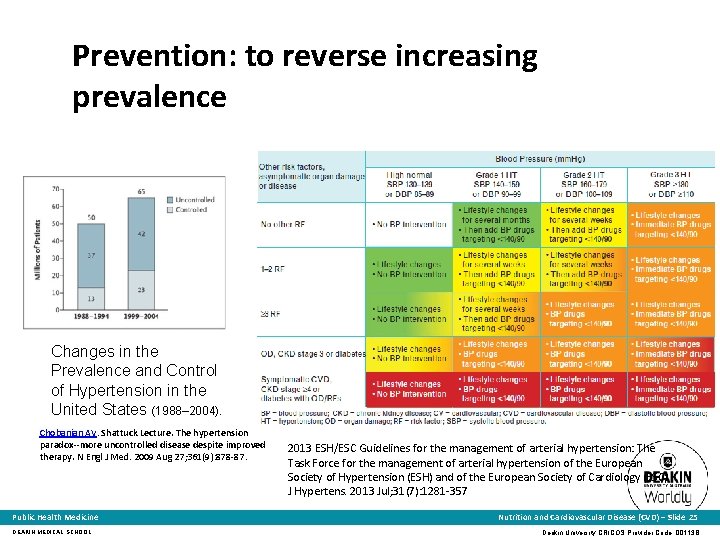
Prevention: to reverse increasing prevalence Changes in the Prevalence and Control of Hypertension in the United States (1988– 2004). Chobanian AV. Shattuck Lecture. The hypertension paradox--more uncontrolled disease despite improved therapy. N Engl J Med. 2009 Aug 27; 361(9): 878 -87. Public Health Medicine DEAKIN MEDICAL SCHOOL 2013 ESH/ESC Guidelines for the management of arterial hypertension: The Task Force for the management of arterial hypertension of the European Society of Hypertension (ESH) and of the European Society of Cardiology (ESC). J Hypertens. 2013 Jul; 31(7): 1281 -357 Nutrition and Cardiovascular Disease (CVD) – Slide 25 Deakin University CRICOS Provider Code: 00113 B
US Guidelines: management of Hypertension Lifestyle modification Endorsed the recommendations of the Lifestyle Work Group: : 1. Combine Dietary Approaches to Stop Hypertension (DASH) diet with reduced sodium intake < 2, 400 mg of sodium (6 g salt) per day, noting that limiting intake to 1, 500 mg (4 g salt/d) can result in even greater reduction in BP 2. Even without achieving these goals, reducing sodium intake by 1, 000 mg (2. 5 g salt)/day lowers blood pressure. Physical activity. Moderate to vigorous physical activity for approximately 160 minutes per week (three to four sessions a week, lasting ~40 minutes per session). Weight loss. The JNC 8 panel endorsed maintaining a healthy weight in controlling blood pressure Alcohol intake received no specific recommendations Eckel RH, et al. 2013 AHA/ACC Guideline on Lifestyle Management to Reduce Cardiovascular Risk: A Report of the American College of Cardiology/American Heart Association Task Force on Practice Guidelines. J Am Coll Cardiol. 2013 Nov 7. pii: S 0735 -1097(13)06029 -4. doi: 10. 1016/j. jacc. 2013. 11. 003. Thomas G 1, Shishehbor M, Brill D, Nally JV Jr New hypertension guidelines: one size fits most? Cleve Clin J Med. 2014 Mar; 81(3): 178 -88. doi: 10. 3949/ccjm. 81 a. 14003. James PA, Oparil S, Carter BL, et al. 2014 Evidence-based guideline for the management of high blood pressure in adults: report from the panel members appointed to the Eighth Joint National Committee (JNC 8). JAMA 2013; doi: 10. 1001/jama. 2013. 284427. Public Health Medicine DEAKIN MEDICAL SCHOOL Nutrition and Cardiovascular Disease (CVD) – Slide 26 Deakin University CRICOS Provider Code: 00113 B
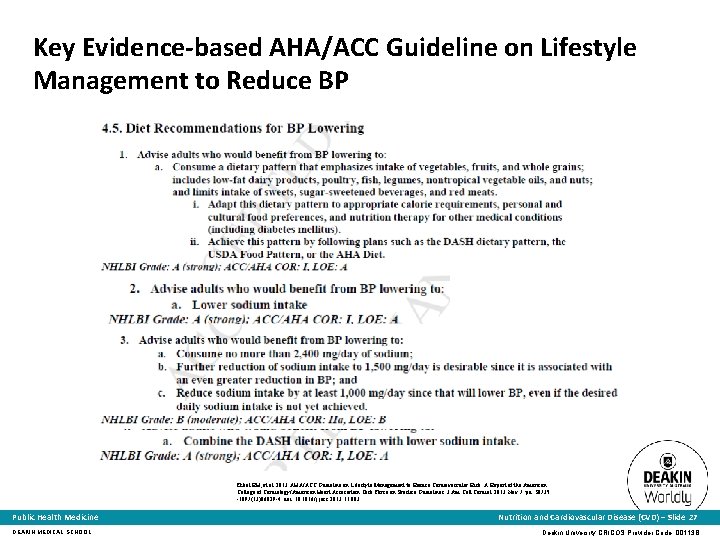
Key Evidence-based AHA/ACC Guideline on Lifestyle Management to Reduce BP Eckel RH, et al. 2013 AHA/ACC Guideline on Lifestyle Management to Reduce Cardiovascular Risk: A Report of the American College of Cardiology/American Heart Association Task Force on Practice Guidelines. J Am Coll Cardiol. 2013 Nov 7. pii: S 0735 -1097(13)06029 -4. doi: 10. 1016/j. jacc. 2013. 11. 003. Public Health Medicine DEAKIN MEDICAL SCHOOL Nutrition and Cardiovascular Disease (CVD) – Slide 27 Deakin University CRICOS Provider Code: 00113 B
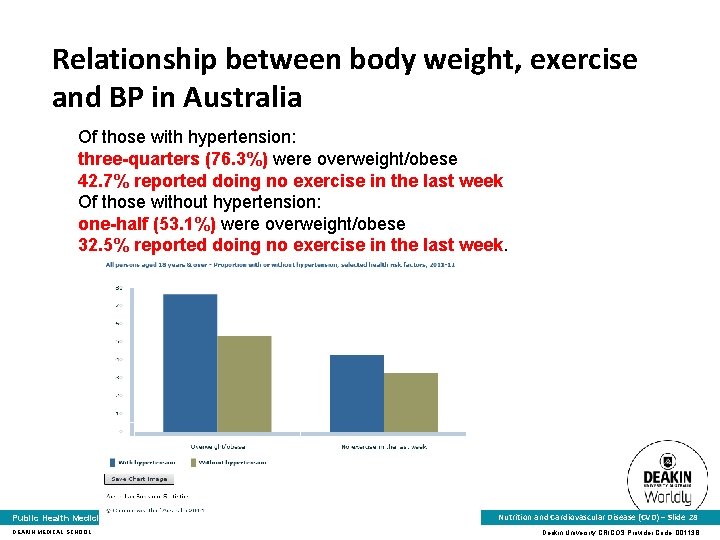
Relationship between body weight, exercise and BP in Australia Of those with hypertension: three-quarters (76. 3%) were overweight/obese 42. 7% reported doing no exercise in the last week Of those without hypertension: one-half (53. 1%) were overweight/obese 32. 5% reported doing no exercise in the last week. Public Health Medicine DEAKIN MEDICAL SCHOOL Nutrition and Cardiovascular Disease (CVD) – Slide 28 Deakin University CRICOS Provider Code: 00113 B
Lifestyle modifications: BP • BP-lowering effects of targeted lifestyle modifications can be equivalent to drug monotherapy • Major drawback: low level of adherence over time • Lifestyle changes may safely and effectively: • delay or prevent hypertension in those without hypertension • delay/prevent medical therapy in grade 1 hypertensive patients • contribute to BP reduction in hypertensives already on medication • reduce number and doses of antihypertensive agents 2013 ESH/ESC Guidelines for the management of arterial hypertension: The Task Force for the management of arterial hypertension of the European Society of Hypertension (ESH) and of the European Society of Cardiology (ESC). J Hypertens. 2013 Jul; 31(7): 1281 -357 Public Health Medicine DEAKIN MEDICAL SCHOOL Nutrition and Cardiovascular Disease (CVD) – Slide 29 Deakin University CRICOS Provider Code: 00113 B
20 ‘salt free’ societies Intersalt study: average (mean) blood pressure of about 200 people of all ages from three of the ‘salt free’ societies Yanomama, Brazil 96/61 mm. Hg Xingu, Brazil 99/62 mm. Hg Asaro, Papua-New Guinea 108/63 mm. Hg Courtesy Dr. Trevor Beard (deceased) Public Health Medicine DEAKIN MEDICAL SCHOOL Nutrition and Cardiovascular Disease (CVD) – Slide 30 Deakin University CRICOS Provider Code: 00113 B
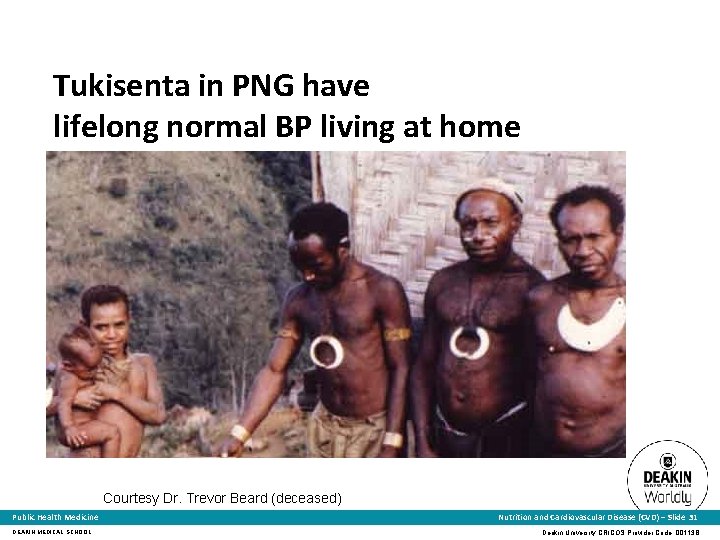
Tukisenta in PNG have lifelong normal BP living at home Courtesy Dr. Trevor Beard (deceased) Public Health Medicine DEAKIN MEDICAL SCHOOL Nutrition and Cardiovascular Disease (CVD) – Slide 31 Deakin University CRICOS Provider Code: 00113 B
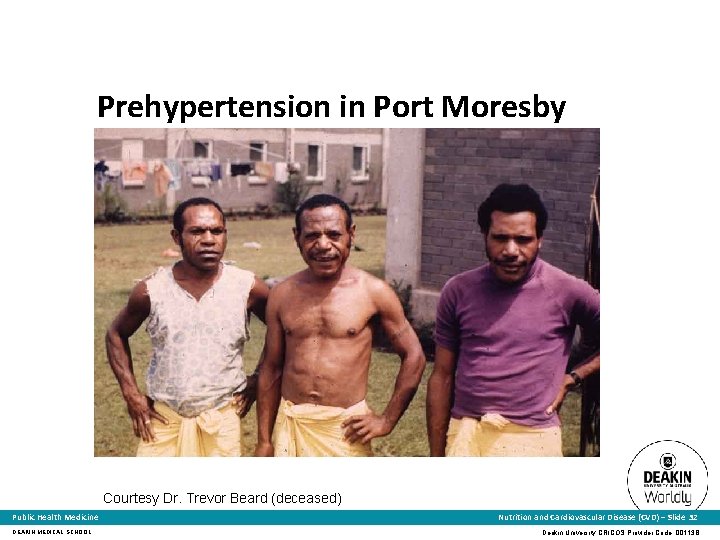
Prehypertension in Port Moresby Courtesy Dr. Trevor Beard (deceased) Public Health Medicine DEAKIN MEDICAL SCHOOL Nutrition and Cardiovascular Disease (CVD) – Slide 32 Deakin University CRICOS Provider Code: 00113 B
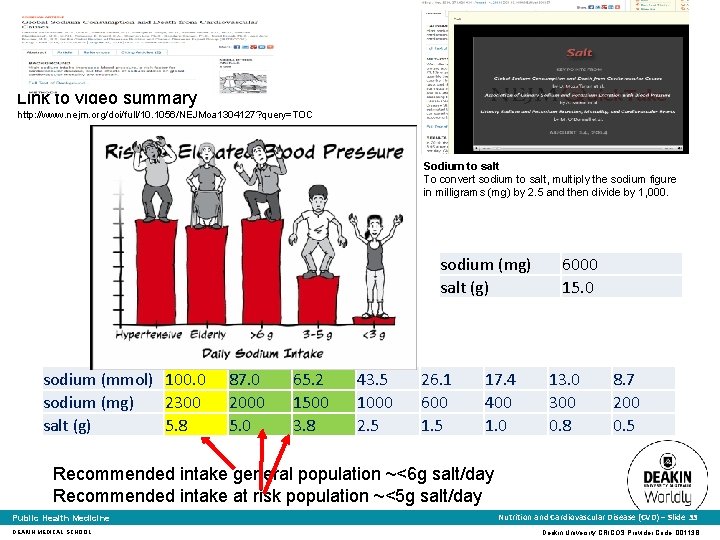
Link to video summary http: //www. nejm. org/doi/full/10. 1056/NEJMoa 1304127? query=TOC Sodium to salt To convert sodium to salt, multiply the sodium figure in milligrams (mg) by 2. 5 and then divide by 1, 000. sodium (mg) salt (g) sodium (mmol) 100. 0 sodium (mg) 2300 salt (g) 5. 8 87. 0 2000 5. 0 65. 2 1500 3. 8 43. 5 1000 2. 5 26. 1 600 1. 5 17. 4 400 1. 0 6000 15. 0 13. 0 300 0. 8 8. 7 200 0. 5 Recommended intake general population ~<6 g salt/day Recommended intake at risk population ~<5 g salt/day Public Health Medicine DEAKIN MEDICAL SCHOOL Nutrition and Cardiovascular Disease (CVD) – Slide 33 Deakin University CRICOS Provider Code: 00113 B
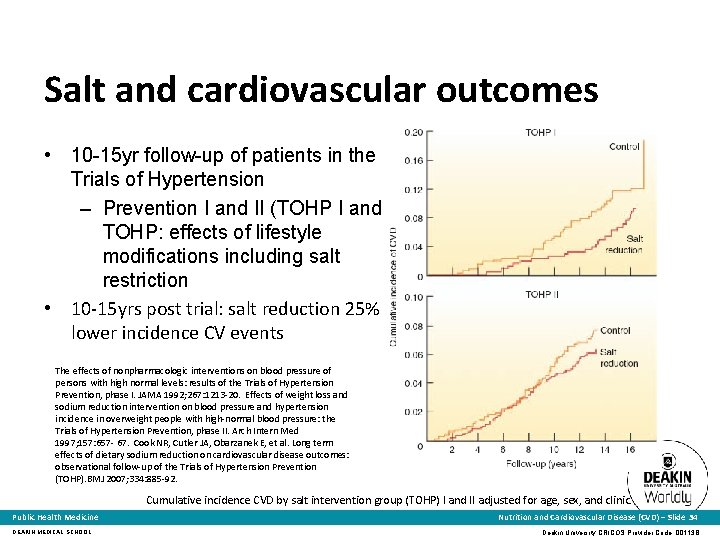
Salt and cardiovascular outcomes • 10 -15 yr follow-up of patients in the Trials of Hypertension – Prevention I and II (TOHP I and TOHP: effects of lifestyle modifications including salt restriction • 10 -15 yrs post trial: salt reduction 25% lower incidence CV events The effects of nonpharmacologic interventions on blood pressure of persons with high normal levels: results of the Trials of Hypertension Prevention, phase I. JAMA 1992; 267: 1213 -20. Effects of weight loss and sodium reduction intervention on blood pressure and hypertension incidence in overweight people with high-normal blood pressure: the Trials of Hypertension Prevention, phase II. Arch Intern Med 1997; 157: 657 - 67. Cook NR, Cutler JA, Obarzanek E, et al. Long term effects of dietary sodium reduction on cardiovascular disease outcomes: observational follow-up of the Trials of Hypertension Prevention (TOHP). BMJ 2007; 334: 885 -92. Cumulative incidence CVD by salt intervention group (TOHP) I and II adjusted for age, sex, and clinic. Public Health Medicine DEAKIN MEDICAL SCHOOL Nutrition and Cardiovascular Disease (CVD) – Slide 34 Deakin University CRICOS Provider Code: 00113 B
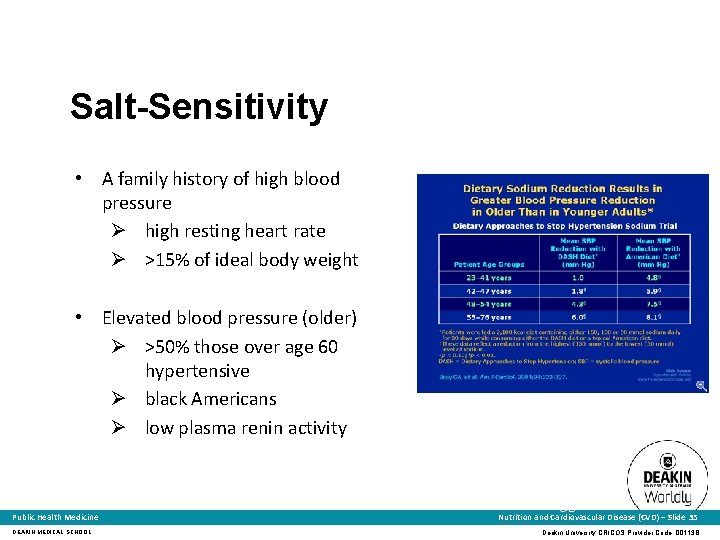
Salt-Sensitivity • A family history of high blood pressure Ø high resting heart rate Ø >15% of ideal body weight • Elevated blood pressure (older) Ø >50% those over age 60 hypertensive Ø black Americans Ø low plasma renin activity Public Health Medicine DEAKIN MEDICAL SCHOOL 35 Nutrition and Cardiovascular Disease (CVD) – Slide 35 Deakin University CRICOS Provider Code: 00113 B
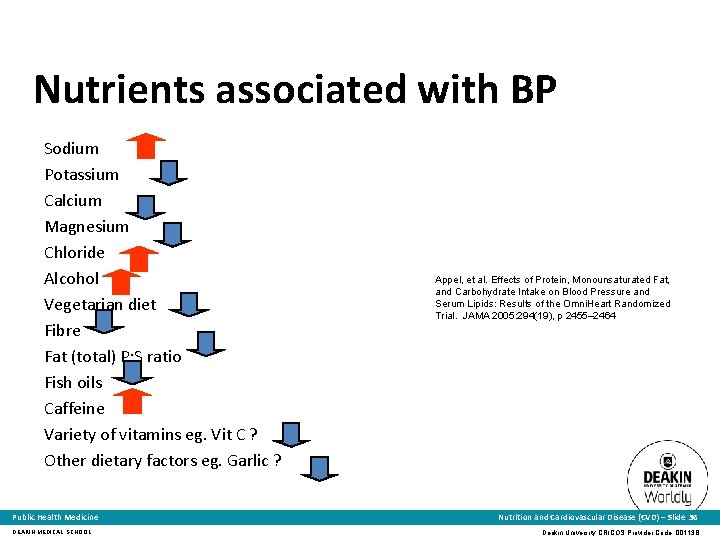
Nutrients associated with BP Sodium Potassium Calcium Magnesium Chloride Alcohol Vegetarian diet Fibre Fat (total) P: S ratio Fish oils Caffeine Variety of vitamins eg. Vit C ? Other dietary factors eg. Garlic ? Public Health Medicine DEAKIN MEDICAL SCHOOL Appel, et al. Effects of Protein, Monounsaturated Fat, and Carbohydrate Intake on Blood Pressure and Serum Lipids: Results of the Omni. Heart Randomized Trial. JAMA 2005: 294(19), p 2455– 2464 Nutrition and Cardiovascular Disease (CVD) – Slide 36 Deakin University CRICOS Provider Code: 00113 B
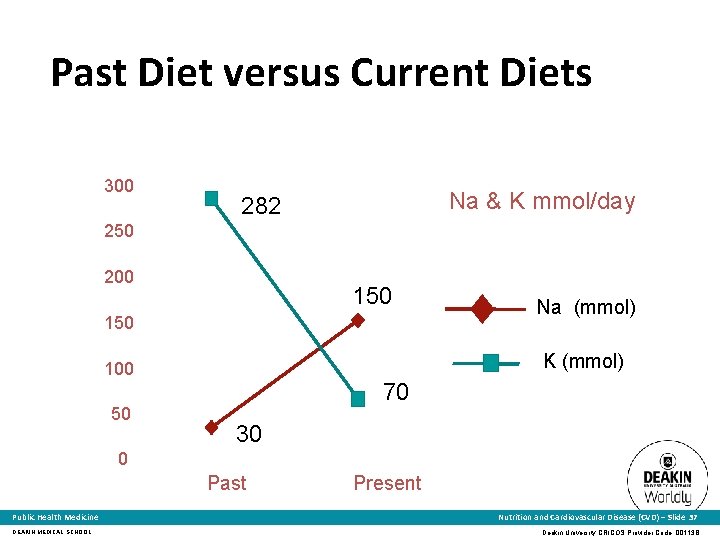
Past Diet versus Current Diets 300 Na & K mmol/day 282 250 200 150 K (mmol) 100 50 Na (mmol) 70 30 0 Past Public Health Medicine DEAKIN MEDICAL SCHOOL Present Nutrition and Cardiovascular Disease (CVD) – Slide 37 Deakin University CRICOS Provider Code: 00113 B
DASH (Study 1) • Dietary patterns, rather than of individual nutrients (NEJM, 1997): significantly and quickly lowered blood pressure (n=459) ‒ Hypertensives: Fall 11/5 mm. Hg ‒ Normotensives: Fall 6/3 mm. Hg • DASH diet: low in saturated fat, total fat, and cholesterol • more fruits, vegetables, and low fat dairy foods, includes whole grains, poultry, fish, and nuts. Reduced in red meat, sweets, and sugar- containing beverages, rich in K, Ca, Mg, protein, fibre • BP reductions: no change in weight, alcohol or Na intake • 3, 000 mg sodium/day 7. 5 g salt Na(130 mmol/day) Public Health Medicine DEAKIN MEDICAL SCHOOL Nutrition and Cardiovascular Disease (CVD) – Slide 38 Deakin University CRICOS Provider Code: 00113 B
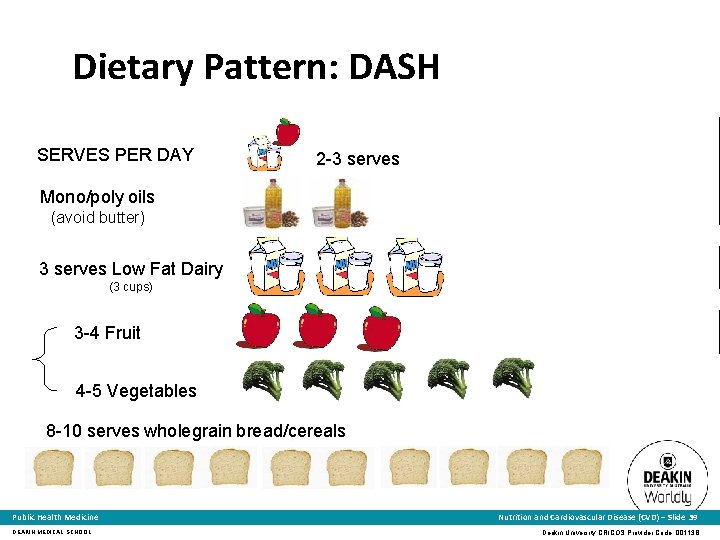
Dietary Pattern: DASH SERVES PER DAY 2 -3 serves Mono/poly oils (avoid butter) 3 serves Low Fat Dairy (3 cups) 3 -4 Fruit 4 -5 Vegetables 8 -10 serves wholegrain bread/cereals Public Health Medicine DEAKIN MEDICAL SCHOOL Nutrition and Cardiovascular Disease (CVD) – Slide 39 Deakin University CRICOS Provider Code: 00113 B
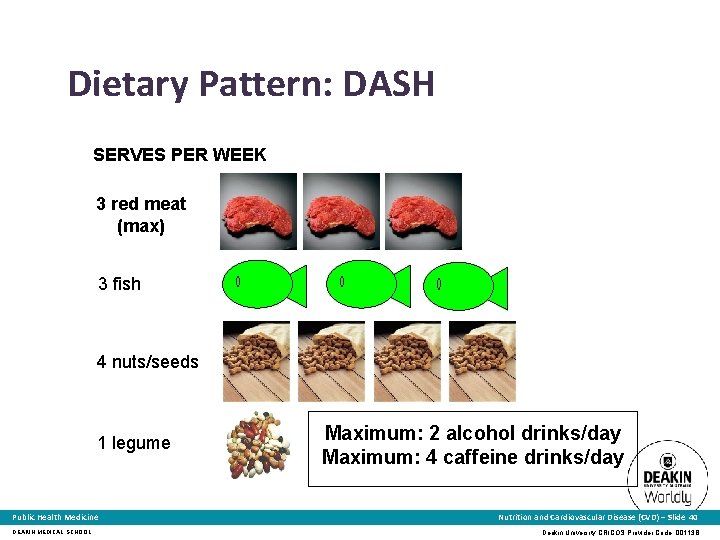
Dietary Pattern: DASH SERVES PER WEEK 3 red meat (max) 3 fish 4 nuts/seeds 1 legume Public Health Medicine DEAKIN MEDICAL SCHOOL Maximum: 2 alcohol drinks/day Maximum: 4 caffeine drinks/day Nutrition and Cardiovascular Disease (CVD) – Slide 40 Deakin University CRICOS Provider Code: 00113 B
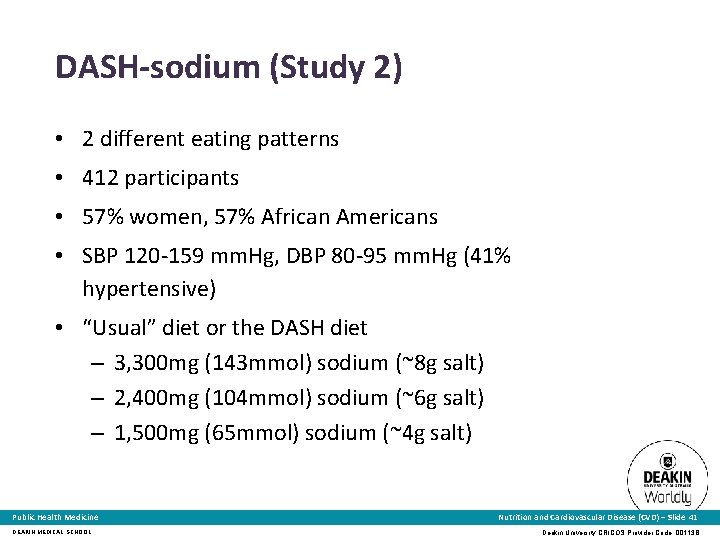
DASH-sodium (Study 2) • 2 different eating patterns • 412 participants • 57% women, 57% African Americans • SBP 120 -159 mm. Hg, DBP 80 -95 mm. Hg (41% hypertensive) • “Usual” diet or the DASH diet ‒ 3, 300 mg (143 mmol) sodium (~8 g salt) ‒ 2, 400 mg (104 mmol) sodium (~6 g salt) ‒ 1, 500 mg (65 mmol) sodium (~4 g salt) Public Health Medicine DEAKIN MEDICAL SCHOOL Nutrition and Cardiovascular Disease (CVD) – Slide 41 Deakin University CRICOS Provider Code: 00113 B
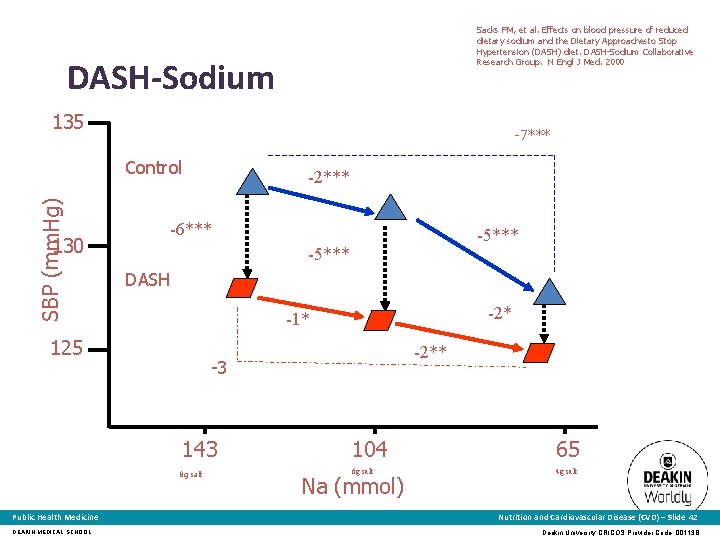
Sacks FM, et al. Effects on blood pressure of reduced dietary sodium and the Dietary Approachesto Stop Hypertension (DASH) diet. DASH-Sodium Collaborative Research Group. N Engl J Med. 2000 DASH-Sodium 135 -7*** SBP (mm. Hg) Control 130 -2*** -6*** -5*** DASH -2** -3 143 8 g salt DEAKIN MEDICAL SCHOOL -2* -1* 125 Public Health Medicine -5*** 104 65 6 g salt 4 g salt Na (mmol) Nutrition and Cardiovascular Disease (CVD) – Slide 42 Deakin University CRICOS Provider Code: 00113 B
Salt & Health: Population Approach Public Health Medicine DEAKIN MEDICAL SCHOOL Nutrition and Cardiovascular Disease (CVD) – Slide 43 Deakin University CRICOS Provider Code: 00113 B
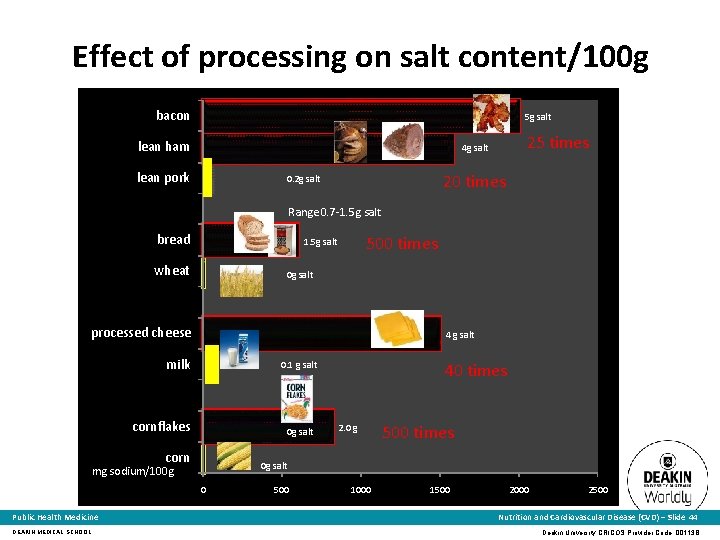
Effect of processing on salt content/100 g bacon 5 g salt lean ham 25 times 4 g salt lean pork 20 times 0. 2 g salt Range 0. 7 -1. 5 g salt bread 500 times 1. 5 g salt wheat 0 g salt processed cheese 4 g salt milk 0. 1 g salt cornflakes 0 g salt corn 0 DEAKIN MEDICAL SCHOOL 2. 0 g 500 times 0 g salt mg sodium/100 g Public Health Medicine 40 times 500 1000 1500 2000 2500 Nutrition and Cardiovascular Disease (CVD) – Slide 44 Deakin University CRICOS Provider Code: 00113 B
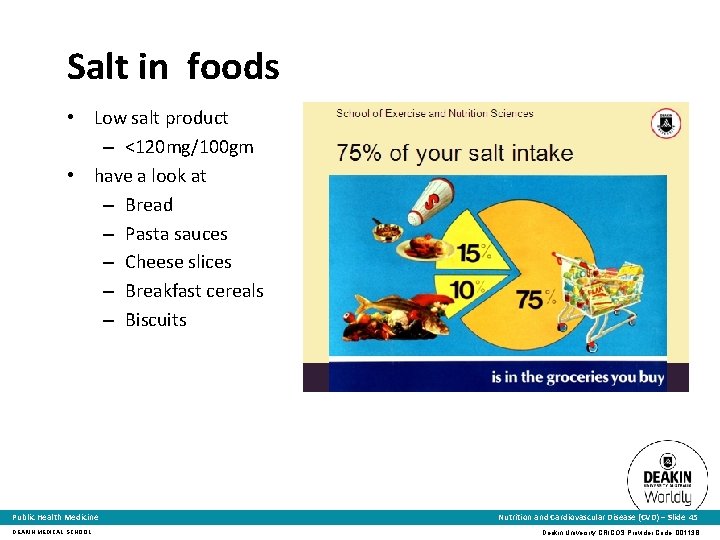
Salt in foods • Low salt product – <120 mg/100 gm • have a look at – Bread – Pasta sauces – Cheese slices – Breakfast cereals – Biscuits Public Health Medicine DEAKIN MEDICAL SCHOOL Nutrition and Cardiovascular Disease (CVD) – Slide 45 Deakin University CRICOS Provider Code: 00113 B
Sodium/ salt targets: Adults (4 -6 g/day) • World Health Organization – < 5 g salt/d (<87 mmol Na+) as a population nutrient intake goal • Australian division of World Action on Salt & Health (AWASH) - less than 6 g salt/d (< 100 mmol Na+) • National Heart Foundation – less than 6 g salt/d (< 100 mmol Na+) – less than 4 g salt/d (< 70 mmol Na+) if high BP or existing CVD • Suggested Dietary target (NH&MRC) http: //www. who. int/dietphysicalactivity/publications/trs 916/ - less than 4 g salt/day (< 70 mmol Na+) download/en/ Diet Nutrition and the Prevention of Chronic Disease – Upper Limit (NH&MRC) Report of the joint WHO/FAO expert consultation WHO Technical Report Series, No. 916 (TRS 916 - less than 6 g/d (100 mmol Na+) NHMRC. Nutrient Reference Values for Australia and New Zealand including Recommended Dietary Intakes. National Health and Medical Research Council, 2004 National Heart Foundation of Australia Position Statement The relationships between dietary electrolytes and cardiovascular disease November 2006) Public Health Medicine DEAKIN MEDICAL SCHOOL Nutrition and Cardiovascular Disease (CVD) – Slide 46 Deakin University CRICOS Provider Code: 00113 B
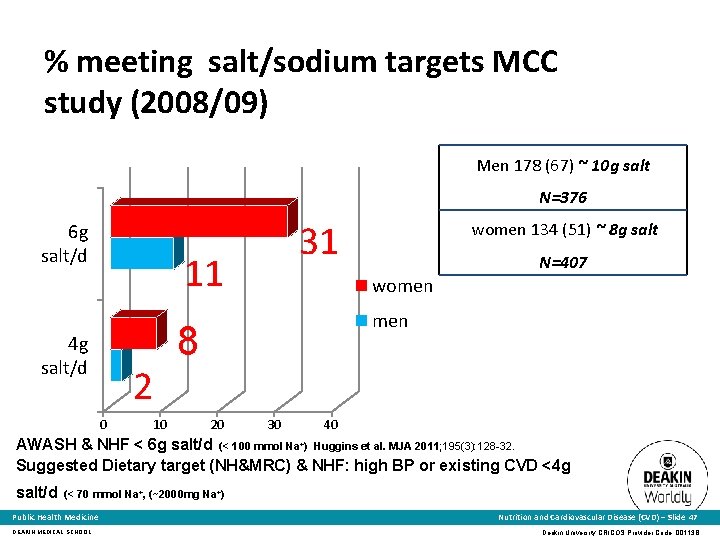
% meeting salt/sodium targets MCC study (2008/09) Men 178 (67) ~ 10 g salt N=376 6 g salt/d 31 11 4 g salt/d 2 0 10 women 134 (51) ~ 8 g salt N=407 women 8 20 30 40 AWASH & NHF < 6 g salt/d (< 100 mmol Na+) Huggins et al. MJA 2011; 195(3): 128 -32. Suggested Dietary target (NH&MRC) & NHF: high BP or existing CVD <4 g salt/d (< 70 mmol Na+, (~2000 mg Na+) Public Health Medicine DEAKIN MEDICAL SCHOOL Nutrition and Cardiovascular Disease (CVD) – Slide 47 Deakin University CRICOS Provider Code: 00113 B
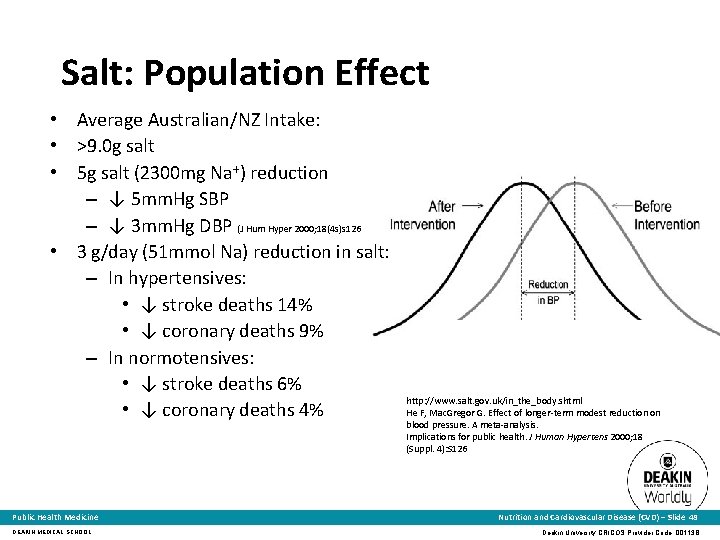
Salt: Population Effect • Average Australian/NZ Intake: • >9. 0 g salt • 5 g salt (2300 mg Na+) reduction – ↓ 5 mm. Hg SBP – ↓ 3 mm. Hg DBP (J Hum Hyper 2000; 18(4 s)s 126 • 3 g/day (51 mmol Na) reduction in salt: – In hypertensives: • ↓ stroke deaths 14% • ↓ coronary deaths 9% – In normotensives: • ↓ stroke deaths 6% • ↓ coronary deaths 4% Public Health Medicine DEAKIN MEDICAL SCHOOL http: //www. salt. gov. uk/in_the_body. shtml He F, Mac. Gregor G. Effect of longer-term modest reduction on blood pressure. A meta-analysis. Implications for public health. J Human Hypertens 2000; 18 (Suppl. 4): S 126 Nutrition and Cardiovascular Disease (CVD) – Slide 48 Deakin University CRICOS Provider Code: 00113 B
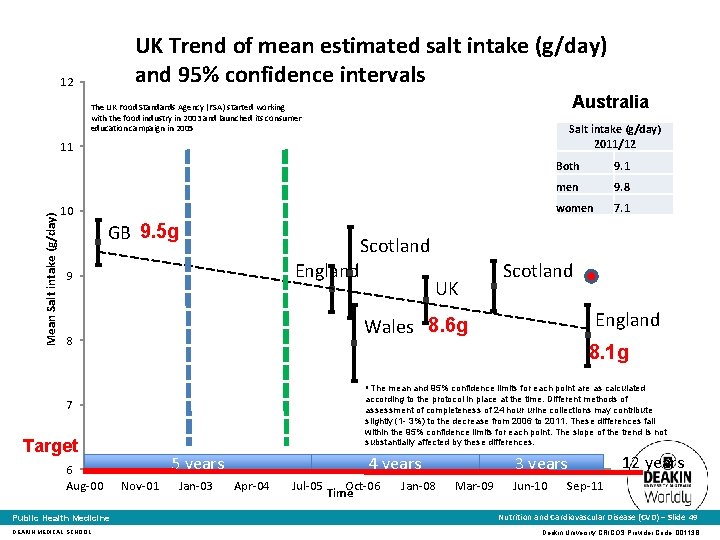
UK Trend of mean estimated salt intake (g/day) and 95% confidence intervals 12 Australia The UK Food Standards Agency (FSA) started working with the food industry in 2003 and launched its consumer education campaign in 2005 Salt intake (g/day) 2011/12 Mean Salt intake (g/day) 11 10 GB 9. 5 g Both 9. 1 men 9. 8 women 7. 1 Scotland England 9 UK Scotland England Wales 8. 6 g 8 8. 1 g a The mean and 95% confidence limits for each point are as calculated according to the protocol in place at the time. Different methods of assessment of completeness of 24 hour urine collections may contribute slightly (1 - 3%) to the decrease from 2006 to 2011. These differences fall within the 95% confidence limits for each point. The slope of the trend is not substantially affected by these differences. 7 Target 6 Aug-00 Public Health Medicine DEAKIN MEDICAL SCHOOL 5 years Nov-01 Jan-03 4 years Apr-04 Jul-05 Oct-06 Time Jan-08 3 years Mar-09 Jun-10 12 years Sep-11 Nutrition and Cardiovascular Disease (CVD) – Slide 49 Deakin University CRICOS Provider Code: 00113 B
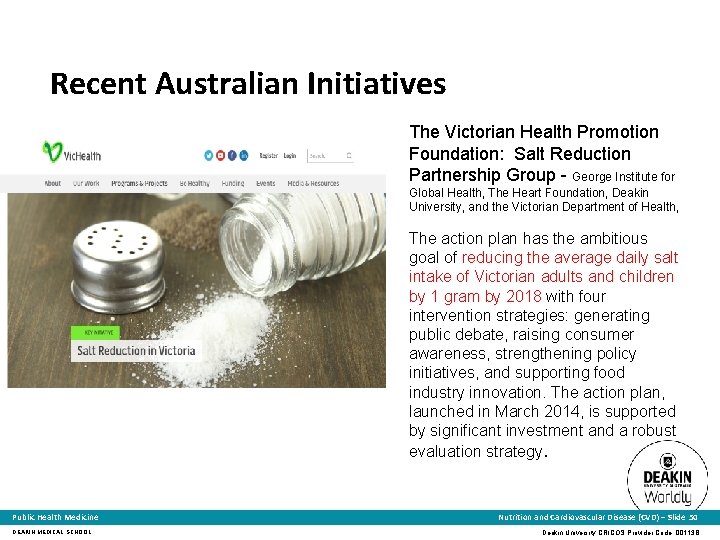
Recent Australian Initiatives The Victorian Health Promotion Foundation: Salt Reduction Partnership Group - George Institute for Global Health, The Heart Foundation, Deakin University, and the Victorian Department of Health, The action plan has the ambitious goal of reducing the average daily salt intake of Victorian adults and children by 1 gram by 2018 with four intervention strategies: generating public debate, raising consumer awareness, strengthening policy initiatives, and supporting food industry innovation. The action plan, launched in March 2014, is supported by significant investment and a robust evaluation strategy. Public Health Medicine DEAKIN MEDICAL SCHOOL Nutrition and Cardiovascular Disease (CVD) – Slide 50 Deakin University CRICOS Provider Code: 00113 B
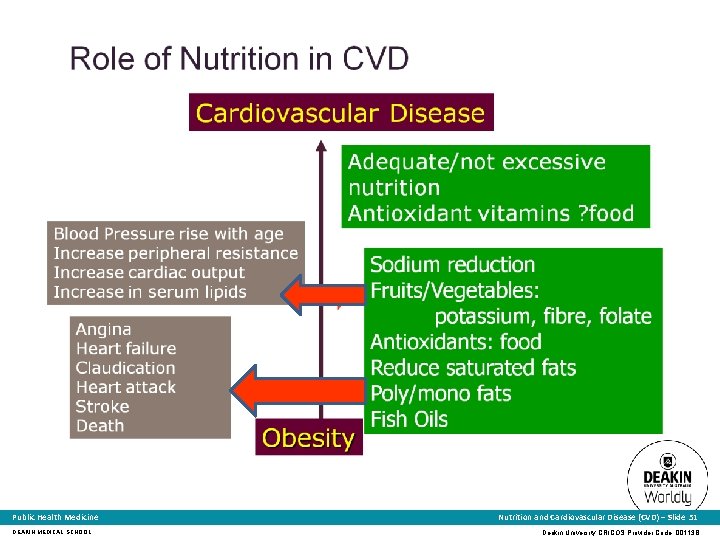
Public Health Medicine DEAKIN MEDICAL SCHOOL Nutrition and Cardiovascular Disease (CVD) – Slide 51 Deakin University CRICOS Provider Code: 00113 B
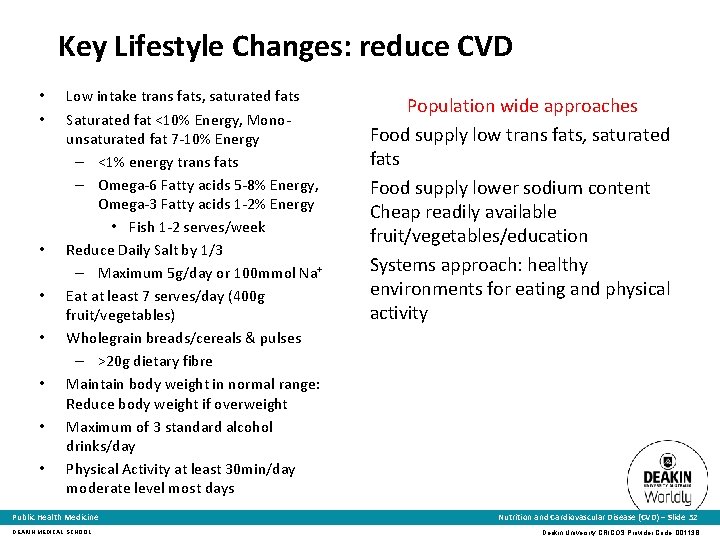
Key Lifestyle Changes: reduce CVD • • Low intake trans fats, saturated fats Saturated fat <10% Energy, Monounsaturated fat 7 -10% Energy – <1% energy trans fats – Omega-6 Fatty acids 5 -8% Energy, Omega-3 Fatty acids 1 -2% Energy • Fish 1 -2 serves/week Reduce Daily Salt by 1/3 – Maximum 5 g/day or 100 mmol Na+ Eat at least 7 serves/day (400 g fruit/vegetables) Wholegrain breads/cereals & pulses – >20 g dietary fibre Maintain body weight in normal range: Reduce body weight if overweight Maximum of 3 standard alcohol drinks/day Physical Activity at least 30 min/day moderate level most days Public Health Medicine DEAKIN MEDICAL SCHOOL Population wide approaches Food supply low trans fats, saturated fats Food supply lower sodium content Cheap readily available fruit/vegetables/education Systems approach: healthy environments for eating and physical activity Nutrition and Cardiovascular Disease (CVD) – Slide 52 Deakin University CRICOS Provider Code: 00113 B
- Slides: 52