
Nutrients what you need to know Quick Quiz
- Slides: 9
Nutrients …what you need to know
Quick Quiz… always true, sometimes true, false • • • Foods that are high in calories are unhealthy You should avoid foods with sugars in them You should avoid fats in your diet Vegetarian diets are low in protein Snacking is bad for you
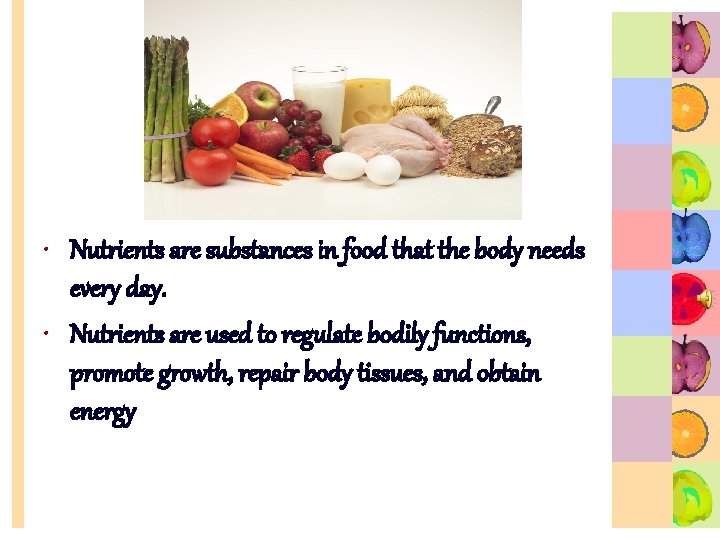
• Nutrients are substances in food that the body needs every day. • Nutrients are used to regulate bodily functions, promote growth, repair body tissues, and obtain energy
There are six classes of nutrients • • • Carbohydrates Fats Proteins Vitamins Minerals water
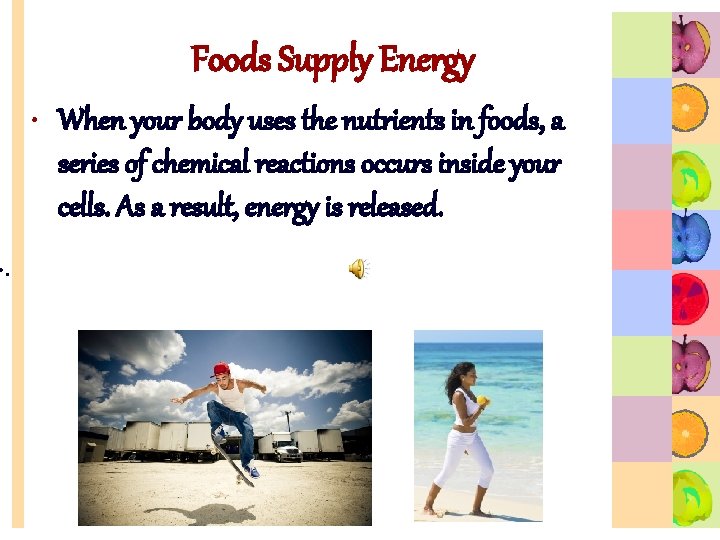
• . Foods Supply Energy • When your body uses the nutrients in foods, a series of chemical reactions occurs inside your cells. As a result, energy is released.
Metabolism • Metabolism is the chemical process by which your body breaks down food to release energy. • Metabolism also involves the use of this energy for the growth and repair of body tissues.
Carbohydrates • Carbohydrates supply energy for your body’s functions. • Simple carbohydrates are also known as sugars. • Complex carbohydrates include starches and fiber. Fiber is found in plants and cannot be digested.
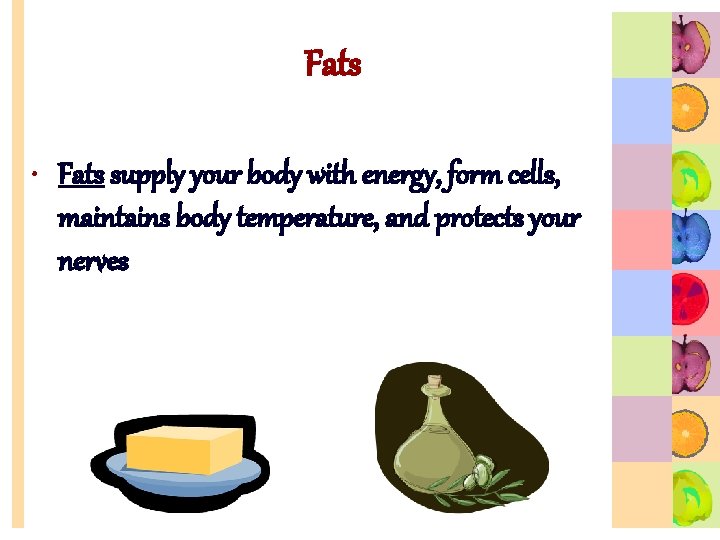
Fats • Fats supply your body with energy, form cells, maintains body temperature, and protects your nerves
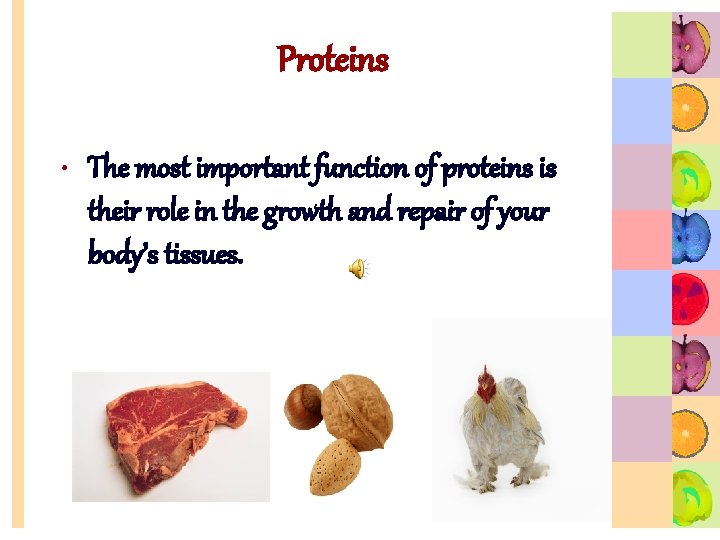
Proteins • The most important function of proteins is their role in the growth and repair of your body’s tissues.