
Nutrients Cycle in the Biosphere Biogeochemical cycles nutrient
Nutrients Cycle in the Biosphere • Biogeochemical cycles, nutrient cycles • • • Hydrologic Carbon Nitrogen Phosphorus Sulfur • Nutrients may remain in a reservoir for a period of time

Water Cycles through the Biosphere • Natural renewal of water quality: three major processes • Evaporation • Precipitation • Transpiration • Alteration of the hydrologic cycle by humans • Withdrawal of large amounts of freshwater at rates faster than nature can replace it • Clearing vegetation • Increased flooding when wetlands are drained-wetlands hold water during floods, periods of snowmelt, storms, etc.
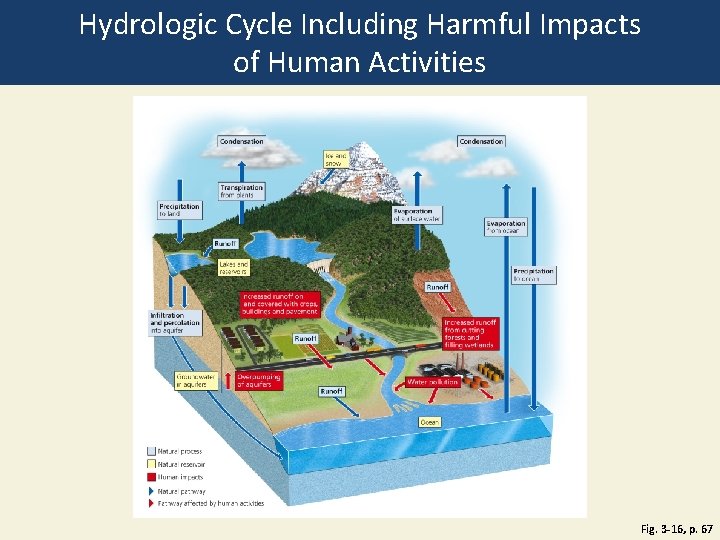
Hydrologic Cycle Including Harmful Impacts of Human Activities Fig. 3 -16, p. 67

Condensation Ice and snow Transpiration from plants Precipitation to land Evaporation of surface water Evaporation from ocean Runoff Lakes and reservoirs Infiltration and percolation into aquifer Groundwater in aquifers Runoff Increased runoff on land covered with crops, buildings and pavement Increased runoff from cutting forests and filling wetlands Runoff Overpumping of aquifers Precipitation to ocean Water pollution Runoff Ocean Natural process Natural reservoir Human impacts Natural pathway Pathway affected by human activities Fig. 3 -16, p. 67
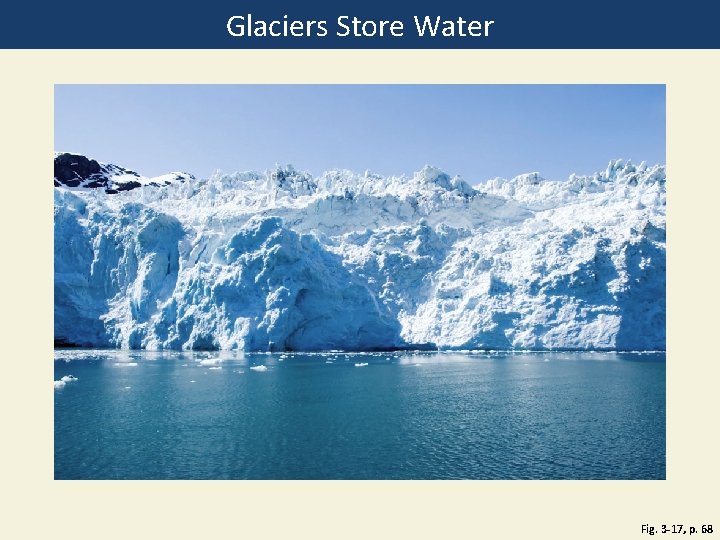
Glaciers Store Water Fig. 3 -17, p. 68
Carbon Cycle Depends on Photosynthesis and Respiration • Link between photosynthesis in producers and respiration in producers, consumers, and decomposers • Additional CO 2 added to the atmosphere • Tree clearing • Burning of fossil fuels • Warms the atmosphere
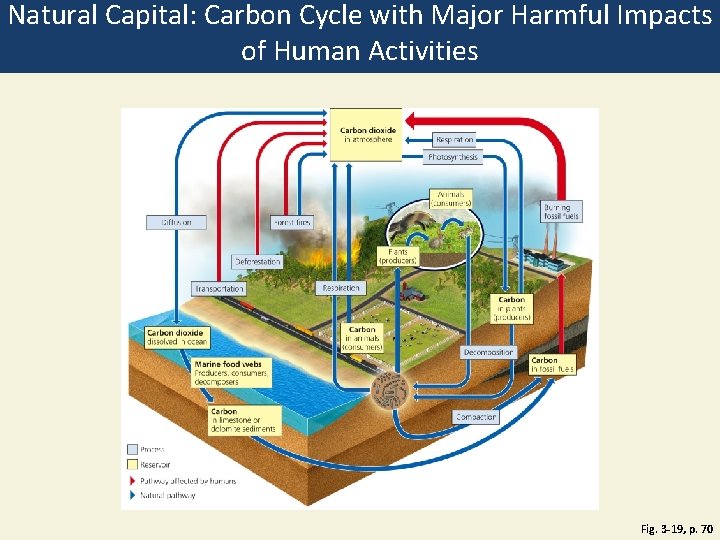
Natural Capital: Carbon Cycle with Major Harmful Impacts of Human Activities Fig. 3 -19, p. 70
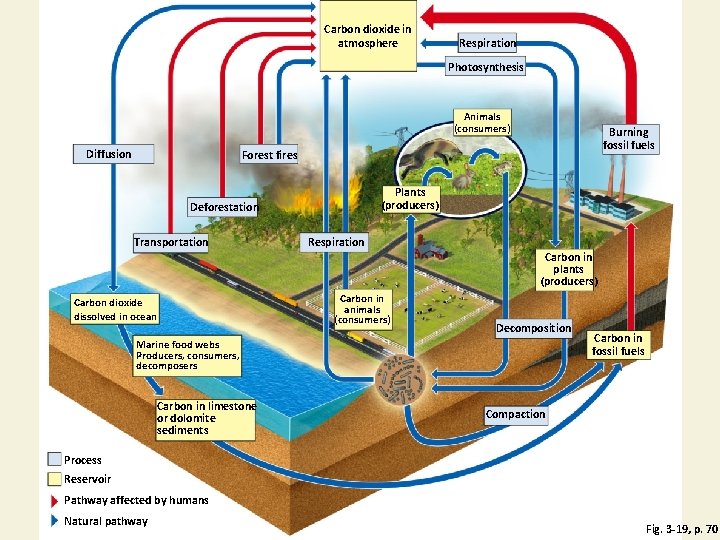
Carbon dioxide in atmosphere Respiration Photosynthesis Animals (consumers) Diffusion Burning fossil fuels Forest fires Plants (producers) Deforestation Transportation Respiration Carbon in plants (producers) Carbon dioxide dissolved in ocean Carbon in animals (consumers) Decomposition Marine food webs Producers, consumers, decomposers Carbon in limestone or dolomite sediments Carbon in fossil fuels Compaction Process Reservoir Pathway affected by humans Natural pathway Fig. 3 -19, p. 70
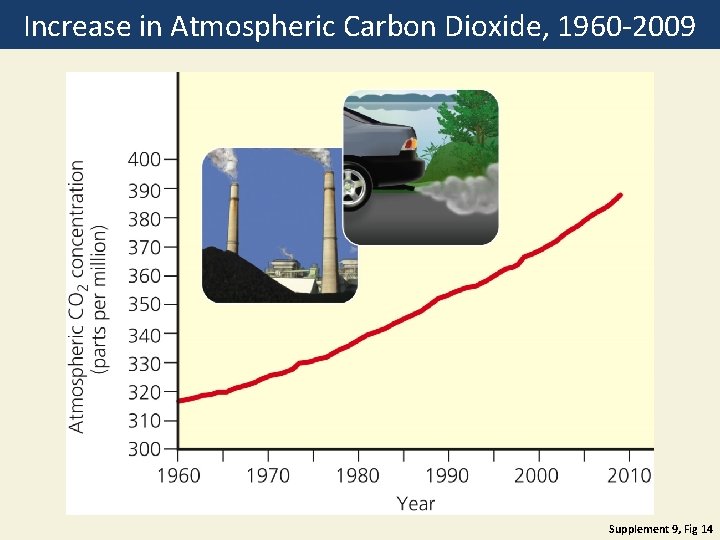
Increase in Atmospheric Carbon Dioxide, 1960 -2009 Supplement 9, Fig 14
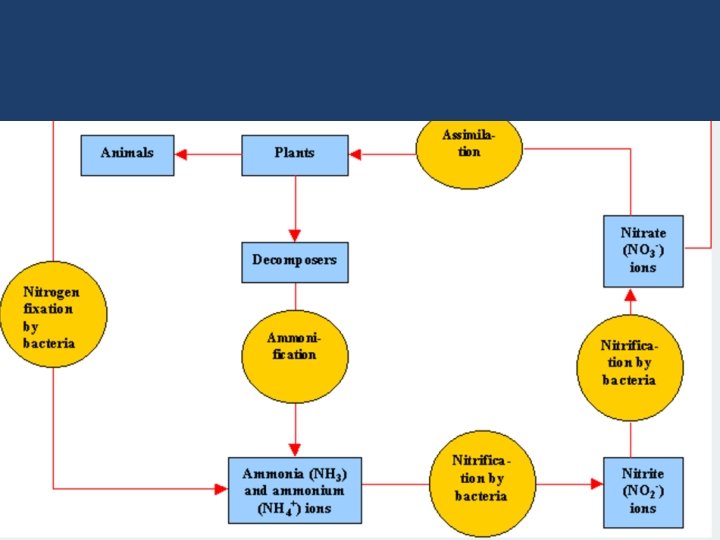
Nitrogen Cycles through the Biosphere: Bacteria in Action • Nitrogen fixed by lightning • Nitrogen fixed by bacteria and cyanobacteria • Combine gaseous nitrogen with hydrogen to make ammonia (NH 3) and ammonium ions (NH 4+) • Nitrification • Soil bacteria change ammonia and ammonium ions to nitrate ions (NO 3 -) • Denitrification • Nitrate ions back to nitrogen gas
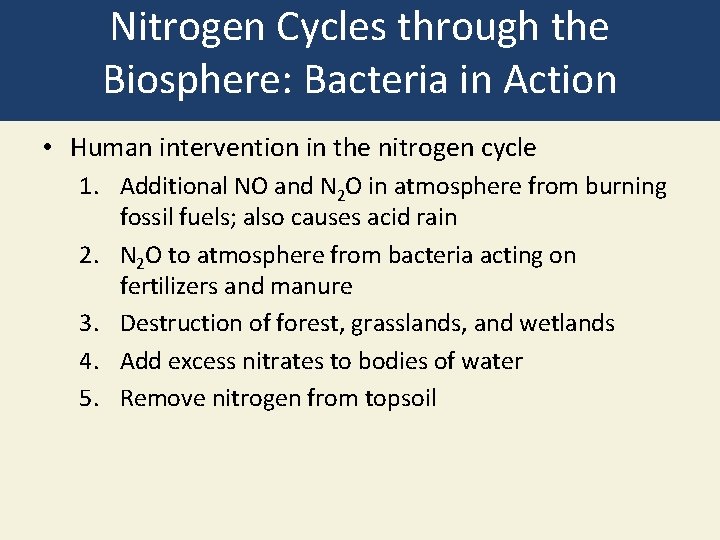
Nitrogen Cycles through the Biosphere: Bacteria in Action • Human intervention in the nitrogen cycle 1. Additional NO and N 2 O in atmosphere from burning fossil fuels; also causes acid rain 2. N 2 O to atmosphere from bacteria acting on fertilizers and manure 3. Destruction of forest, grasslands, and wetlands 4. Add excess nitrates to bodies of water 5. Remove nitrogen from topsoil
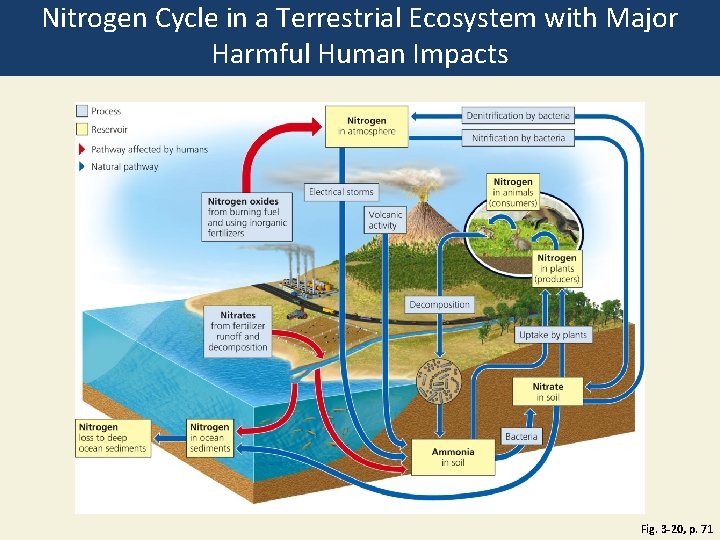
Nitrogen Cycle in a Terrestrial Ecosystem with Major Harmful Human Impacts Fig. 3 -20, p. 71
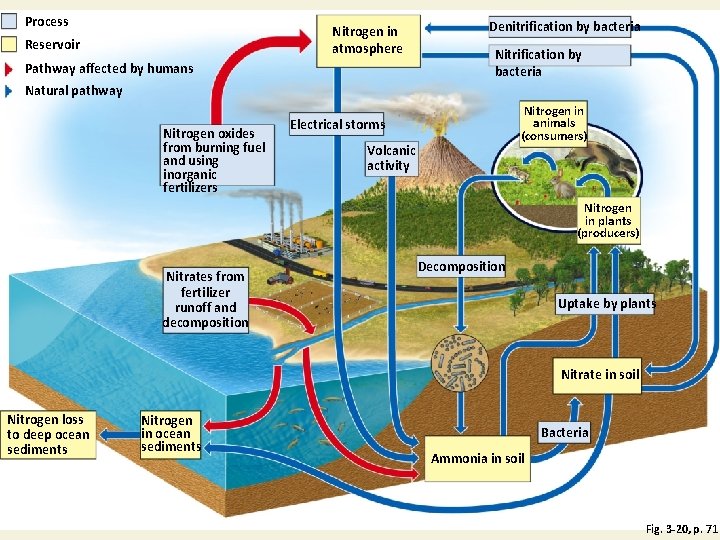
Process Nitrogen in atmosphere Reservoir Pathway affected by humans Denitrification by bacteria Natural pathway Nitrogen oxides from burning fuel and using inorganic fertilizers Nitrogen in animals (consumers) Electrical storms Volcanic activity Nitrogen in plants (producers) Nitrates from fertilizer runoff and decomposition Decomposition Uptake by plants Nitrate in soil Nitrogen loss to deep ocean sediments Nitrogen in ocean sediments Bacteria Ammonia in soil Fig. 3 -20, p. 71
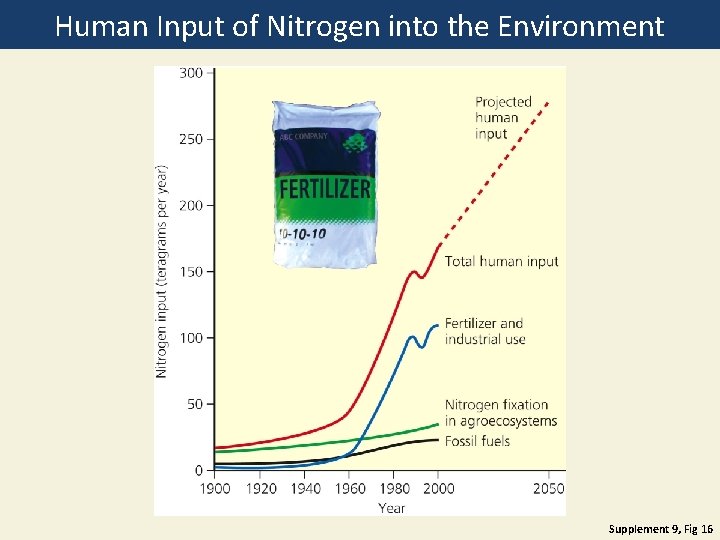
Human Input of Nitrogen into the Environment Supplement 9, Fig 16
Phosphorus Cycles through the Biosphere • Cycles through water, the earth’s crust, and living organisms • Limiting factor for plant growth • Impact of human activities 1. Clearing forests 2. Removing large amounts of phosphate from the earth to make fertilizers 3. Erosion leaches phosphates into streams
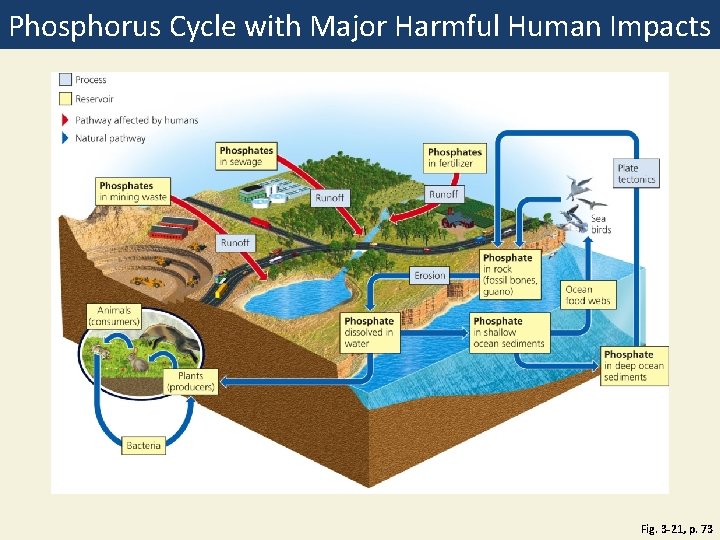
Phosphorus Cycle with Major Harmful Human Impacts Fig. 3 -21, p. 73
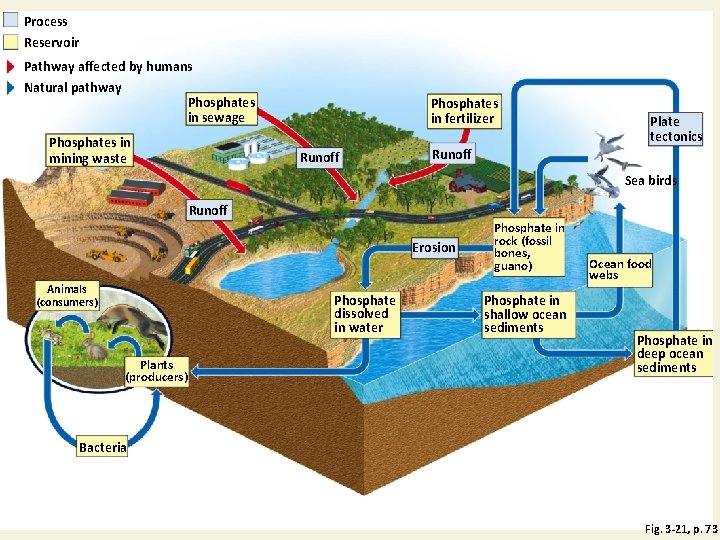
Process Reservoir Pathway affected by humans Natural pathway Phosphates in sewage Phosphates in mining waste Phosphates in fertilizer Runoff Plate tectonics Runoff Sea birds Runoff Erosion Animals (consumers) Phosphate dissolved in water Plants (producers) Phosphate in rock (fossil bones, guano) Phosphate in shallow ocean sediments Ocean food webs Phosphate in deep ocean sediments Bacteria Fig. 3 -21, p. 73
Sulfur Cycles through the Biosphere • Sulfur found in organisms, ocean sediments, soil, rocks, and fossil fuels • SO 2 in the atmosphere • H 2 SO 4 and SO 4 • Human activities affect the sulfur cycle • Burn sulfur-containing coal and oil • Refine sulfur-containing petroleum • Convert sulfur-containing metallic mineral ores
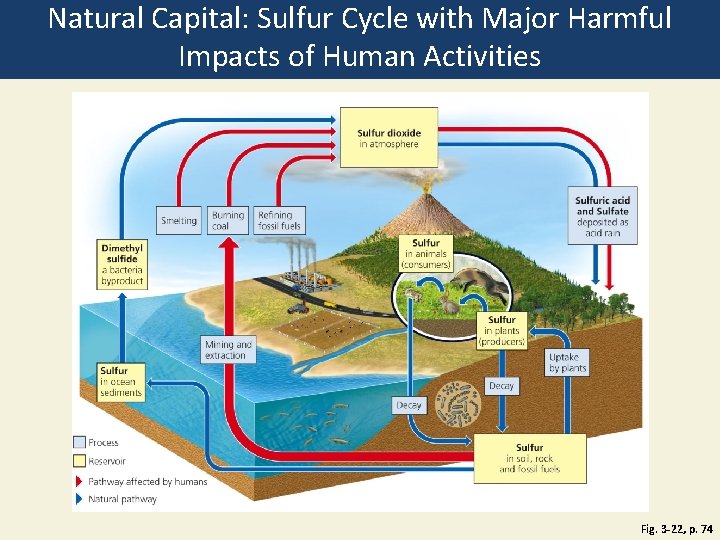
Natural Capital: Sulfur Cycle with Major Harmful Impacts of Human Activities Fig. 3 -22, p. 74
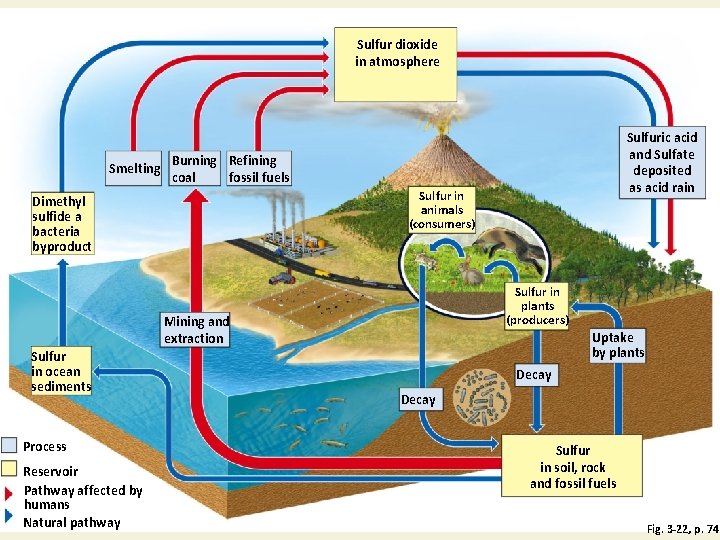
Sulfur dioxide in atmosphere Smelting Burning Refining coal fossil fuels Sulfur in animals (consumers) Dimethyl sulfide a bacteria byproduct Sulfur in plants (producers) Mining and extraction Sulfur in ocean sediments Process Reservoir Pathway affected by humans Natural pathway Sulfuric acid and Sulfate deposited as acid rain Uptake by plants Decay Sulfur in soil, rock and fossil fuels Fig. 3 -22, p. 74
3 -5 How Do Scientists Study Ecosystems? • Concept 3 -5 Scientists use both field research and laboratory research, as well as mathematical and other models to learn about ecosystems.
Some Scientists Study Nature Directly • Field research: “muddy-boots biology” • New technologies available • Remote sensors • Geographic information system (GIS) software • Digital satellite imaging • 2005, Global Earth Observation System of Systems (GEOSS)
Science Focus: Satellites, Google Earth, and the Environment • Satellites as remote sensing devices • Google Earth software allows you to view anywhere on earth, including 3 -D • Satellites can collect data from anywhere in the world
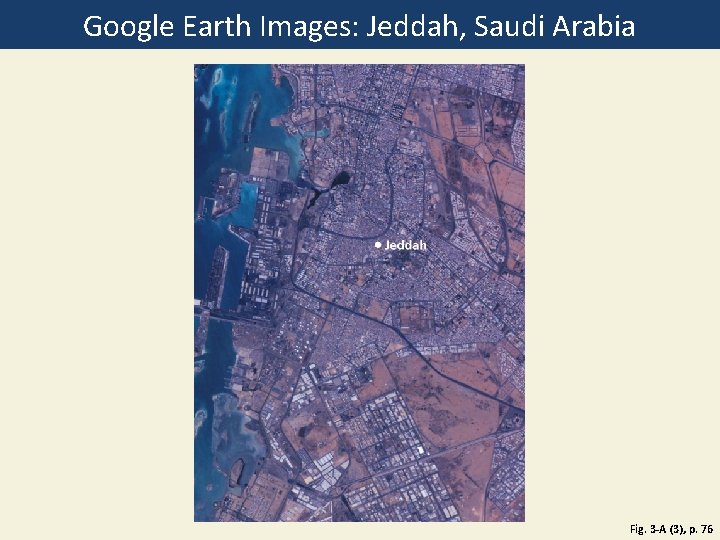
Google Earth Images: Jeddah, Saudi Arabia Fig. 3 -A (3), p. 76
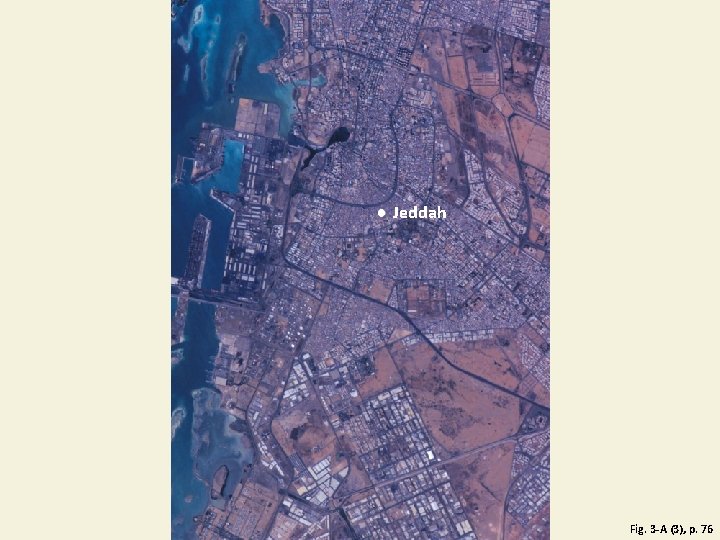
Jeddah Fig. 3 -A (3), p. 76
Some Scientists Study Ecosystems in the Laboratory • Simplified systems carried out in • • Culture tubes and bottles Aquaria tanks Greenhouses Indoor and outdoor chambers • Supported by field research
Some Scientists Use Models to Simulate Ecosystems • Mathematical and other models • Computer simulations and projections • Field and laboratory research needed for baseline data
We Need to Learn More about the Health of the World’s Ecosystems • Determine condition of the world’s ecosystems • More baseline data needed
Three Big Ideas 1. Life is sustained by the flow of energy from the sun through the biosphere, the cycling of nutrients within the biosphere, and gravity. 2. Some organisms produce the nutrients they need, others survive by consuming other organisms, and some recycle nutrients back to producer organisms. 3. Human activities are altering the flow of energy through food chains and webs and the cycling of nutrients within ecosystems and the biosphere.
- Slides: 30