
Nutrients A substance contained in food and used
Nutrients A substance contained in food and used in the body.
The Six Nutrients • • • Carbohydrate Protein Fat Vitamin Mineral Water
Why Do We Need Nutrients? • Energy • Build and/or maintain tissues
Calorie vs. Gram • Calorie – A calorie is a measurement of energy that the body can store or burn. • 3, 500 calories = 1 lb. of fat • Recommended Daily Allowance (RDA) – Males 10 -18 = 2, 500 – 3, 000 – Females 10 -18 = 2, 200 – Adults = 2, 000 – 2, 500 • Gram – A gram is a measurement of weight.
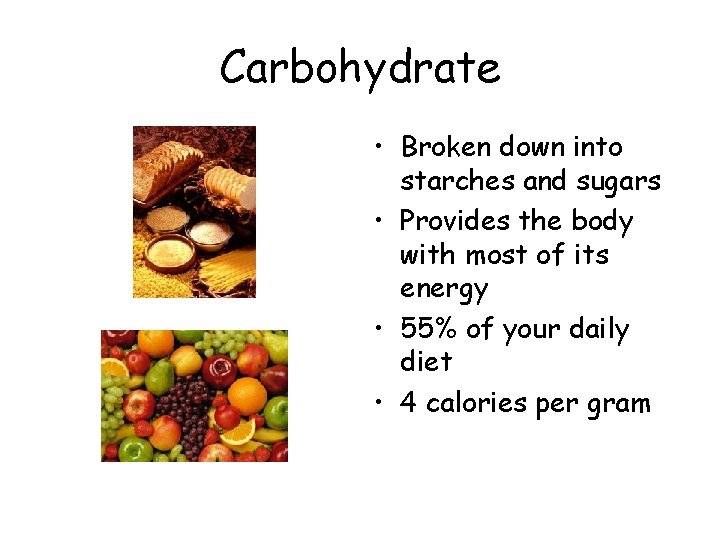
Carbohydrate • Broken down into starches and sugars • Provides the body with most of its energy • 55% of your daily diet • 4 calories per gram
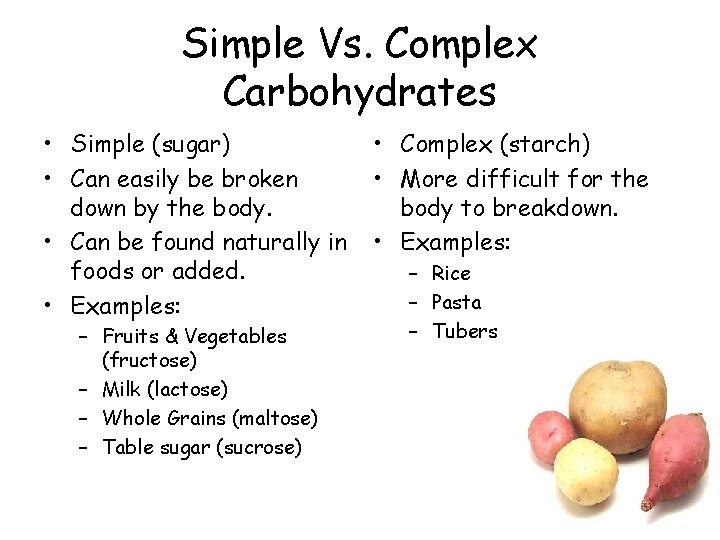
Simple Vs. Complex Carbohydrates • Simple (sugar) • Can easily be broken down by the body. • Can be found naturally in foods or added. • Examples: – Fruits & Vegetables (fructose) – Milk (lactose) – Whole Grains (maltose) – Table sugar (sucrose) • Complex (starch) • More difficult for the body to breakdown. • Examples: – Rice – Pasta – Tubers
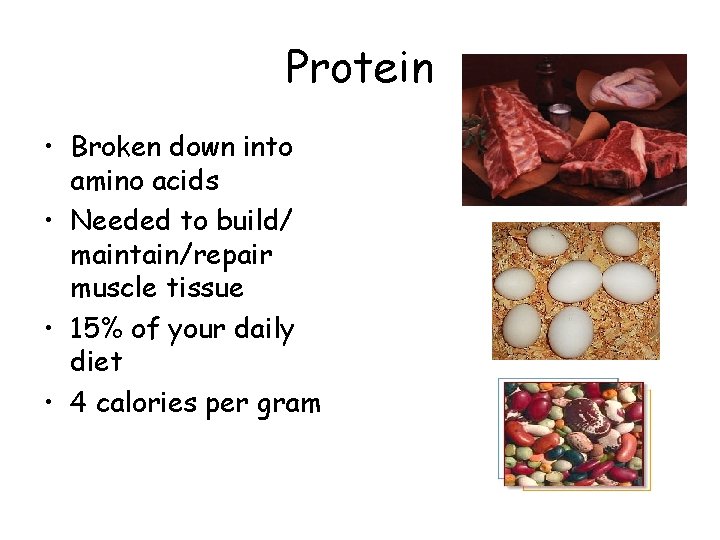
Protein • Broken down into amino acids • Needed to build/ maintain/repair muscle tissue • 15% of your daily diet • 4 calories per gram
Amino Acids • There are 20 different amino acids • Your body makes 11 amino acids • The other 9 amino acids are called essential amino acids because it is essential that you get them from the foods that you eat.
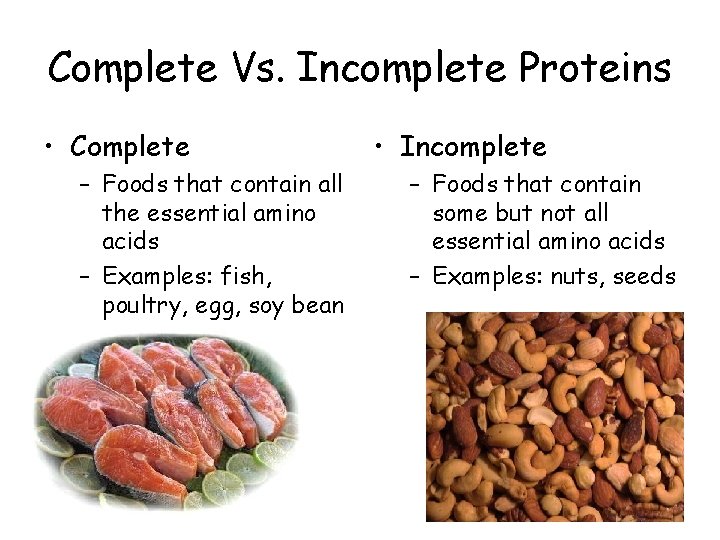
Complete Vs. Incomplete Proteins • Complete – Foods that contain all the essential amino acids – Examples: fish, poultry, egg, soy bean • Incomplete – Foods that contain some but not all essential amino acids – Examples: nuts, seeds
Fat • Can be broken down into good fat and bad fat • Most concentrated form of energy • Carries vitamins to your blood, adds flavor to your food, satisfies hunger, insulates your body from hot and/or cold • 30% of your daily diet • 9 calories per gram
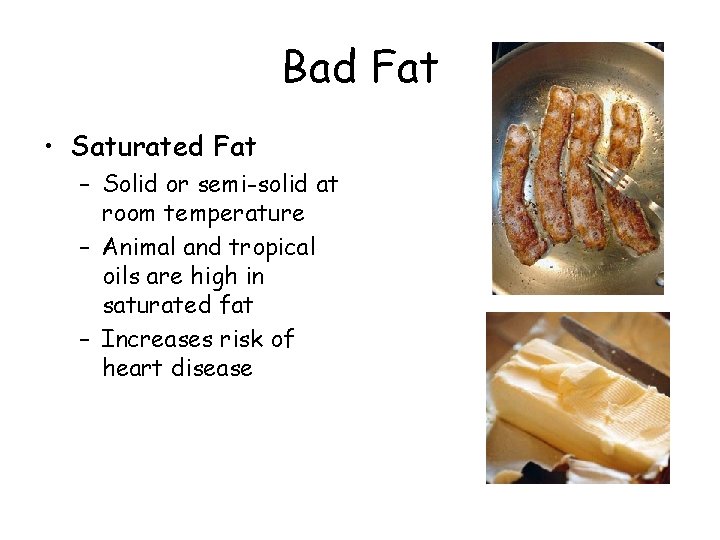
Bad Fat • Saturated Fat – Solid or semi-solid at room temperature – Animal and tropical oils are high in saturated fat – Increases risk of heart disease
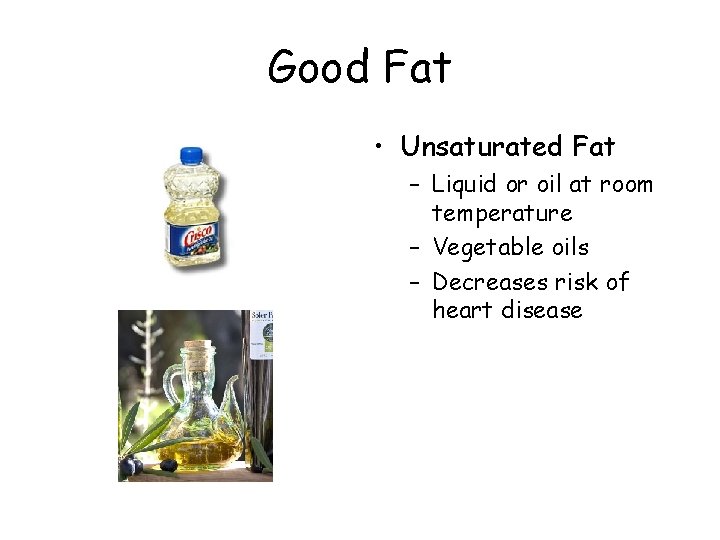
Good Fat • Unsaturated Fat – Liquid or oil at room temperature – Vegetable oils – Decreases risk of heart disease
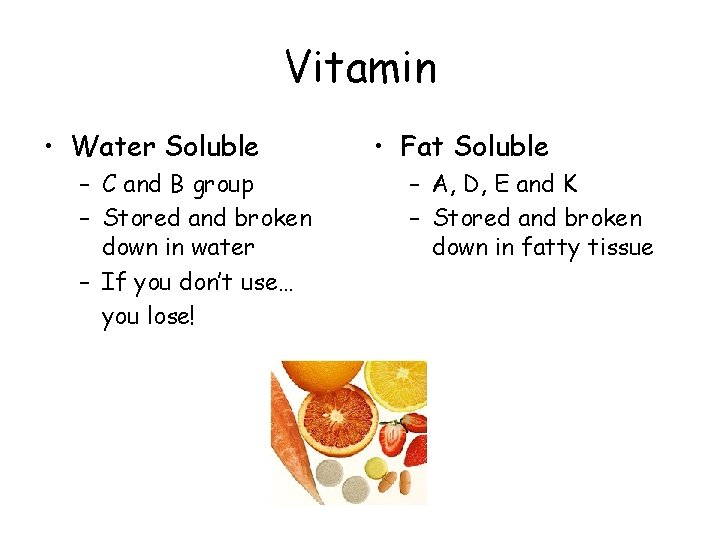
Vitamin • Water Soluble – C and B group – Stored and broken down in water – If you don’t use… you lose! • Fat Soluble – A, D, E and K – Stored and broken down in fatty tissue
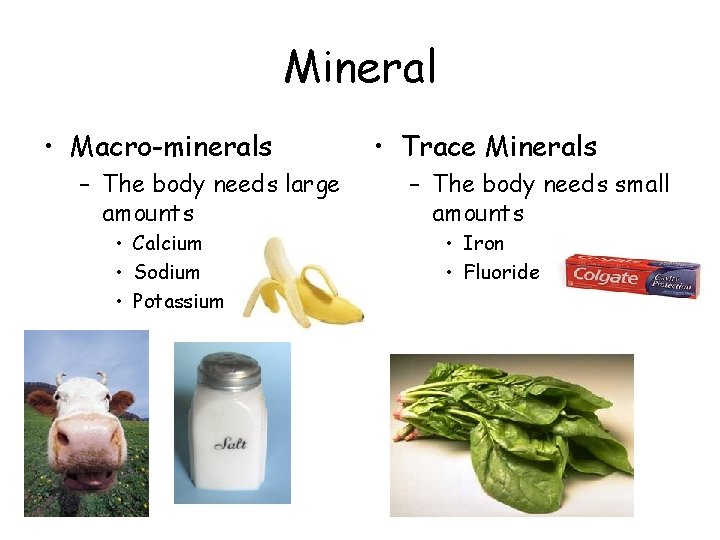
Mineral • Macro-minerals – The body needs large amounts • Calcium • Sodium • Potassium • Trace Minerals – The body needs small amounts • Iron • Fluoride
Water • Makes up blood, urine & sweat • Keeps joints lubricated • Keeps things moving in your digestive tract
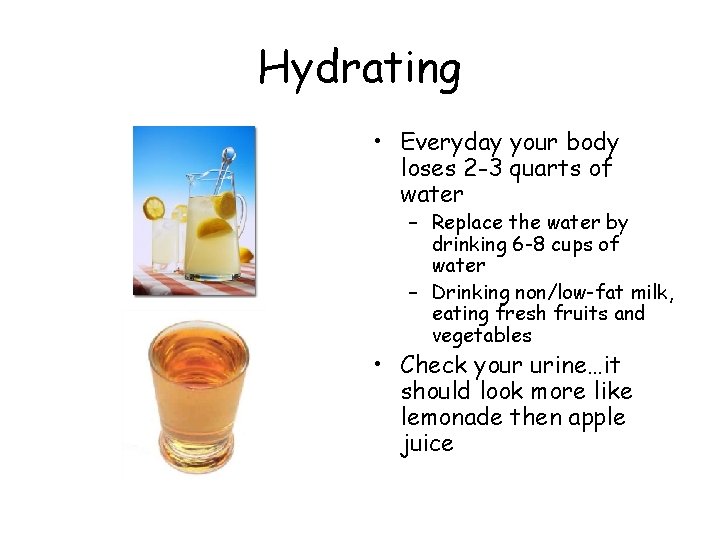
Hydrating • Everyday your body loses 2 -3 quarts of water – Replace the water by drinking 6 -8 cups of water – Drinking non/low-fat milk, eating fresh fruits and vegetables • Check your urine…it should look more like lemonade then apple juice
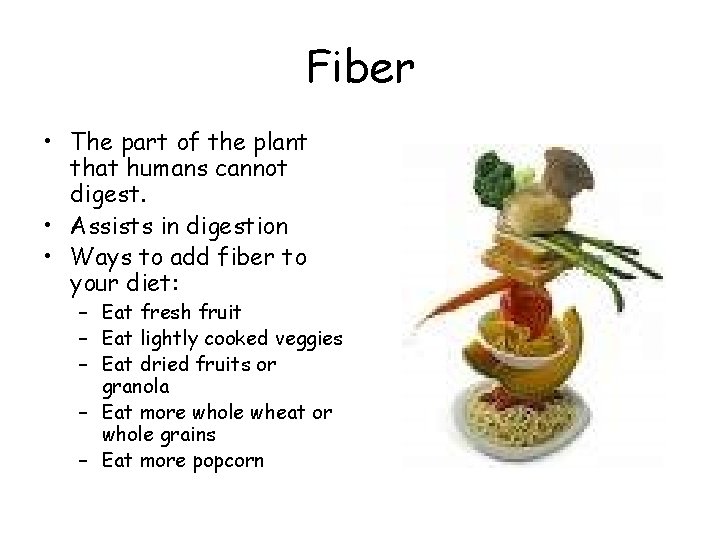
Fiber • The part of the plant that humans cannot digest. • Assists in digestion • Ways to add fiber to your diet: – Eat fresh fruit – Eat lightly cooked veggies – Eat dried fruits or granola – Eat more whole wheat or whole grains – Eat more popcorn
- Slides: 17