
Nutrient recovery from anaerobic codigestion of Chlorella vulgaris
Nutrient recovery from anaerobic co-digestion of Chlorella vulgaris and waste activated sludge Michael Gordon 1, Tyler Radniecki Ph. D 2, Curtis Lajoie Ph. D 2 Bio. Resource Research Interdisciplinary Program 1, School of Chemical, Biological, and Environmental Engineering 2 Oregon State University, Corvallis, OR 97331
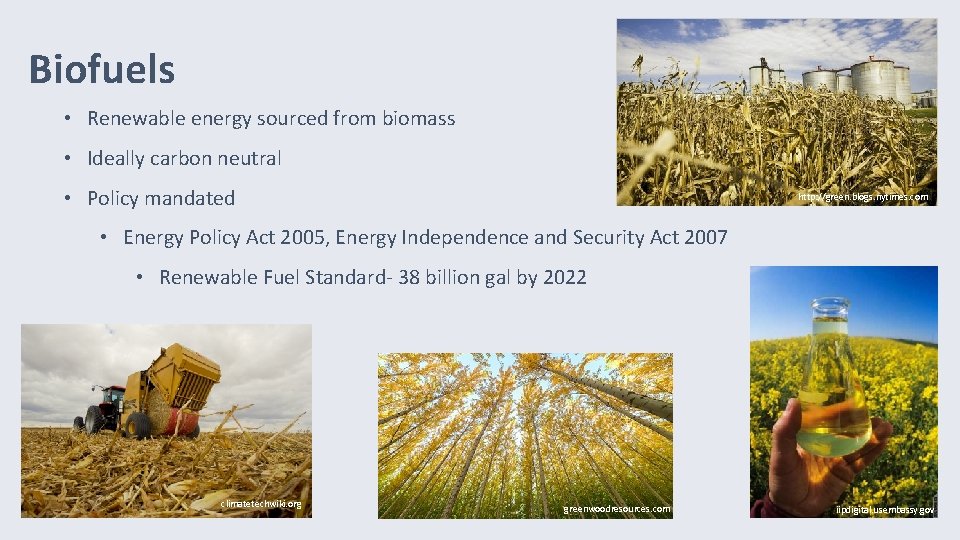
Biofuels • Renewable energy sourced from biomass • Ideally carbon neutral • Policy mandated http: //green. blogs. nytimes. com • Energy Policy Act 2005, Energy Independence and Security Act 2007 • Renewable Fuel Standard- 38 billion gal by 2022 climatetechwiki. org greenwoodresources. com iipdigital. usembassy. gov
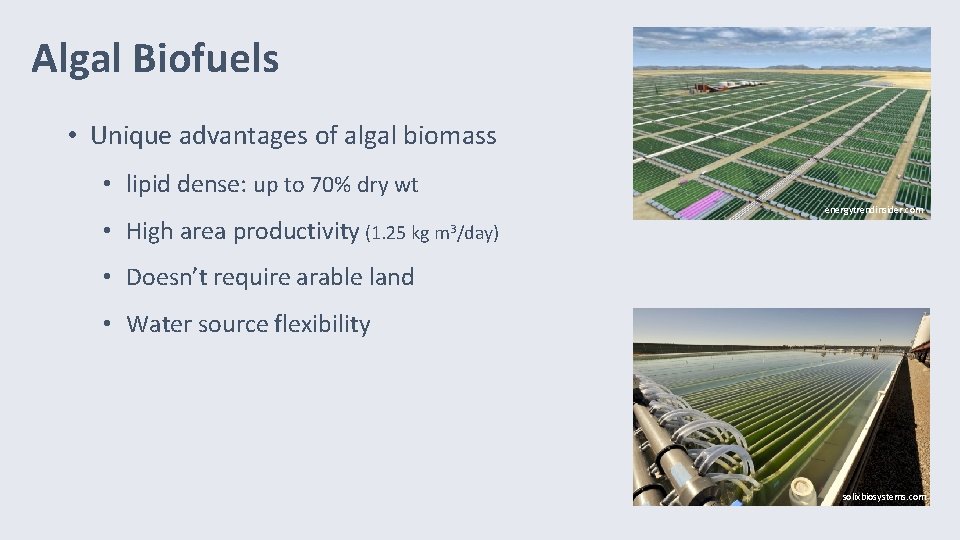
Algal Biofuels • Unique advantages of algal biomass • lipid dense: up to 70% dry wt • High area productivity (1. 25 kg m 3/day) energytrendinsider. com • Doesn’t require arable land • Water source flexibility solixbiosystems. com
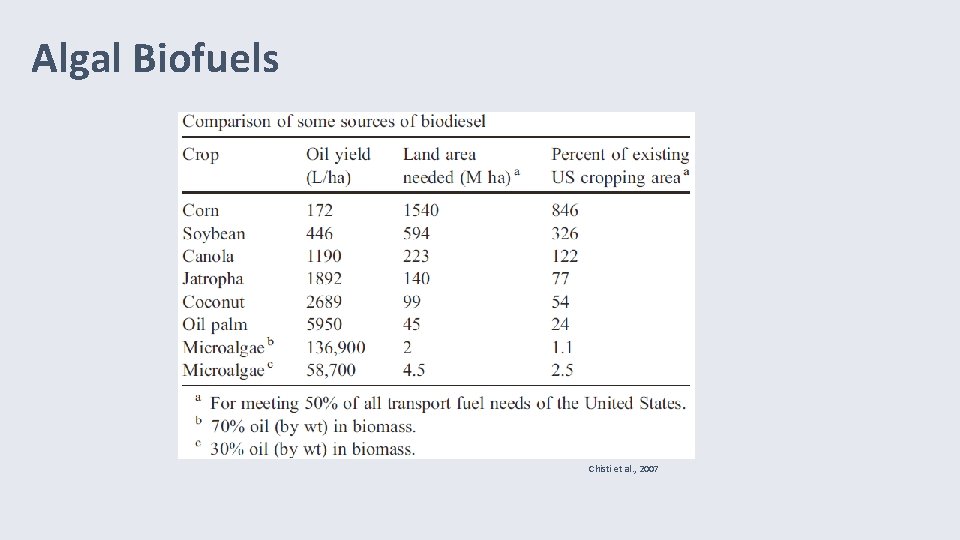
Algal Biofuels Chisti et al. , 2007
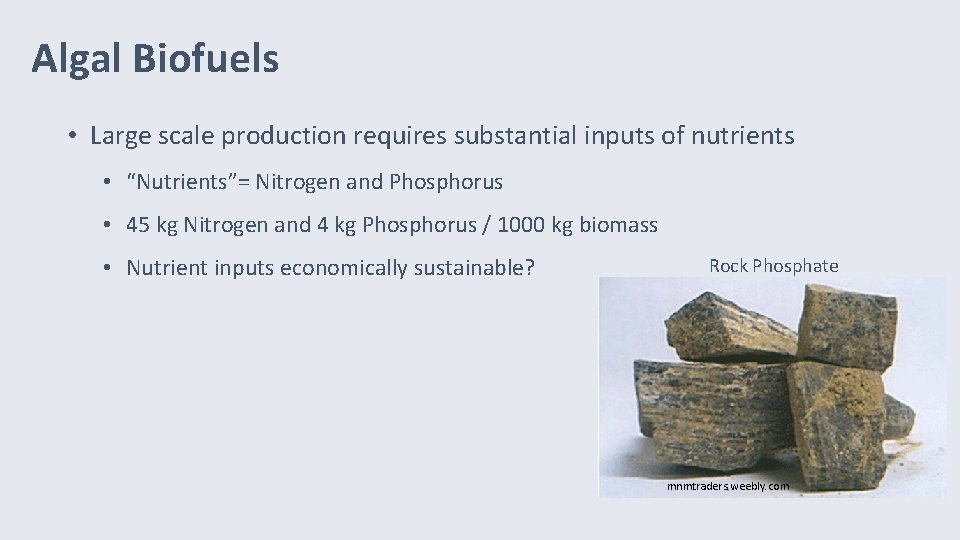
Algal Biofuels • Large scale production requires substantial inputs of nutrients • “Nutrients”= Nitrogen and Phosphorus • 45 kg Nitrogen and 4 kg Phosphorus / 1000 kg biomass • Nutrient inputs economically sustainable? Rock Phosphate mnmtraders. weebly. com
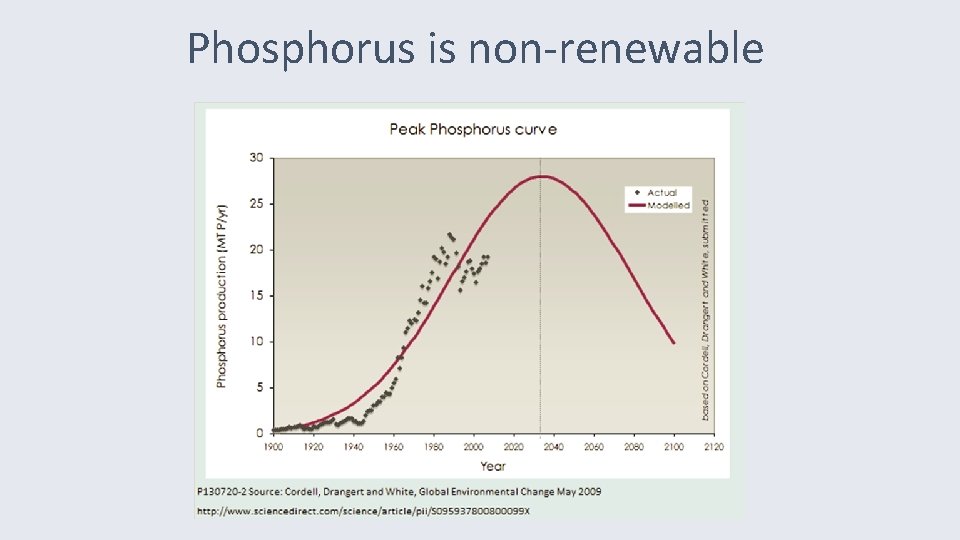
Phosphorus is non-renewable
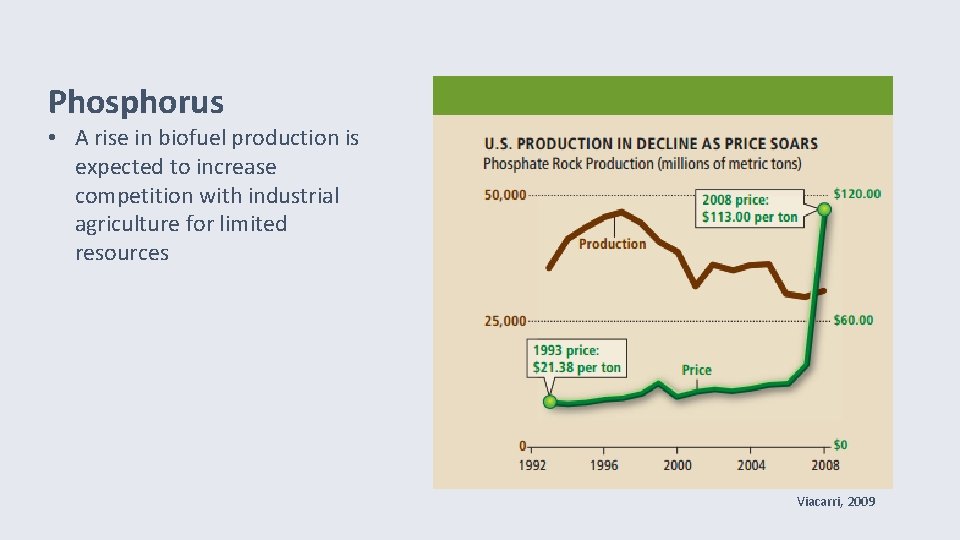
Phosphorus • A rise in biofuel production is expected to increase competition with industrial agriculture for limited resources Viacarri, 2009
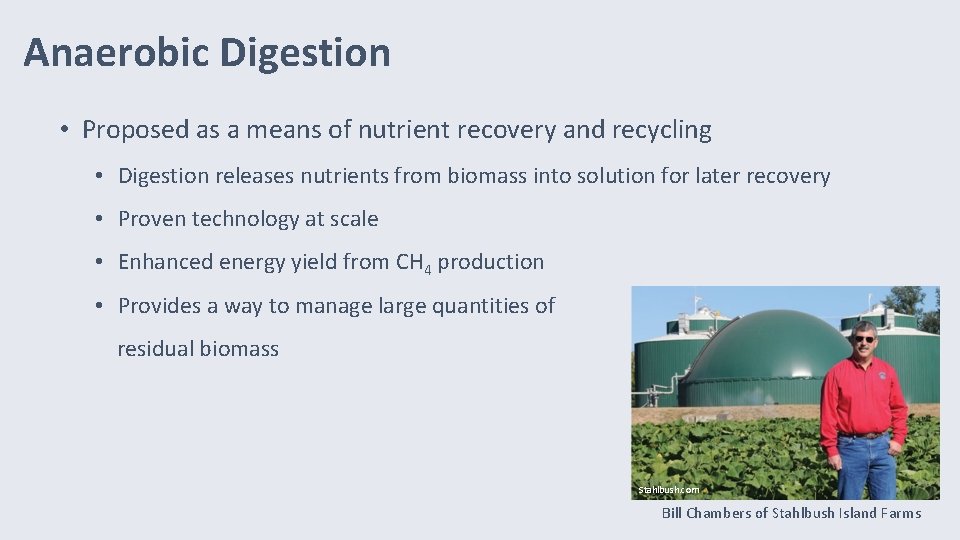
Anaerobic Digestion • Proposed as a means of nutrient recovery and recycling • Digestion releases nutrients from biomass into solution for later recovery • Proven technology at scale • Enhanced energy yield from CH 4 production • Provides a way to manage large quantities of residual biomass Stahlbush. com Bill Chambers of Stahlbush Island Farms
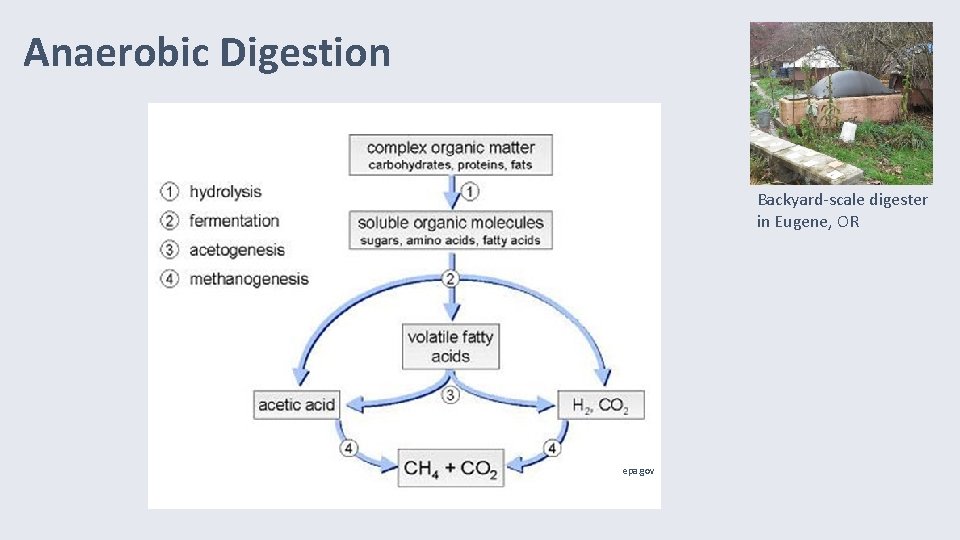
Anaerobic Digestion Backyard-scale digester in Eugene, OR epa. gov
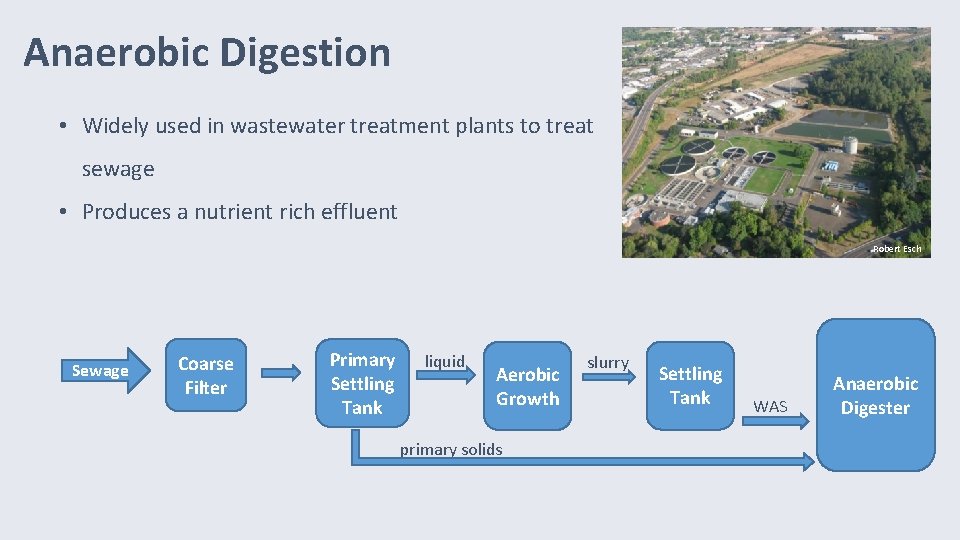
Anaerobic Digestion • Widely used in wastewater treatment plants to treat sewage • Produces a nutrient rich effluent Robert Esch Sewage Coarse Filter Primary Settling Tank liquid Aerobic Growth primary solids slurry Settling Tank WAS Anaerobic Digester
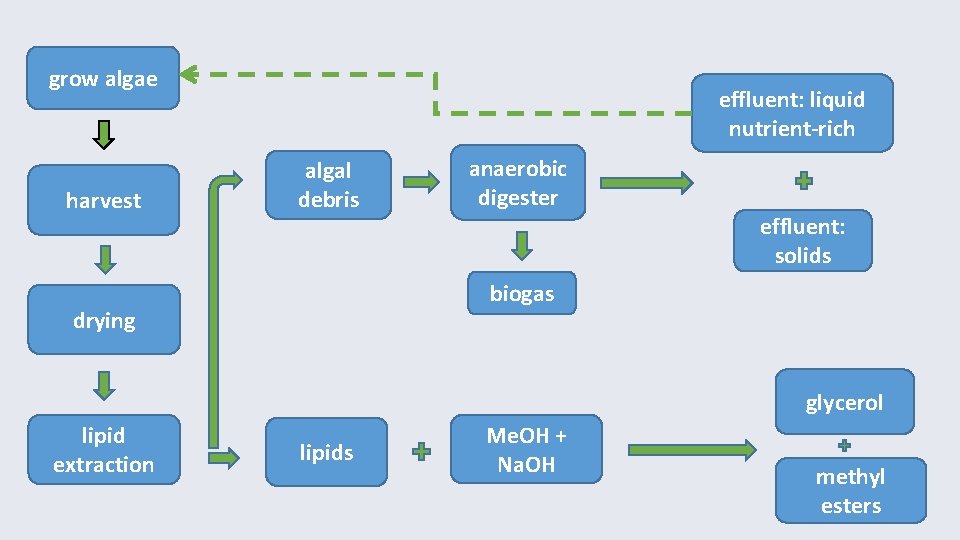
grow algae harvest effluent: liquid nutrient-rich algal debris anaerobic digester effluent: solids biogas drying glycerol lipid extraction lipids Me. OH + Na. OH methyl esters
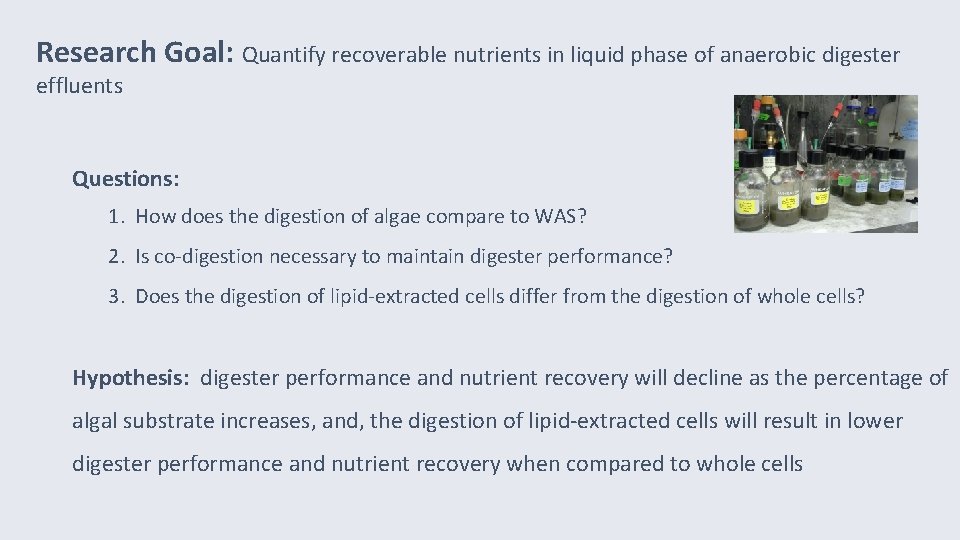
Research Goal: Quantify recoverable nutrients in liquid phase of anaerobic digester effluents Questions: 1. How does the digestion of algae compare to WAS? 2. Is co-digestion necessary to maintain digester performance? 3. Does the digestion of lipid-extracted cells differ from the digestion of whole cells? Hypothesis: digester performance and nutrient recovery will decline as the percentage of algal substrate increases, and, the digestion of lipid-extracted cells will result in lower digester performance and nutrient recovery when compared to whole cells

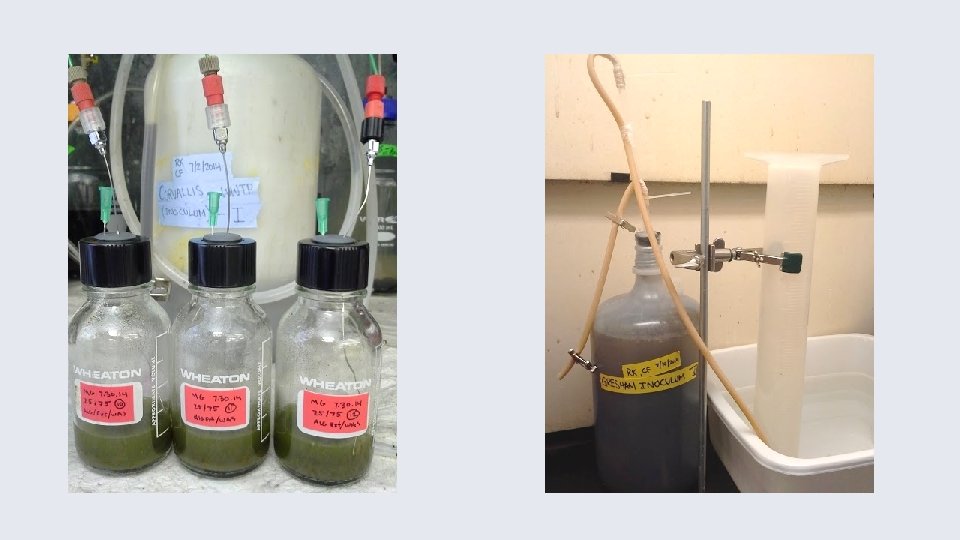
Digester Breakdown Lab-scale batch anaerobic digesters • Constant loading rate of 2070 mg VS L-1 • Constant inoculum to substrate ratio of 5. 8: 1 • Substrate composition varies • *1 trial w/ whole cells and 1 w/ lipid-extracted algal debris Total Liquid =100 m. L Head space (N 2) Inoculum: Corvallis WWTP Buffered H 20 Digester Substrate: Algae and or WAS
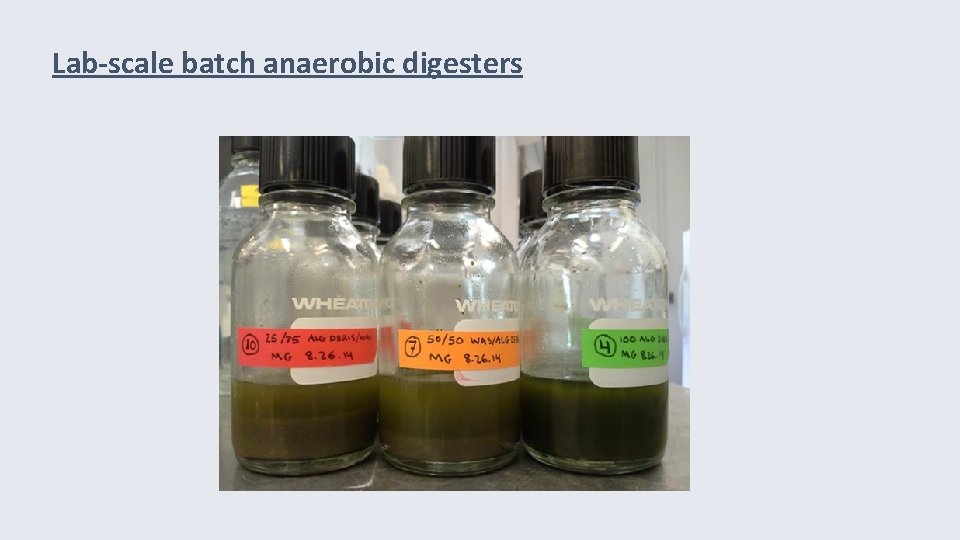
Lab-scale batch anaerobic digesters
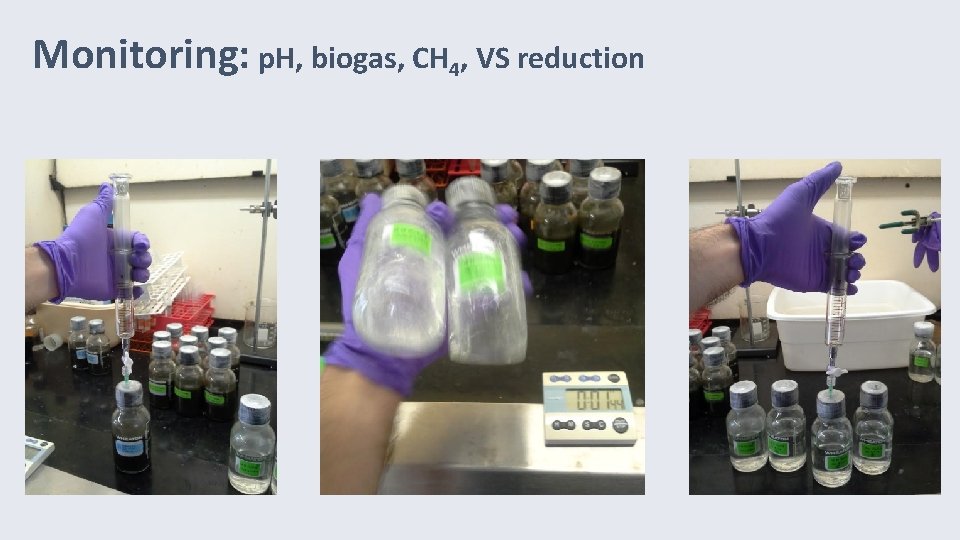
Monitoring: p. H, biogas, CH 4, VS reduction
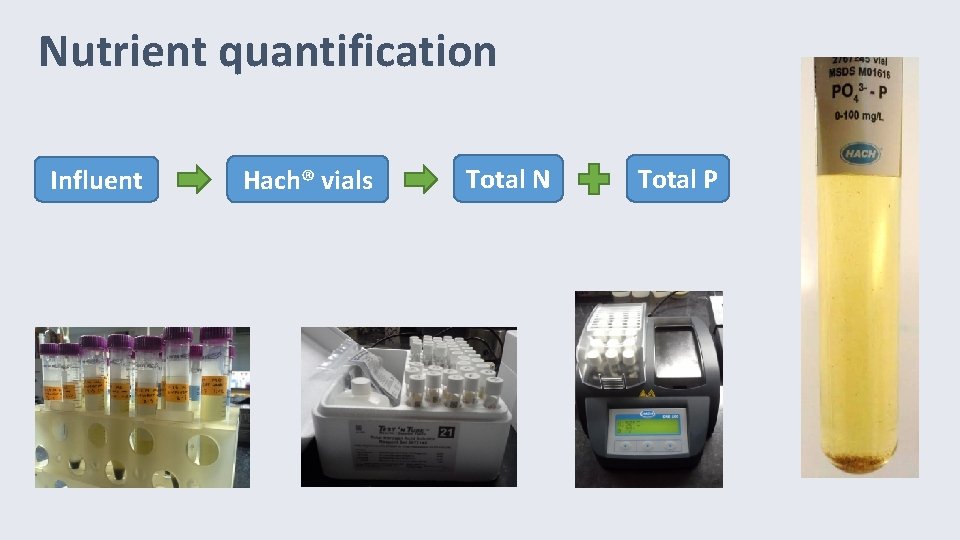
Nutrient quantification Influent Hach® vials Total N Total P
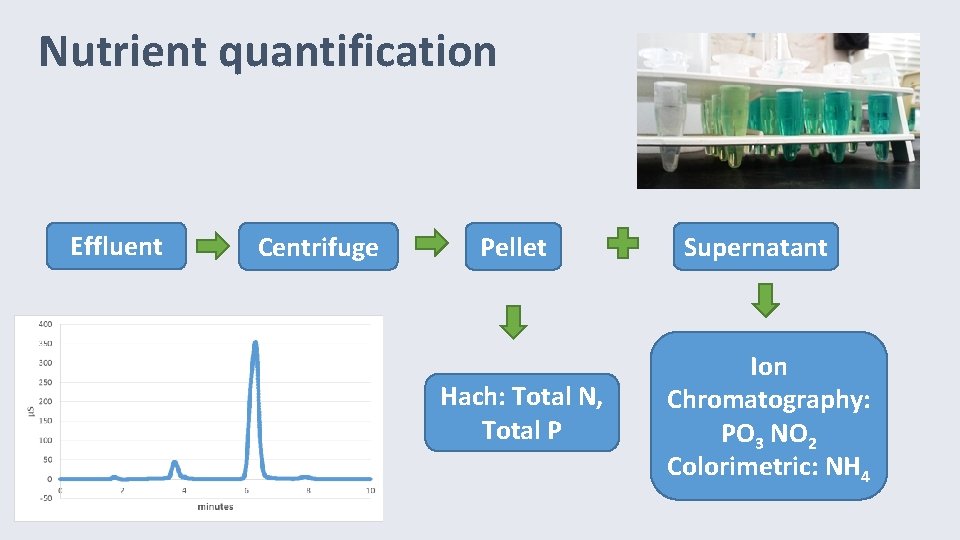
Nutrient quantification Effluent Centrifuge Pellet Hach: Total N, Total P Supernatant Ion Chromatography: PO 3 NO 2 Colorimetric: NH 4
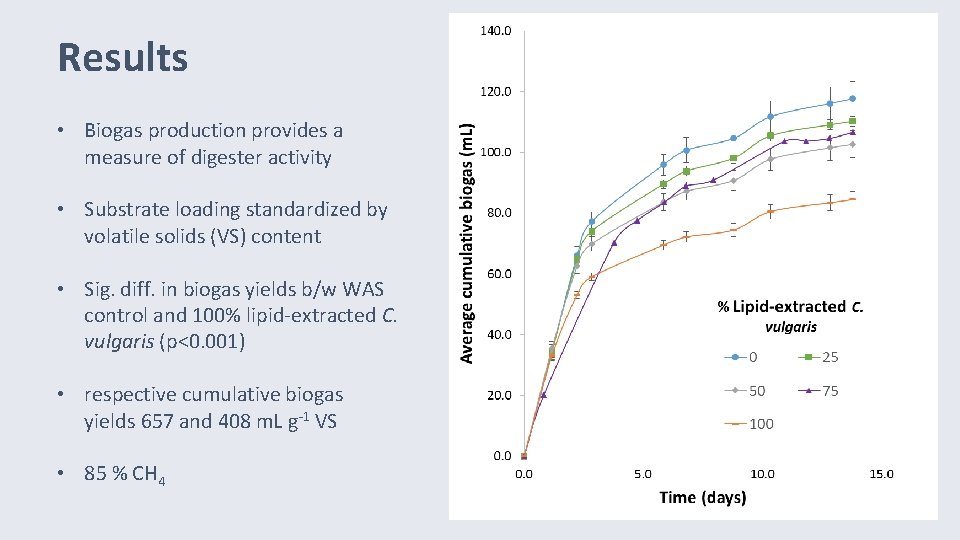
Results • Biogas production provides a measure of digester activity • Substrate loading standardized by volatile solids (VS) content • Sig. diff. in biogas yields b/w WAS control and 100% lipid-extracted C. vulgaris (p<0. 001) • respective cumulative biogas yields 657 and 408 m. L g-1 VS • 85 % CH 4
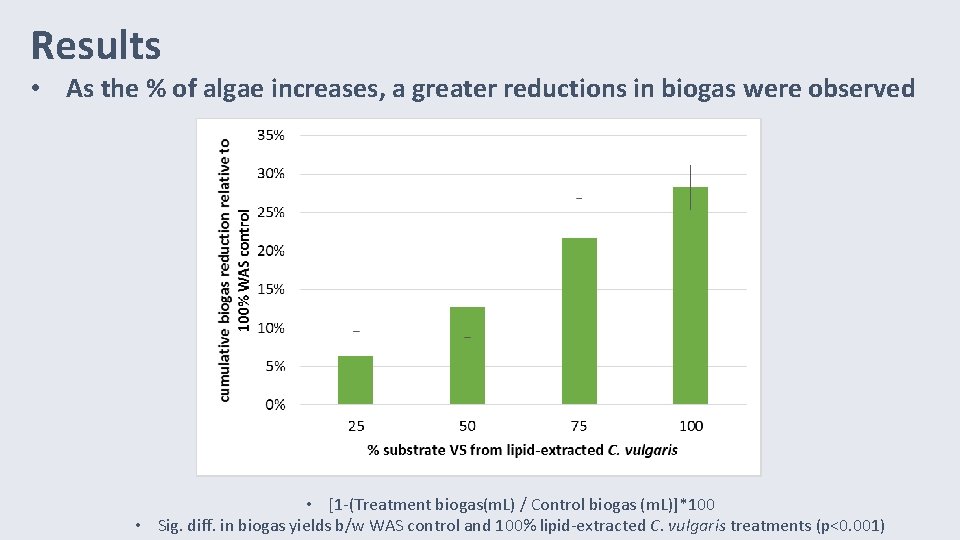
Results • As the % of algae increases, a greater reductions in biogas were observed • [1 -(Treatment biogas(m. L) / Control biogas (m. L)]*100 • Sig. diff. in biogas yields b/w WAS control and 100% lipid-extracted C. vulgaris treatments (p<0. 001)
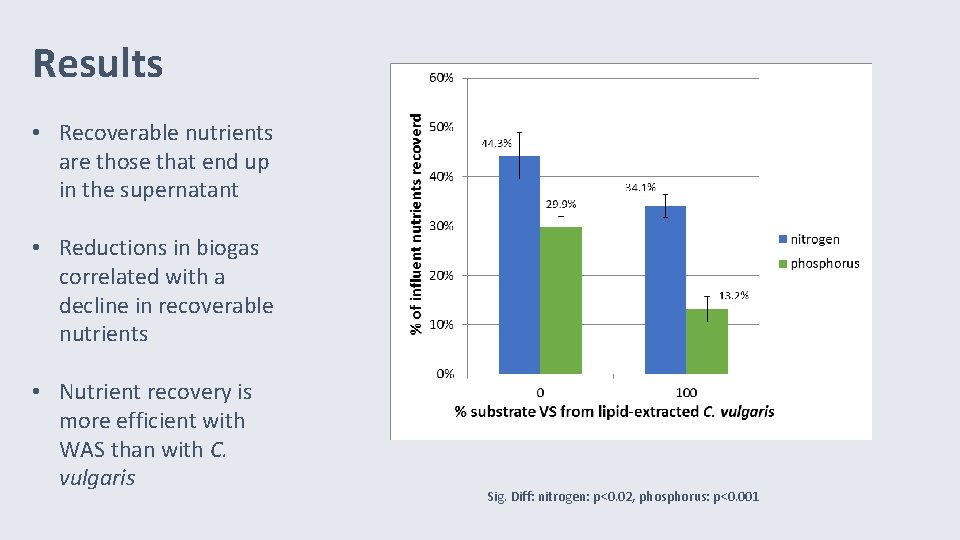
Results • Recoverable nutrients are those that end up in the supernatant • Reductions in biogas correlated with a decline in recoverable nutrients • Nutrient recovery is more efficient with WAS than with C. vulgaris Sig. Diff: nitrogen: p<0. 02, phosphorus: p<0. 001
![Results • [1 -(Treatment nutrients recovered (mg) / Control nutrients recovered (mg)]*100 • 100%](http://slidetodoc.com/presentation_image_h2/d887bffe65d28a63c4e959a80fecff72/image-22.jpg "Results • [1 -(Treatment nutrients recovered (mg) / Control nutrients recovered (mg)]*100 • 100%")
Results • [1 -(Treatment nutrients recovered (mg) / Control nutrients recovered (mg)]*100 • 100% C. vulgaris treatment sig diff than WAS control, N: p<0. 02, P: p<0. 001
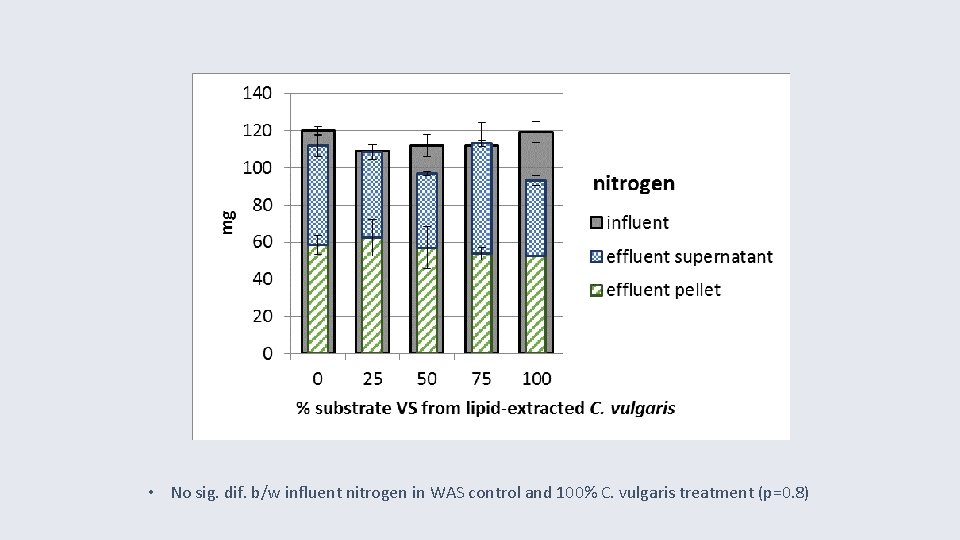
• No sig. dif. b/w influent nitrogen in WAS control and 100% C. vulgaris treatment (p=0. 8)
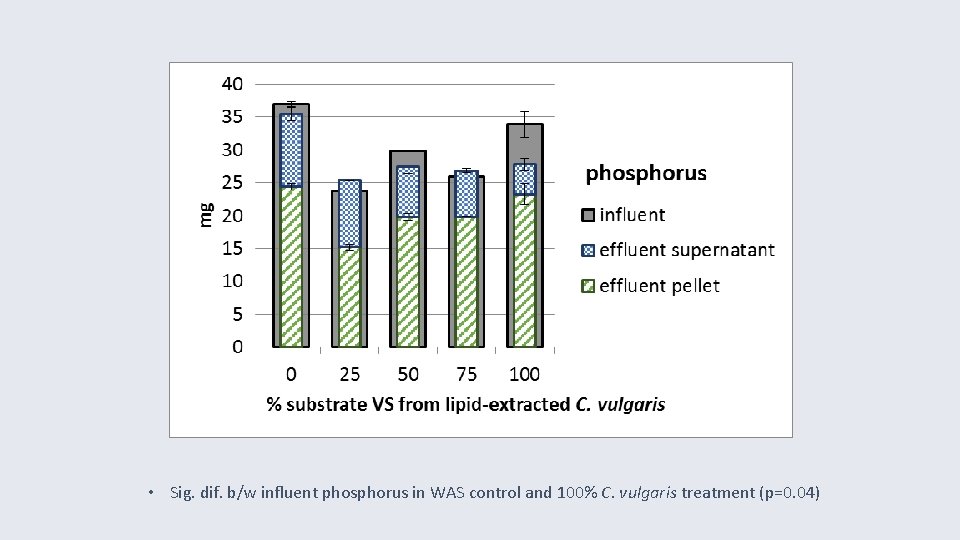
• Sig. dif. b/w influent phosphorus in WAS control and 100% C. vulgaris treatment (p=0. 04)
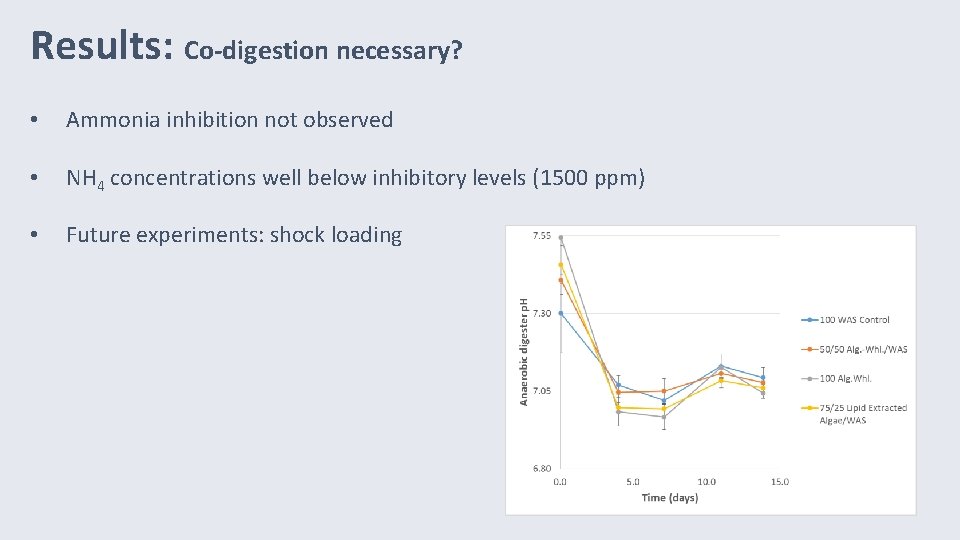
Results: Co-digestion necessary? • Ammonia inhibition not observed • NH 4 concentrations well below inhibitory levels (1500 ppm) • Future experiments: shock loading
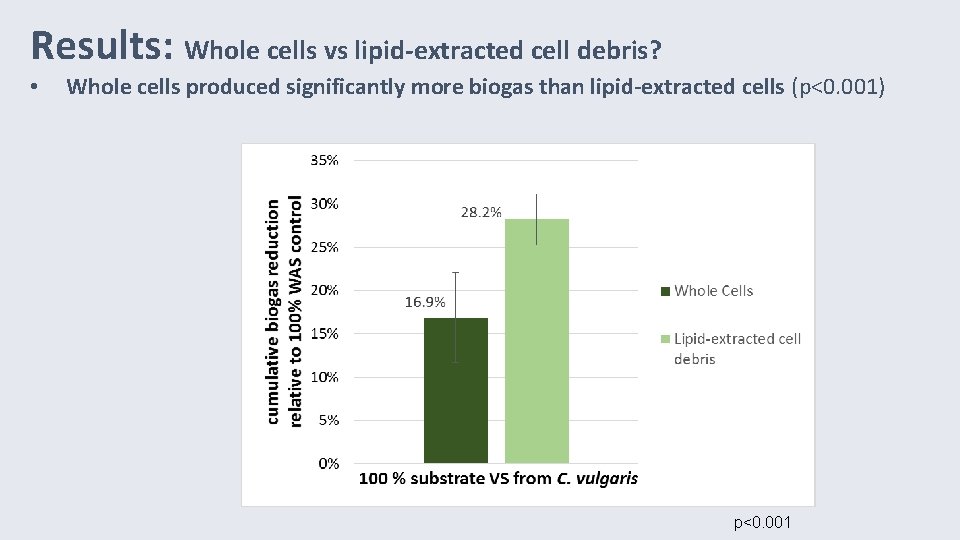
Results: Whole cells vs lipid-extracted cell debris? • Whole cells produced significantly more biogas than lipid-extracted cells (p<0. 001) p<0. 001
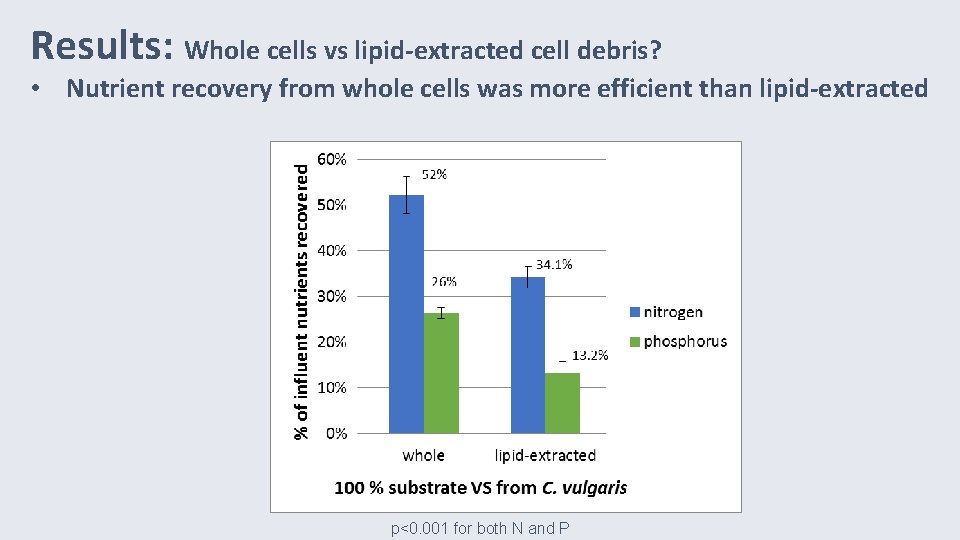
Results: Whole cells vs lipid-extracted cell debris? • Nutrient recovery from whole cells was more efficient than lipid-extracted p<0. 001 for both N and P
Conclusions • Increasing concentrations of C. vulgaris resulted in lower biogas production • Decrease in biogas production correlated to a decline in recoverable nutrients • Anaerobic digestion of algal debris as a means of nutrient recovery is possible though not as efficient as nutrient recovery from waste activated sludge • More data is needed to determine the relationship between % of algal substrate and recoverable nutrients • More precise analytical tools are needed to quantify nutrients in sludge
Acknowledgements • Support provided through OSU’s USDA funded Bioenergy Education Project • Collaborators: Brian Kirby and Xuwen Xiang • City of Corvallis wastewater treatment plant • Advisors: Dr. Radniecki and Dr. Lajoie
- Slides: 29