
Nutrient Cycles aka Bio Geo Chemical Cycles NUMBER
Nutrient Cycles aka: Bio. Geo. Chemical Cycles NUMBER the pages of the booklet!!
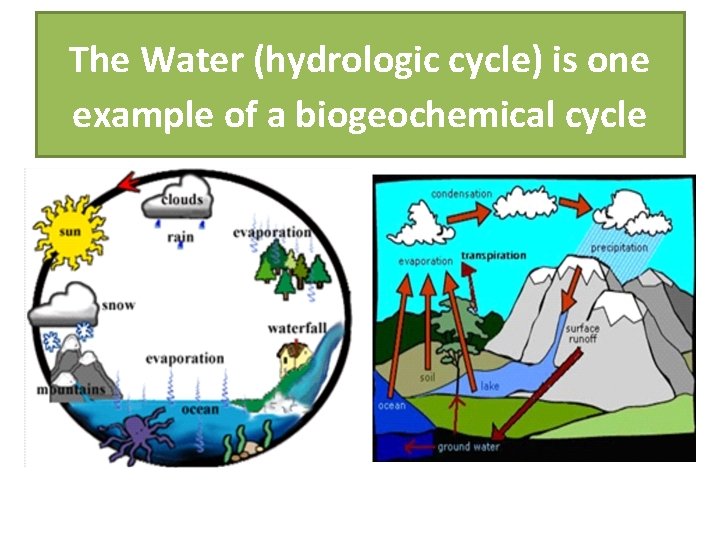
The Water (hydrologic cycle) is one example of a biogeochemical cycle
Living things require both a source of energy and a source of matter in order to survive. Both energy and matter move through ecosystems by moving through food chains Energy flow through ecosystems is one way, while matter flows in cycles.
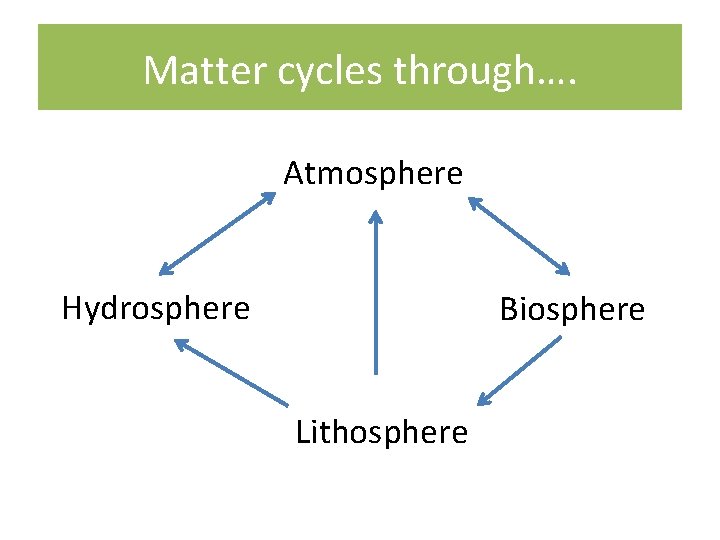
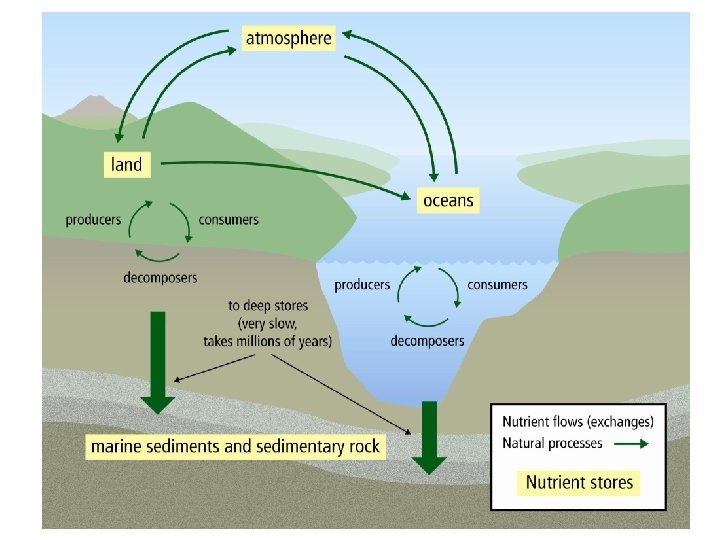
Matter cycles through…. Atmosphere Hydrosphere Biosphere Lithosphere
Video • How Ecosystems work (3: 20) • https: //www. youtube. com/watch? v=o_RBHfj. Z s. UQ • (an intro to how matter and energy cycle through ecosystems)
Bio. ENERGetics Video • https: //www. khanacademy. org/testprep/mcat/chemicalprocesses/bioenergetics/v/bioenergetics-thetransformation-of-free-energy-in-livingsystems • Show up to 1: 35 (Khan Academy intro to photosynthesis and respiration)
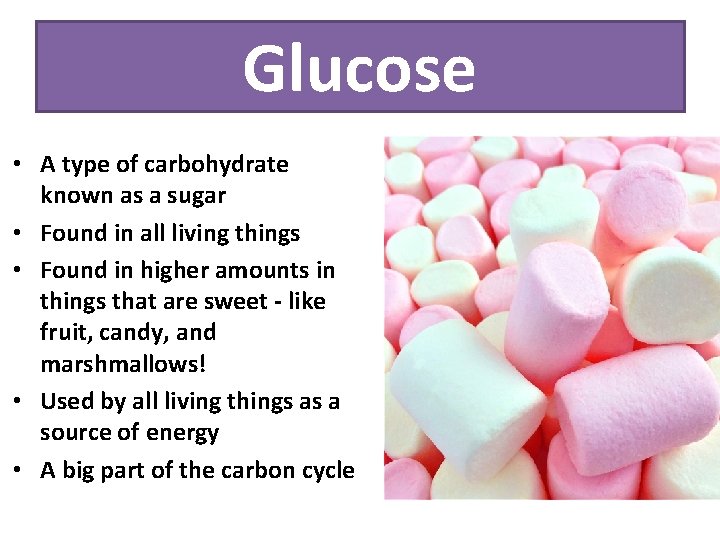
Glucose • A type of carbohydrate known as a sugar • Found in all living things • Found in higher amounts in things that are sweet - like fruit, candy, and marshmallows! • Used by all living things as a source of energy • A big part of the carbon cycle
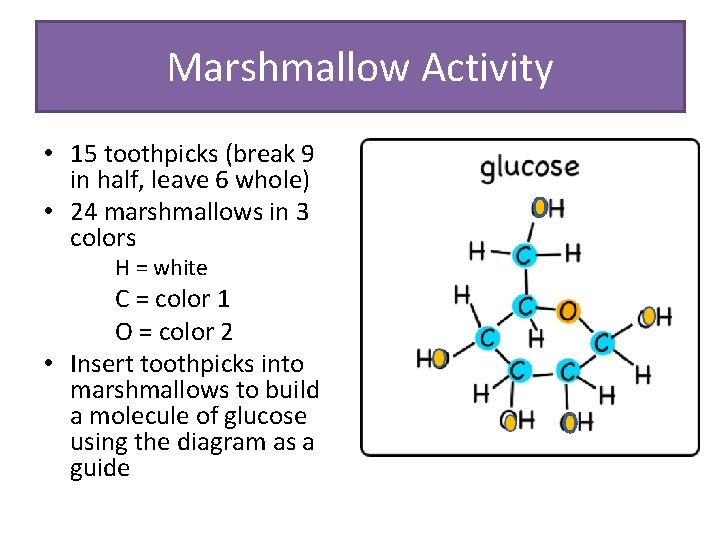
Marshmallow Activity • 15 toothpicks (break 9 in half, leave 6 whole) • 24 marshmallows in 3 colors H = white C = color 1 O = color 2 • Insert toothpicks into marshmallows to build a molecule of glucose using the diagram as a guide
Video 2. The Cycles (SG 1: 45) 3. Carbon Cycle with Tim and Moby (SG 2: 33) 4. The Carbon and Nitrogen cycles (7: 55) https: //www. youtube. com/watch? v=NHq. Eth. RCq. Q 4 (Ameba sisters just show first 4 min. for now)
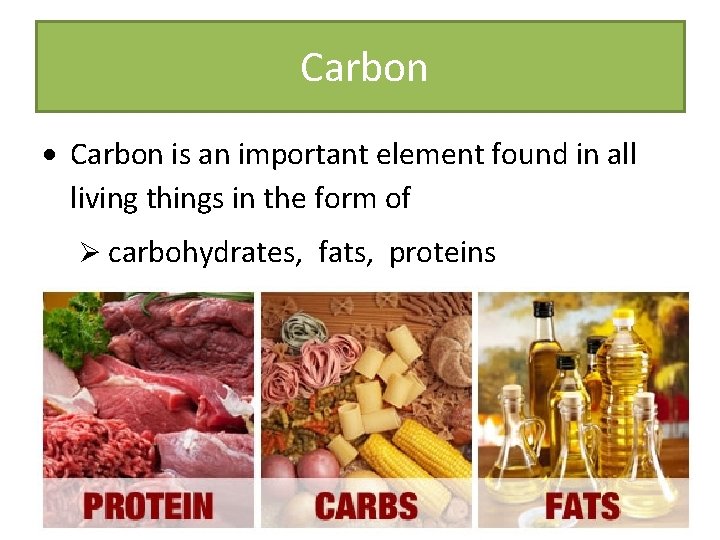
Carbon is an important element found in all living things in the form of Ø carbohydrates, fats, proteins
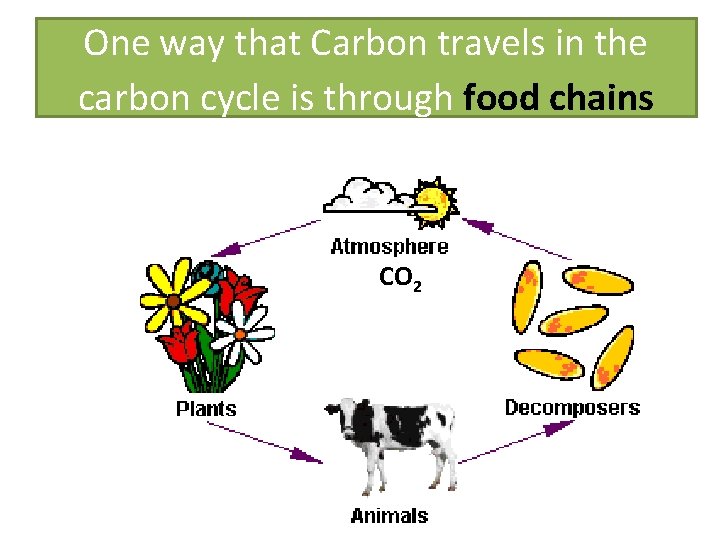
One way that Carbon travels in the carbon cycle is through food chains CO 2
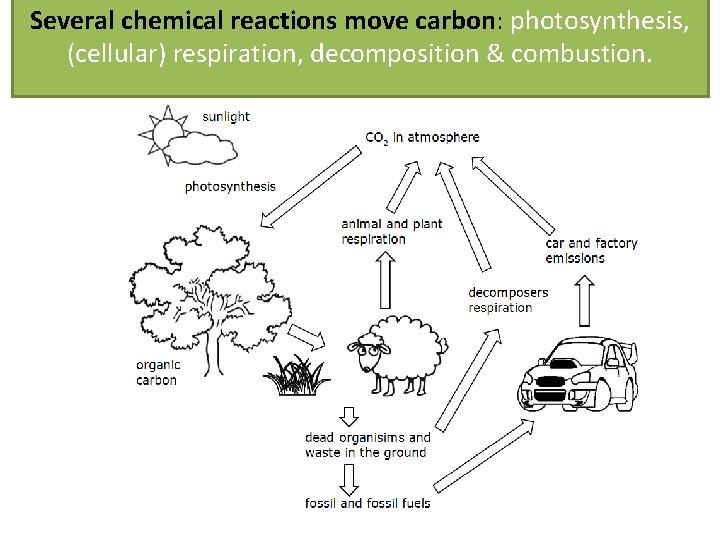
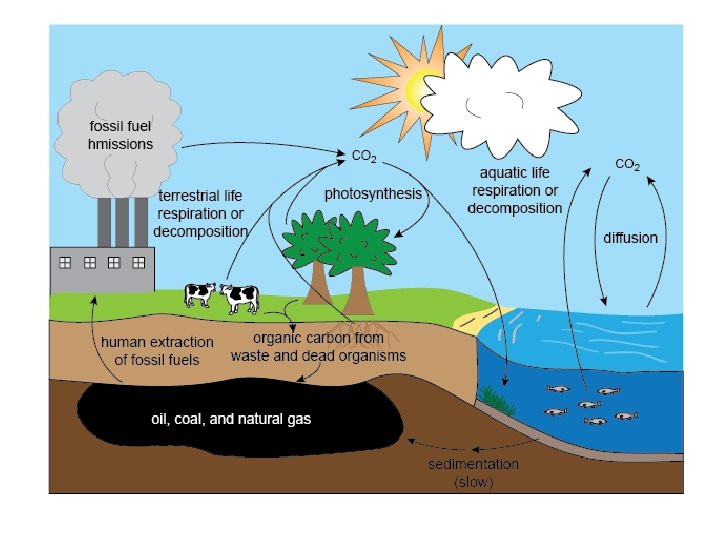
Several chemical reactions move carbon: photosynthesis, (cellular) respiration, decomposition & combustion.
Video 4. Cycles with Hank (SG 10: 03) 5. Carbon Cycle – What is it (2: 59) https: //www. youtube. com/watch? v=r 75 NL 3 g. N 5 y. U
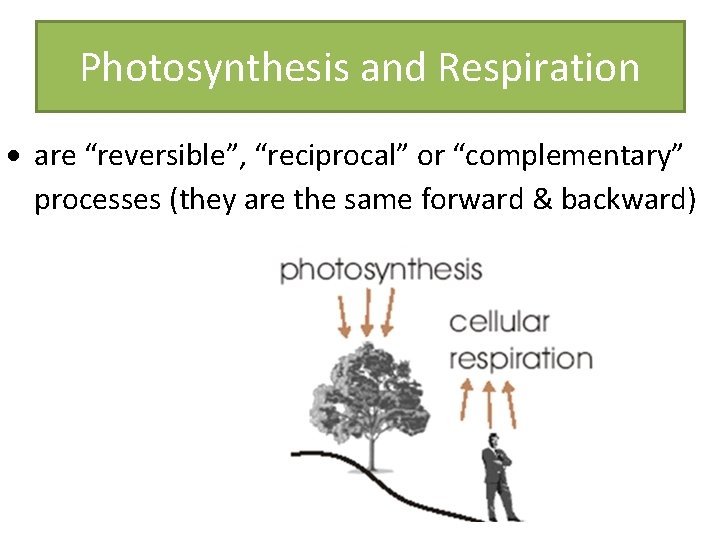
Photosynthesis and Respiration are “reversible”, “reciprocal” or “complementary” processes (they are the same forward & backward)
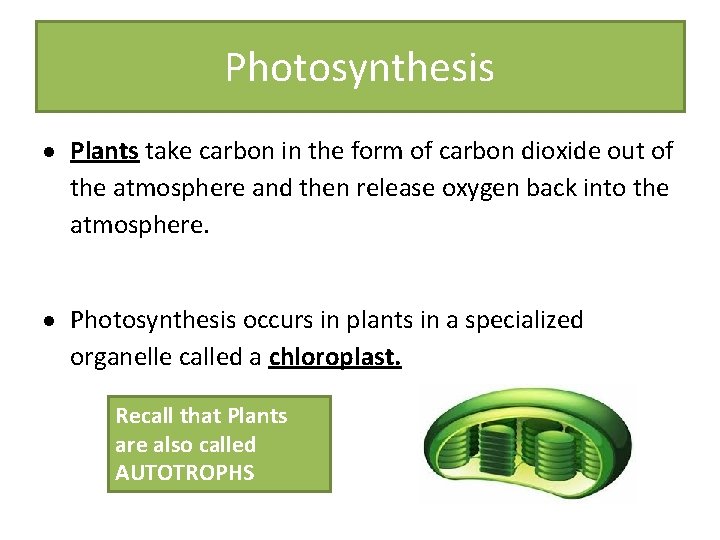
Photosynthesis Plants take carbon in the form of carbon dioxide out of the atmosphere and then release oxygen back into the atmosphere. Photosynthesis occurs in plants in a specialized organelle called a chloroplast. Recall that Plants are also called AUTOTROPHS
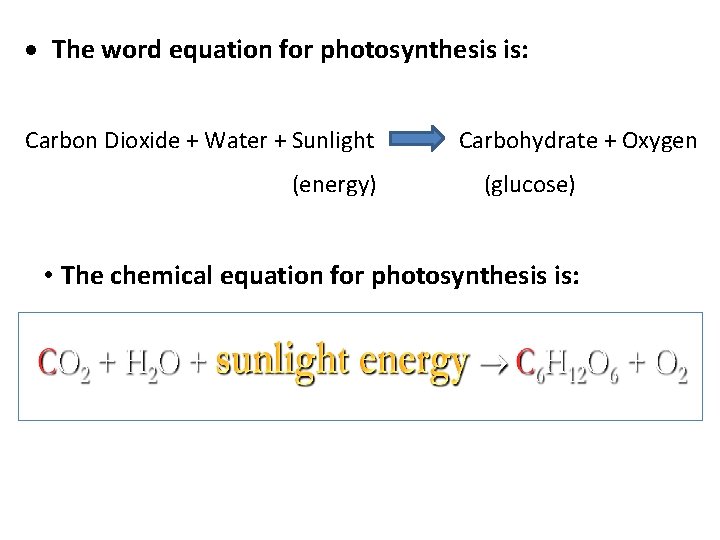
The word equation for photosynthesis is: Carbon Dioxide + Water + Sunlight (energy) Carbohydrate + Oxygen (glucose) • The chemical equation for photosynthesis is:
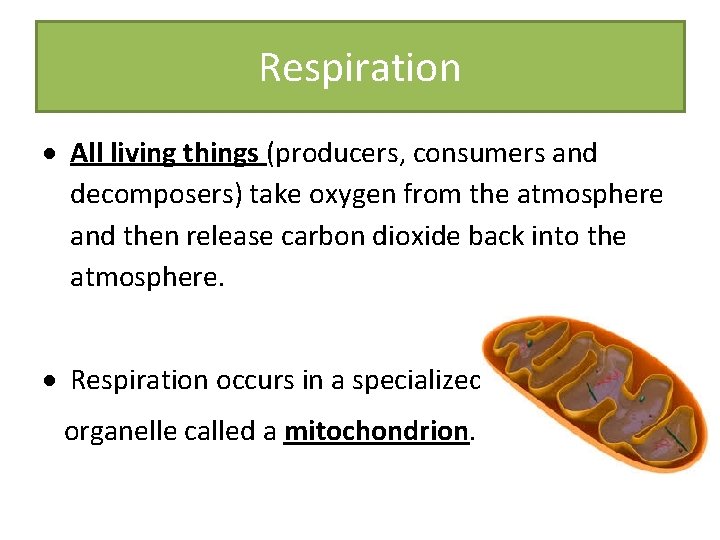
Respiration All living things (producers, consumers and decomposers) take oxygen from the atmosphere and then release carbon dioxide back into the atmosphere. Respiration occurs in a specialized organelle called a mitochondrion.
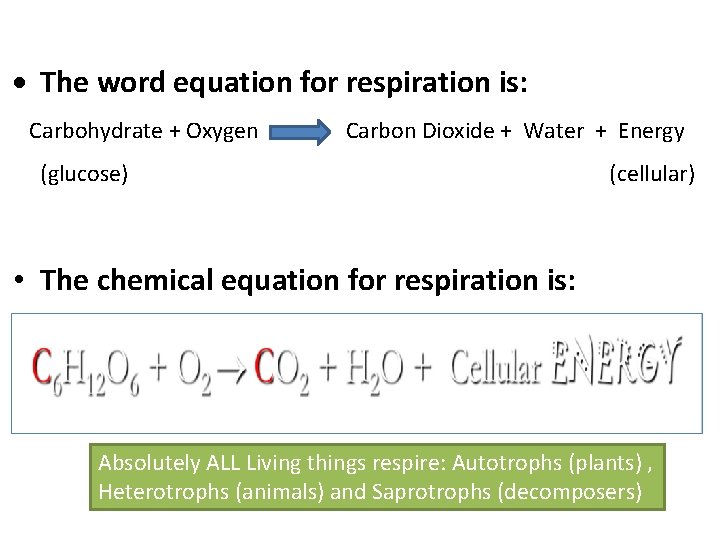
The word equation for respiration is: Carbohydrate + Oxygen Carbon Dioxide + Water + Energy (glucose) (cellular) • The chemical equation for respiration is: Absolutely ALL Living things respire: Autotrophs (plants) , Heterotrophs (animals) and Saprotrophs (decomposers)
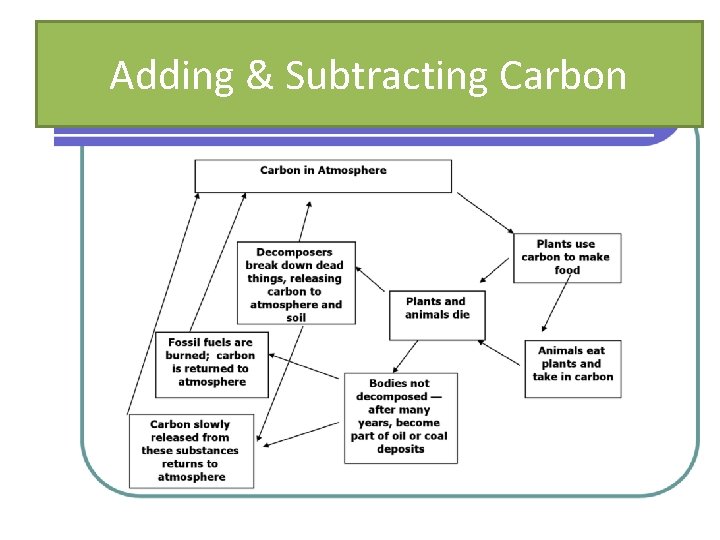
Adding & Subtracting Carbon
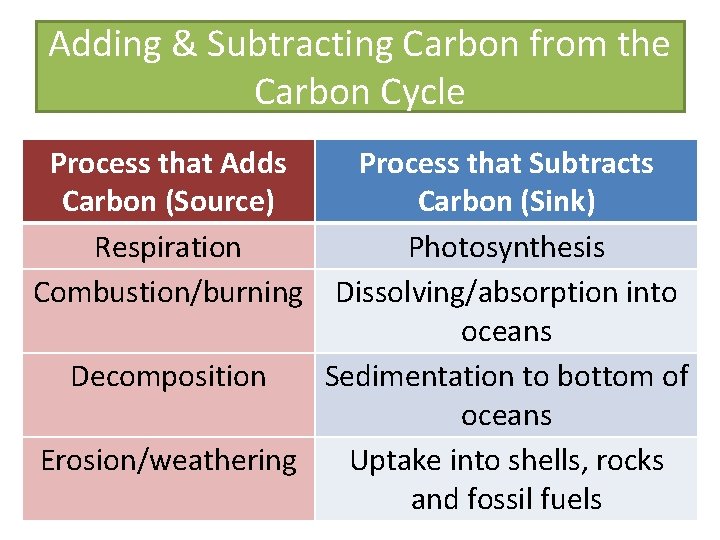
Adding & Subtracting Carbon from the Carbon Cycle Process that Adds Carbon (Source) Respiration Combustion/burning Process that Subtracts Carbon (Sink) Photosynthesis Dissolving/absorption into oceans Decomposition Sedimentation to bottom of oceans Erosion/weathering Uptake into shells, rocks and fossil fuels
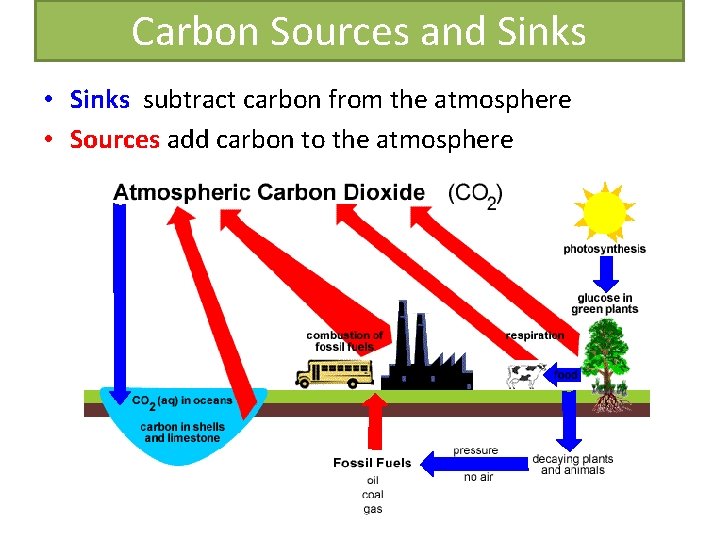
Carbon Sources and Sinks • Sinks subtract carbon from the atmosphere • Sources add carbon to the atmosphere
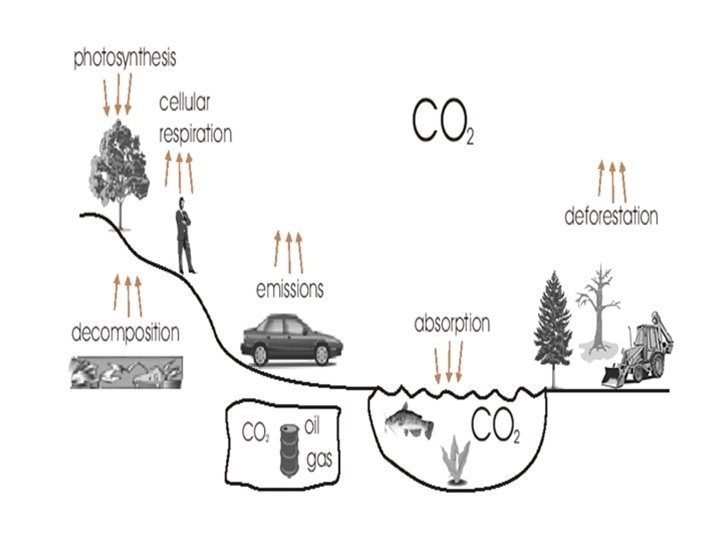
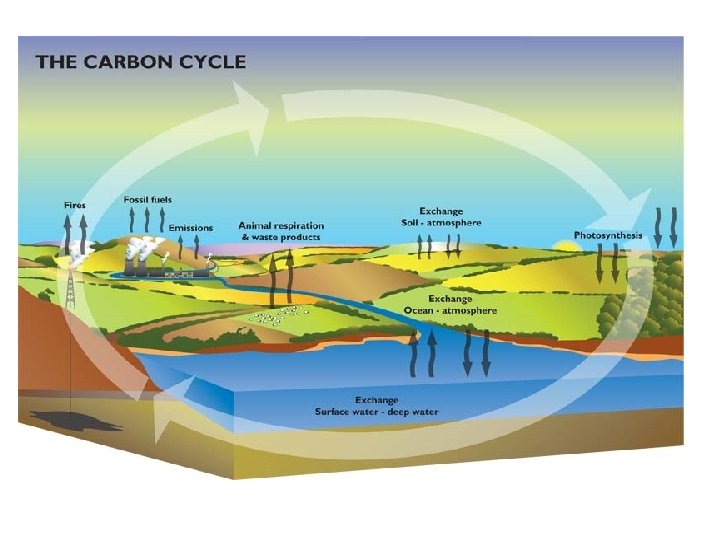
Label the diagram on page 6 • From the overhead • Use Red Arrows for Sources and Blue arrows for Sinks
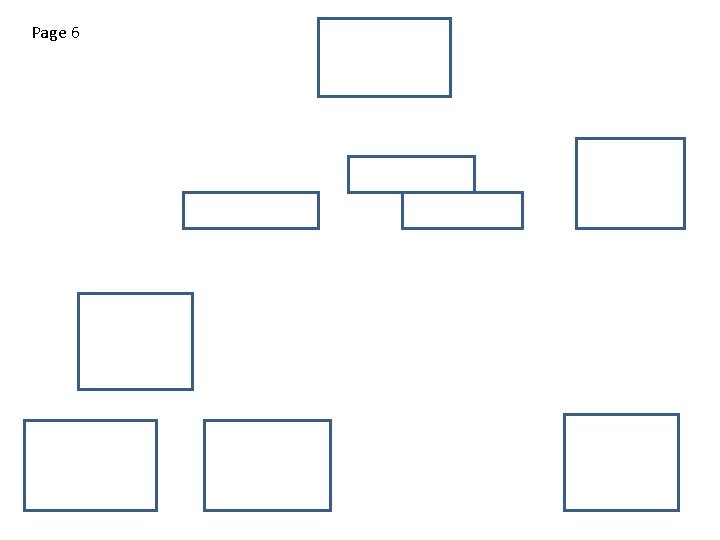
Page 6
Assignment • Page 9 • Page 10, just question 1 for now
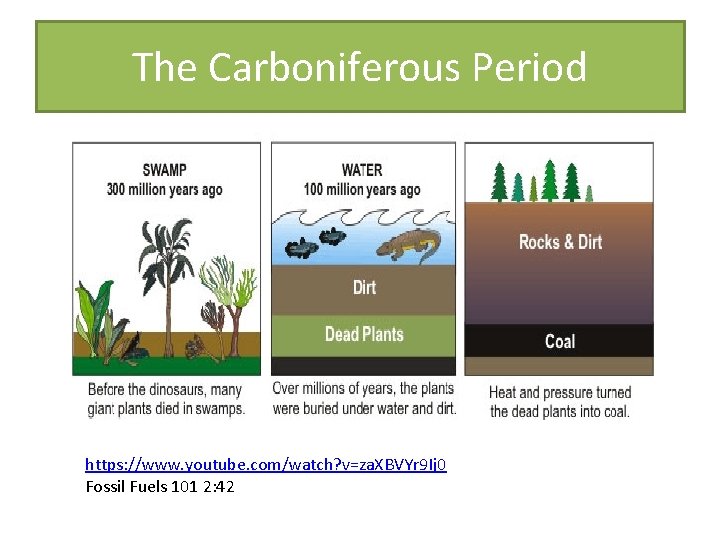
The Carboniferous Period https: //www. youtube. com/watch? v=za. XBVYr 9 Ij 0 Fossil Fuels 101 2: 42
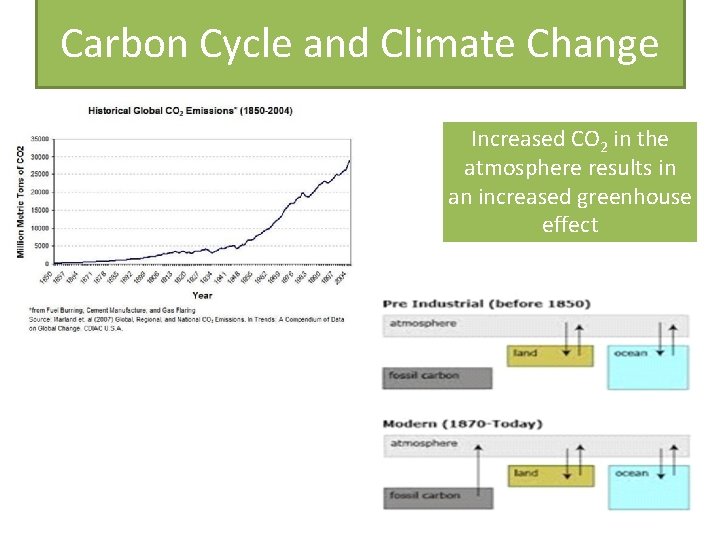
Carbon Cycle and Climate Change Increased CO 2 in the atmosphere results in an increased greenhouse effect
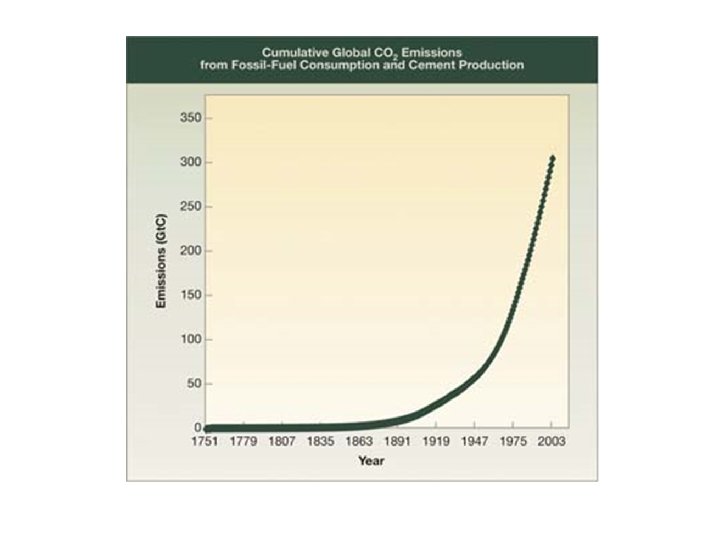
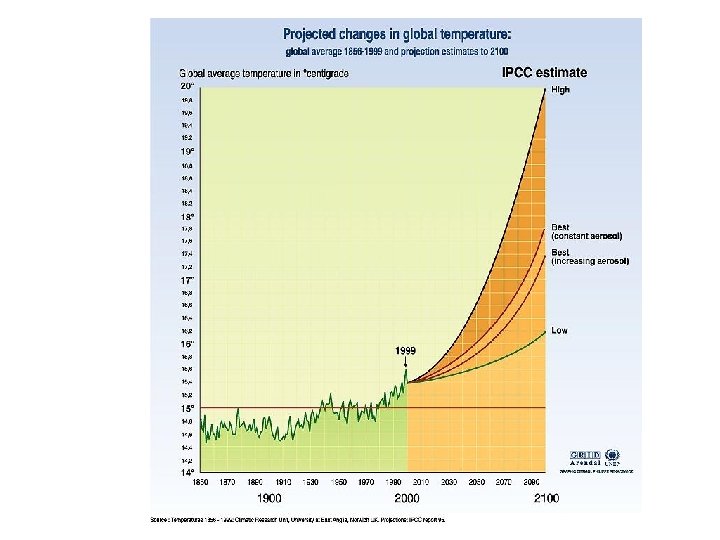
Videos • 5. Carbon Cycle and Human Activity (2: 52) • 6. Keeping up with Carbon (5: 38) • https: //www. youtube. com/watch? v=Hr. Ir 3 x. Dh Q 0 E
What can you do to help? • Use less fossil fuel • Use energy wisely - use less heat, light, air conditioning, hot water • Reduce – Reuse - Recycle • Use energy-efficient appliances and devices • Drive less • Use/Invent alternative Energy Sources (solar, etc) • Plant a tree
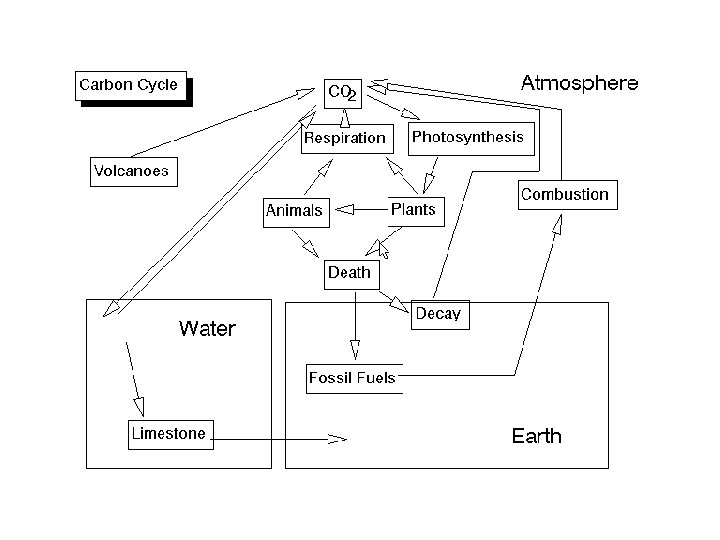
The Carbon Cycle • Can be shown by a variety of different diagrams
Assignment • Finish all worksheets on pages 9 - 13
Answers to pages 9 - 13
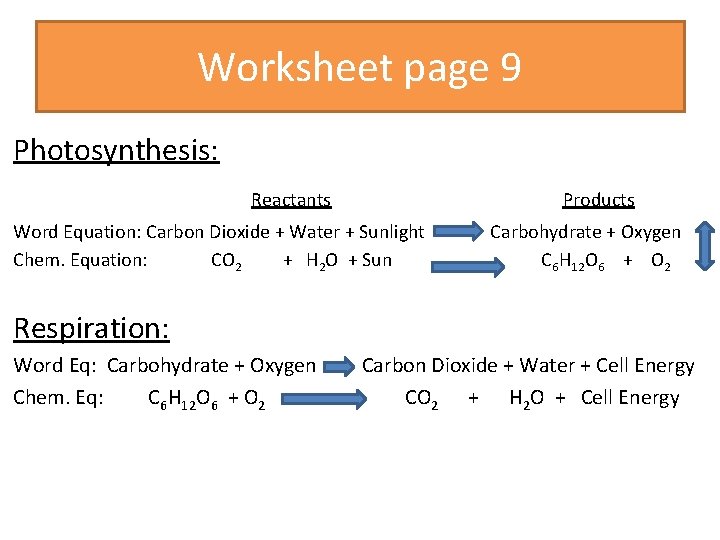
Worksheet page 9 Photosynthesis: Reactants Products Word Equation: Carbon Dioxide + Water + Sunlight Chem. Equation: CO 2 + H 2 O + Sun Carbohydrate + Oxygen C 6 H 12 O 6 + O 2 Respiration: Word Eq: Carbohydrate + Oxygen Chem. Eq: C 6 H 12 O 6 + O 2 Carbon Dioxide + Water + Cell Energy CO 2 + H 2 O + Cell Energy
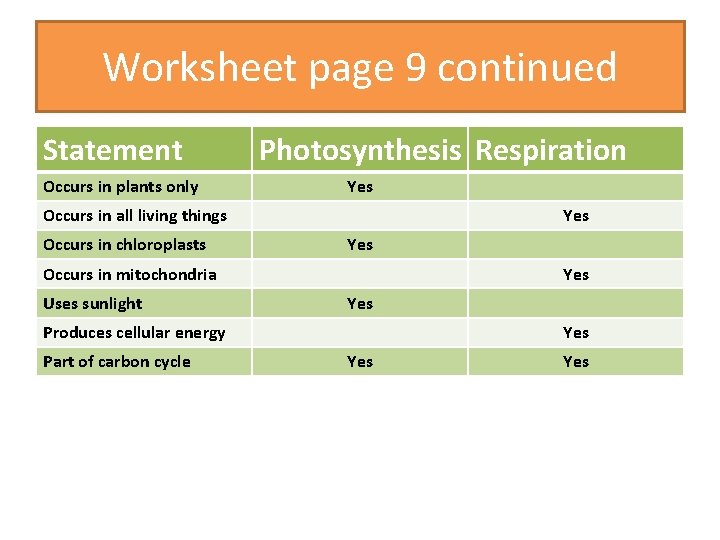
Worksheet page 9 continued Statement Occurs in plants only Photosynthesis Respiration Yes Occurs in all living things Occurs in chloroplasts Yes Occurs in mitochondria Uses sunlight Yes Produces cellular energy Part of carbon cycle Yes Yes
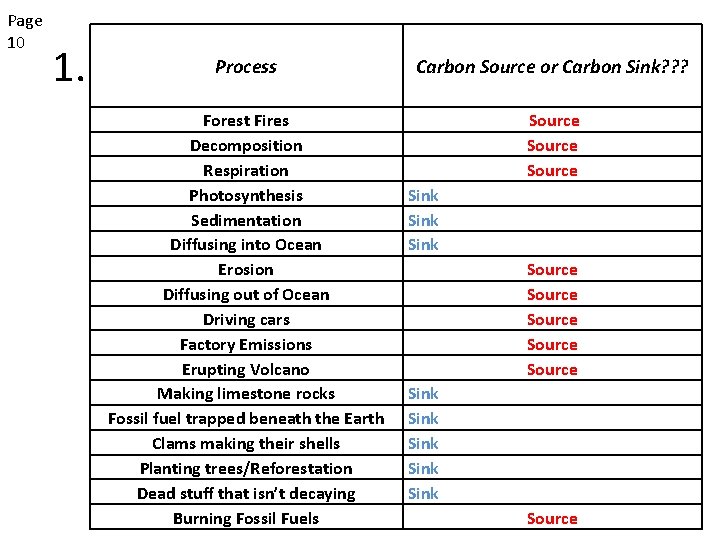
Page 10 1. Process Carbon Source or Carbon Sink? ? ? Forest Fires Decomposition Respiration Photosynthesis Sedimentation Diffusing into Ocean Erosion Diffusing out of Ocean Driving cars Factory Emissions Erupting Volcano Making limestone rocks Fossil fuel trapped beneath the Earth Clams making their shells Planting trees/Reforestation Dead stuff that isn’t decaying Burning Fossil Fuels Source Sink Source Source Sink Sink Source
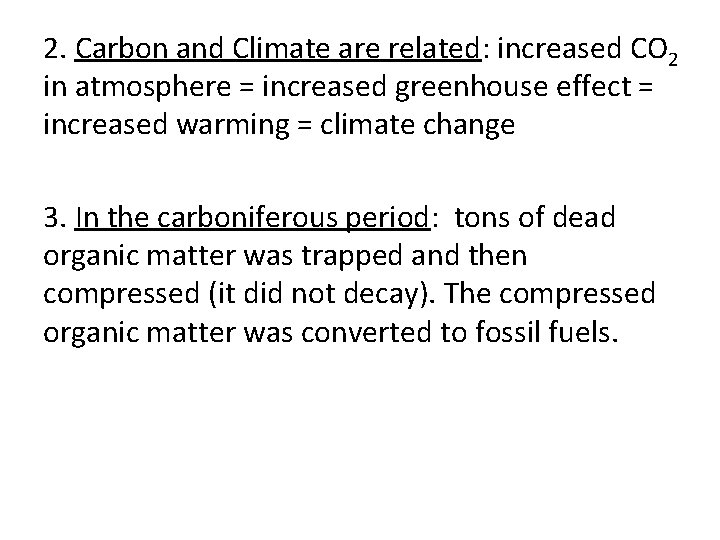
2. Carbon and Climate are related: increased CO 2 in atmosphere = increased greenhouse effect = increased warming = climate change 3. In the carboniferous period: tons of dead organic matter was trapped and then compressed (it did not decay). The compressed organic matter was converted to fossil fuels.
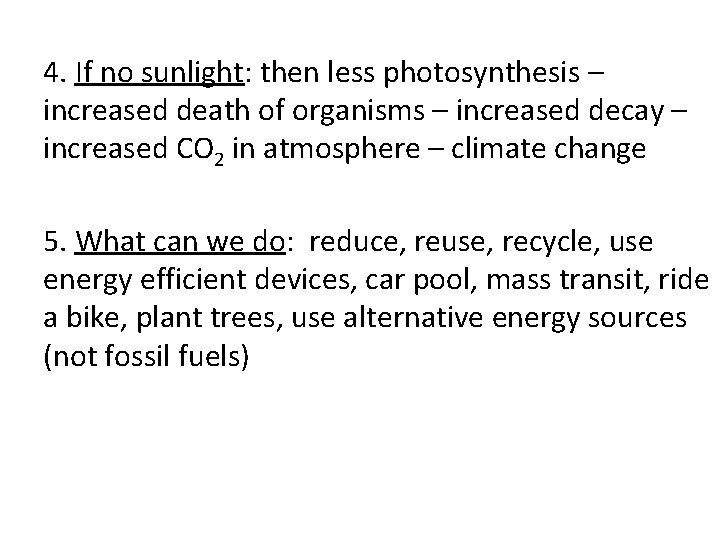
4. If no sunlight: then less photosynthesis – increased death of organisms – increased decay – increased CO 2 in atmosphere – climate change 5. What can we do: reduce, reuse, recycle, use energy efficient devices, car pool, mass transit, ride a bike, plant trees, use alternative energy sources (not fossil fuels)
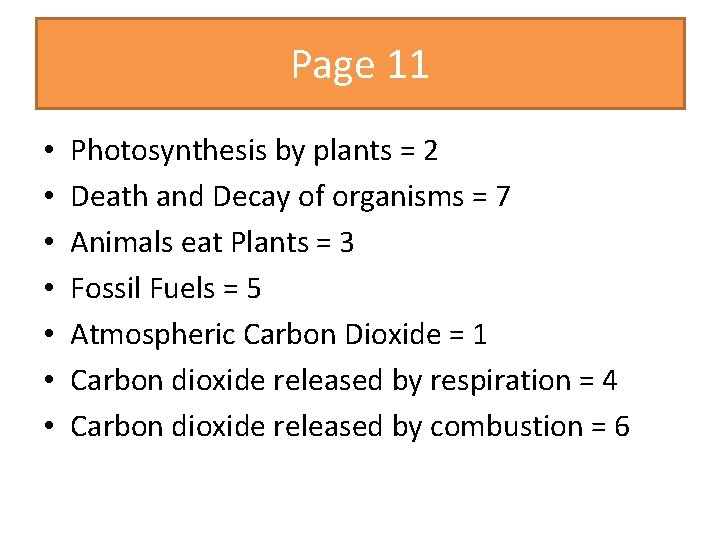
Page 11 • • Photosynthesis by plants = 2 Death and Decay of organisms = 7 Animals eat Plants = 3 Fossil Fuels = 5 Atmospheric Carbon Dioxide = 1 Carbon dioxide released by respiration = 4 Carbon dioxide released by combustion = 6
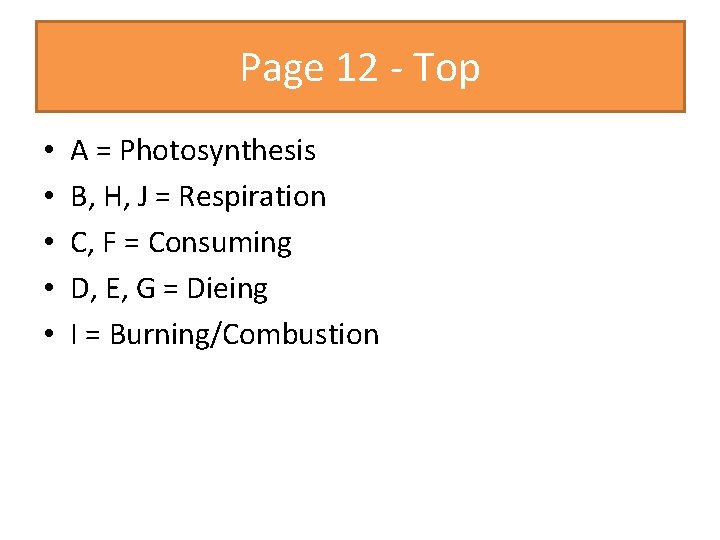
Page 12 - Top • • • A = Photosynthesis B, H, J = Respiration C, F = Consuming D, E, G = Dieing I = Burning/Combustion
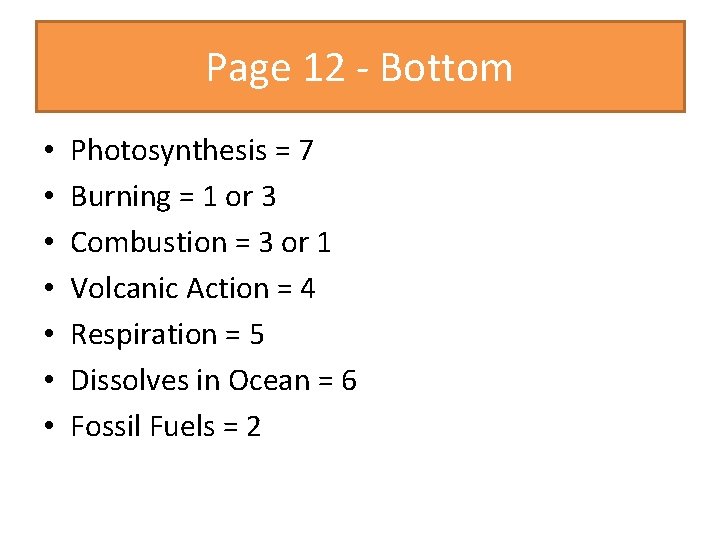
Page 12 - Bottom • • Photosynthesis = 7 Burning = 1 or 3 Combustion = 3 or 1 Volcanic Action = 4 Respiration = 5 Dissolves in Ocean = 6 Fossil Fuels = 2
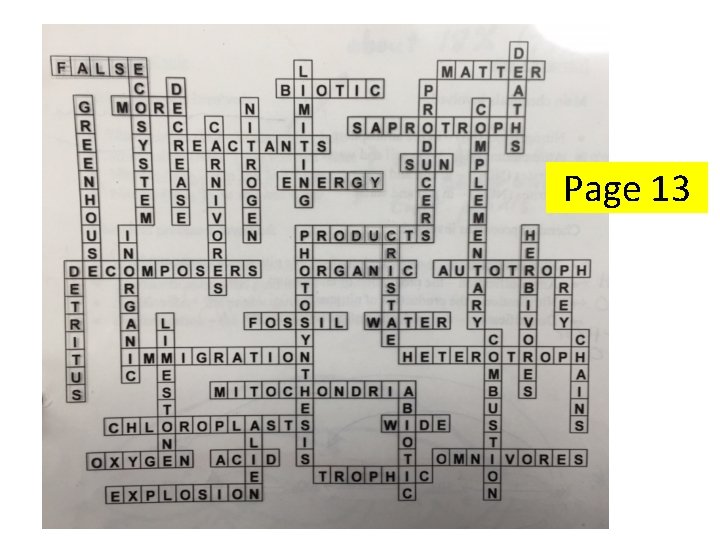
Page 13
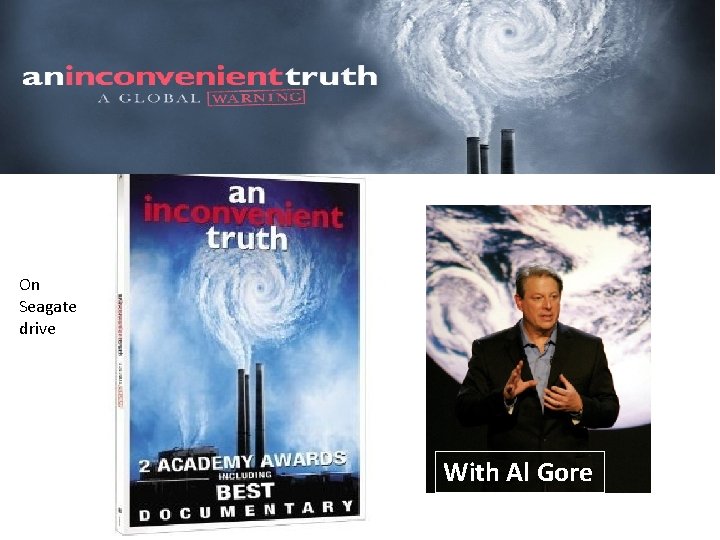
On Seagate drive With Al Gore
Inconvenient Truth Movie • Link to answer key: • http: //shaftesbury 20 fscience. pbworks. com/w /file/fetch/70107922/inconvenient%20 truth% 20 focus%20 questions%20 -%20 key. pdf
- Slides: 49