
NUTRIBITES Webinar Series Setting the Record Straight on
NUTRI-BITES® Webinar Series Setting the Record Straight on Cholesterol, Saturated Fat, and Heart Disease Risk July 8, 2015 Presenter: Ronald M. Krauss, MD Senior Scientist and Director, Atherosclerosis Research, Children’s Hospital Oakland Research Institute Adjunct Professor, Department of Medicine, UCSF Adjunct Professor, Department of Nutritional Sciences, UC Berkley Moderator: James M. Rippe, MD – Leading cardiologist, Founder and Director, Rippe Lifestyle Institute Approved for 1 CPE (Level 2) by the Commission on Dietetic Registration, credentialing agency for the Academy of Nutrition and Dietetics. Original recording of the July 8, 2015 webinar and PDF download of presentation available at: www. Con. Agra. Foods. Science. Institute. com
Setting the Record Straight on Cholesterol, Saturated Fat, and Heart Disease Risk NUTRI-BITES® Webinar Series Based on this webinar the participant should be able to: Summarize the effects of dietary cholesterol on lipid levels and cardiovascular disease risk Explain the basis for current dietary recommendations for saturated fat intake Describe the effects of substituting carbohydrate for fat on lipid markers of cardiovascular disease risk
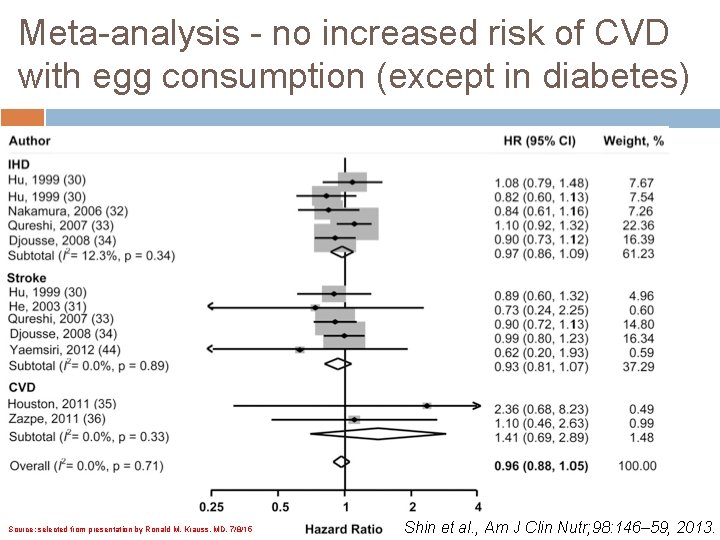
Meta-analysis - no increased risk of CVD with egg consumption (except in diabetes) Source: selected from presentation by Ronald M. Krauss, MD, 7/8/15 Shin et al. , Am J Clin Nutr; 98: 146– 59, 2013.
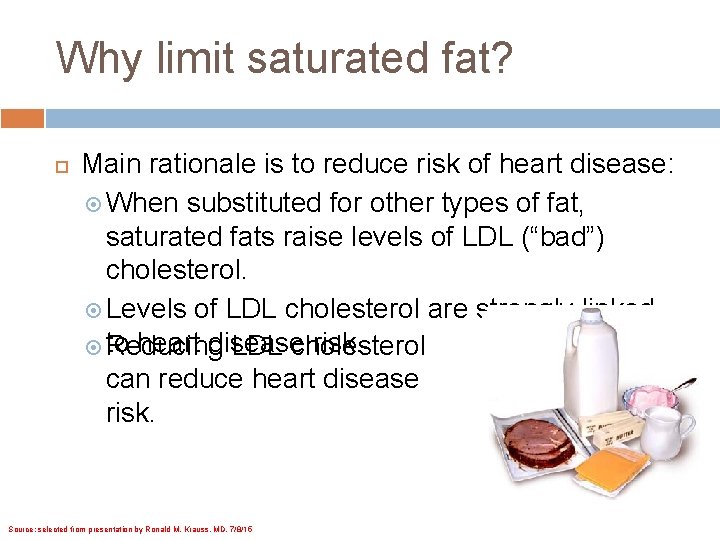
Why limit saturated fat? Main rationale is to reduce risk of heart disease: When substituted for other types of fat, saturated fats raise levels of LDL (“bad”) cholesterol. Levels of LDL cholesterol are strongly linked to heart disease risk. Reducing LDL cholesterol can reduce heart disease risk. Source: selected from presentation by Ronald M. Krauss, MD, 7/8/15
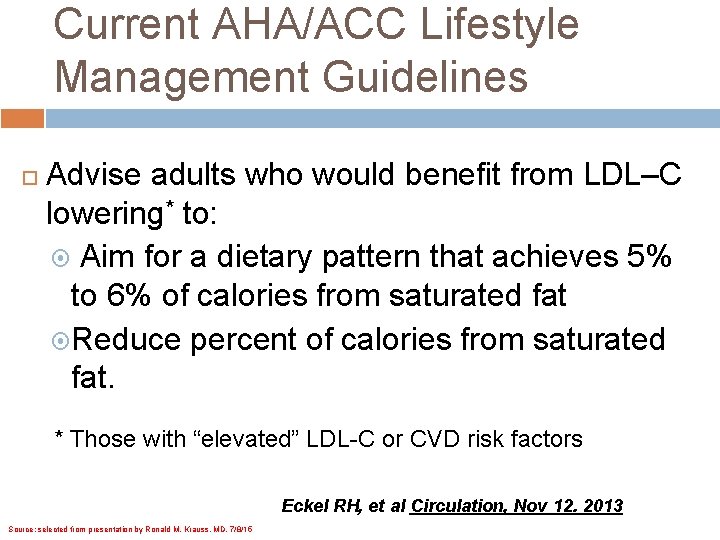
Current AHA/ACC Lifestyle Management Guidelines Advise adults who would benefit from LDL–C lowering* to: Aim for a dietary pattern that achieves 5% to 6% of calories from saturated fat Reduce percent of calories from saturated fat. * Those with “elevated” LDL-C or CVD risk factors Eckel RH, et al Circulation, Nov 12. 2013 Source: selected from presentation by Ronald M. Krauss, MD, 7/8/15
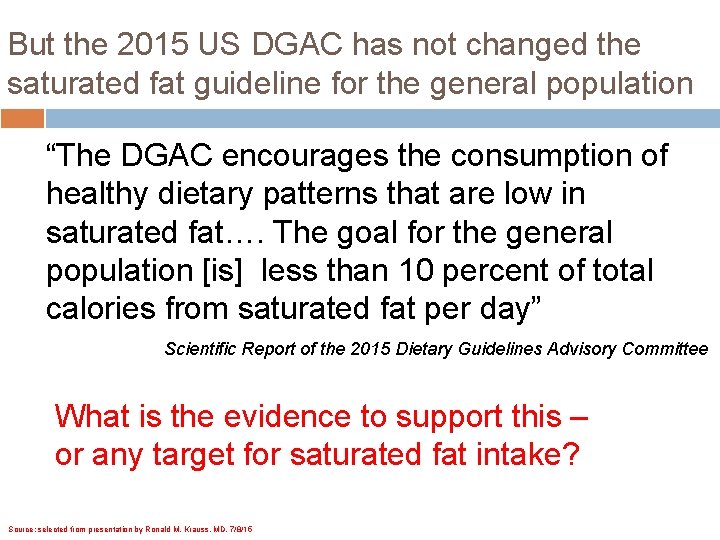
But the 2015 US DGAC has not changed the saturated fat guideline for the general population “The DGAC encourages the consumption of healthy dietary patterns that are low in saturated fat…. The goal for the general population [is] less than 10 percent of total calories from saturated fat per day” Scientific Report of the 2015 Dietary Guidelines Advisory Committee What is the evidence to support this – or any target for saturated fat intake? Source: selected from presentation by Ronald M. Krauss, MD, 7/8/15
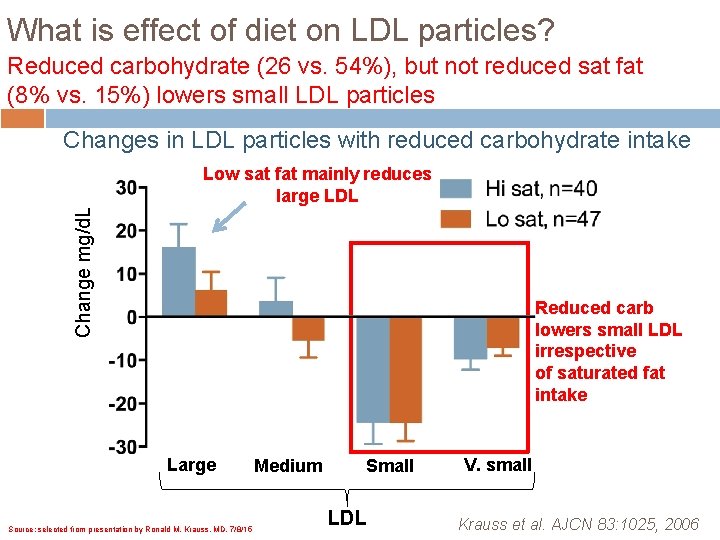
What is effect of diet on LDL particles? Reduced carbohydrate (26 vs. 54%), but not reduced sat fat (8% vs. 15%) lowers small LDL particles Changes in LDL particles with reduced carbohydrate intake Change mg/d. L Low sat fat mainly reduces large LDL Reduced carb lowers small LDL irrespective of saturated fat intake Large Source: selected from presentation by Ronald M. Krauss, MD, 7/8/15 Medium Small LDL V. small Krauss et al. AJCN 83: 1025, 2006
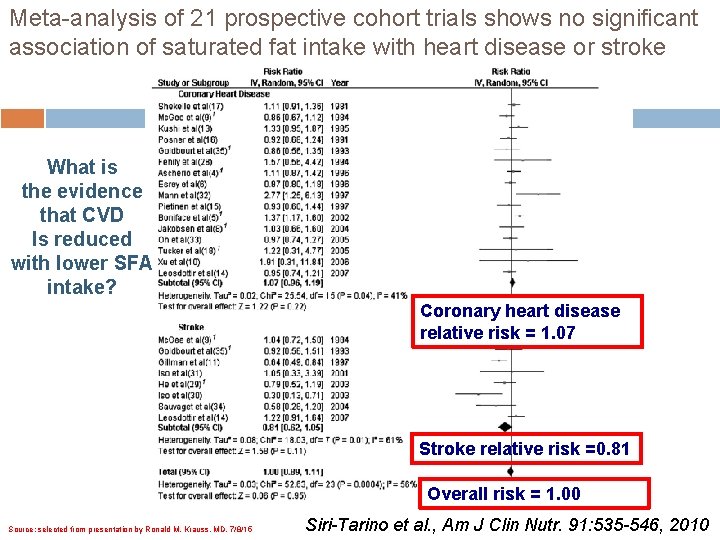
Meta-analysis of 21 prospective cohort trials shows no significant association of saturated fat intake with heart disease or stroke What is the evidence that CVD Is reduced with lower SFA intake? Coronary heart disease relative risk = 1. 07 Stroke relative risk =0. 81 Overall risk = 1. 00 Source: selected from presentation by Ronald M. Krauss, MD, 7/8/15 Siri-Tarino et al. , Am J Clin Nutr. 91: 535 -546, 2010
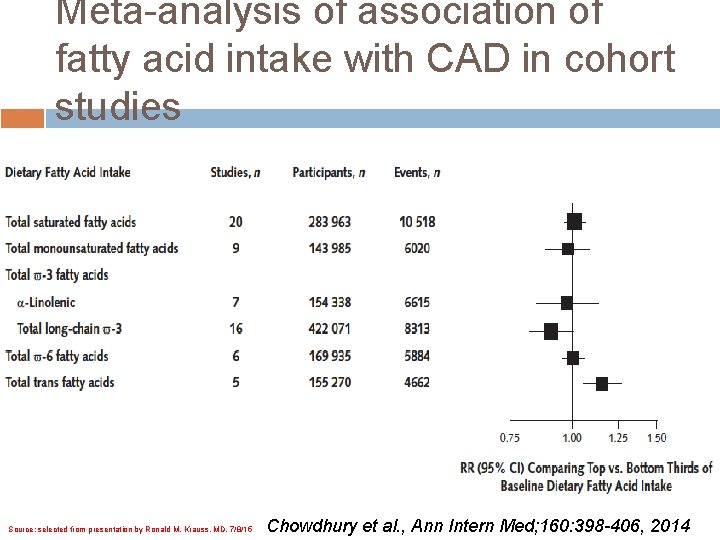
Meta-analysis of association of fatty acid intake with CAD in cohort studies Source: selected from presentation by Ronald M. Krauss, MD, 7/8/15 Chowdhury et al. , Ann Intern Med; 160: 398 -406, 2014
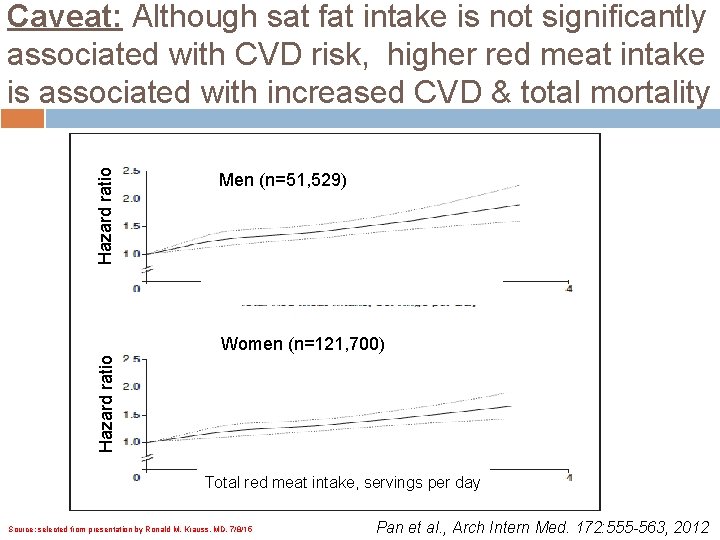
Hazard ratio Caveat: Although sat fat intake is not significantly associated with CVD risk, higher red meat intake is associated with increased CVD & total mortality Men (n=51, 529) Hazard ratio Women (n=121, 700) Total red meat intake, servings per day Source: selected from presentation by Ronald M. Krauss, MD, 7/8/15 Pan et al. , Arch Intern Med. 172: 555 -563, 2012
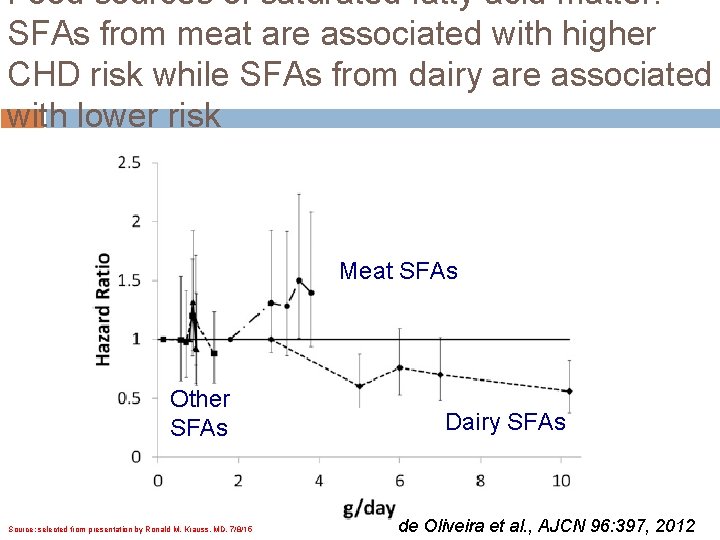
Food sources of saturated fatty acid matter: SFAs from meat are associated with higher CHD risk while SFAs from dairy are associated with lower risk Meat SFAs Other SFAs Source: selected from presentation by Ronald M. Krauss, MD, 7/8/15 Dairy SFAs de Oliveira et al. , AJCN 96: 397, 2012
We should focus on eating healthy foods and food combinations/meal patterns and worry less about counting grams of saturated fat The effect of particular foods on coronary heart disease cannot be predicted solely by their content of total SFAs because: individual SFAs may have different cardiovascular effects and major SFA food sources contain other constituents that could influence CHD risk. Astrup A. , et al. Am J Clin Nutr 2011; 93: 684– 688. Source: selected from presentation by Ronald M. Krauss, MD, 7/8/15
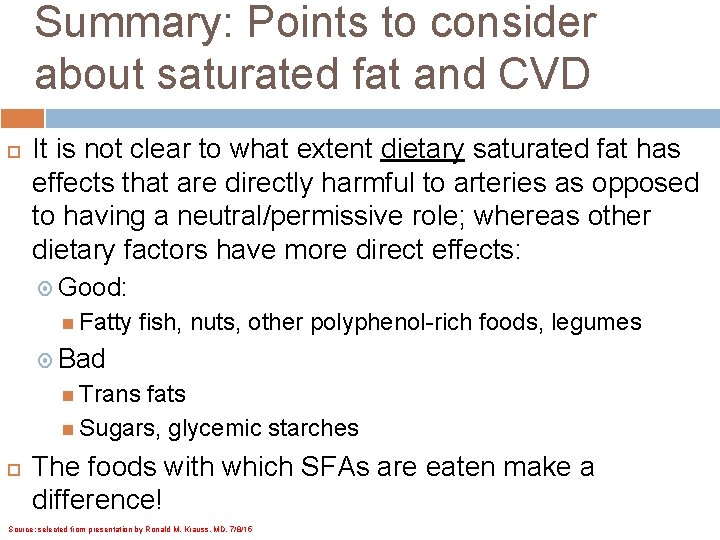
Summary: Points to consider about saturated fat and CVD It is not clear to what extent dietary saturated fat has effects that are directly harmful to arteries as opposed to having a neutral/permissive role; whereas other dietary factors have more direct effects: Good: Fatty fish, nuts, other polyphenol-rich foods, legumes Bad Trans fats Sugars, glycemic starches The foods with which SFAs are eaten make a difference! Source: selected from presentation by Ronald M. Krauss, MD, 7/8/15
- Slides: 13