
NUTRIBITES Webinar Series Nutrition Support for the Bariatric
NUTRI-BITES® Webinar Series Nutrition Support for the Bariatric Surgery Patient: When and Why Nutrition Support is Needed May 6, 2015 Presenters: Kellene A. Isom, MS, RD, LDN Bariatric Program Manager and Senior Bariatric Dietitian Center for Metabolic Health and Bariatric Surgery - Brigham and Women's Hospital Kris M. Mogensen, MS, RD, LDN, CNSC Team Leader Dietitian - Brigham and Women's Hospital Moderator: James M. Rippe, MD – Leading cardiologist, Founder and Director, Rippe Lifestyle Institute Approved for 1 CPE (Level 2) by the Commission on Dietetic Registration, credentialing agency for the Academy of Nutrition and Dietetics. Original recording of the May 6, 2015 webinar and PDF download of presentation available at: www. Con. Agra. Foods. Science. Institute. com
NUTRI-BITES® Webinar Series Nutrition Support for the Bariatric Surgery Patient Based on this webinar the participant should be able to: Outline the four types of bariatric surgery and the mechanisms by which they affect nutritional status. List indications for initiation of nutrition support therapy in the bariatric patient and determine appropriate mode of nutrition support therapy (enteral vs. parenteral nutrition). Illustrate nutrition care considerations necessary when working with bariatric patients on nutrition support therapy. Apply nutrition support therapy across the spectrum of care for bariatric surgery patients and identify resources available to RDNs working with bariatric patients on nutrition support therapy.
What is Weight Loss Surgery? A group of ‘bariatric and metabolic’ surgical operations that impact the physiological regulation of body weight and improve morbidity and mortality rates.
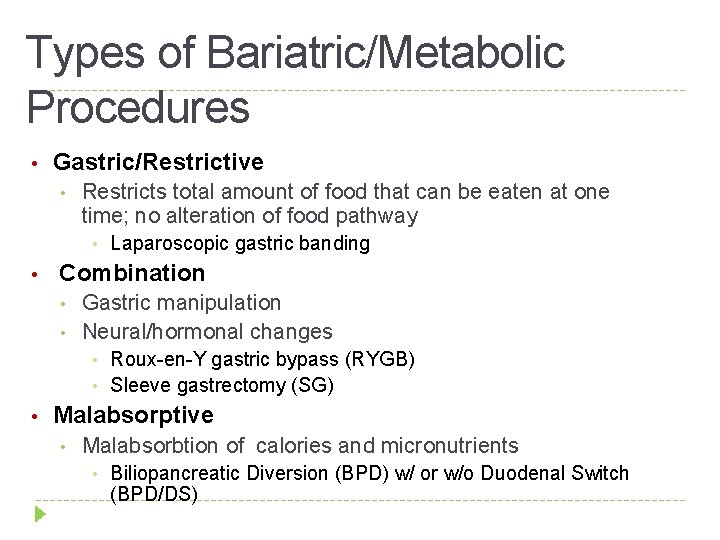
Types of Bariatric/Metabolic Procedures • Gastric/Restrictive • Restricts total amount of food that can be eaten at one time; no alteration of food pathway • • Combination • • Gastric manipulation Neural/hormonal changes • • • Laparoscopic gastric banding Roux-en-Y gastric bypass (RYGB) Sleeve gastrectomy (SG) Malabsorptive • Malabsorbtion of calories and micronutrients • Biliopancreatic Diversion (BPD) w/ or w/o Duodenal Switch (BPD/DS)
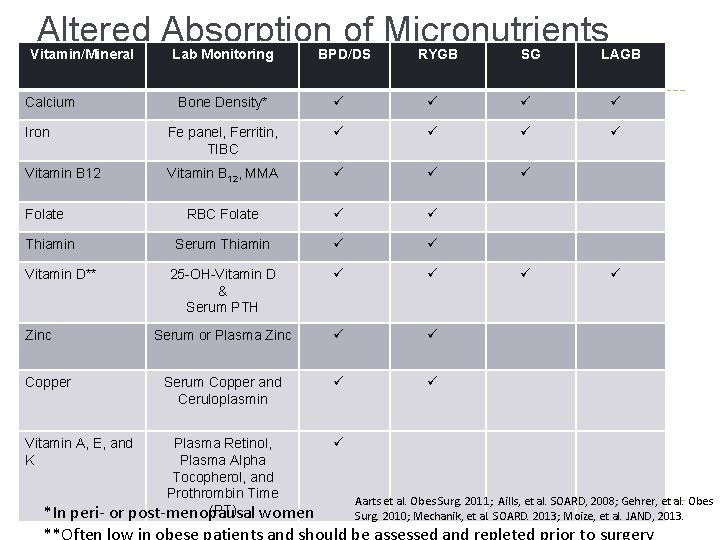
Altered Absorption of Micronutrients Vitamin/Mineral Lab Monitoring BPD/DS RYGB SG LAGB Bone Density* ü ü Iron Fe panel, Ferritin, TIBC ü ü Vitamin B 12, MMA ü ü ü RBC Folate ü ü Serum Thiamin ü ü 25 -OH-Vitamin D & Serum PTH ü ü Serum or Plasma Zinc ü ü Serum Copper and Ceruloplasmin ü ü Calcium Folate Thiamin Vitamin D** Zinc Copper Vitamin A, E, and K Plasma Retinol, Plasma Alpha Tocopherol, and Prothrombin Time (PT) *In peri- or post-menopausal women ü ü ü Aarts et al. Obes Surg. 2011; Aills, et al. SOARD, 2008; Gehrer, et al. Obes Surg. 2010; Mechanik, et al. SOARD. 2013; Moize, et al. JAND, 2013.
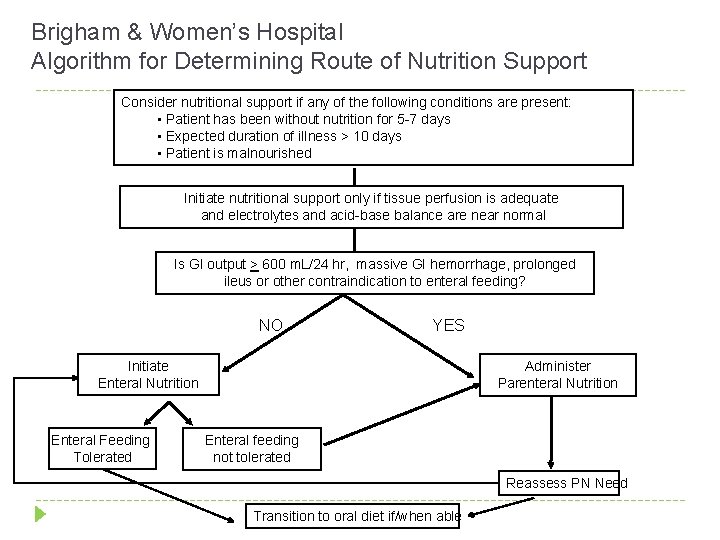
Brigham & Women’s Hospital Algorithm for Determining Route of Nutrition Support Consider nutritional support if any of the following conditions are present: • Patient has been without nutrition for 5 -7 days • Expected duration of illness > 10 days • Patient is malnourished Initiate nutritional support only if tissue perfusion is adequate and electrolytes and acid-base balance are near normal Is GI output > 600 m. L/24 hr, massive GI hemorrhage, prolonged ileus or other contraindication to enteral feeding? NO YES Initiate Enteral Nutrition Enteral Feeding Tolerated Administer Parenteral Nutrition Enteral feeding not tolerated Reassess PN Need Transition to oral diet if/when able
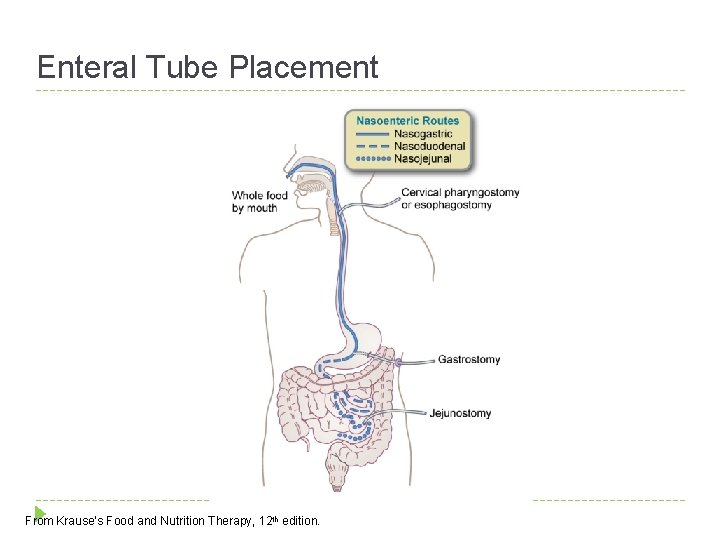
Enteral Tube Placement From Krause’s Food and Nutrition Therapy, 12 th edition.
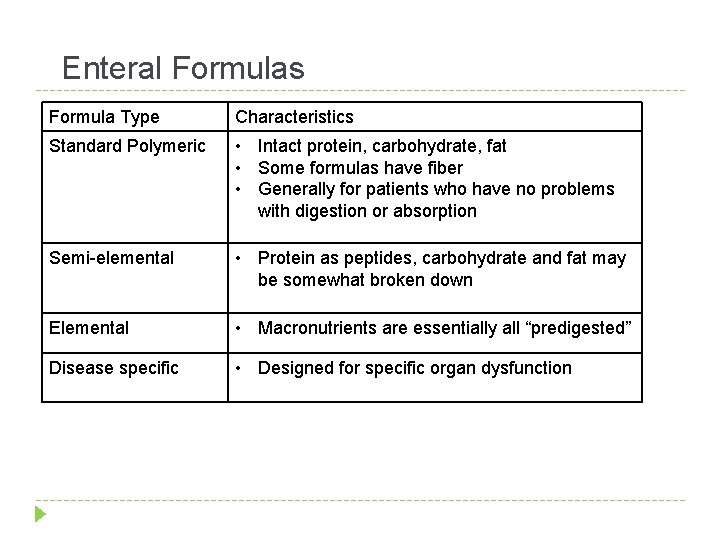
Enteral Formulas Formula Type Characteristics Standard Polymeric • Intact protein, carbohydrate, fat • Some formulas have fiber • Generally for patients who have no problems with digestion or absorption Semi-elemental • Protein as peptides, carbohydrate and fat may be somewhat broken down Elemental • Macronutrients are essentially all “predigested” Disease specific • Designed for specific organ dysfunction
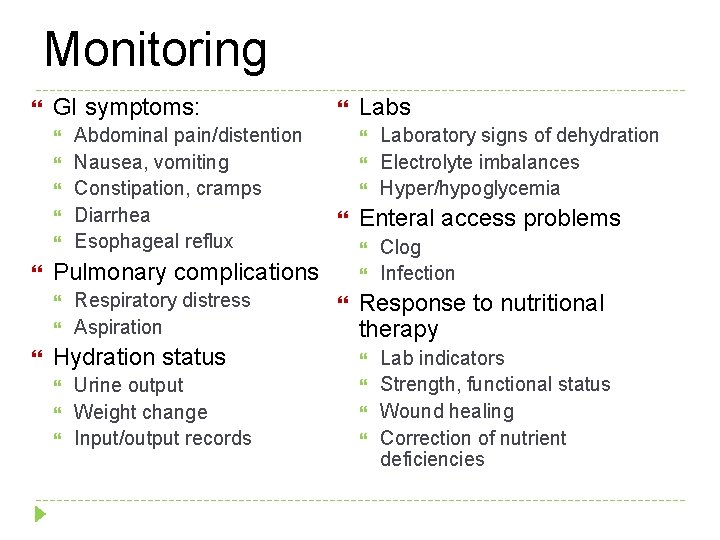
Monitoring GI symptoms: Respiratory distress Aspiration Hydration status Urine output Weight change Input/output records Labs Laboratory signs of dehydration Electrolyte imbalances Hyper/hypoglycemia Enteral access problems Pulmonary complications Abdominal pain/distention Nausea, vomiting Constipation, cramps Diarrhea Esophageal reflux Clog Infection Response to nutritional therapy Lab indicators Strength, functional status Wound healing Correction of nutrient deficiencies
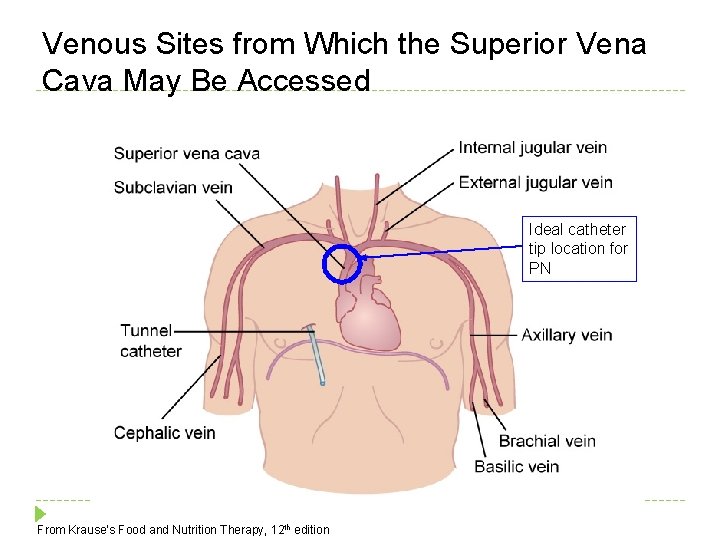
Venous Sites from Which the Superior Vena Cava May Be Accessed Ideal catheter tip location for PN From Krause’s Food and Nutrition Therapy, 12 th edition
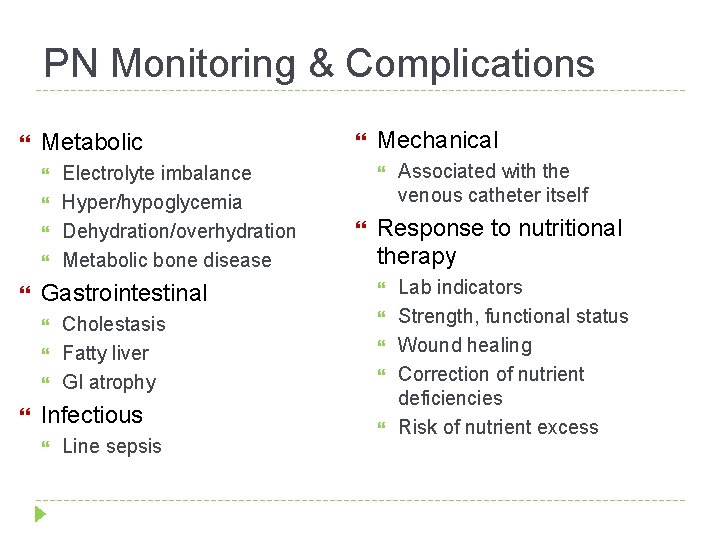
PN Monitoring & Complications Metabolic Gastrointestinal Electrolyte imbalance Hyper/hypoglycemia Dehydration/overhydration Metabolic bone disease Cholestasis Fatty liver GI atrophy Infectious Line sepsis Mechanical Associated with the venous catheter itself Response to nutritional therapy Lab indicators Strength, functional status Wound healing Correction of nutrient deficiencies Risk of nutrient excess
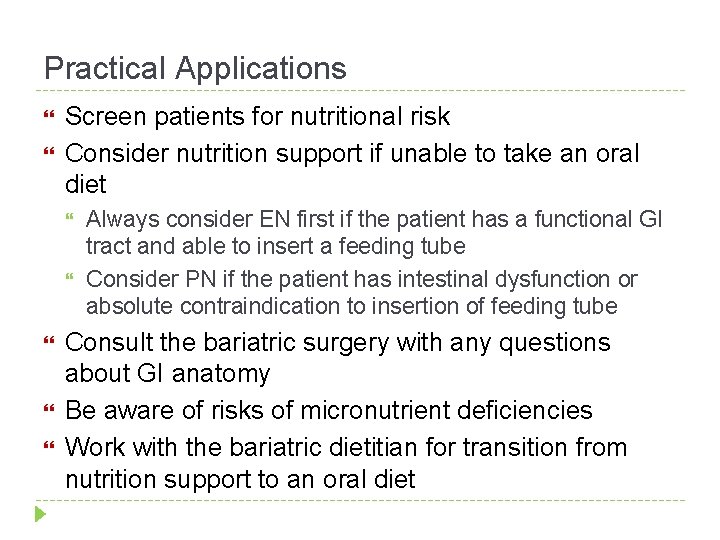
Practical Applications Screen patients for nutritional risk Consider nutrition support if unable to take an oral diet Always consider EN first if the patient has a functional GI tract and able to insert a feeding tube Consider PN if the patient has intestinal dysfunction or absolute contraindication to insertion of feeding tube Consult the bariatric surgery with any questions about GI anatomy Be aware of risks of micronutrient deficiencies Work with the bariatric dietitian for transition from nutrition support to an oral diet
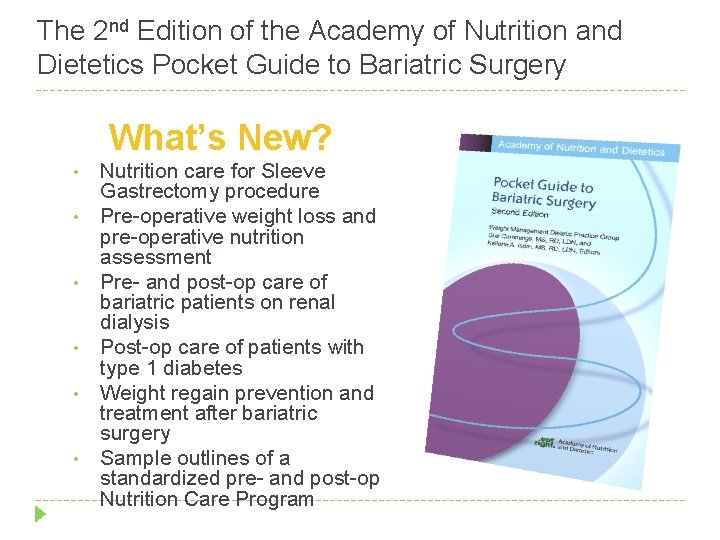
The 2 nd Edition of the Academy of Nutrition and Dietetics Pocket Guide to Bariatric Surgery What’s New? • • • Nutrition care for Sleeve Gastrectomy procedure Pre-operative weight loss and pre-operative nutrition assessment Pre- and post-op care of bariatric patients on renal dialysis Post-op care of patients with type 1 diabetes Weight regain prevention and treatment after bariatric surgery Sample outlines of a standardized pre- and post-op Nutrition Care Program
- Slides: 13