
Nursing Workload Acuity in the EHR Mary Beth
Nursing Workload Acuity in the EHR Mary Beth Mitchell, MSN, RN, BC, CPHIMS CNIO Texas Health Resources September 26 th, 2015
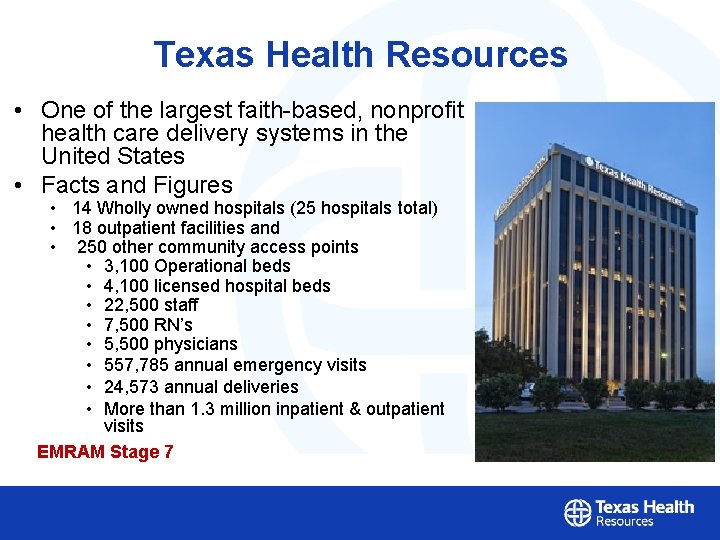
Texas Health Resources • One of the largest faith-based, nonprofit health care delivery systems in the United States • Facts and Figures • 14 Wholly owned hospitals (25 hospitals total) • 18 outpatient facilities and • 250 other community access points • 3, 100 Operational beds • 4, 100 licensed hospital beds • 22, 500 staff • 7, 500 RN’s • 5, 500 physicians • 557, 785 annual emergency visits • 24, 573 annual deliveries • More than 1. 3 million inpatient & outpatient visits EMRAM Stage 7
Objectives • Define the use of an evidenced based acuity system in supporting patient assignment – Definition of evidenced-based acuity – Use of EHR documentation to support acuity – Making patient assignments based on Acuity
Move to Staff Scheduling • People. Soft- HR and Payroll system • Early 2000 - needed Time and Attendance system – driven by Nursing – – – Monitor nursing productivity Optimal scheduling- flexibility Greater accountability at Manager level Facilitated self-scheduling Rules to manage call and call-back • RFP- reviewed several vendors, including the existing nurse scheduling system and People. Soft. • “At. Staff” was selected- now Cerner Clair. Via
THR Drivers to Acuity • Patient Classification Systems came out in the 1980’s to define patients, but were not evidenced-based- based on tasks, not outcomes • Staffing was primarily a “numbers game, ” based on number of patients and budgeted number of nurses. • Need to focus on the patient, not the number. • Acuity optimizes the way nursing care is delivered- based on meeting the patient’s unique needs, not to satisfy a number.
Why Use Outcomes to drive Acuity? • Increasing consumer awareness on quality and safety • Nursing involvement in the National Database for Nursing Quality Indicators (NDNQI) • Center for Medicare and Medicaid Services (CMS) introduces pay-for-performance (P 4 P) initiatives • CMS stops payment for conditions not present on admission: hospital acquired conditions (e. g. , falls, pressure ulcers)
Why Now • Since the late 1990’s, acuity systems are becoming more prominent again. • Patients are more complicated today- more comorbidities, more resources required • Regulatory requirements demand more nursing attention to meet Patient Safety Goals, Core Measures and SCIP Measures • Much more complex environment for staff to manage patients.
Other Benefits • Will be able to account for all the unit activity. Including all admissions, transfers, and discharges- not only the census at midnight. • Based on defined data from the Workload Study in 2010 at all hospitals. • Individualized based on content area- all units are not the same. • Individualized based on hospital location and services offered.
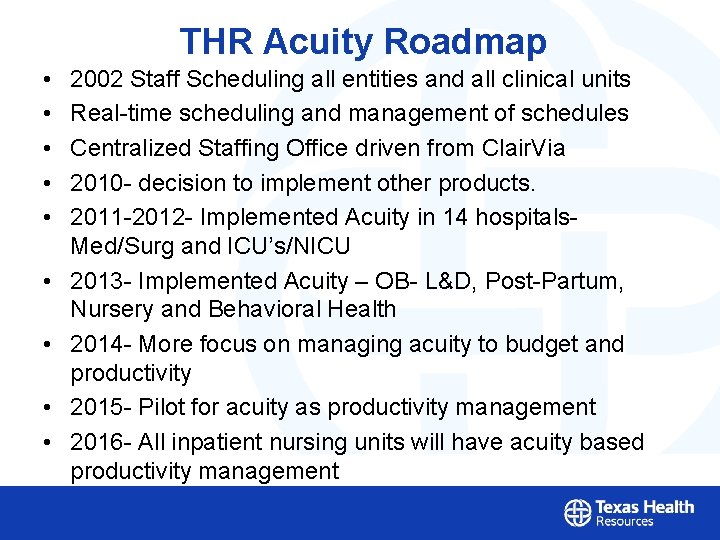
THR Acuity Roadmap • • • 2002 Staff Scheduling all entities and all clinical units Real-time scheduling and management of schedules Centralized Staffing Office driven from Clair. Via 2010 - decision to implement other products. 2011 -2012 - Implemented Acuity in 14 hospitals. Med/Surg and ICU’s/NICU 2013 - Implemented Acuity – OB- L&D, Post-Partum, Nursery and Behavioral Health 2014 - More focus on managing acuity to budget and productivity 2015 - Pilot for acuity as productivity management 2016 - All inpatient nursing units will have acuity based productivity management
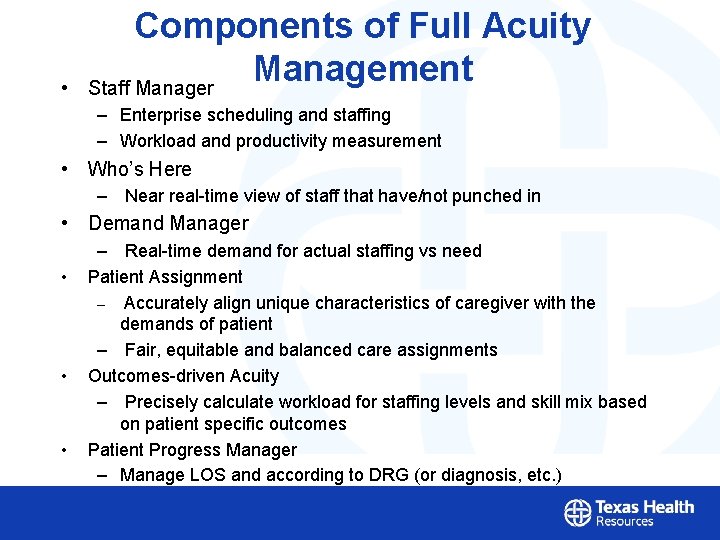
• Components of Full Acuity Management Staff Manager – Enterprise scheduling and staffing – Workload and productivity measurement • Who’s Here – Near real-time view of staff that have/not punched in • Demand Manager • • • – Real-time demand for actual staffing vs need Patient Assignment – Accurately align unique characteristics of caregiver with the demands of patient – Fair, equitable and balanced care assignments Outcomes-driven Acuity – Precisely calculate workload for staffing levels and skill mix based on patient specific outcomes Patient Progress Manager – Manage LOS and according to DRG (or diagnosis, etc. )
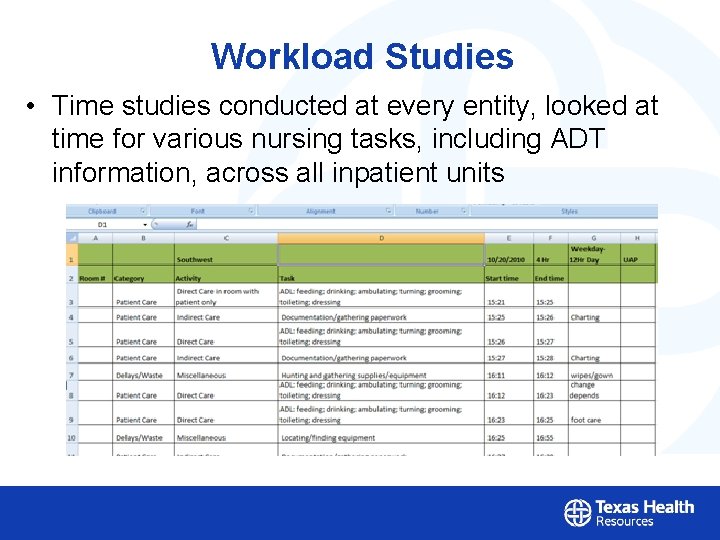
Workload Studies • Time studies conducted at every entity, looked at time for various nursing tasks, including ADT information, across all inpatient units
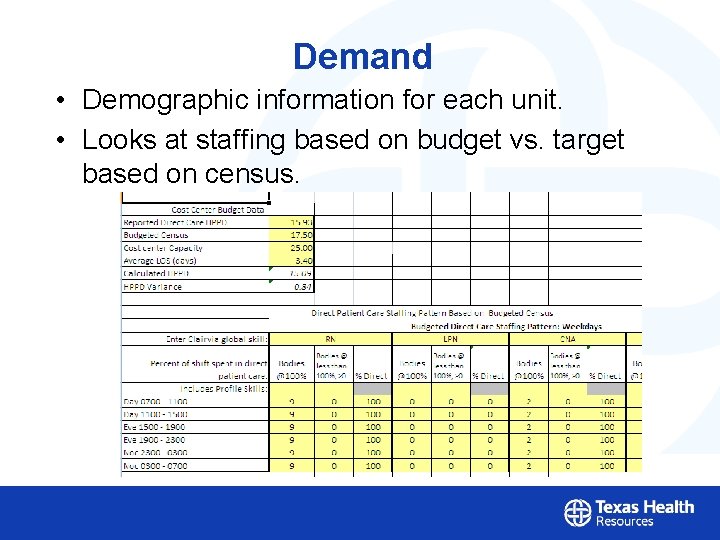
Demand • Demographic information for each unit. • Looks at staffing based on budget vs. target based on census.
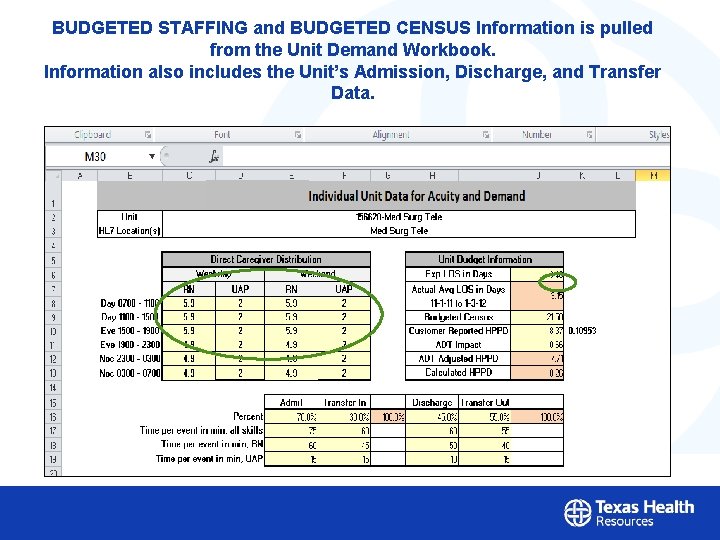
BUDGETED STAFFING and BUDGETED CENSUS Information is pulled from the Unit Demand Workbook. Information also includes the Unit’s Admission, Discharge, and Transfer Data. fgh
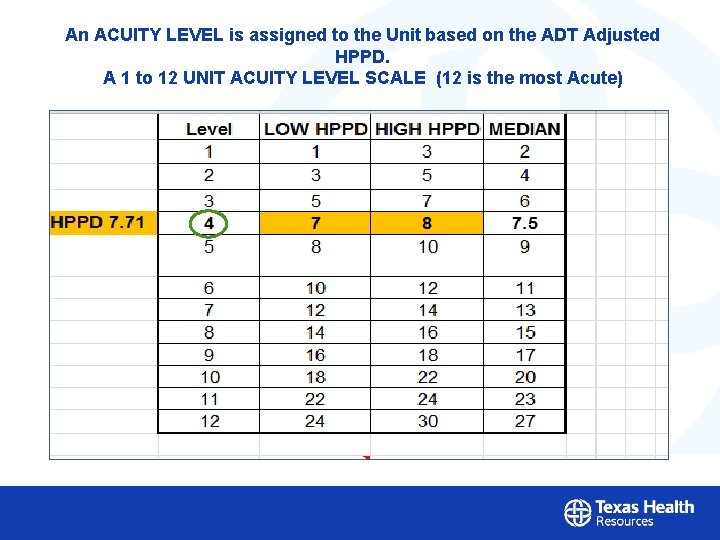
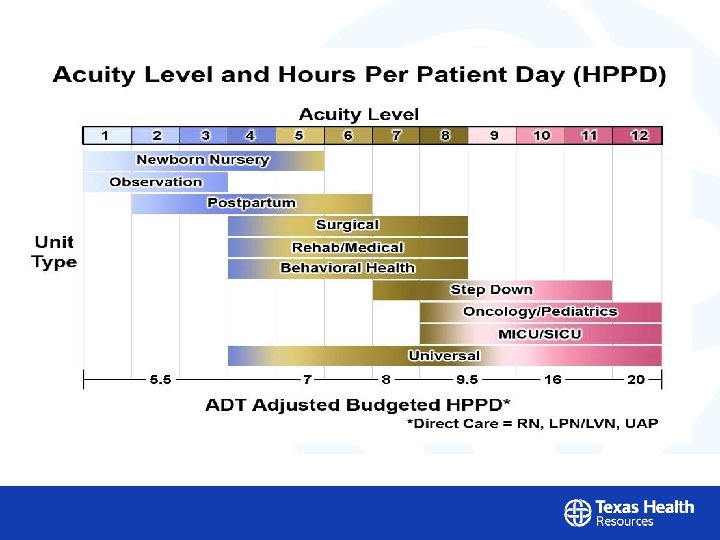
An ACUITY LEVEL is assigned to the Unit based on the ADT Adjusted HPPD. A 1 to 12 UNIT ACUITY LEVEL SCALE (12 is the most Acute)
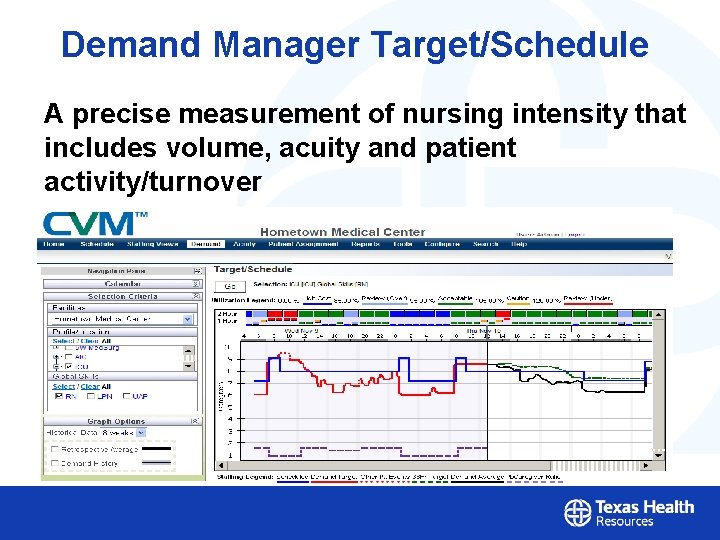
Demand Manager Target/Schedule A precise measurement of nursing intensity that includes volume, acuity and patient activity/turnover

Patient Acuity Assessment
Importance of Patient Assignment • Allows you to see assignments based on acuity loads – By seeing the assignments on screen you are able to verify the equality of loads to staff • Allows you to see the unit acuity as a whole to see the entire census and their individual scores alogn with your unit average score at each time you open the screen • It allows you to keep an electronic record of the activity on the shift. Such as… – Acuity scores (every 4 hours) – ADT Events (all admissions, discharge and transfers) – Staffing assignments – Who had admissions – Who had discharges
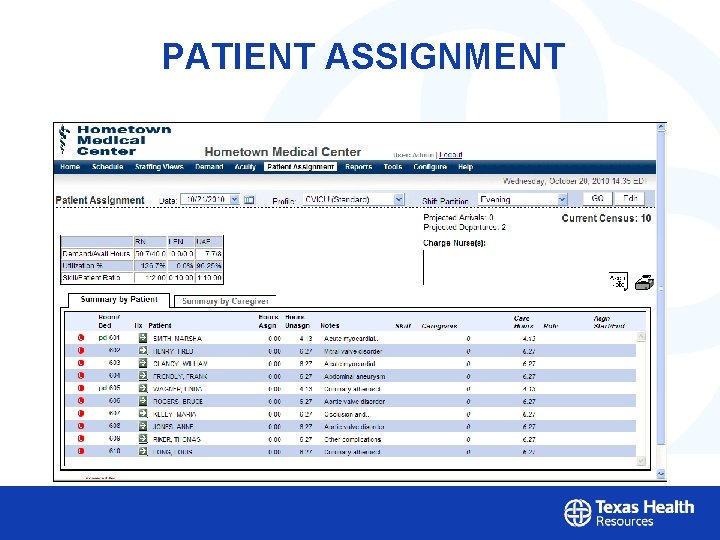
PATIENT ASSIGNMENT
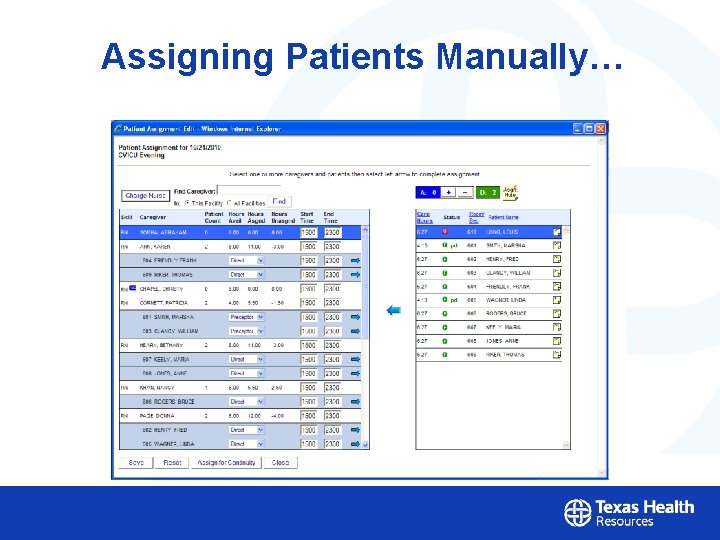
Assigning Patients Manually…
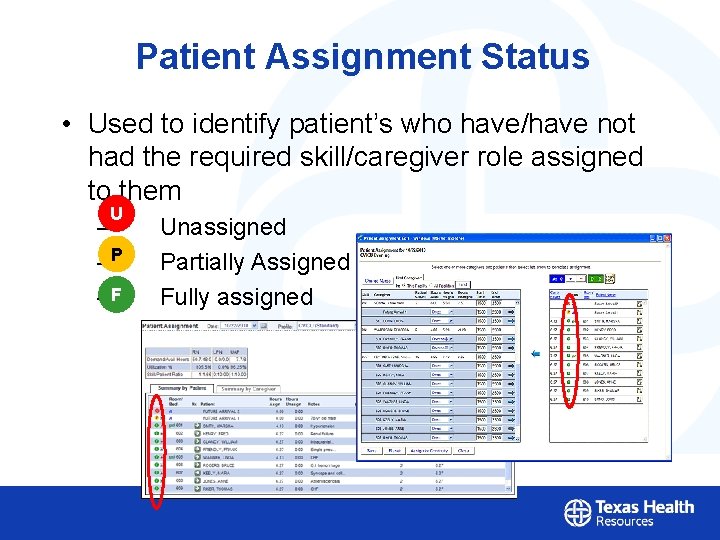
Patient Assignment Status • Used to identify patient’s who have/have not had the required skill/caregiver role assigned to them U – –P –F Unassigned Partially Assigned Fully assigned
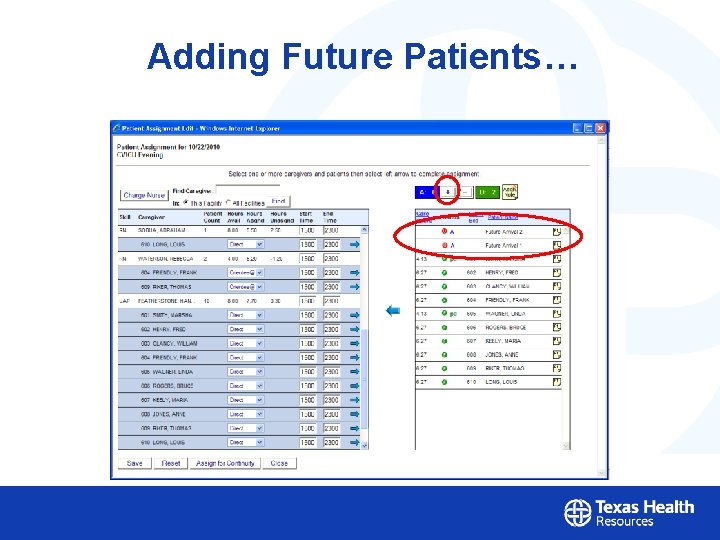
Adding Future Patients…
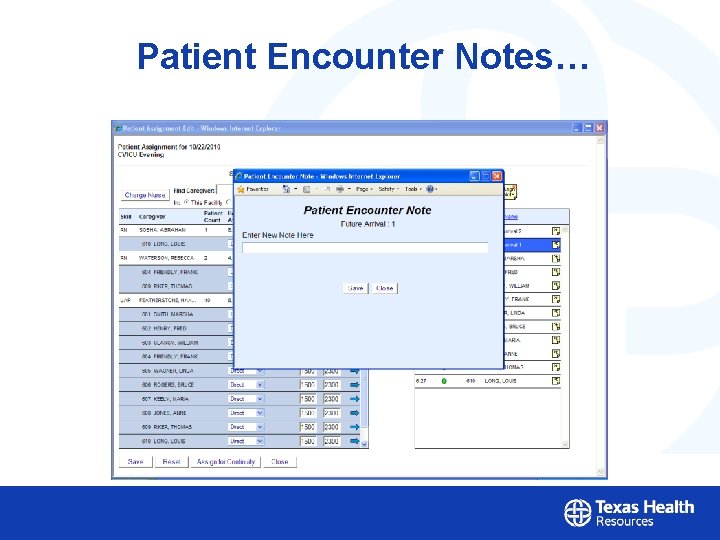
Patient Encounter Notes…
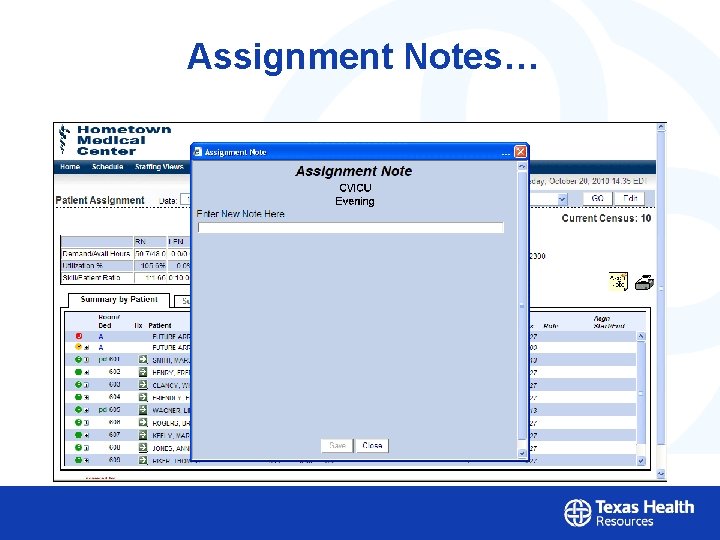
Assignment Notes…
Goals Staff Management • Improve patient throughput by normalizing workflow – Reduce ED Hold times – Manage bottlenecks that impact patient throughout Patient Assignment • Manage staffing across departments and facilities based on patient need – Improve the ability to staff based on variable staffing demands – Proactively predict and plan for staffing needs in advance, to provide cost effective, quality staffing option – Using data, identify when adjustments in staffing patterns are needed to better match staffing resources to patient need. – Decrease ED hold time due to short staffing – Increase patient satisfaction
Goals Demand Management • Decrease Crisis Staffing – Reduce ED Hold Times – Manage bottlenecks impacting patient throughput – Decrease number of phone calls to staff to cover short-staffed shifts Care Management • Manage to Discharge and Transfer times – Reduce Length of Stay – Decrease costs by optimizing LOS, improving patient throughput, and meeting patient departure targets – Improve patient throughput by timely transfer and discharge planning – Stabilize workload relate to patient transfers by modifying the timing outside of high volume admission times
Goals- Outcomes Management • Continuous management of patient condition and outcomes – Appropriate staffing based on care requirements for each patient – Enhanced Staffing Effectiveness – Appropriate care assignments based on patient requirements – Improved patient outcomes – Improved level of care for better patient management
What worked well • Acuity easily validated – aligns with staff perceptions. • Staff feel empowered- they love it! • Interfaces and calculations work well. • Support of Clair. Via staff- outstanding • HR supportive • Aligns with THR Strategic Initiatives
Challenges • Enterprise approach vs. entity approach • Configuration of Nursing Units- multiple OB units in one cost center. • Behavioral Health not managed within Nursing • Lack of engagement by Case Management and FInance • Finance reports not configured to define direct caregivers the same as Clair. Via • Difficulty getting definition for productivity management. • Management of yearly budget updates • Epic catalog configuration • Aging THR infrastructure and performance issues • Care Plan and Education not in Flowsheet format
Lessons Learned • Ensure way to manage update to EHR Flowsheet rows • Schedules have to be kept up with real-time changes • Contractors/agency need to be on schedule • Work with Case Management for management of Length of Stay • Work with Finance for management of budget and productivity • Had to add Lab interface
Other Considerations • Ensure staff commitment to implementation – Strong Nursing leader support – Strong Project Lead – Staff dedicated to validations (superusers best) • Takes a big time commitment – “Trigger Mapping” from Epic- Clin Doc analyst- 400 hours initially – Demand data collection consistency – Needs System Admin or someone to manage • Set the expectation and monitor
Current State • It has taken 2 years to get the system fully implemented and stabilized to get reliable data on any outcomes- we are starting that work now. Looking at productivity and impact of Acuity on productivity. • Pilot in effect to evaluate correlation between budgeted productivity and acuity-based productivity • For 2016, we hope to change our productivity management to align with acuity, rather than budget.
- Slides: 32