
Nursing role in Herpeshpv Dr Hlya KANKAYA Herpes


- Slides: 37
Nursing role in Herpeshpv Dr. Hülya KANKAYA
Herpes
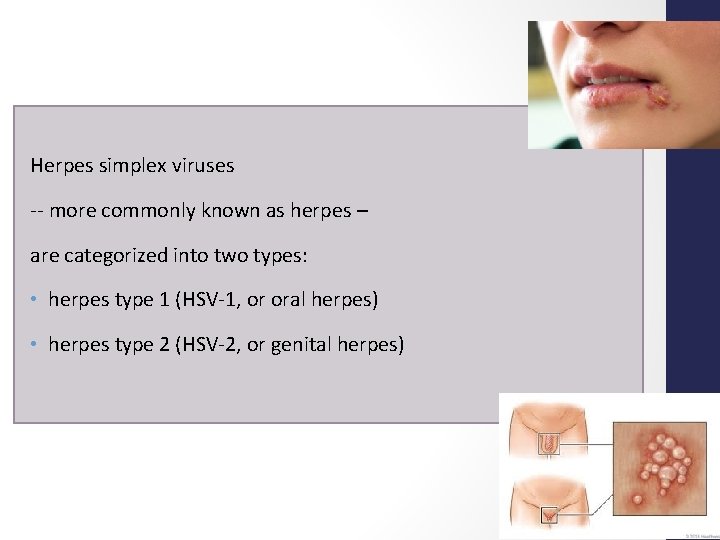
Herpes simplex viruses -- more commonly known as herpes – are categorized into two types: • herpes type 1 (HSV-1, or oral herpes) • herpes type 2 (HSV-2, or genital herpes)
Most commonly, herpes type 1 causes sores around the mouth and lips (sometimes called fever blisters or cold sores). HSV-1 can cause genital herpes, but most cases of genital herpes are caused by herpes type 2. In HSV-2, the infected person may have sores around the genitals or rectum. Although HSV-2 sores may occur in other locations, these sores usually are found below the waist.
How is herpes spread? • Herpes is transmitted by direct skin to skin contact, directly from the site of infection to the site of contact. • For example, if you have a cold sore and kiss someone, the virus can infect your partner’s mouth. • Herpes can also be spread sexually when there are no visible signs or symptoms.
What are the syptomms? • First episodes of the disease tend to be more severe than recurrences. • Symptoms of an infection may include a burning or tingling sensation, followed by multiple painful vesicles at the site of infection (e. g. , cervix, vulva, penis). • A low percentage of patients experience symptoms so severe that they must be hospitalized. • Women often have more severe first episodes than men. • Subsequent recurrences of infection vary from person to person. • Some people who have an HSV infection never experience symptoms.
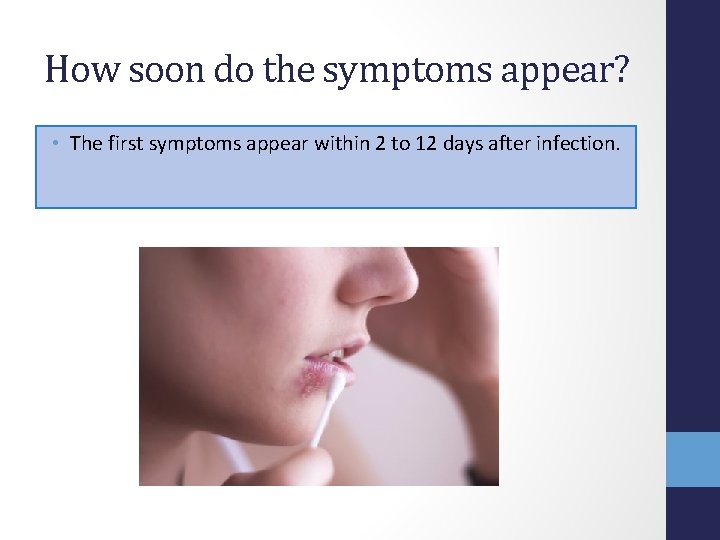
How soon do the symptoms appear? • The first symptoms appear within 2 to 12 days after infection.
How long can an infected person spread the virus? • Patient with primary genital lesions are infections for about 712 days, and with recurrent disease from 4 -7 days. • Asymptomatic viral shedding is probably common.
How is herpes diagnosed? • If you have symptoms, the most common test is a viral culture. To perform this test, your physician must take a sample from a lesion, preferably on the first day.
What is the treatment for herpes? • There is no cure for herpes, but there are medications which help to keep the virus in check. • Current medications are safe and have few side effects. • Suppressive therapy greatly reduces the number of outbreaks for ourbreaks for most people, and can prevent outbreaks altogether for some.
How can one reduce the risk of spreading herpes? • Abstain from sex when signs and symptoms of genital herpes are present. • Tell your partner if you have herpes. Use condoms between recurrences of herpes. • Condoms offer useful protection against unrecognized herpes by protecting the mucous membranes that are the most likely sites of transmission. • Wash your hands after touching sores or using the bathroom. • Avoide kissing others when you have active cold sores to prevent the spread of oral herpes.
What are some complications? • Although rare, during delivery a newborn can contract herpes if the mother has active herpes at the time. • Herpes infections in the newborn can often quite severe and may result in permanent neurologic or ocular damage, or even death of the newborn. • It is possible to move the virus from the location of the outbreak to other places on the body by touching the sores.
What are some complications? • The fingers, eyes, and other body parts can be become infected in this manner. • Encephalitis (inflammation of the brain) may result from primary or recurrent infection and is associated with fever, alterations in the state of consciousness and convulsions.
How many people does herpes affected? • According to the CDC, 45 million people nationawide ages 12 and older, or one out of five of the totel adolescent and population, are infected with HSV-2 (genital herpes). • HSV-1 (oral herpes) has a vast presence in humans. • It has been estimated that 90 percent of humans experience oral herpes infections by the age of 10.
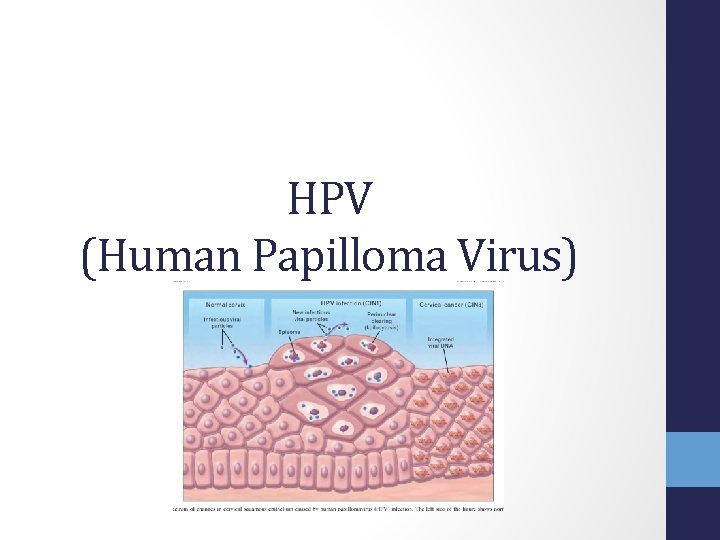
HPV (Human Papilloma Virus)
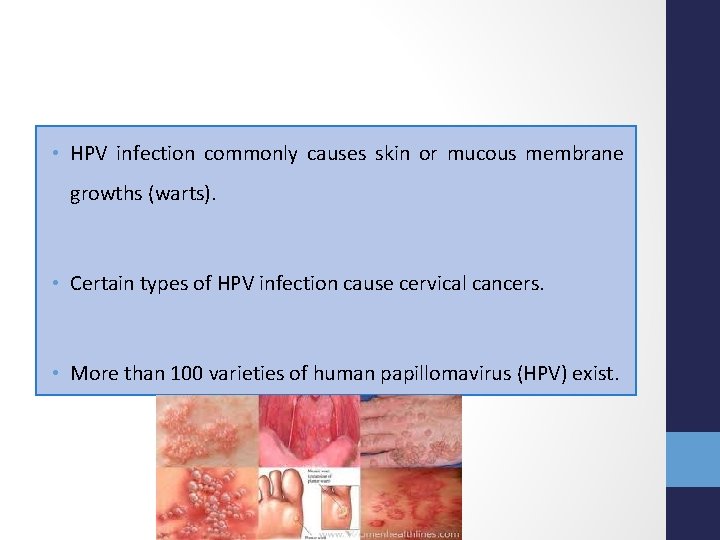
• HPV infection commonly causes skin or mucous membrane growths (warts). • Certain types of HPV infection cause cervical cancers. • More than 100 varieties of human papillomavirus (HPV) exist.
• Different types of HPV infection cause warts on different parts of your body. • For example, some types of HPV infection cause plantar warts on the feet, while others cause warts that mostly appear on the face or neck.
• Most HPV infections don't lead to cancer. But some types of genital HPV can cause cancer of the lower part of the uterus that connects to the vagina (cervix). • Other types of cancers, including cancers of the anus, penis, vagina, vulva and back of the throat (oropharyngeal), have been linked to HPV infection.
• HPV is a group of more than 150 related viruses. Each HPV virus in this large group is given a number which is called its HPV type. • HPV is named for the warts (papillomas) some HPV types can cause. • Some other HPV types can lead to cancer. Men and women can get cancer of mouth/ throat, and anus/rectum caused by HPV infections. Men can also get penile HPV cancer. • In women, HPV infection can also cause cervical, vaginal, and vulvar HPV cancers. • But there are vaccines that can prevent infection with the types of HPV that most commonly cause cancer.
How is HPV spread? • You can get HPV by having vaginal, anal, or oral sex with someone who has the virus. • It is most commonly spread during vaginal or anal sex. • HPV can be passed even when an infected person has no signs or symptoms. • Anyone who is sexually active can get HPV, even if you have had sex with only one person. • You also can develop symptoms years after you have sex with someone who is infected. • This makes it hard to know when you first became infected.
Symptoms
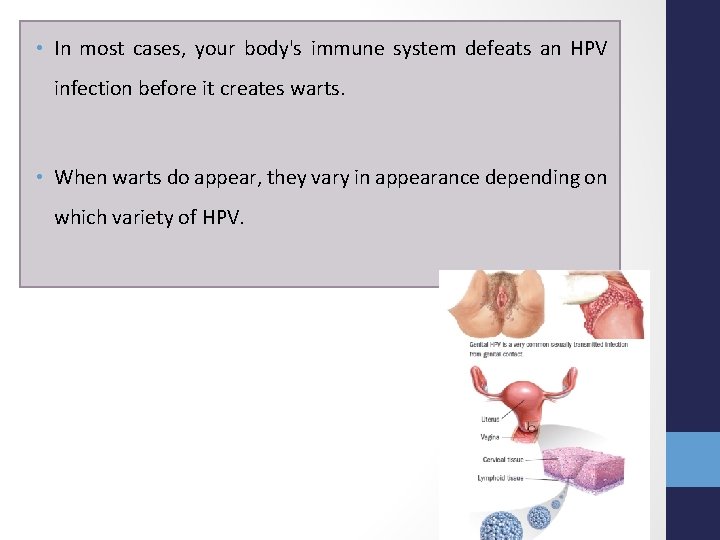
• In most cases, your body's immune system defeats an HPV infection before it creates warts. • When warts do appear, they vary in appearance depending on which variety of HPV.
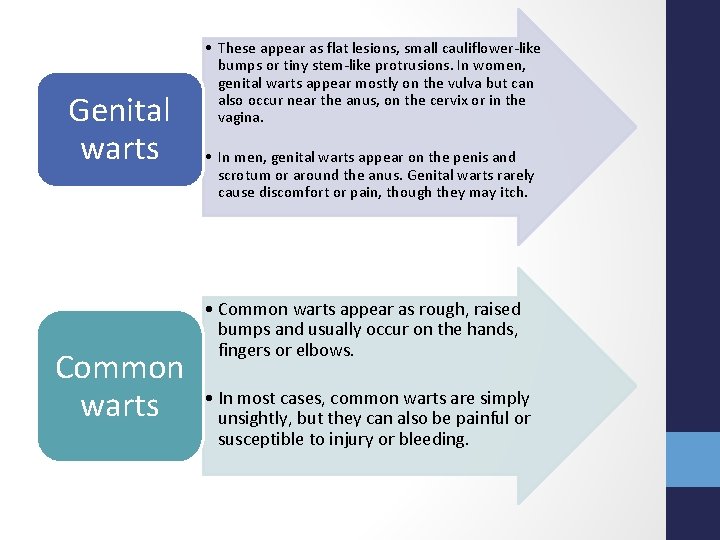
Genital warts Common warts • These appear as flat lesions, small cauliflower-like bumps or tiny stem-like protrusions. In women, genital warts appear mostly on the vulva but can also occur near the anus, on the cervix or in the vagina. • In men, genital warts appear on the penis and scrotum or around the anus. Genital warts rarely cause discomfort or pain, though they may itch. • Common warts appear as rough, raised bumps and usually occur on the hands, fingers or elbows. • In most cases, common warts are simply unsightly, but they can also be painful or susceptible to injury or bleeding.
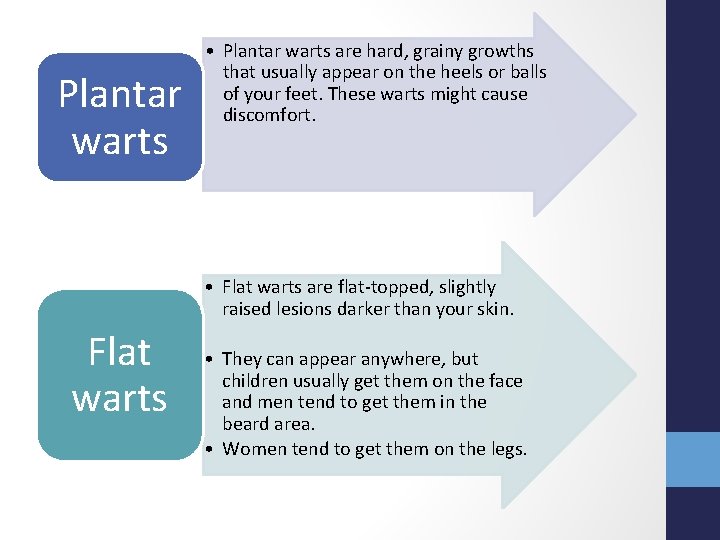
Plantar warts • Plantar warts are hard, grainy growths that usually appear on the heels or balls of your feet. These warts might cause discomfort. • Flat warts are flat-topped, slightly raised lesions darker than your skin. Flat warts • They can appear anywhere, but children usually get them on the face and men tend to get them in the beard area. • Women tend to get them on the legs.
Causes • HPV infection occurs when the virus enters your body, usually through a cut, abrasion or small tear in your skin. • The virus is transferred primarily by skin-to-skin contact. • Genital HPV infections are contracted through sexual intercourse, anal sex and other skin-to-skin contact in the genital region.
Causes • If you're pregnant and have an HPV infection with genital warts, the warts might enlarge and multiply during pregnancy. Treatment might have to wait until after delivery. • Large genital warts can block the birth canal, complicating vaginal delivery. The infection might be linked to a rare, noncancerous growth in the baby's voice box (larynx). • Warts are contagious. They spread by contact with a wart or with something that touched the wart.
Risk factors Number of sexual partners. The more sexual partners you have, the more likely you are to contract a genital HPV infection. Having sex with a partner who has had multiple sex partners also increases your risk. Age. Common warts occur mostly in children. Genital warts occur most often in adolescents and young adults. Weakened immune systems. People who have weakened immune systems are at greater risk of HPV infections. Immune systems can be weakened by HIV/AIDS or by immune system-suppressing drugs used after organ transplants.
Risk factors Damaged skin. Areas of skin that have been punctured or opened are more prone to develop common warts. Personal contact. Touching someone's warts or not wearing protection before contacting surfaces that have been exposed to HPV — such as public showers or swimming pools — might increase your risk of HPV infection.
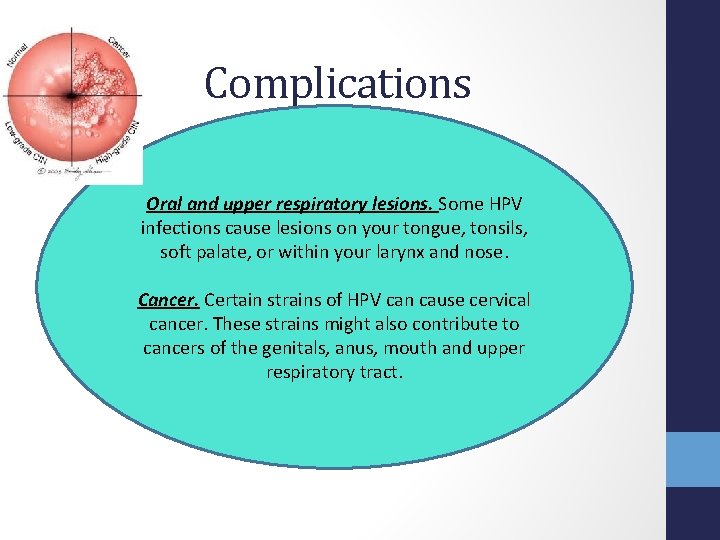
Complications Oral and upper respiratory lesions. Some HPV infections cause lesions on your tongue, tonsils, soft palate, or within your larynx and nose. Cancer. Certain strains of HPV can cause cervical cancer. These strains might also contribute to cancers of the genitals, anus, mouth and upper respiratory tract.
Prevention
Common warts • It's difficult to prevent HPV infections that cause common warts. • If you have a common wart, you can prevent the spread of the infection and formation of new warts by not picking at a wart and not biting your nails.
Plantar warts • To reduce the risk of contracting HPV infections that cause plantar warts, wear shoes or sandals in public pools and locker rooms.
Genital warts You can reduce your risk of developing genital warts and other HPV-related genital lesions by: • Being in a mutually monogamous sexual relationship • Reducing your number of sex partners • Using a latex condom, which can reduce your risk of HPV transmission
HPV vaccines • All boys and girls ages 11 or 12 years should get vaccinated. • Catch-up vaccines are recommended for boys and men through age 21 and for girls and women through age 26, if they did not get vaccinated when they were younger. • The vaccine is also recommended for gay and bisexual men (or any man who has sex with a man) through age 26. • It is also recommended for men and women with compromised immune systems (including those living with HIV/AIDS) through age 26, if they did not get fully vaccinated when they were younger.
• A vaccine called Gardasil 9 has been developed. Gardasil 9 has been shown to protect against cervical cancer and against genital warts. • The Centers for Disease Control and Prevention (CDC) recommends routine HPV vaccination for girls and boys ages 11 and 12, although it can be given as early as age 9. • It's ideal for girls and boys to receive the vaccine before they have sexual contact and are exposed to HPV. Research has shown that receiving the vaccine at a young age isn't linked to an earlier start of sexual activity.
Once someone is infected with HPV, the vaccine might not be as effective or might not work at all. Also, response to the vaccine is better at younger ages than it is at older ages. In October 2016, the CDC updated the HPV vaccine schedule to recommend that all 11 - and 12 -year-olds receive two doses of HPV vaccine at least six months apart, rather than the previously recommended three-dose schedule. Younger adolescents ages 9 and 10 and teens ages 13 and 14 are also able to receive vaccination on the updated two-dose schedule.
• Teens and young adults who begin the vaccine series later, at ages 15 through 26, should continue to receive three doses of the vaccine. • Researchers are working on newer vaccines, some designed to treat HPV lesions, but they're not yet available.