
Nursing Process n 116 The Nursing Process Assessment
- Slides: 28
Nursing Process n 116
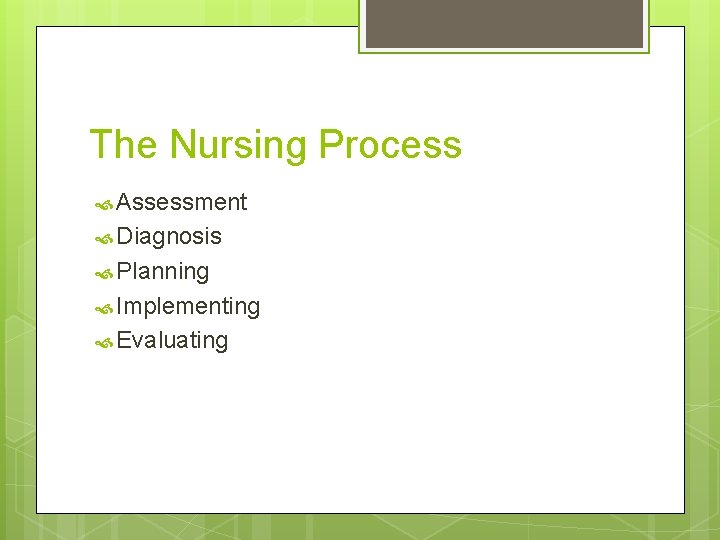
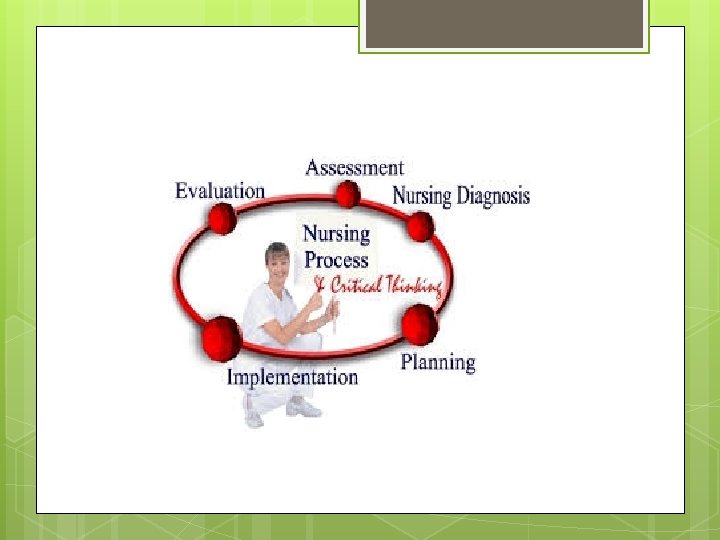
The Nursing Process Assessment Diagnosis Planning Implementing Evaluating
assess Gather information about client’s condition
diagnose Identify the client’s problem
plan Set goals of care and desired outcomes and identify appropriate nursing actions
implement Perform planning the nursing actions identified in
evaluate Determine achieved if goals are met and outcomes
Assessment
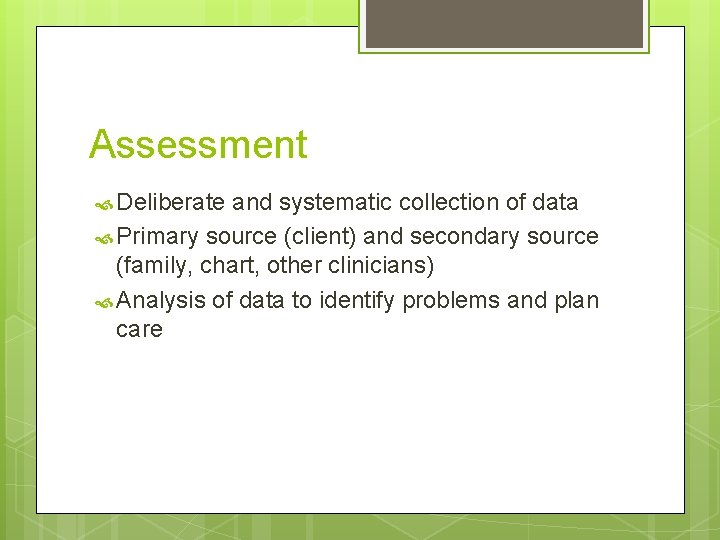
Assessment Deliberate and systematic collection of data Primary source (client) and secondary source (family, chart, other clinicians) Analysis of data to identify problems and plan care
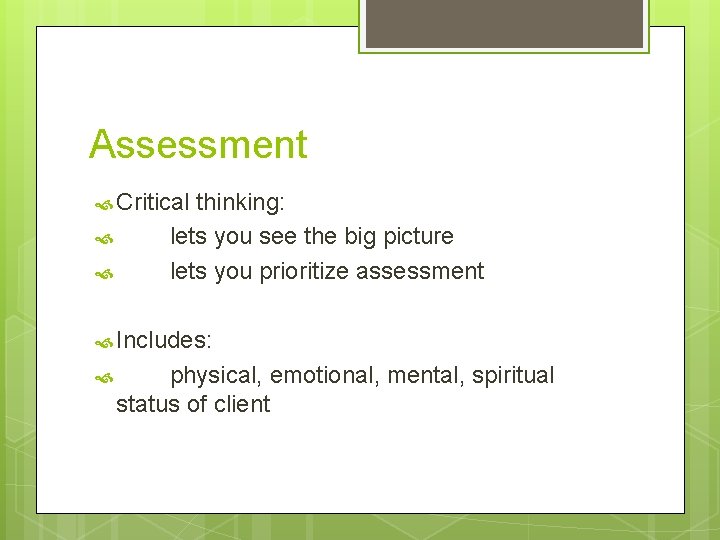
Assessment Critical thinking: lets you see the big picture lets you prioritize assessment Includes: physical, emotional, mental, spiritual status of client
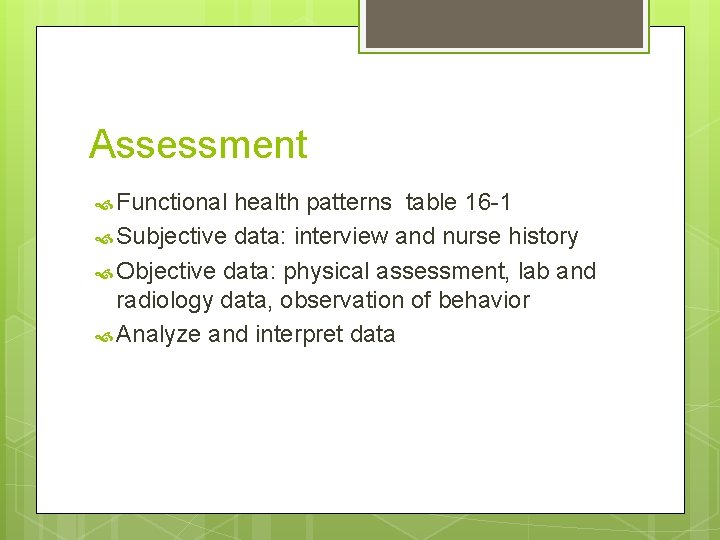
Assessment Functional health patterns table 16 -1 Subjective data: interview and nurse history Objective data: physical assessment, lab and radiology data, observation of behavior Analyze and interpret data
assessment Validate findings with client, medical record, family Validating clarifies vague or unclear data Determine if further assessment is necessary…is more information needed to reach a logical conclusion?
Assessment Steps of data analysis: 1. recognize a pattern or trends 2. compare with normal standards 3. make a reasonable conclusion
Diagnosis
Diagnosis Problems treated primarily by nurses (nursing diagnoses) Problems requiring treatment by several disciplines (collaborative problems) Represent a range of human conditions that require nursing care
Diagnosis Medical diagnosis identification of a disease condition based on specific evaluation of a physical sign, symptom, history, results of tests and procedures. Nursing diagnosis clinical judgment about the client responses to actual or potential health problems or life processes. The human response that the nurse is licensed and competent to treat.
diagnosis Nursing diagnoses are the basis for selecting interventions Emphasize nursing’s independent practice Defines role of nursing as separate from but collaborative with medicine North American Nursing Diagnosis Association (NANDA) approves and revises
diagnosis Precise definitions Enhances communication Helps nurses focus on scope of practice Fosters development of nursing knowledge
diagnosis Critical thinking… Clusters and patterns of data contain defining characteristics table 17 -2 Use accepted norms for comparison and judgment
diagnosis Actual Risk Health promotion Wellness
Diagnosis components Diagnostic label: NANDA approved name Related factors: condition or etiology identified from assessment data. The condition responds to nursing interventions pathophysiological, treatment related, situational, maturational Support of Diagnostic statement
diagnosis Do not use the medical diagnosis as the etiology of the nursing diagnosis Diagnoses are client centered, not nurse centered. Identify the problem, not the goal Don’t use circular language Identity only one client problem in each diagnostic statement
diagnosis Acute pain, related to swelling and pressure on nerves, as evidenced by verbal report of pain 8/10, grimacing, self-limiting movement. Acute pain, related to fractured arm, as evidenced by cast on arm.
Diagnosis Nutrition, more than body requirements, related to insufficient knowledge about caloric value of foods, as evidenced by BMI of 30 and food diary indicating large consumption of soda Nutrition, more than body requirements, related to obesity, as evidenced by obesity
diagnosis Risk for infection related to exposure to pathogens via break in skin integrity Risk for infection related to fevers
diagnosis Ineffective coping, related to lack of family support and learned coping mechanisms, as evidenced by self-report of sleeplessness, disheveled appearance, job absentseeism Ineffective coping , related to nurse not having time to talk to patient, as evidenced by high patient load
Diagnosis Errors in data collecting Errors in data interpretation Errors in data clustering Errors in Diagnostic Statement