
Nursing Home Incident Command System NHICS 2017 Revision
- Slides: 34
Nursing Home Incident Command System (NHICS) 2017 Revision
Course Introduction • This course is divided into 4 Modules: 1: Personal Emergency Preparedness 2: NHICS Guidebook 3: Response Toolkit 4: Planning Toolkit and Implementing NHICS
Module Structure • Each Module includes: – Objectives – Knowledge Checks for self evaluation – Summary with links to additional information
Course Overview • This training course will cover the tools to: – Prepare you and your family – Apply the principles of NHICS to quickly respond to emergencies in your work environment – Assist your healthcare facility in meeting its disaster responsibilities
Why Use NHICS? • The Nursing Home Incident Command System: – Is a practical, standardized approach for dealing with emergencies (not the same “business as usual”) – Uses a common language that all affected facilities and response agencies can recognize – Is flexible and scalable to accommodate the demands of the incident and optimize your facility’s response
Why plan ahead? • As a healthcare worker, you are at the front lines of disaster response at your facility • Most emergencies occur with no “advance warning” • Being prepared will help ensure you can meet your responsibilities to work and family
Hurricane Katrina Lesson Learned “Life and death in the critical first hours of a calamity typically hinged on the preparedness, resources, and abilities of those in the affected community with the power to help themselves and others in their vicinity. Those who did better were those who didn’t wait idly for help to arrive. ” From “Five Days at Memorial Medical Center” by Sheri Fink
MODULE 1: Personal Emergency Preparedness
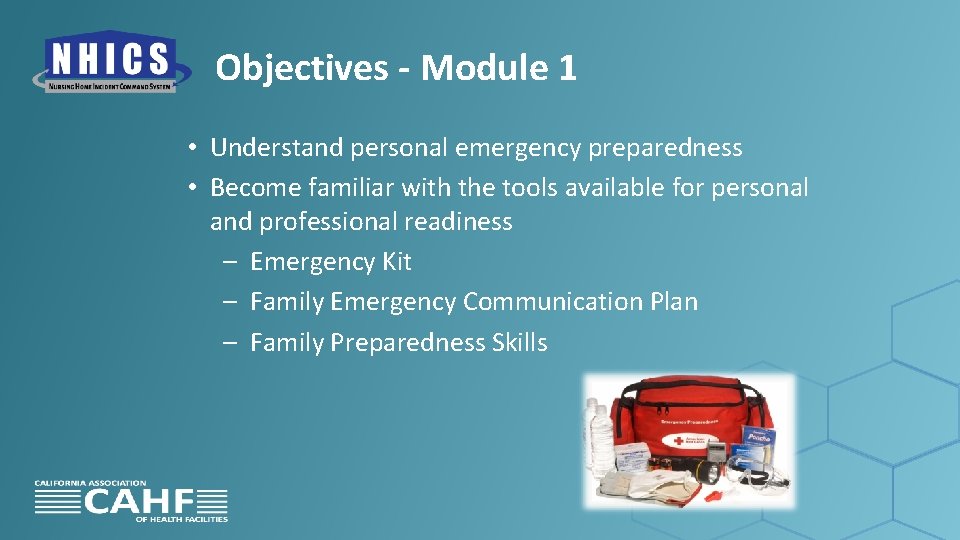
Objectives - Module 1 • Understand personal emergency preparedness • Become familiar with the tools available for personal and professional readiness – Emergency Kit – Family Emergency Communication Plan – Family Preparedness Skills
Reality of your role in disaster • You are the first responder for your residents! • It’s difficult to be there for them if you and your loved ones aren’t prepared. • The planning and thought you invest in preparedness now will ensure your readiness to respond to when disaster strikes.
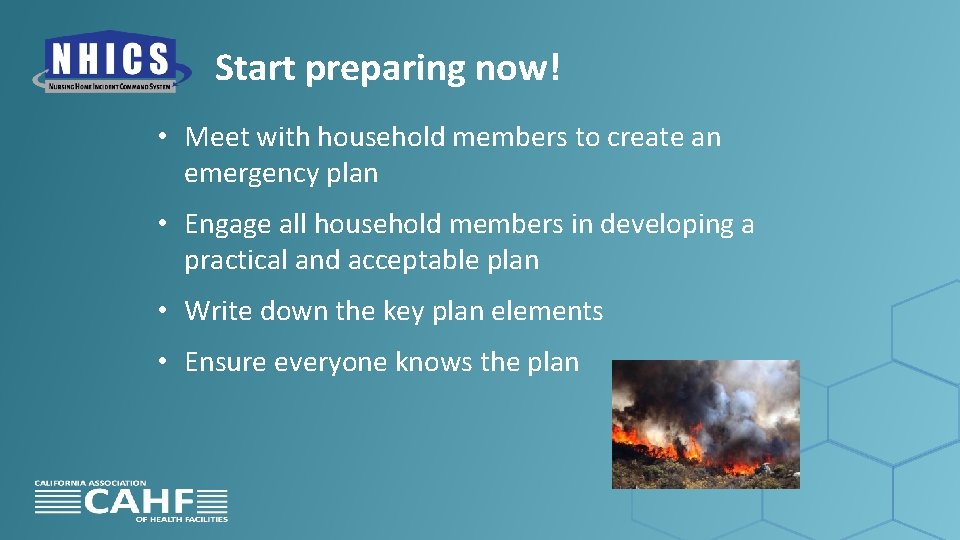
Start preparing now! • Meet with household members to create an emergency plan • Engage all household members in developing a practical and acceptable plan • Write down the key plan elements • Ensure everyone knows the plan
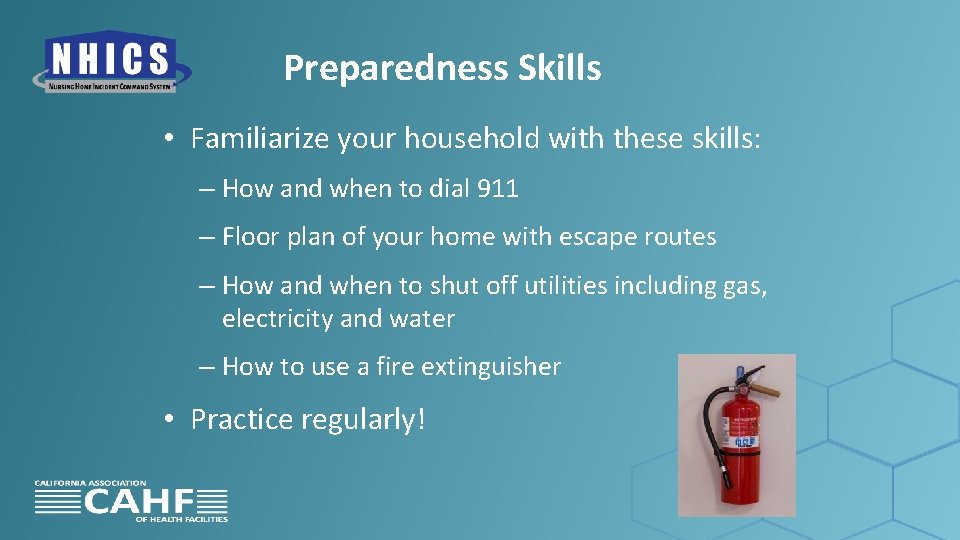
Preparedness Skills • Familiarize your household with these skills: – How and when to dial 911 – Floor plan of your home with escape routes – How and when to shut off utilities including gas, electricity and water – How to use a fire extinguisher • Practice regularly!
Family Emergency Communication Plan • Collect and store contact information for every household member – Contact information should be easily accessible – Best to collect multiple contact numbers if possible – Share information with all household members – Written and electronic is best – Update as needed
Family Emergency Communication Plan… • Include the following in your Plan: – Household Information – “In Case of Emergency” (ICE) Contacts – Pre-Established Emergency Meeting Places – Medical Information – School, Childcare, Caregiver and Workplace Emergency Information
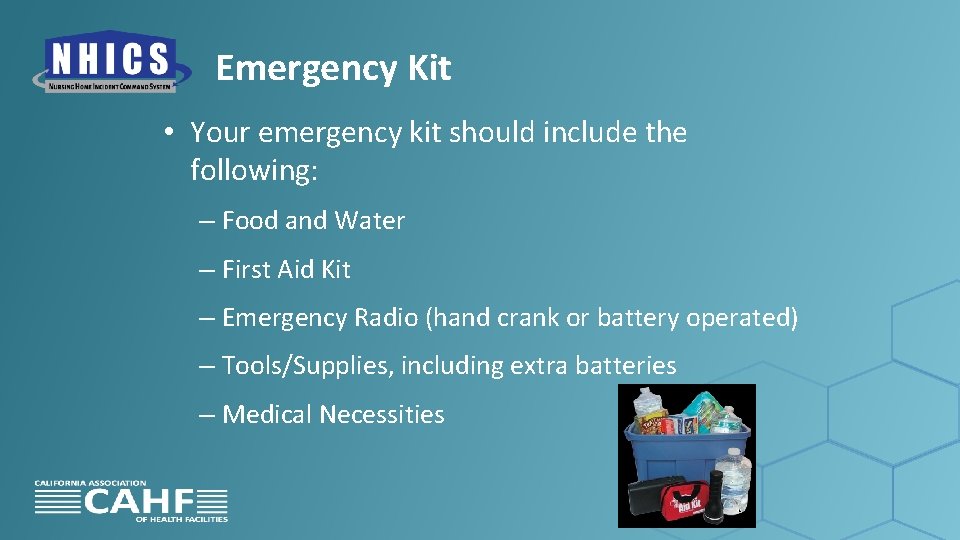
Emergency Kit • Your emergency kit should include the following: – Food and Water – First Aid Kit – Emergency Radio (hand crank or battery operated) – Tools/Supplies, including extra batteries – Medical Necessities
Emergency Food • 3 -5 days of non-perishable food person (and per pet!) • Ready-to-eat meals may include: – Canned soups and vegetables – Nuts and dried fruit – Meals Ready to Eat (MREs) • Manual can opener • Disposable utensils and plates/bowls • Check every six months for shelf life expiration; rotate
Emergency Water • At least 1 gallon person per day for 3 days (Half may be used for drinking and half for washing and cooking) • At least 1/2 gallon per pet per day for 3 days • Drink only clean water and stay hydrated! Example: A family of 4 people and 2 pets would need (4 people x 1 gal x 3 days) + (2 pets x ½ gal x 3 days) = 12 + 3 gal = 15 gallons (and more is better)
Emergency Water – Option 1 • Pre-packaged bottled water is the safest, most reliable approach. – Do not open until you need to use it – Keep in original container – Rotate and replace before expiration/“use by” date
Emergency Water – Option 2 • Use food-grade water storage containers – Clean containers before using to store water • Wash and rinse container using dish soap • Mix 1 tsp. of household bleach with 1 qt. (1/4 gallon) of water • Swish the solution around • Rinse well with clean water • Store in a cool, dark place • Re-clean and replace water every 6 months
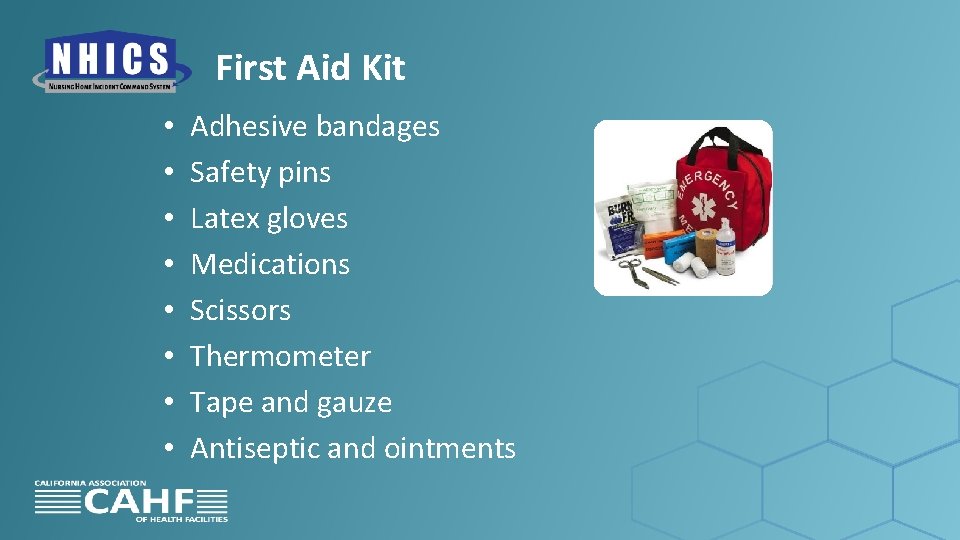
First Aid Kit • • Adhesive bandages Safety pins Latex gloves Medications Scissors Thermometer Tape and gauze Antiseptic and ointments
Tools and Supplies • • Battery-powered or hand crank radio NOAA Weather Radio Whistle to signal for help Dust mask Duct tape Wrench or pliers to turn of utilities Utility knife Extra batteries
Tools and Supplies… • • Cash Personal hygiene items Paper products (cups or bowls) Rain gear Extra blankets Flash light, headlamp and light sticks Shoes Hats/head protection
Emergency Supplies for Infants • Formula, diapers, and wipes • Child carrier • Change of clothes • Blankets and/or portable sleeper • Comfort item/toy (pacifier, etc. ) • Medications • Nonperishable foods
Emergency Supplies for Children • Extra change of clothes and hygiene items • Familiar non-perishable foods • Games, books or puzzles • Comfort items from home • Batteries and chargers for electronics – music players and games • Medications
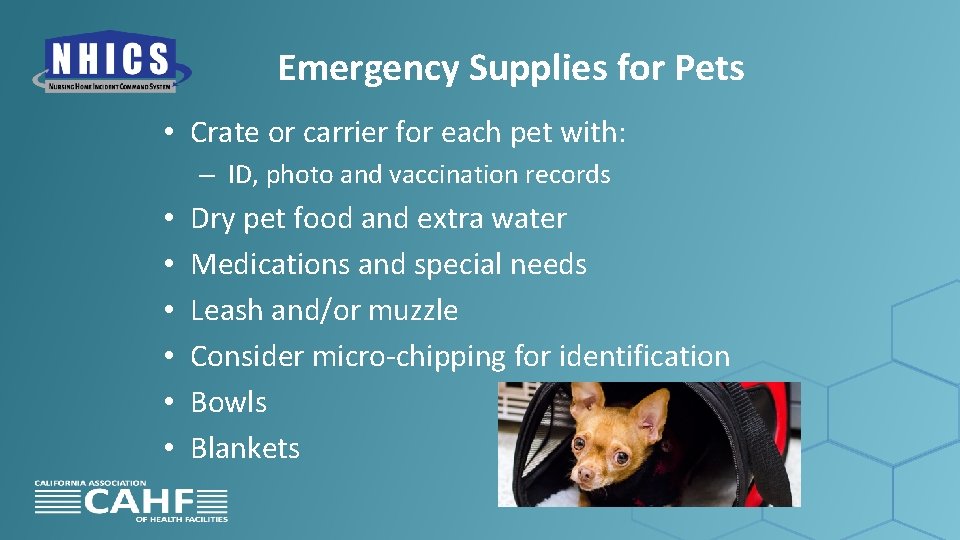
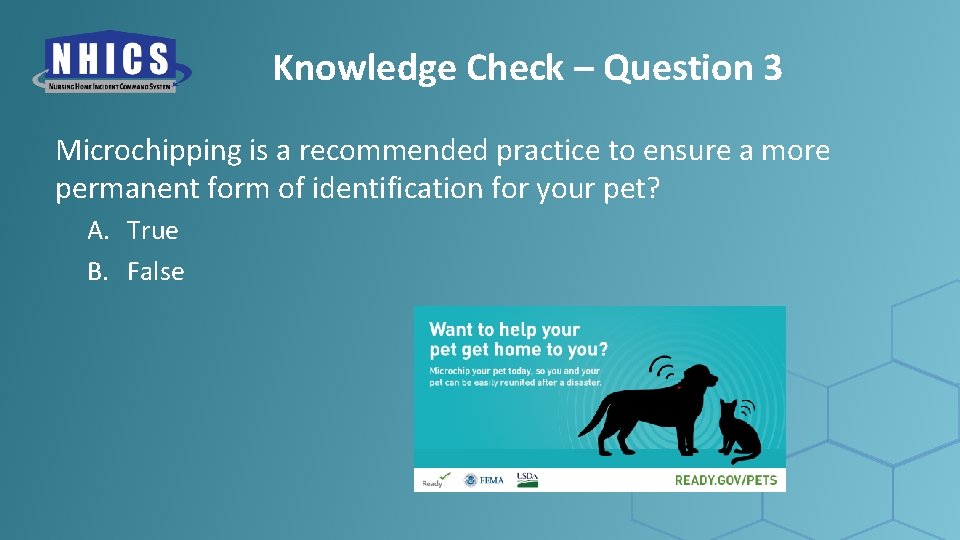
Emergency Supplies for Pets • Crate or carrier for each pet with: – ID, photo and vaccination records • • • Dry pet food and extra water Medications and special needs Leash and/or muzzle Consider micro-chipping for identification Bowls Blankets
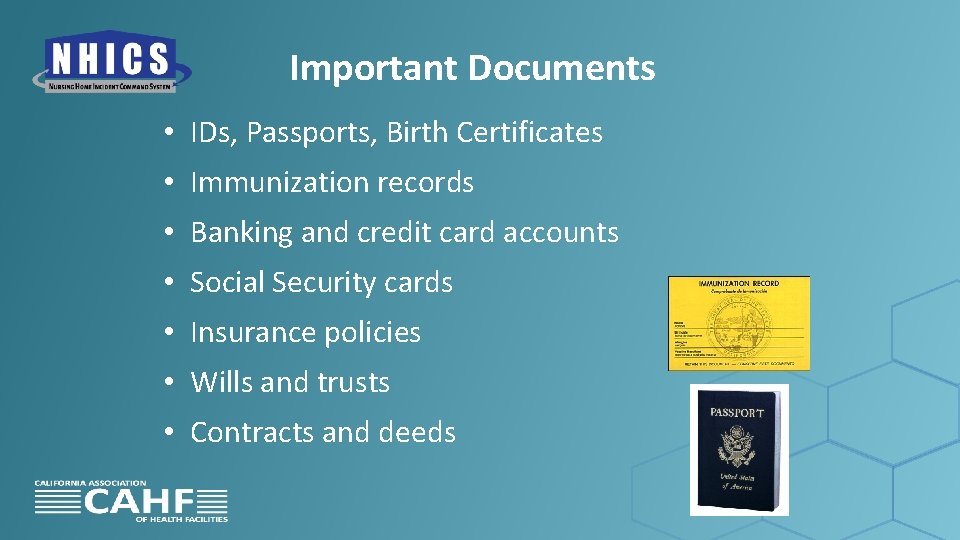
Important Documents • IDs, Passports, Birth Certificates • Immunization records • Banking and credit card accounts • Social Security cards • Insurance policies • Wills and trusts • Contracts and deeds
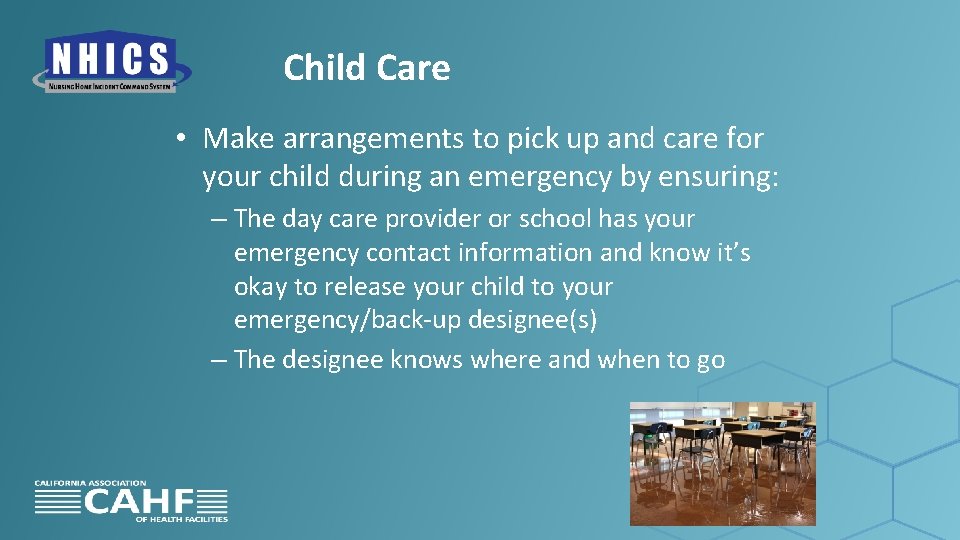
Child Care • Make arrangements to pick up and care for your child during an emergency by ensuring: – The day care provider or school has your emergency contact information and know it’s okay to release your child to your emergency/back-up designee(s) – The designee knows where and when to go
Considerations for Self-Care • During an emergency: – Hydrate and eat regularly – Pace yourself; take breaks when necessary – Safeguard yourself by wearing Personal Protective Equipment (PPE) if necessary – Limit time spent working in high-intensity settings – Check in with your supervisor regularly
Knowledge Check - Question 1 Which of these items would be useful to have in your emergency kit? A. B. C. D. E. First Aid Kit Rain poncho Hand-crank or battery-operated radio Backup batteries All of the above
Knowledge Check - Question 2 Which of the following should your family emergency communication plan include? A. Emergency Meeting Places B. In Case of Emergency (ICE) Contact C. Important Medical Information D. School, Child Care, Care Giver Contacts E. All of the above
Knowledge Check – Question 3 Microchipping is a recommended practice to ensure a more permanent form of identification for your pet? A. True B. False
Knowledge Check – Question 4 The easiest method for getting emergency water supplies for your household (people and pets) is: A. B. C. D. Pre-packaged Bottled Water Food-grade water storage containers Dig a well…saw it on Bear Grylls show! Boil questionable water
Summary • In Module 1, you learned it is important to: – Maintain Emergency Kit(s) for all of your family members, including pets – Develop a Family Emergency Communication Plan – Practice emergency preparedness skills with your family
Links to Additional Information Emergency Water: https: //emergency. cdc. gov/preparedness/kit/water/ Emergency Food: https: //emergency. cdc. gov/preparedness/kit/food/index. asp Infant Care in Disaster from California Department of Public Health: http: //www. cdph. ca. gov/healthinfo/healthyliving/childfamily/Pages/Emergency Preparedness. Infantand. Young. Child. Careand. Feeding. aspx Emergency Food and Water for Pets: https: //www. cdc. gov/features/petsanddisasters/index. html FEMA Youth Preparedness: https: //www. ready. gov/youth-preparedness SAMHSA Tips for Disaster Responders: Preventing and Managing Stress: http: //store. samhsa. gov/shin/content/SMA 14 -4873. pdf