
Nursing Care Interventions for the Client with Connective


- Slides: 20
Nursing Care & Interventions for the Client with Connective Tissue Disorders Keith Rischer RN, MA, CEN 2/23/2021 1
Today’s Objectives… Ø Ø Ø Review pathophysiology of the inflammatory response. Compare and contrast pathophysiology & manifestations of RA, lupas, gout, lyme’s disease & fibromyalgia. Identify the diagnostic tests, nursing priorities, and client education with RA, lupas, gout, lyme’s disease & fibromyalgia. Discuss medical and pharmocologic management for clients with RA, lupas, gout, lyme’s disease & fibromyalgia. Describe the mechanism of action, side effects and nursing responsibilities with pharmacologic management of connective tissue disorders. 2/23/2021 2
Antigen-Antibody Interactions Ø Ø Ø Exposure Antigen recognition Lymphocyte recognition Anti-body production & release Anti-body/binding actions • • Agglutination Lysis 2/23/2021 3
Autoimmunity Recognizes self antigens as foreign Ø Produces antibodies against own tissue Ø Examples Ø • • Lupus Rheumatoid Arthritis 2/23/2021 4
Rheumatoid Arthritis Ø Patho • • • Ø Inflammation Auto-immune disease Cartilage damage Exacerbations Vasculitis Causes • Unknown ü ü 2/23/2021 Possible combo environment/genetic factors Women>men 5
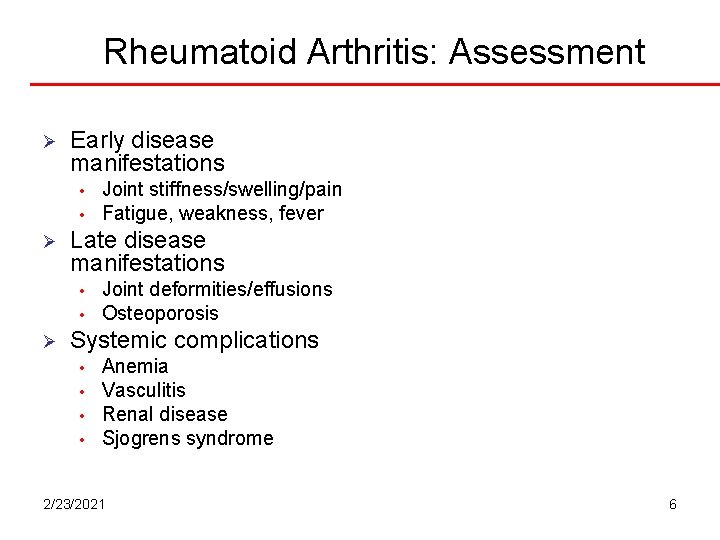
Rheumatoid Arthritis: Assessment Ø Early disease manifestations • • Ø Late disease manifestations • • Ø Joint stiffness/swelling/pain Fatigue, weakness, fever Joint deformities/effusions Osteoporosis Systemic complications • • Anemia Vasculitis Renal disease Sjogrens syndrome 2/23/2021 6
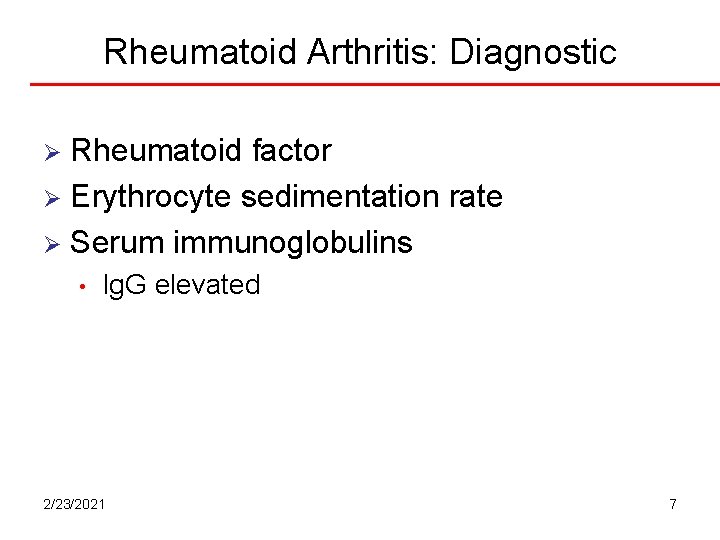
Rheumatoid Arthritis: Diagnostic Rheumatoid factor Ø Erythrocyte sedimentation rate Ø Serum immunoglobulins Ø • Ig. G elevated 2/23/2021 7
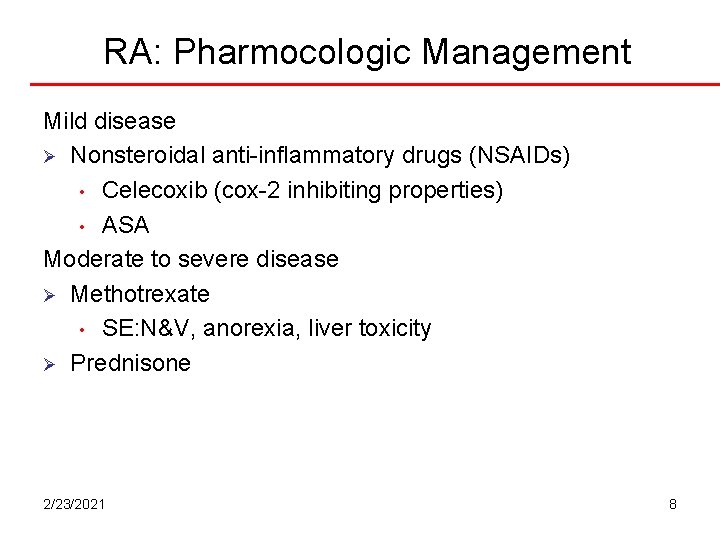
RA: Pharmocologic Management Mild disease Ø Nonsteroidal anti-inflammatory drugs (NSAIDs) • Celecoxib (cox-2 inhibiting properties) • ASA Moderate to severe disease Ø Methotrexate • SE: N&V, anorexia, liver toxicity Ø Prednisone 2/23/2021 8
RA: Nursing Diagnostic Priorities Ø Impaired physical mobility r/t… • • Ø Chronic pain r/t… • • Ø ROM, physical therapy…assistive devices Encourage ambulation Analgesics per schedule…Assess effectiveness Non-pharmacologic Fatigue r/t… • • Monitor nutritional intake Alternate rest/activity…avoid over exertion 2/23/2021 9
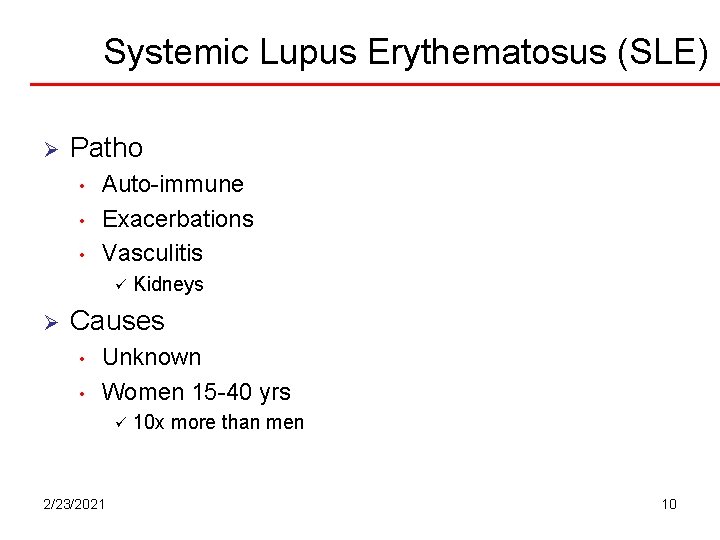
Systemic Lupus Erythematosus (SLE) Ø Patho • • • Auto-immune Exacerbations Vasculitis ü Ø Kidneys Causes • • Unknown Women 15 -40 yrs ü 2/23/2021 10 x more than men 10
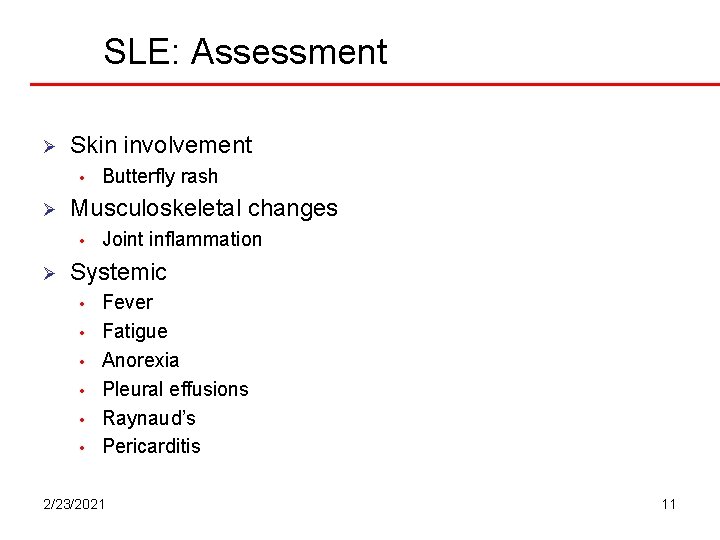
SLE: Assessment Ø Skin involvement • Ø Musculoskeletal changes • Ø Butterfly rash Joint inflammation Systemic • • • Fever Fatigue Anorexia Pleural effusions Raynaud’s Pericarditis 2/23/2021 11
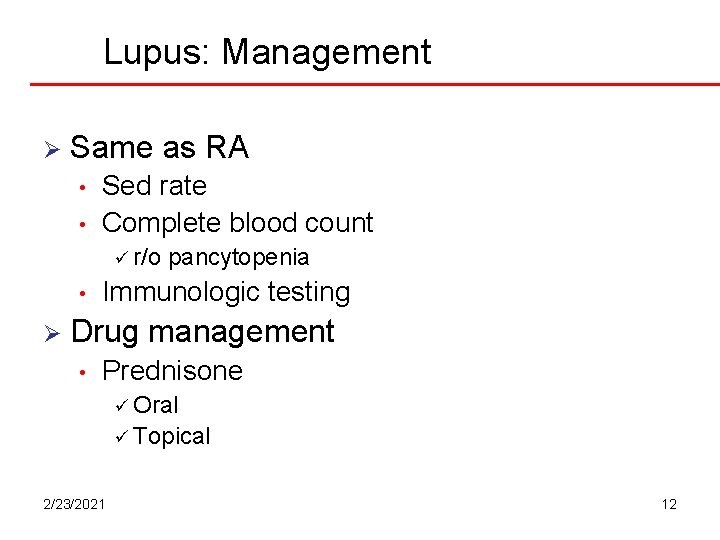
Lupus: Management Ø Same as RA • • Sed rate Complete blood count ü r/o • Ø pancytopenia Immunologic testing Drug management • Prednisone ü Oral ü Topical 2/23/2021 12
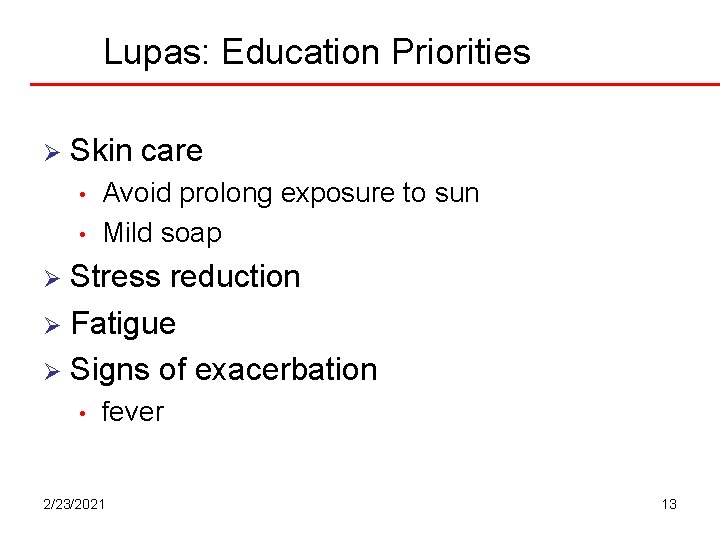
Lupas: Education Priorities Ø Skin care • • Avoid prolong exposure to sun Mild soap Stress reduction Ø Fatigue Ø Signs of exacerbation Ø • fever 2/23/2021 13
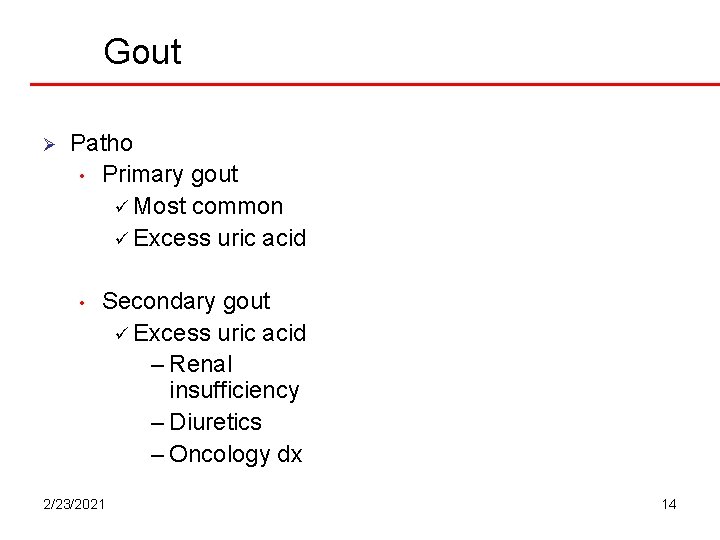
Gout Ø Patho • Primary gout ü Most common ü Excess uric acid • Secondary gout ü Excess uric acid – Renal insufficiency – Diuretics – Oncology dx 2/23/2021 14
Gout: Assessment-Treatment Ø Ø Ø Pain-inflammation small joints Renal calculi Labs • • Ø Sed rate elevated WBC elevated Drugs • • • Indocin (NSAID) Colchicine Allopurinol 2/23/2021 15
Lyme Disease Ø Patho • • Deer tick bite Spirochete 2/23/2021 16
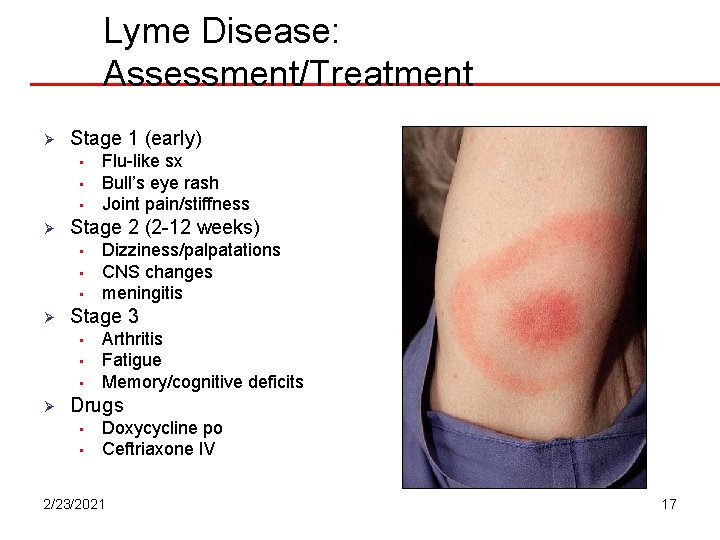
Lyme Disease: Assessment/Treatment Ø Stage 1 (early) • • • Ø Stage 2 (2 -12 weeks) • • • Ø Dizziness/palpatations CNS changes meningitis Stage 3 • • • Ø Flu-like sx Bull’s eye rash Joint pain/stiffness Arthritis Fatigue Memory/cognitive deficits Drugs • • Doxycycline po Ceftriaxone IV 2/23/2021 17
Fibromyalgia Syndrome Ø Patho • • • Ø Assessment • • Ø Cronic pain syndrome Mental health overlay Women 30 -50 yrs Muscle pain at trigger points Fatigue Insomnia Abd/pelvic pain Treatment • • Increase sleep time NSAIDS Muscle relaxants Physical therapy/exercise 2/23/2021 18
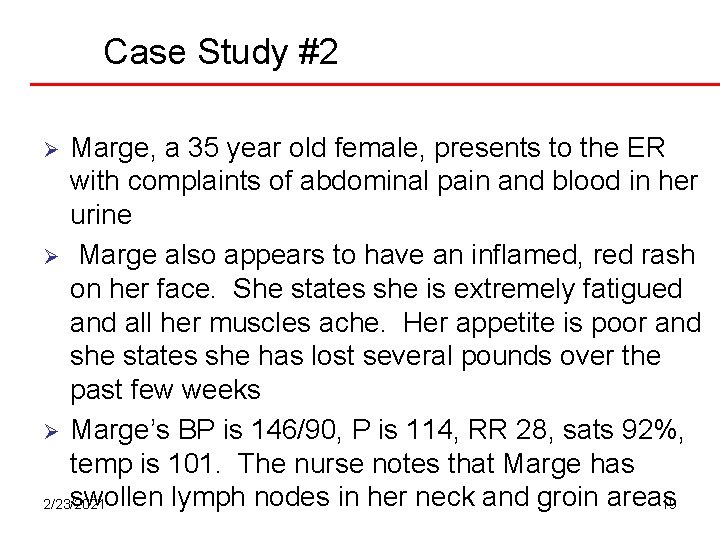
Case Study #2 Marge, a 35 year old female, presents to the ER with complaints of abdominal pain and blood in her urine Ø Marge also appears to have an inflamed, red rash on her face. She states she is extremely fatigued and all her muscles ache. Her appetite is poor and she states she has lost several pounds over the past few weeks Ø Marge’s BP is 146/90, P is 114, RR 28, sats 92%, temp is 101. The nurse notes that Marge has swollen lymph nodes in her neck and groin areas 2/23/2021 19 Ø
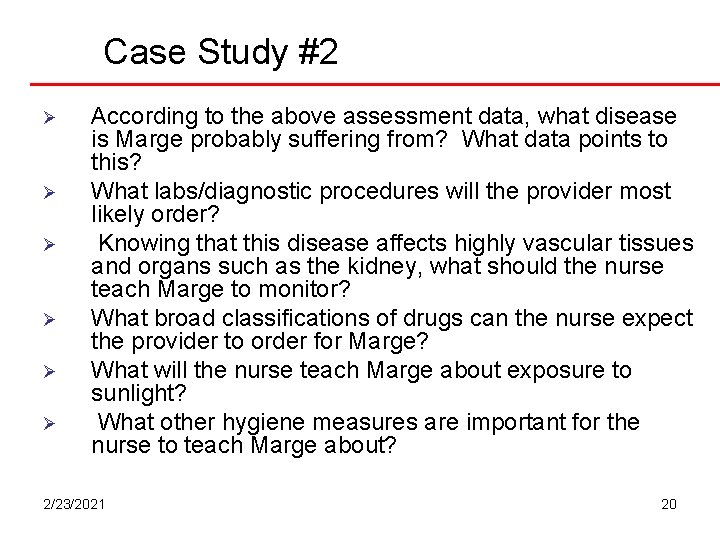
Case Study #2 Ø Ø Ø According to the above assessment data, what disease is Marge probably suffering from? What data points to this? What labs/diagnostic procedures will the provider most likely order? Knowing that this disease affects highly vascular tissues and organs such as the kidney, what should the nurse teach Marge to monitor? What broad classifications of drugs can the nurse expect the provider to order for Marge? What will the nurse teach Marge about exposure to sunlight? What other hygiene measures are important for the nurse to teach Marge about? 2/23/2021 20